03 Glycation & AGEs
Managing Glycation, Not Avoiding Sugar
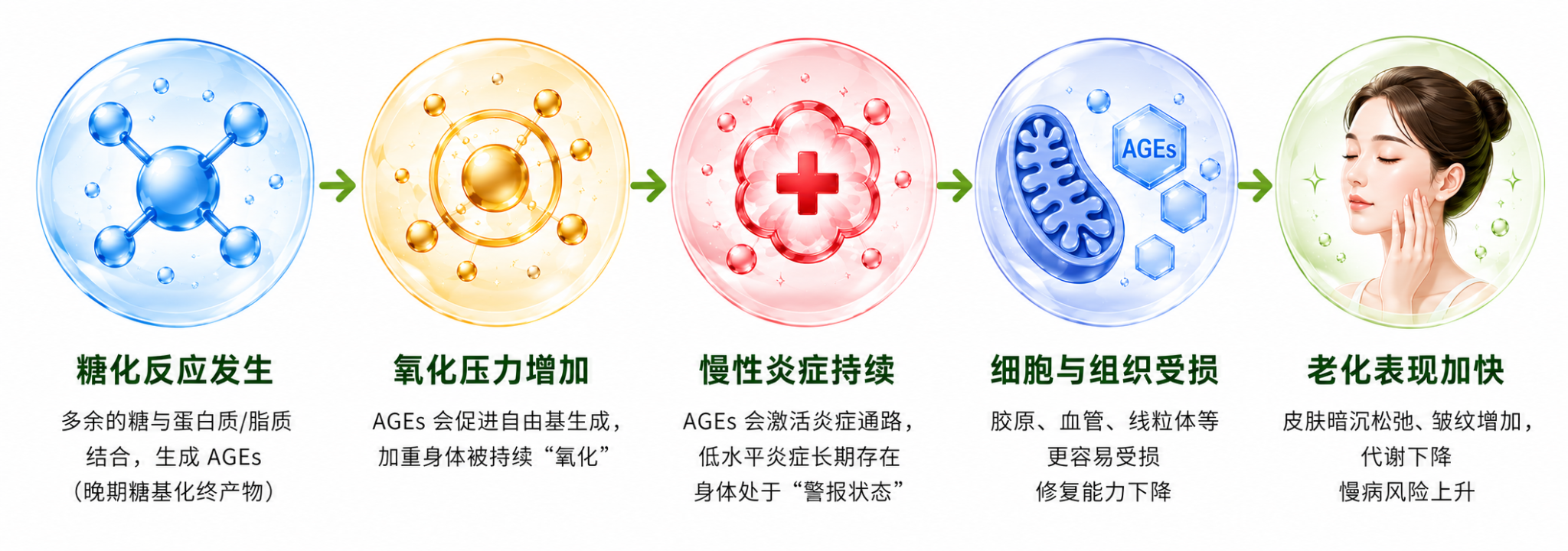
When blood glucose remains high or fluctuates sharply and often, glucose is more likely to bind to proteins and fats through glycation. This can form advanced glycation end products (AGEs).
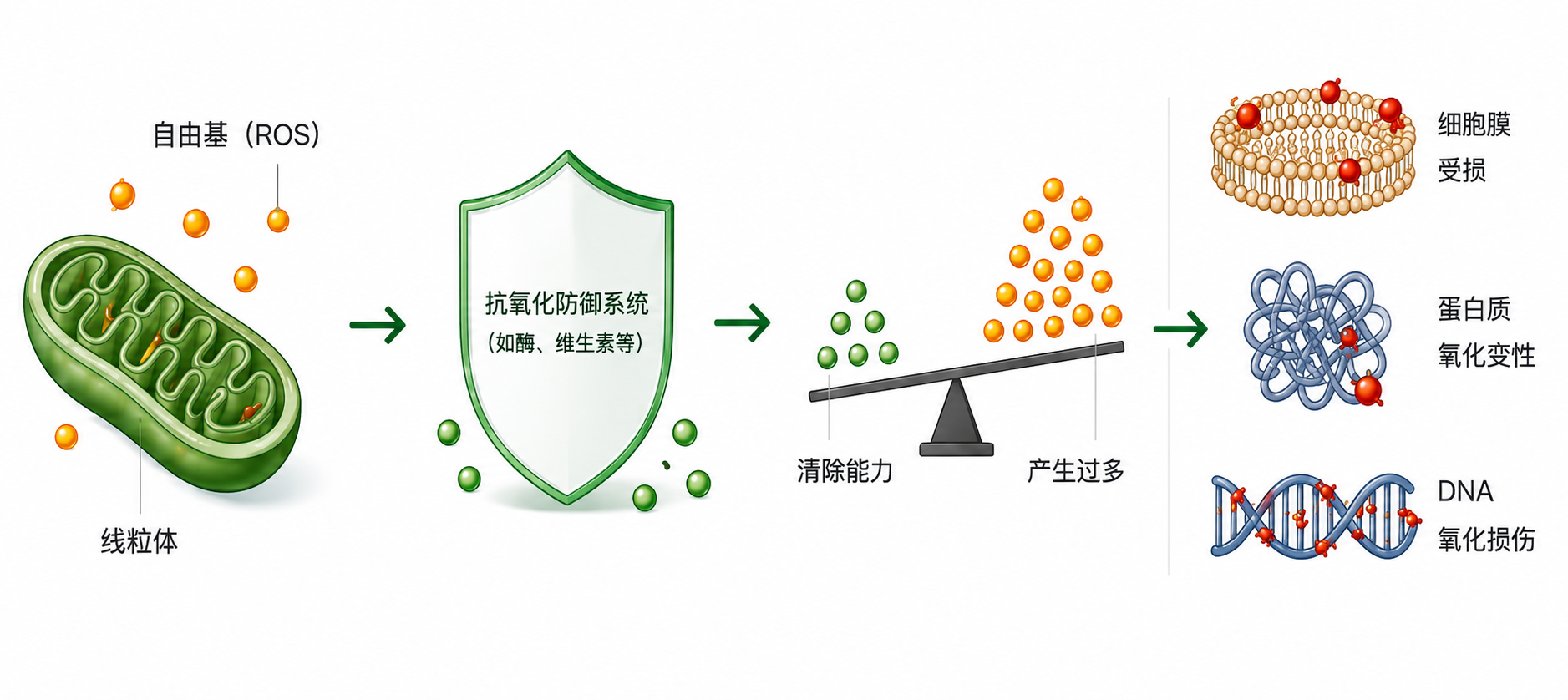
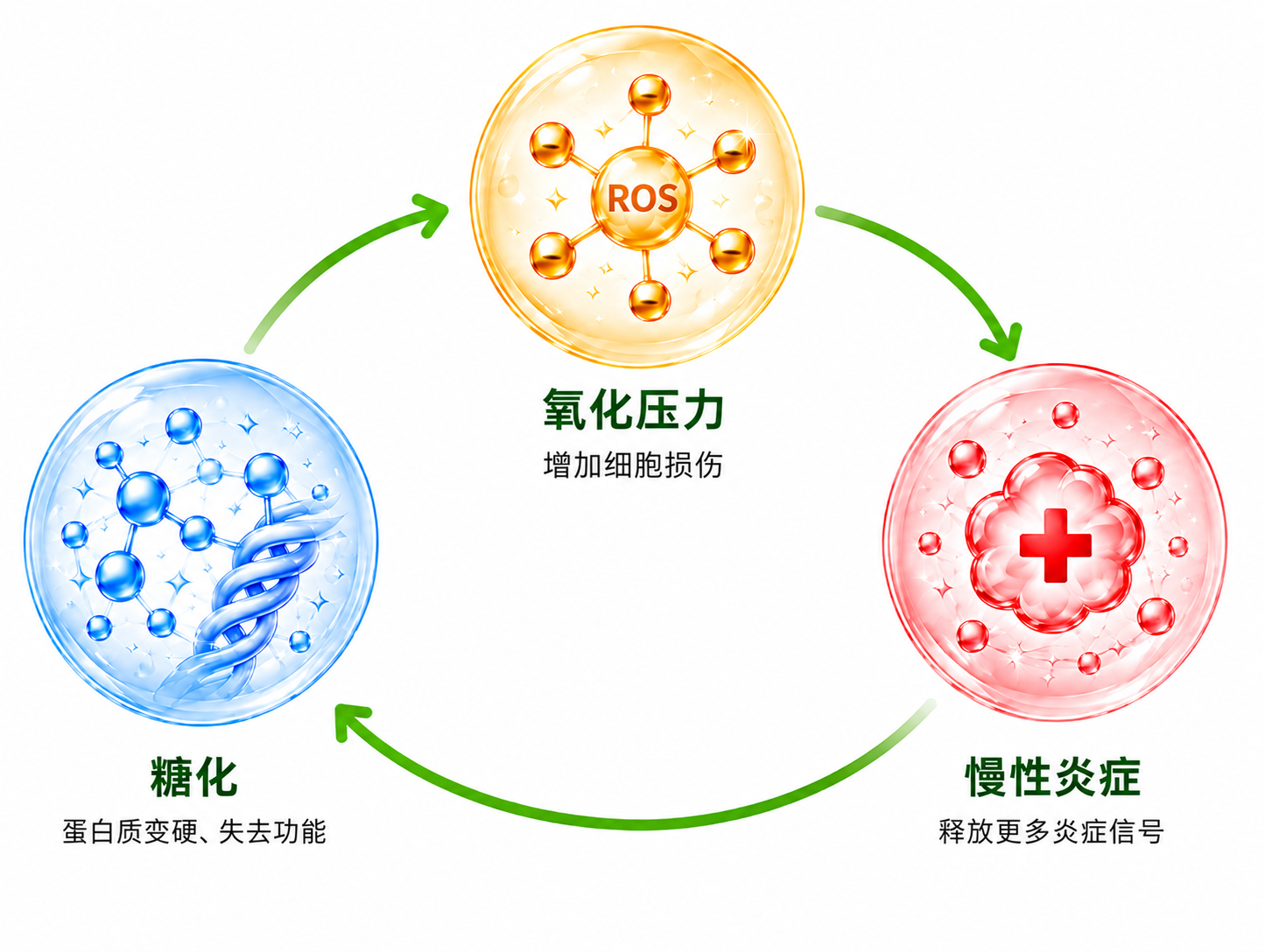
Excess AGEs may increase oxidative stress and chronic inflammation. They can also make collagen and elastin stiffer, more brittle, and harder to repair. Over time, skin may become duller, rougher, less firm, and more visibly lined.
The practical goal is not to avoid all sugar. It is to reduce sugary drinks, desserts, and excess refined starches to support steadier blood glucose, while limiting foods cooked until deeply browned or crisp to reduce dietary AGEs.
Sugar≠Glycation≠AGEs