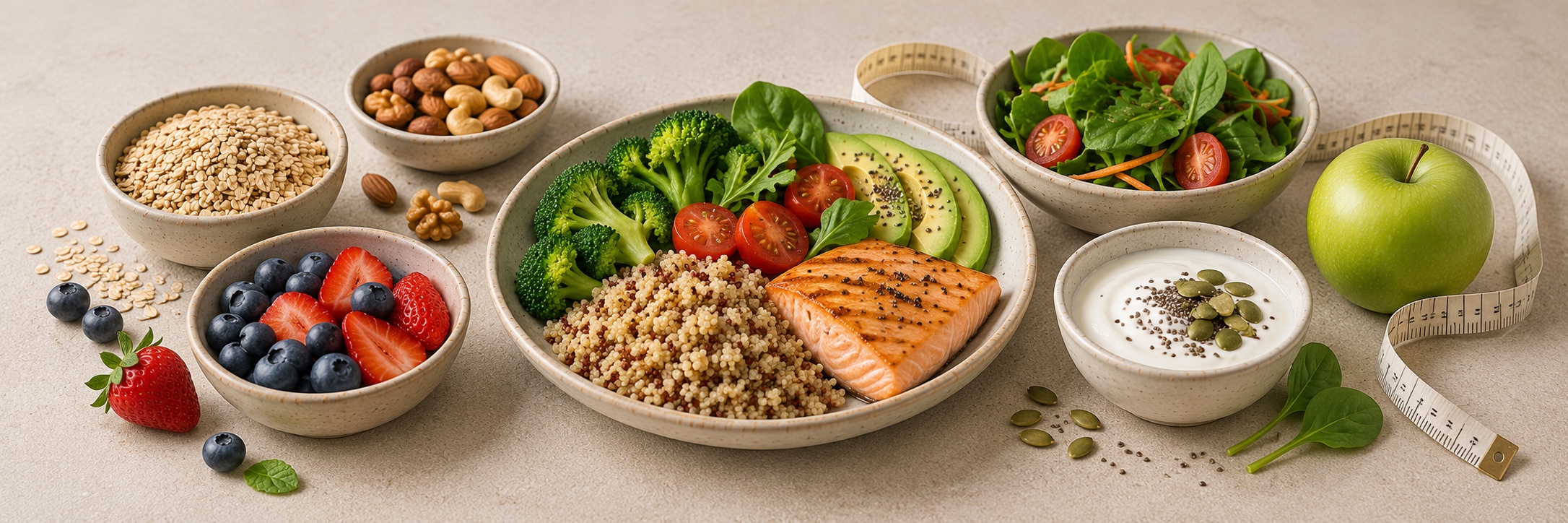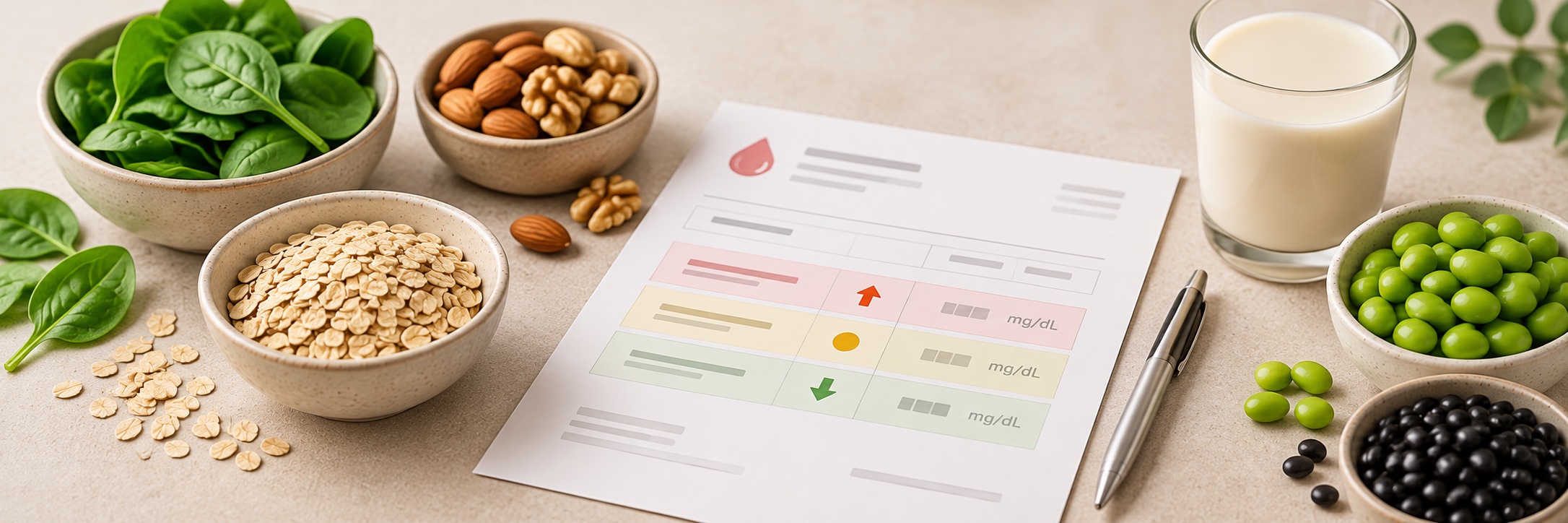
After seeing “abnormal blood lipids” on a health check, many people immediately wonder: should I stop eating meat and oil—and are eggs off-limits too?
But “high blood lipids” are not one single condition. If the main issue is high LDL cholesterol, priorities are lower saturated fat and more soluble fiber. If the main issue is high triglycerides, sugary drinks, added sugar, refined staples, alcohol, and total energy intake deserve more attention. If HDL cholesterol is low, there is no need to chase one “HDL-raising food”; exercise, body weight, and overall cardiovascular risk matter more.
So you do not need to read every section from start to finish. Take out your own lipid report, see whether LDL-C, triglycerides (TG), or HDL-C is the main abnormal value, and go directly to that section.
Key Takeaways
If LDL-C Is High
- Reduce saturated fat first. Fatty meat, processed meat, butter, cream, and large amounts of coconut or palm oil deserve more attention than obsessing over one egg. WHO recommends keeping saturated fat below 10% of total energy and replacing it with unsaturated fat rather than simply removing all fat.
- Increase soluble fiber. Oats, barley, and legumes are useful priorities. A meta-analysis of 181 randomized controlled trials and 14,505 participants found that soluble fiber lowered LDL-C overall.
- Nuts, fish, soy foods, and plant oils can still fit. The goal is to use them to replace less favorable fat and protein sources such as fatty meat, processed meat, and butter—not to keep the old diet and simply “add healthy foods” on top.
If Triglycerides Are High
- Check sugary drinks, added sugar, and excess refined staples first. With high triglycerides, cutting meat alone is often not enough. Sugar, white bread, desserts, and chronically large portions of white rice or refined noodles can matter just as much.
- Alcohol deserves particular attention. When triglycerides are clearly elevated, reducing or even avoiding alcohol is more important than debating whether one food “lowers blood lipids.”
- If you are also overweight, losing some excess weight often helps. A meta-analysis of 73 randomized trials and 32,496 participants found that lifestyle-based weight loss improved triglycerides, LDL-C, and HDL-C.
If HDL-C Is Low
- Do not make “raising HDL with food” the main goal. The American Heart Association now clearly states that HDL-C is not a standalone treatment target for reducing heart attack or stroke risk. More useful priorities are exercise, weight management, not smoking, and managing LDL, triglycerides, blood pressure, and blood glucose together.
Regardless of Which Result Is Abnormal
- Diet matters, but it is not the whole story. The 2026 ACC/AHA dyslipidemia guideline again emphasizes LDL-C, non-HDL-C, and overall cardiovascular risk, with ApoB and Lp(a) included in risk assessment for selected people. When blood lipids are markedly abnormal or cardiovascular risk is already high, diet is only one part of treatment.
1. Read Your Lipid Panel First: What Kind of Dyslipidemia Do You Actually Have?
A typical lipid panel usually includes total cholesterol, LDL-C, HDL-C, and triglycerides.
You do not need to panic over every number before changing your diet. Start with a few core patterns:
| Lab Result | How to Think About It | Main Dietary Focus |
|---|---|---|
| High LDL-C | One of the main lipid markers most clearly linked with atherosclerotic risk | Saturated fat, soluble fiber, and the sources of fat and protein |
| High Triglycerides (TG) | Often linked with energy excess, sugar, refined carbohydrates, alcohol, and body weight | Sugar, refined staples, alcohol, and total energy intake |
| Low HDL-C | One part of overall cardiovascular risk | Exercise, body weight, smoking, and overall metabolic health |
| High LDL-C + High TG | Both patterns may be present at the same time | Apply both sets of priorities |
LDL-C, or low-density lipoprotein cholesterol, is a central marker in lipid management. Long-term exposure to higher levels of atherogenic lipoproteins increases the risk of atherosclerotic cardiovascular disease. The 2026 ACC/AHA guideline specifically emphasizes that risk is not only about whether one lab result barely crosses a “normal” cutoff, but also about cumulative lifetime exposure.
Triglycerides are more strongly influenced by body weight, total energy intake, refined carbohydrates, added sugar, and alcohol. HDL-C is often called “good cholesterol,” but current guidance does not recommend treating it as a separate therapeutic target.
So when you get your results, do not ask only:
“My total cholesterol is high—what should I stop eating?”
A more useful question is:
“Is my main issue high LDL-C, high TG, or both?”
That directly determines which dietary changes deserve priority.
2. If LDL-C Is High: Change Fat Sources First, Then Add More Fiber
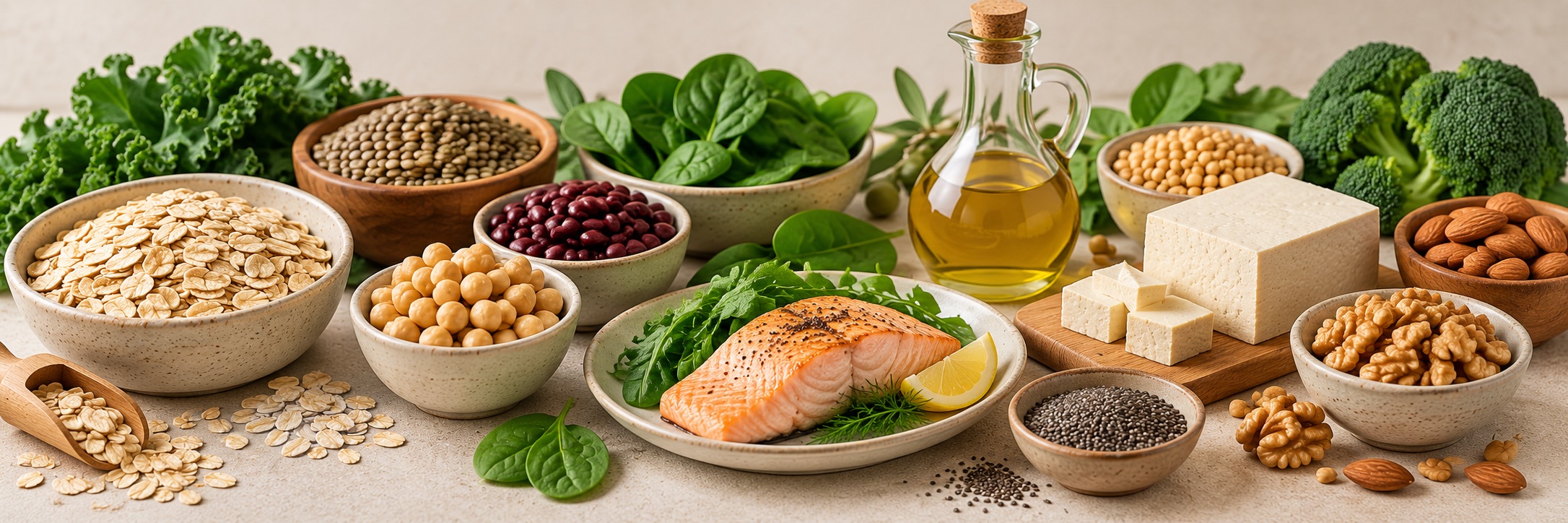
If the main issue is high LDL-C, remember two priorities:
Less saturated fat.
More soluble fiber.
Most other food choices can be organized around those two ideas.
1. Reduce Saturated Fat Instead of Simply “Avoiding Oil”
Common foods high in saturated fat include:
- Fatty cuts of meat and pork belly
- Bacon, sausage, and other processed meats
- Butter and cream
- Some high-fat dairy products
- Coconut oil and palm oil
- Pastries and flaky baked goods made with large amounts of butter, cream, or palm oil
WHO’s 2023 dietary-fat guideline recommends keeping saturated fat below 10% of total energy for people age 2 and older and prioritizing unsaturated fats. The 2026 AHA dietary guidance keeps the same central principle: replace saturated-fat sources with unsaturated-fat sources.
More importantly, this is not only about improving a lab result.
A Cochrane systematic review of 15 long-term trials and more than 56,000 participants found that reducing saturated fat was associated with about a 17% reduction in cardiovascular events. The review also emphasized that what replaces saturated fat matters.
How to Eat
What you actually need to do is not:
Stop using all cooking oil.
Instead, change the source:
Pork belly → fish, tofu, chicken, or lean meat
Butter and lard → olive oil, canola oil, or other liquid plant oils
Sausage and bacon → fresh fish, poultry, legumes, or soy foods
Cream-filled pastries → fruit, plain yogurt, or a small amount of nuts
If you reduce fatty meat and butter but replace them with more cookies, sweet bread, and refined starch, that is not a useful substitution.
For LDL, “where the fat comes from” matters more than “whether you eat any oil at all.”
2. Increase Soluble Fiber: One of the Better-Supported Dietary Steps for LDL
If reducing saturated fat is the subtraction, adding fiber is an important addition.
Soluble fiber is especially worth focusing on.
A meta-analysis of 181 randomized controlled trials and 14,505 adults found that soluble-fiber interventions lowered LDL-C by about 8.3 mg/dL (about 0.21 mmol/L) on average. In dose-response analysis, each additional ~5 g/day of soluble fiber was associated with a further LDL-C reduction of about 5.6 mg/dL.
This is not one small “superfood” study—it is a large body of human trials.
Foods Worth Prioritizing
Common sources include:
- Oats
- Barley
- Legumes
- Whole fruits such as apples and citrus
- Some vegetables
- Viscous fiber sources such as psyllium husk
Beta-glucan from oats has especially extensive research.
A meta-analysis of 58 randomized controlled trials and 3,974 participants found that a median intake of about 3.5 g/day oat beta-glucan lowered LDL-C by about 0.19 mmol/L on average, with reductions in non-HDL-C and ApoB as well.
A separate meta-analysis of psyllium included 28 randomized trials and 1,924 participants, with a median dose around 10.2 g/day, and also found lower LDL-C. This is better viewed as an option when food fiber is insufficient, not evidence that everyone with high LDL needs a fiber supplement.
How to Interpret This in Everyday Life
These average reductions should not be compared directly with lipid-lowering medications, and they do not mean:
“A bowl of oatmeal every day will normalize very high LDL.”
The practical value is:
If breakfast is usually white bread, fried dough, or sweet cereal, replace some of it with oats. If staple foods are almost entirely white rice and refined flour, gradually add barley and legumes. The benefit comes from accumulation over time.
3. Legumes and Soy Foods Are More Than Just “Healthy Foods”
Legumes are useful for high LDL for another reason: they provide fiber while also replacing some animal protein sources that are higher in saturated fat.
An updated 2026 meta-analysis included 38 randomized trials and 2,095 participants. Median intake of whole pulses was about 130 g/day, and LDL-C fell by about 0.14 mmol/L on average, with improvements in non-HDL-C and ApoB as well.
Soy protein also has a substantial human evidence base.
A meta-analysis of the 46 controlled trials identified by the FDA found that a median of about 25 g/day soy protein lowered LDL-C by about 4.8 mg/dL over roughly six weeks. The effect was modest but fairly consistent.
How to Eat
You do not need to calculate “grams of soy protein” every day just to lower LDL.
A more practical approach is:
Several times a week, replace fatty or processed meat with tofu, dried tofu, edamame, chickpeas, lentils, or other legumes.
The benefit of this substitution comes not only from the legumes themselves, but also because:
You are eating less of a less favorable fat source at the same time.
4. Nuts Can Stay—Use Them to Replace Snacks
Many people with high LDL see that nuts are high in fat and begin avoiding them completely.
But most fat in nuts is unsaturated, and nuts also provide fiber and plant protein.
A recent meta-analysis of 113 randomized controlled trials and 8,060 adults found that a median nut intake of about 45.5 g/day lowered LDL-C by about 0.12 mmol/L on average, with a small reduction in triglycerides too.
But that does not mean:
Keep all regular meals, afternoon snacks, and late-night food unchanged, then add a large bag of nuts.
Nuts are still energy-dense.
A More Practical Approach
Use a small handful of plain nuts—about 20–30 g/day—to replace:
Cookies, chips, pastries, candy, and similar snacks.
Walnuts, almonds, pistachios, and peanuts are all reasonable choices.
The point is substitution, not finding the “strongest cholesterol-lowering nut.”
5. Do You Need to Give Up Eggs?
This is one of the most common concerns after seeing high LDL.
Egg yolks do contain a substantial amount of dietary cholesterol, but dietary cholesterol is not the same thing as LDL-C in the blood.
The AHA scientific statement on dietary cholesterol notes that it is difficult to separate dietary cholesterol from saturated fat and other dietary factors when studying cardiovascular risk, so the focus should be on the overall eating pattern rather than one nutrient in isolation.
The 2026 AHA dietary guidance also notes that for most people, dietary cholesterol is no longer the main dietary target for cardiovascular-risk management.
But there is an important boundary:
This does not mean people with high LDL should eat unlimited egg yolks.
Earlier AHA scientific guidance also retained a clear need for individualized advice in people who already have dyslipidemia.
So a more sensible order is to check first:
Do you eat a lot of fatty meat? Sausage and bacon? Butter, cream, and pastries? Very few whole grains and legumes?
If those issues have not been addressed, focusing all your attention on one egg per day often misses the bigger picture.
6. Do Not Search for One “LDL-Lowering Food”—Combine Several Small Changes
Dietary improvement usually does not come from one food acting alone.
A classic example is the Portfolio dietary pattern, which combines viscous fiber, nuts, plant protein, plant sterols, and other LDL-friendly components.
A systematic review included 7 trial comparisons and 439 participants with hyperlipidemia and found that this combined dietary pattern lowered LDL-C by about 17% under study conditions.
That does not mean people need to reproduce the research menu exactly.
The useful message is:
Combining several evidence-based small changes matters more than searching for one “cholesterol-lowering miracle food.”
For example:
Less fatty meat + oatmeal breakfast + legumes added to staples + a small handful of nuts replacing pastries + fish or tofu replacing some red meat
Over time, that pattern is likely to matter more than drinking one so-called “lipid-lowering beverage” every day.
3. If Triglycerides Are High: Focus on Sugar, Staple Foods, Alcohol, and Weight

If the main issue is high triglycerides (TG), the dietary priorities are not exactly the same as for LDL.
A common mistake is:
“My blood lipids are high, so I just need less meat and less oil.”
But if milk tea, sugary drinks, large portions of white rice and refined noodles, late-night food, and alcohol remain daily habits, the major drivers of triglycerides may be unchanged.
National Lipid Association guidance on dietary management of high triglycerides emphasizes several priorities:
Weight loss, less refined carbohydrate and sugar, alcohol restriction, and more physical activity.
1. Cut Sugary Drinks and Added Sugar First
Start by checking whether these are frequent:
- Milk tea
- Sweetened coffee
- Soda
- Fruit-flavored drinks
- Desserts
- Pastries
- Candy
- Large amounts of sweetened snacks
These foods and drinks can quietly add large amounts of sugar and calories.
The 2026 AHA dietary guidance continues to list reducing foods and drinks with added sugar as a key part of a heart-healthy diet. Nutrition guidance for high TG is even more direct about limiting sugar and refined starch.
First Change to Make
If you have a sugary drink every day, the first step does not require redesigning all three meals.
Start by replacing:
Milk tea, soda, sweetened coffee
with:
Water, unsweetened tea, unsweetened coffee, or unsweetened dairy.
This is a very concrete change and is often easy to implement.
2. You Do Not Need to Give Up Staples, but Avoid Eating Large Amounts of Highly Refined Ones
After seeing high triglycerides, some people immediately conclude:
“I can never eat rice again.”
That is not necessary.
More important is:
Degree of refinement + portion size + total energy of the whole meal.
For example:
A large bowl of white rice + sugary drink + dessert
versus:
A moderate portion of mixed-grain rice + lots of vegetables + fish or tofu
Both contain carbohydrates, but they fit into very different overall dietary patterns.
The National Lipid Association recommends limiting refined grains and sugar in people with high triglycerides and using whole grains to increase dietary fiber.
Practical Approach
If white rice is your main staple, start with:
2/3 white rice + 1/3 barley, brown rice, or mixed beans
Then gradually increase the proportion of intact grains as tolerated.
Rotate among:
- Oats
- Barley
- Brown rice
- Quinoa
- Chickpeas
- Lentils
- Other mixed beans
But remember:
Switching to whole grains does not mean unlimited portions.
Chronic energy excess is still a problem for triglycerides.
3. Alcohol Is Especially Important When Triglycerides Are High
If LDL is high, alcohol is not always the first dietary issue.
But with high triglycerides, the situation is different.
The National Lipid Association recommends reducing alcohol with mild-to-moderate hypertriglyceridemia; when triglycerides are markedly elevated—especially in the severe range—complete avoidance may be needed.
The 2026 AHA dietary guidance also states clearly for the general public:
If you do not drink, there is no need to start for supposed “heart protection.”
So if triglycerides stay high, take an honest look at:
Has one drink every evening become a habit?
Do you drink a lot at once on weekends?
Do you also eat late-night food when drinking?
Sometimes these habits matter more than debating exactly how many grams of oil went into a stir-fry.
4. If You Are Also Overweight, Losing Some Weight Usually Helps
If high triglycerides also come with:
- A larger waist
- Overweight
- Fatty liver
- High blood glucose
then long-term energy excess is often part of the overall problem.
A systematic review of 73 randomized controlled trials and 32,496 adults with overweight or obesity found that weight loss—through lifestyle interventions, medications, or bariatric surgery—was generally associated with lower TG and LDL-C and higher HDL-C.
In lifestyle-intervention studies with 12-month follow-up, each ~1 kg of weight loss was associated on average with an additional triglyceride reduction of about 4 mg/dL. This is an average research estimate, not a formula that predicts each person’s result.
How to Think About This
If you are overweight, you do not need to aim immediately for losing 10 or 20 kg.
Start by reducing:
Sugary drinks, alcohol, late-night food, snacks, and oversized staple portions,
while increasing daily activity. Gradual weight loss itself may help triglycerides improve.
If your body weight is already normal, there is no need to become very thin just because of a lipid result.
5. Fish Can Be Part of the Diet, but Ordinary Fish Oil Is Not a Treatment
Fish has two practical advantages.
First, it can replace some fatty or processed meat.
Second, fattier fish provide omega-3 fatty acids such as EPA and DHA.
The AHA recommends about 2 servings of fish per week for most adults, especially including fattier fish such as salmon, sardines, mackerel, and herring.
But one distinction is essential:
Eating fish as part of the diet
and
Using high-dose omega-3 to treat severe hypertriglyceridemia
are not the same thing.
Trials for high triglycerides may use prescription omega-3 drugs with specific doses and formulations. Ordinary over-the-counter fish oil supplements are not equivalent substitutes. The National Lipid Association specifically notes that nonprescription fish oil and prescription products are not interchangeable.
So for most readers:
Put fish into your regular meals before buying large amounts of fish oil just because TG is high.
4. If HDL-C Is Low: Do Not Search for a Special “HDL-Raising Food”

HDL-C is often called “good cholesterol,” so when the number is low, a common first thought is:
“What can I eat to raise HDL?”
But today, HDL is understood as more complex than simply “the higher the better.”
The American Heart Association currently states clearly:
HDL-C is not a direct treatment target for reducing heart attack or stroke risk and should not be interpreted in isolation from other markers.
This means:
There is no need to hunt for one “HDL-raising food” or supplement just to make the number on the report look better.
What Matters More: Exercise and Overall Metabolic Health
If HDL-C is low, first check:
- Do you get too little physical activity?
- Are you overweight or gaining waist circumference?
- Do you smoke?
- Are triglycerides also high?
- Is added sugar and refined carbohydrate intake high?
- Is LDL-C also elevated?
- Are blood pressure or blood glucose abnormal?
There is substantial human evidence for exercise.
A meta-analysis of 148 randomized controlled trials and 8,673 participants found that exercise training increased HDL-C by about 2.1 mg/dL on average while lowering LDL-C by about 7.2 mg/dL and triglycerides by about 8.0 mg/dL. The changes were not huge, but all three moved in a favorable direction.
That helps explain why:
Regular exercise and a better overall diet matter more than finding one food that supposedly “raises HDL.”
And even if HDL is high, it does not mean:
“My HDL is good, so high LDL does not matter.”
High HDL does not cancel the risk from high LDL.
5. What If LDL Is High, TG Is High, and HDL Is Low?
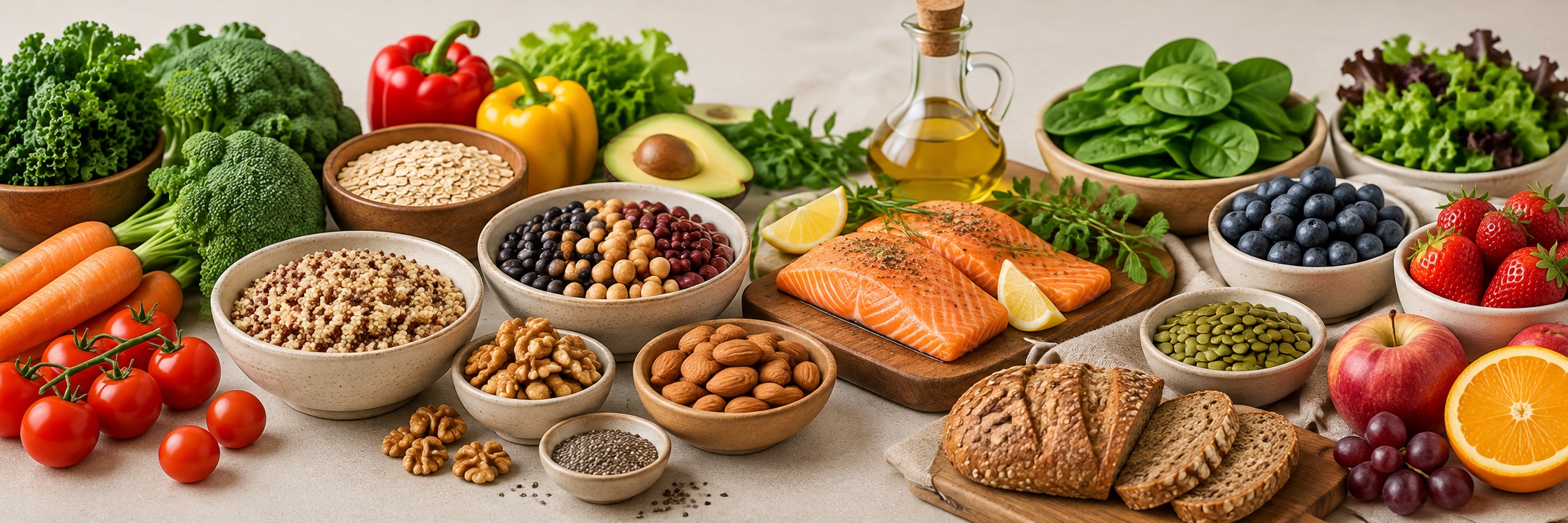
Real-world lipid panels often show more than one abnormal value.
Many people see:
LDL-C ↑ Triglycerides ↑ HDL-C ↓
You do not need three completely different meal plans.
The dietary priorities for these patterns overlap substantially.
Eat More
- A wide variety of vegetables
- Whole fruit
- Whole grains such as oats, barley, and brown rice
- Legumes and soy foods
- Fish
- Moderate amounts of plain nuts
- Moderate amounts of liquid plant oil
Eat Less
- Fatty meat
- Processed meat
- Butter and cream
- Pastries and flaky baked goods
- Sugar-sweetened beverages
- Frequent sweets
- Large amounts of refined staples
- Alcohol
- Frequent high-calorie late-night eating
This broadly matches the framework of the 2026 AHA heart-healthy dietary guidance: more vegetables, fruit, and whole grains; healthier protein sources; replacement of saturated fat with unsaturated fat; less added sugar and highly processed food; and energy intake that matches the body’s needs.
There is no single eating pattern that must be followed.
For example, Mediterranean-style diets—rich in vegetables, legumes, whole grains, nuts, fish, and olive oil—share many of these features. A systematic review of 57 controlled trials and 36,983 participants found generally favorable effects across multiple metabolic-risk markers, though results varied between studies. It should not be interpreted as the one “correct” lipid-lowering diet.
What matters is the structure of the diet, not the name given to it.
6. What Can a Day of Eating Look Like With Abnormal Blood Lipids?
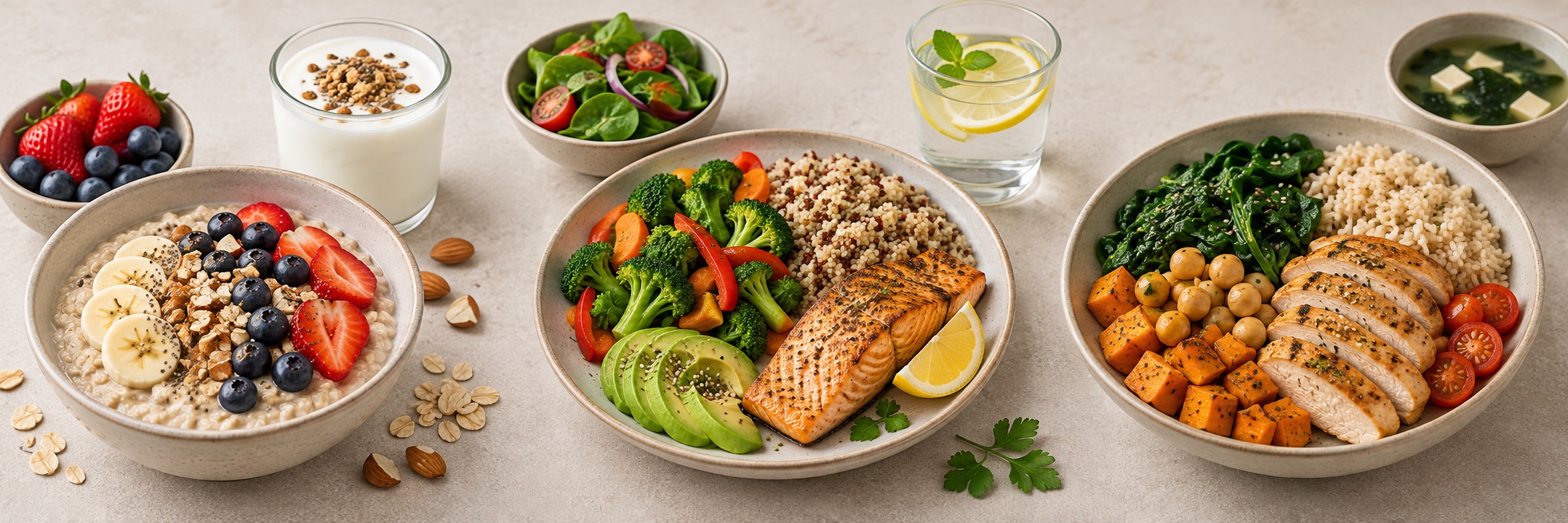
After a dyslipidemia result, you do not need to buy special “cholesterol-lowering foods.”
Ordinary home meals can be adjusted.
Breakfast
For example:
Oats + plain milk or unsweetened yogurt + one whole fruit + a small amount of plain nuts
or:
A whole-grain staple + eggs + vegetables + unsweetened soy milk
If LDL-C is high, pay more attention to:
Butter, cream, bacon, sausage, and other saturated-fat sources.
If triglycerides are high, pay more attention to:
Sweet cereal, milk tea, sweetened coffee, and an oversized breakfast.
Lunch
A useful rough plate is:
1/2 vegetables + 1/4 protein + 1/4 staple food
No need to weigh everything precisely.
Rotate protein sources:
Fish, tofu, legumes, chicken, and lean meat.
For staples:
Mix barley, brown rice, or beans into white rice.
For example:
Barley-mixed rice + steamed fish + two vegetables + tofu.
You do not need to live on boiled chicken breast and broccoli just because your blood lipids are high.
Dinner
The structure can be similar to lunch.
If you are overweight or triglycerides are high, check especially whether dinner is followed by:
Dessert, alcohol, sugary drinks, or late-night food.
Often the problem is not the half bowl of rice at dinner, but:
Continuing to consume a large amount of extra energy after the main meal is already enough.
Snacks
If you are genuinely hungry, choose:
Whole fruit Plain yogurt A small handful of plain nuts
instead of:
Cookies Cake Chips Milk tea Sugary drinks
The same principle still applies:
Healthy foods often help because of what they replace, not because of how much extra you add.
7. When Diet Alone Is Not Enough

Diet can influence blood lipids, but lipid levels are not determined by diet alone.
Genetics, diabetes, thyroid disease, kidney disease, certain medications, and existing cardiovascular or cerebrovascular disease can all affect lipid levels and treatment targets.
The 2026 ACC/AHA guideline no longer frames lipid management as simply:
“Treat it if it is above the lab reference range; ignore it if it is not.”
Instead, it emphasizes LDL-C, non-HDL-C, age, diabetes, chronic kidney disease, existing ASCVD, family history, and—when appropriate—ApoB, Lp(a), coronary artery calcium, and other risk information.
LDL-C ≥190 mg/dL Deserves Special Attention
If LDL-C reaches:
≥190 mg/dL (about 4.9 mmol/L)
the 2026 ACC/AHA guideline classifies this as severe hypercholesterolemia.
For these adults, the guideline recommends evaluating secondary causes and using maximally tolerated statin therapy to lower LDL-C and ASCVD risk rather than relying on diet alone and waiting.
This level also raises concern for conditions such as familial hypercholesterolemia, especially when:
LDL is markedly elevated at a younger age, or close relatives had coronary disease or heart attack unusually early.
Diet still matters, but it should not be the only treatment.
Triglycerides ≥500 mg/dL Are Not Just “A Little High”
The National Lipid Association considers:
TG ≥500 mg/dL (about 5.6 mmol/L)
an important severe hypertriglyceridemia range. At this level, acute pancreatitis risk also becomes a concern in addition to long-term cardiovascular risk.
If triglycerides reach:
≥1000 mg/dL (about 11.3 mmol/L)
the 2026 ACC/AHA guideline specifically emphasizes triglyceride-lowering treatment to help prevent pancreatitis.
At these levels, dietary management can be different from mild TG elevation and may require a very-low-fat diet under professional guidance.
So it is not enough to simply:
“Eat less sugar and more whole grains”
and watch it on your own for a few months.
Existing Cardiovascular Disease Changes the Target Too
If you already have:
- Coronary heart disease
- Previous heart attack
- Stroke
- Peripheral artery disease
or also have:
- Diabetes
- Chronic kidney disease
- A strong family history of premature cardiovascular disease
your LDL-C target may be much lower than the “normal range” printed on a routine lab report.
In the 2026 ACC/AHA guideline, some people with very-high-risk ASCVD have LDL-C treatment goals as low as <55 mg/dL (1.4 mmol/L).
So if your clinician has recommended a statin or another lipid-lowering medication based on overall risk, do not stop it on your own because you started eating more oats, nuts, and fish.
Diet and necessary medication are not either/or.
What to Do Next
After finding abnormal blood lipids, you do not need to eliminate eggs, meat, oil, and rice on day one.
A more useful first step is to open your actual lipid report.
If LDL-C is high, first reduce sources of saturated fat such as fatty meat, processed meat, butter, and cream, while gradually increasing oats, barley, legumes, and other foods rich in soluble fiber.
If triglycerides are high, check sugary drinks, sweets, refined staples, alcohol, late-night eating, and body weight before focusing only on meat and oil.
If HDL-C is low, do not rush to find an “HDL-raising food.” Regular exercise, weight management, not smoking, and managing LDL, TG, blood pressure, and blood glucose together matter more.
If several markers are abnormal, return to the same basic dietary pattern:
More vegetables, more intact staple foods, more legumes and fish; less saturated fat, sugary drinks, processed foods, and alcohol.
Effective lipid management rarely depends on one miracle food.
Know which marker is abnormal, then layer several evidence-based small changes over the long term instead of repeatedly asking “what can I never eat again?”
References
Lipid Management and Overall Dietary Guidance
- 2026 ACC/AHA/AACVPR/ABC/ACPM/ADA/AGS/APhA/ASPC/NLA/PCNA Guideline on the Management of Dyslipidemia: a major current guideline covering LDL-C, TG, non-HDL-C, ApoB, Lp(a), and treatment goals across risk groups. Source
- American Heart Association, 2026 Dietary Guidance to Improve Cardiovascular Health: current scientific guidance on vegetables and fruit, whole grains, protein sources, unsaturated fats, added sugar, alcohol, and overall dietary patterns. Source
- WHO 2023 Saturated Fatty Acid and Trans-Fatty Acid Guideline: saturated-fat and trans-fat intake and replacement principles. Source
LDL-C, Fat, and Dietary Fiber
- Cochrane: reducing saturated fat and cardiovascular risk — 15 studies and more than 56,000 participants. Source
- Soluble Fiber Supplementation and Serum Lipid Profile — 181 randomized controlled trials and 14,505 participants; soluble fiber and LDL-C and related lipid markers. Source
- Oat beta-glucan and LDL cholesterol — 58 randomized controlled trials and 3,974 participants. Source
- Psyllium and LDL cholesterol — 28 randomized controlled trials and 1,924 participants. Source
- Whole dietary pulses and lipid targets — 38 randomized trials and 2,095 participants; whole pulses and LDL-C, non-HDL-C, and ApoB. Source
- Soy protein and LDL cholesterol — meta-analysis of 46 controlled trials. Source
- Nut consumption and blood lipids — 113 randomized controlled trials and 8,060 participants. Source
- Portfolio Dietary Pattern and Cardiovascular Disease — 7 trial comparisons and 439 participants with hyperlipidemia; evaluates a combination of cholesterol-lowering dietary components. Source
- AHA Dietary Cholesterol and Cardiovascular Risk — scientific guidance on dietary cholesterol, eggs, and overall heart-healthy dietary patterns. Source
Triglycerides, Weight, and Exercise
- National Lipid Association: Nutrition Interventions for Adults With Dyslipidemia — nutrition interventions for LDL-C, triglycerides, and mixed dyslipidemia. Source
- National Lipid Association: Practical Approaches to Dietary Management of Hypertriglyceridemia — sugar, refined grains, alcohol, weight loss, exercise, and severe hypertriglyceridemia diet management. Source
- Weight Loss and Serum Lipids in Overweight and Obese Adults — 73 randomized controlled trials and 32,496 participants. Source
- The Effect of Exercise Training on Blood Lipids — 148 randomized controlled trials and 8,673 participants; evaluates effects on HDL-C, LDL-C, and triglycerides. Source
- American Heart Association: Fish and Omega-3 Fatty Acids — the role of fish and seafood in a heart-healthy diet and the recommendation of about 2 servings of fish per week. Source
HDL and Overall Dietary Patterns
- American Heart Association: Understanding Cholesterol and Lipids — explains LDL, HDL, and TG and states that HDL-C is not an independent treatment target. Source
- American Heart Association: What Your Cholesterol Levels Mean — basic interpretation of lipid markers and the role of HDL in overall risk. Source
- Mediterranean Diet and Metabolic Health — systematic review of 57 controlled trials and 36,983 participants on overall metabolic and cardiovascular risk factors. Source
This article is for health education and everyday reference. It does not replace individualized medical assessment of dyslipidemia, cardiovascular risk, or medication decisions.