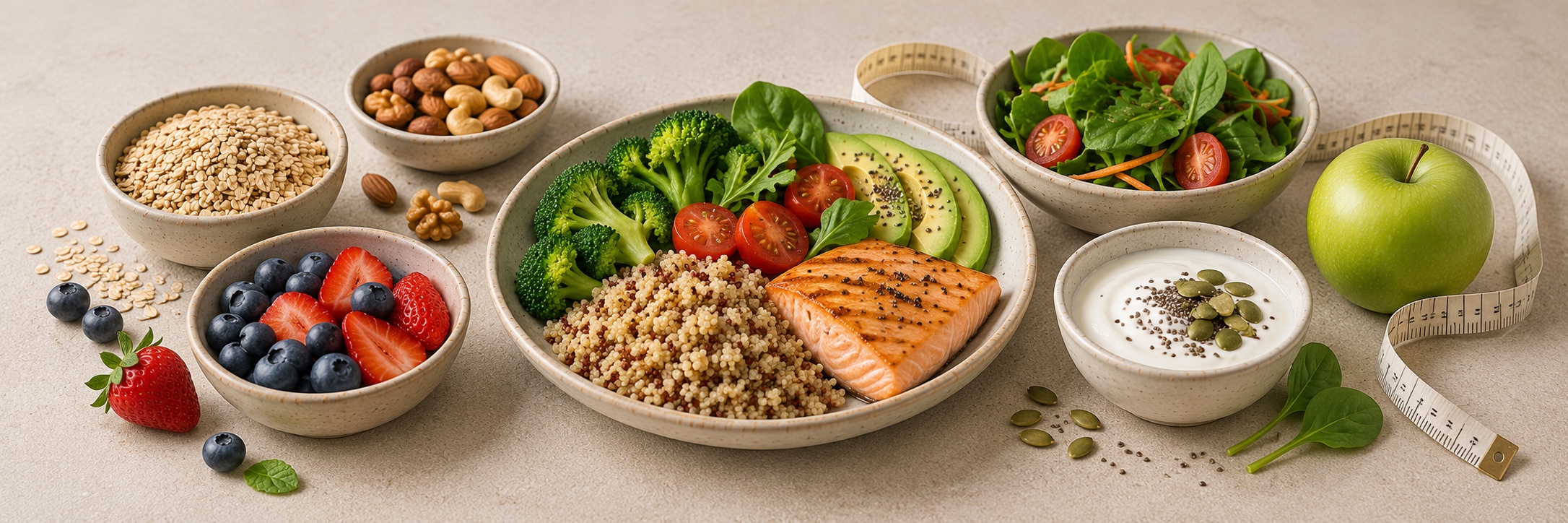
Before Choosing a Low-GI Staple
GI, or glycemic index, describes how quickly a carbohydrate-containing food raises blood glucose after eating. But the response to a staple food also depends on variety, particle size, processing, cooking time, portion size, and the rest of the meal.
Even within one food, structure matters. Intact oat groats, steel-cut oats, thick rolled oats, and instant oat porridge can digest at different rates. The same is true for firm black-rice grain mixtures versus soft, sticky black-rice porridge.
Low GI also does not mean unlimited portions. A large serving can still deliver a high carbohydrate load and produce a substantial glucose rise.
For everyday use, the best low-GI staples are usually not exotic “superfoods.” They are foods you can afford and enjoy long term that replace some refined grains while keeping more intact structure, fiber, plant protein, or slower-digesting starch.
Key Takeaways
To make staple foods more supportive of steadier post-meal glucose, focus on these seven changes:
- Add more barley, hulless barley, and oats for their beta-glucan, while favoring intact or less-processed forms.
- Use quinoa and buckwheat for variety, but do not pay a premium just because they are marketed as “superfoods.”
- Mix sorghum or black rice into multigrain meals, but do not assume a darker color automatically means a lower GI.
- Use lentils and chickpeas to replace part of rice or potatoes while adding plant protein and fiber.
- Combine black beans or kidney beans with rice rather than eating a large bowl of white rice alone.
- Replace part of refined staples with taro or purple sweet potato, preferably steamed or boiled in chunks rather than made into sweetened purées or desserts.
- Choose intact, minimally processed staples first. Chilling cooked rice or potatoes can be a small extra strategy, but it does not replace food choice or portion control.
1. Barley, Hulless Barley, and Oats: A Strong Starting Point
If you want one group of whole grains that can support post-meal glucose control, fiber intake, and cholesterol management, barley, hulless barley, and oats are a strong place to start.
Beta-glucan
These grains contain beta-glucan, a soluble fiber that absorbs water and increases viscosity in the digestive tract. This can slow gastric emptying and carbohydrate digestion.
In a randomized crossover trial, adding high-viscosity oat beta-glucan to breakfast slowed gastric emptying and reduced post-meal glucose and insulin responses.
The effect depends on more than simply “containing beta-glucan.” Dose, molecular size, and processing matter; very fine processing or damage to the fiber structure can reduce its functional effect.
Cholesterol
Oat and barley beta-glucan has also been studied extensively for blood lipids.
Randomized trials have found that about 3 g/day of high-molecular-weight oat beta-glucan, taken for several weeks, can lower LDL cholesterol. Trials of barley beta-glucan have reported similar lipid benefits.
That does not mean a few spoonfuls of oats will noticeably lower cholesterol. The practical value comes from using enough, choosing less-processed products, and making them part of the diet consistently.
Processing matters
Eating oats does not automatically make a meal low GI.
Oat groats, steel-cut oats, and thicker rolled oats keep more of their original structure and require more chewing. Instant oats, oat flour, and very smooth oat porridge expose more starch to digestive enzymes and may digest faster.
When buying oats, prioritize:
Sweetened oat cups, granola clusters, oat drink powders, and sugary oat cookies should not be treated as low-GI staples just because “oat” appears on the package.
How to eat them
Barley, hulless barley, and oats do not need to replace rice completely. A practical starting point is to make them about one-third of the staple portion.
For example, mix rice with barley or hulless barley for a multigrain bowl. At breakfast, choose steel-cut or thick rolled oats and pair them with eggs, plain yogurt, unsweetened soy milk, tofu, or a small amount of nuts.
That combination usually provides more protein and fiber than a bowl of sweetened oatmeal alone and can help keep you full longer.
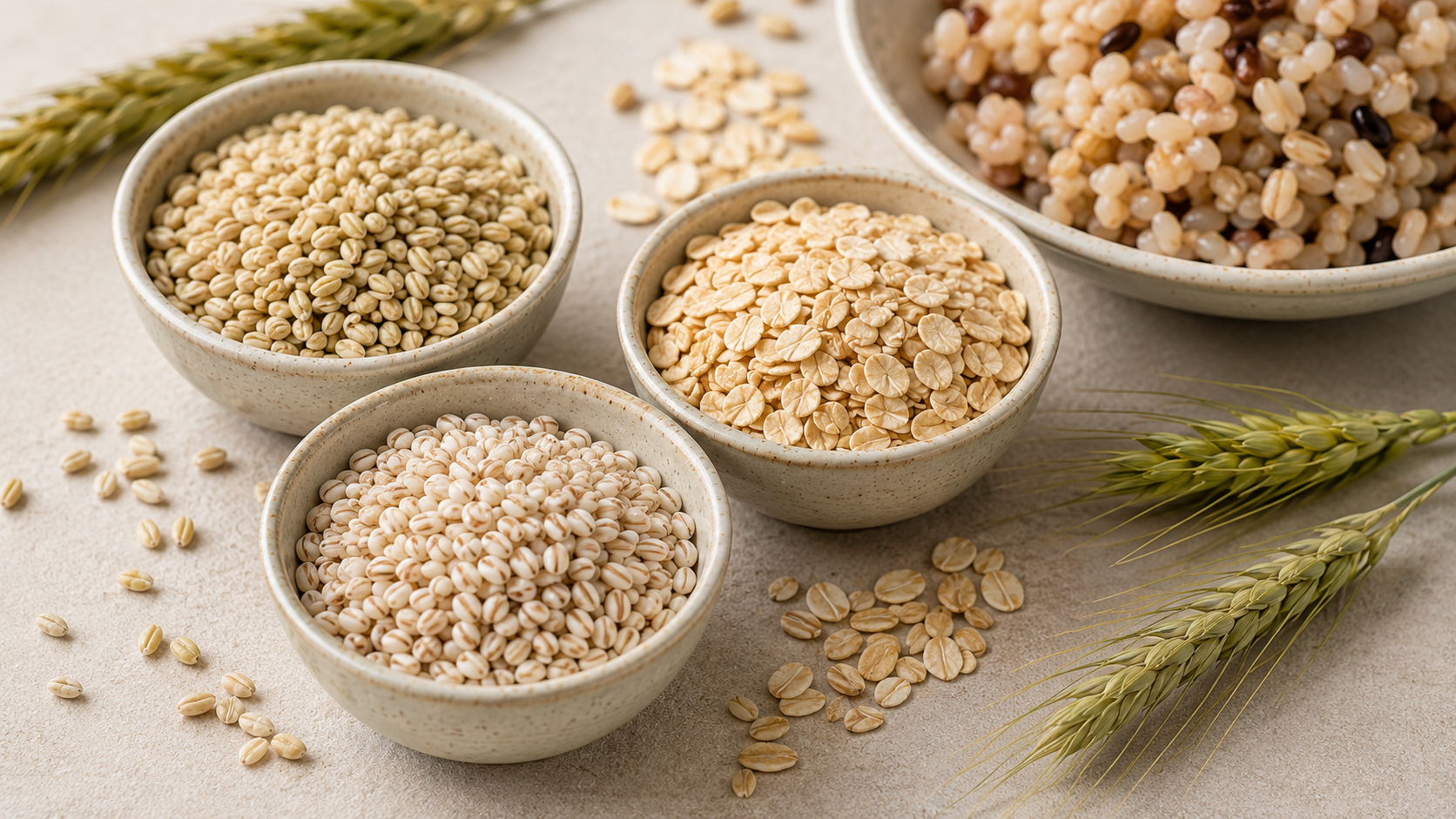
- Oat groats or whole oat kernels
- Steel-cut oats
- Thick rolled oats
- Products with oats as the only ingredient and no added sugar
2. Quinoa and Buckwheat: Nutritious, Not Magic
Quinoa and buckwheat are often sold as “super staples.” They are nutritious, but they are not automatically better than every other whole grain and do not need to appear at every meal.
Quinoa
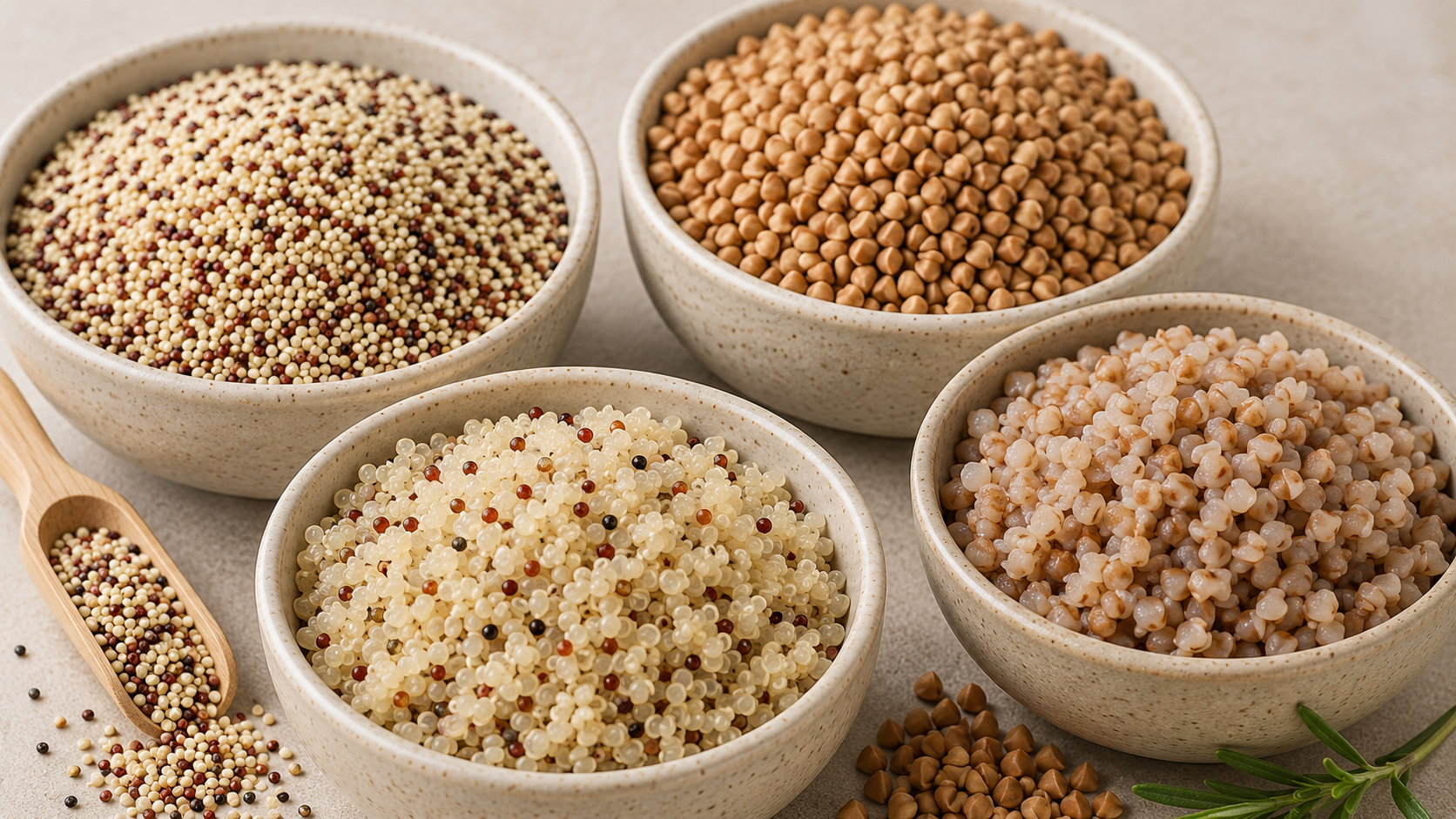
Quinoa provides protein, fiber, and minerals, and cooked grains still retain some chew. It works well mixed with rice rather than used as an all-or-nothing replacement.
A 2025 randomized controlled trial followed 207 people with impaired glucose tolerance. Replacing about half of their usual staples with a prescribed amount of quinoa for one year improved some glucose, insulin-resistance, and lipid measures compared with control.
That study involved a specific higher-risk population, a substantial replacement of staples, and a long intervention. It does not mean everyone needs large daily amounts of quinoa.
A better takeaway is that quinoa can improve staple-food variety, not that it is an indispensable “blood-sugar food.”
Buckwheat
Buckwheat contains fiber and several plant compounds, but its effect on post-meal glucose depends heavily on how the product is made.
One human trial found that buckwheat biscuits did not clearly lower acute post-meal glucose, although they affected some gut hormones related to satiety. Other studies using higher-buckwheat breads or more fiber have reported lower post-meal glucose responses.
So the word “buckwheat” alone tells you little. The proportion of buckwheat, grain structure, fiber content, and processing all matter.
Read the ingredient list
Some products sold as buckwheat noodles are still mostly wheat flour with only a small amount of buckwheat.
Buckwheat cookies, crisps, puffed snacks, and sweetened drink powders should not be treated like intact buckwheat groats or high-buckwheat noodles.
The same ingredient can behave very differently when eaten as whole groats, high-buckwheat noodles, or pastries made with refined flour, fat, and sugar.
How to eat them
Use quinoa and buckwheat to add variety rather than replace every other grain.
Quinoa can make up roughly one-quarter of a mixed-grain bowl. For buckwheat, choose groats or noodles with a high buckwheat content, or combine it with rice and legumes.
If barley, oats, sorghum, or beans are easier to find and cheaper where you live, they can be just as useful. You do not need to pay more for a “superfood” label.
3. Sorghum and Black Rice: Darker Does Not Mean Lower GI
Sorghum and black rice are often assumed to be better for blood sugar because they are darker and contain polyphenols or anthocyanins.
But more plant pigments do not automatically mean slower starch digestion.
Sorghum
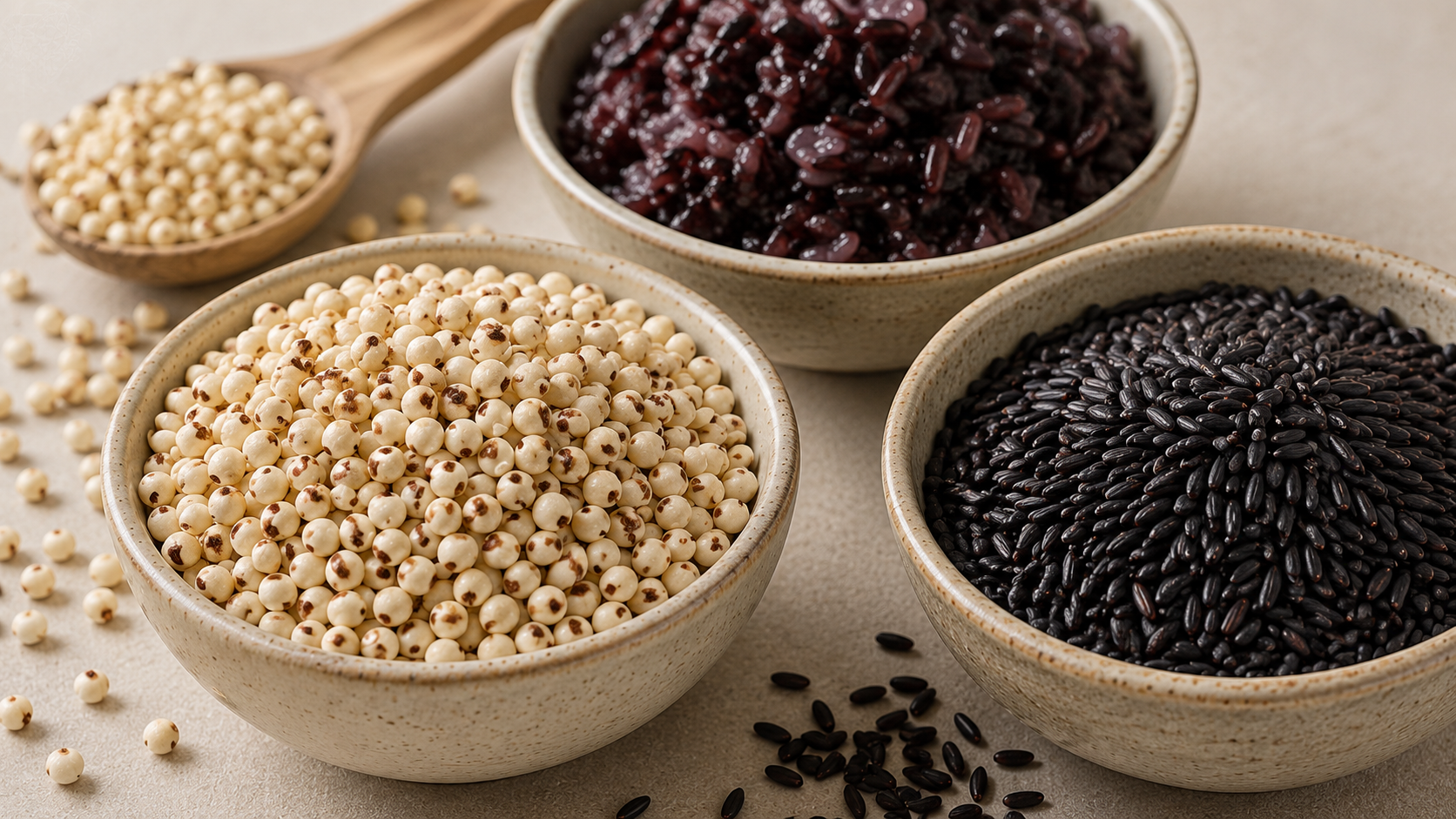
Different sorghum varieties may provide phenolic compounds, tannins, fiber, and some slower-digesting starch.
In a small randomized crossover trial, a whole-grain sorghum muffin produced lower glucose and insulin responses at some post-meal time points than a wheat control muffin.
The study was small and used a specific recipe, so it cannot tell us that every sorghum rice dish, flour, or snack will have the same effect.
Whole sorghum kernels are structurally different from finely milled sorghum buns or porridge. Finer grinding and prolonged cooking can expose more starch to digestive enzymes.
Black rice
The deep purple-black outer layer of black rice mainly reflects anthocyanin pigments.
Direct human evidence on ordinary black-rice meals and post-meal glucose is still limited. Some studies use anthocyanin extracts or fortified foods; those results cannot simply be applied to a bowl of black rice.
Black rice also varies by variety, stickiness, and processing. Firm multigrain black rice, soft porridge, sticky black rice, and sweetened black-rice desserts should not be treated as nutritionally identical.
Do not judge by color alone
A dark color is not a substitute for looking at food structure.
Black-rice porridge, cakes, powders, and sweetened drinks may retain some anthocyanins, but fine particles, heavy gelatinization, or added sugar can make them easier to eat and digest quickly.
The main value of black rice is adding whole-grain variety and plant compounds—not guaranteeing a lower GI than other intact grains.
How to eat them
Sorghum and black rice usually work better mixed into a grain bowl than cooked into a large serving of very soft porridge.
Start with about one-fifth to one-third of the staple portion and combine with rice, barley, oat groats, or beans.
This keeps the meal familiar while adding variety, and it is often easier to digest and sustain than suddenly switching to a very high proportion of coarse grains.
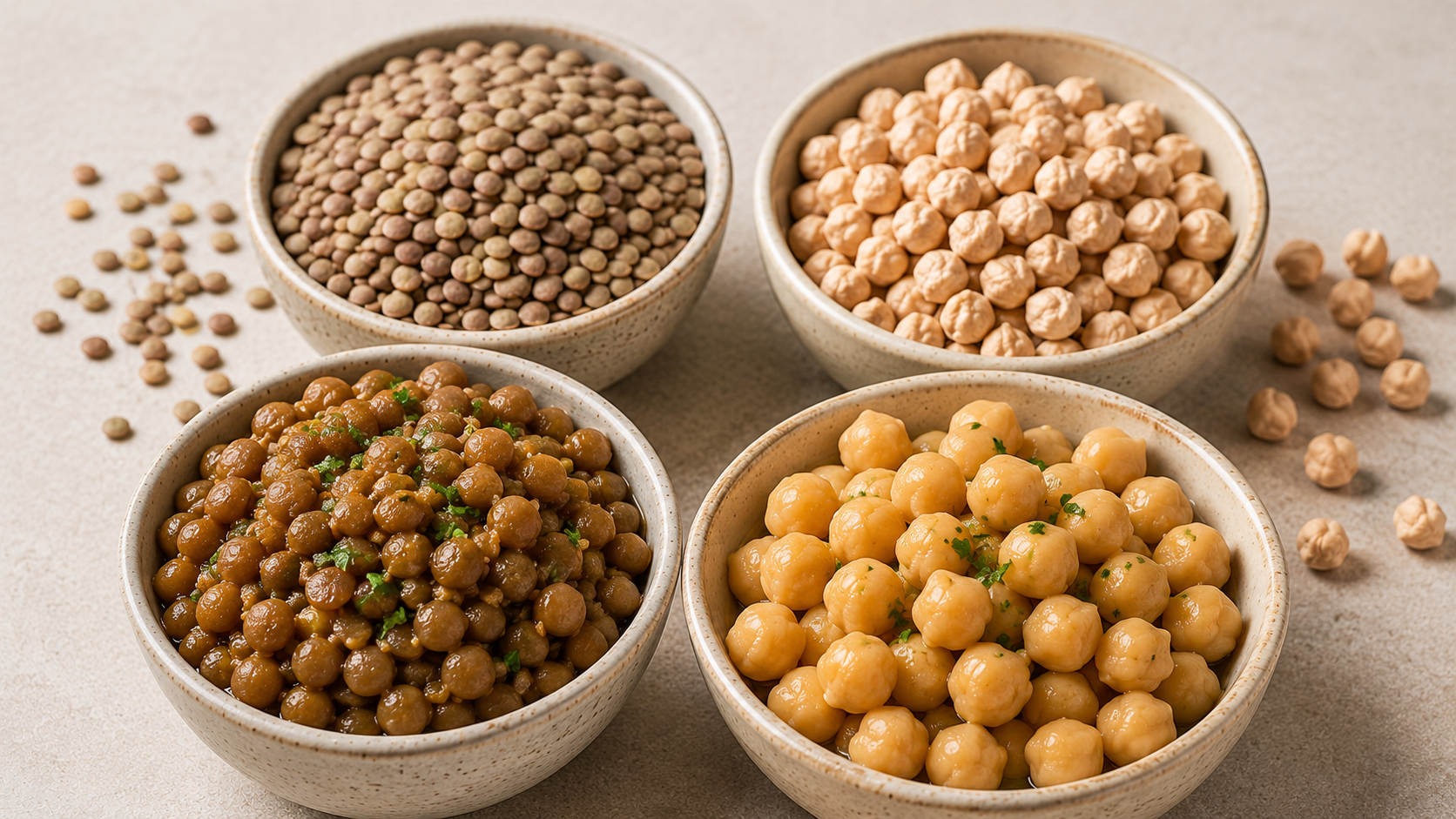
4. Lentils and Chickpeas: Useful Staple Replacements
Among commonly promoted low-GI staples, lentils and chickpeas are especially useful.
Unlike non-starchy vegetables, they contain enough carbohydrate to replace part of a staple food while also providing more plant protein, fiber, and intact starch structure than refined grains.
Lentils
In a randomized crossover trial, healthy adults replaced part of rice or potatoes with lentils. With similar total carbohydrate, meals containing lentils produced lower overall, peak, and fluctuating post-meal glucose responses.
The point is not that everyone should eat only lentils.
It is that legumes need to replace some of the refined staple to matter.
For example, instead of a full bowl of rice, use roughly two-thirds rice and one-third cooked lentils. The total staple amount stays similar while the composition improves.
Chickpeas
Chickpeas also provide plant protein and fiber.
A randomized crossover trial found lower post-meal glucose when black beans or chickpeas were eaten with white rice than when white rice was eaten alone, with similar carbohydrate loads.
Whole chickpeas, hummus, chickpea-flour bread, and fried chickpea snacks are not nutritionally identical.
Hummus can still fit, but large amounts of added oil or a very large serving of refined flatbread can make the overall meal high in energy or carbohydrate.
Replace, do not stack
Legumes contain fiber and protein, but they also contain starch. They are not “free vegetables.”
When adding lentils or chickpeas, reduce some rice, noodles, or potatoes rather than adding a full bowl of beans on top of the usual staple.
That is how you raise fiber and protein without substantially increasing the total staple load.
How to eat them
Dried lentils cook relatively quickly and work well in mixed grains, soups, and stews.
Chickpeas can be soaked and cooked, or bought canned with a simple ingredient list. Rinse canned chickpeas before eating if sodium is a concern.
If you rarely eat legumes, start with a few spoonfuls of cooked beans per meal and increase gradually toward about one-quarter to one-third of the staple portion as tolerated.
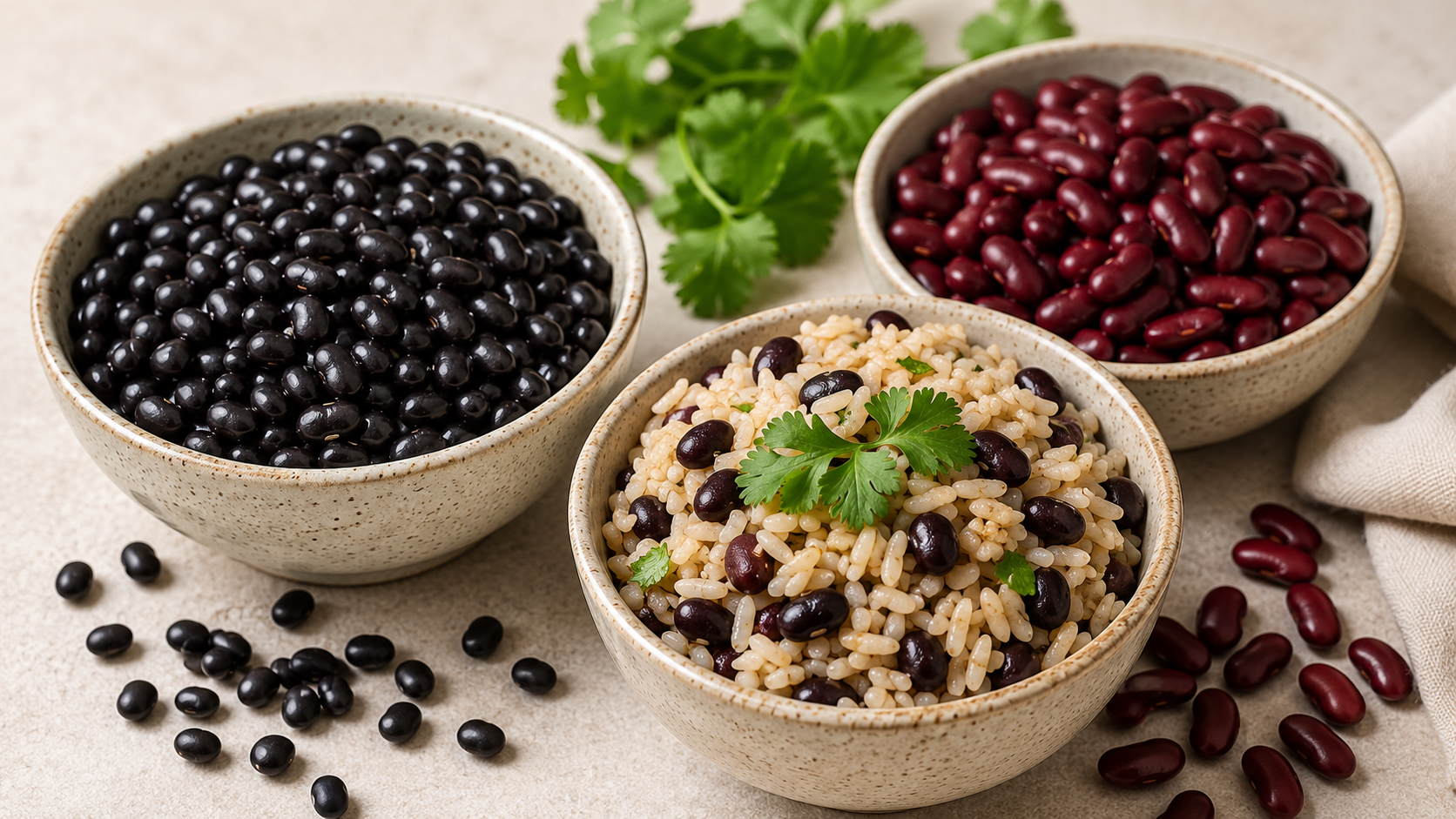
5. Black and Kidney Beans: Better With Rice Than Rice Alone
Black beans, red kidney beans, white kidney beans, and pinto beans can also fit well into everyday staple meals.
Like lentils and chickpeas, they provide starch together with more fiber and plant protein than white rice and usually digest more slowly.
Beans with rice
A crossover study in adults with type 2 diabetes compared white rice alone with rice paired with pinto, kidney, or black beans.
All three bean-and-rice meals produced lower glucose at some post-meal time points than rice alone, and some combinations also reduced the overall post-meal response.
This shows that improving a staple meal does not require giving up rice. Replacing part of the rice with whole beans is a practical option.
Watch the total amount
Beans still contain carbohydrate and energy.
Instead of adding beans to a full bowl of rice, reduce the rice by roughly one-quarter to one-third and replace that amount with cooked beans.
You keep the familiar texture of rice while increasing fiber and plant protein.
Prepare ahead
Black and kidney beans take longer to soften than rice. Soak them ahead, pressure-cook them, or cook them separately before mixing with rice.
You can also cook a larger batch and freeze individual portions for later use.
For canned beans, choose simple ingredients and lower-sodium options when possible, then rinse before eating.
How to combine them
A practical starting ratio is about 3:1 or 4:1 rice to cooked beans. Increase the bean proportion gradually if you enjoy it.
Kidney beans must be thoroughly cooked. If you are prone to bloating or have sensitive digestion, start with smaller portions or easier-to-digest legumes and increase gradually.
6. Taro and Purple Sweet Potato: Use Them as Staples, Not Desserts
Taro and purple sweet potato are often treated as “healthy coarse grains,” but they are still starchy foods.
Use them to replace part of rice, noodles, or buns—not as an extra side dish or dessert after a full serving of staple food.
The name alone does not determine glucose response
Post-meal glucose responses to tubers depend on variety, maturity, cooking method, and portion size.
A study measuring several Asian starchy foods found that taro still raises glucose; its response simply differed from some types of rice and other tubers.
So “rice raises glucose, taro or purple sweet potato does not” is not an accurate way to think about them.
Their practical value is adding staple-food variety plus different fiber, minerals, and plant compounds while still respecting portion size.
Chunks are usually preferable to powders or purées
Steamed or boiled chunks require chewing and are usually eaten more slowly.
Purées, powders, or smooth drink mixes break down the food structure and can make it easier to eat a larger amount quickly.
That does not make puréed foods forbidden; intact, less-processed forms are simply a better default when post-meal glucose matters.
Watch desserts and pastries
Taro paste, taro balls, purple-sweet-potato cakes, breads, and desserts often contain added sugar, condensed milk, cream, syrup, or substantial fat.
They do not become low-GI staples just because they contain taro or purple sweet potato.
Better choices include:
How to eat them
At a meal, use a small piece of purple sweet potato or several chunks of taro to replace roughly one-third to one-half of the rice portion.
Fill the rest of the meal with vegetables and a protein source such as fish, eggs, meat, or tofu.
The goal is not to calculate an exact GI advantage over rice. It is to reduce reliance on one refined starch and diversify the staple portion.
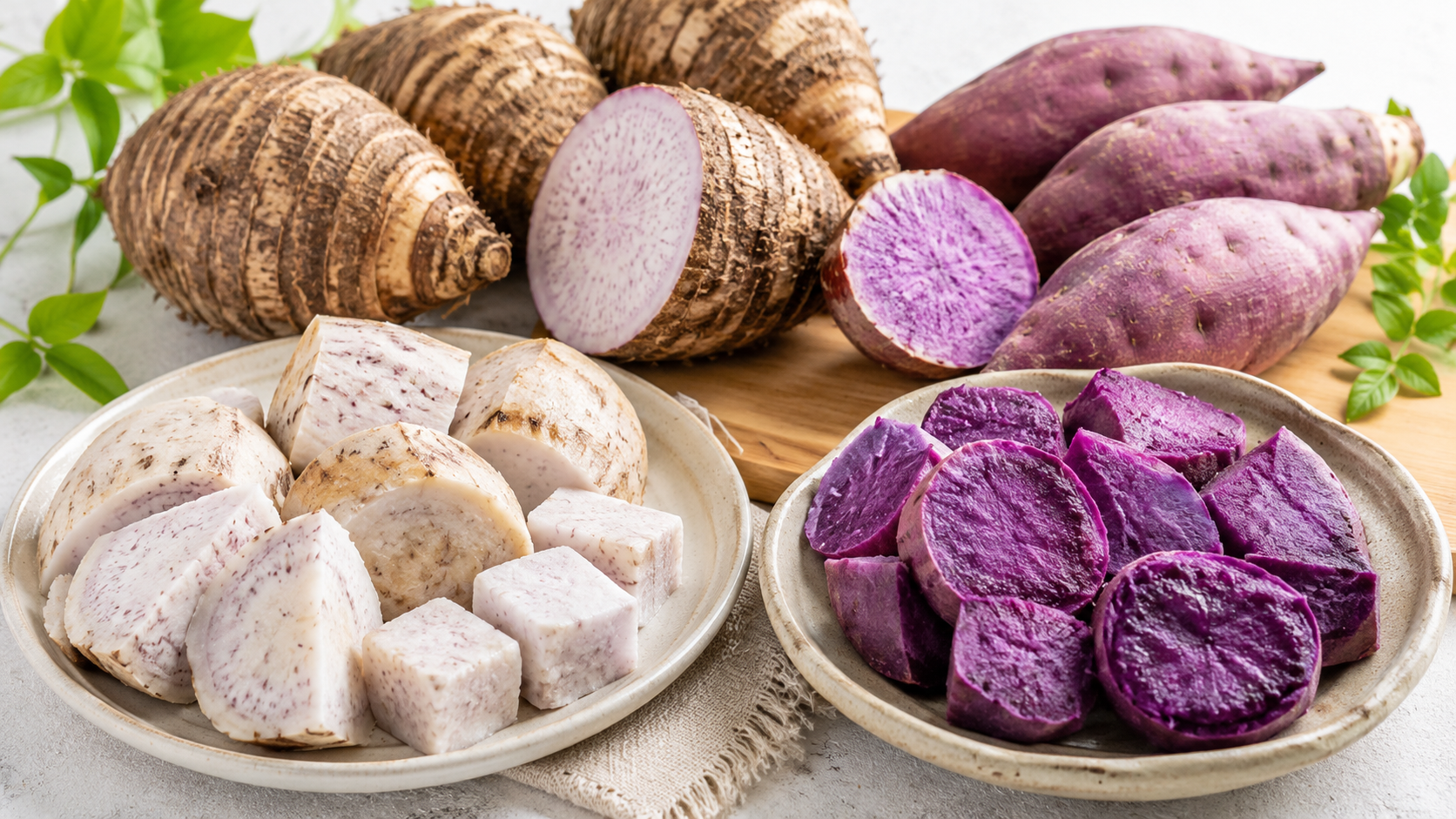
- Whole or large steamed pieces of taro or purple sweet potato
- Taro stewed with little added oil or sugar
- Purple sweet potato chunks combined with legumes and grains
- Cooked tuber pieces chilled safely for salads or packed meals
7. Choose Intact Foods; Chilling Is Only a Small Bonus
When choosing lower-GI staples, a more useful rule than memorizing food names is:
Choose foods that still look close to their original form and are minimally processed.
Particle structure
The outer structure of intact grains and legumes creates a physical barrier to digestion.
Grinding into flour, blending into a paste, or puffing exposes more starch to digestive enzymes and often speeds digestion.
In a randomized crossover trial in adults with type 2 diabetes, two weeks of less-processed, more-intact whole grains improved some glucose measures compared with finely milled whole-grain foods, despite similar whole-grain intake.
A practical hierarchy is:
Intact grains, whole legumes, and whole tubers usually come before powders, purées, pastes, and puffed products.
That does not mean every powdered food is off-limits. It means labels such as “whole wheat,” “multigrain,” “purple sweet potato,” or “black rice” are not enough—you also need to look at the final food structure.
Chilling and resistant starch
Cooking gelatinizes starch and often makes it easier to digest.
During cooling, some starch can rearrange into retrograded starch, one form of resistant starch that is less rapidly digested in the small intestine.
In a small human study, white rice chilled at 4°C for 24 hours and then reheated had more resistant starch and a slightly lower post-meal glucose response than freshly cooked rice.
In a chilled-potato trial, glucose was lower at some early post-meal time points, but the total glucose response was not clearly different; insulin response was lower.
So the effect varies by food, variety, cooling method, and person.
Chilling is only a small extra strategy
Cooling does not turn white rice into a food you can eat without limits.
Most starch is still digestible, so portion size still matters.
More important than chilling is choosing intact foods, replacing some refined grains with whole grains, legumes, or tubers, and pairing staples with enough vegetables and protein.
Food safety still matters
Chilled rice does not mean rice left at room temperature overnight.
Refrigerate leftovers promptly after cooling them safely; in hot weather, shorten the time food sits at room temperature.
Reheat thoroughly and avoid repeated cycles of chilling and reheating. Discard food that smells, looks, or tastes abnormal.
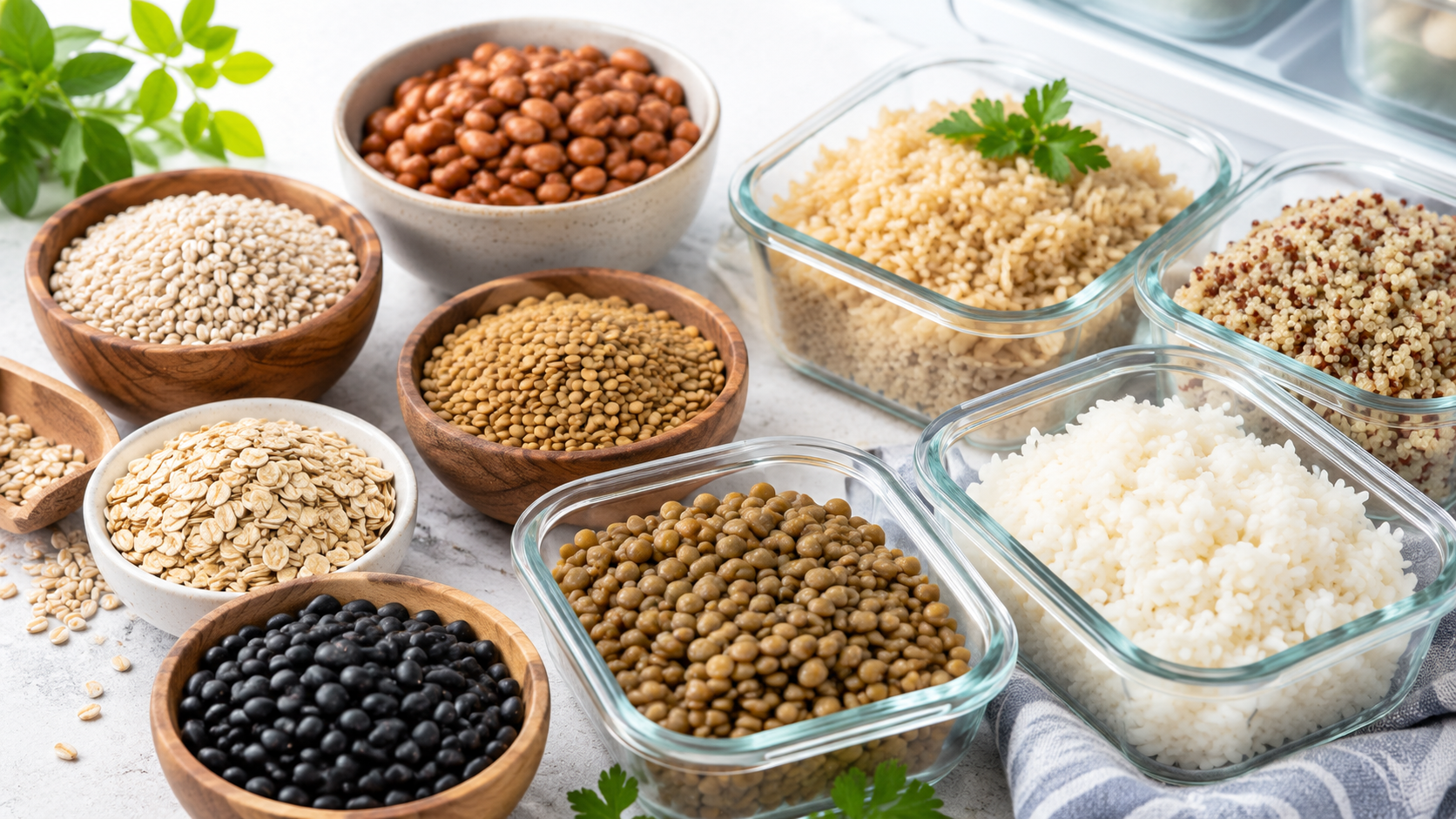
A Simple Day of Staples
Breakfast
Choose steel-cut oats or thick rolled oats with eggs, plain yogurt or unsweetened soy milk, plus a small amount of nuts and whole fruit.
Lunch
Mix rice with barley, hulless barley, black rice, or sorghum, then add a few spoonfuls of black beans, kidney beans, lentils, or chickpeas. Pair with vegetables and a protein source.
Dinner
Use taro, purple sweet potato, or legumes to replace part of the rice. Pair with fish, shrimp, chicken, eggs, or tofu, and do not count tubers as both a large staple and a large side dish.
Meal prep
Cook some beans and whole grains in batches and freeze portions. If storing cooked rice in the refrigerator, cool and refrigerate it promptly and reheat thoroughly before eating.
Bottom Line
The best low-GI staples for long-term use are not one expensive “super grain,” but a practical way of choosing and combining staple foods.
Barley, hulless barley, and oats provide beta-glucan and have relatively strong evidence for post-meal glucose and cholesterol management.
Lentils, chickpeas, black beans, and kidney beans provide plant protein, fiber, and slower-digesting starch. Replacing part of rice with legumes is often more useful than simply swapping one kind of rice for another.
Quinoa, buckwheat, sorghum, black rice, taro, and purple sweet potato can add variety, but they do not need to be glorified. Dark color, higher price, or a “whole grain” label does not guarantee a lower post-meal glucose response.
Four principles matter more than any ranking:
Choose intact foods, replace rather than add, watch portions, and build a balanced meal.
Favor intact grains, whole legumes, and whole tubers; use them to replace some refined grains; keep the total staple portion reasonable; and pair them with vegetables and protein.
Low GI does not mean avoiding carbohydrate, and the goal is not to make every bite produce no glucose rise.
The goal is a staple pattern that digests more slowly, provides more nutrients, keeps post-meal glucose and hunger steadier, and is realistic enough to maintain.
Who Should Be More Careful
Low GI does not mean low carbohydrate, and it does not replace glucose monitoring or standard treatment.
If you use insulin or glucose-lowering medication, major changes in carbohydrate amount or staple-food composition may change your glucose response and should be adjusted with appropriate monitoring.
If you have impaired kidney function or need to limit potassium or phosphorus, ask a clinician or dietitian before substantially increasing legumes, whole grains, or tubers.
If you are prone to bloating or have sensitive digestion, increase legumes and coarse grains gradually rather than changing the entire staple portion at once.
References
- Increasing oat β-glucan viscosity in a breakfast meal slows gastric emptying and reduces glycemic and insulinemic responses but has no effect on appetite, food intake, or plasma ghrelin and PYY responses in healthy humans: a randomized, placebo-controlled, crossover trial (2020). https://pubmed.ncbi.nlm.nih.gov/31828287/
- Randomized controlled crossover study of the effect of a highly beta-glucan-enriched barley on cardiovascular disease risk factors in mildly hypercholesterolemic men (2003). https://pubmed.ncbi.nlm.nih.gov/14522728/
- An Oat β-Glucan Beverage Reduces LDL Cholesterol and Cardiovascular Disease Risk in Men and Women with Borderline High Cholesterol: A Double-Blind, Randomized, Controlled Clinical Trial (2021). https://pubmed.ncbi.nlm.nih.gov/34236436/
- Quinoa is more effective than other whole grains in the management of impaired glucose tolerance: a randomized controlled trial (2025). https://pubs.rsc.org/en/content/articlehtml/2025/fo/d4fo04557b
- Consumption of buckwheat modulates the post-prandial response of selected gastrointestinal satiety hormones in individuals with type 2 diabetes mellitus (2013). https://pubmed.ncbi.nlm.nih.gov/23485142/
- Grain sorghum muffin reduces glucose and insulin responses in men (2014). https://pubmed.ncbi.nlm.nih.gov/24608948/
- Postprandial glycemic and lipidemic effects of black rice anthocyanin extract fortification in foods of varying macronutrient compositions and matrices (2023). https://www.nature.com/articles/s41538-023-00233-y
- Carbohydrate Replacement of Rice or Potato with Lentils Reduces the Postprandial Glycemic Response in Healthy Adults in an Acute, Randomized, Crossover Trial (2018). https://pubmed.ncbi.nlm.nih.gov/29659967/
- Glycemic Response to Black Beans and Chickpeas as Part of a Rice Meal: A Randomized Cross-Over Trial (2017). https://pubmed.ncbi.nlm.nih.gov/28976933/
- Bean and rice meals reduce postprandial glycemic response in adults with type 2 diabetes: a cross-over study (2012). https://pubmed.ncbi.nlm.nih.gov/22494488/
- Glycemic index, glycemic load and insulinemic index of Chinese starchy foods (2010). https://pubmed.ncbi.nlm.nih.gov/20954285/
- Whole-Grain Processing and Glycemic Control in Type 2 Diabetes: A Randomized Crossover Trial (2020). https://pubmed.ncbi.nlm.nih.gov/32424022/
- Effect of cooling of cooked white rice on resistant starch content and glycemic response (2015). https://pubmed.ncbi.nlm.nih.gov/26693746/
- Chilled Potatoes Decrease Postprandial Glucose, Insulin, and Glucose-dependent Insulinotropic Peptide Compared to Boiled Potatoes in Females with Elevated Fasting Glucose and Insulin (2019). https://pubmed.ncbi.nlm.nih.gov/31484331/
Low GI does not mean low carbohydrate, and it does not replace glucose monitoring or medical treatment. If you have diabetes, impaired kidney function, or take glucose-lowering medication, discuss major changes in staple foods with your clinician or dietitian.