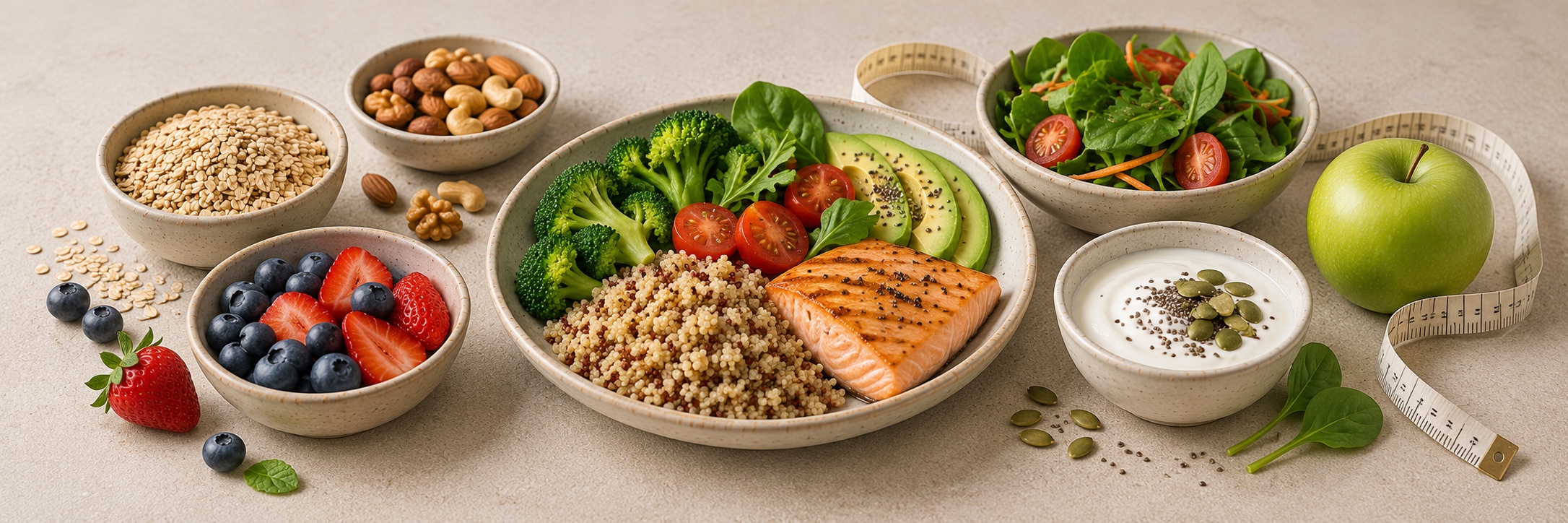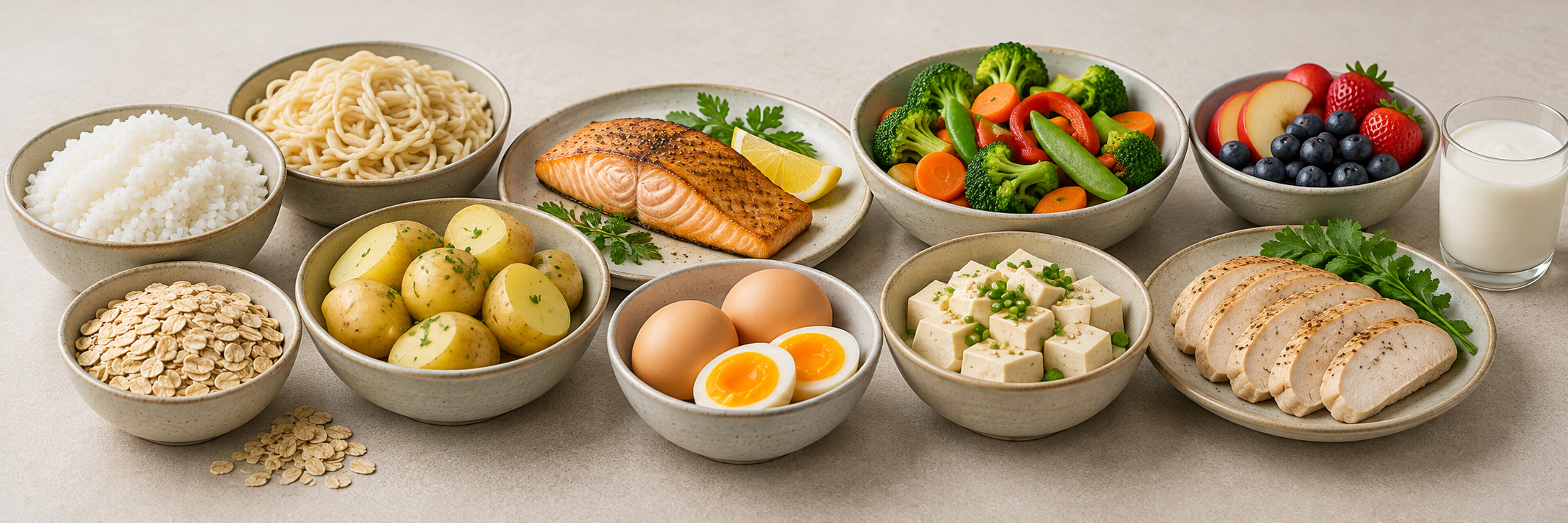
After being told they have “chronic non-atrophic gastritis,” many people quickly adopt a very restrictive diet: porridge for breakfast, soft noodles for lunch, almost no cooking oil, avoiding sour fruit and coffee, and giving up chili completely.
But most people with non-atrophic gastritis do not need to eat this way long term. There is no research-backed “stomach-healing food list” that everyone with this condition should follow. For most people, diet needs to do two things: reduce bloating, early fullness, upper-abdominal pain, or burning after meals, while still providing enough protein, vegetables, fruit, and staple foods without unnecessary restriction.
So instead of constantly asking “what food is best for the stomach?”, a more useful strategy is to eat normally when you feel well, adjust when symptoms flare, and gradually identify the foods that consistently trigger discomfort for you.
Key Takeaways
- If you usually feel fine, you can eat normally. Rice, noodles, oats, potatoes, fish, eggs, tofu, lean meat, vegetables, fruit, and dairy can all stay if you tolerate them. There is no need to live on porridge and soft noodles.
- If bloating or early fullness is the main problem, reduce the amount you eat at one sitting. Do not force yourself to eat until very full; if one meal is too much, eat a little less and add a small meal later if needed.
- On days when your stomach is uncomfortable, make food temporarily softer and more thoroughly cooked. Cook rice a little softer, eat vegetables cooked rather than raw, and cut meat into smaller pieces. You do not need to blend everything into purées or switch to a liquid diet.
- Alcohol deserves more attention than many so-called “irritating foods.” Heavy drinking can directly injure the stomach lining, and it is especially unhelpful when pain, burning, or other symptoms are active.
- Very fatty, fried, or oversized meals are among the first things worth reducing. Fried foods, fatty meat, cream, oily hot pot, and large amounts of dipping oil are more likely to trigger discomfort than a normal amount of plant oil used in cooking.
- Chili, coffee, and acidic fruit do not need to be banned for everyone. Reduce them if they repeatedly trigger pain, burning, or reflux; if they do not cause symptoms, gastritis alone is not a reason to remove them automatically.
- Foods such as Chinese yam and okra can be eaten, but they should not be treated as treatments. They are easy to cook until soft and can fit into a normal diet, but reliable human evidence does not show that they repair the stomach lining or treat non-atrophic gastritis.
- If you have *Helicobacter pylori*, follow standard treatment. Food may help you feel more comfortable, but it cannot replace eradication therapy.
1. What Should You Eat When Your Stomach Feels Fine?
If you do not have significant stomach pain, nausea, early fullness, or severe bloating, there is no need to stay on a special “gastritis diet.” A complete, normal diet is appropriate. Non-atrophic gastritis does not mean your stomach can no longer digest normal food or that you must live on porridge and soft noodles. The main goal is enough variety while avoiding foods that clearly cause symptoms for you.
Rotate staple foods such as rice, noodles, oats, potatoes, Chinese yam, and mixed grains. Protein can come from fish, eggs, tofu, chicken, lean meat, and dairy. Most vegetables are fine; if your stomach is sensitive, cooked vegetables may be easier to tolerate. Fruit does not need to be banned because of gastritis—bananas, apples, pears, oranges, berries, and melons can all be chosen according to tolerance. Normal cooking oil, fish, and a small amount of nuts can also stay; a completely fat-free diet is unnecessary.
A simple meal can be one serving of staple food + one serving of protein + one or two servings of vegetables—for example, rice with steamed fish and two vegetables, or noodles with egg, lean meat, and greens. You do not need to design every meal around “stomach-healing foods.”
Chinese yam and okra are common examples of foods promoted for “nourishing the stomach.” They are fine to eat, but there is no need to chase them. Steamed yam is soft and can replace part of rice or potatoes; cooked okra is also soft and can be an ordinary vegetable. Some animal and laboratory research has explored stomach-lining protection, but current evidence does not show that eating yam or okra treats non-atrophic gastritis or repairs the gastric mucosa. White rice porridge is similar: it can be useful when appetite is poor, but it does not need to replace normal staple foods long term.
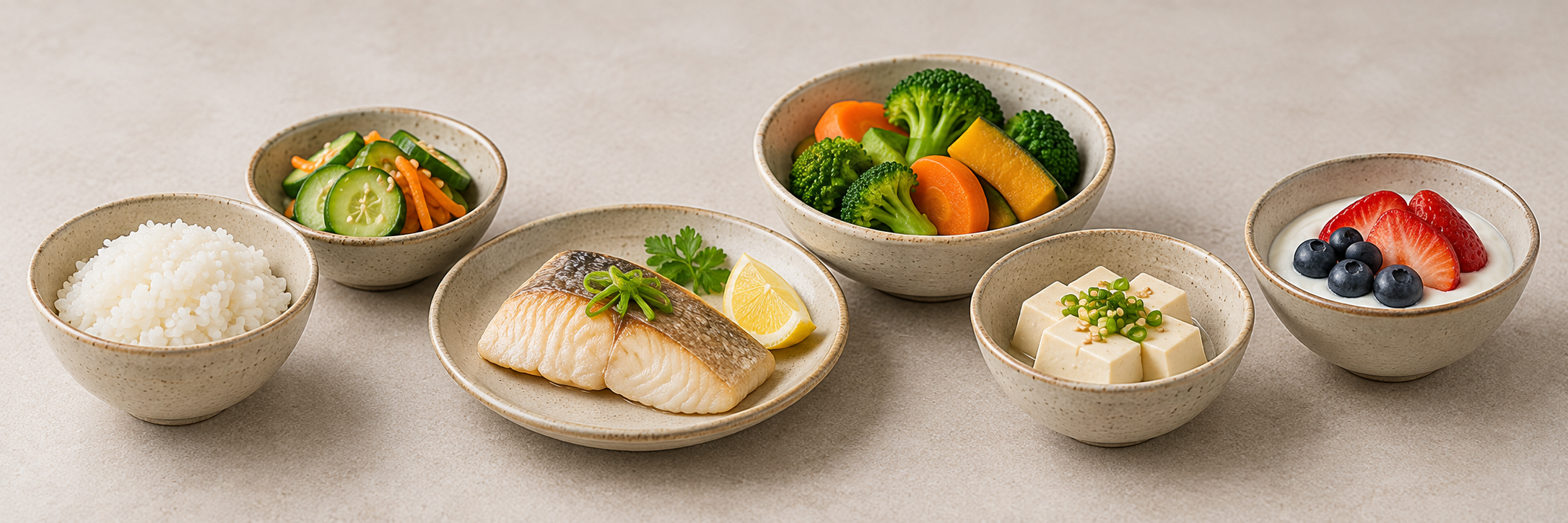
When your stomach feels comfortable, eating a normal and varied diet matters more than searching for one “best food for the stomach.”
2. How to Adjust on Days With Bloating, Pain, or Early Fullness
When your stomach feels off, you can temporarily make meals “lighter,” but that does not mean porridge only. Four changes are more practical: eat a little less at one time, make food softer, lower the fat load, and eat more slowly.
If the main problem is post-meal bloating, getting full very quickly, or feeling pressure halfway through a meal, first check whether the meal is simply too large. A large amount of staple food, meat, fat, dessert, and drinks all at once increases the load on the stomach. If your usual meal is a large bowl of rice, a big plate of meat, two vegetable dishes, plus a drink, reduce the total meal size while keeping a normal portion of fish, chicken, or tofu and cooked vegetables. If you are hungry a few hours later, add a small tolerated meal. If three regular meals feel fine, there is no reason to force yourself into five or six meals just because of gastritis.
During a few days of poor appetite, early fullness, or obvious stomach pain, make foods temporarily more cooked and softer. Cook rice softer, steam yam or potatoes, eat vegetables cooked, and cut meat into smaller pieces or choose fish, eggs, and tofu. Whole grains, legumes, nuts, and fruit are not forbidden, but avoid very large amounts at once. The purpose is to reduce the burden of one meal, not because soft foods “repair the stomach lining.”
Eating speed also matters. There is no need to count chews, but try not to finish an entire meal in a few minutes. Sit down, eat slowly, and pause when you begin to feel clearly full. For people prone to bloating or early satiety, this is often more useful than searching for a special “stomach food.”
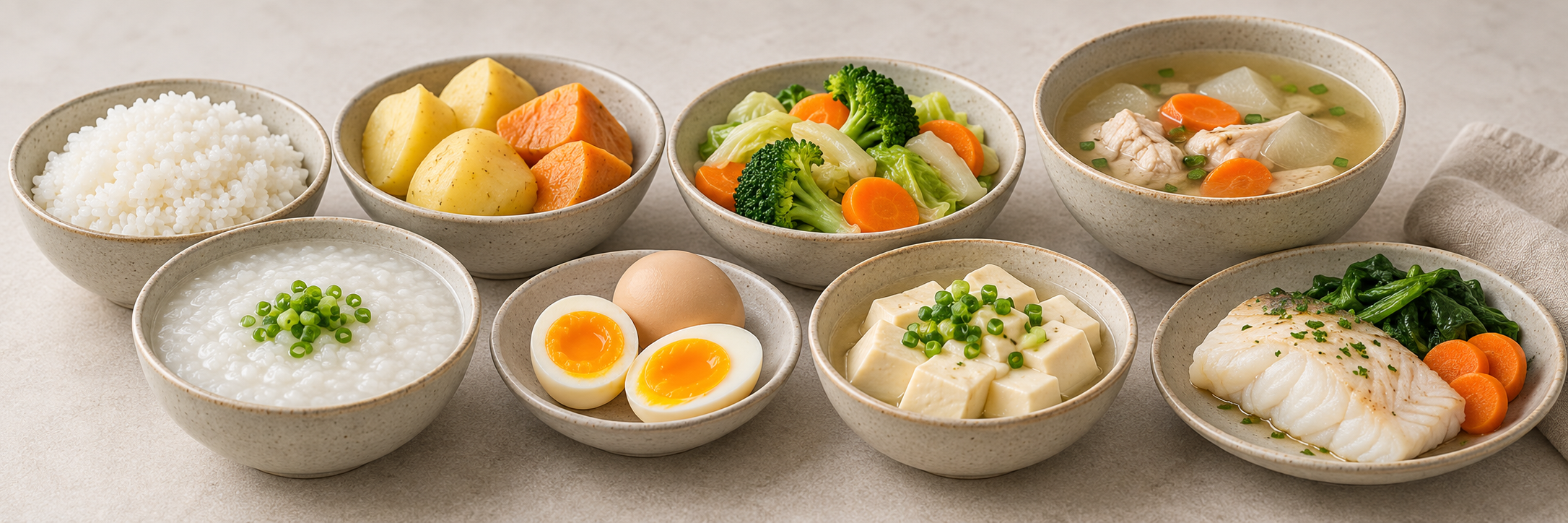
On uncomfortable days, eat a little less at one time, choose softer foods, lower the fat load, and slow down. As symptoms settle, gradually return to a normal diet.
3. Which Foods Are Most Worth Cutting Back First?
If you want to make only one dietary change, start by reducing very fatty, fried, and oversized meals.
This does not mean fat directly causes chronic gastritis. Rather, in research on functional dyspepsia—which overlaps strongly with gastritis symptoms—high-fat meals are more likely to trigger or worsen post-meal fullness, early satiety, and nausea. Recent reviews also consider high-fat eating one of the more relevant dietary factors for post-meal symptoms. But most of this evidence comes from functional dyspepsia, not specifically non-atrophic gastritis, so it should not be interpreted as “fat makes gastritis worse.”
A more practical interpretation is this: if you are already prone to post-meal bloating, early fullness, or nausea, very fatty meals are a sensible first target. Examples include fried chicken with fries and milk tea, fatty hot pot with a lot of oily dipping sauce, a large amount of fatty barbecue meat, or creamy pasta plus fried foods and dessert. The problem is a meal with a very concentrated fat load—not the need to boil every food. Normal use of plant oil, eating fish, or having a small amount of nuts does not need to be eliminated.
Alcohol deserves even more attention than many foods commonly placed on “gastritis ban lists.” Heavy drinking can directly irritate and damage the stomach lining. If you already have gastritis and often experience pain, burning, nausea, or reflux, it makes little sense to strictly restrict fruit, coffee, and seasonings while ignoring alcohol. Especially avoid heavy drinking in one sitting, drinking a lot on an empty stomach, and continuing to drink when symptoms are active. If you do not normally drink, there is no reason to start for supposed digestive benefits.
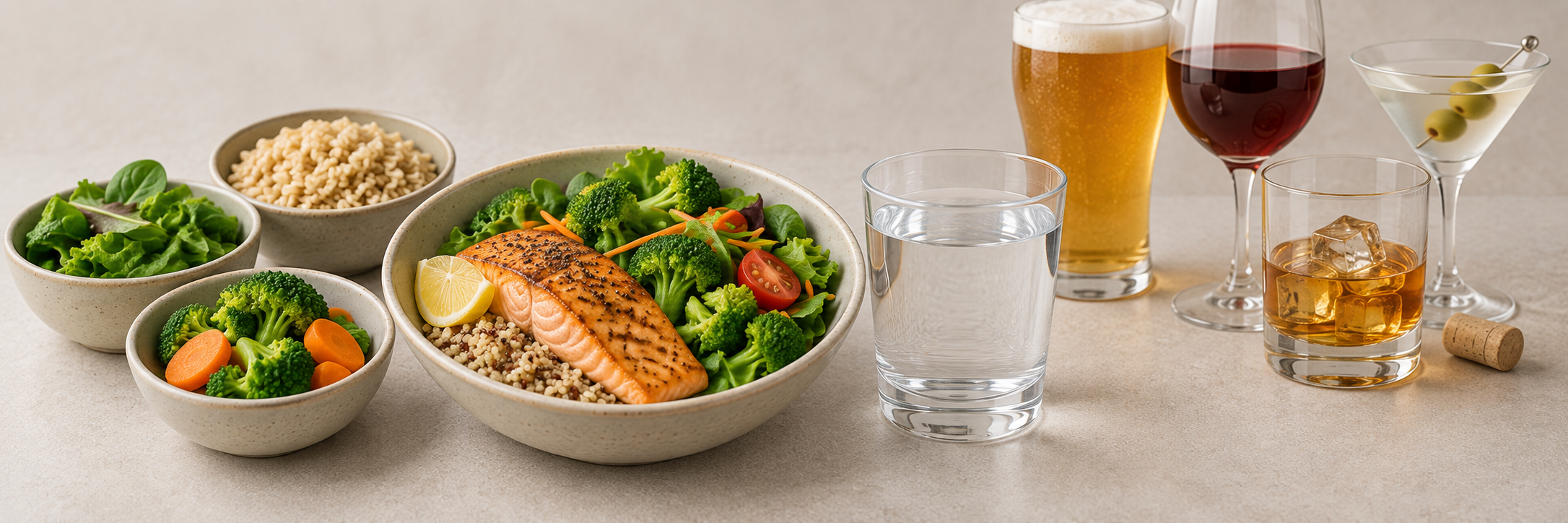
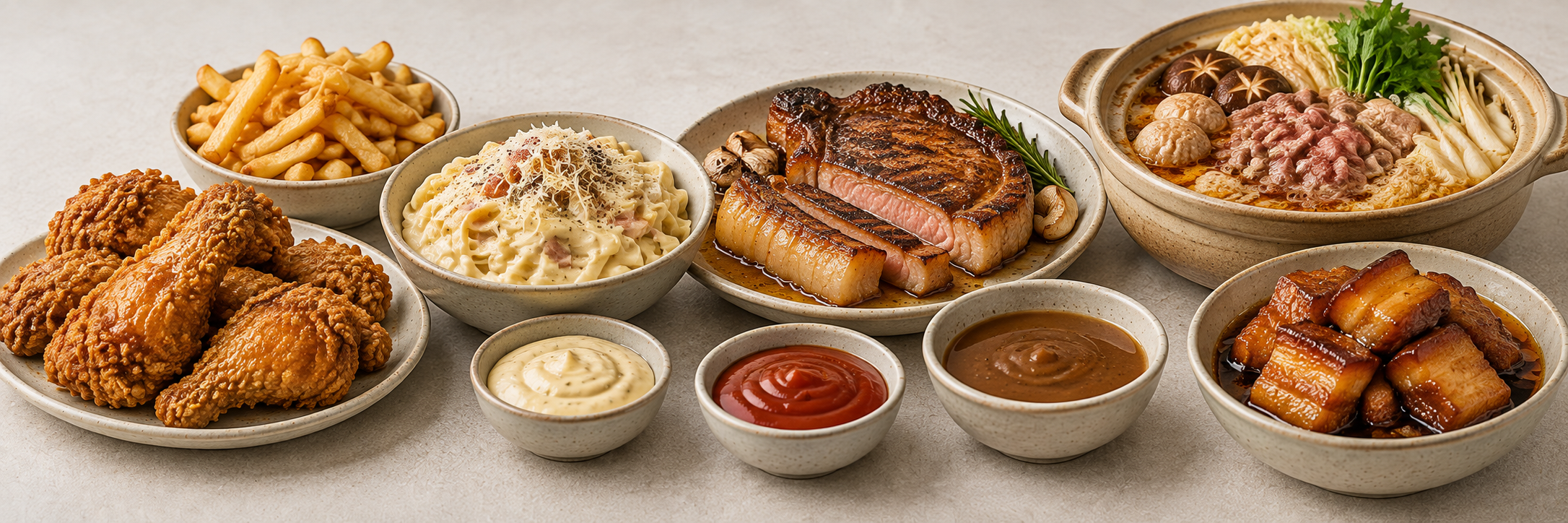
The main targets are very fatty meals and heavy drinking—not turning every meal into boiled food.
4. Chili, Coffee, and Acidic Fruit: Do You Really Need to Avoid Them?
These three groups are common sources of unnecessary food restriction. A more useful rule is not “ban them all,” but ask whether each one is a consistent trigger for your symptoms.
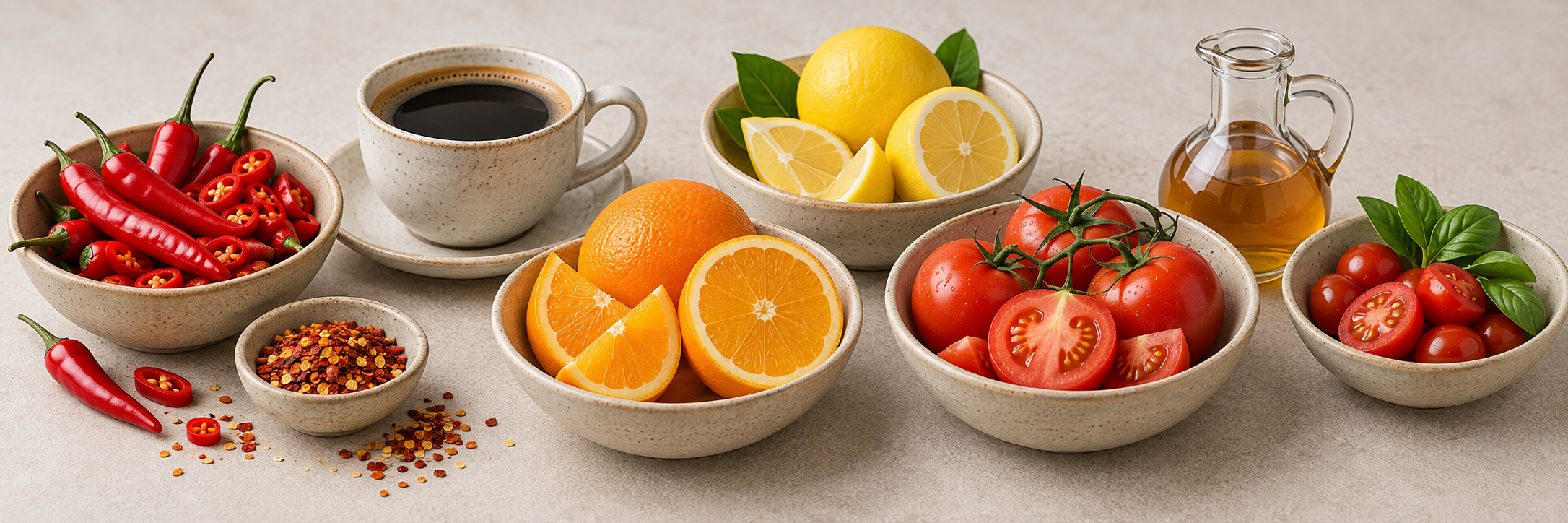
One of the easiest mistakes in gastritis diets is turning “some people may not tolerate this” into “nobody with gastritis can eat this.”
Chili: reduce it if it repeatedly causes pain
A systematic review and meta-analysis of 11 studies with 21,220 participants found that higher intake of spicy foods was associated with functional dyspepsia and a higher likelihood of upper-abdominal pain and burning. But these were mainly observational studies of functional dyspepsia and related symptoms. They do not show that chili causes non-atrophic gastritis in everyone.
If very spicy hot pot, chili sauce, or spicy dishes repeatedly trigger upper-abdominal burning or pain, reduce the intensity and frequency. If a small amount of chili causes no discomfort, there is no need to permanently avoid it just because a gastroscopy report says “non-atrophic gastritis.”
Coffee: pay attention to how you feel afterward
If you drink one cup a day without pain, reflux, burning, or obvious bloating, you do not need to stop automatically because of gastritis. If coffee on an empty stomach often causes discomfort, try drinking it after food, choosing a smaller cup, lowering the strength, or stopping for a while and comparing symptoms.
The goal is not to find one answer that applies to every person with gastritis, but to identify your own tolerance.
Oranges, tomatoes, and vinegar: sour taste does not mean they “corrode the stomach”
Acidic fruit, tomatoes, and vinegar do not automatically damage everyone’s stomach lining just because they taste sour. If they cause no discomfort, they can stay. If oranges, pineapple, tomatoes, or a lot of vinegar repeatedly trigger burning or reflux, reduce that specific item rather than cutting out all fruit.
5. What Can a Full Day of Eating Look Like? Three Practical Examples
Principles only matter if they translate to real meals. These are not prescription meal plans, but examples of how to combine foods in different situations.
What matters most is not whether a dish is marketed as “good for the stomach,” but whether the meal is especially fatty, oversized, and repeatedly followed by symptoms.
When your stomach has been feeling comfortable
For breakfast, try oats or bread with eggs and a serving of fruit, plus milk or yogurt if tolerated. For lunch, have rice or Chinese yam with steamed fish, chicken, or tofu and two vegetables. Dinner can be rice, noodles, or potatoes with fish, eggs, tofu, or lean meat and cooked vegetables. You do not need snacks if you are not hungry; if you do, yogurt, fruit, or a small piece of bread can work. At this stage, the goal is normal, varied eating—not a special “stomach-healing” menu.
When you are prone to bloating or early fullness
Make each meal a little smaller. Choose softer rice, noodles, oats, or steamed yam as staples; use fish, eggs, tofu, or chicken as protein; and eat vegetables cooked. If one meal is too much, eat less and have a small tolerated meal a few hours later. During these days, also reduce fried foods, very fatty meat, oily hot pot, creamy desserts, alcohol, and very large servings of nuts or coarse grains. As symptoms settle, gradually return to a normal diet.
When you eat takeout often
You do not need to search for “stomach-friendly takeout.” Rice with steamed, braised, boiled, or normally stir-fried meat, fish, tofu, and vegetables is usually easy to arrange, as are soup noodles with egg, lean meat, and greens. For rice bowls, choose less fatty meat and heavy oily sauce. At hot pot, favor fish, lean meat, tofu, and vegetables, with less fatty beef or lamb and less oily dipping sauce. Do not make fried chicken, barbecue, or creamy dishes your regular main meal, and avoid combining them with alcohol when your stomach is already uncomfortable.
6. Do Not Keep Shrinking Your Food List in the Name of “Protecting the Stomach”
Many people with stomach symptoms eventually do not become intolerant to everything—they gradually remove more and more foods on their own. First chili goes, then coffee, then fruit, milk, whole grains, legumes, and wheat products all become suspect, until only white porridge, steamed buns, eggs, and a few vegetables remain. That diet may feel “safe” in the short term, but it is not ideal long term.
White rice porridge is soft and easy to eat, so it is completely reasonable for a few days when appetite is poor. But there is no evidence that drinking it long term treats chronic non-atrophic gastritis. A better rule is: eat normally when you feel well, and temporarily soften the diet when you do not.
Milk is not a stomach medicine, but it is not automatically forbidden either. Some people feel fine after drinking it, some feel bloated, and some notice more reflux. If you tolerate it, you can drink it. If regular milk repeatedly causes bloating, consider lactose intolerance and try lactose-free milk before concluding that “gastritis means no dairy.”
Fruit also does not need to be eliminated because it is considered “cold” or sour. If apples bloat you, eat less; if oranges cause burning, adjust them; if bananas feel fine, keep them. Intolerance to one food does not mean the entire category is unsuitable.
If you suspect one food, change one variable at a time. For example, if you think coffee on an empty stomach causes symptoms, adjust the coffee first instead of simultaneously eliminating coffee, milk, wheat, fruit, legumes, and chili. Otherwise, even if symptoms improve, you will not know which change actually helped.
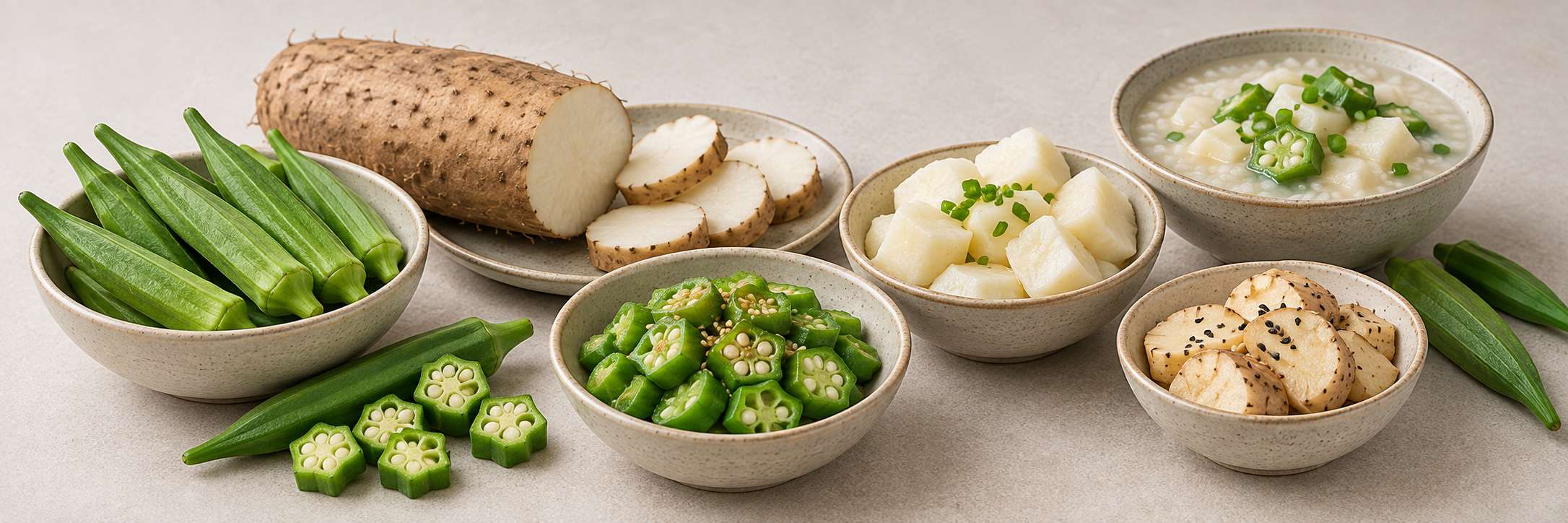
Eat normally when comfortable and temporarily soften meals when symptoms flare. If you suspect one food, change one variable at a time.
7. One Thing Matters More Than Diet: Find Out Why the Gastritis Is There
Eating comfortably matters, but diet cannot replace treatment of the underlying cause. One of the most important causes to check is *Helicobacter pylori* (*H. pylori*), a bacterium that can persist in the stomach and is a major cause of chronic gastritis.
If testing confirms *H. pylori* infection, the priority is standard eradication therapy—not honey, garlic, broccoli sprouts, yogurt, or other supposed “natural antibacterial foods.” Some foods and food compounds have been studied. For example, small human studies of broccoli sprouts rich in sulforaphane precursors have found temporary improvements in some infection and gastric-inflammation markers, but the effects faded after the intervention stopped and reliable eradication was not achieved. These studies do not show that a food can replace treatment.
Also pay attention to long-term painkiller use. Nonsteroidal anti-inflammatory drugs (NSAIDs) such as ibuprofen and naproxen can damage the stomach lining when used frequently or at higher doses, and heavy alcohol use can do the same. If your stomach stays uncomfortable while you keep searching for “stomach-healing foods” but continue frequent NSAID use or heavy drinking, food may not be the main issue to address.
Diet mainly helps you eat more comfortably; the underlying cause still needs cause-specific treatment.
8. When Diet Changes Are Not Enough
Mild occasional bloating or post-meal discomfort can often be observed with diet and lifestyle changes first. But the following signs should prompt medical evaluation rather than more food restriction.
- Black or tarry stools
- Vomiting blood or vomit that looks like coffee grounds
- Persistent or worsening upper-abdominal pain
- Repeated vomiting
- Unintentional, noticeable weight loss
- Marked fatigue or anemia
- Increasing difficulty eating or swallowing
If gastroscopy or pathology has already shown atrophic gastritis, intestinal metaplasia, dysplasia, gastric ulcer, or another specific diagnosis, do not simply apply general non-atrophic-gastritis diet advice. Treatment and follow-up should be tailored to the condition.
What to Do Next
Non-atrophic gastritis does not require turning everyday life into a permanent “stomach-protection mode.”
Only a few things deserve priority: when your stomach feels fine, eat normal staple foods, protein, vegetables, and fruit; on days with bloating or early fullness, make meals smaller and foods softer while reducing very fatty fried food and alcohol; and do not automatically ban chili, coffee, dairy, or acidic fruit—adjust only the foods that repeatedly trigger your symptoms.
Chinese yam, okra, and similar foods can be part of a normal diet, but they are better understood as ordinary foods that are easy to cook soft rather than “stomach medicines.” At the same time, check for *H. pylori* and pay attention to frequent NSAID use and heavy alcohol intake.
The goal is not to find one “best food for the stomach,” but to build a diet that feels comfortable, provides enough nutrition and variety, and is realistic for normal long-term life.
References
- Chinese Society of Gastroenterology. Chinese Guidelines for the Diagnosis and Treatment of Chronic Gastritis (2022, Shanghai; published 2023). https://doi.org/10.3760/cma.j.cn311367-20230117-00023
- Eating, Diet, & Nutrition for Gastritis & Gastropathy (2019). https://www.niddk.nih.gov/health-information/digestive-diseases/gastritis-gastropathy/eating-diet-nutrition
- American College of Gastroenterology. ACG Guideline on Treatment of Helicobacter pylori: New Recommendations... Will Practice Change? (2024 official guideline commentary). https://gi.org/journals-publications/ebgi/schoenfeld_sep2024/
- The impact of diet on functional dyspepsia: a critical review of current evidence (2025). https://www.cambridge.org/core/journals/proceedings-of-the-nutrition-society/article/impact-of-diet-on-functional-dyspepsia-a-critical-review-of-current-evidence/D78C7B0CD742B7681A42E27229F37FDE
- Association between dietary habits and risk of functional dyspepsia: a systematic review and meta-analysis of observational data (2026). https://pmc.ncbi.nlm.nih.gov/articles/PMC12888455/
- Protective Effects of Dioscorea batatas Flesh and Peel Extracts against Ethanol-Induced Gastric Ulcer in Mice (2018). Animal extract experiment, not evidence that eating yam treats human gastritis. https://pmc.ncbi.nlm.nih.gov/articles/PMC6266015/
- Glycosylated compounds from okra inhibit adhesion of Helicobacter pylori to human gastric mucosa (2004). Laboratory/ex vivo experiment, not proof of eradication or treatment in patients. https://pubmed.ncbi.nlm.nih.gov/15030201/
- Yanaka A, et al. Dietary sulforaphane-rich broccoli sprouts reduce colonization and attenuate gastritis in Helicobacter pylori-infected mice and humans. Cancer Prev Res. 2009. Human infection and inflammation markers returned to baseline after stopping; this was not reliable eradication. https://pubmed.ncbi.nlm.nih.gov/19349290/
This article discusses everyday eating for ordinary chronic non-atrophic gastritis. It does not replace diagnosis, *H. pylori* eradication therapy, or treatment of other causes. If symptoms persist, alarm signs appear, or you already have atrophy, intestinal metaplasia, dysplasia, ulcers, or another diagnosis, seek professional medical evaluation.