Alpha-Lipoic Acid
Alpha-Lipoic Acid / Lipoic Acid / Thioctic Acid / ALA / Alpha Lipoic Acid / R-Alpha-Lipoic Acid / R-ALA / Sodium R-Alpha Lipoate
Alpha-lipoic acid is a sulfur-containing compound the body can synthesize and use in mitochondrial energy metabolism. On this page, ALA means alpha-lipoic acid, not alpha-linolenic acid, the omega-3 fatty acid.
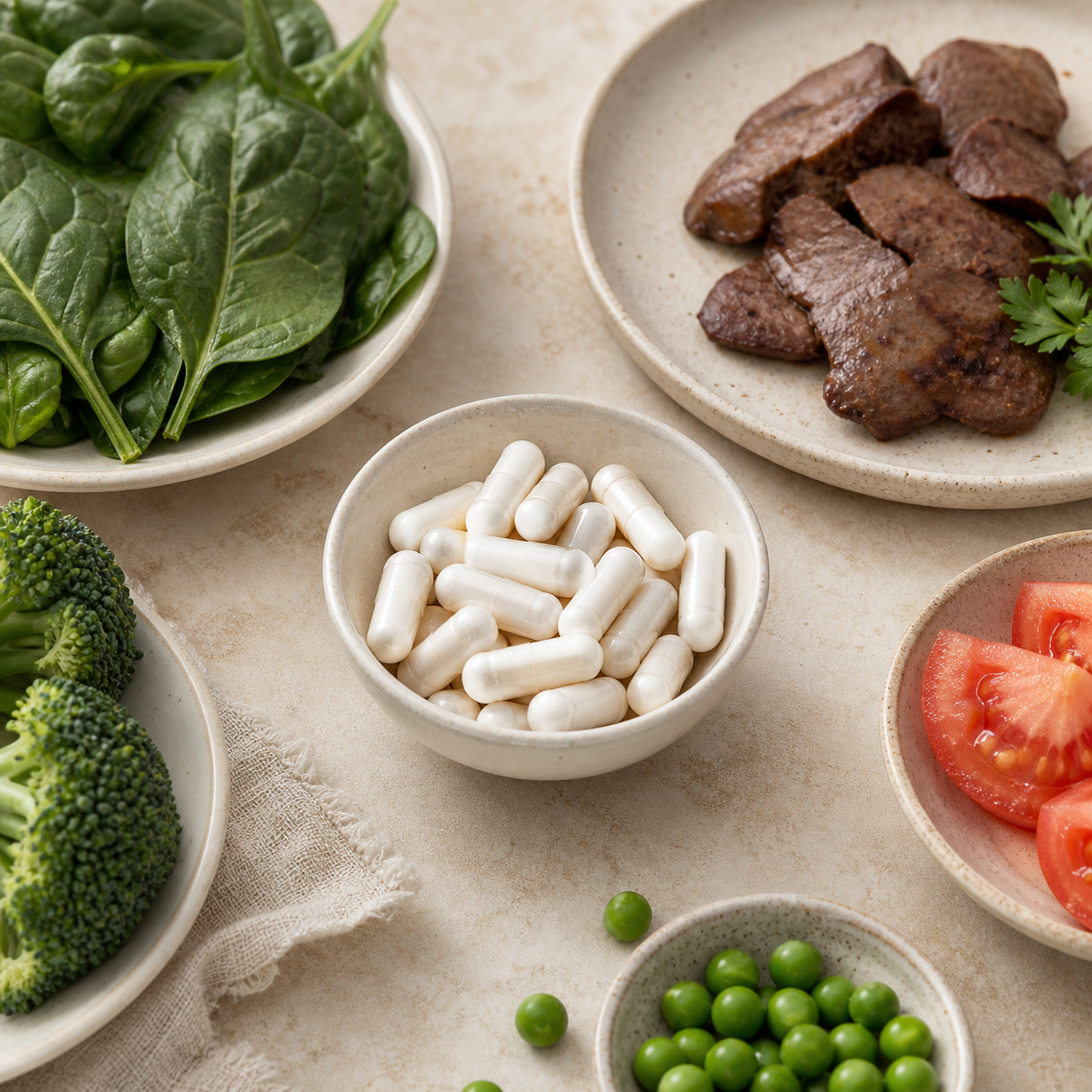
30-second check: which situation fits you best?
I just want everyday antioxidant or anti-aging support
The body can make alpha-lipoic acid on its own. Without a clear weight, metabolic, or recovery goal, its role in mitochondrial metabolism or its marketing as a strong antioxidant does not mean long-term supplementation is necessary.
I have a clear weight, metabolic, or exercise-recovery goal
Studies in adults with overweight suggest small improvements in body weight and BMI, while early human studies suggest possible benefits for recovery after high-intensity training. Form, dose, and duration differ by goal.
I am planning to use it or already taking it
First distinguish conventional alpha-lipoic acid, R-alpha-lipoic acid, sodium R-alpha lipoate, and sustained-release products, then confirm the actual amount of the target ingredient per serving.
Basic Overview
What it is
Alpha-lipoic acid is a sulfur-containing compound the body can synthesize. It mainly participates in mitochondrial enzyme systems involved in energy production. The body naturally produces the R-form and binds it to proteins; supplements mainly provide free alpha-lipoic acid. It is not an essential vitamin or mineral and has no established daily dietary requirement.
Why people use it
- Support for body-weight and body-fat management in people with overweight
- Interest in insulin sensitivity and metabolic markers
- Interest in recovery after high-intensity exercise
- Interest driven by mitochondrial and antioxidant concepts
- Use in selected neurologic settings under professional guidance
How it relates to healthy aging
Alpha-lipoic acid participates in normal mitochondrial metabolism, and cell and animal research also involves redox pathways.
There is currently no reliable human evidence that long-term supplementation in healthy adults extends lifespan, reverses aging, or consistently prevents cognitive decline.
Supplement Assessment
Start by defining a weight, metabolic, or training-recovery goal and checking for hypoglycemia and medication risks.
Low supplementation priority
- No clear physical goal
- Interested mainly because of antioxidant, mitochondrial, or healthy-aging marketing
- Weight and metabolic status are normal
- Diet, exercise, and sleep still have substantial room for improvement
- Planning indefinite long-term use
Your next step:
Turn vague antioxidant goals into measurable outcomes first. Without a clear goal, do not assume long-term use is worthwhile.
Clear goal: a trial may be reasonable
- Overweight while already addressing diet and exercise
- Interested in recovery after high-intensity training
- Accepting that weight effects are usually small
- Able to distinguish conventional ALA from R-ALA research
- Willing to set an observation period
Your next step:
Match your goal with the exact form, dose, population, and duration used in the relevant study.
Talk with a healthcare professional first
- Diagnosed diabetes
- Using insulin or glucose-lowering medication
- Recurrent or unexplained hypoglycemia
- Significant nerve pain, numbness, or burning
- Pregnancy or breastfeeding
- Children or adolescents
- Complex chronic-disease treatment
- Planning long-term use at clearly high doses
Your next step:
In rare genetically susceptible people, alpha-lipoic acid can trigger insulin autoimmune syndrome and cause significant hypoglycemia.
Quick self-check
Is my goal weight, metabolism, training recovery, or vague antioxidant support?
Do I have overweight, and am I already addressing diet and exercise?
Do I have a measurable recovery goal after high-intensity training?
Do I have diabetes, recurrent hypoglycemia, or use glucose-lowering medication?
Is the product conventional ALA, R-ALA, sodium R-lipoate, or sustained release?
Does the product contain biotin that may interfere with laboratory tests?
Do I need testing?
Generally healthy people do not usually need blood alpha-lipoic acid testing.
- There is no clinically established alpha-lipoic acid deficiency threshold, ideal blood range, or cutoff below which supplementation is indicated.
- Pharmacokinetic blood testing is used to study absorption and exposure, not as routine nutrition testing.
- Abnormal glucose levels, hypoglycemia, or neurologic symptoms require medical assessment rather than measurement of alpha-lipoic acid concentration.
Do not invent a “below X means supplement” threshold.
Food Sources
How much is actually in food?
In research, relatively richer sources such as kidney, heart, and liver contained only about 1–3 μg/g dry weight, or roughly 0.1–0.3 mg alpha-lipoic acid per 100 g dry weight.
Tomatoes, peas, Brussels sprouts, and similar foods were lower, at about 0.05 mg alpha-lipoic acid per 100 g dry weight. Everyday foods contain substantial water, so the amount in 100 g of fresh food is usually even lower. These values are reported on a dry-weight basis and should not be rewritten as fresh-weight values.
How does food compare with supplements?
Food: even on a 100 g dry-weight basis, relatively rich foods usually provide only about 0.1–0.3 mg alpha-lipoic acid.
Supplements: commercial products commonly provide 100–600 mg alpha-lipoic acid per serving; human studies also use specific doses such as 150 mg, 300 mg, or 600 mg.
What should everyday eating look like?
A normal, varied diet is enough.
Meat, eggs, organ meats, spinach, broccoli, and other foods naturally provide small amounts, but the body can also synthesize alpha-lipoic acid and there is no established RNI, RDA, or AI.
- No need to calculate daily alpha-lipoic acid from food
- No need to design a special diet to “meet” an alpha-lipoic acid target
- No need to eat large amounts of organ meat
- Do not try to reach 300 or 600 mg research doses through food
Whole foods vs supplements
Alpha-Lipoic Acid in Food
- Occurs naturally in small amounts
- Mainly present in protein-bound form
- The foods themselves provide more meaningful protein, vitamins, minerals, and other nutrients
- No need to chase specific foods for high-dose alpha-lipoic acid
Alpha-Lipoic Acid Supplements
- Provide doses far above normal dietary exposure
- Mainly provide free alpha-lipoic acid
- Can match specific doses used in human studies
- Require separate attention to form, actual milligrams, how they are taken, and safety
Dosage
Alpha-lipoic acid has no official recommended intake. First confirm whether the study used conventional alpha-lipoic acid, the R-form, or sodium R-lipoate before interpreting the dose.
Research Forms, Regulatory References & Dose Boundaries
First Distinguish the Forms Used in Research
Human Research Doses
Interpret Doses by Goal—Do Not Invent a Range
Important Note
For every milligram number, first ask which form it refers to: 600 mg alpha-lipoic acid and 600 mg R-alpha-lipoic acid are not the same research context.
If a paper does not specify the R-form, this page does not relabel it as R-ALA. Even the same 600 mg number may come from an R-form overweight study or a conventional alpha-lipoic acid patient study.
The package weight of sodium R-lipoate may not equal the actual R-lipoic acid provided; look for the stated amount of the target ingredient.
No RNI, RDA, AI, formal UL, or universal daily recommended dose has been established.
Absorption & Exposure
Oral absorption is relatively rapid, with blood concentrations typically peaking in about 30–60 minutes.
Food reduces human exposure, so conventional immediate-release products generally produce higher exposure when taken fasting.
R- and S-lipoic acid have different pharmacokinetics; peak concentrations of the R-form have been observed to be about 40%–50% higher than the S-form.
There is no validated clinical conversion such as 100 mg R-ALA = 200 mg conventional R/S-ALA.
How to Read Common Product Doses
For conventional products, compare actual alpha-lipoic acid. For sodium R-lipoate, compare the stated amount of R-lipoic acid provided. Count combination ingredients separately.
| Product | Package / Label Number | Dose That Is Actually Comparable | Formulation | How to Read It |
|---|---|---|---|---|
| Solgar Alpha Lipoic Acid 200 mg Vegetable CapsulesOfficial product link | Alpha Lipoic Acid 200 mg | 200 mg alpha-lipoic acid/capsule | Conventional single-ingredient Serving Size: 1 capsule |
The 200 mg is actual alpha-lipoic acid; no conversion is needed. The manufacturer's twice-daily directions are not a site recommendation. |
| NOW Foods Alpha Lipoic Acid 250 mg Veg CapsulesOfficial product link | Alpha Lipoic Acid 250 mg | 250 mg alpha-lipoic acid/capsule | Conventional single-ingredient Conventional capsule |
The 250 mg is the actual target ingredient; there is no standardization percentage to apply. |
| GNC Alpha-Lipoic Acid 300mg - 60 CapletsOfficial product link | Alpha-Lipoic Acid 300 mg | 300 mg alpha-lipoic acid/caplet | Conventional single-ingredient Caplet |
The 300 mg on the package is alpha-lipoic acid itself, not the weight of a complex or extract. |
| Jarrow Formulas Alpha Lipoic Sustain®Official product link | 300 mg alpha-lipoic acid + 330 μg biotin | 300 mg alpha-lipoic acid/tablet | Sustained-release formula About 1/3 immediate release + 2/3 sustained release |
Biotin is counted separately and is not added to the alpha-lipoic acid dose; sustained release does not increase the total milligrams. |
| NOW Foods Alpha Lipoic Acid, Extra Strength 600 mg Veg CapsulesOfficial product link | 600 mg alpha-lipoic acid + 30 mg grape-seed extract + 5 mg black-pepper extract | 600 mg alpha-lipoic acid/capsule | Higher-dose combination Combination formula |
Grape-seed and black-pepper extracts are counted separately; this is not 635 mg of alpha-lipoic acid. |
| Jarrow Formulas R-Alpha Lipoic AcidOfficial product link | 125 mg sodium R-alpha lipoate, providing 100 mg R-alpha-lipoic acid + 150 μg biotin | 100 mg R-alpha-lipoic acid/capsule | Stabilized R-form Sodium R-Alpha Lipoate |
The 125 mg is the sodium-salt ingredient weight. Compare the 100 mg of actual R-alpha-lipoic acid provided; biotin is separate. |
| Life Extension Super R-Lipoic Acid, 240 mg, 60 vegetarian capsulesOfficial product link | 283 mg stabilized sodium R-alpha lipoate, providing 240 mg R-lipoic acid | 240 mg R-lipoic acid/capsule | Stabilized R-form Stabilized Na-RALA |
The 283 mg is the sodium-salt ingredient weight; the actual dose is 240 mg R-lipoic acid. |
| Solgar Alpha Lipoic Acid 600 mg TabletsOfficial product link | Alpha Lipoic Acid 600 mg | 600 mg alpha-lipoic acid/tablet | Higher-dose single-ingredient Conventional tablet |
The 600 mg is actual conventional alpha-lipoic acid. Do not relabel it as R-ALA or merge it with R-form research. |
Solgar Alpha Lipoic Acid 200 mg Vegetable Capsules
Official product link- Package / Label Number
- Alpha Lipoic Acid 200 mg
- Dose That Is Actually Comparable
- 200 mg alpha-lipoic acid/capsule
- Formulation
- Conventional single-ingredient
Serving Size: 1 capsule
- How to Read It
- The 200 mg is actual alpha-lipoic acid; no conversion is needed. The manufacturer's twice-daily directions are not a site recommendation.
NOW Foods Alpha Lipoic Acid 250 mg Veg Capsules
Official product link- Package / Label Number
- Alpha Lipoic Acid 250 mg
- Dose That Is Actually Comparable
- 250 mg alpha-lipoic acid/capsule
- Formulation
- Conventional single-ingredient
Conventional capsule
- How to Read It
- The 250 mg is the actual target ingredient; there is no standardization percentage to apply.
GNC Alpha-Lipoic Acid 300mg - 60 Caplets
Official product link- Package / Label Number
- Alpha-Lipoic Acid 300 mg
- Dose That Is Actually Comparable
- 300 mg alpha-lipoic acid/caplet
- Formulation
- Conventional single-ingredient
Caplet
- How to Read It
- The 300 mg on the package is alpha-lipoic acid itself, not the weight of a complex or extract.
Jarrow Formulas Alpha Lipoic Sustain®
Official product link- Package / Label Number
- 300 mg alpha-lipoic acid + 330 μg biotin
- Dose That Is Actually Comparable
- 300 mg alpha-lipoic acid/tablet
- Formulation
- Sustained-release formula
About 1/3 immediate release + 2/3 sustained release
- How to Read It
- Biotin is counted separately and is not added to the alpha-lipoic acid dose; sustained release does not increase the total milligrams.
NOW Foods Alpha Lipoic Acid, Extra Strength 600 mg Veg Capsules
Official product link- Package / Label Number
- 600 mg alpha-lipoic acid + 30 mg grape-seed extract + 5 mg black-pepper extract
- Dose That Is Actually Comparable
- 600 mg alpha-lipoic acid/capsule
- Formulation
- Higher-dose combination
Combination formula
- How to Read It
- Grape-seed and black-pepper extracts are counted separately; this is not 635 mg of alpha-lipoic acid.
Jarrow Formulas R-Alpha Lipoic Acid
Official product link- Package / Label Number
- 125 mg sodium R-alpha lipoate, providing 100 mg R-alpha-lipoic acid + 150 μg biotin
- Dose That Is Actually Comparable
- 100 mg R-alpha-lipoic acid/capsule
- Formulation
- Stabilized R-form
Sodium R-Alpha Lipoate
- How to Read It
- The 125 mg is the sodium-salt ingredient weight. Compare the 100 mg of actual R-alpha-lipoic acid provided; biotin is separate.
Life Extension Super R-Lipoic Acid, 240 mg, 60 vegetarian capsules
Official product link- Package / Label Number
- 283 mg stabilized sodium R-alpha lipoate, providing 240 mg R-lipoic acid
- Dose That Is Actually Comparable
- 240 mg R-lipoic acid/capsule
- Formulation
- Stabilized R-form
Stabilized Na-RALA
- How to Read It
- The 283 mg is the sodium-salt ingredient weight; the actual dose is 240 mg R-lipoic acid.
Solgar Alpha Lipoic Acid 600 mg Tablets
Official product link- Package / Label Number
- Alpha Lipoic Acid 600 mg
- Dose That Is Actually Comparable
- 600 mg alpha-lipoic acid/tablet
- Formulation
- Higher-dose single-ingredient
Conventional tablet
- How to Read It
- The 600 mg is actual conventional alpha-lipoic acid. Do not relabel it as R-ALA or merge it with R-form research.
Health Effects
Antioxidant Function & Mitochondrial Energy
Alpha-lipoic acid participates in mitochondrial energy metabolism and supports the normal function of several energy-metabolism enzymes. In healthy adults, 600 mg/day for 2 months improved some oxidative-stress markers, but there is no evidence that this clearly improves energy, slows aging, or produces long-term health benefits.
View human study
Body Weight & Body Fat
In adults with overweight, a study of 600 mg R-alpha-lipoic acid/day found modest improvements in BMI and some weight measures. It is not a weight-loss drug, and R-ALA should not be rewritten as conventional ALA.
View meta-analysis
Blood Glucose & Insulin Metabolism
Meta-analysis suggests possible improvements in insulin and insulin resistance, but fasting glucose and HbA1c do not consistently decline. Alpha-lipoic acid should not be used to self-treat high blood sugar.
View meta-analysis
Recovery After High-Intensity Exercise
Small human studies suggest alpha-lipoic acid may reduce some markers of muscle damage and oxidative stress during repeated high-intensity training and may support strength recovery. However, participant numbers were small, use was short term, and results were not fully consistent. This is best viewed as an early research signal rather than established evidence that ALA reliably speeds recovery or improves performance.
View human study
Diabetic Peripheral Neuropathy Symptoms
Short-term studies using 600–1,800 mg/day in patients have reported signals of benefit, with more adverse effects at higher doses. Cochrane found that longer-term symptom improvement may be small or absent. These data should not be turned into a nerve-health regimen for healthy adults.
View Cochrane review
Glycation-Related Markers
In a 2025 study of 54 people with type 2 diabetes and neuropathy, 600 mg alpha-lipoic acid/day for 6 months reduced plasma AGEs, while other related markers did not improve in parallel. The study was not a standard placebo-controlled randomized trial and involved patients with diabetic neuropathy. This suggests ALA may influence selected glycation-related markers, but it does not show that supplementation provides “anti-glycation” effects or improves skin aging in healthy people.
View human study
Product Selection
First identify conventional ALA, R-ALA, sodium R-lipoate, or sustained release, then check the actual target ingredient per serving. Do not compare only the largest milligram number on the package.
Check These Four Things
What is the active ingredient?
Confirm Alpha-Lipoic Acid, R-Alpha-Lipoic Acid, or Sodium R-Alpha Lipoate.
How much do you actually get per serving?
For conventional ALA, use the listed milligrams. With sodium R-lipoate, find how much actual R-ALA it provides rather than comparing salt weight alone.
Are there unnecessary added ingredients?
Evaluate biotin, grape-seed extract, and black-pepper extract separately; do not add them to the alpha-lipoic acid dose.
Is quality control credible?
Check the form, Serving Size, lot number, expiration date, testing information, and any biotin-related laboratory-test warning.
How to Read the Label6 steps to read a sodium R-lipoate label
Form → salt weight → actual R-form → serving size → combination ingredients → quality
Biotin 150 μg, counted separately
Interpret the product by the actual R-ALA amount; manufacturer directions are not site recommendations.
Ingredient form | Actual R-ALA | Lot number | Expiration date | Testing
125 mg sodium R-alpha lipoate does not equal 125 mg actual R-ALA. The comparable dose is the 100 mg of R-alpha-lipoic acid provided.
Identify the exact form first
Conventional alpha-lipoic acid, R-ALA, and sodium R-lipoate are different label concepts.
For conventional ALA, read the milligrams directly
A label stating Alpha Lipoic Acid 300 mg usually means 300 mg of the target ingredient.
For R-ALA, find the actual R-form milligrams
Confirm the label states how much R-alpha-lipoic acid is provided.
For sodium R-lipoate, look for “providing”
A 125 mg sodium salt may provide only 100 mg R-ALA; total salt weight is not the comparable dose.
Sustained release does not change the total amount
Sustained Release changes how the ingredient is released, not the total milligrams.
Count combination ingredients separately
Biotin, grape-seed extract, and black pepper do not add to the alpha-lipoic acid dose.
How to Choose Among Common FormsThere is no universal clinical equivalence conversion among forms
Conventional Alpha Lipoic Acid
Main features
Common in traditional human research. Commercial material usually contains both R- and S-enantiomers.
Site guidance
Dose is transparent and easy to compare with many traditional studies. Do not assume it is inferior simply because it is not pure R-ALA.
R-Alpha Lipoic Acid
Main features
The naturally synthesized human enantiomer; its pharmacokinetics differ from the S-form.
Site guidance
It can be considered, but there is no validated rule that lets you automatically use half the conventional ALA dose.
Stabilized Sodium R-Alpha Lipoate
Main features
The sodium salt improves stability, and the salt weight is usually higher than the actual R-ALA amount provided.
Site guidance
Compare the actual R-ALA provided, not 125 mg or 283 mg salt weights.
Sustained Release
Main features
Delays part of the release and changes concentration over time without increasing the total milligrams.
Site guidance
Do not assume sustained release means better absorption or stronger effects.
How to Take
Oral alpha-lipoic acid is absorbed relatively quickly, and food usually lowers human exposure. Conventional immediate-release products are often better absorbed when taken fasting, but product directions and gastrointestinal tolerance still matter.
Default plan (healthy adults)
Official recommended dose: No universal official recommended dose has been established
Frequency: Depends on the specific product and health goal
With food?: Conventional immediate-release products generally have higher exposure when taken fasting
Split doses?: There is no universal requirement to split the dose
How should R-ALA be interpreted?: Use the actual R-ALA amount provided by the product
Long-term use?: Set a goal and observation period before deciding whether to continue
Missed dose: If you occasionally miss a dose, skip it; do not double the next dose
Frequently asked questions
Fasting or with food?
Food generally lowers exposure, so conventional immediate-release products are more often taken fasting. If gastrointestinal discomfort is significant, adjust according to the product and professional advice.
Do I need to take it with fat?
No. Unlike CoQ10, alpha-lipoic acid does not depend on a fat-containing meal; food may actually lower exposure from conventional formulations.
Does R-ALA mean I only need half as much?
No validated human clinical equivalence ratio supports automatically cutting the dose in half.
Before or after exercise?
Small studies have tested dosing around training, but evidence is insufficient to establish an optimal time for typical exercisers.
Can I take it with other supplements?
There is no universal separation rule. Products containing biotin may interfere with some blood tests.
Should I keep taking it if I do not notice anything?
Set a goal in advance. If there is no meaningful change, do not continue indefinitely just because of the antioxidant concept.
Risks & Precautions
Common Side Effects
- Nausea, abdominal discomfort, vomiting, or diarrhea
- Dizziness or vertigo
- Rash, hives, or itching
- In some patient dose-comparison studies, nausea, vomiting, and vertigo increased with higher doses
Higher-Dose Risks
- 600, 1,200, and 1,800 mg alpha-lipoic acid/day were used in patient studies, not as recommendations for healthy adults
- Higher doses did not produce clear additional benefits that matched the increase in adverse effects
- Extreme overdose may cause seizures, acidosis, impaired consciousness, or multiorgan injury
- No formal UL does not mean 1,200 or 1,800 mg is appropriate for routine use
People Who Need More Caution
- Recurrent or unexplained hypoglycemia
- Diagnosed diabetes or use of insulin or glucose-lowering medication
- Pregnancy, breastfeeding, children, or adolescents
- Complex chronic-disease treatment or long-term clearly high-dose use
- Sweating, chills, dizziness, or other symptoms suggestive of hypoglycemia after starting the supplement
Medications & Special Situations
- Insulin or glucose-lowering medication: do not add high-dose alpha-lipoic acid on your own; watch for hypoglycemia
- In very rare genetically susceptible people, alpha-lipoic acid may trigger insulin autoimmune syndrome
- R-form or sustained-release products containing Biotin may interfere with some blood tests
- Before blood testing, tell your healthcare team the full supplement product you are using
Stop and Ask for Advice
Stop use and seek advice for recurrent sweating, chills, dizziness, significant nausea, or other unusual symptoms, especially if hypoglycemia is suspected.
Seek Medical Care Promptly
Seek immediate medical care for fainting, seizures, altered consciousness, severe persistent hypoglycemia symptoms, or a large accidental ingestion by a child.
Sources
Source names and actual URLs are retained. Product pages are used only to verify labels, actual doses, and forms—not to support health-effect claims.
Basic Information & Absorption
Food Sources
Body Weight & Body Fat
Blood Glucose & Metabolism
Exercise Recovery
Diabetic Peripheral Neuropathy
Safety & Regulation
Mainstream Product Dose Examples
Last updated: August 14, 2026