Astaxanthin
Astaxanthin / Natural Astaxanthin / Haematococcus pluvialis Astaxanthin
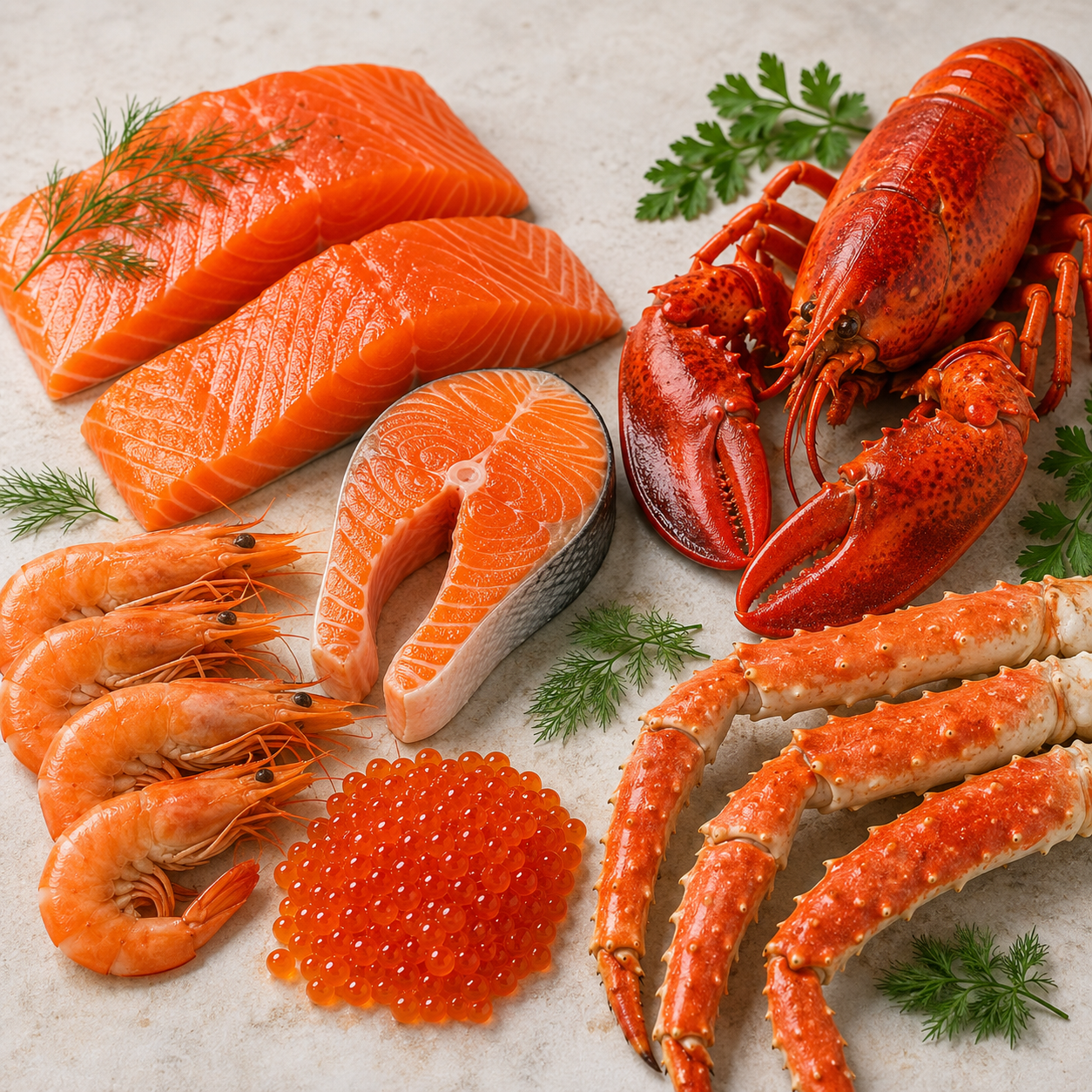
Astaxanthin is an orange-red, fat-soluble xanthophyll carotenoid. Scientifically, it is not itself a plant extract, but this site groups it under Plant Extracts. Natural sources include Haematococcus pluvialis, salmon, trout, and some shellfish, while supplements are mainly produced from H. pluvialis.
30-second check: which situation fits you best?
I mainly want everyday anti-inflammatory or antioxidant support
Astaxanthin does have antioxidant activity, but human benefits in generally healthy adults are concentrated in specific goals. Evidence does not show that everyone gains a clear additional benefit from taking it long term.
I have one clear goal I want to improve
Human studies have explored skin responses after UV exposure, eye fatigue after prolonged screen use, recovery after high-intensity exercise, selected cognitive outcomes in middle-aged or older adults, and some oxidative-stress, inflammatory, or lipid markers.
I am planning to use it or already taking it
Confirm whether the package number is the actual astaxanthin dose or the total weight of Haematococcus algae, algal powder, a blend, or a phospholipid formulation.
Basic Overview
What it is
Astaxanthin is an orange-red, fat-soluble xanthophyll carotenoid found naturally in microalgae and in fish that eat microalgae or small crustaceans. Humans cannot synthesize it, but it is not an essential nutrient required to sustain life. Supplements are usually extracted from Haematococcus pluvialis and formulated in oil or softgels.
Why people use it
- A stable, calculable astaxanthin dose
- A goal related to skin and UV exposure
- Eye fatigue after long periods of screen use
- Recovery after high-intensity exercise
- Exploratory use for selected cognitive outcomes in middle-aged or older adults
- Selected oxidative-stress or inflammatory markers
How it relates to healthy aging
Astaxanthin can influence pathways related to oxidative stress and inflammation, mechanisms that are relevant to skin, vascular, and tissue aging.
Mechanistic relevance does not mean it has been shown to reverse aging or extend lifespan. Current human evidence mainly concerns specific functions and biomarkers.
Supplement Assessment
Whether supplementation is worthwhile depends on a specific goal, the relevant population evidence, actual dose, formulation, and observation period—not “super antioxidant” marketing.
Lower supplementation priority
- Interested only because of “super antioxidant” marketing
- No specific goal to improve
- Mainly seeking vague anti-aging benefits
- Diet, exercise, sun protection, and sleep still have room for improvement
- Planning indefinite long-term use
Your next step:
Turn “antioxidant support” into something observable first. If you cannot define a goal, astaxanthin is usually not a high-priority supplement.
Clear goal: a trial may be reasonable
- The specific goal has human research in healthy adults
- The study population is reasonably similar to you
- You can confirm a natural algal source or another studied form
- You can verify the actual astaxanthin dose
- The trial period is long enough
- You accept that any improvement may be modest
- You are willing to reassess when the trial period ends
Your next step:
Match the goal, population, dose, and product form before deciding whether a trial is worthwhile.
Talk with a healthcare professional first
- Pregnancy or breastfeeding
- Children or adolescents using adult products on their own
- Complex ongoing medical treatment
- Long-term use of multiple medications
- Stacking several products that contain astaxanthin
- Long-term use at doses well above common product strengths
Your next step:
Ask a doctor or pharmacist to review the condition, medications, formula, and total daily intake together.
Quick Self-Check
Am I using it for a specific goal or because of “antioxidant” marketing?
Is there human research in healthy adults for my goal?
Does the package list actual astaxanthin or total algal-powder weight?
Do any of my other combination supplements already contain astaxanthin?
Am I willing to set a trial period before deciding whether to continue?
Food Sources
Representative Food Sources
| Food | Astaxanthin per 100 g | How to Read It |
|---|---|---|
| Wild sockeye salmon | About 2.6–3.8 mg | A standout natural food source; origin, season, and individual fish still create variation |
| Large trout | Up to about 2.5 mg | Some larger trout can reach relatively high levels, but products vary widely |
| Farmed Atlantic salmon | About 0.6–0.8 mg | Feed and farming conditions directly affect the actual content |
| Commercial salmon | About 0.31–0.47 mg | Retail samples can contain far less than sockeye salmon; flesh color is not a reliable dose estimate |
| Pacific white shrimp (wild juvenile muscle) | 0.073 ± 0.004 mg (free form; wet weight) | Mean ± standard error (SE) in one 2019 study. This is free astaxanthin only, excludes separately measured esterified forms, and is neither total astaxanthin nor a general average for shrimp meat. |
Data boundary: Foods sold under the broad name “salmon” can differ several-fold by species, farming method, and sample. Do not write that 100 g of salmon always contains a fixed amount. Shrimp meat ≠ shrimp shell. Species, feed, season, maturity, processing, and storage all affect astaxanthin content. The Pacific white shrimp entry is converted per 100 g of wet muscle; ± denotes the standard error, not a population content range.
How Much Can Food Provide?
Example 1 | 150 g wild sockeye salmon
At about 2.6–3.8 mg/100 g, this provides roughly 3.9–5.7 mg astaxanthin.
That reaches the milligram range used in some human studies, although the actual amount in fish still varies.
Example 2 | 150 g farmed Atlantic salmon
At about 0.6–0.8 mg/100 g, this provides roughly 0.9–1.2 mg astaxanthin.
Even among salmon, species and farming method can substantially change intake.
Cooking and storage tips
Choose fresh when practical: fresh fish generally preserves pigments better than prolonged processing or storage.
Normal cooking is fine: there is no need to eat fish raw simply to preserve astaxanthin.
Protect from light: reduce strong-light exposure and oxidation during storage.
Keep refrigerated and sealed: lower temperature and less air exposure can help limit oxidation.
Whole foods vs supplements
Whole Foods
- Also provide high-quality protein
- Salmon can also provide omega-3 fats
- Fit naturally into a normal dietary pattern
- Astaxanthin dose is not fixed
- Different fish species vary substantially
Supplements
- Actual dose per serving is easier to confirm
- Can provide a consistent milligram-level intake
- Easier to match with specific human studies
- Formulation and carrier can affect absorption
- Long-term use and dose boundaries still matter
Dosage
There is no RNI, RDA, AI, formal UL, or universal daily recommended dose. Regulatory references and human-study doses should not be presented as official recommendations.
Official Dose Status, Regulatory References & Human Research
Official Dose Status & Regulatory References
No RNI, RDA, AI, formal UL, or universal daily recommended dose has been established.
Human-Study References by Goal
These are study doses for specific settings, not recommended intakes for generally healthy adults.
Dose Boundaries & Dose–Benefit Relationship
Human studies commonly use about 4–12 mg/day for skin, eye, cognition, and selected exercise outcomes. That range describes research, not a recommendation.
Core boundary:The 4–12 mg/day range common in human research ≠ a daily recommendation; 20–28 mg/day in research ≠ a routine reference for generally healthy adults.
Important Note
There is no RNI, RDA, AI, formal UL, or universal daily recommended dose.
The ADI of 0.2 mg/kg/day is a food-safety risk-assessment value, not a daily intake target.
The European 8 mg/day figure is an important safety and authorization reference for adult Haematococcus astaxanthin supplements, not a formal UL.
China’s Haematococcus limit of ≤0.8 g/day refers to algal raw-material weight, not 800 mg astaxanthin.
Research doses of 12, 20, or even 28 mg/day do not mean generally healthy adults should use those amounts.
Dose Utilization
Astaxanthin is highly fat soluble, and different lipid formulations can produce several-fold differences in human exposure. The same 4 mg dose may not produce the same exposure across different oil carriers or delivery systems.
Milligrams remain the basic comparison, but they do not capture all absorption differences. High-exposure formulations should not be compared with conventional formulations by milligrams alone.
Higher absorption does not automatically mean stronger real-world health effects. Food-timing guidance is covered in Section 07.
How to Read Common Product Doses
The package number or total blend weight is not always the actual astaxanthin dose. Compare products by the actual amount of Astaxanthin first.
| Product | Package / Label Number | Dose That Is Actually Comparable | Formulation | How to Read It |
|---|---|---|---|---|
| NOW Foods Astaxanthin Extra StrengthOfficial product link | 10 mg Astaxanthin | 10 mg Astaxanthin/capsule | Oil-based softgel Zanthin®; Haematococcus pluvialis |
The 10 mg figure is the actual astaxanthin dose. Then compare source and carrier. |
| Life Extension Astaxanthin with PhospholipidsOfficial product link | 84 mg proprietary Blend | 4 mg Astaxanthin/capsule | Phospholipid complex 80 mg Phospholipids + 4 mg Astaxanthin |
84 mg is not the astaxanthin dose. Only 4 mg is astaxanthin, and 80 + 4 should not be rewritten as 84 mg of active astaxanthin. |
| Doctor's Best Astaxanthin with AstaRealOfficial product link | 6 mg Astaxanthin | 6 mg Astaxanthin/capsule | Oil-based formulation AstaReal®; Haematococcus pluvialis |
The 6 mg figure is the actual astaxanthin dose. The branded ingredient mainly helps identify source and specification. |
| Solgar Natural AstaxanthinOfficial product link | 5 mg Natural Astaxanthin | 5 mg Astaxanthin/capsule | Oil-based softgel Natural Astaxanthin |
Each capsule provides 5 mg actual astaxanthin. The number of daily servings reflects label directions, not an official recommendation. |
| Jarrow Formulas AstaxanthinOfficial product link | 12 mg Astaxanthin | 12 mg Astaxanthin/capsule | Oil-based softgel AstaPure®; Haematococcus pluvialis |
12 mg is a relatively high market strength. It is not proof of greater efficacy and is not a defined danger threshold. |
NOW Foods Astaxanthin Extra Strength
Official product link- Package / Label Number
- 10 mg Astaxanthin
- Dose That Is Actually Comparable
- 10 mg Astaxanthin/capsule
- Formulation
- Oil-based softgel
Zanthin®; Haematococcus pluvialis
- How to Read It
- The 10 mg figure is the actual astaxanthin dose. Then compare source and carrier.
Life Extension Astaxanthin with Phospholipids
Official product link- Package / Label Number
- 84 mg proprietary Blend
- Dose That Is Actually Comparable
- 4 mg Astaxanthin/capsule
- Formulation
- Phospholipid complex
80 mg Phospholipids + 4 mg Astaxanthin
- How to Read It
- 84 mg is not the astaxanthin dose. Only 4 mg is astaxanthin, and 80 + 4 should not be rewritten as 84 mg of active astaxanthin.
Doctor's Best Astaxanthin with AstaReal
Official product link- Package / Label Number
- 6 mg Astaxanthin
- Dose That Is Actually Comparable
- 6 mg Astaxanthin/capsule
- Formulation
- Oil-based formulation
AstaReal®; Haematococcus pluvialis
- How to Read It
- The 6 mg figure is the actual astaxanthin dose. The branded ingredient mainly helps identify source and specification.
Solgar Natural Astaxanthin
Official product link- Package / Label Number
- 5 mg Natural Astaxanthin
- Dose That Is Actually Comparable
- 5 mg Astaxanthin/capsule
- Formulation
- Oil-based softgel
Natural Astaxanthin
- How to Read It
- Each capsule provides 5 mg actual astaxanthin. The number of daily servings reflects label directions, not an official recommendation.
Jarrow Formulas Astaxanthin
Official product link- Package / Label Number
- 12 mg Astaxanthin
- Dose That Is Actually Comparable
- 12 mg Astaxanthin/capsule
- Formulation
- Oil-based softgel
AstaPure®; Haematococcus pluvialis
- How to Read It
- 12 mg is a relatively high market strength. It is not proof of greater efficacy and is not a defined danger threshold.
Health Effects
Skin & UV Exposure
In randomized trials in healthy adults, 4 mg/day for about 9 weeks increased the minimal erythema dose after experimental UV exposure and improved some skin-hydration measures. Doses of 6–12 mg for 16 weeks also helped maintain selected skin measures. These are supportive effects and do not replace sunscreen, shade, or reducing excessive UV exposure.
View systematic review
Screen-Related Eye Fatigue
Several studies in healthy adults suggest astaxanthin may improve selected measures of accommodation, visual fatigue, or visual function after prolonged screen use. However, the trials were small and used different methods. At this stage, it is reasonable to say that some people with screen-related eye fatigue may benefit—not that astaxanthin universally improves vision or treats myopia or other eye disease.
View research review
Exercise Recovery & Performance
Systematic reviews more consistently support limited improvements in selected post-exercise oxidative-stress, muscle-damage, and recovery markers than direct gains in endurance or strength. Study doses range from about 4–28 mg/day, with substantial differences in training status and duration. Higher-dose exercise studies should not be copied directly to generally healthy adults.
View meta-analysis
Oxidative-Stress & Inflammatory Markers
Meta-analyses of randomized trials suggest modest improvements in some oxidative-stress and inflammatory markers, but results vary across outcomes and studies. Most changes are laboratory measurements and should not be expanded into a claim of broad whole-body anti-inflammatory benefit or assumed to be noticeable in daily life.
View meta-analysis
Blood Lipids & Metabolic Health
Some meta-analyses and randomized trials report signals such as lower triglycerides or higher HDL, but participants often had dyslipidemia or metabolic risk rather than being uniformly healthy adults. Study durations are also limited, so astaxanthin should not be positioned as a routine lipid- or glucose-management supplement for healthy people.
View meta-analysis
Cognition & Brain Function
Some studies in healthy middle-aged and older adults used 6 or 12 mg/day for about 12 weeks and reported improvement on selected cognitive tests, but the overall differences were not consistently robust. Trials are small and long-term independent replication is limited, so this should be described as potential support rather than evidence that astaxanthin improves memory or prevents cognitive decline.
View meta-analysis
Product Selection
First check the actual Astaxanthin amount, then confirm the Haematococcus pluvialis source and the oil, phospholipid, or other delivery system.
Check these four things when buying
What is the active ingredient?
Confirm that the label clearly lists Astaxanthin and preferably states the source. If the front mainly lists algal powder, algal oil, or a proprietary blend, keep looking for the actual milligrams of astaxanthin provided.
How much do you actually get per serving?
Check the amount per capsule, per serving, and per day. Do not treat the weight of Haematococcus algae, a branded blend, or the entire formula as the target astaxanthin dose.
Are there unnecessary added ingredients?
Olive oil, sunflower oil, safflower oil, and similar lipid carriers can have a real formulation role. Pay more attention to added sugar, complex stimulant blends, or formulations that obscure the actual active dose.
Is quality control credible?
Check the manufacturer, source species, actual active amount, lot number, and expiration date, and look for consistency, microbiological, and contaminant controls. A branded ingredient can improve traceability but does not prove stronger effects.
How to Read the Label5 steps to find the true astaxanthin dose
Find Astaxanthin first, then check source, actual amount, daily total, formulation, and quality.
80 mg Phospholipids; do not add this to the 4 mg astaxanthin dose
Calculate using the actual 4 mg astaxanthin per capsule.
Source | Actual active dose | Carrier | Batch testing
An 84 mg blend contains 80 mg phospholipids + 4 mg astaxanthin. The dose that should be compared is 4 mg astaxanthin.
Find astaxanthin first
Look for “Astaxanthin” rather than relying only on Haematococcus or total blend weight.
Check the true astaxanthin dose
If the label states “Astaxanthin from Haematococcus pluvialis 6 mg,” the comparable dose is 6 mg astaxanthin.
Break down proprietary blends
An 84 mg phospholipid blend that contains 80 mg phospholipids and 4 mg astaxanthin does not provide 84 mg astaxanthin.
Calculate actual daily intake
5 mg astaxanthin/capsule × 2 capsules/day = 10 mg astaxanthin/day. This is label math, not a site recommendation.
Then check formulation and quality
Astaxanthin → source → amount per capsule → daily total → oil / phospholipid carrier → quality.
How to Choose Among Common Forms(Source, dose transparency, and delivery systems differ)
Haematococcus Oil / Oleoresin
Key Features
A common natural form that disperses algal astaxanthin in plant oil. The dose is easy to standardize, and this source is used in European regulation and many human studies.
Site Guidance
For a simple formula with a transparent dose and easy comparison with research, a conventional algal-oil product is often sufficient.
Haematococcus Powder / Biomass
Key Features
The package may list several hundred milligrams of algal powder, while astaxanthin makes up only a fraction. Chinese specifications require total astaxanthin ≥1.5%, so algal-powder milligrams are not astaxanthin milligrams.
Site Guidance
Without a clearly stated astaxanthin dose, comparison with research or other products is difficult. Prefer products that disclose the active ingredient clearly.
Conventional Oil-Based Softgel
Key Features
Uses the fat-soluble nature of astaxanthin by dispersing it in plant oil. Many products list 4–12 mg per capsule, making labels easy to interpret.
Site Guidance
Practical for most users who simply need a clear dose. There is usually no need to pay a large premium solely for a more complex delivery system.
Phospholipid Complex
Key Features
Combines astaxanthin with phospholipids or other delivery systems to increase human exposure. Lipid formulations can meaningfully change absorption and blood exposure.
Site Guidance
Reasonable when the price difference is small, but higher absorption does not prove stronger effects on skin, eyes, or exercise recovery.
Branded Algal Ingredients
Key Features
AstaReal®, AstaPure®, and Zanthin® represent different manufacturing, extraction, and standardization systems and can improve traceability of source and specification.
Site Guidance
Quality documentation is useful, but it does not mean the same milligram dose will produce stronger health effects.
How to Take
There is no universal official recommended dose. Take it with normal meals and set an observation period around a specific goal.
Default plan (healthy adults)
Official recommended dose: No universal recommended dose has been established
Human-study doses: Healthy-adult studies commonly use about 4–12 mg/day
Frequency: Most products are taken once daily
GI tolerance: If your stomach is sensitive, prefer taking it with food
With food?: Prefer taking it with a normal meal
Split doses?: Routine doses usually do not require forced split dosing
Missed dose: If you occasionally miss a dose, skip it; do not double the next dose
Frequently asked questions
With food or on an empty stomach?
With food is generally more practical. Astaxanthin is highly fat soluble and lipid conditions affect absorption, so there is no need to insist on fasting.
Do I need to eat extra oil?
No. A normal meal usually contains enough fat, and most softgels already use a plant-oil carrier.
Morning or evening?
There is no reliable evidence requiring a specific time of day. Choose a time that is easy to maintain and fits a normal meal.
Do I need to split the dose?
Common 4–12 mg doses usually do not need to be split, and there is no evidence that split dosing clearly improves outcomes.
How long should I take it?
Skin studies last about 9–16 weeks, eye studies about 6 weeks, and cognition studies about 8–12 weeks. Use the duration that matches your goal rather than applying one schedule to everything.
How do I know whether it is working?
Track outcomes that match the goal, such as post-UV skin response, hydration, screen-related fatigue, soreness, or recovery speed. Without a defined outcome, it is difficult to judge benefit.
Risks & Precautions
Common Side Effects
- Human studies generally report good tolerability
- Occasional stomach discomfort may occur
- Mild gastrointestinal symptoms may occur
- Some people may not tolerate the softgel or carrier ingredients
- Individual reactions to algae or other product ingredients are possible
- Frequency data are limited, so do not invent adverse-event percentages
Higher-Dose Risks
- No formal UL does not mean the dose can be increased without limit
- 12 mg/day remained generally well tolerated in some 12–16 week trials and is not a defined high-risk threshold
- That does not prove 20 mg/day is safe long term
- It does not prove 28 mg/day is safe long term
- It does not prove multi-year high-dose use is risk free
- Higher doses have not been shown to work better
People Who Need More Caution
- Pregnancy or breastfeeding: targeted safety data are limited
- Children and adolescents: do not copy adult doses
- Complex ongoing medical treatment
- Allergy to algae or other product ingredients
- Long-term use well above common research doses
- Stacking multiple products that contain astaxanthin
Medications & Special Situations
- There is no established, consistent list of common drug interactions.
- Do not automatically state that astaxanthin interacts with anticoagulants, glucose-lowering drugs, or blood-pressure medications.
- If you use long-term antihypertensive, glucose-lowering, immune-modulating, or other prescription medication, have a doctor or pharmacist review concentrated long-term astaxanthin use.
- Disease-study doses should not be rewritten as healthy-adult doses, and mechanistic research does not prove that astaxanthin can be safely added to treatment.
- If an eye-health or antioxidant combination already contains astaxanthin, calculate the total daily amount first.
Stop and Ask for Advice
Stop and speak with a doctor or pharmacist if persistent gastrointestinal discomfort, rash, or another clearly unusual symptom continues.
Seek Medical Care Promptly
Seek prompt medical care for difficulty breathing, swelling of the face, lips, or tongue, a severe systemic allergic reaction, or another rapidly worsening serious symptom.
Sources
Sources are grouped by regulation and safety, human doses, skin, eye, exercise, oxidative stress and inflammation, lipids and metabolism, food sources, human absorption and formulation, and current product-dose examples.
1. Regulation & Safety
2. Human Doses
3. Skin
4. Eye Health
5. Exercise & Recovery
6. Oxidative Stress & Inflammation
7. Blood Lipids & Metabolic Health
8. Food Sources
9. Human Absorption & Formulation
10. Mainstream Product-Dose Examples
Last updated: August 12, 2026