Sulforaphane
Sulforaphane / SFN / Sulforaphane / Glucoraphanin / Myrosinase
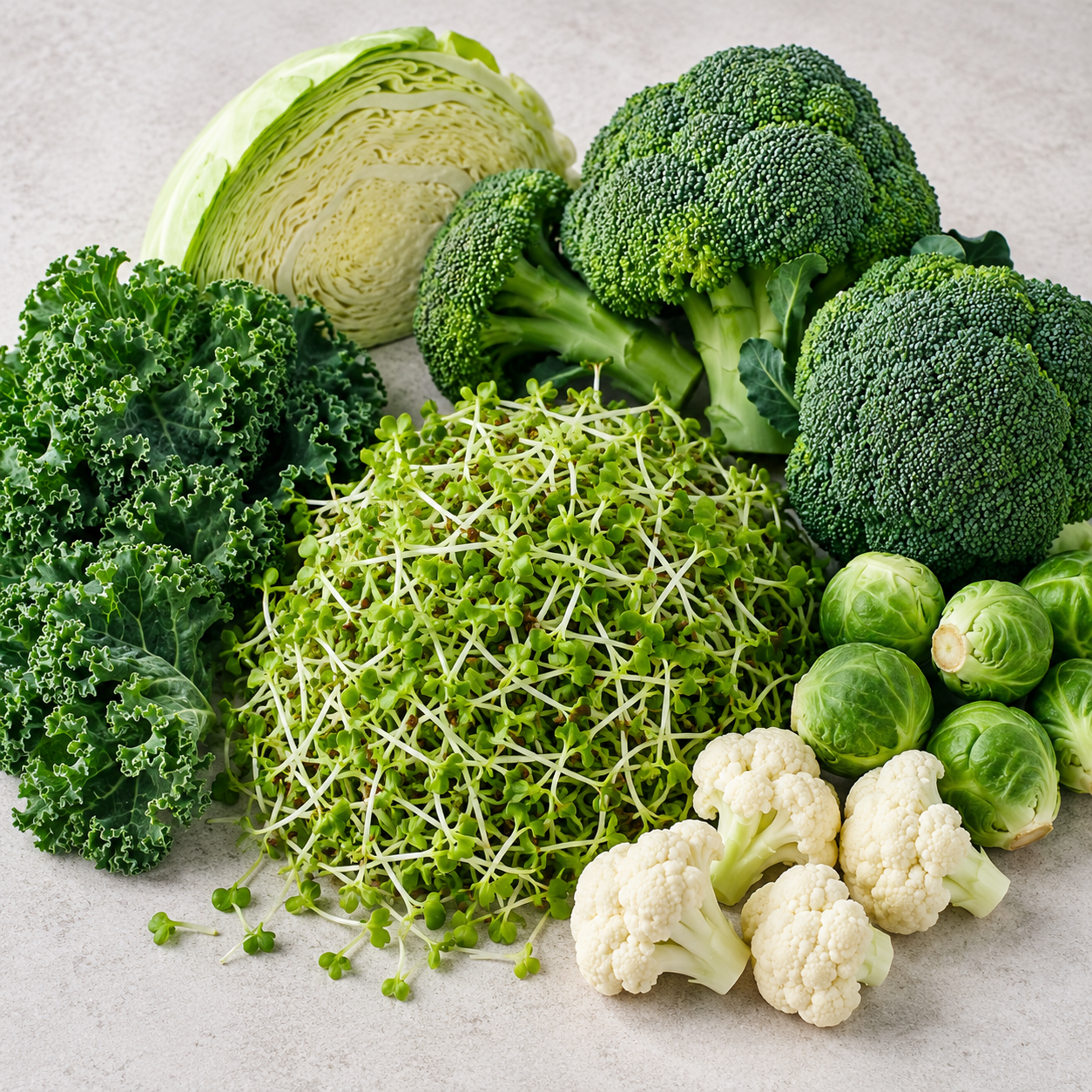
Sulforaphane is a naturally occurring plant compound formed in cruciferous vegetables such as broccoli and broccoli sprouts. It is not an essential nutrient.
30-second check: which situation fits you best?
I mainly want everyday anti-inflammatory or antioxidant support
You have seen that sulforaphane can activate Nrf2 and support antioxidant defenses and are considering it for long-term anti-inflammatory, antioxidant, or healthy-aging use, but you do not have a clear measurable goal. Generally healthy adults can first obtain related compounds from foods such as broccoli sprouts.
I have one clear goal I want to improve
Human research exists for exercise recovery, oxidative-stress markers, pollutant exposure, ALT, and cognition in healthy older adults, but populations, doses, and formulations differ and most outcomes are still changes in selected markers.
I am planning to use it or already taking it
First confirm whether the product provides direct sulforaphane, glucoraphanin precursor, or simply broccoli extract, then check the precursor amount, active myrosinase, and whether delayed release is used. 35 mg of precursor is not the same as 35 mg of direct sulforaphane.
Basic Overview
What it is
Plants usually store sulforaphane as its precursor, glucoraphanin. When broccoli is chopped or chewed, myrosinase helps convert glucoraphanin into sulforaphane. That means a supplement label should not be judged only by how many milligrams of “broccoli extract” it contains; what matters more is how much sulforaphane or glucoraphanin it can actually provide.
Sulforaphane (SFN): the active compound ultimately formed and absorbed.
Glucoraphanin (GR): the precursor that must be converted further.
Myrosinase: the enzyme that helps convert glucoraphanin into sulforaphane.
In simple terms: glucoraphanin + myrosinase → sulforaphane → human absorption.
Why people use it
- A goal-directed trial related to oxidative stress or cellular defense
- Pollutant-metabolism markers after environmental exposure
- Exercise-related muscle damage and recovery
- Selected liver-function, cognitive, or metabolic markers
- A more standardized dose than mature broccoli can provide
- A fixed product and trial period that can be reassessed
How it relates to healthy aging
Sulforaphane can affect cellular-defense pathways such as Nrf2, and studies in healthy adults show that glucoraphanin can alter defense-related genes such as skin NQO1.
That mainly shows that human tissues respond biologically. Reliable evidence does not show that long-term supplementation in healthy adults reverses overall aging, extends lifespan, or meaningfully lowers biological age.
Supplement Assessment
Clear goal → relevant human evidence → precursor or direct sulforaphane → comparable conversion efficiency → whether continued use is worthwhile.
Low priority right now
- No specific goal
- Interested only because of Nrf2, antioxidant, or anticancer marketing
- Wanting a supplement to make the whole body younger
- Regular intake of cruciferous vegetables
- Diet, exercise, and sleep still have room for improvement
- Planning indefinite use without a measurable outcome
- The product lists only broccoli extract with no precursor or direct sulforaphane amount
Your next step:
Prioritize sprouts, broccoli, and an overall healthy diet, and turn broad marketing claims into a goal you can actually evaluate.
Clear goal: worth a closer look
- A specific exercise-recovery or muscle-damage goal
- Interest in pollutant-metabolism research after a defined exposure
- ALT near the upper end of the normal range
- Interest in cognition or mood research in healthy older adults
- Accepting that benefits may be limited to small changes in selected markers
- Willing to distinguish precursor studies from direct-sulforaphane studies
- Able to choose a product with myrosinase and a formulation similar to the research
- Willing to set a defined trial period
Your next step:
Confirm whether the research used glucoraphanin, direct sulforaphane, and myrosinase. Do not copy milligram doses across different formulations.
Talk with a healthcare professional first
- Pregnancy or breastfeeding
- Concentrated supplements for children or adolescents
- Existing thyroid disease with plans for long-term high-dose use
- A sensitive gastrointestinal tract
- Regular use of multiple prescription medications
- Complex ongoing medical treatment
- A product containing piperine or other active ingredients
- Plans to use a high-exposure direct-sulforaphane formulation
Your next step:
Ask a doctor or pharmacist to review the condition, medications, and the full formula rather than evaluating only one ingredient.
Quick Self-Check
Does the label list direct sulforaphane or a precursor?
Does it contain active myrosinase?
What is the actual precursor or sulforaphane amount per serving?
Standard capsule or delayed / enteric release?
Single ingredient or combination formula?
Is the product comparable with the formulation used in research?
Food Sources
Common Foods High in Sulforaphane Precursors
| Food | Form | Precursor per 100 g | Common Serving | Approx. Precursor per Serving | How to Read It |
|---|---|---|---|---|---|
| Broccoli sprouts | Young sprouts, such as 2–3 days old | About 440–726 mg | 20 g | About 88–145 mg | Large differences by cultivar and batch; this is precursor, not direct sulforaphane |
| Broccoli microgreens | Fresh, about 10 days old | About 560–595 mg | 16 g | About 90–95 mg | Potential yield is not the same as the amount actually absorbed |
| Mature broccoli | Fresh raw florets | Average about 17 mg; range <0.2–49 mg | 100 g | Average about 17 mg | Store-bought samples vary widely, so one head should not be assumed to match another |
How should you read these numbers?
Foods mainly contain glucoraphanin precursor, not direct sulforaphane. In a specific 2026 study in healthy adults, average bioavailability was about 39.8% when glucoraphanin was paired with active myrosinase versus about 18.6% for glucoraphanin alone. This suggests substantially greater average exposure, but individual variation was large and it should not be rewritten as “myrosinase guarantees twice the absorption.” Laboratory potential yield is also not the same as the dose that ultimately enters the bloodstream.
How to Get It Naturally From Food
Example 1
About 20 g fresh broccoli sprouts plus a normal serving of other vegetables.
Normal chewing allows the plant precursor and myrosinase to mix; this is not a daily recommended amount.
Example 2
100–200 g lightly cooked broccoli plus a small amount of mustard-seed powder.
In research, 200 g cooked broccoli plus 1 g brown mustard-seed powder substantially increased related metabolite levels. There is no need to force yourself to eat large amounts of sprouts every day.
Cooking and storage tips
Chop or chew thoroughly: helps the precursor come into contact with myrosinase.
Short steaming is a practical choice: it generally preserves myrosinase better than prolonged boiling.
Avoid prolonged high heat: long cooking can inactivate myrosinase even when some precursor remains.
Frozen broccoli depends on processing: commercial blanching before freezing can damage myrosinase.
Cooked broccoli can be paired with mustard powder: a small amount of mustard-seed powder can provide external myrosinase.
Whole foods vs supplements
Whole Foods
- Also provide fiber, vitamins, and other plant bioactives
- Fresh sprouts naturally contain both precursor and plant myrosinase
- Chopping, chewing, and cooking affect actual formation
- Cultivars and batches vary substantially
- Difficult to obtain a fixed dose every day
Supplements
- Precursor or direct sulforaphane can be standardized more precisely
- External myrosinase can be added to improve conversion
- Delayed release can be used to protect myrosinase
- Total broccoli-extract weight can be misleading
- Different formulations should not be compared only by milligrams
Dosage
Glucoraphanin precursor, direct sulforaphane, glucoraphanin + myrosinase, and stabilized formulations use different dose definitions and should not be treated as equivalent.
Official Dose Status, Regulatory References & Human Research
Regulatory Product-Use Reference
This is the labeled use of a specific licensed product, not a recommended intake or UL.
Human-Study Dose References
Glucoraphanin, direct sulforaphane, mixed beverages, and stabilized formulations cannot be collapsed into a recommended range such as 30–60 mg/day.
How to Interpret Dose
There is no single daily dose, minimum effective dose, or universal danger threshold.
Core boundary:Broccoli-extract weight ≠ glucoraphanin weight ≠ the amount of sulforaphane formed ≠ the amount ultimately absorbed.
Important Note
There is no RNI, RDA, AI, formal UL, or universal recommended dose. 30 mg glucoraphanin is not the same as 30 mg direct sulforaphane.
Active myrosinase can meaningfully change human exposure, while higher-dose stabilized direct sulforaphane produced substantially more gastrointestinal adverse effects.
The absence of a UL does not mean the dose can be increased without limit, and long-term glucoraphanin data should not be applied automatically to direct sulforaphane.
Dose Utilization
Glucoraphanin alone converts less efficiently. Average bioavailability was about 39.8% for glucoraphanin + active myrosinase versus about 18.6% for glucoraphanin alone.
Fresh sprouts can sometimes produce higher metabolite exposure than some extracts with the same nominal sulforaphane-equivalent amount. Equal theoretical yield does not mean equal human utilization.
Delayed release may protect myrosinase and change conversion, but greater exposure does not automatically mean greater real-world health benefit.
How to Read Common Product Doses
Package number ≠ actual sulforaphane dose. Keep product names as officially written and distinguish glucoraphanin precursor, direct sulforaphane, and myrosinase in the interpretation.
| Product | Package / Label Number | Dose That Is Actually Comparable | Formulation | How to Read It |
|---|---|---|---|---|
| KAGOME SulforaphaneOfficial product link | 24–50 mg glucoraphanin / 3 capsules | 24–50 mg glucoraphanin/day | Glucoraphanin precursor Broccoli-sprout source |
This is not direct sulforaphane; the amount ultimately formed is not fixed. |
| Jarrow Formulas BroccoMax® Delayed ReleaseOfficial product link | 35 mg glucoraphanin / 2 capsules | 35 mg glucoraphanin + active myrosinase | Glucoraphanin + myrosinase Delayed Release |
35 mg is not direct sulforaphane. Myrosinase and delayed release are intended to support conversion. |
| Life Extension Optimized Broccoli with MyrosinaseOfficial product link | 385 mg Broccoli Seed Extract / capsule | 38.5 mg glucoraphanin / capsule | Standardized to 10% glucoraphanin Also contains 145 mg White Mustard Seed Extract as a source of myrosinase |
385 mg Broccoli Seed Extract is not sulforaphane. The 38.5 mg and 145 mg figures cannot be added and rewritten as 183.5 mg sulforaphane. |
| Avmacol® Extra StrengthOfficial product link | 25 mg glucoraphanin + myrosinase complex / tablet | The ratio is not stated, so a reliable conversion is not possible | Glucoraphanin + myrosinase complex Proprietary complex |
The 25 mg figure is neither a confirmed glucoraphanin amount nor a direct sulforaphane amount. |
| BROQOfficial product link | Serving Size claims a minimum yield of 25 mg sulforaphane | Manufacturer-guaranteed minimum yield of 25 mg sulforaphane/serving | Glucoraphanin + myrosinase Horseradish-derived myrosinase + Delayed Release |
Minimum Yield is not the amount of sulforaphane placed directly in the product and does not mean the body will necessarily absorb 25 mg. |
| Health Canada Broccogen 10Official product link | 500 mg broccoli material / capsule | 30 mg glucoraphanin / capsule | Standardized glucoraphanin product Health Canada licensed product |
500 mg is the total raw-material amount. The 30 mg figure is still glucoraphanin precursor, not direct sulforaphane. |
KAGOME Sulforaphane
Official product link- Package / Label Number
- 24–50 mg glucoraphanin / 3 capsules
- Dose That Is Actually Comparable
- 24–50 mg glucoraphanin/day
- Formulation
- Glucoraphanin precursor
Broccoli-sprout source
- How to Read It
- This is not direct sulforaphane; the amount ultimately formed is not fixed.
Jarrow Formulas BroccoMax® Delayed Release
Official product link- Package / Label Number
- 35 mg glucoraphanin / 2 capsules
- Dose That Is Actually Comparable
- 35 mg glucoraphanin + active myrosinase
- Formulation
- Glucoraphanin + myrosinase
Delayed Release
- How to Read It
- 35 mg is not direct sulforaphane. Myrosinase and delayed release are intended to support conversion.
Life Extension Optimized Broccoli with Myrosinase
Official product link- Package / Label Number
- 385 mg Broccoli Seed Extract / capsule
- Dose That Is Actually Comparable
- 38.5 mg glucoraphanin / capsule
- Formulation
- Standardized to 10% glucoraphanin
Also contains 145 mg White Mustard Seed Extract as a source of myrosinase
- How to Read It
- 385 mg Broccoli Seed Extract is not sulforaphane. The 38.5 mg and 145 mg figures cannot be added and rewritten as 183.5 mg sulforaphane.
Avmacol® Extra Strength
Official product link- Package / Label Number
- 25 mg glucoraphanin + myrosinase complex / tablet
- Dose That Is Actually Comparable
- The ratio is not stated, so a reliable conversion is not possible
- Formulation
- Glucoraphanin + myrosinase complex
Proprietary complex
- How to Read It
- The 25 mg figure is neither a confirmed glucoraphanin amount nor a direct sulforaphane amount.
BROQ
Official product link- Package / Label Number
- Serving Size claims a minimum yield of 25 mg sulforaphane
- Dose That Is Actually Comparable
- Manufacturer-guaranteed minimum yield of 25 mg sulforaphane/serving
- Formulation
- Glucoraphanin + myrosinase
Horseradish-derived myrosinase + Delayed Release
- How to Read It
- Minimum Yield is not the amount of sulforaphane placed directly in the product and does not mean the body will necessarily absorb 25 mg.
Health Canada Broccogen 10
Official product link- Package / Label Number
- 500 mg broccoli material / capsule
- Dose That Is Actually Comparable
- 30 mg glucoraphanin / capsule
- Formulation
- Standardized glucoraphanin product
Health Canada licensed product
- How to Read It
- 500 mg is the total raw-material amount. The 30 mg figure is still glucoraphanin precursor, not direct sulforaphane.
Health Effects
Cellular Antioxidant Defense
In a 2025 study of 18 healthy adults, 450 mg glucoraphanin/day increased skin NQO1 mRNA by about 3.1-fold and affected inflammation-related genes. The sample was very small, and the study did not show younger-looking skin or slower overall aging.
View human study
Environmental Pollutant Metabolism
Multiple human studies suggest broccoli-sprout preparations rich in sulforaphane and its precursors can increase metabolism and excretion of selected air pollutants. In a randomized trial of 291 adults, urinary excretion of benzene- and acrolein-related metabolites increased by about 61% and 23%, respectively; a later study of 170 adults again found greater benzene metabolism at a higher dose. These studies measured metabolism rather than proving a general “detox” effect or lower long-term disease risk from pollution.
View randomized controlled trial
Exercise Recovery
Several small human studies suggest sulforaphane may improve selected markers of muscle soreness, muscle damage, or oxidative stress, while other trials have not found clear advantages in strength, soreness, overall recovery, or exercise performance. Current results are inconsistent, so this remains an exploratory recovery use rather than an established sports-supplement effect.
View human study
Liver-Related Markers
Some small studies in people with fatty liver or relatively high liver enzymes suggest glucoraphanin may reduce ALT or other liver-related markers, while other studies and pooled analyses have not shown consistent improvement. Sulforaphane should not be described as a proven “liver-protection supplement,” and findings from patient populations should not be generalized to healthy adults with normal liver function.
View randomized controlled trial
Cognition & Mood
Two independent 12-week randomized trials involving a total of 288 healthy older adults both reported improvement in processing speed. One also found better working memory, while the other observed less negative mood. The studies came from closely related research teams, so larger independent replication is still needed, and they do not show prevention of cognitive decline or dementia.
View randomized controlled trial
Blood Glucose Control
Several human studies have examined sulforaphane in people with diabetes or prediabetes, but results are inconsistent. Some reported improvements in fasting glucose or HbA1c, particularly in selected people with obesity or poorer glucose control, while pooled analyses have not shown a stable overall benefit and newer trials have sometimes missed their primary outcome. Sulforaphane is not an established routine glucose-control supplement, and patient findings should not be applied directly to people with normal glucose.
View clinical research review
Product Selection
First distinguish direct sulforaphane from a precursor, then check the actual dose, myrosinase, delayed release, and quality.
Check these four things when buying
What does the product actually provide?
Confirm whether the product provides direct sulforaphane or glucoraphanin that still needs to be converted. If a label only says Broccoli Extract 500 mg without stating the actual precursor or direct sulforaphane amount, the dose cannot be interpreted reliably.
How much do you actually get per serving?
Do not treat the weight of broccoli, broccoli seed, or the entire extract as sulforaphane. Look for glucoraphanin content, direct sulforaphane, or a manufacturer-guaranteed Minimum Yield.
Does it include myrosinase for conversion?
For precursor products, active myrosinase matters because it helps conversion and reduces the degree to which exposure depends entirely on individual gut microbiota.
Is quality control credible?
Check botanical source, plant part, precursor or direct active amount, source of myrosinase, Standardized to percentage, and Serving Size. Yield claims are more useful when supported by batch testing.
How to Read the Label5 steps to distinguish precursor, direct sulforaphane, and conversion conditions
Find Sulforaphane or Glucoraphanin first, then check the actual milligrams, Myrosinase, and whether Delayed Release is used.
145 mg White Mustard Seed Extract as a source of Myrosinase
Interpret according to the precursor and formulation.
Source | Standardization | Myrosinase | Batch testing
385 mg × 10% = 38.5 mg glucoraphanin. The 145 mg white-mustard-seed extract is used as a source of myrosinase and cannot be added to create 183.5 mg sulforaphane.
Identify direct sulforaphane or a precursor first
Confirm whether the label provides Sulforaphane, Glucoraphanin, or Sulforaphane Glucosinolate.
Do not be misled by broccoli-extract milligrams
385 mg Broccoli Seed Extract × 10% = 38.5 mg Glucoraphanin. The 385 mg figure is not the sulforaphane dose.
Look for myrosinase
Confirm whether Myrosinase is included because it affects conversion from precursor to sulforaphane. The same precursor milligrams do not guarantee the same human exposure.
Check for delayed release
Delayed Release is a formulation feature that may help protect myrosinase. It is not an additional sulforaphane dose.
Count combination ingredients separately
Mustard-seed extract, horseradish, sprout powder, vitamins, piperine, and other ingredients should be interpreted separately and not added directly to the sulforaphane or precursor amount.
How to Choose Among Common Forms(Conversion conditions and dose definitions differ)
Glucoraphanin Precursor Only
Key Features
Provides glucoraphanin rather than direct sulforaphane. Without active myrosinase, conversion relies more heavily on gut microbiota and can vary substantially between people.
Site Guidance
Reasonable when price and precursor dose are the priority. If more consistent conversion matters, also check for myrosinase.
Glucoraphanin + Active Myrosinase
Key Features
Provides both the precursor and the conversion enzyme, which can improve conversion efficiency and reduce complete dependence on gut microbiota.
Site Guidance
If you want more consistent sulforaphane generation, this is generally more useful to prioritize than simply choosing a higher precursor milligram number.
Glucoraphanin + Myrosinase + Delayed Release
Key Features
Adds delayed release to a precursor + myrosinase formula to reduce exposure of the enzyme to the stomach environment.
Site Guidance
Useful if formulation stability matters, but still compare the actual precursor amount and quality before paying a premium just for delayed release.
Direct Sulforaphane
Key Features
Provides preformed sulforaphane and does not depend on precursor conversion, so the dose is more direct. Stability and delivery technology can still differ substantially.
Site Guidance
Check the true direct-sulforaphane milligrams, stability, and matching human research. Do not compare it milligram for milligram with a precursor product.
Broccoli Sprouts or Sprout Powder
Key Features
Retains precursor, natural myrosinase, and other plant bioactives, making it closer to food, but composition varies with cultivar, processing, and storage.
Site Guidance
Fresh sprouts are useful when food is the priority. For a fixed research dose, standardized supplements are easier to quantify.
Quick Comparison of Five Common Forms
| Form | Is the dose easy to interpret? | Conversion consistency | More suitable for |
|---|---|---|---|
| Precursor only | Fairly easy | Lower; greater individual variability | People prioritizing price and a simple formula |
| Precursor + myrosinase | Easy | Higher | People wanting more consistent sulforaphane exposure |
| Precursor + myrosinase + delayed release | Easy | Higher | People who place more weight on formulation and conversion consistency |
| Direct sulforaphane | Most direct | Does not depend on precursor conversion | People who can verify stability and the direct dose |
| Broccoli sprouts / sprout powder | Harder to quantify precisely | Depends on food state and processing | People who prioritize whole foods |
How to Take
Sulforaphane has no universal official dose. First confirm whether the product provides direct sulforaphane or a precursor.
Default plan (healthy adults)
Official recommended dose: No universal official recommended dose has been established
Frequency: Follow the specific product and formulation used
GI tolerance: If it causes stomach discomfort, adjust how you take it
With food or on an empty stomach?: There is no single rule for every formulation
Split doses?: Higher daily amounts can be divided according to the product directions
Long-term use?: Set an observation period around a defined goal
Missed dose: If you occasionally miss a dose, simply skip it
Frequently asked questions
With food or on an empty stomach?
There is no universal best time. If taking it fasting causes nausea or abdominal discomfort, there is no reason to persist simply for a claimed absorption advantage.
Does it have to contain myrosinase?
Not absolutely, but active myrosinase generally increases and stabilizes conversion from glucoraphanin. Without it, conversion depends more on gut microbiota.
Can cooked broccoli still provide sulforaphane?
Yes, but its own myrosinase may be inactivated. Short steaming is a practical choice, and a small amount of mustard-seed powder can provide an external source of myrosinase.
Is frozen broccoli useless?
No. The precursor may remain, but commercial blanching can damage myrosinase and reduce the amount ultimately formed and utilized.
Do I need to take it twice a day?
Split dosing may prolong metabolite exposure, but it has not been shown to produce greater real-world benefit in generally healthy adults.
How long should I take it?
Exercise studies have used about 4 weeks, cognition and pollutant studies about 12 weeks, and one liver-related study 24 weeks. Without a clear goal, do not default to indefinite use.
Risks & Precautions
Common Side Effects
- Abdominal discomfort: more common with higher-dose direct formulations
- Nausea
- Vomiting
- Diarrhea or bloating
- Rash or itching
- For mild symptoms, pause and reassess. Do not force continued use if nausea, abdominal pain, vomiting, or diarrhea keeps recurring.
Higher-Dose Risks
- There is no formal UL. The absence of a UL does not mean the dose can be increased without limit.
- 60 mg glucoraphanin/day for 24 weeks should not be rewritten as evidence that 60 mg direct sulforaphane is safe long term.
- Stabilized direct sulforaphane at about 46–92 mg/day produced more gastrointestinal adverse effects.
- High-absorption or high-conversion formulations should not automatically use safety data from conventional precursor products.
- Long-term data for high-dose direct sulforaphane are limited.
People Who Need More Caution
- Pregnancy or breastfeeding
- Children and adolescents using concentrated supplements
- Existing thyroid disease with plans for long-term high-dose use
- A sensitive gastrointestinal tract
- Complex medical treatment
- Use of a special stabilized or high-exposure formulation
- A 12-week beverage study did not worsen TSH or free T4. A 4-week study using 20 g raw sprouts/day found only a small decline in T3 that remained within the normal range, with no clear change in T4 or TSH; values recovered after stopping. Ordinary food intake has not shown a clear thyroid-harm signal.
Medications & Special Situations
- Human drug-interaction data are limited. In-vitro drug-enzyme findings should not be rewritten as proven clinical interactions.
- Anticoagulant or antiplatelet drugs: the Broccogen 10 product advises users of anticoagulants to consult first, but this does not prove that all sulforaphane products increase bleeding.
- Products containing piperine require separate review. Risks from a combination formula should not all be attributed to sulforaphane.
- Before surgery, tell your clinician about the supplement, but current evidence does not establish one universal rule such as stopping 7 or 14 days beforehand.
Stop and Ask for Advice
Stop and speak with a doctor or pharmacist if you develop persistent abdominal pain, nausea, vomiting, diarrhea, marked bloating, or recurrent rash.
Seek Medical Care Promptly
Seek prompt medical care for difficulty breathing, swelling of the face or lips, persistent severe vomiting, dehydration, severe abdominal pain, or other clearly serious symptoms.
Sources
Sources support the relationship among glucoraphanin precursor, direct sulforaphane, and myrosinase; food content and cooking; human doses and safety; evidence in healthy adults; and current product labels.
1. Basic Information, Food Content & Absorption
2. Cooking & Food Bioavailability
3. Human Doses & Safety
4. Human Evidence in Healthy Adults
5. Regulatory & Product-Label Examples
6. Data Boundaries
This page defaults to generally healthy adults. Glucoraphanin is not sulforaphane; broccoli-extract weight ≠ precursor weight ≠ potential yield ≠ final human absorption; myrosinase and delayed release affect exposure; biomarker changes do not prove cancer prevention, general detoxification, or anti-aging; high-dose direct formulations should not use precursor safety data automatically.
Last updated: August 12, 2026