Turmeric Powder
Turmeric Powder / Plant Powder / Spice Powder / Curcuma longa L.
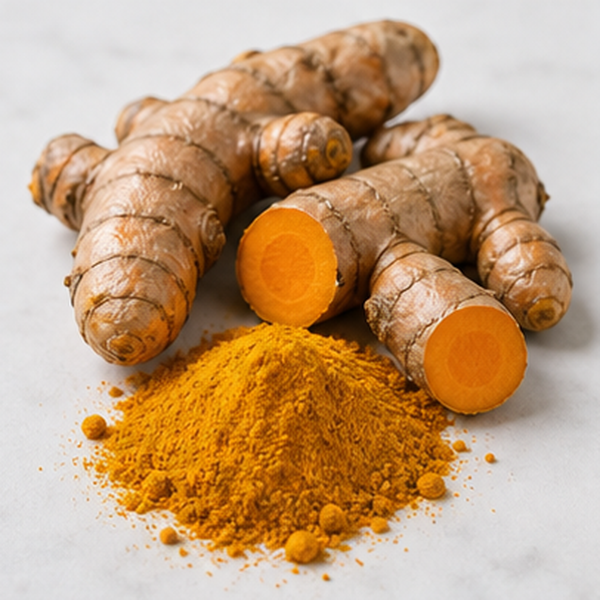
Turmeric powder is a food powder and spice made by drying and grinding turmeric rhizomes. It naturally contains curcuminoids, volatile compounds, and other plant bioactives. Ordinary turmeric powder is better viewed as a plant-based spice for everyday meals and should not be expected to produce the same effects as concentrated extracts.
30-second check: which situation fits you best?
I use it for everyday antioxidant support and a healthy diet
100% turmeric powder can be added to rice, vegetables, meat, soups, or curry, but direct human evidence for ordinary turmeric powder is much more limited than evidence for concentrated extracts.
I have a clear goal: joints, metabolism, or exercise recovery
Joint pain and selected glucose and lipid outcomes have more human research, but most studies used curcumin or standardized turmeric extracts. Exercise-recovery findings are not fully consistent.
I already use turmeric powder every day
Confirm that the product is 100% turmeric-rhizome powder, then check the actual amount you use, total curcuminoid information, and whether you also take a curcumin extract or higher-bioavailability formula.
Basic Overview
What is it?
Turmeric powder is the yellow plant powder and spice made by drying and grinding the rhizome of turmeric (Curcuma longa L.). It naturally contains curcuminoids, volatile compounds, and other plant substances; amounts vary with cultivar, origin, processing, and storage.
Why do people use it?
How does it relate to healthy aging?
Turmeric is linked with healthy aging mainly because of its potential effects on oxidative stress, inflammation-related processes, and metabolic health.
Human studies mostly show changes in selected antioxidant, inflammatory, or metabolic markers. They do not show that ordinary turmeric powder extends lifespan, reverses aging, or makes healthy adults noticeably younger.
Supplement Assessment
First separate everyday spice use from a specific health goal.
Low supplementation priority
- Using it only for general anti-inflammatory or antioxidant support or to prevent aging
- Already eating a varied diet
- No specific joint or metabolic goal
- Hoping turmeric powder will offset a high-sugar, high-fat diet or lack of exercise
Your next step:
Prioritize a consistent diet, exercise, sleep, and metabolic health first; turmeric powder is an optional spice.
A clear goal: a trial may be reasonable
- A specific joint-comfort or physical-function goal
- Wanting to reduce post-exercise soreness while accepting that the evidence is inconsistent
- Existing metabolic abnormalities and interest in adjunctive nutrition strategies
- Willing to judge the evidence by the actual product form and human studies
Your next step:
First confirm the study population, formulation, and actual active dose.
Talk with a healthcare professional before long-term use
- Taking multiple prescription medications
- Current or previous liver problems
- Also using a higher-bioavailability curcumin supplement
- Pregnancy or breastfeeding with planned intake well above normal food amounts
- Persistent reflux, nausea, or abdominal pain after use
Your next step:
Have a doctor or pharmacist review the exact product, amount, and medications together.
Products & Everyday Use
Understand how turmeric powders differ, what key compounds to look for, and how to use them in everyday meals.
Why compare real products here?
Even among products labeled 100% turmeric powder, cultivar, origin, and natural curcumin content can differ substantially.
For example, ordinary turmeric powder and some high-curcumin cultivars can provide several-fold different curcumin amounts even when both are used at 2 g/day.
The examples below use products with publicly available quantitative data to show how these differences appear on real labels.
For information comparison only; not a brand recommendation or ranking.Even when both are 100% turmeric powder
may not be equivalent
Common Market Products
This table includes only turmeric powders whose manufacturers publicly state both origin and a specific curcumin value. Products without disclosed curcumin content are excluded. Percentages are converted to mg/g for easier comparison.
| Product | Package / Label Information | What Is Actually Comparable | Product Features | How to Read It |
|---|---|---|---|---|
| Pahari Roots Lakadong Turmeric PowderOfficial product link | 100 / 200 / 400 g / 1 kg; 100% Lakadong turmeric (Curcuma longa); sun-dried and slow-ground | India · Meghalaya · Jaintia Hills | Curcumin 8–12% | 80–120 mg/g | GI-certified / batch tested High-curcumin Lakadong cultivar with clearly stated origin |
Among these examples, this is in the highest curcumin range. At 2 g, it provides about 160–240 mg curcumin and may appeal to people who specifically care about the key active compound. |
| Earth Story Farms Lakadong TurmericOfficial product link | 100 / 400 g; 100% Lakadong turmeric rhizome; traditionally dried; no added colors, fillers, or preservatives | India · Meghalaya · West Jaintia Hills | Curcumin 9.6% | 96 mg/g | Laboratory-tested value Clearly stated origin with a specific curcumin value; 9.6% is the brand's stated value |
At 2 g, it provides about 192 mg curcumin. The number is easy to interpret and falls within the high-curcumin Lakadong range. |
| Shiva Organic Lakadong TurmericOfficial product link | Fine Lakadong turmeric powder; 100% organic; stone-ground; no additives | India · Meghalaya · Jaintia Hills | Curcumin 7.91% | 79.1 mg/g | Professional laboratory testing Lakadong cultivar and origin stated; GI-protected and GMP-certified |
At 2 g, it provides about 158 mg curcumin. Compared with products that only claim to be high in curcumin, this one provides a specific value that can be compared directly. |
| Behest Of Nature Lakadong TurmericOfficial product link | 250 g vacuum pouch; 100% Lakadong turmeric; cold stone-ground | India · Meghalaya · Jaintia Hills | Curcumin 7.5–9.0% | 75–90 mg/g | NABL laboratory tested Single-origin, cold stone-ground, with GI origin documentation |
At 2 g, it provides about 150–180 mg curcumin. It combines relatively high curcumin content with comparatively transparent sourcing and quality information. |
| Miresi Lakadong Turmeric PowderOfficial product link | 100 g × 2 / 450 g; Lakadong turmeric; solar tunnel dried; no fillers or artificial colors | India · Meghalaya · Lakadong Hills | Curcumin ≥7% | ≥70 mg/g | Third-party laboratory tested Retains natural volatile oils and emphasizes gentler processing |
Using the minimum 7% value, 2 g provides at least about 140 mg curcumin. This is another high-curcumin option with relatively transparent processing information. |
| Ponkali Erode Turmeric PowderOfficial product link | 100 / 250 / 500 g / 1 kg; 100% Erode turmeric; no additives; farm-direct | India · Tamil Nadu · Erode | Curcumin 2.5–3.5% | 25–35 mg/g | GI / FSSAI certified Traditional Erode turmeric, providing a clear contrast with Lakadong |
At 2 g, it provides about 50–70 mg curcumin. This illustrates how two products can both be 100% turmeric powder yet differ substantially in curcumin content by cultivar and origin. |
Pahari Roots Lakadong Turmeric Powder
Official product link- Package / Label Information
- 100 / 200 / 400 g / 1 kg; 100% Lakadong turmeric (Curcuma longa); sun-dried and slow-ground
- What Is Actually Comparable
- India · Meghalaya · Jaintia Hills | Curcumin 8–12% | 80–120 mg/g
- Product Features
- GI-certified / batch tested
High-curcumin Lakadong cultivar with clearly stated origin
- How to Read It
- Among these examples, this is in the highest curcumin range. At 2 g, it provides about 160–240 mg curcumin and may appeal to people who specifically care about the key active compound.
Earth Story Farms Lakadong Turmeric
Official product link- Package / Label Information
- 100 / 400 g; 100% Lakadong turmeric rhizome; traditionally dried; no added colors, fillers, or preservatives
- What Is Actually Comparable
- India · Meghalaya · West Jaintia Hills | Curcumin 9.6% | 96 mg/g
- Product Features
- Laboratory-tested value
Clearly stated origin with a specific curcumin value; 9.6% is the brand's stated value
- How to Read It
- At 2 g, it provides about 192 mg curcumin. The number is easy to interpret and falls within the high-curcumin Lakadong range.
Shiva Organic Lakadong Turmeric
Official product link- Package / Label Information
- Fine Lakadong turmeric powder; 100% organic; stone-ground; no additives
- What Is Actually Comparable
- India · Meghalaya · Jaintia Hills | Curcumin 7.91% | 79.1 mg/g
- Product Features
- Professional laboratory testing
Lakadong cultivar and origin stated; GI-protected and GMP-certified
- How to Read It
- At 2 g, it provides about 158 mg curcumin. Compared with products that only claim to be high in curcumin, this one provides a specific value that can be compared directly.
Behest Of Nature Lakadong Turmeric
Official product link- Package / Label Information
- 250 g vacuum pouch; 100% Lakadong turmeric; cold stone-ground
- What Is Actually Comparable
- India · Meghalaya · Jaintia Hills | Curcumin 7.5–9.0% | 75–90 mg/g
- Product Features
- NABL laboratory tested
Single-origin, cold stone-ground, with GI origin documentation
- How to Read It
- At 2 g, it provides about 150–180 mg curcumin. It combines relatively high curcumin content with comparatively transparent sourcing and quality information.
Miresi Lakadong Turmeric Powder
Official product link- Package / Label Information
- 100 g × 2 / 450 g; Lakadong turmeric; solar tunnel dried; no fillers or artificial colors
- What Is Actually Comparable
- India · Meghalaya · Lakadong Hills | Curcumin ≥7% | ≥70 mg/g
- Product Features
- Third-party laboratory tested
Retains natural volatile oils and emphasizes gentler processing
- How to Read It
- Using the minimum 7% value, 2 g provides at least about 140 mg curcumin. This is another high-curcumin option with relatively transparent processing information.
Ponkali Erode Turmeric Powder
Official product link- Package / Label Information
- 100 / 250 / 500 g / 1 kg; 100% Erode turmeric; no additives; farm-direct
- What Is Actually Comparable
- India · Tamil Nadu · Erode | Curcumin 2.5–3.5% | 25–35 mg/g
- Product Features
- GI / FSSAI certified
Traditional Erode turmeric, providing a clear contrast with Lakadong
- How to Read It
- At 2 g, it provides about 50–70 mg curcumin. This illustrates how two products can both be 100% turmeric powder yet differ substantially in curcumin content by cultivar and origin.
Everyday Ways to Use It
Rice & whole grains
Add a small amount while cooking rice or other grains for color and flavor.
Vegetables
Use with other spices when roasting squash, cauliflower, potatoes, carrots, or sautéed vegetables.
Meat & fish
Use for seasoning or marinating chicken, fish, beef, or tofu; there is no need to swallow it separately.
Curries, stews & legumes
Add it to curries, soups, lentils, or chickpea dishes.
Milk or plant-based milk
A small amount can be added to unsweetened drinks; avoid masking the flavor with large amounts of syrup.
Things to Keep in Mind
No need to eat it raw
Normal cooking is fine; there is no need to swallow raw powder to supposedly preserve nutrients.
No need to add large amounts of oil
The fat in a normal meal is enough; do not deliberately add a lot of extra oil just for absorption.
Black pepper is not required
Piperine can alter curcumin exposure, but that does not mean everyday meals need large amounts of black pepper.
Do not judge quality by color
Color varies with cultivar, processing, and storage, and illegally added dyes are also a concern.
Store it properly
Keep sealed, dry, away from light, and away from high heat. Discard if there is moldy odor, insect damage, or another obvious abnormality.
Dosage
There is no established RNI, RDA, AI, UL, or universal recommended daily gram amount. Research doses must be interpreted in the context of the ingredient form, goal, population, and study duration.
Human Research References for Ordinary Turmeric Powder
Human Study Doses by Population and Goal
These are doses used in human studies of ordinary turmeric powder / turmeric-rhizome powder, not a universal recommended intake.
How to Interpret the Research Doses
These numbers help show the order of magnitude and duration used in human trials. They are not a universal recommendation for healthy adults.
Key reminder:Research dose ≠ recommended dose; ordinary turmeric powder ≠ standardized curcumin extract; higher dose ≠ stronger effect.
Important Note
Turmeric powder has no established RNI, RDA, AI, formal UL, or universally recommended daily gram amount.
A 2 g study dose ≠ everyone should take 2 g/day.
The 1.2–3.0 g/day amounts above mainly come from studies in people with diabetes, metabolic syndrome, fatty liver, or overweight/obesity and should not be generalized directly to healthy adults.
No UL ≠ unlimited intake. A higher dose does not necessarily work better, and no stable linear dose–response relationship has been established.
EFSA's ADI of 3 mg/kg body weight/day for the food additive curcumin E100 applies to curcumin, not to ordinary turmeric powder and not as a recommended intake or UL for turmeric powder.
How Form Affects Exposure
Ordinary turmeric powder and standardized curcumin extracts cannot be compared directly by grams or milligrams.
Even at the same 500 mg: 500 mg ordinary turmeric powder ≠ 500 mg standardized 95% curcumin extract ≠ 500 mg higher-bioavailability curcumin formulation. The amount of curcuminoids and resulting human exposure can differ substantially.
Practical Use Reference
Everyday cooking | Use to taste; there is no need to chase a study dose. Add it to rice, vegetables, meat, curry, or soup. There is no need to weigh out a so-called effective dose every day.
If you want to use it regularly | Start with a smaller amount and adjust to tolerance. The goal is not to reach 2–3 g, but to use an amount that fits your diet over time while choosing a reliable product.
If you have a specific health goal | First confirm the form used in the research. For joints, glucose, blood lipids, or fatty liver, check whether the relevant study used ordinary turmeric powder, turmeric extract, or standardized curcumin. The doses are not interchangeable.
Health Effects
Joint Pain & Physical Function
A meta-analysis of 16 randomized trials involving 1,810 participants found that turmeric extracts may reduce pain and improve physical function in knee osteoarthritis. Most studies used curcumin or extracts, so the findings cannot be applied directly to ordinary turmeric powder.
View meta-analysis of 16 RCTs / 1,810 participants
Antioxidant Defense
A pooled analysis of 66 randomized trials found that turmeric/curcumin may increase total antioxidant capacity and SOD while lowering MDA. These are laboratory-marker changes and do not prove slower aging.
View meta-analysis of 66 RCTs
Blood Lipids
A GRADE review of 64 randomized trials found small average reductions in total cholesterol, triglycerides, and LDL, with a small increase in HDL. Heterogeneity was substantial, so this is better understood as a possible adjunctive effect rather than a large or predictable benefit.
View meta-analysis of 64 RCTs
Blood Glucose & Insulin Metabolism
A systematic review of 34 randomized trials found improvements in fasting glucose, HbA1c, insulin, and insulin resistance in some people with prediabetes or type 2 diabetes. These findings should not be generalized to people with normal glucose regulation.
View meta-analysis of 34 RCTs
Fatty Liver & Liver Enzymes
A review of 15 randomized trials involving 905 people with fatty liver found small average reductions in ALT and AST, but results were not fully consistent. This should not be extended into a clear liver-protection effect for healthy adults.
View meta-analysis of 15 RCTs / 905 participants
Post-Exercise Soreness & Recovery
Some studies report improvements in muscle soreness, creatine kinase, or recovery markers, but findings vary by formulation, dose, exercise type, and outcome. Turmeric-related supplements should not be treated as essential for people who exercise.
View exercise-recovery meta-analysis
Product Selection
Start with your reason for buying, then compare raw material and origin, processing, purity, curcumin data, testing, and packaging.
Which type fits your needs?Even within turmeric powder, the most useful comparison depends on how you plan to use it.
Everyday cooking
Cooking, drinks, or long-term use as a regular food ingredientPrioritize 100% turmeric, a simple ingredient list, clear sourcing, and reliable food-safety testing. There is usually no need to pay a large premium just for higher curcumin content.
Higher natural curcumin
Mainly interested in getting more naturally occurring curcuminPrioritize cultivar, measured curcumin content, and the basis for the testing. Compare actual % or mg/g rather than relying on claims such as “high curcumin.”
Raw-material quality
More interested in organic production, origin, and traceabilityPrioritize specific growing region, cultivar, source traceability, organic/GI certification, and quality-control information. Certification can help with sourcing, but does not prove that curcumin content is higher.
Whichever type you choose, treat a clear ingredient list and credible food-safety testing as the minimum standard. Organic status, GI certification, specific origin, and high curcumin content answer different questions and are not substitutes for one another.
Check These Six Things
01 Raw Material & Origin
Confirm turmeric (Curcuma longa L.) rhizome, then check cultivar, country of origin, and specific growing region. Names such as Lakadong can be informative, but they do not replace testing of the actual product.
02 Processing
Check the drying method, whether the rhizome was cured or heated, whether it was sliced, and how it was milled. Stone-ground, low-temperature, or traditional processing describes the process but does not by itself prove higher curcumin content.
03 Ingredients & Purity
For plain turmeric powder, prefer 100% turmeric. Avoid added sugar, starch, maltodextrin, colors, flavors, or unnecessary extracts and blends.
04 Key Compounds & Amounts
Look for total curcuminoids and the exact basis used. Percentages can be converted to mg/g, but the result should be identified as a calculation from manufacturer data rather than an additional laboratory measurement.
05 Certification & Testing
Check for curcumin testing, lead and other heavy metals, lead chromate or illegal dyes, pesticide residues, microbes, and mycotoxins; then verify whether the report corresponds to the actual product and batch.
06 Packaging & Storage
Choose packaging that is sealed, moisture-resistant, light-protective, and appropriately sized for how quickly you will use it. Packaging helps preserve quality but does not mean the original curcumin content was higher.
How to Read the LabelCheck in this order
Product Name:100% Turmeric Powder
Raw Material:Turmeric rhizome (Curcuma longa L.)
Origin:Wayanad, Kerala, India
Cultivar:Prathibba (high-curcumin cultivar)
Ingredients:100% turmeric (no additives)
Processing:Low-temperature drying → curing → fine milling
Nutrients & Active Compounds (per 100 g)
Converted value: 87 mg/g(calculated from the manufacturer-stated percentage)
Batch Information:Batch No. 20240515
Production Date:2024-05-15 Shelf life: 24 months
Test Report Number:CTI2024XXXXXX (traceable)
Storage:Keep sealed, dry, away from light, in a cool place.
A total-curcuminoid value helps interpret the product; it is not a recommended intake. Organic certification also does not replace active-compound or food-safety testing.
Start with the ingredient list
For plain turmeric powder, prefer 100% turmeric. Watch for starch, colors, flavors, or other blended ingredients.
Confirm raw-material identity
Check the turmeric species, rhizome, cultivar, and specific origin. Lakadong, Erode, and similar names can help explain raw-material differences, but cultivar and origin do not replace testing of the actual product.
Understand the processing
Check whether drying, curing, and milling are clearly described. “Low temperature,” “stone-ground,” or “traditional” does not automatically mean better nutrition; finished-product data are more informative for curcumin content.
Look for measured key compounds
Prioritize total curcuminoid data and convert to mg/g when useful. Distinguish a current batch result, a product test value, and a typical brand range; product- or batch-specific testing is more informative.
Verify safety testing
Do not stop at the phrase “third-party tested.” Look specifically for lead and other heavy metals, lead chromate/illegal dyes, pesticide residues, and microbiological testing, and check whether the report matches the product or batch.
Which Product Features Are Worth Paying More For?Meet the basic requirements first, then decide which differences are actually worth a premium for you.
Higher Curcumin Content
When it may be worth choosing
If the natural curcumin content of the powder matters to you, a product with a higher measured value can be useful. Natural content can vary substantially by cultivar and batch, so a specific value backed by testing is preferable.
When a premium may not be necessary
If you mainly use turmeric for everyday cooking, flavor, or long-term food use, there is no need to chase the highest curcumin level. If a package says “high curcumin,” look for a specific value and testing basis rather than paying for the claim alone.
Organic Certification
When it may be worth choosing
If organic growing and production practices matter to you, a legitimate organic certification can be an additional selection criterion.
When a premium may not be necessary
Organic certification does not mean more curcumin, better nutrition, or stronger antioxidant effects. If curcumin content is your priority, compare actual composition data rather than paying for the word “organic” alone.
Specific Cultivar & Origin
When it may be worth choosing
A clearly stated cultivar and growing region, such as Lakadong or Erode, can help explain raw-material differences. The information is most useful when it lines up with measured curcumin data.
When a premium may not be necessary
Marketing such as “highland grown,” “golden region,” or “natural farm” without a specific cultivar, clear origin, or measured composition does not show that curcumin is higher or that overall quality is better.
How to Take
Treat it as a spice; using it with normal meals is the simplest approach.
Default plan (healthy adults)
When to use it: With a normal meal is simplest
Empty stomach or with food?: With food is usually more practical and better tolerated
Does it need dietary fat?: Using it with a meal that contains a moderate amount of fat can support absorption.
Is black pepper required?: No. Piperine in black pepper can markedly increase curcumin absorption, but it is not required.
Can it be heated?: Yes. Normal sautéing, boiling, or stewing is fine; there is no need to insist on eating it raw.
Do I need it every day?: No. It is not an essential nutrient and has no daily recommended intake.
Frequently asked questions
Can I mix it directly into water?
Yes, but the taste and texture are usually less pleasant than using it in food, and mixing it into water has no extra health advantage.
Can I combine it with cinnamon, cocoa, or other plant powders?
Normal food amounts can usually be combined. The more powders you stack together, the more important it becomes to consider total intake and gastrointestinal tolerance for each ingredient.
How long should I use it before judging an effect?
Everyday food use does not need a treatment course. For a specific health goal, use research that matches the population, formulation, and study duration.
If I do not notice anything, should I keep using it?
If you are forcing yourself to take it every day only for anti-inflammatory or anti-aging claims, have no specific goal, and already eat a varied diet, it is reasonable to reassess.
More questions about use (click to expand)
Can I convert a research dose into teaspoons?
Do not convert curcumin or extract study doses directly into ordinary turmeric powder. Even when a study uses ordinary powder, the amount only reflects what was tested in a specific population and timeframe, not a universal recommendation.
Risks & Precautions
Common Side Effects
- Nausea, vomiting, reflux, or stomach discomfort
- Diarrhea or constipation
- If persistent symptoms develop with regular larger intakes, reduce the amount or stop
Higher-Dose Risks
- No established UL does not mean intake can be increased without limit.
- High-dose, concentrated, or higher-bioavailability products should not be treated as equivalent to normal food amounts.
- Rare liver injury has been reported with some medicinal/supplement turmeric or curcumin products; higher-bioavailability formulations deserve particular caution.
People Who Need More Caution
- Current or previous liver disease
- Pregnancy when considering turmeric supplements
- Breastfeeding when planning intake well above normal food amounts
- Allergy to turmeric or related Zingiberaceae plants
- Long-term larger intakes with ongoing gastrointestinal symptoms
Medications & Special Situations
- Small culinary amounts and long-term high-dose supplementation should not be treated as the same risk scenario.
- If you take long-term medications, use several plant extracts, or plan to use a higher-bioavailability curcumin product, have a doctor or pharmacist review the exact product and medications together.
Stop and Ask for Advice
Stop the product and seek advice if you develop persistent nausea, loss of appetite, reflux, abdominal pain, unusual fatigue, or other clear new symptoms.
Seek Medical Care Promptly
Yellowing of the skin or eyes, dark urine, persistent vomiting, marked fatigue, or significant abdominal pain can be warning signs of liver injury.
Sources
These sources support the definition of turmeric powder, research doses, human health effects, product evaluation, and safety boundaries.
Authoritative Institutions
Use: overall evidence, adverse effects, pregnancy, and liver-risk considerations for higher-bioavailability products.
Use: botanical identity, rhizome information, and European herbal assessment material.
Key Human Evidence
Product Standards, Processing & Storage
Last updated: August 30, 2026