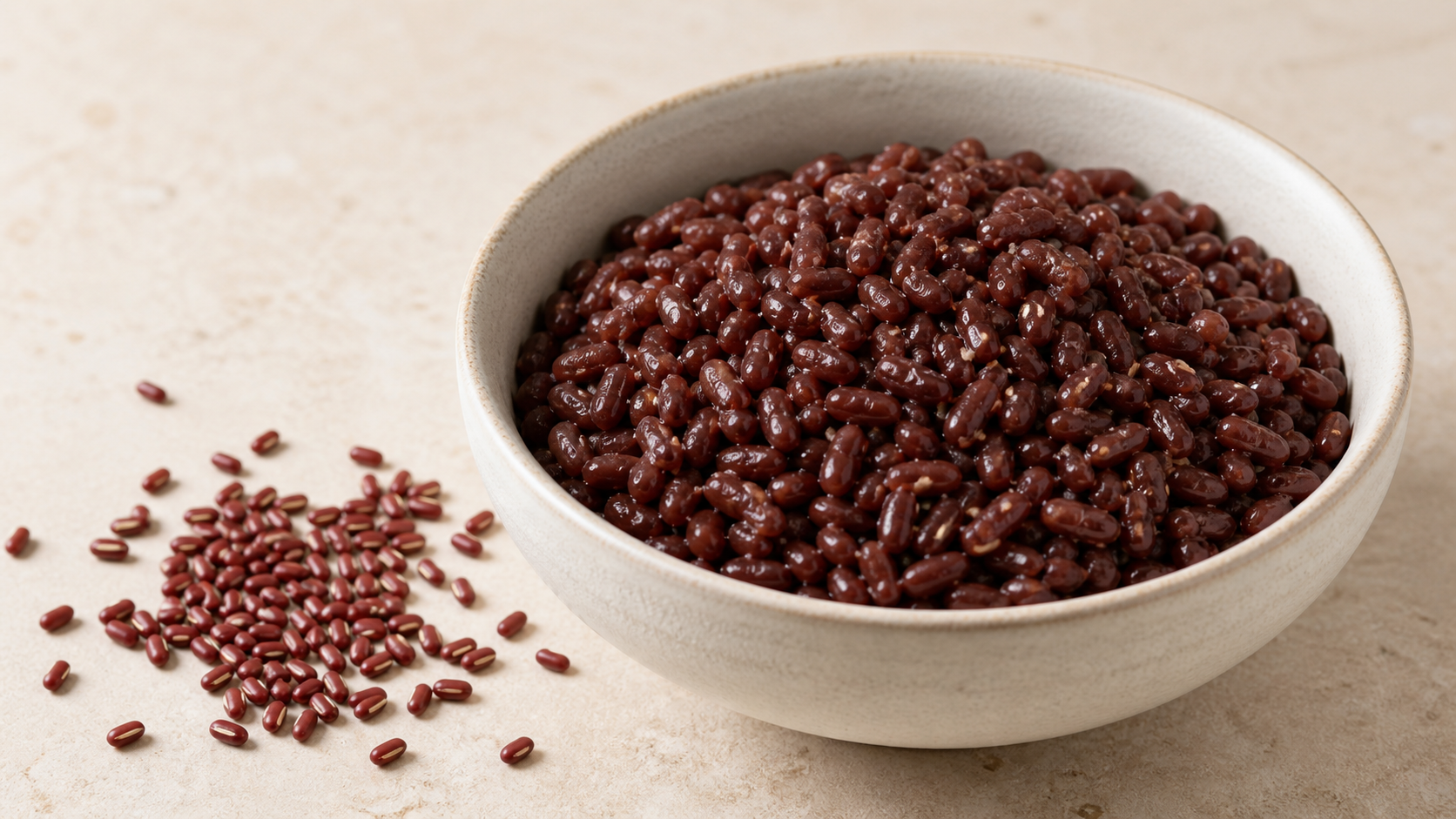
Legumes & Soy Foods · Dry Beans
Rice Bean
Per 100 g, cooked rice beans provide about 132 kcal, 9.7 g of protein, and 13.4 g of dietary fiber, along with copper, manganese, vitamin K, iron, and magnesium. Their seeds also contain flavonoids led by vitexin and catechin, ferulic acid, and other polyphenols, but amounts vary substantially by cultivar.
Food Overview
Key strengths
Per 100 g, cooked rice beans provide about 132 kcal, 9.7 g of protein, 27.5 g of total carbohydrate, and 13.4 g of dietary fiber.
How to Eat It
Rice beans work well soaked in advance and thoroughly cooked until soft, then added to mixed-grain rice, porridge, vegetable soups, stews, and grain salads.
What stands out
Analysis of 13 Chinese rice-bean cultivars found vitexin to be the most abundant individual phenolic, followed by catechin and isovitexin. Epicatechin, p-coumaric acid, ferulic acid, sinapic acid, and quercetin were also detected. The total amount of the 8 quantified phenolic compounds differed by about 6.9-fold across cultivars.
Worth noting
Rice beans and adzuki beans look similar, so both product names and botanical names should be checked when buying or entering data. Raw beans should not be eaten directly; insufficient cooking leaves a hard texture, reduces starch and protein digestibility, and leaves more antinutritional factors.
Basic Nutrition
Showing:100 g Cooked Rice Beans
View complete nutrition data
GI note:GI varies with cultivar, food structure, processing, and cooking. Raw grains usually do not have directly applicable human GI data.
No reliable value was found from a standard human GI test clearly conducted on intact cooked Vigna umbellata seeds. GI values for adzuki beans, red kidney beans, or other legumes should not be applied.
Data notes:Cooked-rice-bean data refer to boiled, intact mature seeds. Dietary fiber includes about 0.6 g of soluble fiber and 12.8 g of insoluble fiber.
Sugar is calculated by adding the glucose, fructose, sucrose, maltose, and other mono- and disaccharides listed in the database; starch is not counted as sugar. Some carbohydrate and fatty-acid values are marked as estimates in the original database, so the page uses “about.”
Vitamins & Minerals
By default, data are shown per 100 g for the currently selected state. Only nutrients providing at least 5% of the adult Daily Value at the selected amount are displayed.
View all vitamins and minerals
Percentages show how much the selected serving contributes to the adult Daily Value.
Key Bioactive Compounds
Vitexin & Isovitexin
FlavonoidsVitexin and isovitexin are flavone C-glycosides and distinctive polyphenols in rice beans.
Among 13 Chinese cultivars, the highest samples contained about 40.18 mg/100 g of vitexin and 19.03 mg/100 g of isovitexin. Values vary substantially by cultivar and seed-coat characteristics.
They show antioxidant activity in vitro and have also been studied in enzyme and glycation models.
Keep the seed coat, discard soaking water, and cook the beans thoroughly.
Extract and in-vitro findings do not show that ordinary rice-bean servings treat diabetes, inflammation, or aging.
Catechin & Epicatechin
FlavanolsCatechin and epicatechin are common legume flavanols and important components of the rice-bean phenolic profile. In research, catechin is usually the second most abundant individual compound after vitexin.
Catechin content varied by about 7.4-fold across 13 Chinese rice-bean cultivars, showing a strong cultivar effect. Specific general amount: —.
Catechin and epicatechin can participate in antioxidant reactions. A variety of flavonoids from legumes, whole grains, fruits, and vegetables is more realistic within a normal diet than pursuing a high dose of one isolated compound.
Choose rice beans with intact, unpolished seed coats, soak, and cook thoroughly until soft.
In-vitro free-radical-scavenging capacity cannot be translated directly into anti-inflammatory effects in people.
p-Coumaric Acid, Ferulic Acid & Sinapic Acid
Phenolic acidsp-Coumaric acid, ferulic acid, and sinapic acid are hydroxycinnamic acids and are representative phenolic acids detected in rice beans.
A study quantified all 3 phenolic acids across 13 Chinese rice-bean cultivars, with clear differences among cultivars. Specific general amount: —.
These phenolic acids have antioxidant properties and may help limit excessive oxidation in food and experimental systems.
Use soaking, boiling, or pressure cooking. Do not shorten necessary cooking time in an attempt to preserve phenolic acids, and do not drink raw-bean soaking water.
Antioxidant, enzyme-inhibiting, or antiglycation activity observed in experiments does not show that rice beans alone can treat high blood glucose, chronic inflammation, or cardiovascular disease.
How Preparation Changes Rice Bean
Raw Rice Beans
Raw rice beans have low water content, so energy, protein, dietary fiber, and minerals look concentrated per 100 g. But raw beans are hard, starch and protein are less digestible, and they contain phytate, tannins, trypsin inhibitors, and fermentable oligosaccharides, so they should not be eaten directly.
Soaking
Rice beans can be soaked in plenty of water for about 6—12 hours. If soaking lasts more than 4 hours, especially in a warm environment, refrigerate them.
Boiling
After soaking, add fresh water, bring the beans to a boil, and simmer until the centers are completely soft. This is mainly weight dilution as water rises from 12% to 60.5%, not disappearance of more than half the protein.
Pressure Cooking
A pressure cooker can shorten cooking time and help soften the seed coat. Follow the appliance instructions for bean-to-water ratio, do not exceed the maximum fill line, and confirm that every bean is soft inside after cooking.
Add Acidic Ingredients Later
Acidic ingredients such as tomatoes, vinegar, and lemon juice can slow softening. For tomato rice-bean soup or tangy stews, cook the beans until soft before adding acidic ingredients.
Mash into a Bean Purée
Cooked rice beans can be mashed. As long as the seed coat and bean solids are not filtered out, dietary fiber remains, although the food structure is more broken down and eating may become faster. For savory bean mash, use little oil, salt, or cream.
Sweetened Bean Paste
Traditional red-bean paste, rice-bean soup, and sweet fillings often contain large amounts of added sugar, and some products are actually made with adzuki beans rather than rice beans.
Sprouted Rice Beans
Sprouting changes vitamins, polyphenols, phytate, and enzyme-inhibitor levels and also introduces the food-safety concerns of raw sprouts. Sprouted rice beans are not included on this page and should be treated as a separate state.
How to Choose & Store
How to choose
- Choose rice beans that are slender and relatively uniform in size.
- Choose naturally dark-red or reddish-brown beans with a dry surface.
- The seed coat should be intact, with few broken beans or impurities.
- Do not buy beans with insect holes, mold, unusual powder, musty smells, sour smells, or rancid odors.
- Rice beans are generally more slender with a slightly indented hilum; adzuki beans are usually rounder and plumper.
- Photos alone can still be misleading, so prioritize the botanical name or labels such as rice bean, Vigna umbellata, or local rice-bean names on the package.
How to store
- Store raw rice beans in a dry, sealed container in a cool, dark, ventilated place.
- In humid conditions, improve sealing to prevent moisture absorption, insect damage, and mold.
- Cool cooked rice beans promptly, refrigerate in a clean sealed container, and generally eat within 3—4 days.
- Freeze in portions if they will not be eaten soon.
- Discard beans that become slimy, moldy, sour or rotten smelling, unusually alcoholic smelling, excessively bubbly, or cause the container to swell.
When buying rice beans, remember three things: look for slender seeds, a dry surface, and check the name so they are not confused with adzuki beans.
How to Include It in Everyday Meals
Rice-Bean Mixed-Grain Rice
Soak rice beans in advance and cook them separately until almost soft, then cook with brown rice, white rice, oat groats, or quinoa. Do not cook unsoaked raw rice beans for a short time together with white rice, because the rice may finish while the bean centers remain hard.
Rice-Bean Porridge
Cook soaked rice beans for a while first, then add millet, oat groats, brown rice, or a small amount of white rice.
Rice-Bean Vegetable Soup
Combine cooked rice beans with tomatoes, carrots, celery, mushrooms, onions, and leafy greens. Rice beans already provide carbohydrate and protein, so there is no need to add large amounts of noodles, sausage, ham, or high-sodium soup base.
Rice Beans Stewed with Pumpkin
Cook the rice beans until soft first, then stew briefly with pumpkin, onion, tomato, and spices. Pumpkin adds natural sweetness and thickness, so syrup or large amounts of coconut milk are unnecessary.
Rice-Bean Grain Salad
Cool cooked rice beans and combine with quinoa, buckwheat groats, corn, tomatoes, cucumber, bell pepper, and leafy greens.
Rice-Bean Mash
Mash cooked rice beans coarsely and add a small amount of olive oil, lemon juice, cumin, or black pepper. Keep the seed coat and do not strain it into a very smooth sweet bean paste.
Who Should Take Extra Care
People with Gastrointestinal Sensitivity
Rice beans are high in dietary fiber, providing about 13.4 g per 100 g cooked, and they also contain raffinose-family oligosaccharides that can be fermented by gut microbes. Start with 2—4 tablespoons of cooked rice beans and increase gradually according to tolerance.
People managing blood sugar
Rice beans do not have a reliable species-specific GI value, but 100 g of cooked rice beans still contains 27.5 g of total carbohydrate.
People with impaired kidney function
Per 100 g, cooked rice beans provide about 370 mg of potassium, 120 mg of phosphorus.
People with Iron Deficiency
Per 100 g, cooked rice beans provide about 3.3 mg of non-heme iron, but phytate and polyphenols in legumes can reduce some iron absorption.
Infants, young children, and people with swallowing difficulties
Cook rice beans until completely soft, then mash, crush, or make a smooth but not overly sticky purée according to swallowing ability. Do not serve hard, undercooked, whole beans that can slip into the airway.
People with Legume Allergies
Specific allergy data for rice beans are limited, but people with known allergy to Vigna species or other legumes should be cautious. If eating them causes generalized hives, swelling of the lips or throat, wheezing, difficulty breathing, or marked dizziness, stop eating and seek medical care promptly.
Similar Food Alternatives
Adzuki Bean
The closest in appearance and traditional use, but the botanical name is Vigna angularis.
Mung Bean
Also a Vigna pulse with similar cooking uses in soups, porridge, and grain dishes.
Green Lentils
They usually cook faster and work well in vegetable soups, stews, and grain salads.
Black Soybeans
They provide substantial plant protein and dietary fiber, and black seed coats contain anthocyanins.