Fruits · Berries
Kiwifruit
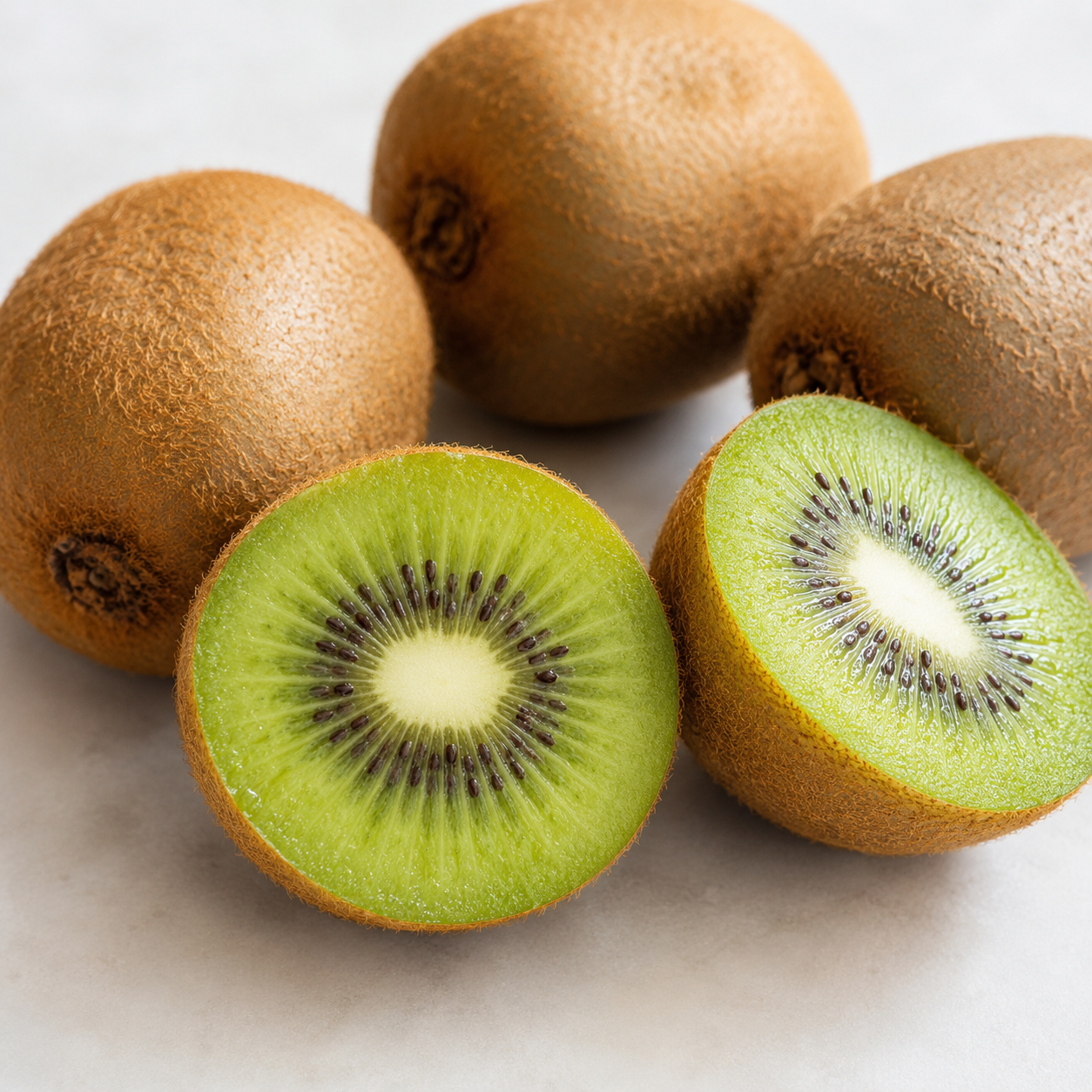
Green kiwifruit is notable for vitamin C and vitamin K and also provides dietary fiber, potassium, vitamin E, and actinidin. It is well suited to eating fresh when ripe and can also be paired with plain yogurt, oats, and salads.
Food Overview
Key strengths
Per 100 g of edible fresh green kiwifruit, there are about 61 kcal, 14.66 g of carbohydrate, 3 g of dietary fiber, and 92.7 mg of vitamin C, along with vitamin K, vitamin E, copper, folate, and potassium.
How to Eat It
Once ripe, kiwifruit can be halved and scooped with a spoon or peeled and sliced. It pairs well with unsweetened plain yogurt, oats, nuts, and other fruit. People who tolerate the fuzzy texture and acidity can also eat the skin after washing it thoroughly.
What stands out
Green kiwifruit contains actinidin, a cysteine protease that can break down food proteins. In-vitro research and small human studies suggest it may assist digestion of some meats and other dietary proteins, but it is not a digestive-enzyme medicine and does not replace treatment for gastrointestinal disease.
Worth noting
Kiwifruit is a recognized food allergen. Reactions may be limited to oral itching but can also include hives, wheezing, throat swelling, or severe systemic reactions. Kiwifruit allergy may also cross-react with pollen or natural-latex allergy.
Basic Nutrition
Showing:100 g Fresh Green Kiwifruit
View complete nutrition data
GI note:GI varies with cultivar, food structure, processing, and cooking. Raw grains usually do not have directly applicable human GI data.
Human testing of green kiwifruit found a mean GI of about 39.3±4.8; the page displays 39.
Data notes:This page includes only fresh green kiwifruit and does not create separate states for gold, red, hardy, or wild kiwifruit, juice, or dried fruit.
Nutrition data are calculated for the edible portion, mainly the peeled flesh and seeds.
The common serving is 69 g, about the edible portion of 1 medium green kiwifruit.
No reliable starch value is available in the database, so starch is shown as “—” rather than estimated from carbohydrate, sugar, and fiber.
Vitamins & Minerals
FDA Daily Values for adults and children age 4 and older are used. Only nutrients providing at least 5% of the Daily Value at the current serving size are shown, with the top six displayed by default.
View all vitamins and minerals
Key Bioactive Compounds
Vitamin C
Water-soluble vitaminKiwifruit is relatively high in vitamin C; gold varieties are generally higher than common green varieties.
Green kiwifruit typically provides about 75—93 mg of vitamin C per 100 g, while some gold varieties may reach about 150—160 mg.
Vitamin C supports normal immune function, collagen formation, antioxidant defenses, and the absorption of non-heme iron.
Eat soon after cutting. Kiwifruit can be paired with oats, legumes, or leafy greens that provide non-heme iron.
Higher vitamin C in gold kiwifruit does not mean its overall nutritional value is always superior to green kiwifruit, and neither variety treats infections or skin problems.
Actinidin
Proteolytic EnzymeActinidin is an enzyme that can break down some dietary proteins, and green kiwifruit usually has noticeable enzyme activity.
Specific amount: —. Enzyme activity is usually expressed in activity units rather than milligrams and is affected by variety, ripeness, temperature, and processing. It is found mainly in fresh fruit flesh.
Research suggests actinidin may assist breakdown of some dietary proteins during digestion, but human evidence remains limited.
To preserve enzyme activity, eat fresh fruit. Prolonged heating inactivates the enzyme; when kiwifruit is used to marinate meat, excessive contact time can make the texture too soft.
Actinidin cannot treat indigestion or replace human digestive enzymes. Kiwifruit may also cause oral irritation or food allergy, so people with prior reactions should be cautious.
Dietary Fiber & Pectin
Dietary FiberKiwifruit flesh, seeds, and skin contain insoluble fiber, pectin, and other fermentable carbohydrates.
Raw kiwifruit provides about 3 g of dietary fiber per 100 g. The skin contains more fiber, but peeled fruit still provides fiber from the flesh and small seeds.
Regular intake of green kiwifruit has some support from human studies for normal bowel function and increased stool frequency.
The flesh can be eaten directly. People who tolerate the skin can wash it thoroughly, rub off some surface fuzz, and eat it with the fruit.
Kiwifruit does not treat every type of constipation and does not replace adequate fluid intake, physical activity, or overall dietary-fiber intake.
How Preparation Changes Kiwifruit
Fresh Flesh, Peeled
Data in sections 02 and 03 mainly correspond to the green flesh and seeds after the brown skin is removed, which is how most people eat kiwifruit. Peeling does not remove vitamin C, vitamin K, or actinidin, but it does remove some fiber and phytochemicals present in the skin.
Eating the Skin
Green kiwifruit skin is edible. Because the nutrition data on this page are based on peeled edible portions, nutrient values should not be claimed to be exactly the same when the skin is eaten.
After Cutting
Once cut, kiwifruit has more surface area exposed to air and the flesh softens and releases juice more readily. Cut it close to serving time, refrigerate cut fruit in a sealed container, and eat it promptly.
Blending & Straining
Blending the flesh with the seeds retains most dietary fiber. Further straining into juice reduces the whole-food structure and makes it easier to consume several kiwifruit quickly. A large glass of filtered juice is not recommended as a substitute for whole fruit.
Heating
Vitamin C is sensitive to heat and oxidation, and actinidin is also inactivated by heating. If the proteolytic activity is desired, fresh flesh is more suitable than prolonged cooking.
With Gelatin & Dairy
Proteases in raw kiwifruit can break down gelatin proteins, which may prevent jelly from setting. Prolonged contact with dairy products may also create bitterness or textural changes. When making gelatin desserts, heat the kiwifruit thoroughly first to inactivate the enzyme.
Green vs Gold Kiwifruit
Gold kiwifruit is usually sweeter and less acidic and often contains more vitamin C, but vitamin K and actinidin differ from green varieties.
How to Choose & Store
How to choose
- For eating the same day, choose fruit that gives slightly under gentle pressure but does not collapse. Completely hard fruit is unripe; very soft, dented, or leaking fruit may be overripe.
- Choose intact fruit without large cracks, mold, or obvious bruising.
- Ripe fruit may have a mild aroma. Do not buy fruit with alcoholic, fermented, moldy, or rotten odors.
- Check the variety label. SunGold, red-fleshed kiwifruit, and hardy kiwifruit do not use the green-kiwi data on this page.
How to store
- Hard unripe fruit can continue ripening at room temperature. Placing it in a slightly ventilated paper bag with apples or bananas can speed softening.
- Once ripe and slightly softened, refrigerate; good quality is usually maintained for about 5 days.
- If you do not want the fruit to soften quickly, keep it away from apples, bananas, pears, and other high-ethylene fruits.
- Whether or not the skin will be eaten, wash the fruit under running water before cutting or peeling.
When buying kiwifruit, remember three things: choose firmness according to when you plan to eat it, look for intact skin, and refrigerate once ripe.
How to Include It in Everyday Meals
Halve and Scoop
Wash the kiwifruit, cut it in half, and scoop out the flesh with a spoon. The edible portion of one medium kiwifruit is about 69 g and can be part of a fruit snack.
Kiwifruit with Plain Yogurt
Cut kiwifruit into pieces and pair it with unsweetened or low-sugar plain yogurt, oats, and a small amount of nuts.
Kiwifruit Oat Bowl
Cook oats and let them cool slightly, then add sliced kiwifruit, walnuts, or chia seeds. Add kiwifruit at the end rather than cooking it for a long time with the oats, helping reduce vitamin C loss and preserve the fresh texture.
Kiwifruit Fruit Salad
Pair with strawberries, blueberries, apples, oranges, or pomegranate. Avoid adding large amounts of syrup, sweetened yogurt, and cream at the same time, which can turn an ordinary fruit salad into a high-sugar dessert.
Kiwifruit Vegetable Salad or Salsa
Dice kiwifruit and combine it with cucumber, tomato, bell pepper, red cabbage, avocado, or legumes, then add a small amount of olive oil and herbs.
Whole-Fruit Kiwifruit Smoothie
Blend kiwifruit with plain yogurt, milk, or unsweetened soy milk and keep all the flesh and seeds; there is no need to strain it.
Who Should Take Extra Care
People with Kiwifruit Allergy
Kiwifruit allergy can range from mild oral itching to hives, wheezing, laryngeal swelling, or severe allergic reactions. People who have previously had breathing difficulty, widespread rash, or marked swelling should not retry even a small amount on their own.
People with Pollen or Natural-Latex Allergy
Kiwifruit may cause oral allergy syndrome in people with birch or other pollen allergies and may cross-react with natural latex, banana, avocado, and other foods. This does not mean every person with latex or pollen allergy must avoid it; decisions should be based on actual reactions and specialist allergy assessment.
People Who Experience Oral Tingling After Eating It
Less-ripe kiwifruit is more acidic, and actinidin may also irritate the oral mucosa. Mild brief tingling does not always mean severe allergy.
People managing blood sugar
Green kiwifruit has a GI of about 39, and one fruit of about 69 g provides about 10.1 g of carbohydrate and 6.2 g of natural sugar.
People Taking Warfarin or Similar Medications
Green kiwifruit provides about 40.3 µg of vitamin K per 100 g. People taking warfarin or other vitamin K antagonists generally do not need to avoid kiwifruit completely, but should keep daily intake of vitamin-K-containing foods reasonably consistent and follow physician or pharmacist guidance.
People Advised to Strictly Limit Potassium
One kiwifruit of about 69 g provides about 215 mg of potassium. Most people do not need to avoid it for this reason, but people with kidney dysfunction who have been told to strictly limit potassium should include it in the daily total.
Infants, young children, and people with swallowing difficulties
Ripe kiwifruit is soft, but large pieces can be slippery. Cut into thin slices, small strips, or mash to an appropriate texture for age and swallowing ability, and supervise eating. When trying it for the first time, also watch for signs of allergy.
People with Constipation
Daily intake of 2 green kiwifruit improved stool frequency and abdominal comfort in some people with constipation in clinical trials, but this does not mean all constipation can be managed with kiwifruit alone.
Similar Food Alternatives
Gold Kiwifruit
The closest substitute in eating style; it is usually sweeter, less acidic, and often higher in vitamin C.
Guava
Also notable for vitamin C and dietary fiber and can be eaten as whole fruit.
Strawberry
Also rich in vitamin C and contains anthocyanins and ellagic-acid-related polyphenols.
Orange or Blood Orange
Also provides vitamin C and citrus flavonoids and is widely available and convenient.
Data Sources & Last Updated
Nutrition Data
Basic Information & Food Safety
Research & References
Richardson DP, Ansell J, Drummond LN. (2018). The Nutritional and Health Attributes of Kiwifruit: A Review.
European Journal of Nutrition, 57, 2659–2676. DOI / Original
Kaur L, Rutherfurd SM, Moughan PJ, Drummond L, Boland MJ. (2010). Actinidin Enhances Protein Digestion in the Small Intestine as Assessed Using an In Vitro Digestion Model.
Journal of Agricultural and Food Chemistry, 58(8), 5074–5080. DOI / Original
Montoya CA, et al. (2020). The Impact of Hayward Green Kiwifruit on Dietary Protein Digestion and Protein Metabolism.
Nutrients. DOI / Original
Gearry R, et al. (2023). Consumption of 2 Green Kiwifruits Daily Improves Constipation and Abdominal Comfort—Results of an International Multicenter Randomized Controlled Trial.
The American Journal of Gastroenterology, 118(6), 1058–1068. DOI / Original
EFSA Panel on Nutrition, Novel Foods and Food Allergens. (2021). Green Kiwifruit and Maintenance of Normal Defecation: Evaluation of a Health Claim.
EFSA Journal, 19(6), 6641. DOI / Original
European Commission. (2025). Commission Implementing Regulation (EU) 2025/1560.
EUR-Lex. DOI / Original
Lucas JSA, Lewis SA, Hourihane JO’B. (2003). Kiwi Fruit Allergy: A Review.
Pediatric Allergy and Immunology, 14(6), 420–428. DOI / Original