Spices and herbs
Red chili pepper
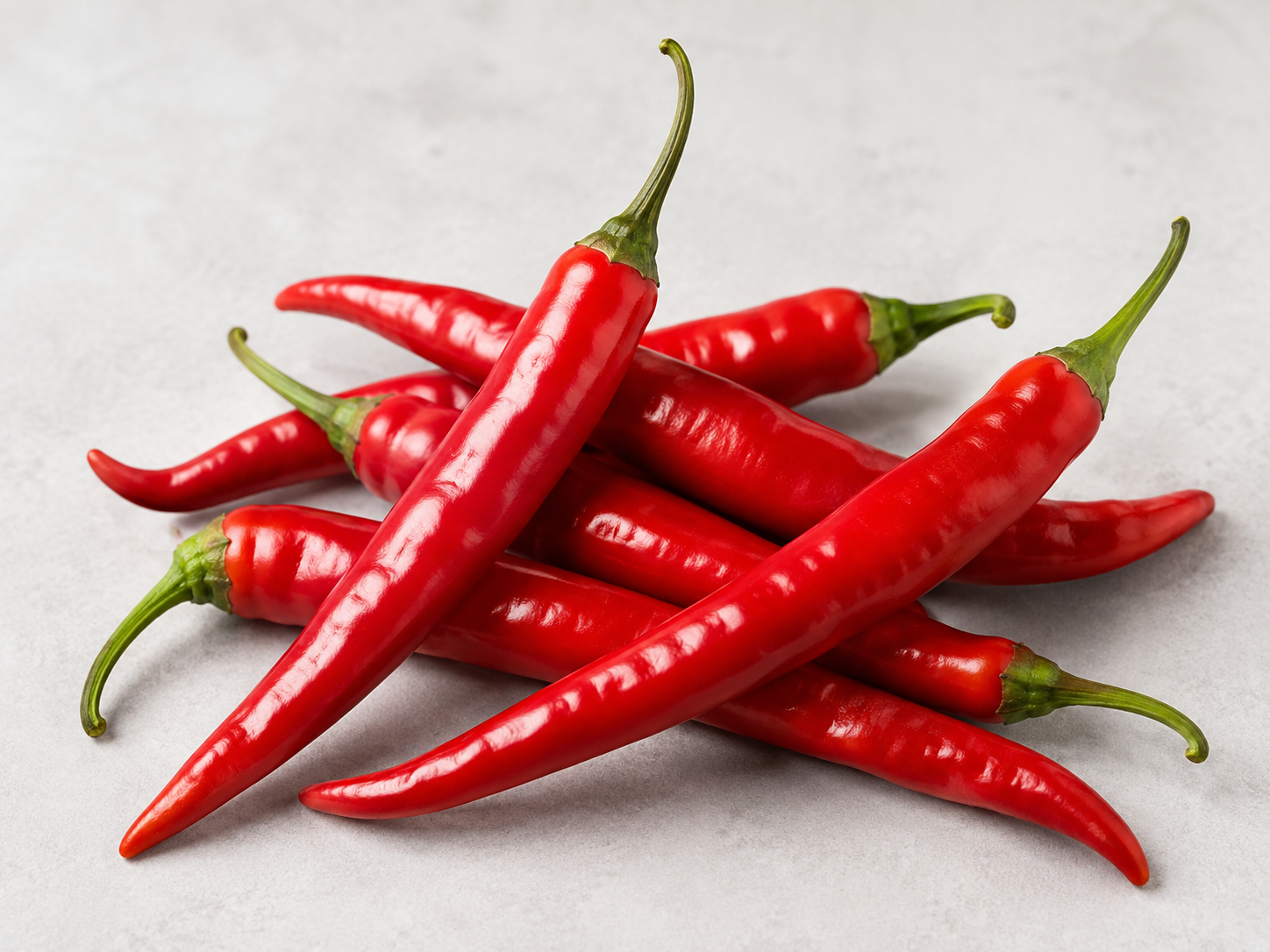
Fresh red chili peppers are notable for vitamin C, red carotenoids, and capsaicinoids that create heat. They work well in small amounts with vegetables, legumes, fish, and whole grains to add flavor, but hotter does not mean more anti-inflammatory or healthier. This page refers to mature, red, clearly pungent fresh peppers, mainly Capsicum annuum L. It excludes red sweet peppers, bell peppers, green peppers, dried chilies, chili powder, bird’s-eye chili, habanero, and other distinct varieties or processed products.
Food Overview
Key strengths
Fresh red chili is low in energy and provides about 144 mg vitamin C per 100 g, plus vitamin B6, potassium, and several carotenoids. As a seasoning vegetable, it can boost flavor without adding much sugar, salt, or fat.
How to use it
Chop into salads, quick stir-fries, steamed fish, bean stews, vegetable soups, or whole-grain dishes. If you are sensitive to heat, use less and remove some of the white placental tissue inside the pepper to reduce pungency.
What stands out
Heat comes mainly from capsaicin and dihydrocapsaicin. Capsaicinoids are concentrated in the white placental tissue that holds the seeds. Seeds can be coated with capsaicin from nearby tissue, but the seeds themselves are not usually the main site of capsaicin production.
Worth noting
Capsaicinoid levels can differ by tens or hundreds of times across varieties, and color or size alone cannot predict heat accurately. Very hot peppers can irritate the mouth, gastrointestinal tract, skin, eyes, and airways and should not be forced down for supposed “anti-inflammatory” effects.
Basic Nutrition
Showing:100 g Raw red chili
View complete nutrition data
GI note:GI varies with cultivar, food structure, processing, and cooking. Raw grains usually do not have directly applicable human GI data.
No reliable GI value was found for a single standardized “ordinary raw red chili” state. Because chili is low in carbohydrate and usually eaten in small amounts, GI is shown as “—” rather than estimated from sugar or carbohydrate.
Data notes:This page uses one formal food state: raw red chili pepper, meaning a mature red pungent fresh pepper, mainly Capsicum annuum L. Red sweet peppers, bell peppers, green peppers, dried chilies, chili powder, bird’s-eye chili, habanero, and other separate varieties or processed forms are not state toggles and do not share this nutrition data.
Basic nutrition comes from USDA FoodData Central “Peppers, hot chili, red, raw” (FDC 170106).
A common serving is one medium fresh red chili, about 45 g, based on the USDA household measure. Actual peppers may weigh only a few grams or more than 100 g, so use the real edible weight when possible.
GI is shown as “—” because no reliable GI value was found for a single standardized state called “ordinary raw red chili.” Chili contains little carbohydrate and is usually eaten as a small side ingredient or seasoning, so GI is not estimated from sugar or carbohydrate.
The database does not provide a suitable starch value, so starch is shown as “—” rather than treating missing data as 0.
Omega-3 and omega-6 are organized from the database’s linolenic-acid and linoleic-acid entries.
Nutrition varies substantially among chili varieties, so the website does not combine the highest values from different databases into one “super chili” profile.
Vitamins & Minerals
Percentages use China GB 28050—2011 NRVs and only nutrients reaching at least 5% at the current serving are shown. At about 45 g, vitamin C, vitamin B6, vitamin K, and potassium qualify. Per 100 g, copper and magnesium also qualify; iron, vitamin A, and folate appear in the expanded section.
Percentages use China GB 28050—2011 nutrition-label NRVs and are rounded. GB 28050—2025 takes effect on March 16, 2027, when the site should update food reference values consistently. At a common 45 g serving, only vitamin C, vitamin B6, vitamin K, and potassium reach the 5% display threshold. Different chili varieties can differ greatly; for example, another raw chili in the Japanese food database lists 120 mg vitamin C, 6,600 µg beta-carotene, and 8.9 mg vitamin E per 100 g, clearly different from the USDA generic raw-red-chili entry. The website therefore does not merge the best values from different peppers.
View all vitamins and minerals
Percentages show how much the selected serving contributes to the adult Daily Value.
Key Bioactive Compounds
Capsaicin and dihydrocapsaicin
CapsaicinoidsCapsaicin and dihydrocapsaicin are the main compounds behind chili heat.
Generic amount: —. Levels vary greatly by variety and tissue. One study found about 0.79–58.31 µg/g fresh weight in flesh versus 1.20–1,035.70 µg/g in placental tissue. These ranges are study-specific. Capsaicinoids are produced mainly in the placenta; seeds can be coated with them but are not the main production site.
Capsaicin activates TRPV1. Supplement studies suggest only small effects on weight or some blood lipids, while observational mortality links cannot prove causation.
Use only as much as you tolerate. Removing some white placental tissue lowers heat. Wear gloves for very hot peppers and clean hands and tools afterward.
Experimental activity does not show that chili eliminates inflammation or prevents cardiovascular disease.
Capsanthin & capsorubin
Red carotenoidsCapsanthin and capsorubin are red carotenoids characteristic of mature red chili.
Generic amount: —. USDA does not list them separately, but reports 534 µg beta-carotene, 40 µg beta-cryptoxanthin, and 709 µg lutein plus zeaxanthin per 100 g. One dry-weight study of a specific red pepper found about 37% capsanthin and 3.2% capsorubin among total carotenoids; these are not universal fresh-pepper values.
Carotenoids support antioxidant defenses; beta-carotene and beta-cryptoxanthin can contribute to vitamin A status.
A normal meal with a little fat is enough for absorption. Brief stir-frying is reasonable; prolonged high heat increases carotenoid loss.
Redder color does not guarantee higher capsanthin or stronger health effects.
Vitamin C
Water-soluble antioxidant vitaminFresh red chili is a concentrated source of vitamin C.
USDA lists about 143.7 mg vitamin C per 100 g; one medium 45 g pepper provides about 64.7 mg. Values apply to the whole edible portion and vary by variety and maturity.
Vitamin C supports antioxidant defenses, collagen synthesis, normal immune function, and non-heme iron absorption.
If tolerated, use a little raw or add it near the end of cooking. Longer soaking or heating generally causes more vitamin C loss.
Spicy food is not required for vitamin C; sweet peppers, broccoli, kiwi, citrus, and strawberries also provide it, and vitamin C does not treat inflammation or prevent colds.
How Preparation Changes Red Chili
Raw red chili
Raw chili better preserves vitamin C and its natural crisp texture while providing capsaicinoids and mature-stage red carotenoids. Wash thoroughly under running water before eating; do not use soap, detergent, or unvalidated produce washes.
Green chili
Green chili is usually an earlier maturity stage, with different color, aroma, and carotenoid composition. Vitamin C, carotenoids, and overall antioxidant activity can shift with ripening, but capsaicin does not necessarily increase in one direction in every variety. Do not apply green-chili data to red chili or assume red automatically means hotter.
Brief stir-frying or roasting
Moderate heating softens the tissue and helps it mix with other foods and a little fat. Some studies find limited changes in total carotenoids with brief stir-frying, but vitamin C still tends to decline as heating time increases.
Prolonged boiling
Vitamin C is water-soluble and heat-sensitive. Long boiling of chopped chili can both degrade it and move it into the cooking liquid. If making soup, the liquid can be eaten, but repeated long simmering is still unnecessary.
Dried chili and chili powder
Dehydration greatly lowers water content, concentrating energy, fat, fiber, minerals, and capsaicinoids per 100 g while typical serving size becomes much smaller. The Japanese food database lists about 270 kcal, 14.7 g protein, and 12 g fat per 100 g dried chili—completely different from fresh chili. Drying temperature, oxygen, light, and storage time affect carotenoids, vitamin C, and capsaicinoid retention.
Pickled, canned, and chili-sauce products
Processed products may contain substantial salt, sugar, oil, and preservatives. They can be useful condiments but should not use fresh-chili sodium, sugar, or energy values. Check the product label, especially serving size, sodium, and added sugar.
How to Choose and Store
How to choose
- Choose smooth, glossy peppers with natural color, firm texture, some spring, and a reasonably fresh stem. Avoid badly shriveled, soft, split, moldy, or heavily bruised fruit.
- Match variety to use: thicker, milder long peppers work well in stir-fries, while smaller peppers suit condiments. Size alone does not predict heat, so check the variety name or seller description for very hot peppers.
- For dried chili or chili powder, prefer products whose ingredient list is simply chili, with natural color and clear sourcing. Do not treat blends with lots of salt, sugar, starch, flavoring, or other seasonings as pure chili powder.
How to store
- Whole fresh chili: keep the surface dry and refrigerate in a breathable bag or container. It can often last a week or longer, but prolonged storage can cause moisture loss, sunken areas, or chilling injury, so use it promptly.
- Cut chili: refrigerate in a sealed container and use soon. Discard if slimy, soft, moldy, or unusually sour-smelling.
- Wash under running water and dry before eating. Do not use soap, detergent, or bleach because cleaning agents can remain on porous produce surfaces.
- For very hot peppers, consider disposable gloves, keep the area ventilated, and avoid touching the eyes, nose, or face. Clean gloves, knives, boards, and surfaces afterward.
Four things to look for: firm fruit, natural color, no soft rot, and a heat level you actually tolerate.
How to Eat It
Fresh chili vegetable salad
Slice a little fresh chili into cucumber, tomato, purple cabbage, tofu, or wood-ear salad and season with vinegar, lemon, garlic, and a little sesame oil. Use chili mainly for flavor rather than making a large salty chili dressing; sensitive people can remove the placenta and use less.
Chili with tofu and mushrooms
Cook tofu and mushrooms first, then add chili for a brief stir-fry. Pair with onion, bell pepper, and leafy greens and use only a little soy sauce or fermented black bean. Avoid frying chili until black or using lots of oil to blunt the heat.
Tomato-chili bean stew
Stew a little chili with tomato, onion, chickpeas, kidney beans, or lentils. Tomato acidity, bean texture, and liquid can soften the perceived heat. Keep salt and sugar modest and avoid large amounts of salty stock concentrate or sweet chili sauce.
Steamed fish with chili
Julienne chili and steam it with fish, ginger, and scallion. Finish with a little soy sauce, vinegar, or lemon. This pairs fish protein with chili flavor while avoiding deep-frying and heavy charring.
Chili whole-grain rice
Near the end of cooking brown rice, barley, quinoa, or regular rice, mix in a little cooked chili, edamame, mushrooms, and carrot. Use fresh chili as a vegetable/seasoning rather than replacing vegetables with lots of chili oil.
Chili scrambled eggs
Cook chopped chili with eggs, tomato, or spinach over medium-low heat. Egg fat helps carotenoids mix with dietary fat, but only a small amount of cooking oil is needed.
Who Should Take Extra Care
People with sensitive digestion
Chili can cause oral burning, stomach discomfort, abdominal pain, or diarrhea. People with diarrhea-predominant IBS may be more sensitive; in one crossover trial, a meal containing 2 g chili caused more abdominal pain and burning in this group. Start small and adjust to your own response rather than forcing spicy food for health claims.
People prone to reflux or stomach burning
Chili does not cause stomach disease in everyone, but if it repeatedly triggers reflux, heartburn, or stomach pain, reduce heat and portion size and avoid large amounts on an empty stomach.
People handling very hot peppers
Capsaicin on skin can cause burning, redness, and even blistering; in the eyes it can cause intense pain, tearing, and redness, and inhaled cooking aerosols can trigger cough or breathing discomfort. If chili juice enters the eye, rinse continuously with plenty of lukewarm water for about 15 minutes; seek medical care if symptoms are severe or persistent.
Children and people with swallowing difficulty
Do not let children take “super-hot” pepper challenges. Chop chili finely and mix it into food to reduce the risk of intense irritation, coughing, vomiting, or aspiration.
People with asthma or sensitive airways
Cooking very hot peppers can release irritating aerosols that cause cough and eye/nose irritation and may provoke breathing symptoms in sensitive people. Use ventilation and an extractor fan.
People allergic to nightshade-family foods
Chili allergy is uncommon, but people with known allergy to chili, sweet pepper, or related foods should avoid it and watch for hidden ingredients in sauces and spice blends.
People doing “extreme heat” challenges
Large amounts of extremely hot chili over a short period can cause severe oral burning, nausea, vomiting, abdominal pain, and diarrhea. Heat tolerance does not mean greater anti-inflammatory or fat-loss benefit, so extreme-spice challenges are not recommended.
Similar Food Alternatives
Green chili
Fresher-tasting and usually lower in red carotenoids. Heat still depends on the specific variety.
Red sweet pepper
Little or no heat but still rich in vitamin C and carotenoids; useful when capsaicin is not tolerated.
Bird’s-eye chili
Usually much hotter and used in smaller amounts. Do not apply ordinary red-chili serving sizes or nutrition data directly.
Chili powder or paprika
Dried concentrated products for soups and seasoning. Distinguish chili powder, paprika, and blends, and check salt, sugar, and other ingredients.