Spices and herbs
Rosemary
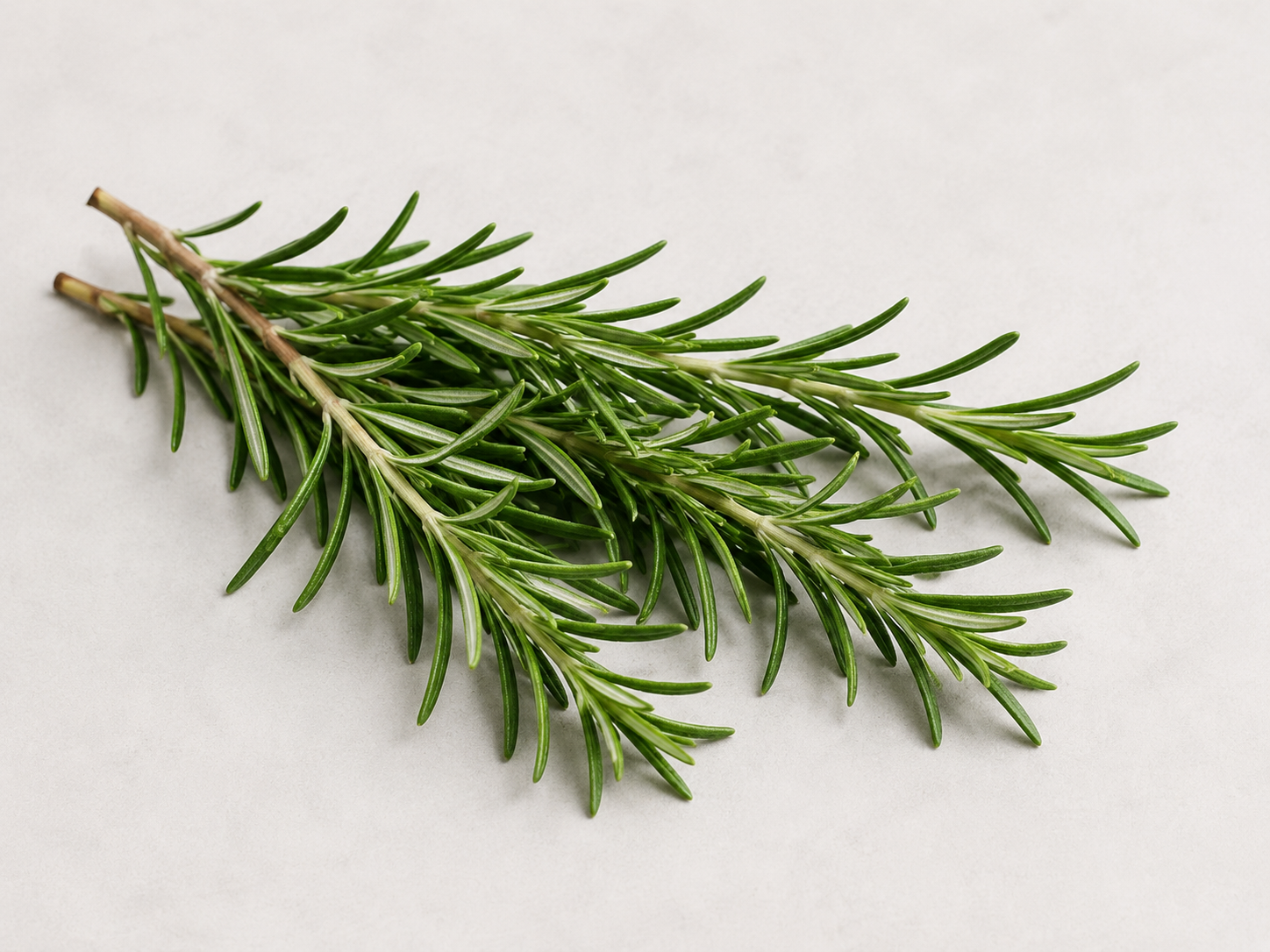
Rosemary is an evergreen aromatic herb in the mint family, usually eaten as the needle-like leaves and tender shoots. A typical culinary amount is only about 1–2 g. Its main everyday value is its strong woody, pine-like, camphoraceous aroma, which can help reduce reliance on excess salt, butter, and heavy sauces rather than provide large amounts of nutrients. Kew currently accepts the name Salvia rosmarinus; older literature and food databases often use Rosmarinus officinalis. This page covers fresh and dried rosemary, not essential oil, extracts, oleoresin, capsules, or medicinal products.
Food Overview
Key strengths
Rosemary is highly aromatic, so a small amount can flavor vegetables, legumes, whole grains, fish, and meat. Its leaves contain carnosic acid, carnosol, rosmarinic acid, and various volatile terpenes, and rosemary is widely studied as a natural antioxidant source in food systems.
How to use it
Rosemary works well with roasted vegetables, tomato-and-bean stews, fish, tofu, mushrooms, and whole-grain bread. Chop tender fresh leaves and add them later in cooking; use tougher whole sprigs to flavor braises or roasting dishes, then remove them before eating.
What stands out
Rosemary’s bioactive profile is not fixed. Variety, leaf age, season, light, temperature, drying time, and extraction method can all change carnosic acid, rosmarinic acid, and volatile compounds. One test result should not be applied to every commercial product.
Worth noting
Per 100 g, rosemary appears high in fiber, iron, calcium, and manganese, but 1 tablespoon of fresh rosemary weighs about 1.7 g and 1 teaspoon of dried rosemary about 1.2 g. A normal seasoning portion provides only about 1%–2% of the 100 g values, so database figures should not be mistaken for intake from one meal.
Basic Nutrition
Showing:100 g Fresh rosemary
View complete nutrition data
GI note:GI varies with cultivar, food structure, processing, and cooking. Raw grains usually do not have directly applicable human GI data.
No clear, reliable GI value was found for ordinary fresh rosemary, so GI is shown as “—” rather than estimated from carbohydrate or sugar content.
Data notes:This page uses two formal food states: fresh rosemary and dried rosemary. Each uses its own USDA FoodData Central entry; values are not estimated from water loss.
Basic nutrition uses USDA FoodData Central entries Rosemary, fresh (FDC 173473) and Spices, rosemary, dried (FDC 171333).
Rosemary is eaten in small amounts: about 1 tablespoon fresh (1.7 g) or 1 teaspoon dried (1.2 g), not 100 g.
High per-100-g energy, fiber, and mineral values—especially in dried rosemary—mainly reflect concentration after water loss. Normal seasoning portions provide only a small fraction.
GI is shown as “—” because there is no clear, reliable GI value suitable for ordinary rosemary. It is not estimated from carbohydrate or sugar content.
Omega-3 and omega-6 are shown from the database’s 18:3 and 18:2 fatty-acid entries. Rosemary is eaten in very small amounts and is not a meaningful omega-3 source.
The USDA entries do not provide reliable values for vitamin E, vitamin K, and some minerals, so these are shown as “—” or omitted rather than assumed to be 0.
Vitamins & Minerals
Only vitamins and minerals providing at least 5% of the Daily Value at the selected amount are shown. The default is fresh rosemary per 100 g; at normal seasoning portions, rosemary usually has no vitamin or mineral reaching 5% of the Daily Value.
At 100 g, 15 vitamins and minerals reach at least 5% of the Daily Value; the first six are shown by default. At a common 1-tablespoon serving (about 1.7 g), none reach 5%, so rosemary is better viewed mainly as a flavoring herb and source of plant compounds, not a major source of iron, calcium, or vitamin C.
View all vitamins and minerals
Percentages show how much the selected serving contributes to the adult Daily Value.
Key Bioactive Compounds
Carnosic acid and carnosol
Phenolic diterpenesCarnosic acid and carnosol are characteristic fat-soluble phenolic diterpenes in rosemary.
Specific dried-rosemary studies measured about 6.30–19.28 mg/g carnosic acid and 3.61–7.28 mg/g carnosol. Values vary by sample and extraction method. Carnosic acid is often higher in younger green leaves and can oxidize into carnosol.
They help slow lipid oxidation in food and experimental systems, but this does not establish an anti-inflammatory effect from normal seasoning amounts.
Use fresh or dried rosemary in normal cooking; store dried rosemary sealed, dark, and away from heat.
Leaf amounts, standardized extracts, and isolated carnosic acid involve very different doses. Food or laboratory studies do not show that a teaspoon treats inflammation or slows aging.
Rosmarinic acid
Phenolic acidsRosmarinic acid is a common water-soluble phenolic acid in rosemary and other mint-family herbs.
Reported dried-leaf values vary widely: about 1.36–2.35 mg/g in some samples and roughly 8.6–15.3 mg/g in literature summaries. Cultivar, harvest time, leaf age, drying, and extraction all affect the result; leaves generally contain more than woody stems.
Rosmarinic acid and rosemary extracts show antioxidant activity experimentally, but much of the evidence comes from extracts or animal studies.
Fresh or dried leaves are both suitable; normal cooking is enough and prolonged repeated high heat is unnecessary.
Containing rosmarinic acid does not mean rosemary treats arthritis, gastrointestinal disease, or cardiovascular disease.
1,8-Cineole, camphor, and alpha-pinene
Volatile aroma compounds1,8-Cineole, camphor, and alpha-pinene help create rosemary’s pine, eucalyptus, and camphor-like aroma.
Across 71 rosemary essential-oil samples, 1,8-cineole was about 9.7%–70.2%, camphor 0.3%–31.0%, and alpha-pinene 4.5%–14.5% of the oil. These are essential-oil proportions, not leaf-weight percentages; one leaf study found about 1.84% essential-oil yield.
Their clearest food role is aroma. Essential oil and isolated compounds show antioxidant or antimicrobial activity in vitro at much higher concentrations than ordinary dishes.
Chop or crush rosemary just before use; whole sprigs can flavor stews and be removed before serving.
Rosemary essential oil is far more concentrated than leaves and should not be swallowed or treated as a food oil.
How Preparation Changes Rosemary
Fresh whole sprigs
Fresh rosemary has more water and a fresher aroma. Use woody sprigs to flavor braises or roasting dishes and remove them before serving; tender leaves can be chopped and eaten. Lower per-100-g nutrient density than dried rosemary mainly reflects water.
Chopped or crushed
Chopping, rubbing, or crushing breaks leaf tissue and surface glands, releasing volatile aroma faster. Use it soon after cutting because aroma continues to dissipate.
Baking and stewing
Rosemary works well heated with root vegetables, legumes, fish, and meat. Prolonged high heat reduces some volatile aroma and changes compound proportions, but there is no reliable universal retention percentage for home cooking, so exact “percent retained after heating” claims are not appropriate.
Dried rosemary
Water falls from about 67.8 g/100 g fresh to about 9.3 g/100 g dried, concentrating nutrients per 100 g. But a teaspoon of dried rosemary is only about 1.2 g. Drying also changes essential-oil yield and aroma composition.
Essential oil and concentrated extracts
Essential oil concentrates volatile compounds, while antioxidant extracts may be standardized for carnosic acid or carnosol. Their composition, concentration, and use differ from whole leaves, so they should not share this page’s nutrition data.
How to Choose and Store
How to choose
- Fresh rosemary: choose green to gray-green leaves and firm sprigs with a clear aroma when rubbed. Avoid large areas of blackened or yellow leaves, slime, mold, or rotten odor. FDA recommends choosing fresh produce without obvious bruising or damage.
- Dried rosemary: choose products whose ingredient list contains only rosemary. Leaves should be dry, with no damp clumping, mustiness, or insect damage. Herb salts, barbecue blends, and marinades may contain much more salt, sugar, or other ingredients and should not use plain-rosemary data.
How to store
- Fresh rosemary: refrigerate in a clean container or bag without excessive surface moisture. FDA recommends keeping herbs and other perishable produce at 4°C or below and separate from raw meat, poultry, and seafood.
- Wash before eating: rinse well under running water, then pat dry with a clean paper towel or cloth. Do not wash leaves with soap, detergent, or commercial produce wash.
- Dried rosemary: keep in an airtight container in a cool, dry, dark place away from the stove, steam, and sunlight. Carnosic acid, rosmarinic acid, and aroma compounds decline with light, heat, and storage time.
- Discard when spoiled: throw away fresh rosemary that becomes slimy, very soft, moldy, or unusually odorous. Dried rosemary that is clearly damp, moldy, or insect-infested should also be discarded.
When buying rosemary, remember three things: firm fresh sprigs, a clear aroma, and no slime or mold.
How to Use It in Everyday Meals
Rosemary-roasted root vegetables
Roast carrots, squash, potatoes, onion, or cauliflower with a little chopped rosemary, olive oil, and black pepper. Start small because rosemary is strong, and avoid lots of butter, salt, sugary sauce, or heavy charring.
Tomato-rosemary bean stew
Simmer tomatoes and onion with chickpeas, white beans, or lentils, using a small fresh rosemary sprig for flavor and removing the woody stem before serving. Add mushrooms, carrots, or leafy greens if desired, and use less salty bouillon, bacon, and processed sausage.
Rosemary-baked fish or tofu
Season fish or tofu with a little rosemary, lemon juice, garlic, and black pepper, then bake or cook over moderate heat. Rosemary adds flavor without needing a large amount of oil, and the food does not need to be browned until charred.
Rosemary mushrooms
Add a little chopped rosemary when mushrooms are nearly cooked and toss briefly. Pair with legumes, eggs, or whole grains, and use less butter, concentrated gravy, and large amounts of cheese.
Rosemary whole-grain bread
Add a little chopped rosemary to whole-wheat bread, focaccia, or multigrain flatbread, with tomato, olives, or nuts if desired. Keep surface salt, butter, and refined flour moderate; adding herbs does not cancel the bread’s overall salt, fat, or refined-carbohydrate content.
Lemon-rosemary dressing
Mix chopped rosemary with lemon juice, vinegar, black pepper, and a little olive oil for vegetables, legumes, fish, or whole-grain salads. Make it fresh rather than keeping fresh rosemary submerged in oil at room temperature for long periods.
Who Should Take Extra Care
People allergic to rosemary or other mint-family herbs
People with a known rosemary or related-herb allergy should avoid it and watch for hidden sources in herb blends, barbecue marinades, bread, and restaurant sauces. Seek medical care for hives, swelling of the mouth, wheezing, or breathing difficulty.
Infants, young children, and people with swallowing difficulties
Rosemary leaves are firm and the stems can become woody. For children or people with swallowing difficulty, remove coarse stems and chop the leaves finely to reduce choking risk.
Pregnant or breastfeeding people, or those taking medication
Small culinary amounts differ from medicinal tea, essential oil, or standardized extracts. During pregnancy or breastfeeding, or when using medicines or managing chronic disease, do not use concentrated rosemary products based on food-page advice. EMA medicinal-product conclusions do not automatically apply to foods or supplements.
People using rosemary essential oil
Do not assume essential oil is safe to swallow because it comes from a plant. Many essential oils can cause serious poisoning if misused, swallowed, or aspirated into the lungs. Follow the product label strictly and keep essential oils away from children and pets.
People making homemade rosemary-infused oil
Fresh herbs in oil create a low-acid environment that can support Clostridium botulinum. Refrigerate homemade fresh-rosemary oil and use within 2–3 days, or freeze for longer storage. Do not keep it sealed at room temperature.
People eating fresh rosemary raw
Fresh herbs can pick up microbes during growing and handling. Rinse rosemary under running water before raw use and keep it separate from tools used for raw meat or seafood. Higher-risk groups should be especially careful with raw-produce hygiene.
Similar Food Alternatives
Thyme
A woody herb that tolerates cooking well and suits roasted vegetables, legumes, fish, and stews. Its aroma is usually softer than rosemary’s.
Sage
More woody, camphoraceous, and slightly bitter; useful with squash, legumes, mushrooms, and poultry. Start with a small amount.
Oregano
More spicy and slightly bitter; good with tomatoes, legumes, eggplant, whole-grain bread, and Mediterranean dishes, but it lacks rosemary’s pine note.
Basil
Fresher and better for salads, tomatoes, tofu, and finishing dishes. It works as a fresh-herb substitute but not as a one-for-one cooking replacement.