Whole Grains & Tubers · Whole grain
Highland Barley
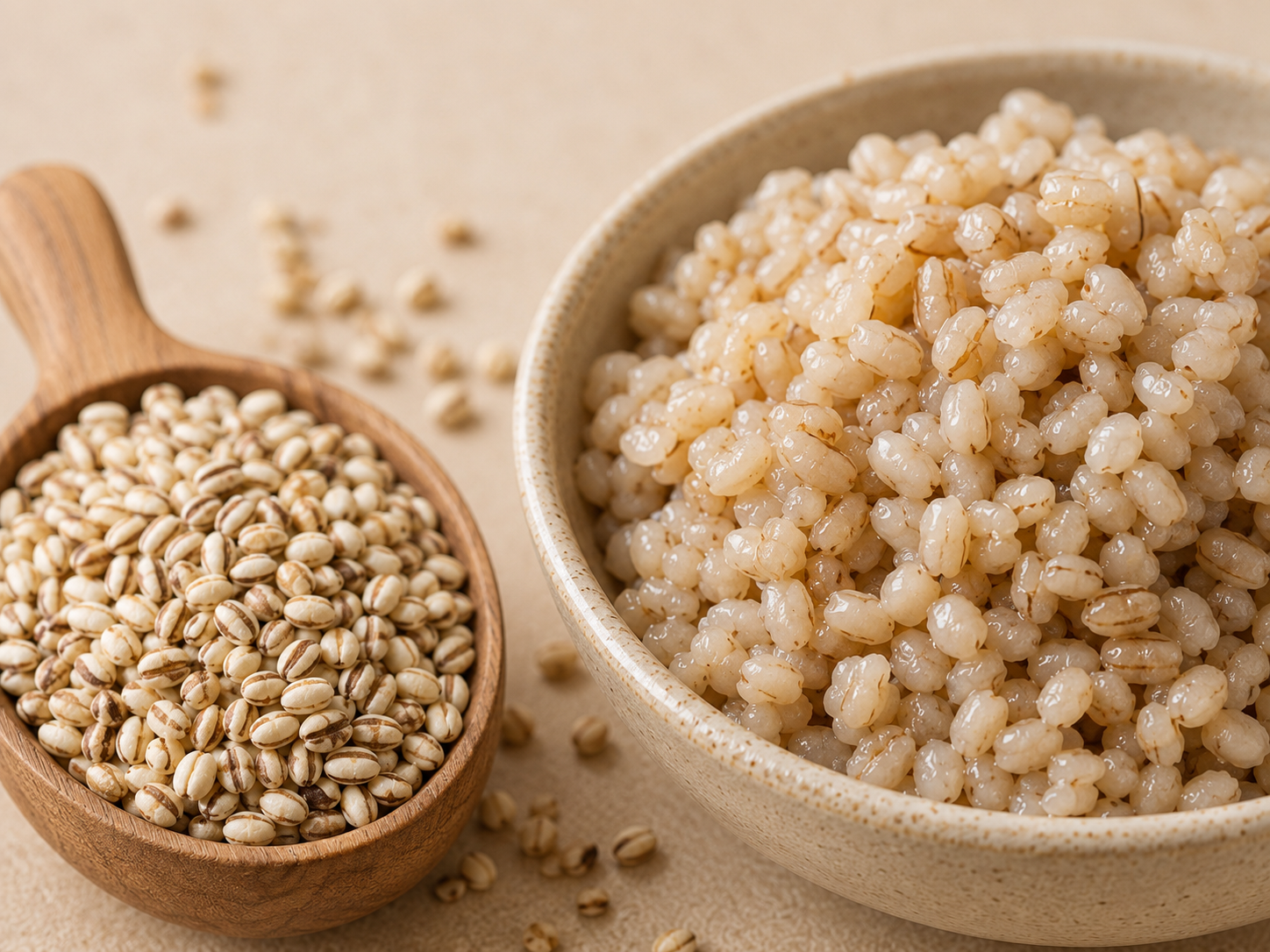
Highland barley is a hulless barley adapted to high-altitude environments. When the whole kernel is retained, it is a whole grain rich in dietary fiber and β-glucan. Dark varieties may contain more anthocyanins, but color alone does not determine overall nutritional quality.
Food Overview
Key strengths
Highland barley usually retains the endosperm, germ, and bran and is a whole grain. In studies of hulless-barley samples, total dietary fiber was about 10.7%—13.2% and β-glucan about 3.3%—4.0%; across broader studies, β-glucan commonly ranged from about 3.9%—6.9%, with substantial cultivar differences.
How to Eat It
It can be cooked with rice, brown rice, millet, or legumes as mixed-grain rice and also works in porridge, vegetable soup, grain salads, tsampa, and some noodle products.
What stands out
Look for products that retain the whole grain structure. Whole or lightly processed highland barley usually keeps more dietary fiber and outer-layer polyphenols; heavy pearling, fine milling, or puffing changes food structure and may reduce some nutrients and phytochemicals.
Worth noting
Highland barley is barley and naturally contains gluten, so it is not suitable for people with celiac disease. Black, blue, and purple varieties often contain more anthocyanins or polyphenols, but grain color should not be used as the sole indicator of protein, β-glucan, or overall nutritional value.
Basic Nutrition
Showing:100 g Raw Highland Barley
View complete nutrition data
GI note:GI varies with cultivar, food structure, processing, and cooking. Raw grains usually do not have directly applicable human GI data.
Highland barley is hulless barley. Similar hulless-barley samples have reported GI values around 29–30, but standard human GI tests specifically for plain cooked highland-barley kernels are still lacking, so barley GI values are not directly assigned here.
Data notes:Energy, protein, fat, carbohydrate, water, vitamins, and minerals use the highland-barley entry in the Chinese Food Composition Tables.
Dietary fiber is shown as the measured range from research on four hulless-barley cultivars rather than as a fixed value from the Chinese Food Composition Tables; values vary by cultivar and processing.
“—” means not tested or not provided by the database and should not be automatically entered as 0.
Vitamins & Minerals
By default, show data per 100 g of raw highland barley and only nutrients providing at least 5% of the adult Daily Value; iron and copper are temporarily not displayed
View all vitamins and minerals
Percentages show how much the selected serving contributes to the adult Daily Value.
Key Bioactive Compounds
β-Glucan
Soluble dietary fiberHighland barley is hulless barley, and β-glucan is one of its most characteristic functional carbohydrates.
Across different colors and cultivars, raw highland barley contains about 3.88—6.88 g of β-glucan per 100 g, with a study-sample average of about 5.22 g.
Highland-barley β-glucan absorbs water and forms a viscous structure, which may help reduce cholesterol absorption and support steadier post-meal glucose responses and a normal intestinal environment.
Soak before cooking thoroughly and pair it with brown rice or legumes. Prefer whole or lightly pearled highland barley and avoid relying mainly on highly refined highland-barley flour products.
A relatively high β-glucan content does not mean that all highland-barley foods have the same effect.
Ferulic Acid & Other Phenolic Acids
Phenolic acidsHighland barley contains ferulic acid, p-coumaric acid, and other phenolic acids, many of which are bound to dietary fiber in the bran and cell walls.
Specific amount: —. Grain color, cultivar, growing region, and analytical method can substantially affect results. Phenolic acids are concentrated mainly in the pericarp, bran, and aleurone layer and usually decrease with more extensive milling.
Phenolic acids can contribute to dietary antioxidant defenses as part of highland barley’s phytochemical profile, while bound phenolic acids may also be utilized by colonic microbes.
Prefer whole highland-barley kernels or products that retain the bran.
In-vitro antioxidant activity of highland-barley phenolics should not be equated with anti-inflammatory effects in people and does not show that highland barley can treat altitude-related illnesses.
Anthocyanins & Proanthocyanidins
Polyphenol pigmentsBlack highland barley and some blue-purple varieties contain anthocyanins, proanthocyanidins, and related pigments that contribute to the dark color of the grain.
Specific amount: —. These compounds mainly apply to black, blue, or purple highland barley and should not be applied to ordinary white varieties.
Anthocyanins, proanthocyanidins, and their metabolites can participate in antioxidant defenses, while dark whole grains can also increase the diversity of dietary polyphenols.
Choose products clearly labeled as black or blue highland barley and retain the outer layers where possible.
Data from black highland barley should not be applied to all highland barley, and darker color does not establish cancer prevention or a definite anti-inflammatory effect in people.
How Preparation Changes Highland Barley
Whole Highland-Barley Kernels
Whole or only lightly cleaned highland-barley kernels retain more of the outer layers and are closer to an intact whole grain.
Pearled Highland Barley
Moderate pearling can improve texture and shorten cooking time, but further removal of outer layers reduces bran, total dietary fiber, and some polyphenols.
Highland-Barley Flour
Milling disrupts the grain structure and increases the surface area of starch exposed to digestive enzymes. The flour can be used for tsampa, noodles, steamed breads, and baking, but milling, added sugar, and other ingredients still matter.
Extruded & Puffed Products
Extrusion can improve texture and convenience, but studies suggest it may reduce phenolics, β-glucan, protein, lipids, and in-vitro antioxidant capacity while increasing the proportion of rapidly digestible starch.
Roasted Highland Barley & Tsampa
Traditional tsampa is generally made by roasting highland barley and grinding it into flour, so the intact grain structure has been lost.
Highland-Barley Noodles & Bread
Highland barley does not form the same strong gluten network as bread wheat. Commercial highland-barley noodles, steamed buns, and breads may therefore contain wheat flour. Check the ingredient list for the highland-barley position and proportion.
How to Choose & Store
How to choose
- Packages may say Qingke, highland barley, hulless barley, naked barley, or related names.
- Pearled barley or pearl barley usually refers to polished ordinary barley and should not automatically be treated as highland barley.
- Prefer intact kernels that have not been milled into fine flour or heavily puffed and whose only ingredient is highland barley.
- For processed products, check the position of highland-barley flour in the ingredient list, the amount of wheat flour, and added sugar, fats, sodium, cream powder, and non-dairy creamer.
- White, yellow, blue, purple, and black varieties are all edible; darker color does not mean every nutrient is higher.
- Grains should remain dry and free of mold, insect damage, abnormal clumping, or rancid odors.
How to store
- Store raw highland barley in a cool, dry, dark place and seal it after opening to protect it from moisture and insects. Refrigeration can be used in hot, humid environments.
- Refrigerate cooked highland barley within 2 hours in a shallow, sealed container and try to eat it within 3—4 days.
- Discard grains with mold, insects or eggs, obvious moisture clumping, abnormal odors, or cooked grains that become abnormally slimy or discolored.
When buying highland barley, remember three points: prefer intact kernels; check the highland-barley proportion in processed foods; and do not judge nutritional quality by color alone.
How to Include It in Everyday Meals
Highland-Barley Mixed-Grain Rice
Cook with rice, brown rice, millet, or legumes. Whole highland barley is firm, so soak it in advance according to package directions; use it to replace part of the original rice rather than adding an extra staple-food portion.
Highland-Barley Porridge
Cook with millet, oats, red beans, or mung beans while retaining some grain texture. Pair with legumes, pumpkin, mushrooms, eggs, or lean meat, and use little sugar, condensed milk, or cream.
Highland-Barley Vegetable Soup
Add precooked highland barley to soups with tomatoes, onions, carrots, celery, legumes, and mushrooms. Use less high-sodium stock cubes, processed meat, and heavy cream.
Highland-Barley Grain Salad
Cool cooked highland barley and combine it with colorful vegetables, legumes, tofu, nuts, eggs, or fish. Keep refrigerated after preparation and still control the staple-grain portion.
Highland-Barley Noodles, Steamed Buns, or Pancakes
Prefer products with a higher proportion of highland-barley flour and simple ingredient lists. They may still contain wheat flour and are not suitable for people with celiac disease; high-sugar cookies and cakes are not equivalent to intact highland-barley staple foods.
Who Should Take Extra Care
People with Celiac Disease
Highland barley is barley and naturally contains gluten. People with celiac disease should avoid highland barley, highland-barley flour, tsampa, and ordinary highland-barley noodle products; it should not be treated as gluten-free simply because it is not wheat.
People Allergic to Barley or Grain Proteins
If hives, swelling of the lips, wheezing, or other clear allergic symptoms occur, stop eating and seek medical care promptly.
People with digestive sensitivity
The relatively high amount of dietary fiber and fermentable carbohydrate may cause bloating, gas, and changes in bowel habits. Start with a small serving and increase gradually according to tolerance.
People managing blood sugar
Highland barley is still a carbohydrate-containing staple food. Current human evidence cannot be generalized to all highland-barley powders, cookies, and beverages.
People with impaired kidney function
People who need to limit phosphorus, potassium, or magnesium should choose portions according to a personalized plan from a physician or registered dietitian.
Infants, young children, and people with swallowing difficulties
Whole kernels are firm and should be soaked and cooked until soft, with particle size adjusted as needed. Avoid serving hard, dry whole kernels directly to people with weaker chewing or swallowing ability.
Similar Food Alternatives
Oats
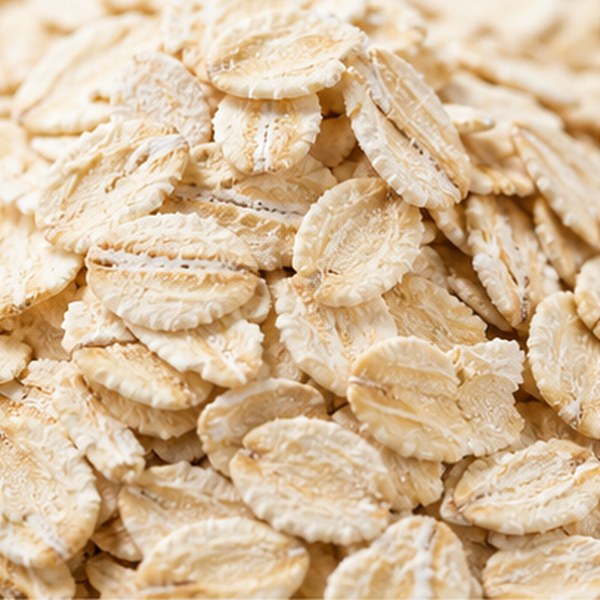
Oats are another representative β-glucan source and are more convenient to cook for breakfast.
View details →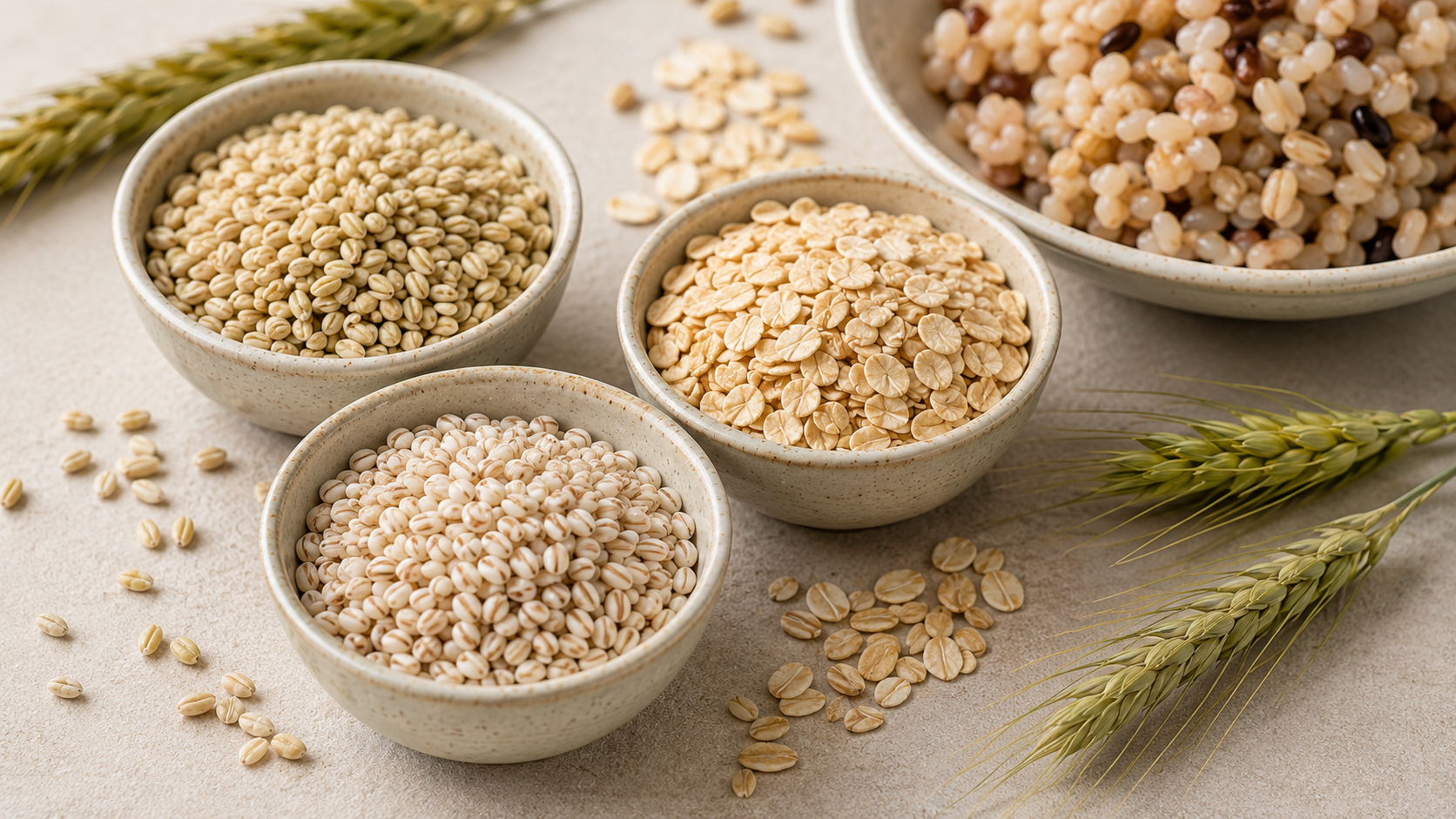
Pearled Barley
Pearled barley comes from the same barley species, but commercial products are usually more heavily polished.
View details →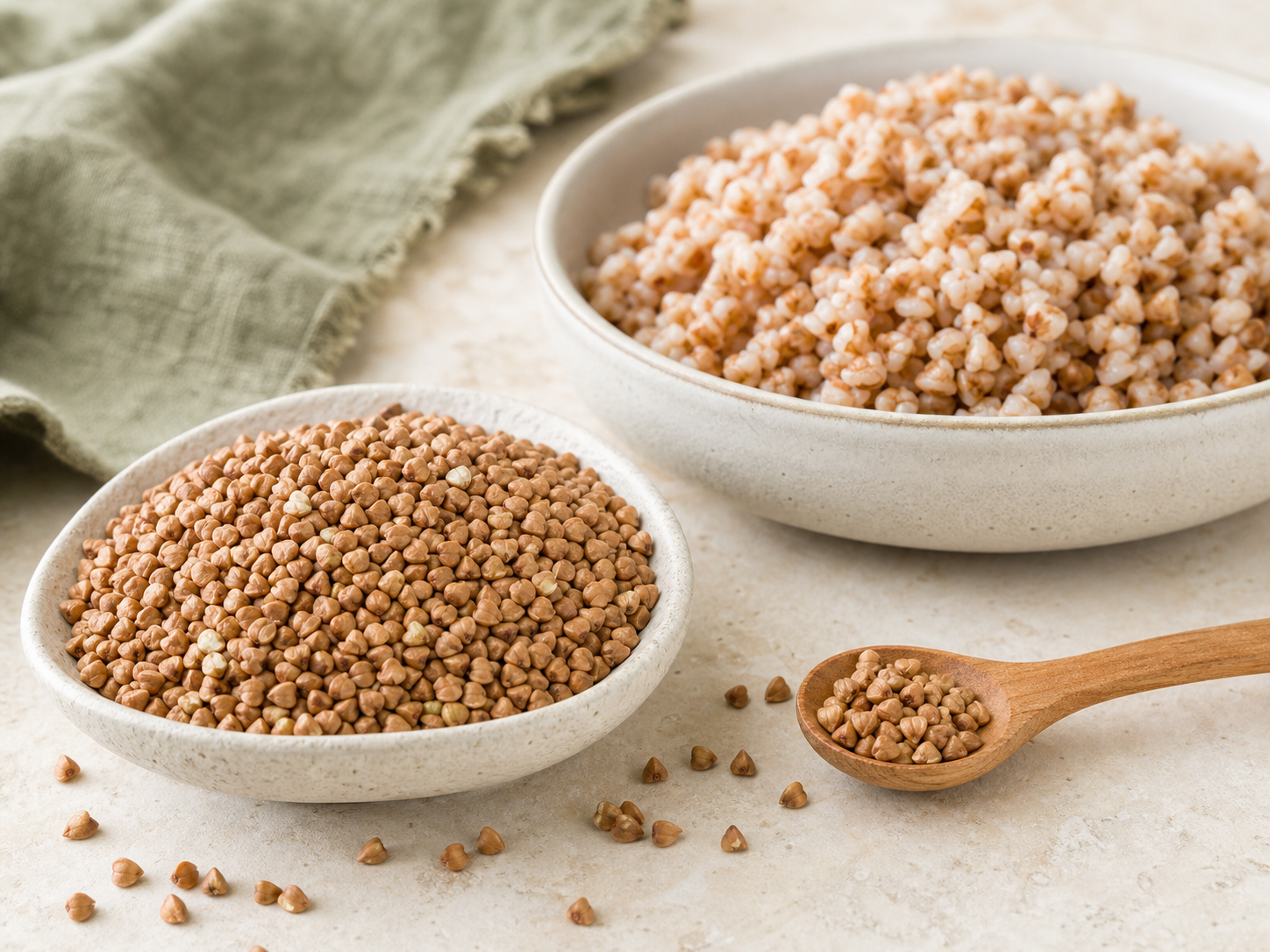
Buckwheat
Quinoa works well in mixed-grain rice, grain salads, and pasta-style dishes and does not contain barley gluten.
View details →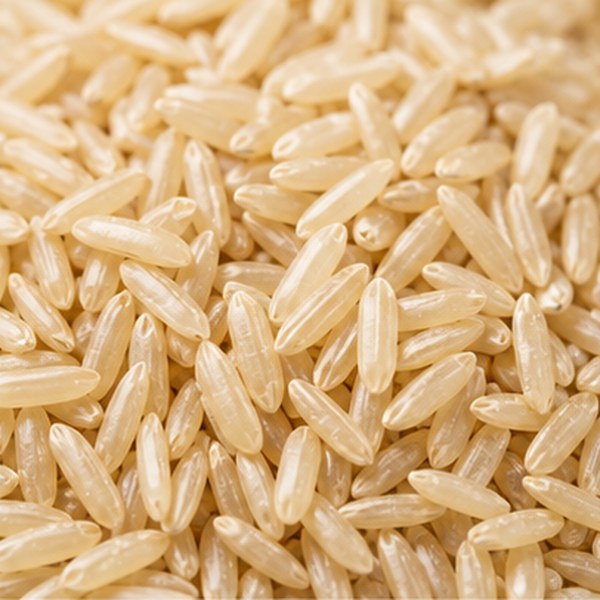
Brown Rice
Brown rice has a texture and use pattern closer to everyday rice and can increase whole-grain intake.
View details →Data Sources & Last Updated
Nutrition Data
Yu, L., et al. (2021). Effect of Hulless Barley Flours on Dough Rheological Properties, Baking Quality, and Starch Digestibility of Wheat Bread.
Frontiers in Nutrition, 8, 785847. DOI / Original
Basic Information & Food Safety
Research & References
Guo, T., Horvath, C., Chen, L., Chen, J., & Zheng, B. (2020). Understanding the nutrient composition and nutritional functions of highland barley (Qingke): A review.
Trends in Food Science & Technology, 103, 109–117. DOI / Original
Dang, B., et al. (2022). Evaluation of Nutritional Components, Phenolic Composition, and Antioxidant Capacity of Highland Barley with Different Grain Colors on the Qinghai Tibet Plateau.
Foods, 11(14), 2025. DOI / Original
Lin, S., et al. (2018). Phenolic profiles, β-glucan contents, and antioxidant capacities of colored Qingke cultivars.
Journal of Cereal Science, 81, 69–75. DOI / Original
Yang, X.-J., Dang, B., & Fan, M.-T. (2018). Free and Bound Phenolic Compound Content and Antioxidant Activity of Different Cultivated Blue Highland Barley Varieties.
Molecules, 23(4), 879. DOI / Original
Nie, C., et al. (2021). Structure of β-glucan from Tibetan hull-less barley and its in vitro fermentation by human gut microbiota.
Chemical and Biological Technologies in Agriculture, 8, 12. DOI / Original
Zheng, Q., et al. (2023). Effect of pearling on nutritional value of highland barley flour and processing characteristics of noodles.
Food Chemistry: X, 18, 100596. DOI / Original
Xiao, X., et al. (2022). Effect of Extrusion or Fermentation on Physicochemical and Digestive Properties of Barley Powder.
Frontiers in Nutrition, 8, 794355. DOI / Original
Ho, H. V. T., et al. (2016). A systematic review and meta-analysis of randomized controlled trials of the effect of barley β-glucan on LDL-C, non-HDL-C and apoB.
European Journal of Clinical Nutrition, 70(11), 1239–1245. DOI / Original
Chu, Z., Ran, H., Zhang, H., & Su, Q. (2025). Postprandial glycemic response, sensory, and appetite evaluation of highland barley-multigrain rice versus white rice in healthy Chinese adults.
Asia Pacific Journal of Clinical Nutrition, 34(5), 750–758. DOI / Original