Vegetables · Root vegetables
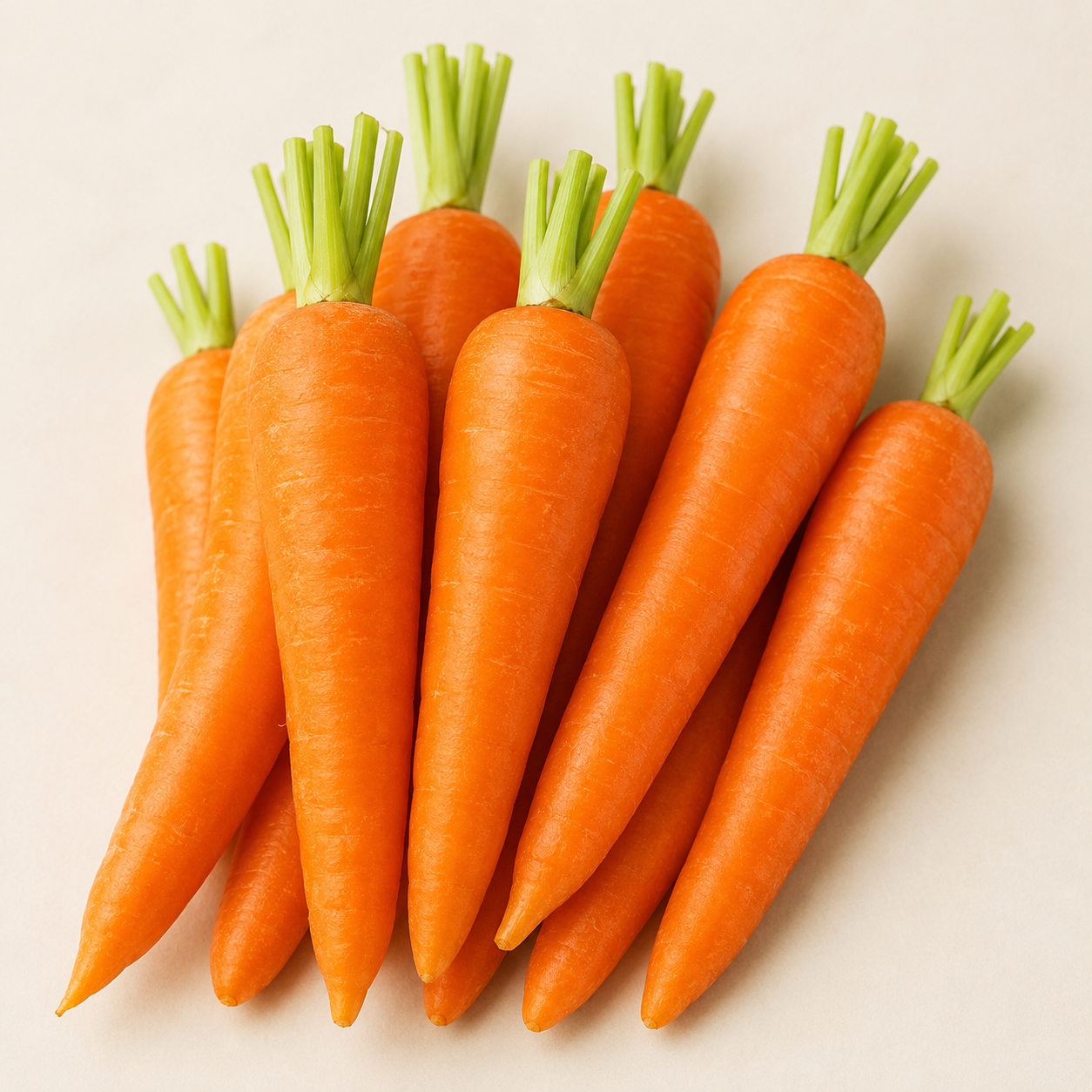
Carrot
Carrot is a low-energy root vegetable notable for its carotenoid content. Raw, steamed or boiled, and moderately roasted carrots each have different characteristics, and carrot juice, smooth carrot purée, and whole carrots should not share exactly the same GI or nutrition interpretation.
Food Overview
Key strengths
Carrot’s most prominent nutrition feature is its vitamin A activity and carotenoid content. Raw carrot contains about 8,285 μg beta-carotene and 3,477 μg alpha-carotene per 100 g, along with 2.8 g dietary fiber, 320 mg potassium, and smaller amounts of vitamin K, vitamin B6, and vitamin C.
How to eat it
Carrots can be eaten raw or steamed, boiled, quickly stir-fried, stewed, or moderately roasted. Raw carrots are crisp and work well as sticks, shreds, or in salads; cooked carrots are softer and pair well with beans, mushrooms, eggs, fish, poultry, and whole grains.
What stands out
Beta-carotene and alpha-carotene are provitamin A carotenoids that can be converted to vitamin A as needed. Vitamin A supports normal vision, immune function, and cell growth, but eating carrots cannot reverse myopia or replace treatment for eye disease.
Worth noting
Cooked carrots remain a low-GI food overall, but chopping, puréeing, and juicing change food structure. In the University of Sydney GI database, ordinary boiled carrots generally range from GI 32–49, while a smooth cooked carrot purée tested at GI 60, so different carrot products should not all be assigned the same GI value.
Basic Nutrition
Showing:100 g Boiled carrot
View complete nutrition data
GI note:GI varies with cultivar, food structure, processing, and cooking. Raw grains usually do not have directly applicable human GI data.
The range reflects ordinary boiled carrots with skin, peeled carrots, or diced carrots. An early five-person GI result of 92 and a smooth carrot purée GI of 60 are not included in the main card.
Data notes:Raw and boiled carrots use separate USDA sample entries, so the two per-100-g tables cannot be used to calculate an exact cooking-loss rate.
A typical 60 g serving of raw carrot is about one medium carrot; a typical 80 g serving of boiled carrot is about 1/2 cup sliced.
GI reflects the state of the food and does not scale proportionally when switching between per-100-g and typical-serving views.
Vitamins & Minerals
Uses FDA Daily Values for adults and children age 4 and older, shows only items providing more than 5% of the Daily Value in the selected state and serving, and sorts them from highest to lowest percentage.
Some values are slightly higher in the boiled entry than in the raw entry, mainly reflecting differences in independent samples, maturity, and weight composition; this should not be interpreted as boiling creating nutrients.
View all vitamins and minerals
Percentages show how much the selected serving contributes to the adult Daily Value.
Key Bioactive Compounds
Beta-carotene & alpha-carotene
CarotenoidsThese orange-yellow carotenoids are major contributors to carrot color and can both be converted to vitamin A in the body.
Raw carrots contain about 8,285 μg beta-carotene and 3,477 μg alpha-carotene per 100 g, concentrated mainly in the orange-yellow root tissues. Actual amounts vary with cultivar color, maturity, and growing conditions.
Both can be converted to vitamin A and help support normal vision, skin, mucous membranes, and immune function while contributing to antioxidant defense.
Chopping, steaming, boiling, or brief heating can soften plant tissues, and a little plant oil can improve absorption.
Eating carrots as part of a normal diet does not treat myopia, dry eye, or other eye disease and should not be equated with taking high-dose beta-carotene supplements.
Lutein & zeaxanthin
CarotenoidsCarrots also contain small amounts of lutein and zeaxanthin, and yellow cultivars may have a different relative profile from orange cultivars.
Raw carrot contains about 256 μg lutein plus zeaxanthin per 100 g, mainly in the colored root tissues.
Lutein and zeaxanthin can accumulate in the macula of the retina, where they support normal visual function and contribute to antioxidant defense.
As with beta-carotene, chopping, thorough chewing, gentle heating, and a little dietary fat can help release and absorb these compounds.
Carrots contain less lutein than dark leafy greens such as spinach, and this does not mean carrots can treat macular or vision problems.
Falcarinol & falcarindiol
PolyacetylenesFalcarinol and falcarindiol are natural defense compounds in plants of the carrot family and are also related to carrot flavor and disease resistance.
Polyacetylenes such as falcarinol and falcarindiol can be detected in carrot roots, but amounts vary substantially with cultivar, storage, and tissue damage, so a universal per-100-g value is not appropriate.
These compounds show various biological activities in cell and animal studies, while human research remains limited.
Choose fresh carrots without mold or major damage. After washing, the thin edible outer layer can be retained.
It is not currently clear how much effect polyacetylenes from ordinary dietary amounts have in humans, and they do not justify claims that carrots have anticancer or drug-like effects.
How Preparation Changes Carrot
Raw carrot
Raw carrots retain a crisp, firm structure and work well as sticks, slices, or shreds. Eating them raw avoids losses of water-soluble nutrients such as vitamin C into cooking water, but the intact plant cell walls mean carotenoid release also depends on chewing and cutting.
Boiling
Boiling softens carrots, and some water-soluble nutrients and soluble sugars can move into the water. Ordinary boiled carrot pieces have a GI of 32–49, still within the low-GI range, but prolonged boiling is unnecessary.
Steaming
Steaming reduces direct contact with large amounts of water while softening the tissue. In one specific study, 30 minutes of boiling reduced measured total beta-carotene, while steaming had a smaller effect.
Quick stir-frying
Slice or shred carrots and briefly stir-fry with a little plant oil to improve texture and combine with other vegetables.
Moderate roasting
Roasting softens carrots, concentrates sweetness, and adds roasted flavor. Roasted carrots do not have complete nutrition and GI data matching the framework of this page, so boiled values should not be applied directly.
Carrot purée
Puréeing substantially disrupts food structure. In the GI database, ordinary boiled carrot pieces are generally GI 32–49, while a smooth purée made from cooked carrots tested at GI 60.
Carrot juice
Juicing reduces chewing, changes food structure and fiber distribution, and makes it easier to consume a larger amount of carrot at once.
Peel on vs. peeled
Carrot skin is thin. If the surface is damaged, softened, or has dirt that cannot be removed, trim the affected outer layer.
How to Choose & Store Carrots
How to choose
- Choose carrots that feel firm and heavy for their size; avoid roots that are soft, bend easily, wilted, or extensively shriveled.
- Ordinary orange carrots should have relatively even color. A clearly green top may taste bitter and should be trimmed away.
- Natural surface texture and a few fine roots are normal, but avoid obvious cracks, slime, rot, mold, or large blackened areas.
- For carrots sold with tops, the leaves should look relatively fresh and green.
How to store
- After removing the tops, refrigerate carrots in a storage bag or sealed container and avoid prolonged surface moisture.
- Proper refrigeration can usually maintain good quality for about two weeks. Once cut, store sealed in the refrigerator and use promptly.
- If slightly wilted but not spoiled, a brief soak in cold water can help restore crispness.
- Discard carrots with extensive soft leaking tissue, obvious slime, mold or rotten odor, large internal blackened areas with off odor, or swollen packaging in cut products.
When buying carrots, remember three things: choose firm, heavy roots; avoid mold and soft rot; and refrigerate after removing the leafy tops.
How to Use Carrots in Everyday Meals
Carrot sticks
Wash carrots and cut into sticks to serve with cucumber, bell pepper, tomato, eggs, or hummus. Raw carrots are firm and require thorough chewing; choose dips based on unsweetened yogurt, bean purée, or a little nut butter rather than large amounts of mayonnaise, cream, or salty sauces.
Carrot salad
Coarsely shred carrot and combine with purple cabbage, lettuce, apple, beans, or eggs. Eat soon after shredding or refrigerate, and avoid using lots of sugar, condensed milk, or salad dressing just to mask the natural earthy flavor.
Steamed carrots
Cut carrots into large sticks or chunks and steam until easy to bite but still holding their shape. Pair with fish, chicken, tofu, mushrooms, and whole grains.
Quick stir-fried carrots
Slice or shred carrots and quickly stir-fry with bell pepper, onion, broccoli, mushrooms, eggs, or lean meat. Add carrots first and quick-cooking leafy vegetables later.
Carrot stew
Carrots work well stewed with tomato, onion, potato, beans, beef, or chicken. Keep pieces fairly large and add them when other ingredients are nearing doneness to avoid excessive softening.
Roasted carrots
Cut carrots into thick sticks or chunks, toss with a little plant oil, black pepper, and herbs, and roast moderately. Pair with pumpkin, cauliflower, chickpeas, fish, or poultry.
Who Should Take Extra Care
People managing blood sugar
Raw and ordinary boiled carrots generally have a low GI, and one raw carrot weighing about 60 g contains only about 5.75 g total carbohydrate.
People with pollen-food syndrome
Some people allergic to birch or other pollens may develop itching of the lips, mouth, or throat after eating raw carrot. Stop eating and seek prompt medical care for facial swelling, wheezing, or breathing difficulty.
People who eat very large amounts of carrots or drink carrot juice regularly
Long-term high intake of beta-carotene-rich foods can turn the skin, especially the palms and soles, yellow-orange, a condition called carotenemia.
Infants and young children
Raw carrots are hard, and round slices or large pieces can pose a choking risk. Steam or boil until easily squashed between the fingers, then cut into age-appropriate sticks, finely chop, or mash to a suitable texture.
People with limited chewing or swallowing ability
Older adults, people with poor dentition, or those with swallowing difficulties should choose steamed or boiled soft carrots or smaller pieces and avoid hard raw carrots and rounds.
Similar Food Alternatives
Pumpkin
Also provides beta-carotene and works well steamed, boiled, in soups, or as a coarse mash.
Sweet potato
Orange-fleshed sweet potato provides beta-carotene and dietary fiber but is a starchy staple with much more carbohydrate and energy than carrot, so it should replace part of rice, bread, or other staple foods rather than simply being added as another vegetable.
Red bell pepper
Adds vitamin C and another red-orange vegetable option and works raw, stir-fried, or roasted.
Broccoli
Provides vitamin C, vitamin K, folate, and glucosinolates and works well steamed, blanched, or quickly stir-fried.
Data Sources & Last Updated
Nutrition Data
Basic Information & Food Safety
Research & References
Imsic M, Winkler S, Tomkins B, Jones R. (2010). Effect of Storage and Cooking on β-Carotene Isomers in Carrots (Daucus carota L. cv. ‘Stefano’).
Journal of Agricultural and Food Chemistry, 58(8), 5109–5113. DOI / Original
Bongoni R, Stieger MA, Dekker M, Steenbekkers B, Verkerk R. (2014). Sensory and Health Properties of Steamed and Boiled Carrots.
International Journal of Food Sciences and Nutrition, 65(7), 809–815. DOI / Original
Rawson A, Brunton NP, Rai DK, et al. (2013). Stability of Falcarinol Type Polyacetylenes during Processing of Apiaceae Vegetables.
Trends in Food Science & Technology, 30(2), 133–141. DOI / Original
Dawid C, et al. (2015). Bioactive C17-Polyacetylenes in Carrots (Daucus carota L.).
Journal of Agricultural and Food Chemistry. DOI / Original