Vegetables · Dark leafy greens
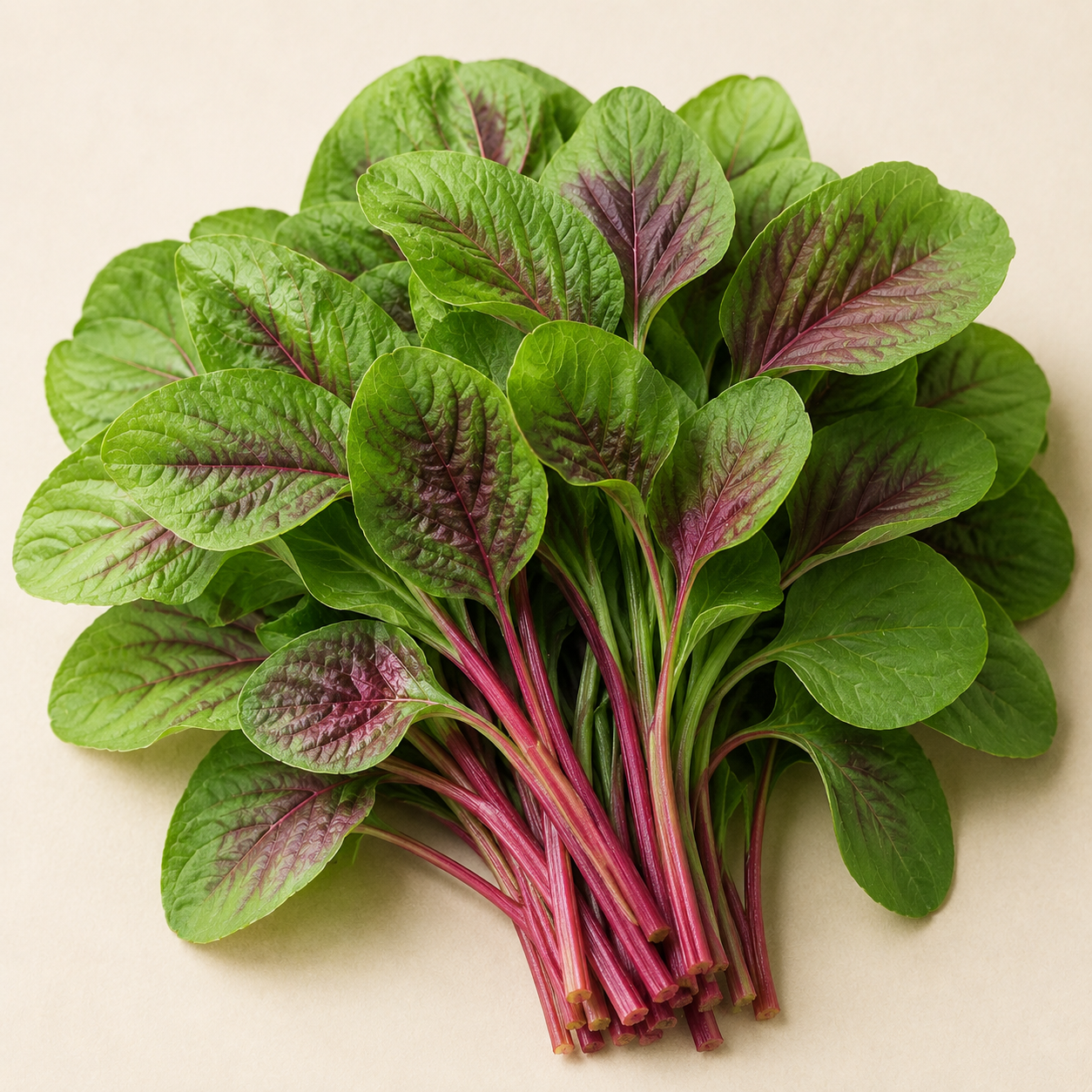
Amaranth Greens
Amaranth greens are a low-energy, micronutrient-dense leafy vegetable. USDA generic data show that 100 g of raw amaranth leaves provide about 23 kcal, 43.3 mg of vitamin C, 215 mg of calcium, 611 mg of potassium, and 1,140 mcg of vitamin K.
Food Overview
Key strengths
Amaranth greens provide vitamin K, vitamin C, folate, vitamin A, calcium, magnesium, potassium, iron, copper, and manganese for very little energy.
How to eat it
Amaranth leaves and tender stems work well with brief blanching, quick stir-frying, steaming, or in soups. There is no need to cook it until completely soft or add large amounts of oil or high-sodium soup base.
What stands out
The red-purple color of red amaranth comes mainly from betalain pigments, especially betacyanins such as amaranthin and isoamaranthin, rather than the anthocyanins commonly found in many purple foods.
Worth noting
Amaranth greens can be relatively high in oxalate. People with recurrent calcium oxalate stones or those advised to follow a low-oxalate diet should individualize portion size and cooking methods with professional guidance.
Basic Nutrition
Showing:100 g Boiled amaranth leaves
View complete nutrition data
GI note:GI varies with cultivar, food structure, processing, and cooking. Raw grains usually do not have directly applicable human GI data.
There is no standard human GI value that matches boiled amaranth leaves, and values for amaranth grain, amaranth porridge, or processed foods should not be applied to the leaves.
Data notes:The raw and boiled amaranth entries are separate database records and may not represent the same variety or batch, so they cannot be used to calculate an exact nutrient-retention rate.
USDA raw and cooked entries do not provide reliable values for dietary fiber, total sugars, or starch, so these are shown as “—” and should not be estimated from total carbohydrate.
A common serving of raw amaranth leaves is about 30 g, or roughly 1 cup of loose leaves; a common serving of boiled amaranth leaves is about 130 g, or roughly 1 cup cooked.
Vitamins & Minerals
Uses FDA Daily Values for adults and children age 4 and older, shows only items providing more than 5% of the Daily Value in the selected state and serving, and sorts them from highest to lowest percentage.
The USDA entry for boiled amaranth leaves does not report vitamin K. This is missing data; it does not mean boiled amaranth contains no vitamin K.
View all vitamins and minerals
Percentages show how much the selected serving contributes to the adult Daily Value.
Key Bioactive Compounds
Betalains
Betalain pigmentsThe red-purple color of red and purple-red amaranth comes mainly from betacyanins and betaxanthins, not anthocyanins.
Some red amaranth lines have reported betacyanin levels of about 127–143 mg per 100 g of fresh leaves, while green lines may contain very little.
Betalain pigments add to the diversity of plant pigments in the diet and participate in antioxidant-related metabolism.
Blanch briefly or stir-fry quickly rather than boiling for a long time.
Red amaranth is not a treatment for anemia, and its red color does not mean that it necessarily contains more iron or that its iron is better absorbed.
Carotenoids
CarotenoidsAmaranth leaves contain carotenoids such as beta-carotene and lutein, and both red and green varieties may provide them.
Some amaranth lines have reported total carotenoid levels of about 23–56 mg per 100 g fresh weight, but results depend on the line and analytical method and should not be treated as a fixed value for all retail amaranth.
Beta-carotene can be converted to vitamin A, while lutein helps support normal visual function.
Blanch briefly or stir-fry quickly and include a little plant oil.
“Total carotenoid” values reported across studies cannot be directly converted into beta-carotene or vitamin A values, and amaranth greens should not be presented as a treatment for eye disease.
Rutin & other phenolics
Flavonoids & phenolic acidsAmaranth leaves contain rutin, quercetin derivatives, and several phenolic acids. The exact profile varies by species and stage of growth.
Rutin and other phenolics are found mainly in amaranth leaves.
These polyphenols add to dietary flavonoid and phenolic-acid diversity and contribute to antioxidant-related metabolism within an overall plant-rich diet.
Choose fresh, evenly colored leaves, cook them briefly, and avoid prolonged soaking.
Research on rutin extracts does not show that ordinary servings of amaranth greens treat vascular, inflammatory, or metabolic diseases.
How Preparation Changes Amaranth Greens
Raw amaranth greens
Food databases include raw amaranth-leaf data, but this does not mean large amounts should be eaten raw. If tender leaves are occasionally used in salads, choose fresh amaranth that is clearly identified as an edible vegetable.
Brief blanching
Blanching softens the leaves and can also move some oxalate and water-soluble compounds into the cooking water. Research on leafy vegetables indicates that blanching and boiling can substantially reduce oxalate and may improve iron availability; the exact reduction depends on variety, cut size, water volume, and cooking time.
Boiling
Boiling softens the leaves and tender stems. With red amaranth, the cooking water may turn red-purple as water-soluble betalain pigments leach into it; this is normal and is not the vegetable “bleeding.
Quick stir-frying
Amaranth greens are well suited to quick stir-frying with a little plant oil and garlic. Cook just until the leaves and tender stems soften; repeated frying until dry or charred is unnecessary.
Prolonged heating
Betalain pigments, vitamin C, and some phenolic compounds are sensitive to heat, oxygen, and time. Long simmering or repeated reheating may fade the red color and overly soften the texture, although stability varies by variety and no single loss percentage applies to all amaranth.
Chopping or juicing
Chopping works well for soups, steamed egg dishes, and fillings, but blending large amounts of raw amaranth into concentrated juice can speed intake and may deliver a relatively large amount of oxalate at once.
How to Choose & Store Amaranth Greens
How to choose
- Choose amaranth with vivid color, firm leaves, and no widespread yellowing; color intensity depends mainly on the variety.
- Tender stems should bend easily and have relatively fresh cut ends; avoid thick, old, or clearly woody stems.
- Avoid leaves with widespread slime, leaking moisture, soft rot, sour or spoiled odors, pooled liquid in the package, or swollen packaging.
- Prefer amaranth that is clearly sold as an edible vegetable; do not forage wild Amaranthus plants that you cannot identify accurately.
How to store
- Refrigerate soon after purchase. Remove clearly damaged leaves, wrap loosely with absorbent paper, and place in a produce bag or container.
- If the greens have already been washed, drain or dry the surface well and avoid storing them for long periods.
- Before eating, rinse the leaves under running water in small bunches or individually, and do not use the same uncleaned cutting board that was used for raw meat.
- Discard amaranth if leaves become extensively slimy, develop sour or rotten odors, stems and leaves turn watery and mushy, mold is widespread, or packaging becomes swollen.
When buying amaranth greens, remember three things: fresh, non-slimy leaves; crisp, non-woody tender stems; and prompt refrigeration and use.
How to Use Amaranth Greens in Everyday Meals
Garlic stir-fried amaranth
Wash the amaranth and trim off tough lower stems. Heat a little plant oil with garlic, then add the greens and stir-fry quickly until the leaves soften.
Blanched amaranth salad
Briefly blanch the amaranth in boiling water, drain, then dress with garlic, vinegar, sesame, and a little plant oil. Blanching can reduce some soluble oxalate, but there is no need to cook until the color is completely lost.
Amaranth & tofu soup
Amaranth can be cooked in soup with tofu, mushrooms, tomatoes, or eggs. Cook the other ingredients first, then add the amaranth briefly near the end to avoid over-softening the leaves; keep salt and concentrated soup bases moderate.
Amaranth with eggs
Blanch or quickly wilt the amaranth before combining it with eggs; tomatoes or mushrooms can also be added. Eggs provide protein and fat, while amaranth contributes folate, vitamin C, and carotenoids. a little oil is enough, without processed meats such as ham or sausage.
Amaranth multigrain porridge
When millet, oat groats, or brown-rice porridge is nearly cooked, add chopped amaranth leaves and tender stems and cook briefly until softened.
Amaranth, mushroom & legume bowl
Combine blanched or quickly stir-fried amaranth with brown rice, quinoa, chickpeas, tofu, and mushrooms. Grains and legumes add protein and dietary fiber, while amaranth contributes dark leafy vegetables and plant compounds, increasing the variety of foods in the meal.
Who Should Take Extra Care
People taking warfarin
The USDA raw-amaranth-leaf entry reports a high vitamin K content. The boiled-amaranth entry does not report vitamin K; this means the data are missing, not that boiling reduces vitamin K to zero.
People with calcium oxalate stones or high urinary oxalate
Amaranth greens can be relatively high in oxalate. Discarding water after blanching or boiling may reduce some oxalate, but it does not make amaranth an oxalate-free food.
People with impaired kidney function or potassium restriction
Raw amaranth leaves contain about 611 mg of potassium per 100 g, and boiled leaves about 641 mg. People with impaired kidney function, elevated blood potassium, or a prescribed potassium restriction should base portions on their own laboratory results and total daily diet.
People with iron deficiency or anemia
Amaranth contains iron, but plant-derived iron is non-heme iron and its absorption is affected by oxalate and the rest of the meal.
People with digestive sensitivity
Eating a large amount of amaranth leaves and tender stems at once may cause bloating or changes in bowel habits in some people. Start with a smaller portion, remove tough older stems, cook until tender, and observe your own tolerance.
Infants, young children, and people with swallowing difficulties
Remove tough older stems, cook thoroughly, and chop to a texture that is safe to swallow. Amaranth purée or complementary foods should be eaten promptly or refrigerated rather than left at room temperature for long periods, and they do not need large amounts of salt or sugar for flavor.
Similar Food Alternatives
Spinach
Like amaranth, spinach is a micronutrient-dense dark leafy green that works well blanched, quickly stir-fried, or in soups.
Bok choy
Milder in flavor and suitable for stir-frying, blanching, and soups.
Malabar spinach
Its leaves are soft and slightly mucilaginous, making it suitable for soups and stir-fries, with a cooked texture somewhat similar to amaranth.
Water spinach
Works well with garlic in quick stir-fries, blanching, or soups and can add variety to dark leafy vegetables.
Data Sources & Last Updated
Nutrition Data
Basic Information & Food Safety
Research & References
Sarker U, Oba S. (2020). Leaf pigmentation, its profiles and radical scavenging activity in selected Amaranthus tricolor leafy vegetables.
Scientific Reports, 10. DOI / Original
Miguel MG. (2018). Betalains in Some Species of the Amaranthaceae Family: A Review.
Antioxidants. DOI / Original
Li H, et al. (2015). Characterization of phenolics, betacyanins and antioxidant activities of the seed, leaf, sprout, flower and stalk extracts of three Amaranthus species.
Journal of Food Composition and Analysis. DOI / Original
Yadav SK, Sehgal S. (2002). Effect of domestic processing and cooking methods on total, HCl extractable iron and in vitro availability of iron in spinach and amaranth leaves.
Nutrition and Health. DOI / Original
Salgado N, et al. (2023). Oxalate in Foods: Extraction Conditions, Analytical Methods, Occurrence, and Health Implications.
Foods. DOI / Original