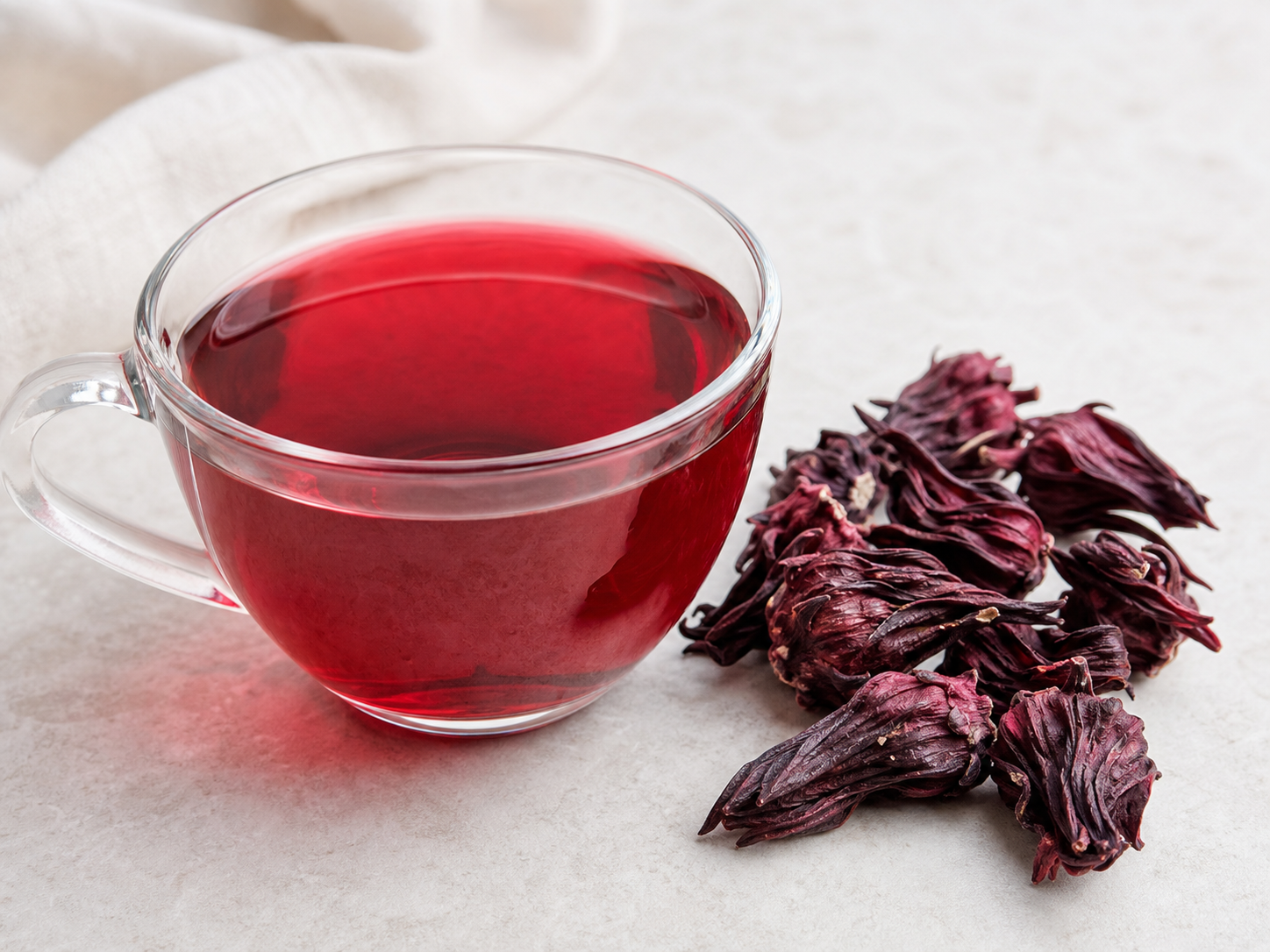
Tea & Coffee · Naturally Caffeine-Free Herbal Infusion
Hibiscus Tea
Unsweetened hibiscus tea is a low-energy, naturally caffeine-free tart herbal drink. Its deep red color comes mainly from delphinidin- and cyanidin-type anthocyanins, alongside hibiscus acid, citric acid, and other phenolic acids. Actual concentrations vary widely with the roselle variety, storage, amount used, and brewing method.
Overview
Main strengths
Plain hibiscus tea contains very little fat or protein and provides little available carbohydrate or energy. It is naturally caffeine-free. Its main nutritional interest comes from anthocyanins, organic acids, and other polyphenols rather than vitamins or minerals.
Best way to drink it
Drink it hot or chill it for an unsweetened iced tea. If the tartness is too strong, add more water, shorten the steep, or use cinnamon, ginger, or mint for flavor instead of relying on large amounts of honey or syrup.
What stands out
Bioactive content varies greatly between products. A 2024 analysis of 29 hibiscus calyx, beverage, and extract products found very large differences in total anthocyanins, organic acids, and phenolic acids. There is no single fixed “antioxidant content” that applies to all hibiscus tea.
Worth noting
Some clinical studies report lower blood pressure after hibiscus drinks, but doses, products, and populations differ. A 2022 meta-analysis suggested a possible effect with high heterogeneity, while a 2021 Cochrane review found the evidence insufficient to establish effectiveness and safety for treating hypertension. Hibiscus tea is not a blood-pressure medication.
Basic Nutrition
Showing:100 mL Unsweetened hibiscus tea
View complete nutrition data
GI note:GI varies with cultivar, food structure, processing, and cooking. Raw grains usually do not have directly applicable human GI data.
Plain hibiscus tea contains too little available carbohydrate for a meaningful standard GI test. The page therefore shows “—”, not 0, and does not use data from sweetened hibiscus drinks.
Data notes:This page uses one nutrition state—plain hot-brewed hibiscus tea—so no food-state switch is shown.
Basic macronutrients use USDA generic unsweetened herbal infusion data as a representative reference, not a hibiscus-specific national database value.
The 0 g sugar value applies only to roselle calyces brewed in water. Sugar, honey, juice, or syrup must be counted separately.
Vitamins & Minerals
Only vitamins and minerals reaching at least 5% of the FDA adult Daily Value are shown. No item can currently be reliably confirmed to meet that threshold per 100 mL or per typical 240 mL cup.
No vitamin or mineral reaches 5% of the Daily Value in the selected serving.
At the current serving size, no vitamin or mineral can be reliably confirmed to reach 5% of the adult Daily Value using general hibiscus-tea data. High values from dried calyces should not be applied directly to filtered tea.
View all vitamins and minerals
Key Bioactive Compounds
Delphinidin- and cyanidin-type anthocyanins
AnthocyaninsHibiscus tea gets most of its deep red color from anthocyanins, especially delphinidin-3-sambubioside and cyanidin-3-sambubioside.
A 2024 survey of 29 commercial calyx, drink, and extract products found total anthocyanins below 0.001% to 2.372% by product weight—a range too broad to convert into one value per cup. In one clinical preparation using 10 g dried calyces in 500 mL water, the drink contained about 1.92 mg anthocyanins per 100 mL.
Anthocyanins can contribute to antioxidant defenses. Some hibiscus trials report changes in blood pressure or metabolic markers, but the drink also contains organic acids, phenolic acids, and other compounds, so the results cannot be attributed to anthocyanins alone.
Steep well-stored deep-red calyces in hot water for about 5 minutes. Longer boiling may extract more material but can also speed anthocyanin breakdown, so repeated prolonged reheating is unnecessary.
A darker cup does not automatically mean a stronger anti-inflammatory effect. Laboratory antioxidant activity does not show that hibiscus tea treats hypertension, cancer, or other chronic disease.
Hibiscus acid and other organic acids
Organic acidsHibiscus acid is one of the characteristic organic acids in roselle and contributes to its tart taste. Citric, malic, hydroxycitric, and other organic acids may also be present.
No single general amount can be assigned. A 2024 market survey identified eight major organic acids and found total organic acids ranging from about 0.073% to 78.002% across calyces, drinks, concentrated extracts, and products from different origins. Hibiscus acid was the main organic acid in one digestion-and-absorption study, but concentration depends on formulation and brewing.
These acids shape the tart flavor and may contribute to some experimentally observed biological activity, but they do not replace the nutrients supplied by fruits, vegetables, or a balanced diet.
If the tea is too acidic, use more water or fewer calyces rather than adding a lot of sugar. People with a sensitive stomach or teeth can shorten steeping time, drink smaller amounts with food, and rinse with water afterward.
Much of the evidence linking hibiscus acid with weight or glucose effects comes from concentrated extracts, cell studies, or animal research. It does not show that an ordinary cup has drug-level weight-loss or glucose-lowering effects.
Protocatechuic acid and other phenolic acids & flavonoids
PolyphenolsRoselle calyces also contain protocatechuic acid, chlorogenic acid, caffeic acid, quercetin, and other flavonoids, creating a varied polyphenol profile.
There is no fixed general amount. A 2024 commercial-product analysis identified 23 phenolic acids, with total phenolic acids around 0.001% to 1.041% by product weight. Because the range combines calyces, beverages, and extracts, it should not be treated as a standard amount per cup.
These polyphenols can participate in antioxidant reactions and may relate to vascular or metabolic effects. Hibiscus research, however, usually reflects the combined food matrix rather than one isolated phenolic acid.
Normal hot or cold brewing is enough. Powdering the calyces speeds extraction but also creates sediment and can make very concentrated drinks; there is no need to swallow large amounts of powder or use concentrated extracts for polyphenols.
Free-radical scavenging, antimicrobial, or enzyme-inhibition results from laboratory studies do not directly establish anti-inflammatory, anti-infective, or disease-treatment effects in people.
How Preparation Changes Hibiscus Tea
Hot steep
Steep about 2 g dried calyces in roughly 240 mL hot water for about 5 minutes, then strain. Extending the steep to 10–15 minutes deepens color and tartness, but may not keep increasing every bioactive; some studies found certain flavonoids and anthocyanins fell after longer steeping.
Cold brew
Cold water also extracts color, organic acids, and aroma, but usually takes several hours. For home use, cold-brew in the refrigerator, strain, and drink promptly.
Boiling or simmering
Boiling produces a stronger, more acidic drink, but prolonged heat speeds anthocyanin degradation. For a stronger cup, using slightly more calyx is usually preferable to repeated long boiling.
Whole calyces vs. tea bags
Whole calyces make it easier to inspect color, mold, and debris and are simple to strain. Broken material and tea bags extract faster but reveal less about variety and quality. Either can work if the ingredient is clean and well stored.
Sweetened hibiscus drinks
Bissap, Agua de Jamaica, and some bottled hibiscus drinks may contain substantial sugar, syrup, or juice. Once sweetened, their energy, sugar, and GI no longer match the plain-tea nutrition shown here.
Fruit-tea blends
Many berry or fruit teas use hibiscus and rosehip as a base and may add dried apple, citrus peel, flavorings, licorice, black tea, or green tea. Blends containing Camellia sinensis can contain caffeine.
Powders and concentrated extracts
Hibiscus powders, capsules, and standardized extracts deliver very different doses from brewed tea. Extract trials may standardize anthocyanins or total polyphenols, so the safety or effects of one cup should not be used to judge concentrated supplements.
How to Choose & Store
How to choose
- Prefer products that clearly list roselle calyces or Hibiscus sabdariffa; avoid unlabeled bulk flowers identified only as “hibiscus” or ornamental hibiscus.
- 100% dried roselle calyces are the simplest choice. For blends, check for added sugar, honey powder, juice concentrate, licorice, tea leaves, yerba mate, flavorings, or colorants.
- Look for burgundy, dark-red, or purplish-red calyces with a recognizable thick calyx structure. The brightest color does not necessarily mean the highest anthocyanin level.
- Avoid products with white, green, or black mold spots, damp clumps, musty or rotten odors, unusual chemical smells, excessive dust, damaged packaging, or unclear origin.
How to store
- Keep dried calyces sealed and protected from light in a cool, dry place away from steam, the stove, and sunlight.
- Use a clean, dry utensil so moisture is not introduced into the package.
- Drink brewed tea promptly. For iced tea, cool it quickly and refrigerate in a clean covered container.
- Do not leave brewed tea at room temperature for long periods or keep topping up the same batch over several days.
Three things matter most: confirm roselle calyces, keep the ingredient list simple and unsweetened, and avoid damp or moldy material.
How to Use It in Daily Life
Unsweetened hot hibiscus tea
Steep about 2 g dried calyces in roughly 240 mL hot water for about 5 minutes, then strain. If you are new to it, start with less calyx. Sugar or honey is unnecessary, and long boiling can make the drink overly harsh.
Unsweetened iced hibiscus tea
Cool hot-brewed tea over ice or chill it. Mint, cinnamon, or a little ginger can add aroma. Ice only dilutes the drink; it does not remove organic acids or anthocyanins already extracted.
Cold-brew hibiscus tea
Steep a small amount of dried calyx in cold water in a clean covered container in the refrigerator for several hours, then strain. The flavor is often softer, but cold brewing is not automatically higher in anthocyanins or health effects.
Hibiscus with cinnamon
A small cinnamon stick can add natural sweet aroma and reduce the urge to add sugar. Use cinnamon as a flavoring, not in large amounts or as a glucose-lowering treatment.
Hibiscus with ginger
Add a few slices of fresh ginger if you enjoy a spicy note. If you have a sensitive stomach, keep both ginger and hibiscus modest and reduce the concentration if reflux or burning develops.
Unsweetened sparkling hibiscus drink
Mix cooled hibiscus tea with unsweetened sparkling water as an alternative to sugary soda. Check that the sparkling water contains no syrup or juice, and avoid prolonged sipping if acidic drinks bother your teeth.
Who Should Be More Careful
People with low blood pressure
Some hibiscus studies report lower blood pressure. If you already have low blood pressure, dizziness, or light-headedness when standing, avoid very strong or large servings. Stop if you develop marked dizziness, weakness, or palpitations.
People taking blood-pressure medication
Hibiscus may add to the effect of antihypertensive drugs, although specific interactions are not well studied. If you plan to drink strong hibiscus tea daily, monitor your blood pressure and ask a clinician or pharmacist rather than reducing or stopping medication yourself.
Pregnancy and breastfeeding
There is not enough human evidence to establish the safety of long-term, highly concentrated hibiscus intake during pregnancy or breastfeeding. A cautious approach is to avoid extracts, very strong preparations, and large habitual amounts unless your obstetric clinician advises otherwise.
Reflux or a sensitive stomach
The organic acids in hibiscus tea can trigger reflux, heartburn, stomach discomfort, or nausea in some people. Dilute it, shorten steeping time, and avoid large amounts on an empty stomach if you are sensitive.
Sensitive teeth or enamel damage
Hibiscus tea is acidic. Frequent slow sipping can increase the time teeth are exposed to acid. Drink it in a defined sitting, avoid holding it in the mouth, rinse with water afterward, and do not brush aggressively right away.
Iron deficiency or iron supplements
Hibiscus drinks are not a reliable iron source. Polyphenols may also bind iron and reduce absorption. Do not use hibiscus tea to swallow iron supplements, and avoid drinking large amounts with your main iron-rich meal.
Kidney disease
Mineral and trace-element levels vary widely between hibiscus products. People with chronic kidney disease, potassium restrictions, or concerns about trace-element accumulation should avoid very concentrated products of unclear origin and follow individualized medical advice.
Blood-glucose management
Plain hibiscus tea contains very little available carbohydrate, but Bissap, Agua de Jamaica, hibiscus fruit drinks, and ready-to-drink products often contain sugar or juice. Check the ingredient list and actual sugar content rather than relying on the word “hibiscus.”
Similar Drink Options
Green rooibos
Also naturally caffeine-free, usually less tart, and rich in flavonoids such as aspalathin. A good option if you dislike strong acidity.
Green tea
Provides catechins such as EGCG but naturally contains caffeine. Better for people who want tea flavor and mild stimulation, not for those avoiding caffeine completely.
White tea
Milder in flavor and contains catechins plus caffeine. Caffeine varies with leaf age, amount used, and brewing, so it should not be treated as caffeine-free.
Rosehip tea
Also tart and fruity and often blended with hibiscus. Its botanical source and dominant compounds differ, so check for added sugar, dried apple, and flavorings.
Sources & Last Update
Nutrition data
Sáyago-Ayerdi S.G., et al. (2007). Dietary fiber content and associated antioxidant compounds in roselle flower beverage.
.
Basic information & food safety
Research & references
Li N., Simon J.E., Wu Q. (2024). Determination of anthocyanins, organic acids, and phenolic acids in hibiscus market products using LC/UV/MS.
Journal of Food Science. DOI / Original
Izquierdo-Vega J.A., et al. (2020). Organic Acids from Roselle (Hibiscus sabdariffa L.)—A Brief Review of Its Pharmacological Effects.
Biomedicines. DOI / Original
Montalvo-González E., et al. (2022). Physiological Effects and Human Health Benefits of Hibiscus sabdariffa: A Review of Clinical Trials.
Nutrients. DOI / Original
Ellis L.R., et al. (2022). A systematic review and meta-analysis of the effects of Hibiscus sabdariffa on blood pressure and cardiometabolic markers.
.
Pattanittum P., et al. (2021). Roselle for hypertension in adults.
Cochrane Database of Systematic Reviews. DOI / Original
McKay D.L., et al. (2010). Hibiscus sabdariffa L. tea lowers blood pressure in prehypertensive and mildly hypertensive adults.
Journal of Nutrition. DOI / Original
Ramírez-Rodrigues M.M., et al. (2011). Hot and cold water infusion aroma profiles of Hibiscus sabdariffa: fresh compared with dried.
Journal of Food Science. DOI / Original
Oyewole A.O., et al. (2023). Evaluating the potential of Hibiscus sabdariffa beverage to address iron deficiency.
LWT. DOI / Original