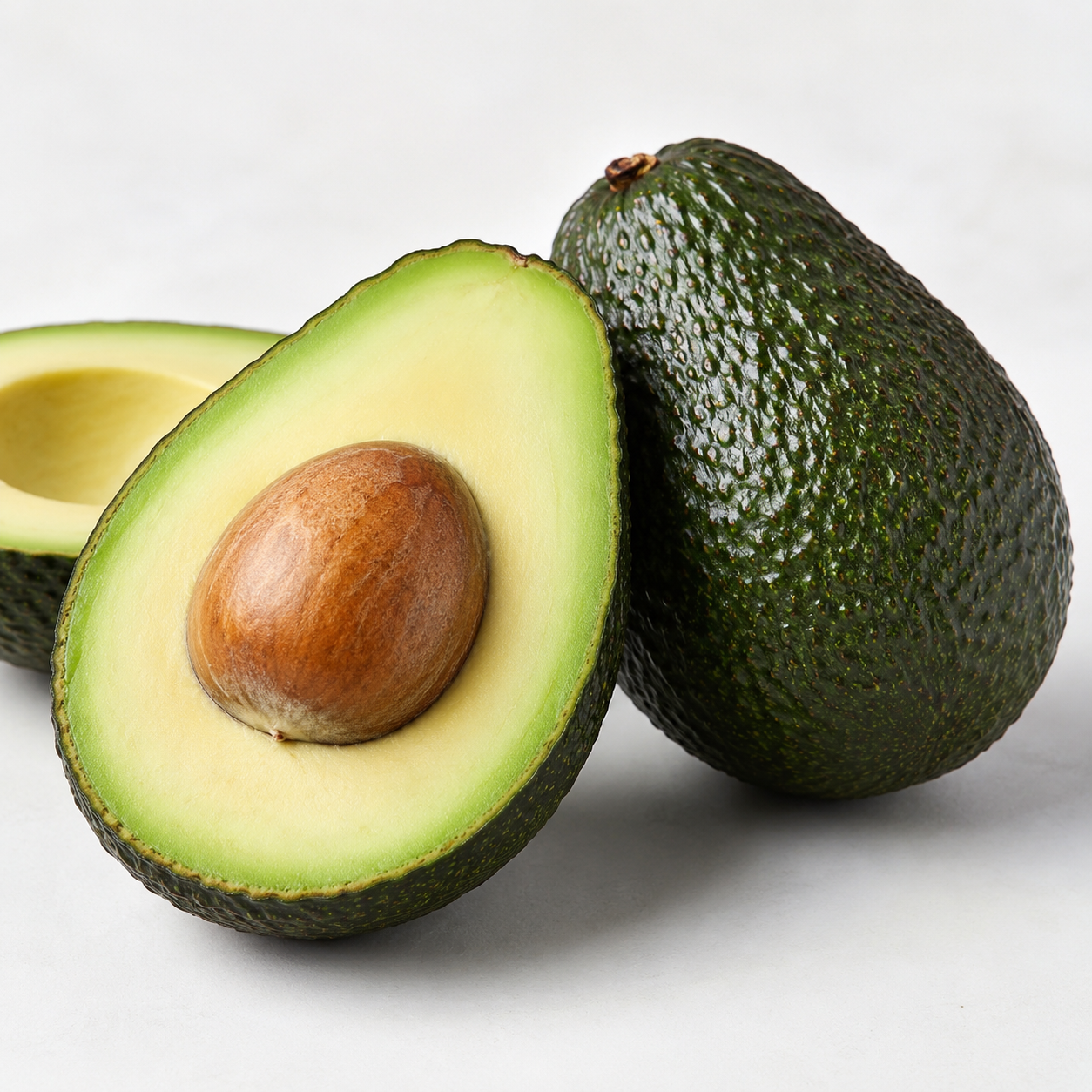
Fruits · High-fat fruit
Avocado
Avocado is a high-fat fruit rich in monounsaturated fat and dietary fiber. It also contains glutathione, lutein, zeaxanthin, and phytosterols. It can replace some butter, cream, and mayonnaise, but serving size still matters.
Food Overview
Key strengths
Most avocado fat is monounsaturated. Per 100 g, raw avocado provides about 14.66 g of fat, including 9.80 g of monounsaturated fat, plus 6.70 g of fiber.
It can replace some butter, cream, or sauces high in saturated fat.
How to Eat It
Avocado works well sliced, diced, or mashed and paired with whole grains, legumes, vegetables, eggs, fish, and plain dairy foods.
Because avocado already contains substantial fat, salads, sandwiches, and sauces made with it usually do not need large additional amounts of olive oil, butter, cream cheese, or mayonnaise.
What stands out
Avocado’s nutritional value is not limited to “healthy fat.” It also provides folate, vitamin E, vitamin K, vitamin B6, copper, potassium, glutathione, lutein, zeaxanthin, and phytosterols.
Avocado naturally contains fat. Eating it with carotenoid-rich foods such as tomatoes, carrots, and leafy greens can improve absorption of some fat-soluble carotenoids from the meal.
Worth noting
Avocado is low in sugar but not low in energy: about 160 kcal per 100 g, and half a medium fruit can exceed 100 kcal.
Treat it as the meal’s fat source, replacing rather than adding to butter, mayonnaise, creamy sauces, or oil.
Basic Nutrition
Showing:100 g Raw Avocado
View complete nutrition data
GI note:GI varies with cultivar, food structure, processing, and cooking. Raw grains usually do not have directly applicable human GI data.
Avocado contains very little available carbohydrate, making it difficult to provide a test portion with 50 g of available carbohydrate under standard GI methods.
Data notes:This page includes only raw avocado. Nutrition data are calculated for the edible flesh and exclude the skin and pit.
Avocado oil, seasoned avocado spreads, salted guacamole, milkshakes, and processed purées cannot be calculated using this page’s data.
A common serving is 50 g, about 1/3 of a medium avocado.
Variety, ripeness, and growing region can affect composition. GI is not scaled with serving weight.
Vitamins & Minerals
FDA Daily Values for adults and children age 4 and older are used. Only nutrients providing at least 5% of the Daily Value at the current serving size are shown, with the top six displayed by default.
View all vitamins and minerals
Percentages show how much the selected serving contributes to the adult Daily Value.
Key Bioactive Compounds
Avocado’s anti-inflammatory and antioxidant value comes from the combined food matrix of glutathione, carotenoids, vitamin E, phytosterols, unsaturated fats, and some phenolic compounds.
Oleic Acid
Monounsaturated fatty acidOleic acid is the main fatty acid in avocado and is also a characteristic monounsaturated fatty acid in olive oil.
Raw avocado provides about 9—10 g of monounsaturated fat per 100 g, mainly oleic acid, concentrated in the edible flesh. Actual amounts vary with cultivar and ripeness.
When total energy intake is appropriate, replacing some foods high in saturated fat with foods rich in unsaturated fat can help support normal blood-lipid levels.
Use avocado to replace some butter, cream, or sauces high in saturated fat.
Avocado has a favorable fat profile but is still energy-dense.
β-Sitosterol & Other Phytosterols
Plant sterolsβ-Sitosterol is the main phytosterol in avocado, with smaller amounts of campesterol and stigmasterol.
Some studies have measured about 76 mg of β-sitosterol per 100 g of avocado, along with smaller amounts of other phytosterols.
Phytosterols can compete with cholesterol for absorption in the intestine, but the amount obtained from ordinary avocado is lower than the doses used in many studies of fortified foods.
Avocado can simply be used as one source of healthy fat alongside nuts, seeds.
Normal avocado intake cannot replace lipid-lowering medication and does not provide the roughly gram-level daily phytosterol doses studied in fortified foods.
Lutein & zeaxanthin
CarotenoidsAvocado contains lutein and smaller amounts of zeaxanthin, carotenoids that can accumulate in the macular region of the retina.
Food-database averages show about 270 µg of lutein plus zeaxanthin per 100 g of avocado.
Lutein and zeaxanthin contribute to macular pigment in the eye and participate in antioxidant defenses.
When scooping out the flesh, try to retain the dark-green layer close to the skin.
Eating avocado does not treat myopia, cataracts, or macular degeneration and does not replace eye examinations or treatment.
Dietary Fiber
Dietary FiberAvocado flesh contains insoluble and fermentable fibers and is relatively high in dietary fiber for a fruit.
Raw avocado provides about 6.7 g of dietary fiber per 100 g, all in the edible flesh.
Dietary fiber supports normal bowel movements, can increase satiety, and provides fermentable substrates for some gut microbes.
Slice and pair with whole grains, legumes, and vegetables. Keep added salt, cream, and high-sodium seasonings modest in avocado spreads.
Avocado alone does not cause weight loss or improve the gut microbiome; effects depend on what it replaces and on total daily energy intake.
How Preparation Changes Avocado
Ripe Raw Avocado
Ripe avocado is soft and works well sliced, diced, or mashed. Data on this page refer to ripe or normally edible fresh raw flesh and exclude the skin and pit.
Unripe Avocado
Unripe avocado is firm and mild in flavor and is not well suited to being forced open and eaten.
Cut or Mashed
After cutting, avocado flesh undergoes enzymatic browning. Slight surface browning is mainly a color and quality change and does not mean the food is immediately spoiled.
Guacamole
Homemade guacamole retains the flesh’s fiber and most of its fat, but its nutritional profile depends on added ingredients.
Avocado Oil
Avocado oil mainly retains fat and some fat-soluble compounds. It contains essentially none of the whole flesh’s dietary fiber, water-soluble vitamins, or most minerals, so it is not a “cooked avocado” state and cannot replace whole avocado gram for gram.
Heating
Avocado can be added briefly to eggs, pasta, grains, or soup. Prolonged heating changes its texture and may reduce sensitive compounds, so raw, lightly heated, or added-after-cooking uses are preferable; avoid deep-frying or heavy charring.
How to Choose & Store
How to choose
- For eating the same day or the next day, choose fruit that gives slightly when pressed gently with the palm but does not visibly collapse, avoid repeatedly pressing with fingertips.
- Completely firm fruit is usually unripe. Localized deep dents, extreme softness, or failure to spring back may indicate bruising or overripeness.
- Skin color at ripeness depends on the cultivar. Hass darkens, while some green-skin cultivars stay green when ripe, so judge together with firmness.
- Choose fruit with intact skin and no cracks, leaking juice, mold, or large collapsed areas.
- Choose a mix of slightly soft, beginning-to-yield, or fully firm fruit according to when each one will be eaten.
How to store
- Keep whole unripe fruit at room temperature in a cool, ventilated place.
- Once the desired ripeness is reached, refrigerate if not eating immediately to slow further softening, but still use it promptly.
- Brush the cut surface with a little lemon or lime juice and press wrapping material directly against it, or refrigerate in a sealed container with as much air removed as possible.
- Store guacamole in a sealed container with wrapping material touching the surface and refrigerate; do not leave it at room temperature for long periods.
- Discard fruit with obvious rancid or fermented odors, extensive black or gray discoloration, sliminess, mold, leaking liquid, or decay.
When buying avocado, remember three things: choose firmness based on when you plan to eat it, avoid deep bruises and cracks, and refrigerate once ripe and eat promptly.
How to Include It in Everyday Meals
Whole-Grain Avocado Toast
Mash about 50 g of ripe avocado onto whole-grain bread and pair it with tomato slices, egg, tofu, unsweetened yogurt, or a small amount of nuts.
Avocado already provides fat and creaminess.
Avocado Vegetable Salad
Dice avocado and combine it with tomatoes, red bell peppers, red cabbage, kale, lettuce, asparagus, or legumes.
The natural fat in avocado can help with absorption of some fat-soluble carotenoids from vegetables in the same meal.
Avocado Whole-Grain Bowl
Pair avocado with brown rice, quinoa, buckwheat, corn, or other whole grains, then add eggs, tofu, chickpeas, fish, or chicken plus at least two differently colored vegetables.
Avocado mainly serves as the fat source in this meal, so keep other sauces lower in oil, sugar, and salt to avoid making the bowl excessively energy-dense.
Avocado & Bean Dip
Mash avocado with chickpeas, white beans, or edamame and season with lemon juice, black pepper, herbs, and a small amount of garlic.
Compared with plain guacamole, adding beans can increase protein and overall satiety.
Avocado Egg or Tofu Sandwich
Use mashed avocado to replace some mayonnaise and combine it with boiled egg, tofu, tomato, lettuce, and whole-grain bread.
This keeps a creamy texture while reducing the use of large amounts of mayonnaise or butter.
Cold Avocado Sauce
Blend a small amount of avocado with plain yogurt, unsweetened soy milk, lemon juice, herbs.
Avoid adding large amounts of cream, syrup, and extra oil at the same time. Refrigerate promptly after preparation and eat soon.
Who Should Take Extra Care
People with Natural-Latex Allergy
Avocado is a relatively common cross-reactive food in latex-fruit syndrome, but natural-latex allergy does not mean that everyone must automatically avoid avocado. People who have previously had systemic reactions such as widespread hives, throat swelling, wheezing, breathing difficulty, dizziness, or other significant reactions to avocado or related latex-fruit foods should not test avocado at home and should seek evaluation from an allergy specialist.
People with Irritable Bowel Syndrome or Sugar-Alcohol Sensitivity
Avocado contains the sugar alcohol perseitol, and larger portions may trigger bloating, abdominal pain, or bowel changes in some people. Its higher fat content can also cause discomfort in some people with gastrointestinal sensitivity, so start with a smaller portion and adjust to tolerance.
People with Kidney Dysfunction or High Blood Potassium
Avocado provides about 485 mg of potassium per 100 g and about 243 mg per 50 g. Not everyone with kidney disease needs to avoid it completely, but people advised to restrict potassium, those with high blood potassium, or those on dialysis should control portions according to laboratory results and clinical nutrition guidance.
People Managing Body Weight or Total Energy Intake
Avocado is both nutrient-dense and energy-dense. A more useful approach is to count it as the fat source in a meal and use it to replace butter, mayonnaise, cream sauces, or some cooking oil rather than simply adding it to the existing diet.
People Taking Warfarin
Avocado contains vitamin K, but people taking warfarin do not need to eliminate it on their own. The key is to keep intake reasonably consistent rather than changing suddenly from almost none to large amounts every day, and to follow physician guidance for coagulation monitoring.
Infants, young children, and people with swallowing difficulties
Use fully ripe, soft flesh, remove the skin and pit completely, and mash or cut it into a texture appropriate for chewing and swallowing ability. Do not let children handle the whole pit, and do not serve hard, unripe chunks.
Similar Food Alternatives
Hummus
Its smooth texture makes it useful for spreading on bread or serving as a dip in place of avocado.
Mashed Edamame or Green Peas
The color and texture can resemble mashed avocado to some extent while providing more plant protein.
Walnuts
Walnuts provide unsaturated fat, fiber, and ALA and work well in salads or oats; avoid them if you have a tree-nut allergy.
Olive Oil
Olive oil provides monounsaturated fat but no fiber and is more energy-dense, so use it in small amounts.
Data Sources & Last Updated
Nutrition Data
Basic Information & Food Safety
Research & References
Jones DP, Coates RJ, Flagg EW, et al. (1992). Glutathione in Foods Listed in the National Cancer Institute's Health Habits and History Food Frequency Questionnaire.
Nutrition and Cancer, 17(1), 57–75. DOI / Original
Ford NA, Spagnuolo P, Kraft J, Bauer E. (2023). Nutritional Composition of Hass Avocado Pulp.
Foods, 12(13), 2516. DOI / Original
Dreher ML, Davenport AJ. (2013). Hass Avocado Composition and Potential Health Effects.
Critical Reviews in Food Science and Nutrition, 53(7), 738–750. DOI / Original
Kopec RE, Cooperstone JL, Schweiggert RM, et al. (2014). Avocado Consumption Enhances Human Postprandial Provitamin A Absorption and Conversion from a Novel High-β-Carotene Tomato Sauce and from Carrots.
The Journal of Nutrition, 144(8), 1158–1166. DOI / Original
Unlu NZ, Bohn T, Clinton SK, Schwartz SJ. (2005). Carotenoid Absorption from Salad and Salsa by Humans Is Enhanced by the Addition of Avocado or Avocado Oil.
The Journal of Nutrition, 135(3), 431–436. DOI / Original
Duester KC. (2001). Avocado Fruit Is a Rich Source of Beta-Sitosterol.
Journal of the American Dietetic Association, 101(4), 404–405. DOI / Original
Gromek W, et al. (2024). Revisiting Latex-Fruit Syndrome after 30 Years of Research: A Comprehensive Literature Review and Description of Two Cases.
Journal of Clinical Medicine, 13(14), 4222. DOI / Original