Spices and herbs
Turmeric
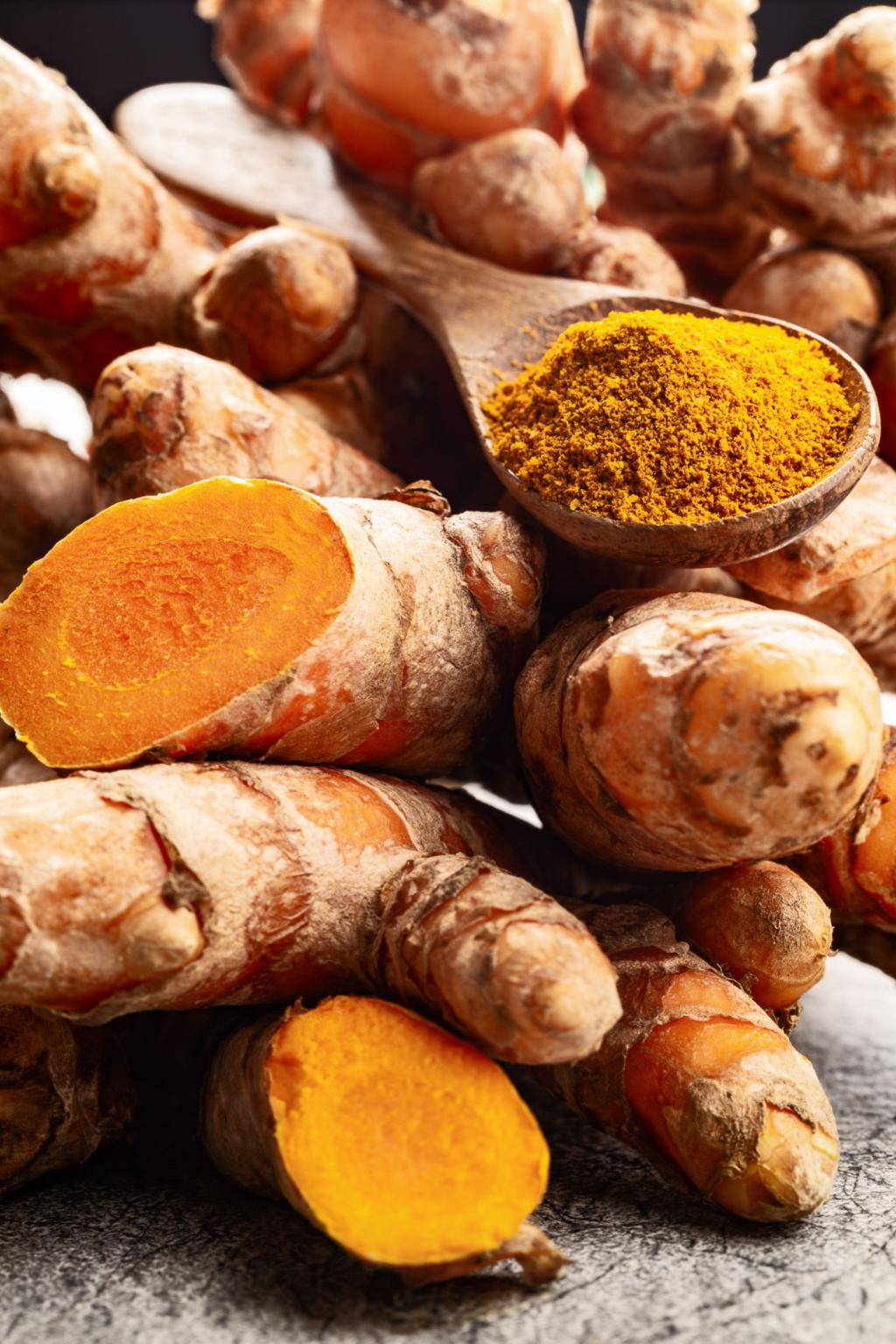
Turmeric is a yellow spice made from the underground rhizome of Curcuma longa. Its main value is adding color, aroma, and curcuminoids to food, not supplying large amounts of basic nutrients from a small seasoning dose. Culinary turmeric powder is not equivalent to concentrated curcumin extracts or supplements.
Food overview
Key strengths
Even in small amounts, turmeric adds a bright yellow color, warm aroma, and mild bitter-pungent note to curries, legumes, grains, and vegetables while contributing curcuminoids and volatile aromatic compounds.
How to eat it
Use it in curries, bean soups, mixed-grain rice, stews, eggs, tofu, and unsweetened hot drinks. About 1/4 to 1 teaspoon per use is usually enough; large amounts are not needed for health benefits.
What stands out
Turmeric powder, turmeric extracts, and curcumin supplements are different products. Whole turmeric powder retains many rhizome components, while standardized extracts may concentrate curcuminoids to high levels and add piperine, liposomes, or other bioavailability-enhancing systems.
Worth noting
There is still not enough evidence to conclude that turmeric or curcumin consistently improves any one health condition. Using turmeric as a spice in a balanced diet is reasonable, but it should not be promoted as a way to “eliminate inflammation,” “detox,” or replace medical treatment.
Basic Nutrition
Showing:3 g Turmeric powder
View complete nutrition data
GI note:GI varies with cultivar, food structure, processing, and cooking. Raw grains usually do not have directly applicable human GI data.
No reliable standard GI was found for pure turmeric powder. Because it is normally used only as a small seasoning, GI is shown as “—” rather than estimated from carbohydrate or shown as 0.
Data notes:This page primarily refers to dried, ground turmeric rhizome and uses one formal food state: turmeric powder. Fresh turmeric root is discussed under processing, but because its water content is much higher, its per-100-g nutrition cannot be taken directly from dried powder data.
Basic nutrition data use USDA FoodData Central “Spices, turmeric, ground” (FDC 172231, SR Legacy).
A common serving is about 1 teaspoon or 3 g, reflecting household seasoning use. Per-100-g values are for database comparison and do not imply eating 100 g at once.
GI is shown as “—”. No reliable standard GI was found for pure turmeric powder, and it is not normally eaten alone in large carbohydrate-containing portions, so GI is not estimated from carbohydrate content or shown as 0.
The USDA entry does not provide usable starch data and does not assign all polyunsaturated fat specifically to omega-3 or omega-6, so those fields remain “—” rather than being inferred.
Vitamin and mineral percentages currently use China's GB 28050—2011 nutrition-label NRVs rather than the FDA Daily Value system used on some other pages. GB 28050—2025 takes effect on March 16, 2027, when the site should update all food reference values together.
Vitamins & Minerals
Uses adult daily reference values and shows only nutrients reaching at least 5% at the selected serving. At 1 teaspoon or about 3 g, only manganese at about 20% and iron at about 11% meet the threshold. Per 100 g, manganese, iron, potassium, copper, magnesium, phosphorus, and additional expanded items are shown. Percentages use China's GB 28050—2011 NRVs, not FDA Daily Values.
The default serving is 1 teaspoon, about 3 g. At 3 g, only manganese, about 0.59 mg or 20% of the daily reference value, and iron, about 1.65 mg or 11%, reach the 5% display threshold. Other vitamins and minerals remain below 5%. Turmeric does provide some manganese and iron, but the high per-100-g numbers should not be mistaken for realistic seasoning intake. Percentages use GB 28050—2011 NRVs; the site should update all foods when GB 28050—2025 takes effect in 2027.
View all vitamins and minerals
Key Bioactive Compounds
Curcumin
Curcuminoid polyphenolCurcumin is the most studied yellow compound in turmeric and a major reason for its bright yellow-orange color.
Curcumin is concentrated in the yellow-orange tissue of turmeric rhizomes and their dried powder. EMA summaries report about 2.3%–3.43% curcumin in some dried turmeric materials; testing of 21 batches by the European Directorate for the Quality of Medicines found average total curcuminoids of 2.34%, ranging from 1.15% to 5.15%. Using the 2.3%–3.43% sample range, 3 g turmeric powder could contain roughly 69–103 mg curcumin. Variety, origin, processing, and batch all affect the result, so this is not a fixed commercial value.
Curcumin shows antioxidant and inflammation-related activity in cell and experimental studies. Human studies have examined joint discomfort, blood lipids, fatty liver, and other outcomes, but products, doses, and study quality vary enough that consistent benefit for any one condition is not established.
Mix turmeric powder into curries, bean soups, or vegetable stews containing some water and a modest amount of fat so it disperses well. Large amounts of oil or black pepper are unnecessary. Prolonged high-temperature dry heating speeds curcumin degradation; use moderate heat and avoid scorching the powder.
Laboratory antioxidant activity does not mean ordinary turmeric intake “removes inflammation.” Culinary turmeric powder also does not replace anti-inflammatory drugs, lipid-lowering treatment, or other medical care.
Demethoxycurcumin and bisdemethoxycurcumin
Other curcuminoidsThese compounds are structurally related to curcumin and together make up the major curcuminoid family in whole turmeric powder.
Specific content: —. Standard food-composition databases usually provide basic nutrition for turmeric powder rather than separate values for demethoxycurcumin and bisdemethoxycurcumin. The proportions of the three major curcuminoids vary by origin, so extract or capsule data should not be substituted for ordinary turmeric powder.
Both compounds show antioxidant and inflammation-related activity in vitro and may contribute to turmeric's overall phytochemical profile. Evidence is insufficient to define separate human effects from ordinary food amounts.
Whole turmeric powder with turmeric as the only ingredient is sufficient; there is no need to seek isolated demethoxycurcumin products. There is also no good evidence that a household cooking method selectively improves absorption of these two compounds.
In-vitro antioxidant activity does not equal anti-inflammatory effects in humans, and extract studies cannot be used to assume that one teaspoon of turmeric powder produces the same effect.
Turmerones
Volatile sesquiterpenesTurmerones include ar-turmerone, alpha-turmerone, and beta-turmerone and are important components of turmeric's aroma and volatile oil.
Whole-food content: —. In one study of fresh, dried, and processed turmeric from the same source, ar-turmerone made up about 21.0%–30.3% of the extracted volatile oil, alpha-turmerone 26.5%–33.5%, and beta-turmerone 18.9%–21.1%. These are proportions of essential oil, not grams per 100 g of whole turmeric or powder. Volatile-oil composition also varies greatly by origin.
Turmerones show antioxidant and other biological activity in experimental research, but human evidence is far more limited than for curcumin. They are best understood as part of turmeric's aroma and overall phytochemical profile.
After opening, keep turmeric powder sealed, protected from light, and away from heat. Adding some during the middle or later stages of cooking can reduce excessive loss of volatile aroma from prolonged heating.
Cell and animal studies of turmeric essential oil or isolated turmerones do not show that ordinary culinary amounts treat inflammation, infection, neurological disease, or other conditions.
How processing changes turmeric
Fresh turmeric root
Fresh rhizome has much more water, a vivid yellow-orange interior, fresher aroma, and a sharper vegetal-pungent note. Slice, chop, or grate it into soups, stews, and drinks. Its per-100-g nutrition should not be copied from dried turmeric powder.
Dried turmeric powder
Drying and grinding concentrate color and flavor and make portioning and storage easier. USDA standard nutrition data apply to this state, which is the default nutrition state on this page.
Moderate heating
Brief cooking in soup, curry, or stew distributes color and flavor well. Curcumin retention varies across household cooking conditions, so prolonged high heat is not needed to “activate” curcumin.
Prolonged high heat or charring
Research shows curcumin can degrade during prolonged high-temperature heating. Avoid extended dry-frying, repeated roasting, or heating turmeric until it visibly blackens.
Curry powder
Curry powder is usually a blend of turmeric, cumin, coriander, chili, and other spices. Turmeric proportion varies widely, and products may also contain salt, sugar, or starch, so pure turmeric nutrition and curcumin data do not apply.
Turmeric extracts and supplements
Extracts may highly concentrate curcuminoids and add piperine, micelles, phospholipids, or other bioavailability-enhancing systems. They are supplements or herbal preparations, not another “food state” of turmeric powder.
How to choose and store
How to choose
- Check the ingredient list: choose products listing only turmeric, turmeric powder, or “100% turmeric.” Curry powder, turmeric seasoning blends, and turmeric drink mixes are not pure turmeric powder.
- Check source and traceability: choose packaged products that identify the manufacturer, origin, batch, production date, and shelf life. Bright color alone does not prove curcumin content or purity.
- Do not rely on color alone: regulators have documented illegal use of yellow pigments such as lead chromate in turmeric and other spices. The Royal Botanic Gardens, Kew has also noted that ground turmeric is more vulnerable to adulteration than whole rhizome. Prefer traceable products with quality testing.
- Choose smaller packs: household use is modest, and large packs can lose aroma after opening through moisture, light, and long storage. Buy an amount you can reasonably finish.
How to store
- Turmeric powder: keep in a sealed container in a cool, dry, dark place away from the stove, sink, and steam. Use a dry spoon and discard if there is persistent damp clumping, moldy odor, or insect contamination.
- Fresh turmeric root: keep relatively dry and refrigerate in a bag or sealed container. Discard if it becomes very soft, leaks liquid, develops mold, or smells abnormal.
When buying turmeric, remember four things: simple ingredients, clear sourcing, sealed packaging, and do not judge quality by color alone.
How to use turmeric in everyday meals
Turmeric vegetable curry
Sauté onion, garlic, and a little ginger, then add about 1/4–1/2 teaspoon turmeric before tomatoes, cauliflower, carrots, chickpeas, or tofu. Use tomato, herbs, and other spices for flavor rather than relying on lots of salt, cream, or coconut milk.
Turmeric lentil soup
Add turmeric while cooking red lentils, chickpeas, or other legumes with tomatoes, onion, celery, and leafy greens. Stir it well into the liquid so it does not settle, and avoid prolonged dry-frying or large amounts of salty stock concentrate.
Turmeric mixed-grain rice
Add a small amount of turmeric and black pepper to the cooking water for rice, brown rice, or quinoa, then pair with edamame, mushrooms, carrots, or peas. Around half a teaspoon per pot is often enough for noticeable color and flavor.
Turmeric eggs or tofu
Mix a little turmeric into eggs or tofu and cook over low to medium heat with tomatoes, spinach, peppers, and mushrooms. Because turmeric stains easily, mix it into the food or a little water rather than dry-frying it in an empty pan.
Unsweetened turmeric hot drink
Warm 1/4 teaspoon turmeric in milk, unsweetened soy milk, or an oat drink with a little ginger or cinnamon. Avoid using large amounts of honey, syrup, or condensed milk to mask bitterness, and do not treat a high-sugar “golden milk” as a health drink.
Fresh turmeric stew
Wash and thinly slice or grate fresh turmeric and simmer with chicken, fish, mushrooms, tomatoes, or root vegetables. Start with a small amount to avoid excessive bitterness, and note that it can stain knives, cutting boards, and clothing.
Who Should Take Extra Care
People with sensitive digestion
Turmeric or curcumin taken orally can cause reflux, nausea, stomach discomfort, diarrhea, or constipation. Start with small culinary amounts and reduce or stop if symptoms persist.
People with gallstones or biliary disease
Small culinary amounts are not the same as medicinal preparations, but people with bile-duct obstruction, cholangitis, gallstones, or other biliary disease should not self-use large daily amounts of turmeric powder, extracts, or curcumin supplements.
People taking long-term medication
EMA materials describe drug-interaction research with high-dose turmeric or curcumin, usually at doses above culinary intake. People using anticoagulants, antiplatelet drugs, cancer therapies, transplant medicines, or other important prescriptions should not add concentrated curcumin products on their own.
People with abnormal liver function
Risk from ordinary seasoning should not be conflated with high-bioavailability supplements. Reported liver injury has mainly involved high-dose, enhanced-bioavailability curcumin products, often alongside other supplements or medicines. Stop the relevant product and seek medical care for marked fatigue, loss of appetite, dark urine, or jaundice.
Pregnancy and breastfeeding
Using small amounts of turmeric as a spice is different from taking curcumin supplements. NCCIH notes that turmeric supplements may be unsafe in pregnancy, and safety data for amounts well above food use during breastfeeding are limited.
People with turmeric or other spice allergies
People with a confirmed turmeric allergy should avoid turmeric. Allergy to ginger, cardamom, or another Zingiberaceae plant does not automatically mean a person is allergic to turmeric; people with a history of severe spice reactions should seek individualized allergy evaluation rather than testing turmeric on their own. Turmeric powder can also irritate the skin or cause contact-allergy reactions in some people; wash hands after handling.
Infants and young children
Turmeric can be used in small amounts as a food seasoning, but infants and young children should not be directly given turmeric powder, concentrated drinks, or supplements. With powdered spices, reliable sourcing and heavy-metal quality control are especially important.
Similar Food Alternatives
Ginger
Another Zingiberaceae rhizome used in soups, stews, fish, and legumes. It adds pungent aroma but is lighter in color and does not have the same curcuminoid profile as turmeric.
Galangal
Fresher and more citrus-peppery, suited to Southeast Asian soups, curries, and seafood. It can replace some aromatic rhizome notes but not turmeric's yellow color or curcuminoid profile.
Curry powder
Many curry powders contain turmeric and work when a broader spice blend is wanted. Check ingredients and sodium because turmeric proportion, salt, and other additions vary widely.
Paprika
Adds warm color and aroma to stews, legumes, and grains, but is redder and has a different flavor and phytochemical profile. It is a culinary color/flavor substitute, not a nutritional equivalent.