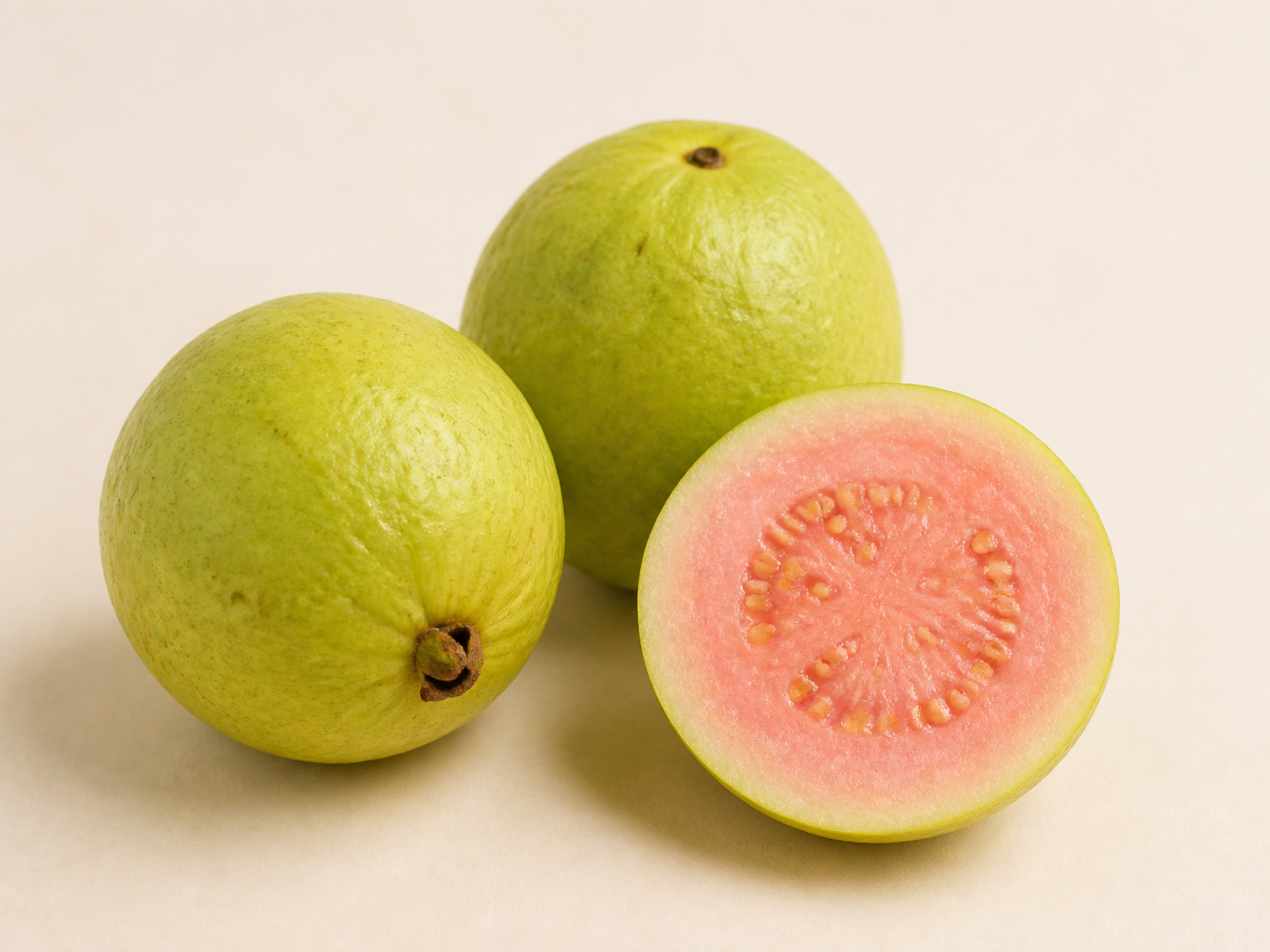
Fruits · Tropical fruit; berry-type fruit
Guava
Guava is a tropical fruit notable for vitamin C and dietary fiber. Per 100 g, it provides about 68 kcal, 5.4 g of dietary fiber, and 228 mg of vitamin C.
Food Overview
Key strengths
Per 100 g, fresh guava provides about 68 kcal, 14.32 g of carbohydrate, 2.55 g of protein, and 5.4 g of dietary fiber, along with about 228.3 mg of vitamin C, 49 µg of folate, 0.23 mg of copper, and 417 mg of potassium.
How to Eat It
Rinse and eat sliced or diced. Guava also pairs well with plain yogurt, oats, nuts, and fruit salads. Whether to eat the skin and seeds can be adjusted according to the variety, seed hardness, and personal chewing ability.
What stands out
Guava contains vitamin C, carotenoids, and multiple polyphenols. Lycopene is especially relevant in red- or pink-fleshed varieties. Quercetin derivatives, catechins, proanthocyanidins, ellagitannins, and various phenolic acids can also be detected in the skin and flesh.
Worth noting
Guava leaves, guava-leaf tea, unripe-guava extracts, and so-called “blood-sugar-lowering guava powder” are different products. Animal, cell, or supplement studies of leaf extracts should not be presented as effects of eating fresh guava, and whole fresh fruit does not replace disease treatment.
Basic Nutrition
Showing:100 g Fresh Guava
View complete nutrition data
GI note:GI varies with cultivar, food structure, processing, and cooking. Raw grains usually do not have directly applicable human GI data.
Human tests of fresh guava from different regions, samples, and participants reported values of 29, about 31, about 33, and about 54, so a range is shown.
Data notes:This page includes only fresh whole guava, so no food-state switch is shown. Both the per-100 g view and the common serving are 100 g.
Basic nutrition data use USDA FoodData Central “Guavas, common, raw” (FDC ID 173044). Total carbohydrate is calculated by difference and includes dietary fiber.
GI is shown as a range of 29–54 from several human tests of fresh guava and is not scaled when serving size changes.
No reliable starch value is available, so starch is shown as “—” rather than estimated by subtracting sugar and fiber from total carbohydrate.
Vitamins & Minerals
FDA Daily Values for adults and children age 4 and older are used. Only items providing at least 5% of the Daily Value at the current serving size are shown; the top six are displayed by default, with all ten available when expanded.
Vitamin E provides 0.73 mg per 100 g; the exact calculation is about 4.9% of the Daily Value, below the strict 5% threshold, so it is not displayed.
View all vitamins and minerals
Percentages show how much the selected serving contributes to the adult Daily Value.
Key Bioactive Compounds
Vitamin C
Water-soluble vitaminGuava is a common fruit with a very high vitamin C content, with substantial vitamin C in both the skin and flesh.
Raw guava averages about 228 mg of vitamin C per 100 g. Actual values vary with red- or white-fleshed variety, ripeness, and storage conditions.
Vitamin C contributes to collagen formation, normal immune function, antioxidant defenses, and absorption of non-heme iron from plant foods.
After washing, guava can be eaten with the skin. Avoid prolonged cooking or turning it into high-sugar jam.
Guava cannot treat infections, anemia, or skin disease. A high vitamin C content also does not mean that more should be eaten at one time.
Lycopene
CarotenoidsLycopene is an important pigment responsible for the red color of red- or pink-fleshed guavas. White-fleshed varieties usually contain much less.
Specific amount: —. Lycopene is concentrated mainly in the colored flesh of red guavas, and levels vary markedly by variety and ripeness.
Lycopene contributes to antioxidant defenses, and diets rich in carotenoid-containing foods have been studied for cardiovascular health.
Choose naturally ripe red-fleshed guava and eat it as whole fruit.
White-fleshed guava is still rich in vitamin C, so nutritional value should not be judged by flesh color alone.
Dietary Fiber & Pectin
Dietary FiberGuava skin, flesh cell walls, and edible seeds together provide dietary fiber, including some pectin.
Raw guava provides about 5.4 g of dietary fiber per 100 g. Peeling, removing seeds, or filtering it into juice reduces fiber intake.
Dietary fiber supports normal bowel function and may help support the gut microbiota and steadier post-meal metabolic responses.
If the teeth and digestive system tolerate them, the skin and seeds can be eaten.
Guava alone does not lower blood glucose or treat constipation; effects also depend on total intake, fluid intake, and the overall diet.
How Preparation Changes Guava
Fresh Whole Guava
This is the default form on the page and retains the skin, flesh, seeds, and dietary fiber. Seed hardness varies by variety, so people with sensitive teeth or weaker chewing ability may remove the seeds.
White-Fleshed vs Red-Fleshed
White- and red-fleshed guavas have broadly similar macronutrient profiles, but their carotenoid composition may differ substantially. Red-fleshed varieties often contain lycopene, while white-fleshed varieties may contain little or none. It is not accurate to say one flesh color is always more nutritious.
Ripeness Differences
Guava can continue ripening after harvest. Unripe fruit is generally firmer and more astringent, while ripe fruit is more aromatic and softer.
Cut Pieces vs Purée
In the same human study, cut guava had a GI of about 29 and guava purée about 47.
Juicing & straining
Juicing and filtering remove some skin, seeds, flesh, and fiber. Whole guava is preferable to filtered juice; high-risk groups should avoid unpasteurized fresh juice from uncertain sources.
Heating
Guava can be stewed or baked, but vitamin C is sensitive to prolonged storage and heating. Home cooking does not mean all nutrients disappear; it is more useful to avoid repeated prolonged heating and large amounts of added sugar.
Drying & Freeze-Drying
Drying and freeze-drying alter volatile aromas and phenolic composition, while dehydration concentrates sugar and energy per unit weight. Therefore 100 g of fresh guava is not equivalent to 100 g of dried guava, freeze-dried powder, or guava paste.
How to Choose & Store
How to choose
- Choose ripeness according to timing: dark-green and firm fruit is less ripe.
- Choose intact fruit that feels heavy for its size, without insect holes, mold, large abrasions, obvious dents, or leaking juice, and with a fresh rather than alcoholic smell.
- Do not choose by size alone. Size and shape vary by variety; consider ripeness, aroma, firmness, and damage together.
- White- and red-fleshed varieties can have similar outer skins, so flesh color can only be determined accurately after cutting.
How to store
- Firm green fruit that is not yet ripe can be kept briefly in a cool, ventilated place away from direct sunlight and high heat.
- Ripe, yellowing, softening guava should be refrigerated and eaten soon.
- Before eating or cutting, rinse under running water and rub gently.
- After cutting, refrigerate in a clean sealed container and eat promptly. Discard fruit that develops mold, sliminess, heavy leaking, an alcoholic smell, or extensive soft decay.
When buying guava, remember three things: choose ripeness according to when you plan to eat it, avoid fruit with insect holes or soft decay, and refrigerate ripe fruit promptly and eat it soon.
How to Include It in Everyday Meals
Eat It Sliced
Rinse guava under running water and cut into thin slices or small pieces. If the skin texture is acceptable, it does not need to be removed.
Guava with Plain Yogurt
Dice guava and add it to plain yogurt or unsweetened Greek yogurt, with a small amount of oats, walnuts, chia seeds, or flaxseeds if desired. Avoid adding honey, jam, and sweetened cereal at the same time.
Guava with Oats
Let cooked oats cool slightly, then add diced guava to retain its crisp texture and reduce unnecessary prolonged heating of vitamin C.
Fruit salad
Guava can be combined with strawberries, kiwi, oranges, apples, or papaya. Use a little lemon juice, mint, or plain yogurt for flavor; condensed milk, syrup, and high-sugar salad dressing are unnecessary.
Vegetable & Whole-Grain Salad
Diced guava can be added to leafy greens, tomatoes, cucumber, avocado, legumes, quinoa, or buckwheat salads. Its sweet-tart flavor can reduce reliance on sweet dressings; use a small amount of olive oil, vinegar, and herbs for seasoning.
Whole-Fruit Guava Drink
Blend guava with plain yogurt, milk, or unsweetened soy milk without filtering out the pulp. Control the portion based on the actual amount of fruit used, and do not add juice, honey, syrup, and multiple high-sugar fruits at the same time.
Who Should Take Extra Care
People managing blood sugar
Fresh guava has tested at a GI of about 29–54, but still contains about 14.3 g of total carbohydrate and 8.9 g of sugar per 100 g.
People with Gastrointestinal Sensitivity
Per 100 g, guava provides about 5.4 g of dietary fiber. People who usually eat little fiber, are prone to bloating, or are currently experiencing gastrointestinal discomfort can start with a smaller portion, chew thoroughly, and observe tolerance.
People with Sensitive Teeth, Braces, or Dentures
Some varieties have hard seeds that can be uncomfortable to chew. Choose softer- or fewer-seeded varieties, or cut the fruit and remove the central seed area rather than forcing hard seeds to be chewed.
Infants, young children, and people with swallowing difficulties
Adjust texture according to chewing and swallowing ability by peeling, removing hard seeds, and cutting into thin slices or small pieces, or mashing.
People with Kidney Dysfunction or Those Who Need to Limit Potassium
Guava provides about 417 mg of potassium per 100 g. People with chronic kidney disease, high blood potassium, or medications that may affect potassium should determine an appropriate portion based on laboratory values, medications, and the rest of the meal.
People with Guava Allergy
People with a known allergy should avoid guava. If eating it causes widespread hives, throat swelling, wheezing, or difficulty breathing, stop eating it and seek prompt medical care.
People at higher risk from foodborne illness
Pregnant people, infants and young children, older adults, and people with weakened immune systems should choose fruit without insect holes, decay, or mold and wash it carefully.
People Using Guava-Leaf Tea or Related Supplements
Fresh fruit is not the same product as leaf tea, unripe-fruit extract, or standardized supplements. If a supplement claims to affect blood glucose or blood pressure, people taking medications should consult a physician or pharmacist first.
Similar Food Alternatives
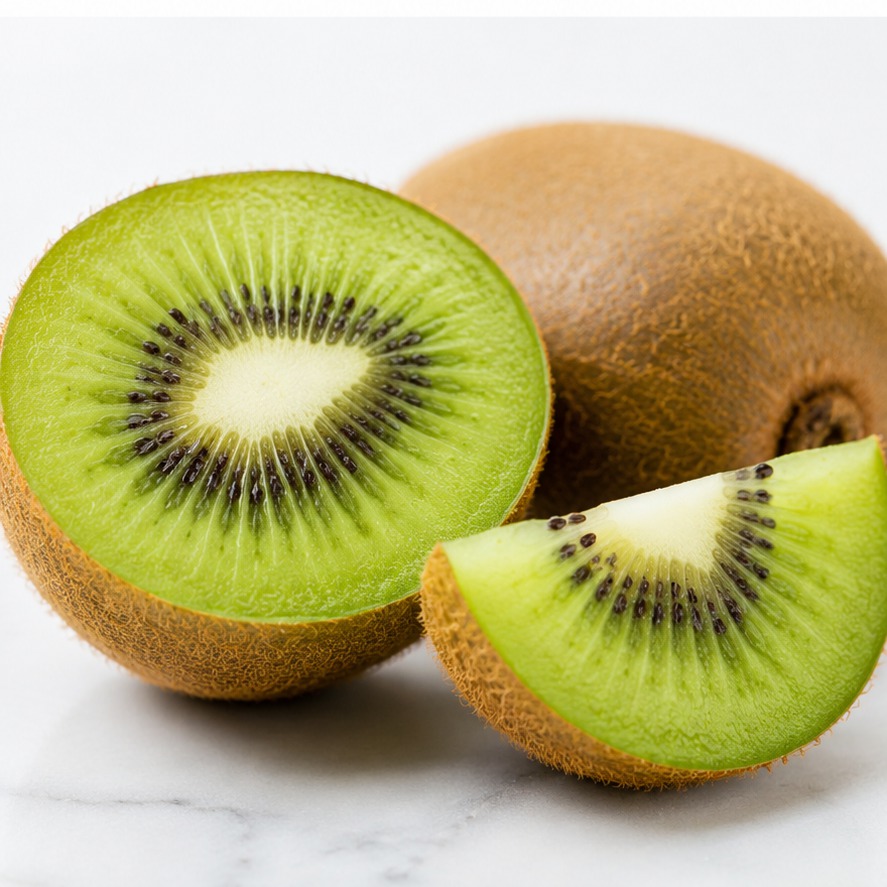
Kiwifruit
Also relatively high in vitamin C and dietary fiber, with softer flesh and smaller seeds.
View details →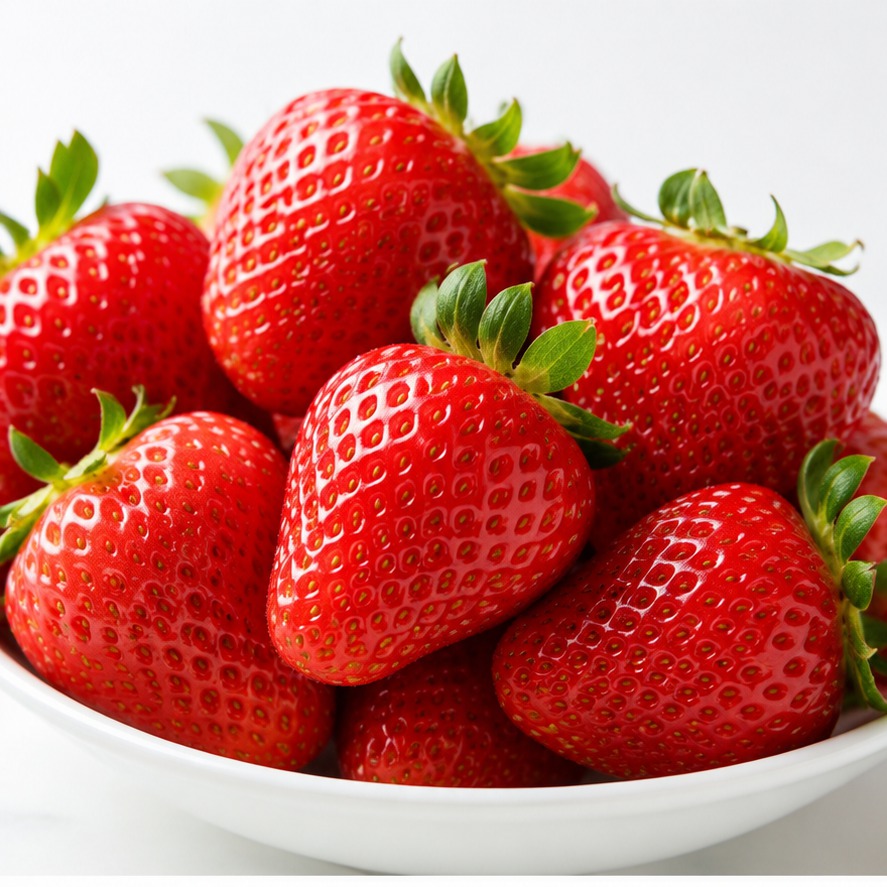
Strawberry
Vitamin C and polyphenols are notable, and strawberries are easy to eat fresh or pair with plain yogurt.
View details →Papaya
Another tropical fruit with soft ripe flesh, vitamin C, and carotenoids.
View details →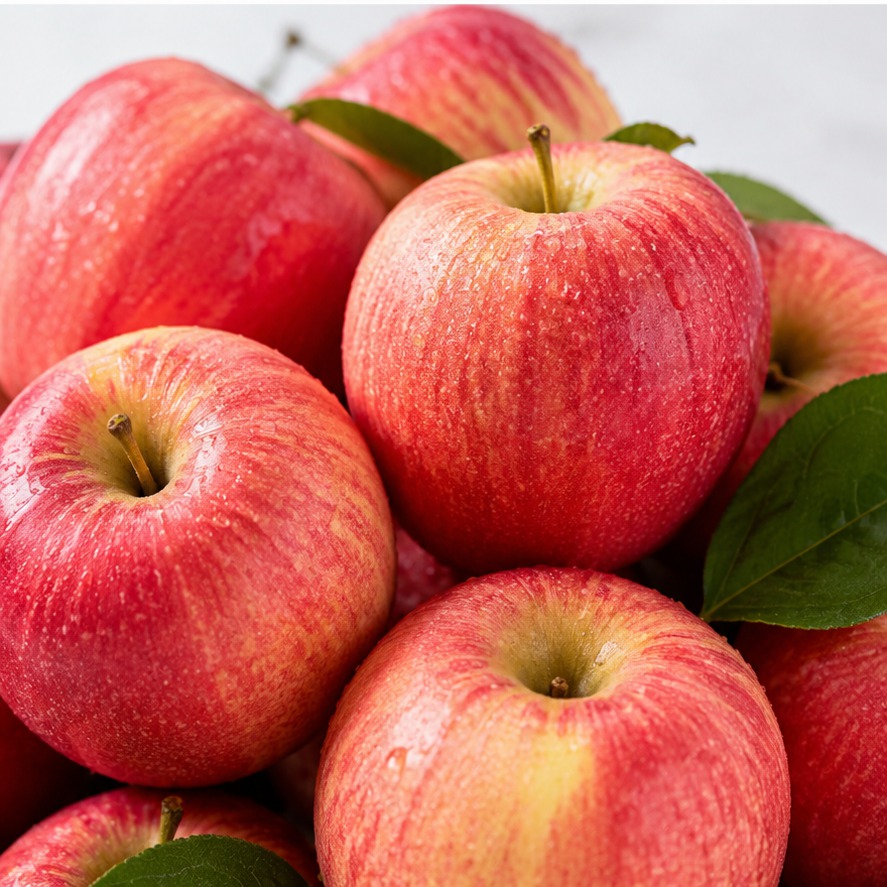
Apple
Apples are widely available and similarly convenient as whole fruit that can be sliced and eaten with the skin.
View details →Data Sources & Last Updated
Nutrition Data
Basic Information & Food Safety
Research & References
Tey SL, Lee DEM, Henry CJ. (2017). Fruit Form Influences Postprandial Glycemic Response in Elderly and Young Adults.
The Journal of Nutrition, Health & Aging, 21(8), 887–891. DOI / Original
Rojas-Garbanzo C, Zimmermann BF, Schulze-Kaysers N, Schieber A. (2017). Characterization of phenolic and other polar compounds in peel and flesh of pink guava.
Food Research International, 100, 445–453. DOI / Original
González IA, Osorio C, Meléndez-Martínez AJ, González-Miret ML, Heredia FJ. (2011). Application of tristimulus colorimetry to evaluate colour changes during the ripening of Colombian guava varieties with different carotenoid pattern.
International Journal of Food Science & Technology, 46(4), 840–848. DOI / Original
Rojas-Garbanzo C, Gleichenhagen M, Heller A, et al. (2017). Carotenoid Profile, Antioxidant Capacity, and Chromoplasts of Pink Guava during Fruit Ripening.
Journal of Agricultural and Food Chemistry, 65(24), 4993–4999. DOI / Original
Nunes JC, Lago MG, Castelo-Branco VN, et al. (2016). Effect of drying method on volatile compounds, phenolic profile, and antioxidant capacity of guava powders.
Food Chemistry. DOI / Original