Fermented foods · Fermented vegetables
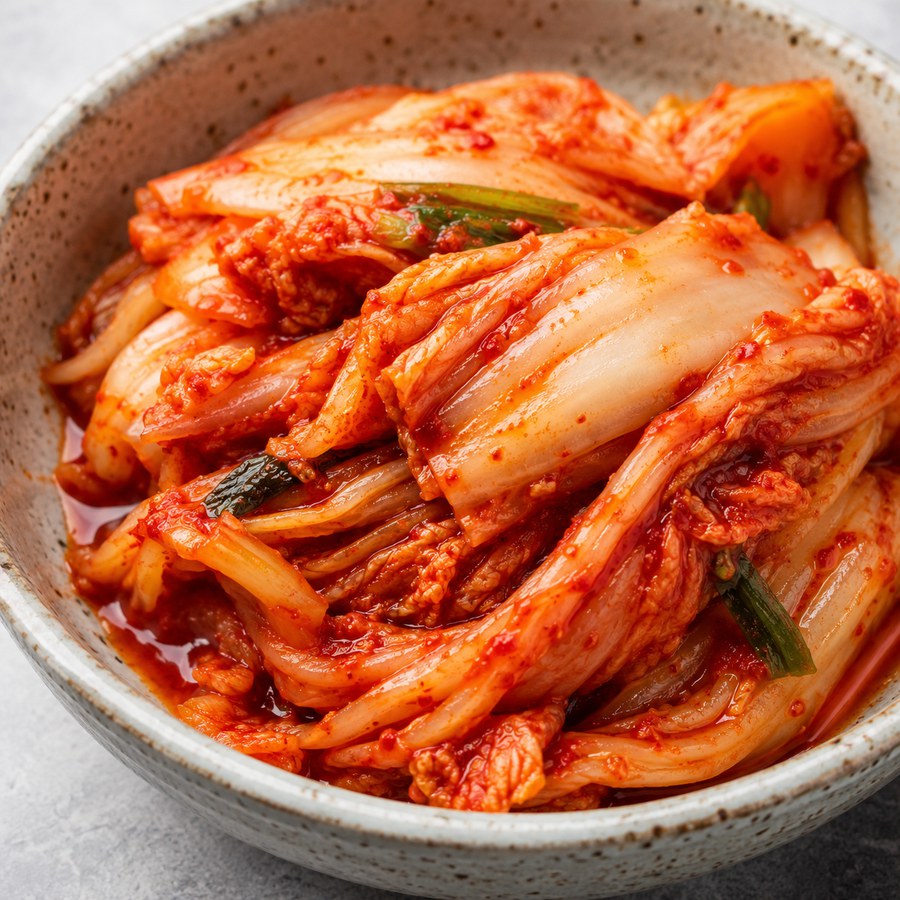
Korean napa cabbage kimchi
Korean napa cabbage kimchi is made mainly from napa cabbage that is salted, rinsed, drained, mixed with chili powder, garlic, ginger, allium vegetables, radish, and other seasonings, then fermented at low temperature. Recipes may also include fish sauce, salted shrimp, sugar, rice paste, or other ingredients, so nutrition, sodium, heat, and live-culture counts vary. It is low in calories and can add both vegetables and fermented foods to the diet, but sodium is often substantial, so fermentation is not a reason to eat it without limit.
Food overview
Key strengths
Napa cabbage kimchi provides vegetables, a little fiber, and some vitamin K, folate, and other micronutrients at low calorie density. Unheated products that still contain live cultures may also provide lactic-acid bacteria and fermentation metabolites.
Best ways to use it
Use a small amount as a side dish with brown rice or mixed grains, tofu, eggs, fish, mushrooms, and fresh vegetables. Because kimchi is already salty, reduce soy sauce, salt, soup bases, and processed meat in the same meal.
What stands out
Check five things: whether it is truly fermented napa cabbage kimchi; whether it was pasteurized or otherwise heat-treated; sodium per 100 g; fish sauce, shrimp paste, or other allergens; and refrigeration/package condition. “Fermented” does not guarantee a stable dose of clinically validated probiotic strains.
Worth noting
Sodium is the main everyday limitation. In the USDA sample, 50 g provides about 249 mg sodium, around 11% of the FDA Daily Value. WHO recommends adults stay below 2000 mg sodium per day, so kimchi is better treated as a small flavorful side than a large bowl of vegetables.
Basic Nutrition
Showing:100 g Refrigerated fermented napa cabbage kimchi
View complete nutrition data
GI note:GI varies with cultivar, food structure, processing, and cooking. Raw grains usually do not have directly applicable human GI data.
Reliable GI data are lacking for napa cabbage kimchi, so no value is estimated from carbohydrate content and 0 is not shown.
Data notes:This page covers traditional spicy refrigerated fermented baechu kimchi made mainly from napa cabbage, with one formal nutrition state: refrigerated fermented napa cabbage kimchi. Radish kimchi, cucumber kimchi, water kimchi, white kimchi, fresh-mixed kimchi, kimchi soup, kimchi fried rice, and canned or shelf-stable sterilized kimchi are separate products and do not share these values.
Basic nutrition uses USDA FoodData Central “Cabbage, kimchi” (FDC 170392).
The default view is per 100 g. A common serving is about 50 g, roughly a small side dish, used for site calculations rather than as an official intake recommendation.
GI is shown as “—”. Reliable GI data for ordinary napa cabbage kimchi are limited, and glycemic impact varies with recipe, added sugar, fermentation, and the rest of the meal. GI is not estimated from carbohydrate or sugar content and is not shown as 0.
The current source does not provide a usable starch value and does not support reliable totals for omega-3, omega-6, or cholesterol, so these are shown as “—” rather than estimated.
Sodium varies widely: the USDA sample has about 498 mg/100 g, while one Korean official sample has about 232 mg/100 g. Use the product label rather than treating one database value as universal.
Vitamin and mineral percentages use FDA Daily Values for adults and children age 4+ and are recalculated when serving size changes.
Vitamins & Minerals
Only nutrients reaching at least 5% of the current FDA Daily Value are shown. At both 100 g and 50 g, the qualifying nutrients are vitamin K, vitamin B2, iron, folate, and vitamin B6; lower-value nutrients are not added just to fill cards.
Percentages use USDA kimchi values and current FDA Daily Values. At a 50 g serving, vitamin K is about 18%, vitamin B2 about 8%, iron about 7%, folate about 7%, and vitamin B6 about 6%; per 100 g the percentages roughly double. Kimchi is not a stable high-vitamin food because ingredients, chili level, fermentation, rinsing, storage, and heat treatment all affect values.
View all vitamins and minerals
Key Bioactive Compounds
Lactic-acid bacteria and fermentation metabolites
Fermentation-active microbesLeuconostoc, Weissella, and other lactic-acid bacteria commonly drive napa cabbage kimchi fermentation and produce organic acids and flavor compounds.
Fixed amount: —. Counts shift with recipe, temperature, time, packaging, and refrigeration. One study observed roughly 10⁵ to 10⁸ CFU/g, but that is not a universal retail range.
Fermentation microbes and metabolites may interact with digestion, gut ecology, and immune signaling, but human evidence specific to kimchi remains limited.
For live cultures, choose refrigerated kimchi that has not been pasteurized after fermentation. Cold use preserves more microbes than prolonged cooking.
Kimchi microbes are not automatically clinically validated probiotics and should not be claimed to treat constipation, cause weight loss, boost immunity, or cure gut disease.
Capsaicinoids
Chili pungency compoundsCapsaicin and dihydrocapsaicin create much of the heat in spicy red kimchi.
Fixed amount: —. Retail kimchi has no standardized level. A 2024 experiment used about 4, 12, 30.7, 40.9, and 50.3 mg/kg during 28 days at 4°C; these experimental recipes do not define normal retail content.
Capsaicinoids have been studied for links with energy metabolism, oxidative stress, and inflammation, but ordinary kimchi servings are not equivalent to concentrated capsaicin studies.
Choose a heat level you tolerate. People with sensitive stomachs, mouths, or intestines can reduce the portion or choose milder or white kimchi.
Hotter does not mean more anti-inflammatory, nor does it prove stronger fat-loss, antimicrobial, or disease-treatment effects.
Beta-carotene, lutein, and related carotenoids
CarotenoidsBeta-carotene, lutein, and zeaxanthin come from napa cabbage, chili powder, scallions, and other vegetables.
The USDA sample has about 55 µg beta-carotene and 49 µg combined lutein and zeaxanthin per 100 g; another Korean sample has about 281 µg beta-carotene, showing large recipe variation.
Beta-carotene can contribute to vitamin A nutrition, while lutein and zeaxanthin participate in antioxidant defense and support normal eye-related physiology.
Eat the whole serving and pair it with a normal meal containing some healthy fat; there is no need to add large amounts of oil just for carotenoid absorption.
Kimchi carotenoids are variable and do not replace richer sources such as dark-green vegetables, carrots, or pumpkin, nor do they offset a high-sodium diet.
How processing changes it
Fresh or lightly fermented kimchi
Newly made kimchi is crisper and less sour, and its microbial community and fermentation metabolites are still in an early phase. It is closer to fresh-mixed geotjeori and should not be assumed to have the same live counts or metabolite profile as mature fermented kimchi.
Refrigerated fermented napa cabbage kimchi
With low-temperature fermentation, microbes gradually use sugars while lactic acid, acetic acid, mannitol, and other metabolites increase. Sourness rises and texture softens. This is the main state discussed on this page.
Over-fermented kimchi
With longer fermentation, kimchi becomes softer and more sour and is often used for soup or fried rice. Increased sourness alone does not mean spoilage, but mold, rotten odor, abnormal slime, or damaged packaging are reasons to discard it.
Heated kimchi
Cooking in soup, fried rice, or stews preserves vegetables, fiber, minerals, and flavor, but greatly reduces or inactivates live lactic-acid bacteria. Cooked kimchi should not still be promoted as a live-culture food.
Pasteurized or shelf-stable kimchi
Some shelf-stable, canned, or export products are heat-treated to extend storage. Their live-culture status differs from refrigerated unpasteurized kimchi, so check storage and heat-treatment instructions on the package.
Recommended page state
The nutrition module keeps only one state: refrigerated fermented napa cabbage kimchi. Fresh, over-fermented, heated, and pasteurized versions do not get separate nutrition states because there is not enough standardized data to calculate one from another.
How to choose and store it
How to choose
- Check the product name: choose products clearly labeled napa cabbage kimchi, baechu kimchi, or Napa cabbage kimchi. If the label only says “Korean kimchi,” check the main vegetable and ingredients so radish, mixed, or fresh kimchi are not treated as the same food.
- Check ingredients: traditional baechu kimchi usually starts with napa cabbage and includes chili powder, garlic, ginger, radish, and alliums. Some products also contain fish sauce, shrimp paste or salted shrimp, sugar or syrup, rice paste, MSG, or preservatives. Vegans and people with fish or shellfish allergy must check the ingredient and allergen labels.
- Check sodium: compare sodium per 100 g instead of relying on claims such as low-fat, fermented, or probiotic. Prefer products with relatively lower sodium and clear serving information.
- Check live-culture and heat-treatment information: if live microbes are important, look for refrigeration, natural fermentation, no pasteurization, and live-culture or strain statements. If the package says nothing, do not assume high live counts.
How to store
- Refrigerate as directed, use clean chopsticks or tongs, reseal promptly, and return the container to the refrigerator.
- Keep vegetables mostly submerged in the brine, do not return leftovers to the original container, and avoid long periods at room temperature.
- Do not keep using the product if there is leakage, a broken seal, obvious mold, rotten odor, or abnormal slime.
Remember three things: confirm it is napa cabbage kimchi, compare sodium, and check refrigeration and heat-treatment information.
How to use it in everyday meals
Serve directly as a side dish
Use about 30–50 g with mixed grains, tofu, eggs, fish, and mild vegetables. Because kimchi is already salty, use less salt, soy sauce, miso, and concentrated soup base elsewhere in the meal.
Kimchi tofu vegetable soup
Cook a small amount with tofu, mushrooms, onion, zucchini, and tomato. Kimchi adds acidity and heat, so there is less need for extra salt or processed meat. Heating keeps the vegetable and flavor value but not the live-culture status.
Kimchi whole-grain bowl
Use brown rice, quinoa, or barley with a small amount of kimchi, edamame, tofu, egg, and several fresh vegetables. Kimchi works best as a fermented condiment rather than most of the vegetable volume.
Lower-oil kimchi fried rice
Use cooled mixed-grain rice with a little kimchi, egg, tofu, and vegetables and stir-fry quickly with a small amount of plant oil. Limit ham, luncheon meat, bacon, cheese, and extra soy sauce to keep sodium down.
Kimchi whole-grain noodles
Pair a small amount with buckwheat, whole-wheat, or legume noodles plus cucumber, spinach, mushrooms, or tofu. A little kimchi brine can season the dish without a high-sodium soup base or large amounts of chili paste.
Kimchi vegetable pancake
Chop kimchi and mix with onion, carrot, chives, and a moderate amount of whole-grain flour, then pan-cook with a little oil over medium-low heat. Keep batter, oil, and salt modest and avoid repeated charring.
Who Should Take Extra Care
People Who Need to Limit Sodium
People with hypertension, cardiovascular disease, impaired kidney function, or a prescribed sodium restriction should check labels and control portions. Kimchi should not be treated as unlimited fresh vegetables.
People with reflux or sensitive gastrointestinal systems
Kimchi is spicy, acidic, and salty, and can trigger heartburn, bloating, abdominal pain, or bowel changes in some people. Start with a smaller portion and choose milder, moderately fermented products if needed.
People with fish or shellfish allergy
Traditional kimchi may contain fish sauce, shrimp paste, or salted shrimp. Always check ingredients and allergen labeling; a vegetable-based food is not automatically free of seafood ingredients.
Vegetarian or vegan diets
Some kimchi contains fish sauce, shrimp paste, or other animal-derived fermented seasonings. Choose products clearly labeled vegan or with an ingredient list free of animal products.
People sensitive to biogenic amines in fermented foods
Some kimchi can contain histamine, tyramine, and other biogenic amines, influenced by microbes, fermentation time, and ingredients such as fish sauce or shrimp paste. People who repeatedly develop headache, flushing, palpitations, or gastrointestinal symptoms after fermented foods can start with a small amount and observe tolerance.
Immunocompromised people, pregnant people, and older adults
Choose commercially produced, intact, continuously refrigerated products and follow label storage instructions. Avoid homemade kimchi with uncertain hygiene, damaged packages, visible mold, or products left at room temperature for long periods.
People focused on “probiotic” effects
Live counts vary with product, strain, fermentation time, and storage. Heated or pasteurized kimchi may no longer contain substantial live microbes, so “fermented food” alone does not prove a probiotic effect.
Similar Food Alternatives
Sauerkraut
Also lactic-fermented cabbage, usually without chili, garlic, or complex seafood seasonings. Flavor is simpler and more acidic, but sodium still needs label checking.
Naturally fermented northeastern Chinese suancai
Another lactic-fermented cabbage food often used in soups and stews. Ingredients, fermentation, acidity, and sodium differ from Korean kimchi, so nutrition data should not be shared.
Sichuan pickled vegetables
Often made by fermenting radish, cowpeas, chilies, and other vegetables in brine. Crisp and sour-salty, but vegetable mix and brine differ and sodium still matters.
Low-sodium cabbage slaw
Not fermented and does not provide fermentation microbes, but it offers fresh vegetables and crunch. For people who need strict sodium control, it may fit better than large portions of kimchi.