Fruits · Dark-Colored Berry
Black Mulberry
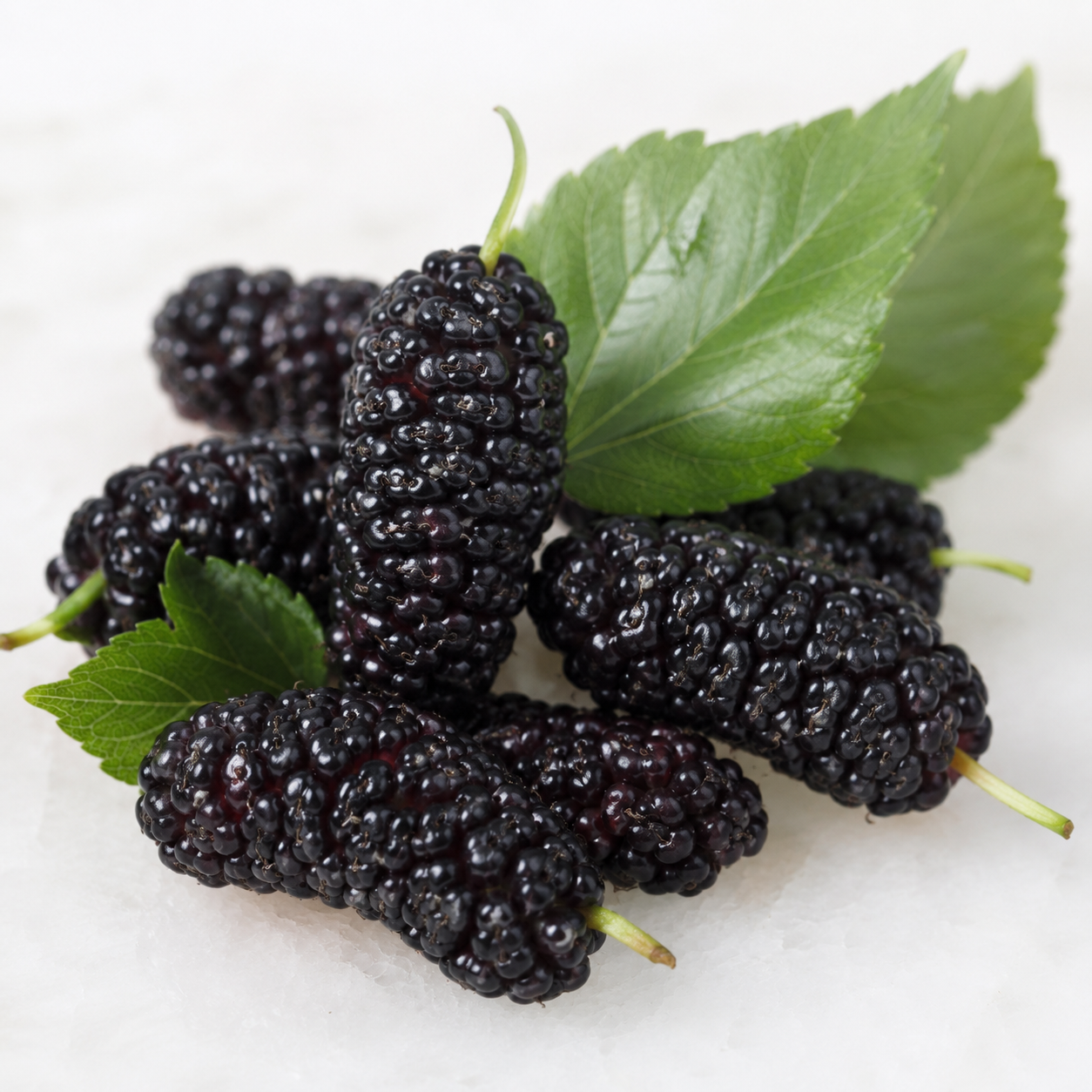
Black mulberry is a dark-colored fruit with high water content and a sweet-tart flavor. Per 100 g, it provides about 43 kcal, along with vitamin C, iron, and dietary fiber. Its purple-black color comes mainly from cyanidin-based anthocyanins, while chlorogenic acid, rutin, and other polyphenols are also present. Actual amounts vary greatly by species, cultivar, and ripeness.
Food Overview
Key strengths
Per 100 g, fresh mulberries provide about 43 kcal, 9.8 g of carbohydrate, 1.7 g of dietary fiber, and 36.4 mg of vitamin C, along with 1.85 mg of iron and smaller amounts of vitamin B2, copper, vitamin K, and vitamin E.
How to Eat It
Ripe black mulberries can be rinsed and eaten fresh or added to plain yogurt, oats, whole-grain cereal, and fruit salads. Because the berries are soft and easily crushed or leaky, refrigerate them promptly and eat them soon after purchase.
What stands out
The most characteristic phytochemicals in black mulberries are anthocyanins. Studies indicate that cyanidin-3-O-glucoside and cyanidin-3-O-rutinoside are often among the major anthocyanins, but total anthocyanin content can differ by more than twentyfold across Morus species and cultivars.
Worth noting
Color alone cannot identify the species or polyphenol content of mulberries. Dark fruit may come from Morus nigra or from dark-fruited cultivars of Morus alba.
Basic Nutrition
Showing:100 g Fresh Black Mulberries
View complete nutrition data
GI note:GI varies with cultivar, food structure, processing, and cooking. Raw grains usually do not have directly applicable human GI data.
No reliable value was found from a standard human GI test clearly conducted on fresh whole black mulberries, so online estimates are not used.
Data notes:This page includes only fresh, whole black mulberries and does not create separate nutrition states for processed products.
The common serving is also set at 100 g, so switching to it does not change the nutrition values.
The USDA entry does not provide a reliable starch value, so starch is shown as “—” rather than calculated indirectly.
Vitamins & Minerals
Uses FDA Daily Values for adults and children age 4 and older, showing only nutrients that reach at least 5% of the Daily Value at the current serving size; the first six are shown by default.
View all vitamins and minerals
Key Bioactive Compounds
Anthocyanins
AnthocyaninsThe purple-black color of mulberries comes mainly from cyanidin-based anthocyanins; white or pale mulberries generally contain much less anthocyanin.
Specific amount: —. Anthocyanin content can vary severalfold across mulberry cultivars and ripening stages, and some studies report dry-weight or extract values that are not suitable as general values for market fruit.
Anthocyanins contribute to dietary antioxidant defenses, and diets rich in dark berries may support normal vascular and metabolic health.
Eat mulberries whole with the skin after rinsing. Because the fruit bruises and oxidizes easily, keep it refrigerated and eat it soon after purchase.
Mulberries do not treat anemia, lower blood glucose as a medication would, or reverse aging.
Chlorogenic acid
Phenolic acidsChlorogenic acid is one of the phenolic acids commonly found in mulberries and contributes to plant growth, defense, and fruit flavor.
Specific amount: —. Chlorogenic acid varies considerably by cultivar and is generally distributed through the flesh and skin.
Chlorogenic acid can contribute to dietary antioxidant defenses as part of the fruit’s polyphenol profile and may be associated with normal post-meal metabolic responses.
Prefer whole mulberries or purées that retain the pulp. Avoid obtaining large amounts through high-sugar mulberry paste, jam, or syrup.
Research on chlorogenic acid extracts does not show that eating mulberries can treat diabetes, fatty liver disease, or other metabolic conditions.
Rutin & other flavonols
FlavonoidsMulberries contain rutin, quercetin glycosides, and other flavonols, with rutin often identified as a representative flavonoids.
Specific amount: —. Levels vary with cultivar, ripeness, and analytical method and are found mainly in the skin and flesh tissues.
Flavonols and their metabolites may contribute to vascular and antioxidant defenses, although only a limited proportion is absorbed and utilized by the body.
Eating whole mulberries with the skin is sufficient; there is no need to purchase mulberry flavonoid or rutin extracts.
Rutin in mulberries does not replace medication, and in-vitro antioxidant findings do not establish clear blood-pressure-lowering or vascular-protective effects in people.
How Preparation Changes Black Mulberry
Fresh Whole Mulberries
Fresh whole mulberries retain the skin, flesh, small seeds, and dietary fiber and are the default form discussed on this page. Ripe mulberries are very soft and are easily crushed, split, and contaminated after picking, so they are best eaten promptly.
Freezing
Unsweetened frozen mulberries retain the whole flesh and dietary fiber, although ice crystals damage cell structure, making the fruit softer and more likely to release purple-red juice after thawing.
Puree or smoothie
When mulberries are blended with plain yogurt, milk, or unsweetened soy milk without straining, most dietary fiber remains.
Juicing & straining
Juicing and straining remove part of the skin, small seeds, pulp, and dietary fiber, reducing polyphenols retained in the solid fraction. Commercial mulberry drinks may also contain added sugar, juice concentrate, flavoring, or coloring and should not use fresh-fruit nutrition data.
Heating & Stewing
Anthocyanins and vitamin C are affected by heat, light, and oxygen. At home, avoid unnecessary prolonged heating, add mulberries near the end of cooking when appropriate, limit repeated reheating, and keep sugar and cream modest.
Mulberry Jam & Mulberry Paste
Jam, mulberry paste, and syrup are generally heated, concentrated, and sweetened, so their sugar content, energy density, and serving sizes differ substantially from fresh fruit.
Dried & Freeze-Dried Mulberries
Drying or freeze-drying removes a large amount of water, concentrating sugar and energy per unit weight. 100 g of fresh mulberries is not equivalent to 100 g of dried or freeze-dried mulberries.
How to Choose & Store
How to choose
- Choose naturally and evenly colored ripe berries that remain intact; normal ripe color varies by cultivar.
- Ripe mulberries can be soft, but they should not be slimy, heavily collapsed, leaking extensively, or smell alcoholic.
- Check the bottom of the package for large amounts of purple juice, visible mold, or decomposing berries.
- Purple-black color alone cannot determine whether the fruit is Morus nigra or Morus alba.
How to store
- Refrigerate promptly after purchase or harvest and eat soon; do not leave piled fruit at room temperature for long periods.
- Use a shallow, wide container to avoid crushing. A dry paper towel can be placed underneath, and damaged or moldy fruit should be removed promptly.
- Rinse gently under cool running water just before eating. Do not soak for long periods or use soap, detergent, or bleach.
- Discard fruit with mold, a strong alcoholic odor, sliminess, extensive leaking, or widespread soft decay.
When buying black mulberries, remember three things: choose naturally ripe fruit, avoid mold, and check that there is not a large pool of juice at the bottom of the package.
How to Include It in Everyday Meals
Eat as fresh fruit
Rinse gently under running water and drain before eating. Mulberries stain easily, so simply protect clothing and surfaces rather than eating a larger portion because of the dark color.
Black Mulberries with Plain Yogurt
Add fresh mulberries to plain yogurt or unsweetened Greek yogurt, with a little oats, walnuts, chia seeds, or flaxseeds if desired. Avoid adding honey, jam, sweetened cereal, and syrup at the same time.
Black Mulberries with Oats
Let cooked oats cool slightly, then add whole or lightly crushed mulberries to reduce prolonged heating. Milk, unsweetened soy milk, and nuts can be added so the meal includes whole grains, protein, fat, and fruit.
Mixed Berry Bowl
Combine black mulberries with blueberries, strawberries, blackberries, or raspberries to vary fruit color and texture. A little plain yogurt, lemon juice, or mint can be used for flavor; condensed milk, syrup, or large amounts of sweet dressing are unnecessary.
Whole-Fruit Black Mulberry Smoothie
Blend mulberries with plain yogurt, milk, or unsweetened soy milk without straining out the skin or small seeds. a little oats or nuts can be added, but keep the total fruit portion reasonable and avoid adding juice, honey, syrup, and multiple high-sugar fruits together.
Cold Whole-Grain or Vegetable Salad
Add a little mulberries to quinoa, buckwheat, brown rice, or leafy-green salads and pair with legumes, nuts, and a little plant oil.
Who Should Take Extra Care
People managing blood sugar
Per 100 g, fresh mulberries provide about 9.8 g of carbohydrate and 8.1 g of sugar. No reliable standard human GI value is available, so low-GI numbers circulated online should not be used to justify unlimited intake.
People with Mulberry Allergy
Mulberry allergy is uncommon, but IgE-mediated systemic reactions and anaphylaxis have been reported, and cross-reactivity with birch pollen, figs, and other foods may occur.
People with Gastrointestinal Sensitivity
Mulberries contain natural sugars, dietary fiber, and small seeds. Larger servings may cause bloating, gas, abdominal discomfort, or bowel changes in some people. Start with a smaller portion and adjust based on personal tolerance.
People with impaired kidney function
Fresh mulberries provide about 194 mg of potassium per 100 g. Whether restriction is needed depends on kidney function, blood potassium, dialysis status, medications, and the rest of the diet.
Infants, young children, and people with swallowing difficulties
Ripe mulberries are soft but elongated and contain many small seeds. For people with weaker chewing or swallowing ability, mash or chop them or serve as a purée that retains the pulp, and supervise eating.
People at higher risk from foodborne illness
Pregnant people, young children, older adults, and people with weakened immune systems should choose fruit from reliable sources, avoid moldy or spoiled berries, wash carefully, and keep them refrigerated.
People Foraging Wild Mulberries
A purple-black ripe fruit in the wild is not automatically edible black mulberry and cannot be identified safely from online photos alone.
Similar Food Alternatives
Blackberry
Another dark-colored fruit, blackberries contain anthocyanins and are relatively high in dietary fiber.
Blueberry
Blueberries also contain anthocyanins, are more consistently available in markets, and usually store better.
Blackcurrant
Blackcurrants are especially notable for vitamin C and delphinidin-based anthocyanins and usually have a more tart, intense flavor than mulberries.
Raspberry
Raspberries are relatively high in dietary fiber and have a more noticeable tartness, making them suitable for yogurt, oats, and fruit bowls.
Data Sources & Last Updated
Nutrition Data
Basic Information & Food Safety
Research & References
Kim I, Lee J. (2020). Variations in Anthocyanin Profiles and Antioxidant Activity of 12 Genotypes of Mulberry (Morus spp.) Fruits and Their Changes during Processing.
Antioxidants, 9(3), 242. DOI / Original
Wang RS, Dong PH, Shuai XX, Chen MS, et al. (2022). Evaluation of Different Black Mulberry Fruits (Morus nigra L.) Based on Phenolic Compounds and Antioxidant Activity.
Foods, 11(9), 1252. DOI / Original
Skrovankova S, Ercisli S, Ozkan G, et al. (2022). Diversity of Phytochemical and Antioxidant Characteristics of Black Mulberry (Morus nigra L.) Fruits from Turkey.
Antioxidants, 11(7), 1339. DOI / Original
Aramwit P, Bang N, Srichana T. (2010). The properties and stability of anthocyanins in mulberry fruits.
Food Research International, 43(4), 1093–1097. DOI / Original
Zhang H, Ma ZF, Luo X, Li X. (2018). Effects of Mulberry Fruit (Morus alba L.) Consumption on Health Outcomes: A Mini-Review.
Antioxidants, 7(5), 69. DOI / Original
Choi JH, Sim JK, Oh JY, et al. (2015). An IgE-Mediated Allergic Reaction Caused by Mulberry Fruit.
Allergy, Asthma & Immunology Research, 7(2), 195–198. DOI / Original