Fish & Seafood
Atlantic Mackerel
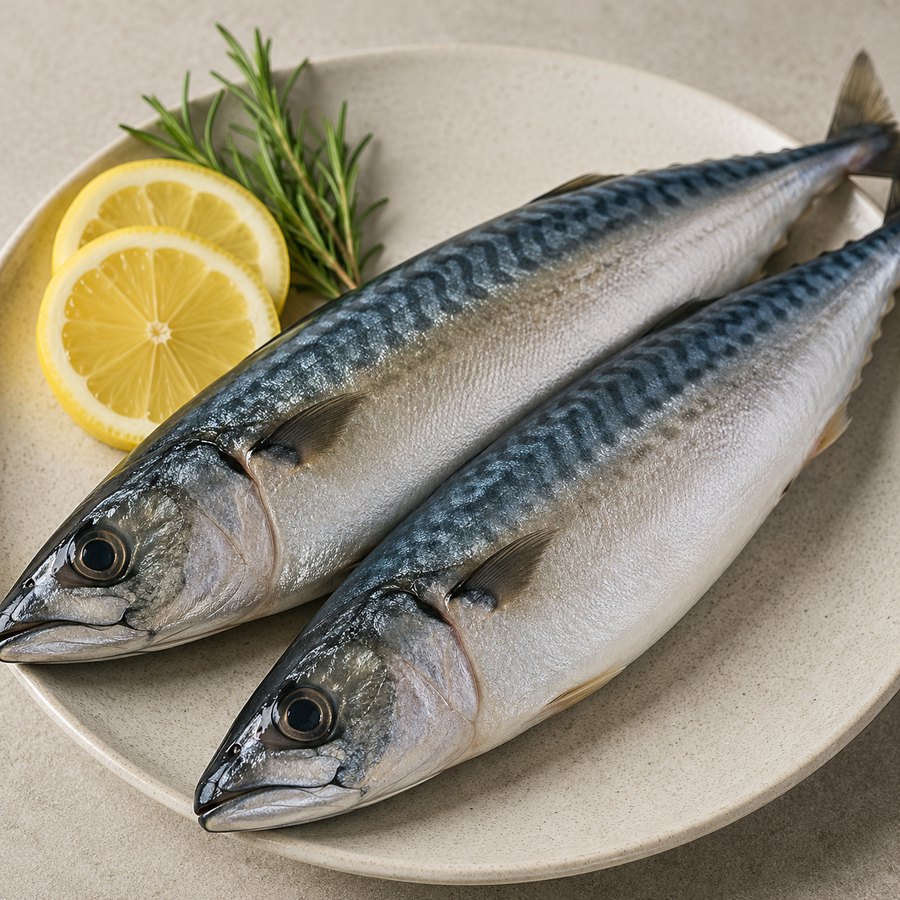
Atlantic mackerel is a fatty fish from cool-temperate North Atlantic waters, typically blue-green on the back with 20–30 dark wavy bars and a silvery belly. It is a different species from Pacific/chub mackerel, Atlantic chub mackerel, and king mackerel, so nutrition data should not be mixed. Its main nutritional strengths are EPA, DHA, vitamin B12, vitamin D, selenium, and high-quality protein. Fat content can vary greatly by season and sample, so this page uses one consistent database rather than combining sources.
Food Overview
Key strengths
Atlantic mackerel is a fatty fish especially rich in long-chain omega-3s. In the database sample, 100 g provides about 1.8 g EPA and 2.6 g DHA, plus vitamin B12, vitamin D, selenium, niacin, and vitamin B6.
How to eat it
Steam, poach, bake, stew with tomato, or pan-cook briefly with a little oil. Pairing with vegetables, beans, and whole grains is a better everyday pattern than deep-frying, heavy charring, or high-sodium sauces.
What stands out
EPA and DHA are the main highlights. A common 85 g serving provides about 1.53 g EPA and 2.21 g DHA, about 3.74 g combined, but this comes from a particularly high-fat database sample and does not represent every Atlantic mackerel sold.
Worth noting
Mackerel can accumulate histamine if temperature control is poor after catch, during transport, or after thawing. Once formed, histamine is not removed by freezing, cooking, smoking, curing, or canning.
Basic Nutrition
Showing:100 g Raw Atlantic Mackerel
View complete nutrition data
GI note:GI varies with cultivar, food structure, processing, and cooking. Raw grains usually do not have directly applicable human GI data.
Atlantic mackerel contains almost no available carbohydrate and has no suitable reliable GI value for an ordinary food page, so GI is shown as “—”, not 0 or an estimate.
Data notes:The default species is Atlantic mackerel (Scomber scombrus), which is different from Pacific/chub mackerel (Scomber japonicus), Atlantic chub mackerel, and king mackerel; their nutrition data should not be mixed.
Basic nutrition uses the Japanese food-composition database entry for raw Atlantic mackerel (food no. 10158). Because fat content varies greatly by season and sample, this page uses one database rather than combining values from different sources.
Default values are per 100 g edible portion; a common serving is 85 g edible portion, calculated proportionally from the 100 g data.
GI is shown as “—”. Atlantic mackerel contains almost no available carbohydrate and lacks a suitable reliable GI value for an ordinary food page. “Not applicable/no reliable data” is not the same as a tested GI of 0.
The database records about 0.4 g available carbohydrate but does not provide separate sugar and starch values suitable for the page, so sugar and starch are shown as “—” rather than assumed to be 0.
Boiled-state data come from the Japanese food-composition database entry for boiled Atlantic mackerel (food no. 10159). Raw and boiled values are from different samples, not the same fish measured before and after cooking.
Atlantic mackerel fat varies with fishing area, season, fish size, and physiological state. When total fat changes, EPA, DHA, and energy per 100 g also change, so the values here should not be treated as fixed for every piece of fish.
Added cooking oil, salt, or sauces are not included in the page data.
Vitamins & Minerals
Uses adult Daily Values and shows only nutrients providing at least 5% of the Daily Value at the current serving; the top six are shown by default.
A common serving is 85 g edible portion. Only vitamins and minerals providing at least 5% of the Daily Value are shown, with the top six displayed by default and the rest expandable. Percentages use FDA Daily Values for adults and children age 4 and older; FDA generally considers 5% DV or less low and 20% DV or more high. Base values come from the Japanese raw Atlantic mackerel entry and are for general reference because fat and micronutrients vary by season and sample.
View all vitamins and minerals
Percentages show how much the selected serving contributes to the adult Daily Value.
Key Bioactive Compounds
EPA
Long-Chain Omega-3 Fatty AcidsEPA is a major long-chain omega-3 fatty acid in fatty marine fish and contributes to cell membranes and lipid signaling molecules.
Raw Atlantic mackerel provides about 1,800 mg EPA per 100 g and about 1,530 mg per 85 g, mainly in fish lipids. These values come from a high-fat database sample and vary with season and body fat.
EPA contributes to lipid signals involved in platelet function, vascular responses, immunity, and inflammation regulation. Including fatty fish in a balanced diet directly increases long-chain omega-3 intake.
Choose fish with a reliable cold chain and cook soon after thawing. Steaming, poaching, baking, or brief pan-cooking is sufficient; you do not need to eat it raw for EPA, and repeated frying or heavy charring is not recommended.
EPA participates in inflammation regulation, but one meal of Atlantic mackerel does not “eliminate inflammation.” Food does not replace lipid-lowering drugs, anti-inflammatory medicines, or disease treatment.
DHA
Long-Chain Omega-3 Fatty AcidsDHA is an important structural fatty acid in cell membranes and is abundant in brain and retinal tissue; it is also a characteristic component of fatty marine fish.
Raw Atlantic mackerel provides about 2,600 mg DHA per 100 g and about 2,210 mg per 85 g. EPA+DHA total about 4.4 g per 100 g and 3.74 g per 85 g.
DHA helps maintain normal cell-membrane structure and has normal physiological roles in the brain and retina. Eating fish provides DHA directly without relying entirely on the limited conversion of plant ALA.
Use gentle cooking and avoid repeated prolonged heating. Keep butter, cream, and high-sodium sauces modest, and pair with vegetables and whole grains.
DHA is not a “brain-boosting drug.” Eating Atlantic mackerel does not guarantee better memory and does not treat cognitive disorders, eye disease, or neurological conditions.
Selenium
Antioxidant-related mineralSelenium is an essential trace mineral and a component of selenoproteins involved in antioxidant defense and metabolism.
Raw Atlantic mackerel provides about 45 μg selenium per 100 g and about 38.3 μg per 85 g, roughly 70% of the Daily Value. Levels vary with fishing area and sample.
Selenoproteins support antioxidant defense, thyroid-hormone metabolism, DNA synthesis, and normal immune function, helping protect cells from excessive oxidative damage.
A varied diet including fish, eggs, meat, and other foods can supply selenium. With a normal serving of Atlantic mackerel, there is usually no need to add high-dose selenium supplements for “extra antioxidant” effects.
Selenium supports antioxidant defenses but does not treat thyroid disease, cancer, or infection. In selenium-sufficient people, high supplemental intake has not consistently prevented cardiovascular disease.
How Preparation Changes Atlantic Mackerel
Raw Atlantic Mackerel
Per 100 g: about 295 kcal, 17.2 g protein, 26.8 g fat, 10 μg vitamin D, 8.1 μg vitamin B12, and 45 μg selenium. This is the default nutrition state.
Boiled Atlantic Mackerel
Per 100 g: about 310 kcal, 18.6 g protein, 28.5 g fat, 6.6 μg vitamin D, 12 μg vitamin B12, and 45 μg selenium. These values can be viewed in the nutrition-state switch.
Raw vs Boiled
Raw and boiled data come from different database samples, not the same fish before and after cooking. Apparent increases per 100 g after boiling may reflect water loss and sample differences, not cooking “creating” more protein or vitamin B12.
Freezing & Thawing
Freezing extends storage but does not remove histamine that has already formed. Refrigerate or freeze promptly after purchase and thaw slowly in the refrigerator rather than leaving fish at room temperature.
Salted, Smoked & Canned
Salted, smoked, water-packed, oil-packed, and tomato-seasoned products can differ greatly in sodium, sugar, and added fat and should not use raw-fish nutrition data. Smoking, curing, or canning also does not remove histamine that has already formed.
How to Choose & Store
How to choose
- Fresh fish or steaks: choose naturally glossy skin, clear back markings, and firm flesh. The smell should be mild, not sour, rotten, ammonia-like, or rancid.
- Frozen fillets: packaging should be intact and leak-free, with the fish fully frozen and without excessive ice crystals or obvious signs of repeated thawing. Labels should ideally say Atlantic mackerel and Scomber scombrus; “mackerel” alone does not identify the species.
- Salted, smoked, and canned products: check the ingredient list, drained weight, sodium or salt per 100 g, and whether sugar, plant oil, heavy sauces, or other seasonings are added.
How to store
- Refrigerate or place on ice immediately after purchase. If using within 2 days, keep at about 4°C or below; otherwise freeze. Thaw frozen fish slowly in the refrigerator.
- Atlantic mackerel especially requires good temperature control. Histamine can rise within hours if the cold chain fails, and normal appearance or smell does not fully rule out risk.
- Cook fish to an internal temperature of at least 63°C. Properly cooked flesh usually becomes opaque and flakes easily with a fork.
- Do not eat fish with a clear sour, rotten, ammonia-like, or rancid odor; damaged, swollen, or leaking packaging; obvious repeated-thawing signs; uncertain source/cold chain; or an unusual peppery or burning sensation on tasting.
Remember three things: confirm the scientific name, choose a reliable cold chain, and check sodium in processed products.
How to Use in Everyday Meals
Steamed Atlantic Mackerel
Steam with ginger and scallion until fully cooked, then add a little lower-sodium soy sauce, vinegar, or lemon juice. Pair with broccoli, bell pepper, mushrooms, and mixed grains; there is no need for a large amount of hot oil.
Baked Atlantic Mackerel
Pat dry, season with black pepper, lemon, and herbs, and bake until opaque and flaky. Serve with tomato, onion, pumpkin, or asparagus and avoid prolonged heavy charring of the skin and edges.
Tomato-Stewed Atlantic Mackerel
Stew briefly with tomato, onion, mushrooms, and beans. Use herbs and spices for flavor and keep concentrated soup bases, refined sugar, and added oil modest; pair with brown rice or whole-wheat noodles.
Lightly Pan-Seared Atlantic Mackerel
Use a nonstick pan and a little plant oil over medium heat until both sides are cooked. Pair with cabbage, bell pepper, asparagus, or tofu and avoid repeated pan-frying or heating until smoking and charred.
Atlantic Mackerel Vegetable Soup
Cook with radish, tomato, tofu, mushrooms, or leafy greens. If using fresh fish, cook it thoroughly; with salted fish or canned products, reduce added salt, soy sauce, and concentrated stock.
Cooked Fish Grain Bowl
Pair baked or poached Atlantic mackerel with brown rice, quinoa, chickpeas, and colorful vegetables. Use vinegar, lemon, and herbs for seasoning and keep mayonnaise, cream, and salty sauces modest.
Who Should Take Extra Care
People Eating Raw or Undercooked Fish
Raw or undercooked marine fish can carry parasites such as Anisakis. Avoid raw or undercooked fish and cook to at least about 63°C to reduce parasite risk.
People with Fish Allergy
People with diagnosed fish allergy should avoid Atlantic mackerel and products such as canned mackerel, fish sauces, broths, and processed foods containing it, and should be aware of cross-contact with other fish.
Pregnancy, Breastfeeding & Children
FDA lists Atlantic mackerel as a lower-mercury “Best Choice.” During pregnancy or breastfeeding, choose 2–3 servings per week from varied “Best Choice” fish, with child portions adjusted for age and fish fully cooked. Atlantic mackerel is different from king mackerel, a large high-mercury species that should be avoided.
People Who Need to Watch for Histamine
Rapid facial flushing, headache, sweating, oral burning or peppery sensation, nausea, hives, abdominal pain, or diarrhea after fish may suggest histamine fish poisoning; seek medical care according to symptom severity.
People Who Need to Limit Sodium
Fresh fish is relatively low in sodium, but salted, smoked, and seasoned canned products can be high in sodium. If limiting sodium, favor plain fresh or frozen fish and check labels on processed products.
People Managing Energy Intake
The database sample of raw Atlantic mackerel provides about 251 kcal and 22.8 g fat per 85 g. It is more useful to replace fatty meat or processed meat with it than to add large amounts on top of an already energy-dense diet.
Similar Food Alternatives
Pacific / Chub Mackerel
Also a Scomber species and a source of EPA, DHA, protein, and vitamin B12, but it is a different species and its fat and omega-3 values should not be reused.
Sardines
A small fish rich in EPA and DHA. Some bone-in canned products also provide calcium; check sodium and seasonings.
Atlantic Herring
Another fatty fish that can add variety. Pickled and smoked herring are often high in sodium, so processing method matters.
Salmon or Trout
Provide high-quality protein, EPA, DHA, and vitamin D and usually have a milder flavor than mackerel; good options for steaming, baking, or light pan-cooking.