Whole Grains & Tubers · Tubers
Sweet potato
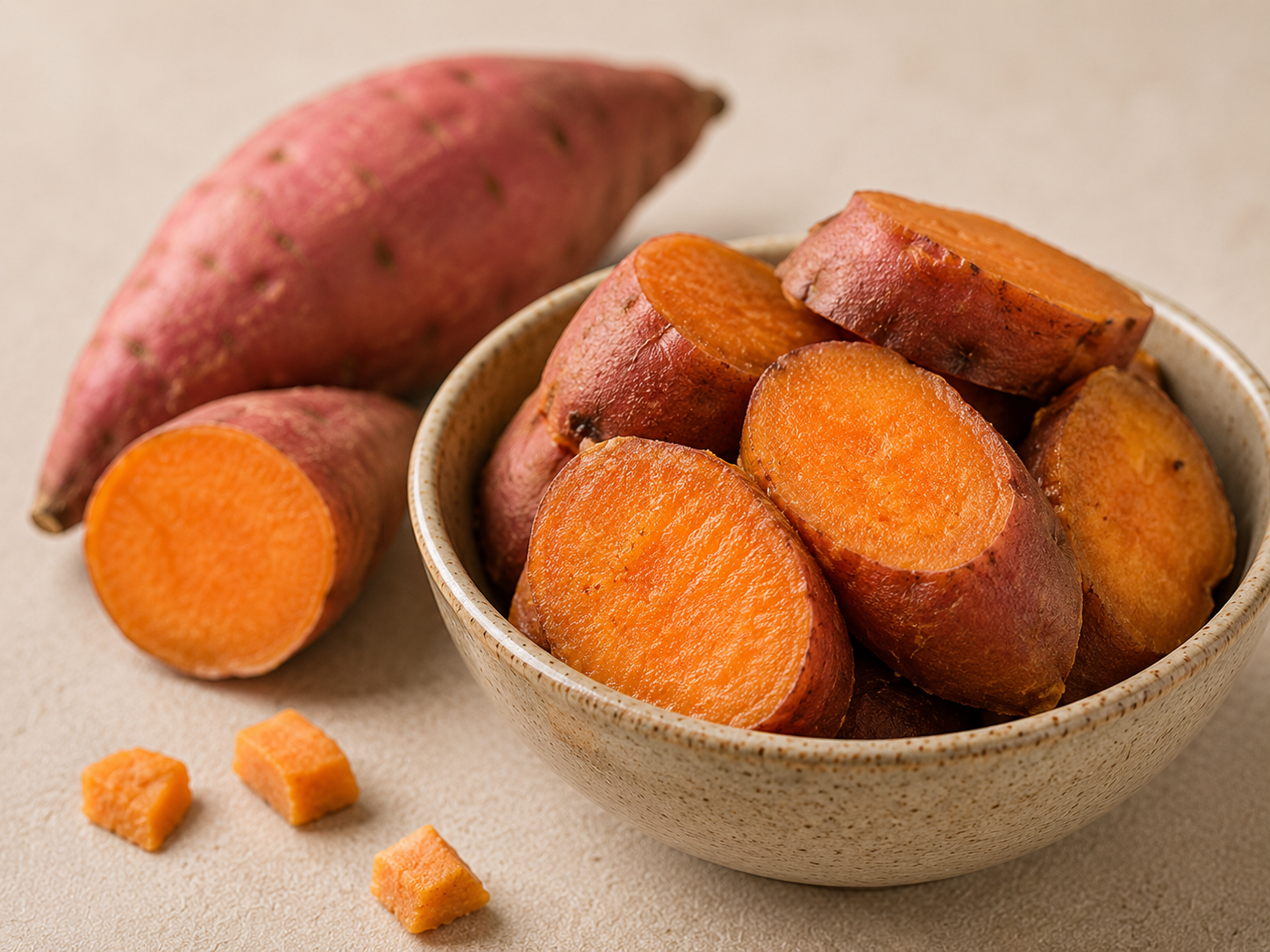
Sweet potato is a starchy tuber that can replace part of rice or wheat-based staples. Orange-fleshed varieties are rich in beta-carotene, while purple varieties contain more anthocyanins. Different colors have different strengths, but none should be treated as an unlimited food.
Food Overview
Key strengths
Sweet potato provides carbohydrate, dietary fiber, potassium, copper, manganese, vitamin B5, and vitamin B6. Orange-fleshed sweet potato can also provide a large amount of beta-carotene, which the body converts to vitamin A as needed.
How to Eat It
Sweet potato can be steamed, boiled, or baked whole, or cut into pieces and added to mixed-grain rice, porridge, soups, and stews.
What stands out
Nutrition varies substantially with flesh color. Orange-fleshed varieties are notable mainly for beta-carotene; purple-fleshed varieties for anthocyanins; and white- or yellow-fleshed varieties generally contain less carotenoid, but that does not mean their overall nutritional value is necessarily lower.
Worth noting
GI varies greatly with cultivar, maturity, piece size, and cooking method. Human studies have reported sweet-potato GI values from about 44 to 94. Boiling is usually lower, while prolonged baking or roasting may be higher, so a single fixed GI should not be assigned to all sweet potatoes.
Basic Nutrition
Showing:100 g Raw Sweet Potato
View complete nutrition data
GI note:GI varies with cultivar, food structure, processing, and cooking. Raw grains usually do not have directly applicable human GI data.
Raw sweet potato is not a common eating state, and small human tests in specific cultivars do not represent all market sweet potatoes, so no fixed GI value is used.
Data notes:Basic nutrition data come from USDA FoodData Central entries for raw sweet potato, peeled boiled sweet potato, and baked sweet-potato flesh from skin-on baked sweet potatoes.
The three datasets are not paired measurements of the same sweet potatoes before and after cooking, so they should be used only as representative values for each state and not to calculate nutrient-retention rates.
The USDA entries have relatively high vitamin A values and overall are closer to the common orange-fleshed sweet potatoes in the U.S. market.
Vitamins & Minerals
By default, show values per 100 g of raw sweet potato and only nutrients providing at least 5% of the adult Daily Value at the current serving size; vitamin A data mainly represent orange-fleshed sweet potato.
View all vitamins and minerals
Percentages show how much the selected serving contributes to the adult Daily Value.
Key Bioactive Compounds
Beta-carotene
CarotenoidsBeta-carotene is an important pigment responsible for the orange-yellow color of sweet potato and is a carotenoid that can be converted to vitamin A in the body.
Specific amount: —.
Beta-carotene can be converted to vitamin A as needed and helps maintain normal vision, skin, mucous membranes, and immune function while participating in antioxidant defenses.
Steaming, boiling, or moderate baking softens plant tissue, and a small amount of plant oil in the meal can support absorption.
Eating sweet potato does not treat myopia, dry eye, or other eye disease.
Chlorogenic Acid & Caffeoylquinic Acids
Phenolic acidsSweet potato contains chlorogenic acid, dicaffeoylquinic acids, and related phenolic acids that contribute to plant defense and are also involved in oxidative browning after cutting.
Specific amount: —. Levels vary markedly by cultivar and growing conditions. Phenolic acids are often relatively concentrated in the skin and tissues close to the skin, with some also present in the flesh.
These phenolic acids can contribute to dietary antioxidant defenses as part of sweet potato’s phytochemical profile.
Sweet potatoes with intact skin and no rot or obvious damage can be scrubbed thoroughly and cooked with the skin.
In-vitro antioxidant activity of sweet-potato phenolic acids does not prove that sweet potato lowers blood glucose, treats fatty liver disease, or removes inflammation from the body.
Resistant Starch & Dietary Fiber
Functional carbohydratesSweet potato contains dietary fiber and some resistant starch, with amounts changing with cultivar, cooking, and cooling.
Specific amount: —. Raw sweet potato contains more resistant starch, thorough cooking reduces it, and some may reform during cooling.
Fiber supports normal bowel function, while some resistant starch can be fermented by gut microbes and contribute to short-chain fatty-acid production.
Cook thoroughly. Prompt refrigeration and later reheating may form a little retrograded starch, but food-safety rules still matter.
Cooling does not make sweet potato low-calorie or freely edible; post-meal glucose response still depends on portion size, cultivar, and the rest of the meal.
How Preparation Changes Sweet potato
Sweet Potatoes of Different Colors
Orange-fleshed sweet potato is characterized mainly by beta-carotene; purple-fleshed sweet potato by anthocyanins; and white- or pale-yellow sweet potato generally contains less beta-carotene and anthocyanins but may differ in starch, texture, and dry-matter content.
Raw Sweet Potato
Raw sweet potato is firm and its starch granules are not fully gelatinized, so it is generally not a main everyday eating state.
Steamed Sweet Potato
Steaming does not immerse sweet potato directly in water and may reduce losses of some water-soluble nutrients into cooking water.
Boiled Sweet Potato
Boiled sweet potato contains more water and has a softer texture. Some soluble sugars, vitamins, and minerals can move into the cooking water, but human GI values for boiled sweet potato are generally lower than for baked sweet potato.
Baked Sweet Potato
During baking, water is lost and sweet potato’s own amylase can convert some starch to maltose, making baked sweet potato taste sweeter.
With Skin vs Peeled
Sweet-potato skin and nearby tissues provide some dietary fiber and phenolic compounds. Moldy, rotten, or clearly damaged areas should not be eaten.
Mashed Sweet Potato
Mashing improves chewing and swallowing but disrupts the intact structure. Mashed sweet potato can still serve as a staple food, but use little sugar, condensed milk, butter, and cream and do not ignore the actual amount simply because the texture is smooth.
Sweet-Potato Flour, Noodles & Puffed Products
Sweet-potato flour, sweet-potato starch, and starch noodles no longer retain all the dietary fiber, beta-carotene, and phenolic compounds of whole sweet potato.
Cooling & Reheating
After cooked sweet potato is cooled, some gelatinized starch can retrograde and form a small amount of resistant starch. The change depends on cultivar, cooking degree, cooling time, and reheating and does not justify calling refrigerated sweet potato a “glucose-lowering food” or “low-calorie food.”
How to Choose & Store
How to choose
- This page covers sweet potato, yam-like regional names such as hongshu, ganshu, fanshu, digua, shanyu, and Sweet potato.
- Orange-fleshed sweet potato is notable for beta-carotene; purple-fleshed sweet potato for anthocyanins; yellow- or white-fleshed varieties are often starchier or drier.
- Choose sweet potatoes that feel firm overall, with relatively intact skin and no mold, leaking liquid, large soft rotten areas, or strong off odors.
- There is no need to seek the sweetest possible product.
- For processed products, check the actual sweet-potato percentage, added sugar, syrup, edible oil, sodium, non-dairy creamer, butter, or cream.
How to store
- Store raw sweet potatoes in a cool, dry, dark, well-ventilated place rather than sealed in a damp plastic bag.
- Ordinary refrigerator temperatures can cause hard centers and texture changes in raw sweet potatoes, so long-term storage of whole uncut raw sweet potatoes in the refrigerator is not recommended.
- After cutting, refrigerate in a sealed container and cook promptly.
- Place cooked sweet potatoes in a shallow sealed container and refrigerate within 2 hours; when ambient temperature is above 32°C, refrigerate within 1 hour.
- Discard sweet potatoes with obvious mold, leaking liquid, large soft rotten areas, abnormal odors, widespread black rot, cooked sweet potato that becomes slimy or discolored, or cooked food left at room temperature beyond a safe time.
When buying sweet potato, remember three points: choose by color, look for intact skin without soft rot, and for processed products check sugar, oil, and the actual sweet-potato proportion.
How to Include It in Everyday Meals
Steamed Sweet Potato
Scrub sweet potatoes clean and steam them whole or in large sections to retain natural moisture without added oil or sugar.
Boiled Sweet Potato
Peel sweet potato or keep the clean skin, cut into similar-sized pieces, and boil until a chopstick slides in easily. Boiled sweet potato usually has a lower GI than prolonged baking but the actual portion still matters.
Baked Sweet Potato
Choose similarly sized sweet potatoes, wash them, and bake whole until soft in the center. Avoid repeatedly baking until charred and do not add butter, cream, honey, or large amounts of cheese.
Sweet-Potato Mixed-Grain Rice
Cut sweet potato into large pieces and cook with rice, brown rice, millet, or quinoa to increase staple-food variety.
Sweet-Potato Porridge or Vegetable Soup
Sweet potato can be cooked with millet, oats, red beans, or pumpkin as porridge, or added to soups with tomatoes, onions, carrots, and legumes.
Sweet-Potato Grain Bowl or Salad
Combine steamed or boiled sweet-potato pieces with lettuce, tomatoes, bell peppers, red cabbage, chickpeas, tofu, eggs, or fish.
Who Should Take Extra Care
People managing blood sugar
Sweet potato is not a naturally “glucose-lowering staple.” Human GI values are usually lower for boiled sweet potato than for baked sweet potato, but large cultivar differences still occur.
- Prefer steaming or boiling
- Control the total amount of sweet potato
- Replace rather than stack staple foods
- Eat less mashed sweet potato, sweet-potato flour, and puffed products
- Adjust according to personal post-meal glucose response
People with impaired kidney function
Baked sweet potato provides about 475 mg of potassium per 100 g. People who need to restrict potassium should control portions and follow an individualized plan rather than replacing rice or noodles with large amounts.
People with digestive sensitivity
Sweet potato contains dietary fiber and fermentable carbohydrate. Start with a smaller portion, cook thoroughly, and avoid consuming a large amount of sweet potato, legumes, and other high-fiber foods all at once.
Infants, Young Children & People with Weaker Swallowing Ability
Sweet potato should be steamed or boiled until soft and then mashed or cut into a size appropriate for age, grasping, and swallowing.
People with Celiac Disease or Those Requiring a Strict Gluten-Free Diet
Plain sweet potato naturally does not contain the gluten found in wheat, barley, and rye and can be used as a gluten-free staple. However, sweet-potato noodles, bread, cookies, fries, and seasoned processed products may contain wheat flour or have cross-contact, so check ingredient lists and gluten-free labeling.
People with Sweet-Potato Allergy
Sweet-potato allergy is uncommon but can occur. If eating it causes hives, swelling of the lips or throat, wheezing, repeated vomiting, or other clear allergic symptoms, stop eating and seek medical care promptly.
Similar Food Alternatives
Pumpkin
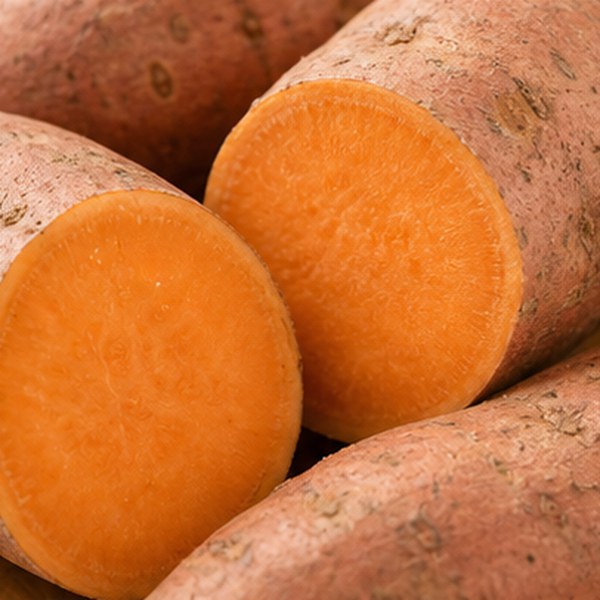
Also suitable for steaming, boiling, and soups, with generally more water and usually less carbohydrate per unit weight than sweet potato.
View details →Potato
Another starchy tuber staple suitable for steaming, boiling, baking, and stews.
View details →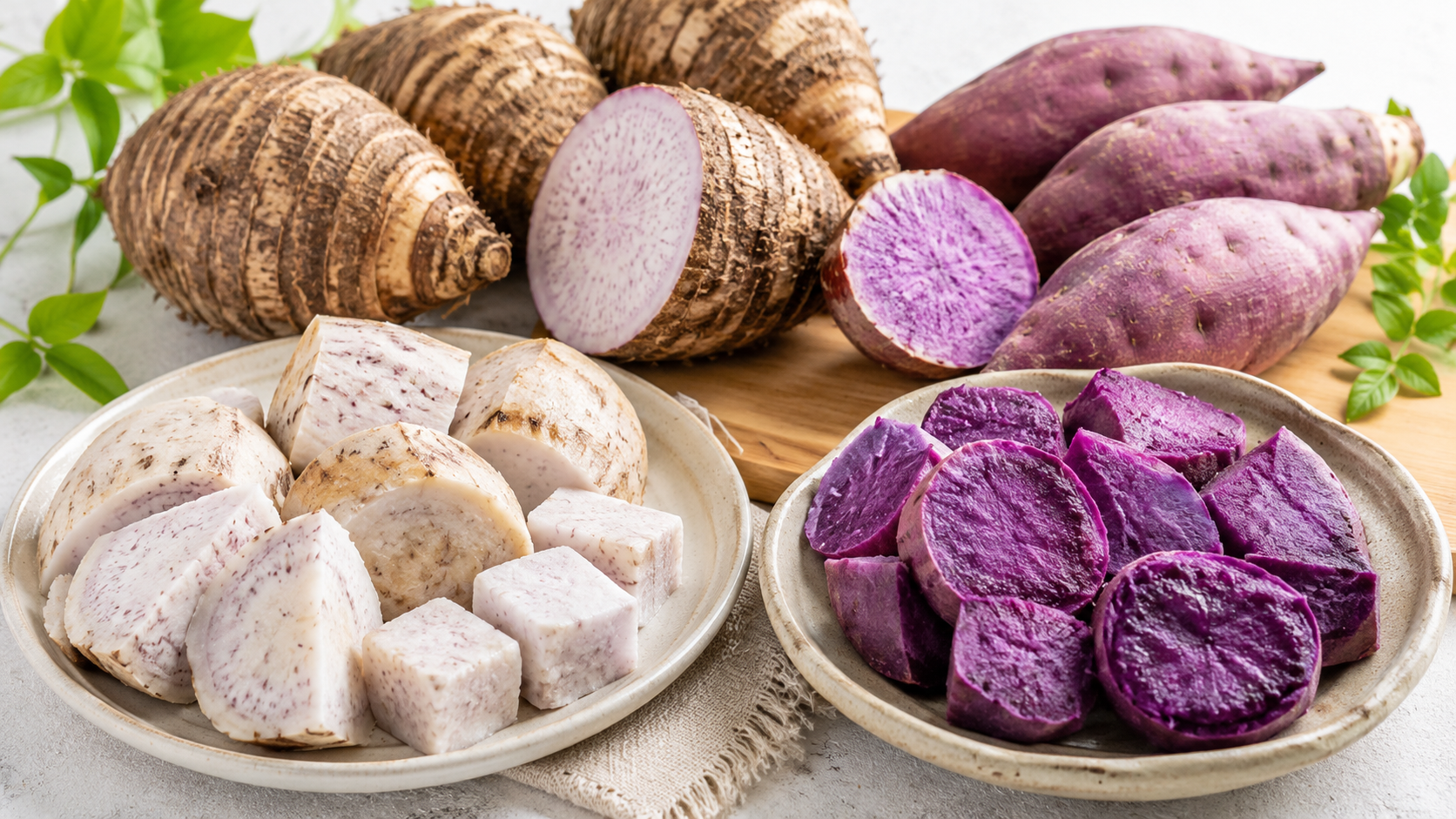
Taro
Taro is similarly starchy and works steamed, boiled, or in soups, but it must be cooked thoroughly and uses separate nutrition and GI data.
View details →Corn
A whole-staple option outside the tuber category, suitable for boiling, steaming, or adding to mixed-grain rice.
View details →Data Sources & Last Updated
Nutrition Data
Basic Information & Food Safety
Research & References
Allen, J. C., et al. (2012). Glycemic Index of Sweet Potato as Affected by Cooking Methods.
The Open Nutrition Journal, 6, 1–11. DOI / Original
Laveriano-Santos, E. P., et al. (2022). Sweet Potato Is Not Simply an Abundant Food Crop: A Comprehensive Review of Its Phytochemical Constituents, Biological Activities, and the Effects of Processing.
Antioxidants, 11(9), 1648. DOI / Original
Neela, S., & Fanta, S. W. (2019). Review on nutritional composition of orange-fleshed sweet potato and its role in management of vitamin A deficiency.
Food Science & Nutrition, 7(6), 1920–1945.
de Moura, F. F., et al. (2015). Retention of Provitamin A Carotenoids in Staple Crops Targeted for Biofortification in Africa: Cassava, Maize and Sweet Potato.
Critical Reviews in Food Science and Nutrition, 55(9), 1246–1269.
Franková, H., et al. (2022). Changes in Antioxidant Properties and Phenolics in Sweet Potatoes (Ipomoea batatas L.) Due to Heat Treatments.
Molecules, 27(6), 1884. DOI / Original
Liao, M., et al. (2019). Effect of Domestic Cooking Methods on the Anthocyanins and Antioxidant Activity of Deeply Purple-Fleshed Sweetpotato GZ9.
Heliyon, 5(4), e01515. DOI / Original