Whole Grains & Tubers · Tubers
Purple Sweet Potato
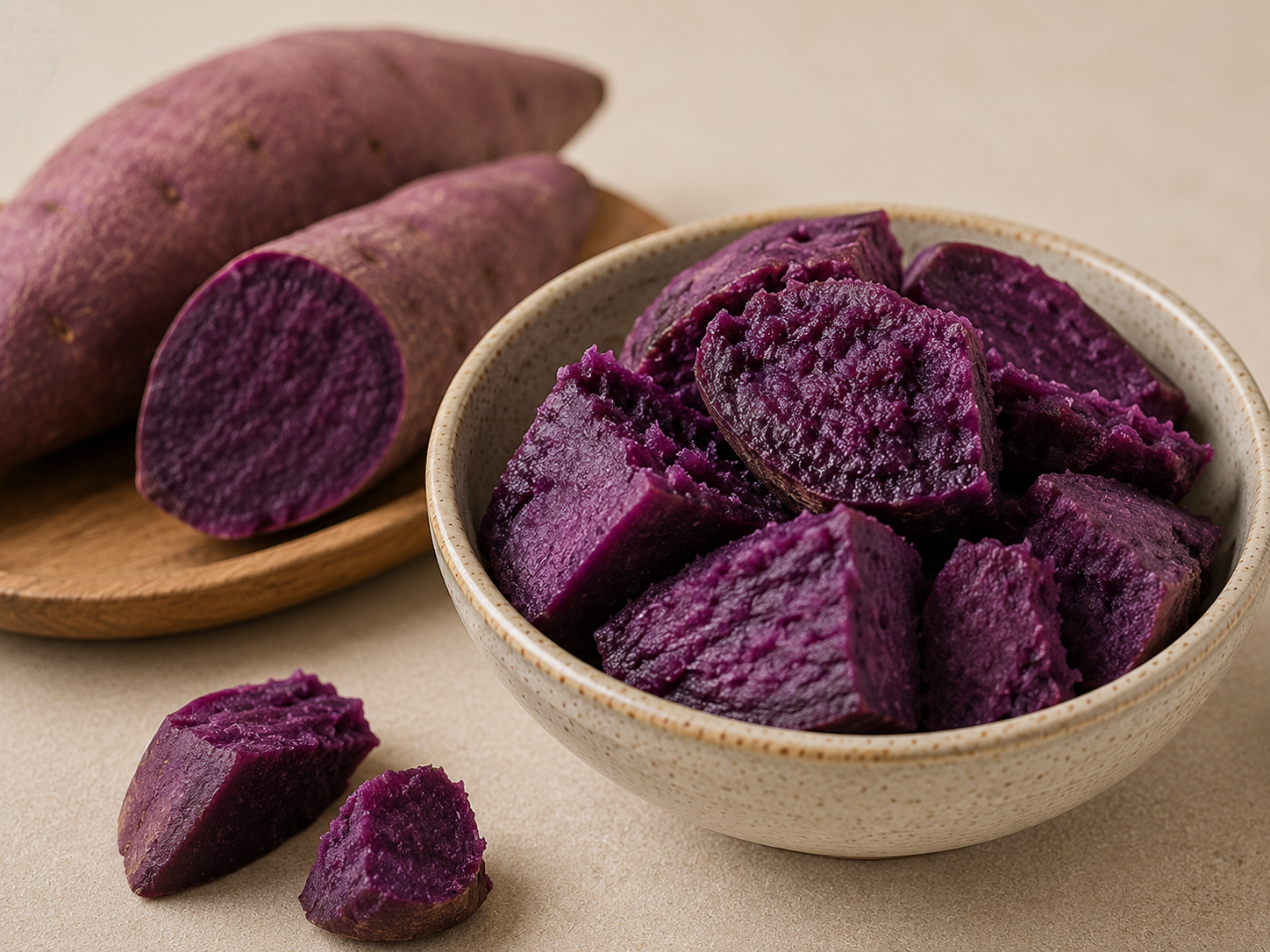
Purple sweet potato is a starchy tuber used as a staple food, with its purple color coming mainly from anthocyanins. It provides carbohydrate, dietary fiber, vitamin C, potassium, copper, and manganese, but a darker color does not mean a low GI, and its anthocyanin content does not make it an unlimited “antioxidant food.”
Food Overview
Key strengths
Purple sweet potato provides staple-food carbohydrate along with dietary fiber, vitamin C, potassium, copper, manganese, and a range of plant polyphenols.
How to Eat It
It is best steamed or boiled whole, or added to mixed-grain rice, soups, and salads, replacing part of rice, noodles, bread, or other staple foods.
What stands out
The most characteristic plant compounds in purple sweet potato are anthocyanins, commonly including cyanidin- and peonidin-derived forms. Levels vary markedly among cultivars, so exact amounts cannot be inferred from flesh color alone.
Worth noting
Purple sweet potato is not inherently a low-GI food. A small human study of one specific boiled purple-sweet-potato product reported a GI indicator value of 83.75±12.34, but that result cannot be applied directly to all cultivars or to steamed purple sweet potato.
Basic Nutrition
Showing:100 g Raw Purple Sweet Potato
View complete nutrition data
GI note:GI varies with cultivar, food structure, processing, and cooking. Raw grains usually do not have directly applicable human GI data.
Raw purple sweet potato is not a usual ready-to-eat state, and no reliable GI value matches the data scope used on this page.
Data notes:Both the raw and steamed entries refer to peeled edible portions. The data come from directly analyzed samples in the Japanese food-composition database and are not calculated from a fixed raw-to-cooked weight ratio.
“Sugars” is the sum of glucose, fructose, sucrose, and maltose rather than a separate total-sugars field provided by the database.
No reliable GI value was found that exactly matches the steamed state and cultivar scope used on this page, so GI is shown as “—” for both states.
Vitamins & Minerals
By default, show values per 100 g of raw purple sweet potato and only items providing at least 5% of the adult Daily Value at the current serving; screening uses the unrounded underlying percentage
View all vitamins and minerals
Percentages show how much the selected serving contributes to the adult Daily Value.
Key Bioactive Compounds
Anthocyanins
AnthocyaninsAnthocyanins give purple sweet potato its color, and many are acylated forms that are relatively stable.
Specific amount: —. Levels vary widely by cultivar and testing method and are concentrated mainly in the purple flesh and tissues near the skin.
Anthocyanins and their metabolites contribute to antioxidant defenses and add variety to deep-purple plant foods.
Steam, boil, or roast moderately; avoid long boiling followed by discarding deeply colored cooking liquid.
Dark color does not mean purple sweet potato detoxifies the body, prevents cancer, or directly eliminates inflammation.
Chlorogenic Acid & Dicaffeoylquinic Acids
Phenolic acidsIn addition to anthocyanins, purple sweet potato contains chlorogenic acid and dicaffeoylquinic acids, which are important non-anthocyanin polyphenols.
Specific amount: —. Values vary substantially with cultivar, growing conditions, and analytical method. Phenolic acids are found in the skin and purple flesh.
These phenolic acids, together with anthocyanins, contribute to dietary antioxidant defenses, and their metabolites may also be used by gut microbes.
Cook soon after cutting to reduce prolonged exposure to air. Use gentle heating and avoid deep-frying or cooking until clearly charred.
In-vitro antioxidant capacity cannot directly predict anti-inflammatory effects in people, and no single phenolic acid represents the full health value of purple sweet potato.
Resistant Starch & Dietary Fiber
Functional carbohydratesIts starch structure and fiber affect digestion, and cooling after cooking can form some retrograded resistant starch.
Specific amount: —. Levels vary with cultivar, piece size, cooking temperature, and cooling time.
Some resistant starch can be fermented by gut microbes, while fiber supports normal bowel movements and satiety.
Cook thoroughly. Refrigerate cooked portions promptly and reheat thoroughly; do not undercook them to preserve resistant starch.
Purple sweet potato is still a starchy food, and resistant starch or anthocyanins do not remove the need to control portions.
How Preparation Changes Purple Sweet Potato
Raw Purple Sweet Potato
Raw-purple-sweet-potato data are mainly useful for nutrition databases and pre-cooking weighing. It contains 22.7 g of starch and about 4.8 g of listed sugars in total. In everyday eating, thorough cooking is preferred.
Steamed Purple Sweet Potato
After steaming, energy and total carbohydrate change very little, but starch decreases from 22.7 g to 13.6 g and maltose increases from 0 to 9.0 g, making the taste noticeably sweeter.
Boiling
Boiling brings the sweet potato into direct contact with water, so some water-soluble nutrients and phenolic compounds may move into the cooking liquid.
Roasting
Roasting reduces water and concentrates sweetness and aroma. Prolonged high-temperature roasting can also dry or char parts of the sweet potato, so repeatedly roasting until it is clearly blackened is unnecessary.
Different Cooking Methods
A study comparing white-, orange-, and purple-fleshed sweet potatoes found that cooking method significantly changed sugars, phenolic composition, and antioxidant activity, and different methods did not preserve anthocyanins equally.
Purple Sweet-Potato Mash & Powder
Mashing very finely or grinding into powder further disrupts food structure and may also increase eating speed. Commercial purple-sweet-potato powder, buns, bread, and drinks may contain refined flour, sugar, and added fat, so the nutrition data on this page cannot be applied directly to those products.
How to Choose & Store
How to choose
- Confirm that the product is a purple-fleshed sweet potato rather than a purple potato, purple yam, or another tuber.
- Fresh-eating cultivars are often selected for sweetness, moisture, and texture, while processing cultivars may have a deeper color but less sweetness.
- Choose roots with relatively intact skin that feel firm and show no obvious mold, leaking, or large areas of soft decay.
- For dried purple sweet potato, chips, powder, or pastries, check the actual proportion of purple sweet potato, added sugar and fat, the main ingredients, and sodium content.
How to store
- Store whole uncut purple sweet potatoes in a cool, dry, ventilated, dark place. Do not seal them in a damp plastic bag, and avoid long-term storage in an excessively cold refrigerator compartment.
- Sweet potatoes may develop chilling injury below about 13°C, with hardening, spongy texture, or water-soaked changes inside.
- Wrap cut purple sweet potato and refrigerate it, then cook it promptly.
- If steamed purple sweet potato will not be eaten immediately, refrigerate it in a shallow container within two hours rather than leaving it at room temperature for a long time.
- Discard it if there is obvious mold, sour or fermented odor, extensive soft decay or leaking, abnormal internal blackening together with an off odor, or severe insect damage.
When buying purple sweet potatoes, remember three things: confirm the type, choose firm roots without mold, and check the ingredient list for processed products.
How to Include It in Everyday Meals
Whole Steamed Purple Sweet Potato
Wash the purple sweet potato and steam it whole or in large sections to reduce direct contact with water. Pair it with eggs, unsweetened yogurt, soy milk, or nuts as part of a meal.
Purple Sweet-Potato Mixed-Grain Rice
Cut purple sweet potato into chunks and cook it with white rice, brown rice, millet, or quinoa. Because the sweet potato already provides starch, reduce the amount of rice accordingly.
Purple Sweet-Potato Vegetable Soup
Purple sweet potato can be stewed with onion, carrot, tomato, mushrooms, legumes, or chicken. Do not cut it too small or cook it until completely dissolved.
Purple Sweet-Potato Grain Salad
Cool steamed purple-sweet-potato chunks and combine them with lettuce, tomato, bell pepper, chickpeas, egg, or tofu. Dress with a small amount of olive oil, vinegar, lemon juice, and herbs, and use less sweet salad dressing, mayonnaise, and fried toppings.
Purple Sweet-Potato Mash
After steaming, mash roughly and mix with unsweetened yogurt, unsweetened soy milk, or a small amount of nuts.
Moderate Roasting
Cut purple sweet potato into larger pieces and roast moderately with a small amount of plant oil and spices. Avoid slicing it very thin and using a lot of oil to roast it until crisp and charred, and do not serve it with large amounts of syrup, cheese sauce, or cream.
Who Should Take Extra Care
People managing blood sugar
Purple sweet potato is still a starchy staple: 100 g of steamed purple sweet potato contains 31.4 g of carbohydrate, or about 47.1 g in a 150 g serving.
One small study found a relatively high GI for a specific boiled variety, but that result should not be generalized to all purple sweet potatoes.
People Who Need to Limit Potassium
Steamed purple sweet potato provides 420 mg of potassium per 100 g, or about 630 mg in 150 g. People advised to limit potassium should adjust portions to lab results and the rest of the day’s diet.
People with digestive sensitivity
People who usually eat few tubers or little dietary fiber, or who are prone to bloating, can start with a smaller serving. Thorough cooking and pairing it with other foods generally make it easier to control actual intake than eating a large amount of chilled purple sweet potato or mash at once.
Infants, young children, and people with swallowing difficulties
Steam until soft, remove any hard or very fibrous parts, and cut or mash it to a texture appropriate for swallowing ability.
People Managing Body Weight
Purple sweet potato can replace part of refined staple foods, but it should not be added on top of a normal portion of rice, noodles, and bread.
Similar Food Alternatives
Regular Sweet Potato
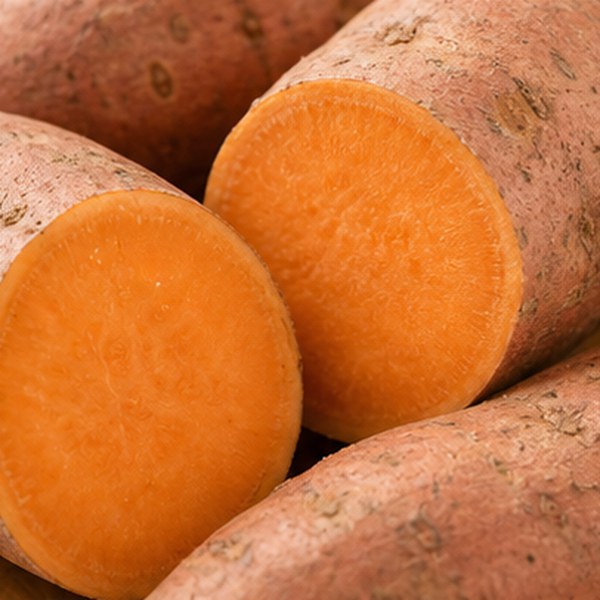
Cooking methods and staple-food substitution are most similar to purple sweet potato.
View details →Orange-Fleshed Sweet Potato
It contains more beta-carotene and is useful for increasing carotenoid intake.
View details →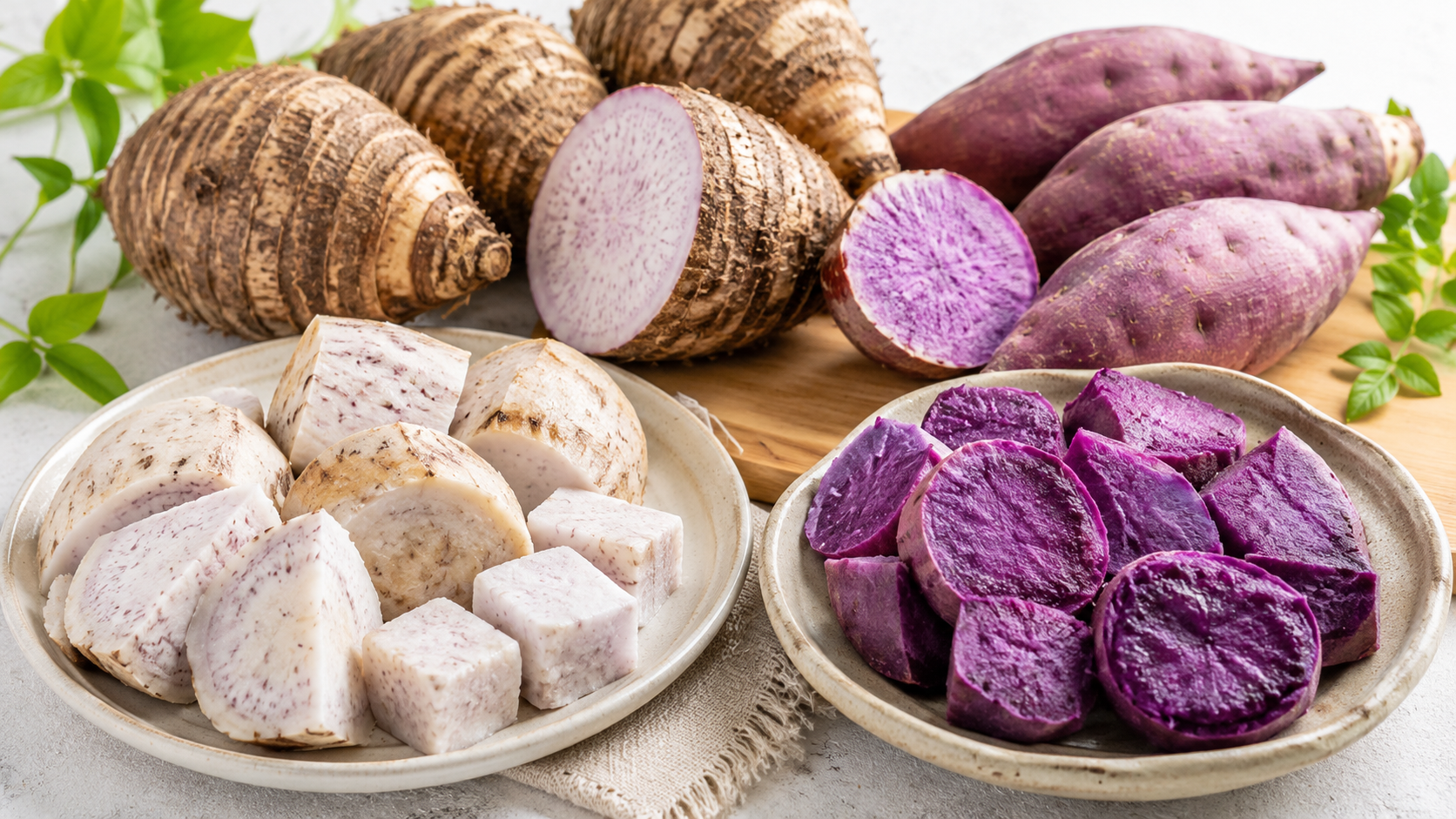
Taro
Its soft texture makes it suitable for steaming, boiling, soups, and replacing part of rice or noodles.
View details →Potato
Potatoes work well steamed, boiled, or in soups and salads, but are not equivalent to purple sweet potato in pigments or nutrients.
View details →Data Sources & Last Updated
Nutrition Data
Basic Information & Food Safety
Research & References
Suda I, et al. (2003). Physiological Functionality of Purple-Fleshed Sweet Potatoes Containing Anthocyanins and Their Utilization in Foods.
Japan Agricultural Research Quarterly, 37(3), 167–173. DOI / Original
Teow CC, et al. (2007). Antioxidant Activities, Phenolic and β-Carotene Contents of Sweet Potato Genotypes with Varying Flesh Colours.
Food Chemistry, 103(3), 829–838. DOI / Original
Guclu G, et al. (2023). Comparative Elucidation on the Phenolic Fingerprint, Sugars and Antioxidant Activity of White, Orange and Purple-Fleshed Sweet Potatoes as Affected by Different Cooking Methods.
Heliyon, 9(8), e18684. DOI / Original
Nurdjanah S, et al. (2022). Chemical Components, Antioxidant Activity, and Glycemic Response Values of Purple Sweet Potato Products.
International Journal of Food Science. DOI / Original