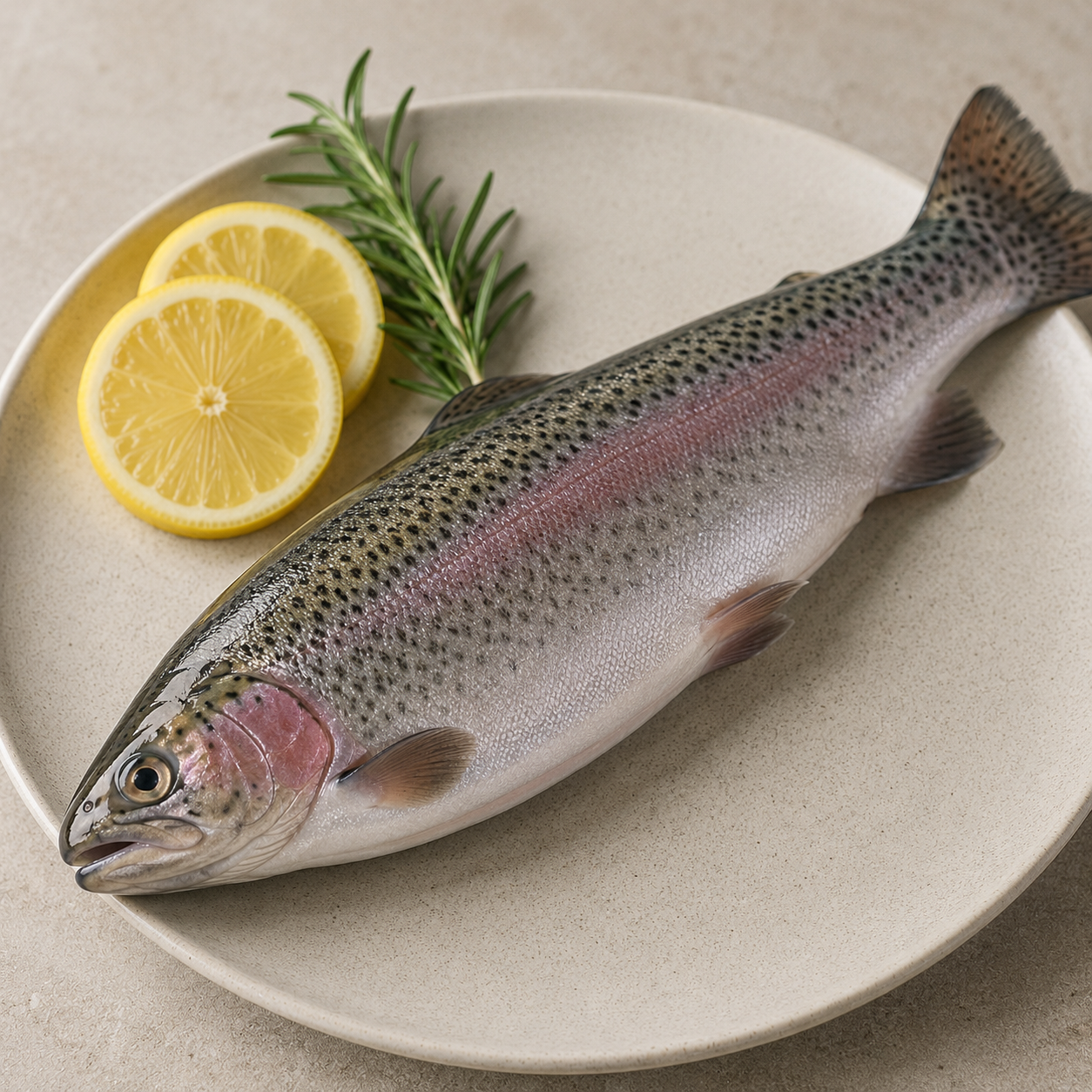
Fish & Seafood
Rainbow Trout
Rainbow trout is a salmonid freshwater fish with tender flesh that provides high-quality protein, long-chain omega-3s, vitamin D, vitamin B12, and selenium. It is generally leaner than some fatty salmon but still nutrient-dense. This page uses farmed rainbow trout edible flesh in raw and dry-heat-cooked states and does not mix data from wild trout, steelhead, smoked, cured, or canned products.
Food Overview
Key strengths
Rainbow trout provides about 20% protein along with EPA, DHA, vitamin D, vitamin B12, and selenium. Compared with processed meats such as sausage or bacon, it is a better everyday animal-protein choice.
How to eat it
Steam, bake, poach, stew, or pan-cook over medium to low heat. Pair with leafy greens, tomatoes, mushrooms, beans, brown rice, and other whole grains.
What stands out
Farmed trout composition depends on feed, fish size, and farming conditions, especially for fatty acids and astaxanthin. Redder flesh does not necessarily mean fresher fish or a higher astaxanthin content.
Worth noting
Rainbow trout is a fish allergen. Also watch for bones, refrigeration temperature, and raw-to-cooked cross-contamination. For self-caught trout, check local fish-consumption advisories first.
Basic Nutrition
Showing:100 g Raw Rainbow Trout
View complete nutrition data
GI note:GI varies with cultivar, food structure, processing, and cooking. Raw grains usually do not have directly applicable human GI data.
Rainbow trout contains almost no available carbohydrate, so GI is not applicable; the page shows “—”, not 0, low GI, or an estimate. When eaten with rice, bread, or pasta, the meal response depends on all foods, portions, and cooking methods.
Data notes:This page uses two formal food states: raw farmed rainbow trout and dry-heat-cooked farmed rainbow trout. Wild rainbow trout, steelhead, smoked trout, cured trout, and canned products should not use these values directly.
Basic nutrition uses USDA FoodData Central entries for raw farmed rainbow trout (FDC 173717) and dry-heat-cooked farmed rainbow trout (FDC 173718).
The default view is raw trout per 100 g; a common serving is 150 g edible fish, a website conversion rather than a fixed recommendation for everyone.
When switching food state, basic nutrition, fatty acids, vitamins, and minerals all switch together; only changing the label while keeping the original data would be incorrect.
GI is shown as “—”. Rainbow trout contains almost no available carbohydrate, so standard GI testing is not applicable; do not show 0, low GI, or “ultra-low.” Breaded, fried, or sweetened products should be assessed from their actual recipe.
Omega-3 and omega-6 totals are estimates calculated from the listed fatty acids in the database, not database-provided totals, so the page marks them as approximate.
Protein, fatty acids, and minerals per 100 g often appear higher after cooking mainly because water is lost; cooking does not create new nutrients.
Steelhead is the same species but has a different life history and may differ nutritionally, so its data should not be substituted here.
Vitamins & Minerals
Only vitamins and minerals providing at least 5% of the Daily Value at the current serving are shown. The default state is raw trout per 100 g; raw and dry-heat-cooked trout have different micronutrient values.
In raw trout, 14 vitamins and minerals provide at least 5% of the Daily Value per 100 g; the top six are shown by default. Vitamin D, vitamin B12, and selenium are especially notable. Raw and cooked states have different micronutrient values and should not share one set of numbers.
View all vitamins and minerals
Percentages show how much the selected serving contributes to the adult Daily Value.
Key Bioactive Compounds
EPA & DHA
Long-Chain Omega-3 Fatty AcidsEPA and DHA are mainly found in fish fat and are the most characteristic fatty acids in rainbow trout. They are long-chain omega-3s that are difficult to obtain directly from most plant foods.
Per 100 g, raw farmed rainbow trout provides about 217 mg EPA and 516 mg DHA, about 733 mg combined; dry-heat-cooked trout provides about 259 mg EPA and 616 mg DHA, about 875 mg combined. Actual levels depend on feed, farming conditions, and body fat.
EPA and DHA enter cell membranes and help form signaling molecules involved in immune, vascular, and inflammatory responses. Higher intake can shift related lipid signaling toward a less inflammatory profile.
Prefer steaming, baking, poaching, or brief medium-heat pan-cooking. Trout already contains fat, so large amounts of added oil are unnecessary; avoid prolonged frying, repeated reheating, and heavy charring.
Eating trout increases EPA and DHA intake but does not eliminate chronic inflammation and is not equivalent to high-dose fish-oil supplements or medical treatment.
Astaxanthin
CarotenoidAstaxanthin is an orange-red carotenoid that contributes to the pink or orange-red color of some rainbow trout flesh. Farmed trout mainly accumulates it from feed.
There is no single astaxanthin value for all market trout. One feeding study measured about 3.70 mg/kg in flesh, roughly 0.37 mg/100 g; other trials ranged from under 1 mg/kg to about 12 mg/kg. Levels depend on feed source, dose, feeding duration, and fish condition.
Astaxanthin has antioxidant activity, and trout can provide a small dietary amount, but the main nutritional value of trout comes from the whole fish rather than astaxanthin alone.
You do not need to add a large amount of oil for astaxanthin absorption. Gentle cooking and avoiding heavy charring help limit oxidation of fish fat and pigments.
Trout flesh contains far less astaxanthin than doses used in many supplement studies. Flesh color does not accurately indicate content, freshness, or antioxidant effect, and eating trout should not be promoted as an anti-inflammatory or anti-aging treatment.
Selenium
Antioxidant-related mineralSelenium is an essential trace mineral and a component of selenoproteins and glutathione peroxidases.
Raw trout provides about 23.6 μg selenium per 100 g, around 43% DV; dry-heat-cooked trout provides about 28.1 μg, around 51% DV. The higher per-100 g value after cooking mainly reflects water loss.
Selenoproteins support thyroid-hormone metabolism, DNA synthesis, and defense against oxidative damage, including antioxidant enzymes such as glutathione peroxidase.
A normal serving already provides substantial selenium. Steaming, baking, or stewing is sufficient; there is no need to eat large amounts or add high-dose selenium supplements the same day.
Selenium is part of the antioxidant system, but more is not always better. In selenium-sufficient people, high-dose supplementation does not necessarily increase antioxidant-enzyme activity further.
How Preparation Changes Rainbow Trout
Raw Rainbow Trout
Per 100 g, raw trout provides about 141 kcal, 19.9 g protein, and 733 mg EPA+DHA. This is a nutrition-data state, not a recommendation to eat trout raw, because raw fish carries microbial and parasite risks.
Dry-Heat-Cooked Rainbow Trout
Per 100 g, dry-heat-cooked trout provides about 168 kcal, 23.8 g protein, and 875 mg EPA+DHA. The higher nutrient density mainly reflects water loss; avoid overcooking until very dry.
Different Cooking Methods
Research in farmed trout suggests baking, broiling, and microwaving have relatively small effects on overall polyunsaturated-fat composition. Pan-frying with some plant oils can change the fatty-acid profile as oil enters or fish fat is lost, so lower-oil, shorter cooking is preferable.
Smoked, Cured & Seasoned Products
Smoked, salt-cured, and preseasoned trout are separate food states with potentially much higher sodium and different storage requirements. Do not use raw or dry-heat-cooked values for them.
How to Choose & Store
How to choose
- Whole fish: choose clear, glossy eyes, springy flesh, normal gill color, and no strong sour, ammonia-like, or rotten odor.
- Fillets: flesh should be firm and moist, without dry, darkened, or discolored edges. Pink intensity can be influenced by feed and processing and is not a freshness test.
- Frozen trout: packaging should be intact and fish fully frozen. Avoid damaged packs, excessive ice crystals, or signs of repeated thawing.
- Check the label for product name, farmed/caught status, production date, storage temperature, and ingredients. Seasoned, smoked, or cured products also need attention to sodium, sugar, and sauces.
How to store
- Refrigerate promptly below 4°C and use within 1–2 days. Store in a sealed container away from ready-to-eat foods.
- If not using soon, freeze promptly. For best quality, fatty fish is generally best used within about 2–3 months in the freezer.
- Thaw in the refrigerator. For faster thawing, use a sealed package in cold water; cook immediately after microwave thawing.
- Refrigerate cooked trout promptly and generally eat within 3–4 days. Do not keep it if left at room temperature for more than 2 hours, or more than 1 hour in hot conditions.
Remember three things: mild smell, firm flesh, and an intact cold chain.
How to Use in Everyday Meals
Steamed Rainbow Trout
Steam with ginger, scallion, or herbs and season after cooking with a little lemon, vinegar, or lower-sodium soy sauce. Pair with broccoli, asparagus, mushrooms, and mixed grains; avoid a large amount of salty steaming sauce.
Lemon-Herb Baked Rainbow Trout
Brush lightly with olive oil, add black pepper, dill, rosemary, or garlic, and bake through. Pair with peppers, tomato, onion, and small potatoes; avoid heavily charred edges.
Tomato-Vegetable Stewed Rainbow Trout
Simmer tomato, onion, carrot, and mushrooms first, then add trout briefly until cooked. Use the broth, but skip high-sodium stock cubes, cream, and large amounts of sugar.
Medium-Heat Pan-Seared Rainbow Trout
Use a little heat-stable plant oil over medium to low heat, set the skin, then turn once. Pair with leafy greens, chickpeas, or lentils and keep butter and heavy sauces modest.
Rainbow Trout Grain & Vegetable Bowl
Flake cooked trout after removing bones and pair with brown rice, quinoa, beans, red cabbage, tomato, and avocado. Season with lemon and a little olive oil for a balanced meal.
Rainbow Trout Vegetable Soup
Simmer trout or bones briefly with tofu, seaweed, mushrooms, and vegetables. Remove small bones carefully and keep salt and high-sodium seasonings modest.
Cooking Temperature
Cook to an internal temperature of about 63°C, or until the flesh is opaque and flakes easily with a fork.
Who Should Take Extra Care
People with Fish Allergy
Fish is a major food allergen. People with known fish allergy should avoid rainbow trout and watch for cross-contact from utensils, cooking oil, and work surfaces.
Pregnancy, Breastfeeding & Children
FDA and EPA list freshwater trout as a low-mercury “Best Choice.” During pregnancy and breastfeeding, fully cooked trout can be part of a varied fish intake rather than the only fish eaten long term.
Older Adults, Children & People with Weakened Immunity
Avoid raw, undercooked, and unreheated refrigerated smoked trout. Freezing can kill some parasites but does not eliminate all pathogens, so thorough cooking remains safer.
People Eating Self-Caught Rainbow Trout
Trout from lakes and rivers may be affected by local mercury or other contaminants. Check local advisories; if none exist, FDA advises eating only one serving and no other self-caught fish that week.
Infants, young children, and people with swallowing difficulties
Rainbow trout can contain small pin bones. After cooking, remove bones carefully and cut or mash into an appropriate texture rather than removing only the obvious large bones.
Similar Food Alternatives
Salmon
Salmon is the closest alternative in texture and cooking and also provides protein, EPA, DHA, and vitamin D, usually with more total fat.
Atlantic Mackerel
Rich in EPA and DHA and suitable for baking or pan-cooking, with a stronger flavor. Choose Atlantic mackerel and do not confuse it with high-mercury king mackerel.
Sardines
A small oily fish that works well canned or baked. Bone-in canned sardines can also provide substantial calcium, but check sodium.
Tilapia
Mild, usually lower-cost fish that can fill the same cooking role but generally contains much less fat and EPA+DHA, so it is not nutritionally equivalent.
Low-Mercury Choices
FDA and EPA list freshwater trout, salmon, sardines, Atlantic mackerel, and tilapia among low-mercury “Best Choices,” but their fatty-acid and vitamin profiles still differ.