Legumes & Soy Foods · Soy Foods
Tofu
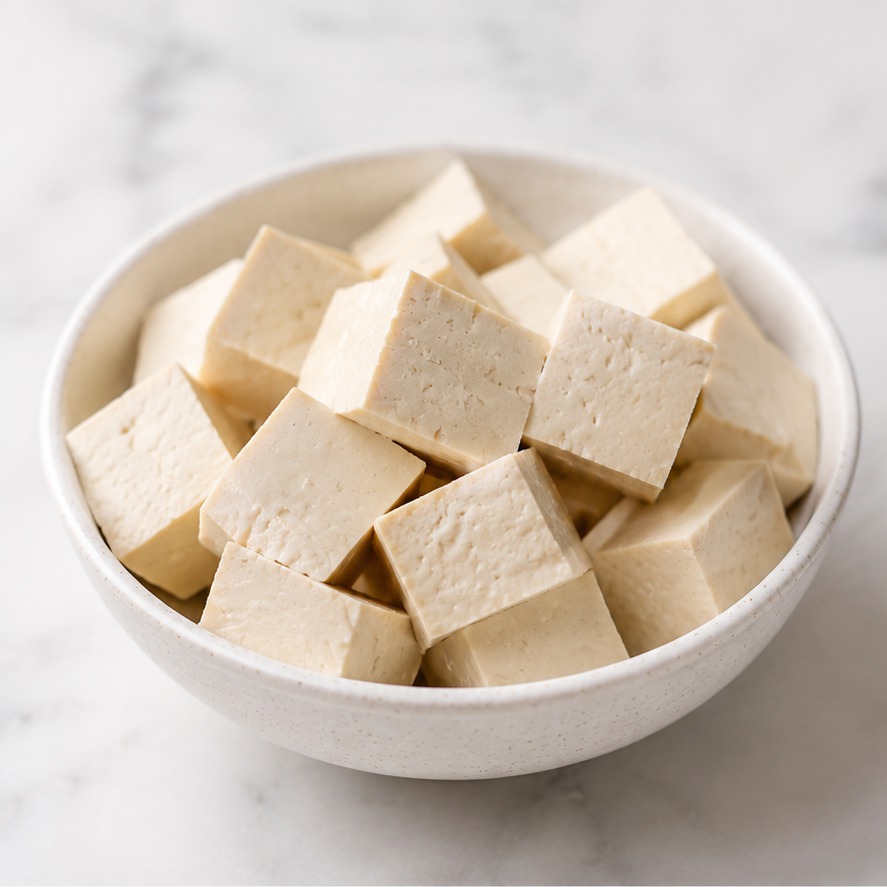
Tofu is a low-carbohydrate soy food that provides plant protein and mostly unsaturated fat, along with soy isoflavones, saponins, and phytosterols. Calcium varies greatly with the coagulant and recipe, so check both ingredients and the nutrition label.
Food Overview
Key strengths
Tofu provides soy protein with relatively little carbohydrate, and most of its fat is unsaturated. Per 100 g, regular calcium-set tofu has about 8.1 g protein, firm tofu about 9.1 g, and soft tofu about 6.6 g.
How to Eat It
Steam, simmer, braise, serve cold, pan-sear with little oil, or stir-fry briefly with vegetables. Because tofu is not high in fiber, pair it with whole grains, mushrooms, vegetables, and other legumes.
What stands out
Calcium is not fixed across tofu. The three reference products on this page provide about 111–350 mg calcium per 100 g. Very firm calcium-set tofu can be higher, but package labels may be much lower than database extremes.
Worth noting
Tofu is a soy food and should be avoided by people with soy allergy. Keep opened tofu refrigerated and discard it if it smells sour, becomes slimy, discolors, grows mold, or the package swells.
Basic Nutrition
Showing:100 g Regular Tofu (Calcium Sulfate Set)
View complete nutrition data
GI note:GI varies with cultivar, food structure, processing, and cooking. Raw grains usually do not have directly applicable human GI data.
Tofu typically contains only about 1.8–2.9 g total carbohydrate per 100 g, too little for a standard GI test. The University of Sydney lists tofu as “GI not relevant,” not GI 0.
Data notes:Tofu is not divided into raw and cooked states. All three entries are finished tofu made after heating soy milk, filtering, and coagulation; they simply have not been fried, baked, or seasoned again.
The three states are standardized USDA entries and do not map perfectly to every Chinese-style soft, firm, northern, southern, or old tofu product.
No reliable starch value is available, so starch is shown as “—” rather than estimated from total carbohydrate.
Vitamins & Minerals
By default, values are shown per 100 g of regular calcium-set tofu. Only nutrients providing at least 5% of the FDA Daily Value for adults and children age 4+ at the current serving are shown, with the top 6 displayed first.
This reference tofu uses calcium sulfate, so its database calcium value is relatively high. Do not apply 350 mg to all glucono-delta-lactone, nigari, or local unpackaged tofu.
View all vitamins and minerals
Percentages show how much the selected serving contributes to the adult Daily Value.
Key Bioactive Compounds
Soy Isoflavones
IsoflavonesSoy isoflavones are characteristic compounds in tofu, mainly genistein, daidzein, glycitein, and their glycosides.
A review reported about 13.10–83.20 mg total isoflavones per 100 g of tofu; soy variety, concentration, coagulation, pressing, and storage all affect the result.
Whole soy foods can fit a balanced diet; human research generally finds neutral or favorable associations for cardiovascular and some cancer outcomes.
Use tofu as a normal protein food with vegetables and whole grains; steaming, simmering, braising, or short low-oil cooking work well.
Tofu isoflavones are not human estrogen and are not equivalent to high-dose isoflavone supplements.
Soy Saponins
Triterpenoid saponinsSoy saponins are natural soybean compounds, some of which remain in tofu solids.
Fresh tofu has no universal wet-weight value. Dry-matter studies report wide ranges, so those numbers should not be presented as fresh-tofu amounts.
Soy saponins show antioxidant and lipid-related effects in laboratory studies, but normal food-level effects in people remain uncertain.
Normal cooking is enough; tofu has already been heated and coagulated, so prolonged boiling to remove saponins is unnecessary.
Saponin extracts are not equivalent to a serving of tofu, and higher saponin content does not automatically mean better nutrition.
Plant sterols
Plant sterolsTofu contains phytosterols such as beta-sitosterol, campesterol, and stigmasterol.
Specific amount: —. One 2025 Korean analysis found about 21.84 mg total phytosterols per 100 g in a specific tofu, but that value is not universal.
Phytosterols can reduce cholesterol absorption in the gut, but tofu contributes only part of total dietary intake.
Pair tofu with nuts, seeds, whole grains, and vegetables; deep-frying is unnecessary.
Ordinary tofu is not equivalent to gram-level phytosterol-fortified foods and does not replace lipid-lowering medication.
How Preparation Changes Tofu
Regular Tofu
Regular calcium-set tofu contains about 85% water and has a texture between soft and firm tofu. Its high reference calcium value mainly reflects the calcium-sulfate coagulant.
Soft Tofu
Soft tofu retains more water and is suitable for steaming, soups, cold dishes, and soft tofu custards. Lower nutrient density per 100 g mainly reflects higher water content.
Firm Tofu
Firm tofu is pressed more and holds its shape better for pan-searing, baking, braising, and stir-frying. It often provides more protein per 100 g, depending on brand and water content.
Coagulant Differences
Common coagulants include calcium sulfate, magnesium chloride, magnesium sulfate, glucono-delta-lactone, or blends. Calcium sulfate can raise calcium; magnesium salts may increase magnesium. Texture alone does not reveal mineral content.
Freezing
Freezing creates ice crystals that make tofu more porous and chewy after thawing, so it absorbs broth well. Frozen tofu is a distinct processed state and should not be treated as identical to fresh soft tofu.
Pan-Frying, Deep-Frying & Baking
Light pan-searing or baking can improve texture, but added oil increases energy. Deep-fried tofu, tofu puffs, and highly processed tofu products usually contain much more fat and energy than plain tofu.
Fermented Tofu
Fermented tofu, stinky tofu, and mold-fermented tofu have different isoflavone forms, flavors, textures, and often much more sodium, so they need separate data.
How to Choose & Store
How to choose
- Confirm it is soy tofu, not egg tofu, fish tofu, thousand-layer tofu, almond tofu, or a starch-heavy imitation product.
- Simple tofu usually contains water, soybeans, and one or more coagulants.
- If calcium matters, look for calcium sulfate or food-grade gypsum, but use the nutrition label as the final guide.
- At the same weight, tofu with less water and more soy solids usually contains more protein.
- Plain tofu is often low in sodium, while seasoned, braised, fermented, or dried tofu can be much saltier.
- Avoid swollen or damaged packages, unusually cloudy liquid, slime, mold, or products that were not kept at the required temperature.
How to store
- Keep refrigerated tofu chilled according to the package and use by the date shown; shelf-stable aseptic packs can remain unopened as labeled.
- After opening, place leftovers in a clean sealed container, cover fully with clean cold water, refrigerate, change the water daily, and ideally use within 5 days.
- Some products should be used sooner after opening; follow the package first.
- Do not leave refrigerated tofu out for more than 2 hours, or more than 1 hour when the temperature is above about 32°C.
- Discard tofu with sour or fermented odors, slime, swelling, mold, unusual spots, or heavily foaming soaking liquid.
When buying tofu, look for simple ingredients, a clearly listed coagulant, and nutrition-label values for protein, calcium, and sodium.
Easy Ways to Eat Tofu
1. Tofu Vegetable Soup
Add tofu cubes to soups with tomatoes, mushrooms, seaweed, cabbage, spinach, or winter melon. Add it near the end and use less stock concentrate, hot-pot base, and salt.
2. Steamed Tofu
Steam soft or regular tofu with mushrooms, shrimp, egg, scallions, or peppers. Season lightly with soy sauce, vinegar, or sesame oil instead of pouring on lots of hot oil or salty fermented sauce.
3. Tofu Vegetable Stew
Firm tofu works well with tomatoes, eggplant, pumpkin, peppers, mushrooms, and dark leafy greens. Cook the vegetables first, then add tofu briefly so it absorbs flavor without breaking apart.
4. Lightly Pan-Seared Tofu
Drain firm tofu, slice it, and sear over medium-low heat with a little plant oil until lightly golden. Avoid heavy starch coatings, repeated oil absorption, or deep browning.
5. Cold Tofu Salad
Use tofu labeled ready-to-eat, drain it, and pair with cucumber, tomato, red cabbage, cilantro, or seaweed. Season with vinegar, garlic, a little soy sauce, and sesame.
6. Tofu Whole-Grain Bowl
Pair tofu with brown rice, quinoa, barley, or buckwheat, plus leafy greens, peppers, mushrooms, and a small amount of nuts. This gives a more balanced meal than a large plate of tofu alone.
Who Should Take Extra Care
People with Soy Allergy
Tofu contains soy protein and should be avoided by people with soy allergy. Reactions can include rash, oral symptoms, nasal symptoms, abdominal pain, vomiting, wheezing, throat swelling, or severe systemic allergy.
People Taking Levothyroxine
People with hypothyroidism do not need to avoid tofu completely, but soy can reduce levothyroxine absorption. Follow medication instructions consistently; some guidance suggests separating soy foods and levothyroxine by about 4 hours and rechecking thyroid function after major intake changes.
People with impaired kidney function
Tofu provides protein, phosphorus, potassium, and magnesium. People who need to restrict protein, phosphorus, or potassium should choose portions based on kidney function and laboratory results.
People Limiting Sodium
Plain tofu is often low in sodium, but fermented, dried, braised, or restaurant-prepared tofu can be much saltier. Check the actual label and seasoning.
People with digestive sensitivity
Tofu removes some okara, so fiber and some oligosaccharides are lower than in whole soybeans, but large portions can still cause bloating. Start with about 100–150 g and adjust to tolerance.
Infants, young children, and people with swallowing difficulties
Soft tofu can be mashed and used as one protein food for infants and young children. Introduce small amounts and watch for soy allergy; avoid salty fermented or deep-fried tofu.
People Concerned About Soy Isoflavones
Current evidence supports normal soy foods as part of a balanced diet. The American Cancer Society considers soy foods generally safe, including for breast-cancer survivors; this does not mean high-dose isoflavone supplements should be used without guidance.
Similar Food Alternatives
Edamame
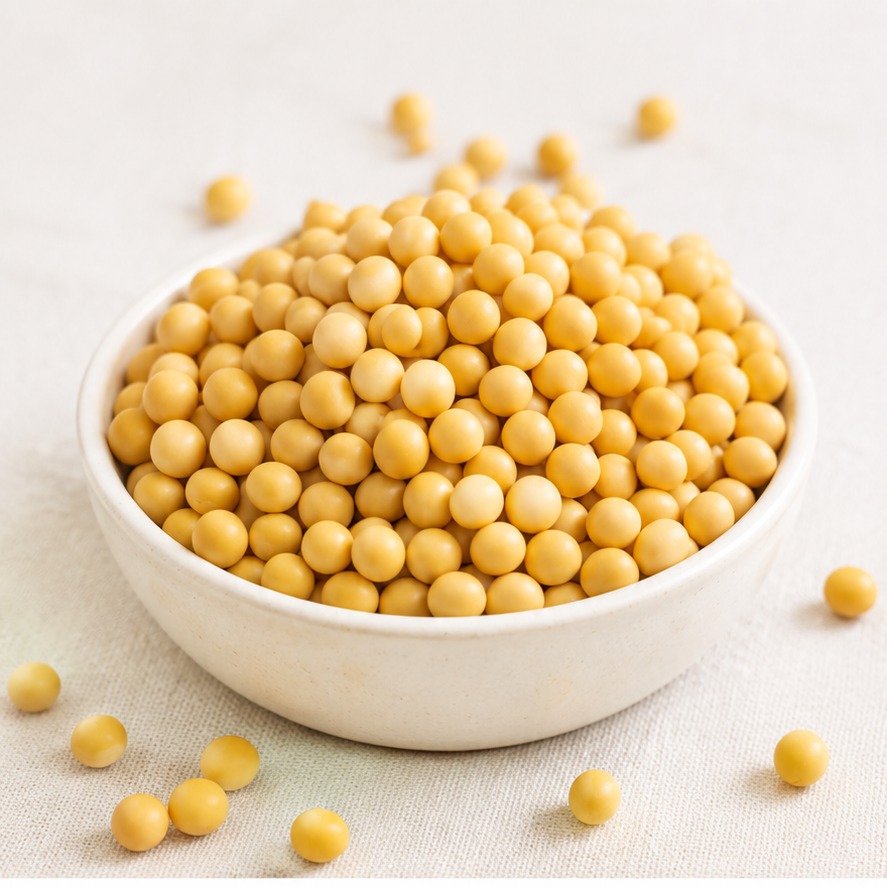
Edamame is immature soybean and provides protein, fiber, folate, and isoflavones. It retains the whole-bean structure and usually contains more fiber than tofu.
View details →
Unsweetened Soy Milk
Also made from soy and useful with breakfast, oats, or drinks. Soy milk is more dilute and usually lower in protein per 100 g than firm tofu; choose calcium-fortified products when calcium matters.
View details →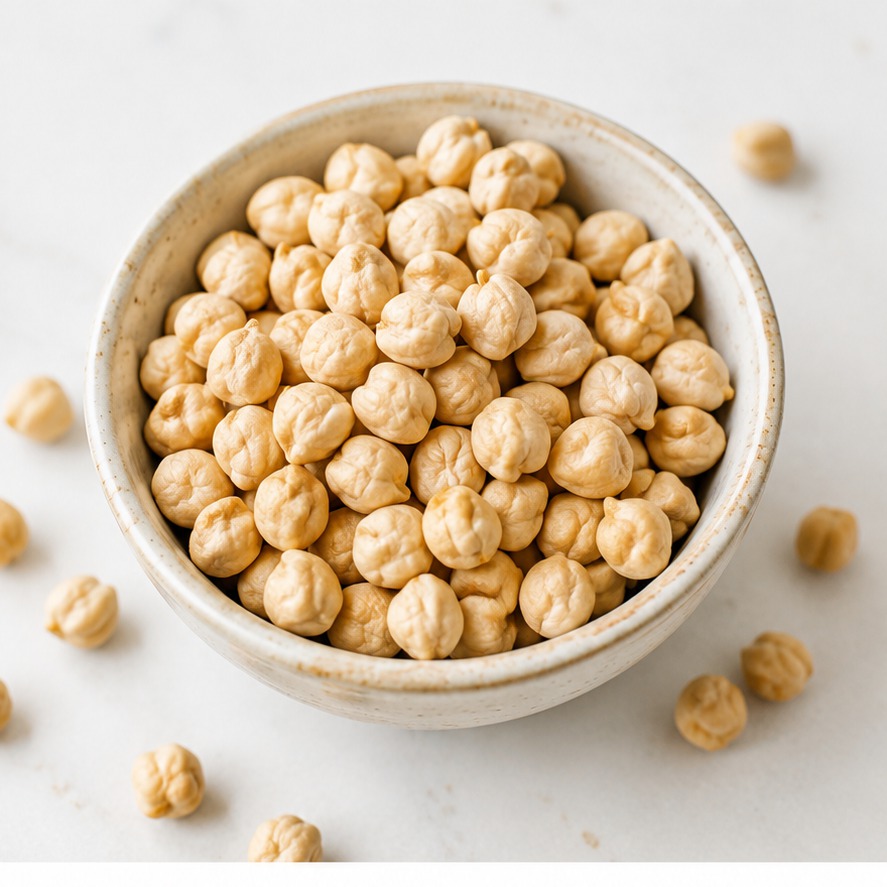
Chickpeas
Works well in salads, stews, and plant-protein meals. Chickpeas provide more fiber and carbohydrate and have a different phytochemical profile from soy.
View details →
Eggs
Eggs can replace some of tofu’s protein role in soups, steamed dishes, or stir-fries, but contain animal nutrients and no soy isoflavones.
View details →Data Sources & Last Updated
Nutrition Data
Basic Information & Food Safety
Research & References
Bhagwat S., et al. (). USDA Database for the Isoflavone Content of Selected Foods.
USDA Agricultural Research Service. DOI / Original
Messina M. (2025). Perspective: Isoflavones—Intriguing Molecules but Much Remains to Be Learned.
Advances in Nutrition. DOI / Original
Kamo S., et al. (2014). The content of soyasaponin and soyasapogenol in soy foods and their estimated intake in the Japanese.
Food Science and Nutrition. DOI / Original
Atudorei D., et al. (2023). Development of Extraction Method for Determination of Saponins in Soybean-Based Yoghurt Alternatives.
Foods. DOI / Original
Hwang J., et al. (2025). Phytosterol Content and Contribution of Individual Phytosterols in Commonly Consumed Plant-Based Foods in Korea.
Journal of the Korean Society of Food Science and Nutrition. DOI / Original
American Cancer Society (). Soy and Cancer Risk: Our Expert's Advice.
American Cancer Society. DOI / Original