Spices and herbs
Green Cardamom
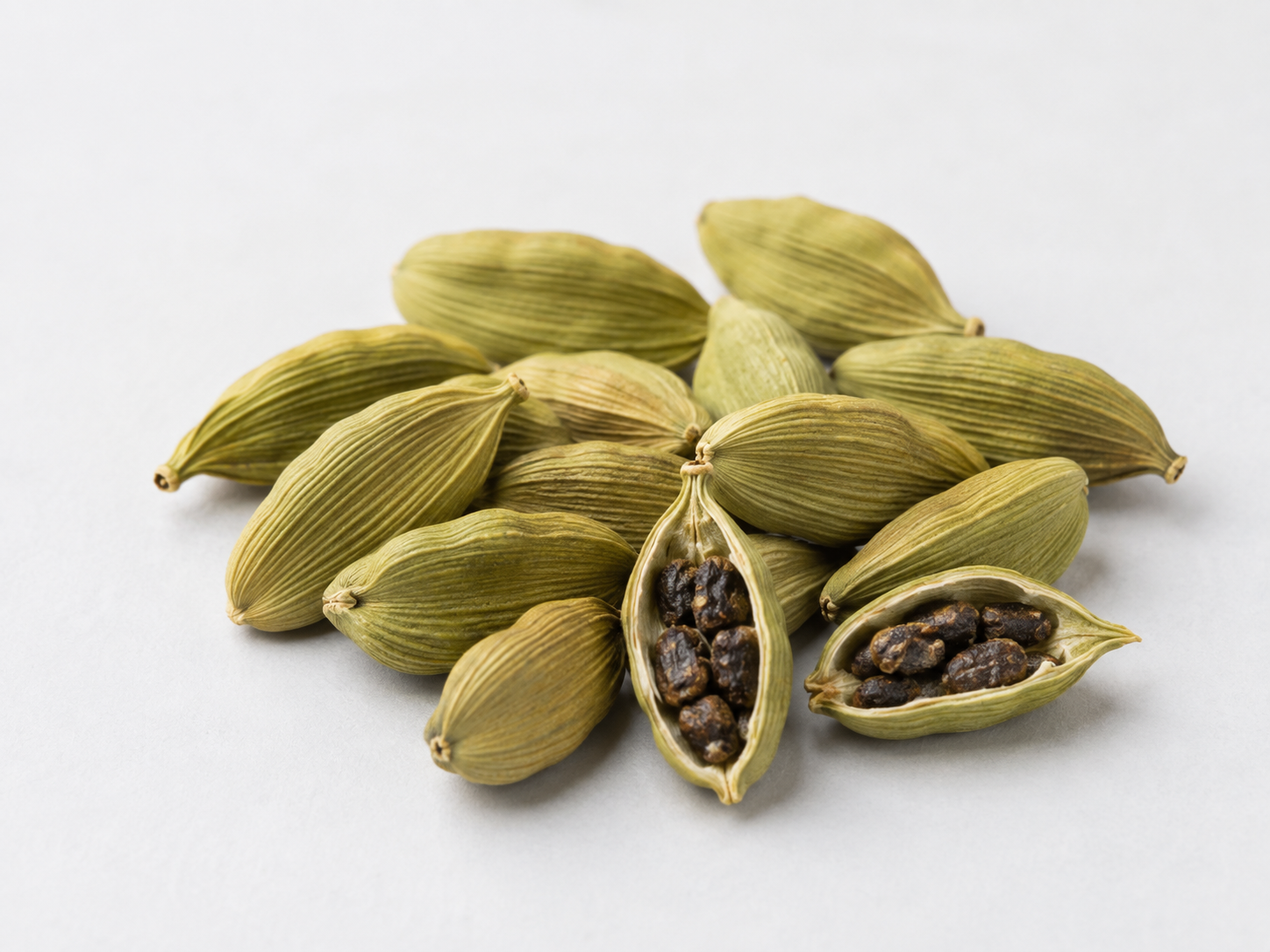
Green cardamom (Elettaria cardamomum (L.) Maton) is a ginger-family spice native to southwestern India. The aromatic seeds inside the dried pods are the main edible part, while whole pods are also used in rice dishes, curries, and hot drinks. Its floral, citrus, eucalyptus-like, warm aroma comes largely from alpha-terpinyl acetate, 1,8-cineole, and other monoterpenes. In everyday cooking, its main value is flavor: a small amount can help reduce reliance on sugar, cream, salt, and heavy sauces. This page covers Elettaria cardamomum only, not black or white cardamom.
Food Overview
Key strengths
A small amount of cardamom adds strong floral, citrus, and warm-spice notes to coffee, tea, oats, rice dishes, legumes, curries, and lower-sugar baking. Its signature aroma comes mainly from alpha-terpinyl acetate, 1,8-cineole, and other monoterpenes.
How to use it
Lightly crack whole pods for rice, soups, curries, or hot drinks, then remove the pods before eating. Freshly grind the seeds for coffee, oats, yogurt, or baking. Cardamom is potent, so start with a small amount.
What stands out
Check that the product is clearly labeled Elettaria cardamomum. Black cardamom is usually Amomum subulatum and is smokier and more camphor-like; white cardamom often refers to other plants such as Wurfbainia vera. Their nutrition and bioactive data are not interchangeable with green cardamom.
Worth noting
Human trials and meta-analyses suggest cardamom supplementation may reduce some inflammatory markers, but the evidence is limited. Participants have mainly had overweight, impaired glucose metabolism, or other metabolic conditions, and many trials used about 3 g/day for weeks to months. These findings do not show that small culinary amounts have the same effect in healthy people.
Basic Nutrition
Showing:100 g Ground cardamom
View complete nutrition data
GI note:GI varies with cultivar, food structure, processing, and cooking. Raw grains usually do not have directly applicable human GI data.
Reliable GI data for cardamom are lacking. Although cardamom contains carbohydrate, a typical serving is only about 2 g and provides little available carbohydrate. GI should not be estimated from carbohydrate, fiber, or sugar content, and should not be shown as 0.
Data notes:This page uses one formal nutrition state: ground cardamom. Whole pods, shelled seeds, infusions, essential oil, extracts, capsules, sweetened cardamom drinks, and curry blends are not separate nutrition states.
Basic nutrition uses the USDA generic entry “Spices, cardamom” (FDC 170919). It does not specify variety, origin, or how much husk was removed, so it is a practical reference for ground cardamom, not a fixed value for every commercial green cardamom.
A common serving is about 1 teaspoon of ground cardamom, or 2 g. The 100 g values are for standardized comparison only and are far above a normal culinary amount.
Per 100 g, fiber and several minerals look high, but a 1-teaspoon serving provides only a small fraction and does not replace whole grains, vegetables, legumes, or nuts.
GI is shown as “—” because reliable GI data for cardamom are lacking and a typical seasoning portion contains very little available carbohydrate. GI is not estimated from carbohydrate, fiber, or sugar content, and “no reliable data” is not the same as a tested GI of 0.
The database does not provide sugar or starch values, so both are shown as “—” rather than estimated by subtraction.
The database lists unspecified 18:2 and 18:3 fatty acids but does not explicitly identify them as omega-6 and omega-3 totals, so this page shows “—” rather than converting them.
This page covers Elettaria cardamomum (green cardamom). Black cardamom, white cardamom, tsaoko, amomum fruits, and nutmeg are different plants and should not share the same data.
Vitamins & Minerals
Only vitamins and minerals providing at least 5% of the Daily Value at the selected amount are shown. At 100 g, several qualify; at a common 1-teaspoon (2 g) serving, only manganese reaches 5% or more.
At 100 g, 13 vitamins and minerals reach at least 5% of the Daily Value; the page shows the first six by default. At a common serving of about 1 teaspoon (2 g), only manganese reaches 5% or more. The 100 g view is for comparison, not a recommended amount.
View all vitamins and minerals
Percentages show how much the selected serving contributes to the adult Daily Value.
Key Bioactive Compounds
Alpha-terpinyl acetate
Oxygenated monoterpene esterAlpha-terpinyl acetate is a signature aroma compound behind green cardamom’s sweet, floral, warm-spice notes.
Amount: —. In cardamom essential oil, it is often about 30%–42% of chromatographic area; some specific seed or husk oils measured about 51%–57%. These are percentages within the essential oil, not of the whole pod or seed by weight.
Experimental studies suggest antioxidant, inflammation-modulating, and antimicrobial activity, but human evidence for this single compound is limited.
Lightly crack whole pods or add freshly ground seed near the end of cooking, then store the spice sealed and away from light.
Human trials use whole cardamom powder or supplements, not isolated alpha-terpinyl acetate; it should not be presented as a treatment for chronic inflammation.
1,8-Cineole
Oxygenated monoterpene1,8-Cineole, or eucalyptol, gives cardamom part of its cool, eucalyptus-like aroma.
Amount: —. International quality references report roughly 16%–35% of cardamom essential-oil chromatographic area. Specific studies found about 15% in seed oil and 24% in husk oil. These percentages cannot be converted directly into grams per 100 g of spice.
It shows antioxidant, inflammation-modulating, and antimicrobial activity experimentally, but its contribution to human effects from cardamom is uncertain.
For hot drinks or stews, lightly crack whole pods or add a little freshly ground seed later in cooking.
Essential-oil or isolated-compound findings do not equal effects from culinary amounts, and cardamom does not replace medical treatment.
Phenolic acids
PolyphenolsCardamom seeds contain phenolic acids such as syringic, protocatechuic, caffeic, and ferulic acids.
One specific seed sample contained about 36.43 mg/100 g syringic acid, 29.69 mg protocatechuic acid, 26.23 mg caffeic acid, 14.60 mg 5-O-caffeoylquinic acid, 6.68 mg ferulic acid, and 4.28 mg vanillic acid. These values do not represent every product or whole pods.
Phenolic acids have antioxidant activity. Cardamom trials have reported some changes in oxidative-stress and inflammatory markers, but results are not fully consistent.
Freshly grind the seeds into oats, yogurt, legumes, whole grains, or lower-sugar baking rather than using large amounts.
Trials often used about 3 g/day for weeks; occasional small culinary amounts should not be claimed to lower inflammation, lipids, or glucose.
How Preparation Changes Cardamom
Whole cardamom pods
Whole pods protect the seeds and suit rice, curries, soups, and hot drinks. Lightly crack them to release aroma and remove the tough pod before eating. Whole pods usually retain aroma better than preground powder.
Cardamom seeds
Open the pod to remove the dark aromatic seeds. They can be freshly ground or cooked with rice, curries, or drinks. ISO specifications treat whole pods and seeds as different commercial forms.
Ground cardamom
Grinding releases aroma quickly but also speeds loss from air, light, and heat. Ground cardamom is convenient for coffee, oats, yogurt, and baking; buy small amounts and store tightly sealed. Sections 02 and 03 use it as the default form.
Gentle heating
Heat changes cardamom volatiles, but laboratory extraction does not directly model home cooking. Lightly crack or freshly grind the spice and heat briefly rather than dry-frying it for a long time or charring it.
Cardamom essential oil and extracts
Cardamom essential oil, concentrated extracts, and capsules are not simply another food form. Their active compounds are far more concentrated and can cause skin or eye irritation and sensitization, so they should not be used like ground spice.
How to Choose and Store
How to choose
- Confirm the species: choose products clearly labeled “Green cardamom” or “Elettaria cardamomum.” A package labeled only “cardamom” or “cardamom powder” may not make clear whether it is green, black, white, or a blend.
- Choose intact pods: look for whole pods with a strong aroma and no insect damage, mold, dampness, or large numbers of shriveled or empty pods. ISO whole-pod standards assess odor and flavor, infestation, mold, foreign matter, light seeds, and immature or shriveled pods.
- Choose seeds or powder carefully: they should smell naturally floral and spicy, without musty, rancid, or chemical odors. Preground powder makes species and freshness harder to judge, so favor products with clear ingredient, origin, batch, and quality information.
- Food safety matters: dried spices are not sterile. FDA has published recalls of whole green cardamom pods for potential Salmonella contamination and notes that spice supply chains require pathogen and foreign-material controls. This does not mean all cardamom is unsafe, but it supports choosing reputable, traceable products.
How to store
- Store sealed: keep whole pods, seeds, and powder in airtight containers in a cool, clean, dry place away from the stove, sunlight, and steam. Use a dry spoon and avoid prolonged exposure to air or moisture.
- Check the package: USDA recommends keeping shelf-stable dry foods in a cool, clean, dry place and inspecting packaging for damage that could let in moisture or pests.
- Discard if spoiled: do not use products with visible mold, insects, damp clumping, rotten odors, or products included in a regulatory recall.
When buying cardamom, remember three things: confirm the species, favor intact pods, and look for a fresh aroma with no mustiness.
How to Use It in Everyday Meals
Cardamom coffee
Brew coffee with one lightly cracked cardamom pod or a little freshly ground seed. Its floral sweetness can reduce the need for syrup or cream. Remove the pod after brewing and keep the amount moderate.
Cardamom oats
Stir a little cardamom into cooked oats, apple, or pear, and pair with Ceylon cinnamon, walnuts, and plain yogurt. Fruit and spices already add sweetness and aroma, so large amounts of honey, brown sugar, or condensed milk are unnecessary.
Cardamom whole-grain rice
Add one or two lightly cracked pods while cooking brown rice, quinoa, or chickpea rice, optionally with turmeric, cumin, and bay leaf. Remove the pods after cooking and keep salty stock cubes and large amounts of butter in check.
Cardamom bean curry
Simmer cardamom with turmeric, ginger, cumin, tomato, and legumes. Whole pods can go in early for a base note; a little freshly ground seed can be added later for aroma. Keep coconut milk, cream, and salt moderate.
Cardamom yogurt or fruit
Mix a pinch of cardamom into plain yogurt, unsweetened soy yogurt, berries, or orange, with nuts or chia seeds if desired. Its aroma is strong, so start with a small pinch to avoid bitterness.
Lower-sugar baking
Cardamom works well in whole-grain bread, oat muffins, baked apples, and nut-based snacks. It can enhance sweetness perception, but it does not offset large amounts of refined sugar, butter, or white flour.
Who Should Take Extra Care
People allergic to cardamom or other ginger-family plants
If cardamom causes mouth itching, rash, swelling of the face or lips, or breathing difficulty, stop using it and seek care as appropriate. Essential oil is more likely than culinary spice to irritate skin or eyes or cause sensitization.
People with sensitive digestion
Culinary amounts are usually small, but swallowing a large dose of powder or using concentrated products may irritate the mouth or digestive tract. Start with small amounts in food rather than swallowing dry powder on an empty stomach.
Children and people with swallowing difficulty
Do not let children swallow whole pods or large amounts of dry powder. Remove whole pods after cooking or brewing, and mix ground cardamom evenly into food to reduce choking or coughing risk.
People with weakened immune function
Spices can become contaminated with microbes. People with weakened immunity should choose reputable packaged products with clear quality control, follow recall notices, and avoid damp, moldy, or untraceable spices.
People taking long-term medicines
There is not enough evidence to define broad drug restrictions for normal culinary amounts, but capsules, extracts, and essential oils are far more concentrated. People taking antihypertensive, glucose-lowering, or other long-term medicines should not increase high-dose cardamom supplements based on small trials.
Pregnancy & Breastfeeding
Using cardamom as a spice is different from taking large daily doses of powder, capsules, or essential oil. High-dose supplemental products do not have adequate pregnancy or breastfeeding safety data and should not be used long term without professional guidance.
People using cardamom essential oil
Cardamom essential oil can irritate the skin and eyes and may cause skin sensitization. It should not be swallowed using ground-cardamom doses as a guide.
Similar Food Alternatives
Black cardamom
Smokier, more camphoraceous, and stronger; useful in savory stews, curries, and legumes. It is a different species, so nutrition and volatile-oil data are not interchangeable.
White cardamom
Often refers to other ginger-family species such as Wurfbainia vera. It has a cooler camphor note and is used in Chinese and Southeast Asian soups and spice blends.
Ceylon cinnamon
Warm, sweet, and woody; useful in coffee, oats, stewed fruit, and lower-sugar baking. It adds sweetness but lacks cardamom’s floral-citrus character.
Ginger
Fresh, spicy, and citrus-like; useful in curries, soups, fish, and hot drinks. It can add warmth when cardamom is unavailable, but the flavor and compounds differ.