Nuts & Seeds · Seeds
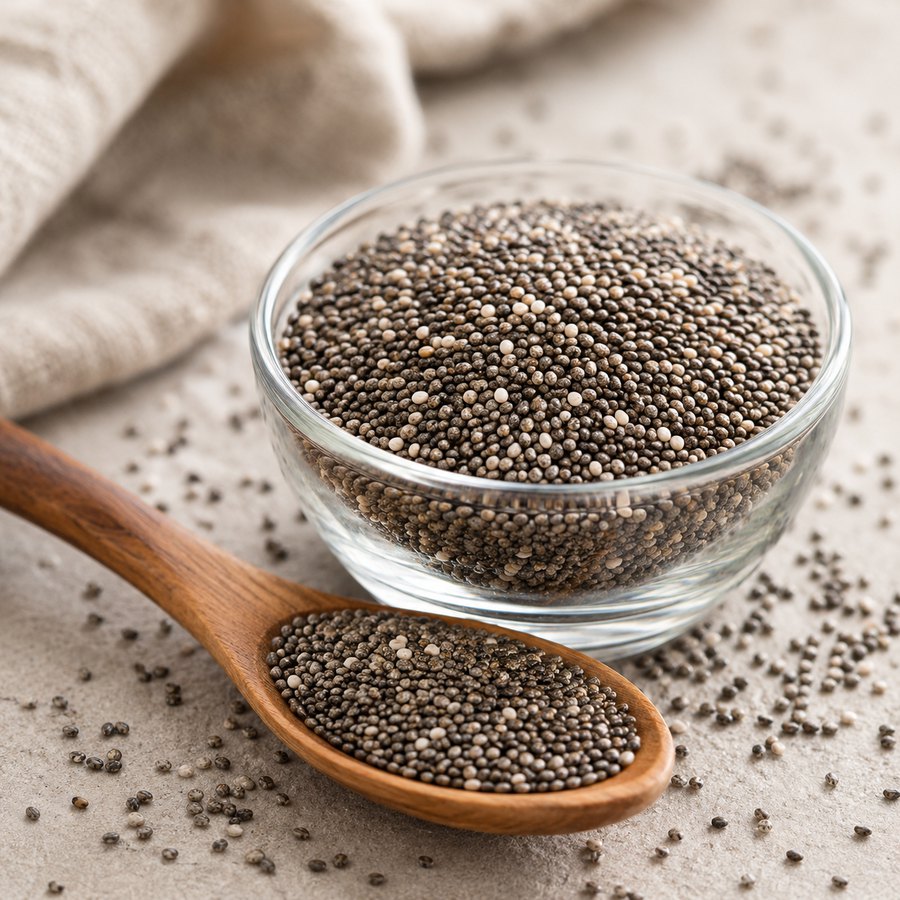
Chia seeds
Chia seeds are rich in fiber and unsaturated fat. A 15 g serving provides about 5.2 g fiber and 2.7 g ALA, plus magnesium, manganese, phosphorus, copper, and selenium. Because they form a gel in water, they are best mixed into moist foods or soaked first rather than swallowed dry.
Overview
Key strengths
Per 100 g, chia seeds provide about 34.4 g fiber, 30.7 g fat, and 16.5 g protein. Most of the fat is polyunsaturated, with ALA the main fatty acid. A 15 g serving gives about 5.2 g fiber and 2.7 g ALA.
How to eat it
Soak into a gel or mix into oats, yogurt, soy milk, smoothies, porridge, or moist batter. The flavor is mild, so chia can add fiber and seed-based fats, but it should not replace normal meals for “detox” or weight loss.
What stands out
Chia is high in total carbohydrate, but most of it is fiber. A 15 g serving has about 6.3 g total carbohydrate, including about 5.2 g fiber, so it should not be treated as 6.3 g of absorbable sugar.
Worth noting
Chia rapidly forms a thick gel in water. A case report described complete esophageal blockage after dry seeds were swallowed and then followed with water. People with swallowing difficulty, esophageal narrowing, or eosinophilic esophagitis should not swallow dry chia seeds.
Basic Nutrition
Showing:15 g Chia seeds
View complete nutrition data
GI note:GI varies with cultivar, food structure, processing, and cooking. Raw grains usually do not have directly applicable human GI data.
There is no suitable standard GI value for whole chia seeds. Adding chia to a carbohydrate-containing meal may reduce the meal’s post-meal glucose response, but that mixed-meal effect cannot be used to assign chia a GI. The page therefore shows “—”, not 0, 1, or “low GI.”
Data notes:This page uses USDA SR Legacy “Seeds, chia seeds, dried” so fiber and fatty acids can be shown together. Newer Foundation Foods samples may give different averages and have incomplete fiber or fatty-acid fields, so the two datasets are not mixed.
These values apply to plain chia seeds. Chia pudding, oat cups, and bottled drinks can differ substantially in energy and sugar depending on milk, yogurt, fruit, syrup, and the amount of chia used.
USDA does not provide a starch value suitable for this page, so starch is shown as “—”. The difference between total carbohydrate and fiber should not be labeled as starch or sugar.
Vitamins & Minerals
Daily Values use FDA standards for adults and children age 4 and older. Only nutrients reaching at least 5% DV at the selected portion are shown.
Chia contains calcium, iron, and zinc, but phytate and fiber can reduce absorption of some minerals. Database content is not the same as absorbed amount, and chia should not be treated as a treatment for iron deficiency or osteoporosis.
View all vitamins and minerals
Percentages show how much the selected serving contributes to the adult Daily Value.
Key Bioactive Compounds
Alpha-Linolenic Acid
Plant omega-3 fatty acidALA is an essential plant omega-3 fat and the most characteristic fatty acid in chia seeds.
Chia provides about 17.83 g ALA per 100 g, or 2.67 g per 15 g serving, about 58% of total fat. NIH lists 5.06 g per 1 oz; adult AI is 1.1 g/day for women and 1.6 g/day for men.
ALA supports cell membranes and lipid metabolism and can convert in small amounts to EPA and DHA.
Whole chia is useful for fiber; freshly ground chia can improve access to internal fat but should be kept sealed and refrigerated.
ALA is not the same as EPA or DHA, and conversion is limited. Chia does not replace fish, algal omega-3, or medical treatment.
Fiber & seed mucilage
Fiber and functional polysaccharidesWater-soluble polysaccharides on the seed coat form a gel, while the seed also contains substantial insoluble fiber.
Chia provides about 34.4 g fiber per 100 g, or 5.2 g per 15 g. Reviews estimate roughly 85%–93% insoluble and 7%–15% soluble fiber, though values vary.
The fiber adds bulk and viscosity. Small trials suggest chia may blunt post-meal glucose rises, but long-term glucose results are inconsistent.
Mix chia thoroughly into water or moist foods and let it hydrate. Start small if your usual fiber intake is low and drink enough fluids.
Gel formation does not mean chia “cleans the gut” or removes body fat, and chia alone has not been shown to cause sustained weight loss.
Rosmarinic acid & other phenolics
Phenolic acids & flavonoidsChia contains rosmarinic acid, caffeic acid, protocatechuic acid, quercetin, myricetin, and other polyphenols.
Some samples contained about 35–93 mg rosmarinic acid per 100 g, but methods differ between whole seeds, flours, and extracts, so this is not a fixed label value.
These phenolics show antioxidant activity in laboratory systems and are part of chia’s overall plant-chemical profile.
Choose fresh, dry seeds; keep opened products sealed and dark, and refrigerate ground chia to slow oxidation.
Extract antioxidant results do not show that ordinary chia servings treat chronic inflammation, cancer, or liver disease.
How Preparation Changes Chia Seeds
Whole chia seeds
Whole seeds retain fiber, protein, fat, minerals, and some protection for the internal oils. They work well soaked or mixed into yogurt, oats, and other moist foods.
Soaked chia
Soaking adds water and volume but does not create extra ALA, protein, or minerals. Nutrition should be based on the dry seed weight, not 100 g of hydrated gel as if it were 100 g dry seed. For example, 15 g chia plus 150 g water weighs about 165 g after soaking, but its nutrients still come from the original 15 g seeds.
Ground chia
Grinding breaks the seed coat. One human study found greater rises in plasma ALA and EPA with ground than whole chia, but it used a specific population and 25 g/day, so grinding is not mandatory for everyone. Ground chia also oxidizes more easily and should be stored sealed and used quickly.
Black vs. white chia
Black and white chia mainly differ in appearance. Both provide fiber and ALA, and differences in protein, oil, and total phenolics are not consistent enough to make color a reliable marker of nutrition, purity, or antioxidant value.
Baking & heating
Chia can be baked into bread, oat bars, and muffins. Normal food use is considered safe, but heat can affect oil oxidation, phenolics, and texture. The overall quality of the finished food still depends more on added sugar, refined flour, butter, and portion size.
Chia seed oil
Chia oil mainly provides fat and ALA and contains little of the whole seed’s fiber, protein, or minerals. It is also less oxidation-resistant than whole seeds and should not use this page’s nutrition data.
How to Choose & Store
How to choose
- For plain chia, the ingredient list should contain only chia seeds. Products with sugar, creamer, dried fruit, syrup, or meal-replacement powders need separate evaluation.
- Choose intact seeds with a natural mix of black, gray, brown, and white, with little powder and no mold, insects, damp clumping, or visible oil seepage.
- Fresh chia has a mild smell. Avoid products with strong rancid-oil, paint-like, bitter, moldy, or damp-cardboard odors.
- Prefer intact packaging, clear dates, smaller or resealable packs, clear plant identity, and no unnecessary sugar, salt, or flavoring.
How to store
- After opening, keep whole chia in an airtight container in a cool, dry, dark place away from the stove and sink. For long storage or warm climates, refrigeration is reasonable.
- Ground chia has more air exposure. Keep it sealed, dark, and refrigerated; grind only what you can use within a short period.
- Refrigerate soaked chia gel in a clean sealed container and use it promptly. If milk, yogurt, or fruit is added, storage time should follow the most perishable ingredient.
- Discard chia with mold, insects, unusual clumping, rancid or bitter odors, water-damaged packaging, or soaked mixtures that become sour, foamy, or discolored.
Choose chia with three things in mind: a single-ingredient product, intact seeds without damp or rancid odors, and a small, sealed package stored away from light.
How to Eat It
Chia gel
Stir about 5–15 g chia thoroughly into water and let it hydrate evenly into a gel. Lemon juice or unsweetened tea can add flavor without large amounts of honey or syrup. Eat the seeds with the liquid rather than drinking only the top layer.
Chia oats
Mix chia with oats and unsweetened milk or soy milk, then refrigerate overnight or cook as porridge. Add berries, kiwi, nuts, or cinnamon. Because chia already adds fat and energy, there is little need for large amounts of nut butter, cream, or syrup.
Chia yogurt
Mix 5–10 g chia into plain yogurt, let it hydrate, then add berries and a small amount of nuts. Yogurt provides moisture and reduces the risk of swallowing a concentrated mass of dry seeds. Prefer unsweetened or low-added-sugar yogurt.
Add to soy milk or smoothies
Blend a small amount of chia with unsweetened soy milk, milk, fruit, or vegetables. Whole seeds can be soaked first; freshly ground chia gives a smoother texture. Do not strain out all the seeds, or much of the fiber is lost.
Add to porridge, soup, or stews
Stir a small amount into finished porridge, vegetable soup, or bean stew and let residual heat hydrate it. Too much chia thickens food quickly, so start around 5 g. Long boiling is unnecessary, and dry clumps should not be swallowed.
Use in batter and baking
Soaked chia gel can be added to whole-grain bread, oat muffins, or pancake batter for binding and fiber. Whether the baked food is healthy still depends on sugar, refined flour, butter, and portion size.
Who Should Take Extra Care
People with swallowing or esophageal problems
People with dysphagia, esophageal narrowing, eosinophilic esophagitis, or a history of food impaction should not swallow dry chia. Use fully hydrated small portions and follow medical or swallowing-therapy advice if needed.
People with sensitive digestion or low usual fiber intake
A 15 g serving provides about 5.2 g fiber. A sudden large increase may cause bloating, gas, pain, diarrhea, or constipation. Start around 5 g, increase gradually, and drink enough fluids.
People with food allergies
Chia allergy is uncommon but contact dermatitis and severe reactions have been reported. Chia proteins may cross-react immunologically with sesame, hazelnut, and some other seeds. People with a history of severe seed allergy should be cautious with first exposure. Hives, wheezing, tongue or throat swelling, repeated vomiting, dizziness, or breathing difficulty require urgent care.
People managing blood sugar
Adding chia to carbohydrate foods may reduce some post-meal glucose responses, but reviews have not confirmed consistent improvements in fasting glucose, HbA1c, or insulin. People using insulin or glucose-lowering medication should not replace treatment with chia and should continue monitoring if intake rises sharply.
People with low blood pressure or taking antihypertensive medication
Recent reviews suggest chia may produce small reductions in systolic and diastolic blood pressure, but evidence is limited and generally low quality. People planning larger daily amounts should watch for dizziness or low blood pressure and continue normal monitoring.
People with impaired kidney function
A 15 g serving provides about 129 mg phosphorus and 50 mg magnesium. People who need to restrict phosphorus, magnesium, protein, or total seeds should count chia within the full-day plan rather than assuming it is unlimited because sodium is low.
Infants, older adults, and people with weaker swallowing ability
Use small amounts of fully hydrated chia with a smooth texture, mixed into porridge, yogurt, or other soft foods. Do not give a spoonful of dry seeds to children or anyone with weak swallowing ability.
Similar Food Alternatives
Flaxseed
Like chia, ground flaxseed provides ALA and fiber and also contains lignans. Its hull is harder to digest, so it is usually better ground; once ground, keep it sealed and refrigerated.
Walnuts
Walnuts also provide ALA, polyphenols, and unsaturated fat and are easier to eat as a whole nut. They contain less fiber than chia and do not form a gel in water.
Hemp hearts
Hemp hearts provide protein and unsaturated fat with a soft texture that works in oats, yogurt, and salads. Hulled hemp is much lower in fiber than whole chia.
Sesame seeds
Sesame provides unsaturated fat, calcium, copper, and sesamin-related compounds and works well as tahini or a topping. It does not provide chia-level ALA and does not form the same seed-coat gel.
Sources
Nutrition Data
Basic Information & Food Safety
Research & References
Ho H., et al. (2013). Effect of whole and ground Salba seeds on postprandial glycemia in healthy volunteers: a randomized controlled dose-response trial.
European Journal of Clinical Nutrition. DOI / Original
Jin F., et al. (2012). Supplementation of Milled Chia Seeds Increases Plasma ALA and EPA in Postmenopausal Women.
Plant Foods for Human Nutrition, 67, 105–110. DOI / Original
Martínez-Cruz O., Paredes-López O. (2014). Phytochemical profile and nutraceutical potential of chia seeds.
Journal of Chromatography A. DOI / Original
Oliveira-Alves S.C., et al. (2017). Characterization of phenolic compounds in chia seeds, fiber flour and oil.
Food Chemistry. DOI / Original
Muñoz L.A., et al. (2021). Physicochemical and functional properties of soluble fiber extracted from two phenotypes of chia seeds.
Journal of Food Composition and Analysis. DOI / Original
Kiani S., et al. (2024). Effects of chia seed supplementation on cardiovascular risk factors: systematic review and dose-response meta-analysis.
Phytomedicine. DOI / Original
Pam P., et al. (2024). The effectiveness of chia seed in improving glycemic status: a systematic review and meta-analysis.
Diabetes & Metabolic Syndrome. DOI / Original