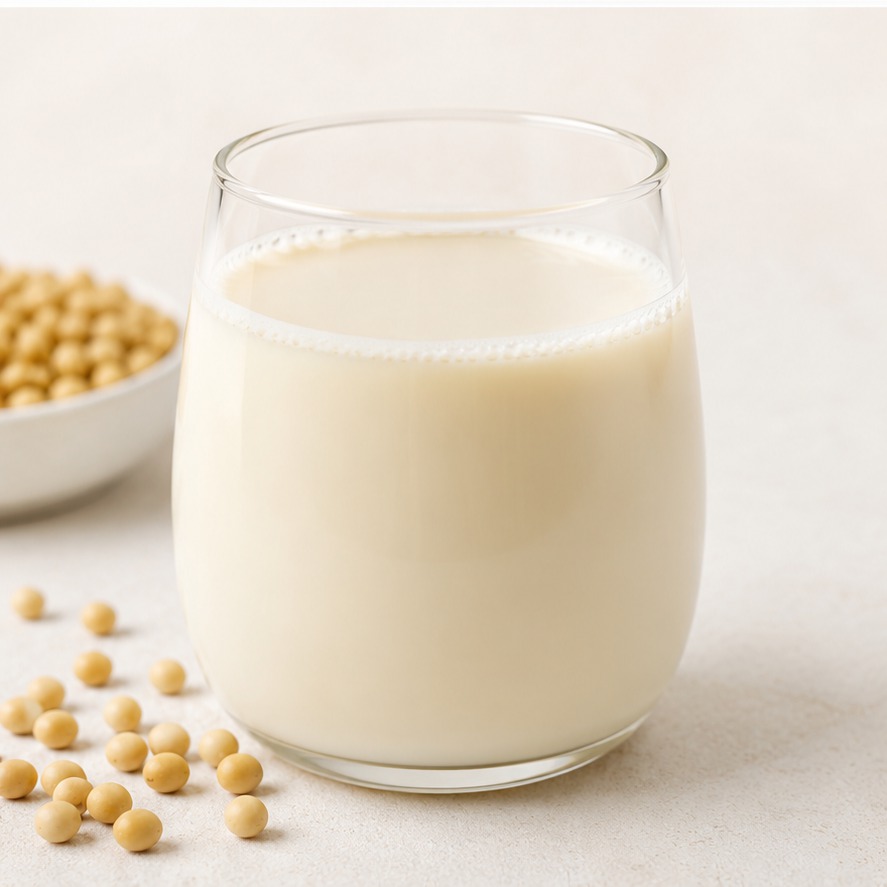
Legumes & Soy Foods · Soy Beverage
Unsweetened Soy Milk
Unsweetened soy milk provides plant protein and mostly unsaturated fat with little sugar and saturated fat. Fortified products can also provide calcium, vitamin D, and vitamin B12, but levels vary by brand, so check the label.
Food Overview
Key strengths
The USDA composite sample provides about 38 kcal and 3.55 g protein per 100 g. A 240 mL cup, approximated as 240 g, provides about 92 kcal, 8.5 g protein, and 5.1 g fat, mostly unsaturated.
How to Eat It
Drink it plain or use it with oats, whole-grain breakfasts, fruit, nuts, smoothies, soups, or baking. Soy milk is not a complete meal by itself, so pair it with other foods.
What stands out
Protein, fiber, calcium, vitamin D, and vitamin B12 vary widely by brand. If using soy milk instead of dairy milk, choose an unsweetened product with good protein plus fortified calcium and vitamin D; vegans should also check vitamin B12.
Worth noting
“Unsweetened” or “no added sugar” does not mean total sugar must be 0. Soybeans naturally contain small amounts of sucrose and oligosaccharides such as raffinose and stachyose; the USDA sample still contains about 0.56 g total sugar per 100 g.
Basic Nutrition
Showing:100 g Commercial Plain Unsweetened Soy Milk
View complete nutrition data
GI note:GI varies with cultivar, food structure, processing, and cooking. Raw grains usually do not have directly applicable human GI data.
GI values vary considerably among soy beverages, and no result exactly matches the USDA composite sample. A single GI is therefore not shown and should not be applied across brands.
Data notes:This page uses one reliable state: commercial plain unsweetened soy milk. Homemade or freshly ground soy milk and differently formulated products need separate data.
240 mL is approximated as 240 g for display; actual density and package serving sizes can differ slightly.
The USDA sample lists 0 g fiber, but not every unsweetened soy milk is fiber-free.
Vitamins & Minerals
By default, values are shown per 100 g of commercial plain unsweetened soy milk. Only nutrients providing at least 5% of the FDA adult Daily Value at the current serving are shown, with the top 6 displayed first.
Calcium and vitamins D, A, and B12 may come from fortification, so use the product label.
View all vitamins and minerals
Percentages show how much the selected serving contributes to the adult Daily Value.
Key Bioactive Compounds
Soy Isoflavones
Isoflavone PolyphenolsSoy isoflavones are characteristic soy compounds, mainly daidzein, genistein, and their glycosides.
Per 100 g, the USDA sample records daidzin 12.91 mg, genistin 18.81 mg, glycitin 1.37 mg, daidzein 0.46 mg, and genistein 0.38 mg. At 240 mL, the main glycosides are about 31.0, 45.1, and 3.3 mg.
Meta-analyses suggest soy or isoflavones may modestly lower C-reactive protein, while effects on IL-6 and TNF are not consistently improved.
Choose plain unsweetened soy milk and use it as part of a varied diet rather than seeking concentrated extracts.
Soy isoflavones are not human estrogen and do not mean soy milk can 'balance hormones,' enlarge breasts, or treat menopausal disease.
Gamma- and Delta-Tocopherol
Vitamin E Family AntioxidantsGamma- and delta-tocopherol are vitamin E family compounds found in soybean fat.
Per 100 g, the USDA sample contains about 1.42 mg gamma-, 0.87 mg delta-, and 0.16 mg alpha-tocopherol. A 240 mL cup provides about 3.41 mg gamma- and 2.10 mg delta-tocopherol.
Tocopherols contribute to antioxidant defenses, but the independent effects of these forms in one cup of soy milk are unclear.
Drink soy milk normally and refrigerate promptly after opening; extra oil is unnecessary.
Gamma- and delta-tocopherol do not replace alpha-tocopherol requirements, and laboratory antioxidant activity does not prove anti-aging or anticancer effects.
Soy Saponins
Triterpenoid saponinsSoy saponins are natural soybean compounds that enter soy milk during grinding and can contribute to foaming.
Specific amount: —. Levels vary with soybean variety, bean-to-water ratio, soaking, heating, filtering, and industrial processing.
Saponins show antioxidant and lipid-related activity in laboratory studies, but normal food-level effects in people remain limited.
Ordinary unsweetened soy milk and other whole soy foods are enough; special grinding or reheating methods are unnecessary.
Cell or animal results do not prove that a cup of soy milk lowers lipids, eliminates inflammation, or prevents cancer.
How Preparation Changes Soy Milk
Shelf-Stable Commercial Unsweetened Soy Milk
This page’s reference data represent commercially heat-treated plain unsweetened soy milk that can be stored at room temperature before opening. Formulations and fortification still vary by brand.
Refrigerated Commercial Soy Milk
Refrigerated products must stay cold and may differ in protein, sugar, fat, calcium, and vitamin content. Use the package label rather than shelf-stable reference data.
Fortified vs. Unfortified
Fortified soy milk may contain added calcium and vitamins D, A, and B12. Traditional unfortified soy milk usually contains much less calcium, so soy milk is not naturally equivalent to dairy milk in calcium.
Homemade Soy Milk
Homemade soy milk varies greatly in bean amount, water, and filtering. It must be heated thoroughly to reduce trypsin inhibitors and other digestion-limiting compounds; warming raw soy milk is not enough.
Filtering & Okara Retention
Okara contains much of the insoluble fiber. Heavily filtered soy milk may have close to 0 g fiber, while products retaining more fine solids may provide 1–2 g or more.
Sweetened & Flavored Products
Sweetened, chocolate, vanilla, or milk-tea-style soy drinks may contain added sugar or syrup. Their energy, sugar, and GI cannot use this page’s values.
How to Choose & Store
How to choose
- Look for labels such as Unsweetened or Plain, but still check ingredients and nutrition because 'plain' does not always mean unsweetened.
- For unsweetened soy milk, check that added sugar is 0 g rather than looking only at total sugar, which can include natural soybean sugars.
- When using it as a milk or breakfast protein source, products with about 7–9 g protein per 240 mL are a practical target.
- If replacing dairy milk, choose unsweetened soy milk fortified with calcium and vitamin D; vegans should also check vitamin B12.
- Compare sodium and ingredient complexity at the same serving size; a small amount of stabilizer is not automatically a problem.
How to store
- Store unopened shelf-stable soy milk in a cool, dry, dark place as labeled. Do not drink from swollen, leaking, or damaged packages.
- Keep products labeled 'refrigerated' cold from purchase through use and do not leave them for long periods in a car or at room temperature.
- Refrigerate immediately after opening. Some brands suggest use within 7–10 days, but follow the package first.
- Discard soy milk with sour or fermented odors, unusual curds, slime, package swelling, spurting, or major color changes. Shake only if the package directs you to.
When choosing soy milk, focus on four things: 0 g added sugar, adequate protein, fortified calcium and vitamin D, and moderate sodium.
Easy Ways to Use Unsweetened Soy Milk
Drink It Plain
A 240 mL cup provides about 8.5 g plant protein in the reference product. Pair it with whole grains, fruit, and nuts rather than using one cup as a complete breakfast.
Soy Milk Oat Bowl
Use unsweetened soy milk for oatmeal or overnight oats and add berries, kiwifruit, apple, walnuts, or flaxseed. Keep honey, syrup, condensed milk, and sweetened dried fruit modest.
Unsweetened Soy Smoothie
Blend soy milk with berries, banana, or spinach and keep the whole fruit pulp. Avoid adding juice, honey, syrup, and several high-sugar fruits at once.
Coffee or Tea
Use unsweetened soy milk in coffee, black tea, or matcha instead of sweetened creamer or condensed milk. Slight separation can occur with acidity or temperature changes and does not require extra sugar.
Soups & Sauces
Add soy milk to pumpkin, mushroom, corn, or vegetable soups near the end of cooking over medium-low heat. This can reduce the need for large amounts of cream, butter, or salty soup base.
Pancakes & Baking
Unsweetened soy milk can replace some dairy milk in whole-grain pancakes, muffins, or bread. Finished nutrition must be recalculated from all ingredients.
Who Should Take Extra Care
People with Soy Allergy
Soy is a major food allergen. Reactions can include oral symptoms, hives, gastrointestinal symptoms, wheezing, or severe systemic allergy. People with diagnosed soy allergy should avoid soy milk and other soy-protein drinks.
Infants Under 12 Months
Soy milk is not infant formula and should not replace breast milk or infant formula. Fortified unsweetened soy beverages are generally introduced only after 12 months as part of a varied diet.
Choosing Soy Milk for Children
For children, check protein, calcium, vitamin D, and vitamin B12 rather than relying on front-label terms such as 'plant milk' or 'for kids.' Products vary widely.
People Taking Levothyroxine
Soy foods can reduce levothyroxine absorption. Do not take the medication with soy milk; ask a doctor or pharmacist about timing and keep soy intake and medication habits reasonably consistent. Normal thyroid function usually does not require avoiding soy.
People with Breast Cancer or a History of Breast Cancer
Current evidence supports normal food amounts of soy foods such as tofu, edamame, and unsweetened soy milk as part of a balanced diet. This does not mean high-dose isoflavone supplements should be used without medical advice.
People Concerned About Male Hormones
Updated clinical meta-analyses have not found significant effects of soy foods or isoflavones on men’s total testosterone, free testosterone, or estrogen levels. Normal food amounts should not be described as 'feminizing.'
People with Sensitive Digestion or Frequent Bloating
Stachyose, raffinose, and other fermentable compounds can increase gas or bloating in some people. Start with half a cup and adjust to tolerance.
People managing blood sugar
The USDA sample provides about 3.1 g carbohydrate and 1.3 g natural sugar per 240 mL, but brands vary. Unsweetened products are usually easier to fit into carbohydrate goals than sweetened soy drinks.
People with Kidney Dysfunction or Those Told to Limit Potassium or Phosphorus
Using this page’s reference values, 240 mL provides about 380 mg potassium and 165 mg phosphorus. People with strict potassium, phosphorus, or fluid limits should check the actual label and count the serving in the daily total.
Pregnancy & Breastfeeding
Normal food amounts of soy can be part of the diet. Safety of high-dose isoflavone supplements should not be inferred from ordinary soy-milk intake.
Similar Food Alternatives
These alternatives are based on beverage use and nutrition roles, not identical composition.
Unsweetened Fortified Pea-Protein Beverage
Some products provide protein close to soy milk and may also be fortified with calcium and vitamin D. Check added sugar and the actual label.
Low-Fat or Skim Milk
Provides high-quality protein, calcium, and vitamin B12 for people who tolerate lactose and milk protein, but it is an animal food and not suitable for everyone using soy beverages.
Unsweetened Fortified Oat Drink
Works well in coffee, oats, and baking, but is usually much lower in protein and may be higher in carbohydrate than soy milk.
Unsweetened Fortified Almond Drink
Often low in energy and may be fortified with calcium and vitamin D, but usually contains little protein. Protein must come from other foods if it replaces soy milk.
Data Sources & Last Updated
Nutrition Data
Basic Information & Food Safety
Research & References
Messina M. (2016). Soy and Health Update: Evaluation of the Clinical and Epidemiologic Literature.
Nutrients. DOI / Original
Reed K.E., et al. (2021). Neither Soy nor Isoflavone Intake Affects Male Reproductive Hormones.
Reproductive Toxicology. DOI / Original
Otun J., et al. (2019). Systematic Review and Meta-analysis on Soy and Thyroid Function.
Scientific Reports. DOI / Original