Tea & Coffee · Tea beverage
Green tea
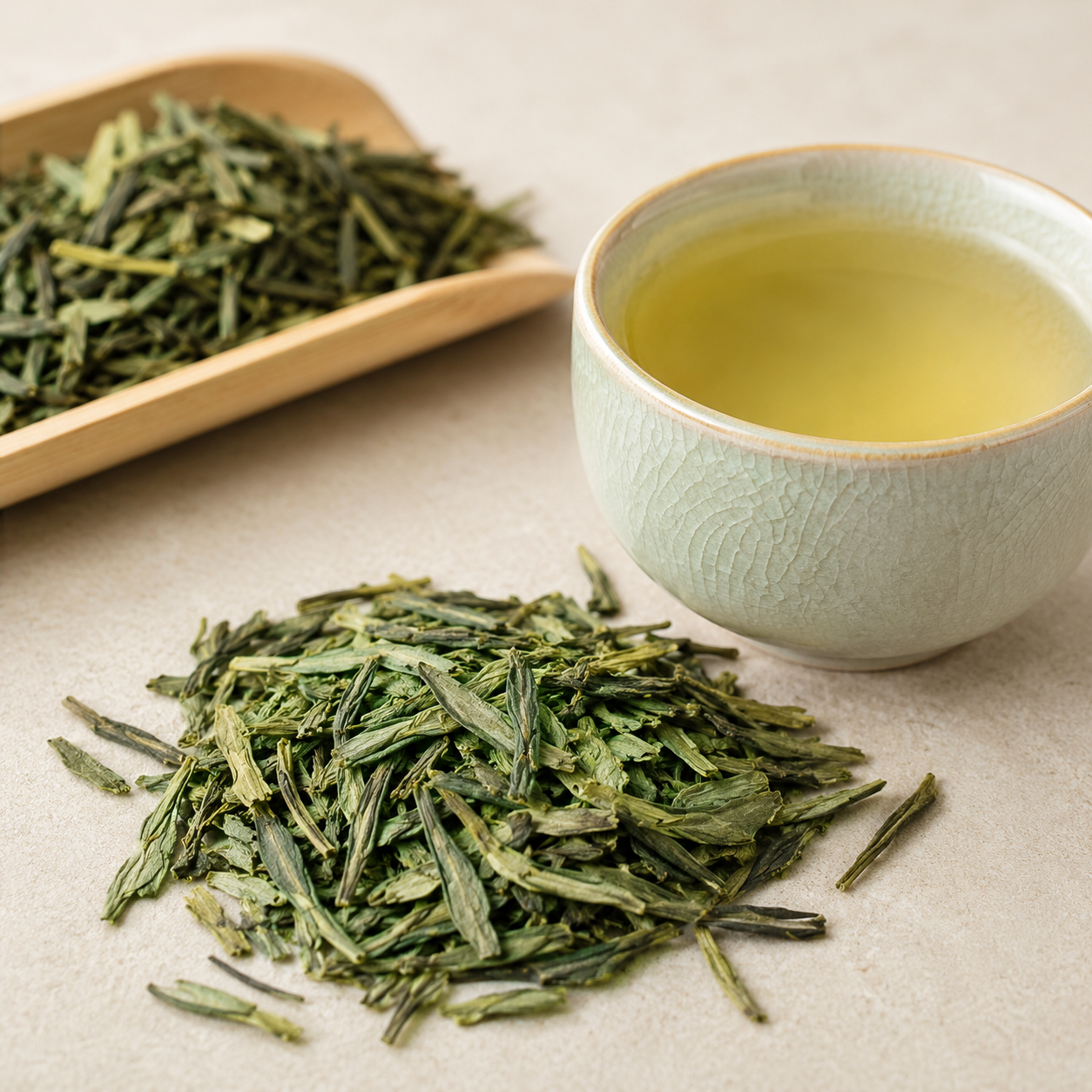
Unsweetened green tea provides almost no energy or sugar, while supplying tea catechins plus small amounts of caffeine and L-theanine. Moderate brewing and little or no added sugar make it easier to use as an everyday drink.
Food overview
Key strengths
Plain unsweetened brewed green tea provides about 1 kcal per 100 g, with carbohydrate, sugar, and fat recorded as 0. One 245 g cup provides about 2 kcal, making it a practical substitute for sugar-sweetened drinks.
How to drink it
Drink it hot, cold-brewed, or with a little lemon or mint for flavor. The main point is to use little or no sugar, honey, syrup, or creamer; darker color or stronger bitterness is not automatically better.
What stands out
Green tea is best known for catechins, especially epigallocatechin gallate (EGCG). It also contains EGC, ECG, EC, and flavonols such as quercetin, kaempferol, and myricetin.
Worth noting
Green tea naturally contains caffeine. USDA representative data show about 12 mg per 100 g of brewed tea and about 29 mg per 245 g cup, but actual content varies with tea type, leaf maturity, amount used, particle size, water temperature, and steeping time.
Basic Nutrition
Showing:100 g Unsweetened brewed green tea
View complete nutrition data
GI note:GI varies with cultivar, food structure, processing, and cooking. Raw grains usually do not have directly applicable human GI data.
Unsweetened green tea has carbohydrate and sugar recorded as 0, so standard GI testing is not appropriate and GI should not be listed as 0. “—” means not applicable or no interpretable standard value is available.
Data notes:This page covers plain green tea brewed from green-tea leaves and water, with no sugar or milk.
Caffeine is not an essential nutrient, but it is practically relevant, so it is included in the full nutrition data.
USDA records total fat as 0 but does not separately confirm n-3 or n-6 fatty acids, so Omega-3 and Omega-6 are shown as “—”.
Vitamins & Minerals
FDA Daily Values for adults and children age 4+ are used, and only nutrients reaching at least 5% of the DV at the selected serving are shown. At 100 g, only manganese appears by default; at one 245 g cup, manganese and vitamin B2 appear.
Green tea’s main value does not come from conventional vitamins, but from plant bioactives such as catechins. Nutrition values in the infusion vary with the leaves, water, and brewing method.
View all vitamins and minerals
Key Bioactive Compounds
Tea catechins
Flavan-3-ol polyphenolsTea catechins are the signature polyphenols in green tea, mainly EGCG, EGC, ECG, and EC. They also contribute to green tea’s bitterness, astringency, and in-vitro antioxidant capacity.
USDA flavonoid data for brewed green tea average about 70.20 mg EGCG, 29.18 mg EGC, 17.94 mg ECG, 8.33 mg EC, and 4.47 mg catechin per 100 g. Per 245 g cup, that is about 172 mg EGCG, 71 mg EGC, 44 mg ECG, and 20 mg EC. Samples vary widely; EGCG ranged about 2.31–203.20 mg/100 g.
Catechins contribute to antioxidant defenses. Clinical studies of green tea or green-tea products suggest small reductions in total and LDL cholesterol, but many trials used extracts rather than ordinary brewed tea. Results for inflammatory markers are inconsistent, so “a source of antioxidant polyphenols” is a better description.
Brewing at about 80–85°C for 2–3 minutes can balance catechin extraction and taste. Hotter water or longer steeping usually extracts more compounds but also increases bitterness, astringency, and caffeine. There is no need to brew extremely strong tea or boil it for a long time.
Laboratory antioxidant capacity does not directly translate into anti-inflammatory, anticancer, or anti-aging effects in people. Brewed tea and concentrated EGCG capsules are different exposures; ordinary green tea is generally safe, while supplement intakes at or above 800 mg EGCG/day may pose liver risk.
Caffeine
Methylxanthine alkaloidCaffeine is a naturally occurring stimulant in tea that can increase alertness and contributes to green tea’s energizing effect.
USDA data show about 12 mg caffeine per 100 g brewed green tea, or about 29 mg per 245 g cup. A real cup may contain much more or less. More leaf, smaller particles, hotter water, and longer steeping usually increase extraction; bud content, shade growing, and cultivar also matter.
Caffeine can briefly improve alertness and attention. Because green tea also contains L-theanine, the combination may influence focus after drinking tea, but the effect varies by person.
People who tolerate caffeine can drink green tea in the morning or afternoon. If sleep is easily affected, drink it earlier and use less tea or shorter steeping. Up to 400 mg caffeine/day is generally not associated with negative effects in most healthy adults, but sensitivity varies widely.
Green-tea caffeine does not have a special “slow-release” structure and cannot guarantee freedom from palpitations, anxiety, or sleep disruption. L-theanine does not cancel excessive caffeine, and caffeine does not replace sleep.
L-theanine
Tea-characteristic amino acidL-theanine is a characteristic non-protein amino acid in tea and contributes to green tea’s fresh, smooth, slightly sweet finish.
A 2025 analysis of tea infusions found green tea averaged about 12.5±2.5 mg L-theanine per 200 mL. This came from specific teas and brewing conditions, so it is not a fixed value for all green tea. Cultivar, leaf maturity, shading, fertilization, processing, and brewing all affect content.
L-theanine taken with caffeine may modestly help some measures of attention, reaction time, and mood. A recent systematic review of randomized trials found some attention tasks favored the combination, but overall effects were not consistent.
Normal brewing is enough; there is no need to boil tea for a long time to obtain L-theanine. For a fresher taste, lower the water temperature and shorten steeping so bitterness does not overwhelm the tea’s natural flavor.
Most cognition studies of L-theanine used 50–200 mg or more as supplements, far above what is typically in one cup of green tea. Supplement findings should not be presented as proof that one cup markedly reduces anxiety, improves sleep, or boosts memory.
Brewing and processing differences
Dry green-tea leaves
Dry leaves contain far more catechins, caffeine, and L-theanine than the brewed tea, but normal tea drinking does not consume the whole leaf. Per-100-g dry-leaf values therefore do not represent actual intake. Matcha is different because the powdered leaf is consumed and has its own page.
Moderate-temperature brewing
Brewing at about 80–85°C for 2–3 minutes usually balances aroma, fresh taste, and catechin extraction. In one study, 85°C for 3 minutes gave a favorable combination of EGCG content and sensory scores.
Hotter or longer brewing
Hotter water and longer steeping generally extract more caffeine and some polyphenols, but also make the tea more bitter and astringent. More bitterness does not necessarily mean healthier tea, and there is no need to drink extremely strong tea long term.
Multiple infusions
The first and second infusions often release substantial caffeine and catechins, with levels generally declining in later infusions. Which infusion is highest depends on water temperature and steeping time for each round.
Cold-brewed green tea
Cold water also extracts caffeine, catechins, and flavor compounds, but more slowly. Cold brew should be prepared in a clean container in the refrigerator, not left for long periods at warm room temperature. It often tastes smoother, but it is not automatically caffeine-free or higher in catechins.
Bottled unsweetened green tea
Bottled green teas vary in tea concentration, brewing process, storage time, and ingredients. Check total sugar, added sugar, and caffeine on the product itself; do not assume the fresh-brew data on this page apply.
Decaffeinated green tea
Decaffeination reduces caffeine but usually does not remove it completely. Different processes can also alter catechins and flavor, so data for regular green tea should not be applied directly to decaf products.
How to choose and store
How to choose
- The package should clearly say green tea; jasmine green tea, genmaicha, and fruit-flavored green tea are blended products.
- Plain green-tea leaves usually need only green tea as the ingredient.
- Tea bags or blends may include flowers, herbs, or grains, but avoid products with large amounts of sugar, creamer, or sweetened powders.
- Prefer well-sealed packaging that protects from light and moisture.
- Buy an amount you can use in the near term; smaller packs or individually sealed portions reduce exposure to air and humidity.
- Dry tea should stay dry, with no moldy or rancid odor and no obvious moisture clumping. Less vivid color does not necessarily mean poor quality.
How to store
- After opening, keep the tea in an airtight, opaque container or its original multilayer package.
- Store in a cool, dry, dark place away from strong odors such as spices, coffee, and cleaning products.
- Temperature, humidity, oxygen, and storage time can all affect catechins and overall green-tea quality.
- Freshly brewed tea is best consumed soon after brewing.
- If refrigerating, use a clean sealed container and drink it promptly.
- Do not drink tea that develops an unusual cloudy odor, sourness, or abnormal sliminess.
When buying green tea, remember four things: simple ingredients, sealed light-protective packaging, dry leaves, and an amount you can use while fresh.
How to fit it into your diet
Hot brewed green tea
Use a moderate amount of tea per cup and brew at about 80–85°C for 2–3 minutes. New drinkers or people with sensitive stomachs can use less leaf or a shorter steep. It does not need to be very strong, and sugar, honey, and syrup are unnecessary.
Unsweetened cold-brew green tea
Steep green-tea leaves in clean cold water in the refrigerator for several hours, then strain. The smoother taste can make it a useful replacement for bottled sweet tea and sugary drinks. Keep it refrigerated after brewing rather than repeatedly warming and rechilling it.
Lemon or mint green tea
Add a little fresh lemon, lemon juice, or mint for aroma without extra sugar. Lemon is mainly for flavor; this combination should not be promoted as “detox water” or a rapid-fat-loss drink.
Pair with fruit and nuts
Green tea can accompany apples, berries, plain yogurt, or a small portion of nuts as a snack. Avoid pairing it routinely with sugary pastries, cream cakes, or candied fruit, so the tea replaces sweet drinks rather than simply accompanying high-sugar desserts.
Separate from iron-rich meals
People with iron deficiency or low iron stores should avoid drinking large amounts of strong tea with iron-rich meals. Tea taken with a non-heme-iron meal can reduce iron absorption; separating it by about 1 hour may lessen the effect.
Who Should Take Extra Care
People sensitive to caffeine or with poor sleep
Green tea contains caffeine. People prone to palpitations, nervousness, tremor, or insomnia can use less tea, steep for less time, choose decaf products, and avoid it later in the afternoon or evening.
Pregnant People
During pregnancy, count caffeine from coffee, tea, chocolate, energy drinks, and other sources. ACOG recommends keeping caffeine below 200 mg/day. One ordinary cup of green tea contains about 29 mg, but actual amounts vary, so a fixed number of cups is not a reliable rule.
People with iron deficiency or iron-deficiency anemia
Tea polyphenols can reduce absorption of non-heme iron from meals. People with low iron should separate green tea from meals and iron supplements, and especially should not take iron pills with tea.
People with GERD or sensitive digestion
Strong tea, caffeine, and tea astringency can trigger reflux, nausea, or stomach discomfort in some people. Avoid strong tea on an empty stomach, try a weaker brew, and adjust to your own tolerance.
People taking certain medications
High green-tea intake has been shown to lower blood concentrations of the beta-blocker nadolol, and green-tea extracts may interact with drugs such as atorvastatin and raloxifene. People on long-term medication should ask a doctor or pharmacist, especially before using extracts.
People with abnormal liver function
Ordinary green-tea beverages generally do not raise major safety concerns in adults, but concentrated extracts, weight-loss capsules, and high-dose EGCG supplements have been linked to rare liver injury. People with liver disease should not self-use concentrated green-tea supplements.
People with arrhythmias or labile blood pressure
Caffeine can briefly increase heart rate or alter blood pressure in some people. If you have a related condition or clear symptoms, follow medical advice for total caffeine intake, not just green tea.
Children and adolescents
Green tea is not a suitable main drink for children. Children are more sensitive to caffeine and should not get large amounts from milk tea, bottled tea, or energy drinks.
Similar beverage alternatives
Decaffeinated green tea
Retains some green-tea flavor and catechins with usually less caffeine, which may suit caffeine-sensitive people. Decaffeination level and catechin retention vary by product.
View details →White tea
Also made from Camellia sinensis, usually with lighter processing, and it contains both catechins and caffeine. White tea is not necessarily lower in caffeine than green tea; this depends on the material and brewing method.
View details →Yellow tea
Processed similarly to green tea but with an added yellowing step, usually giving a softer flavor. Its catechin profile differs from green tea, so green-tea content data should not be reused.
View details →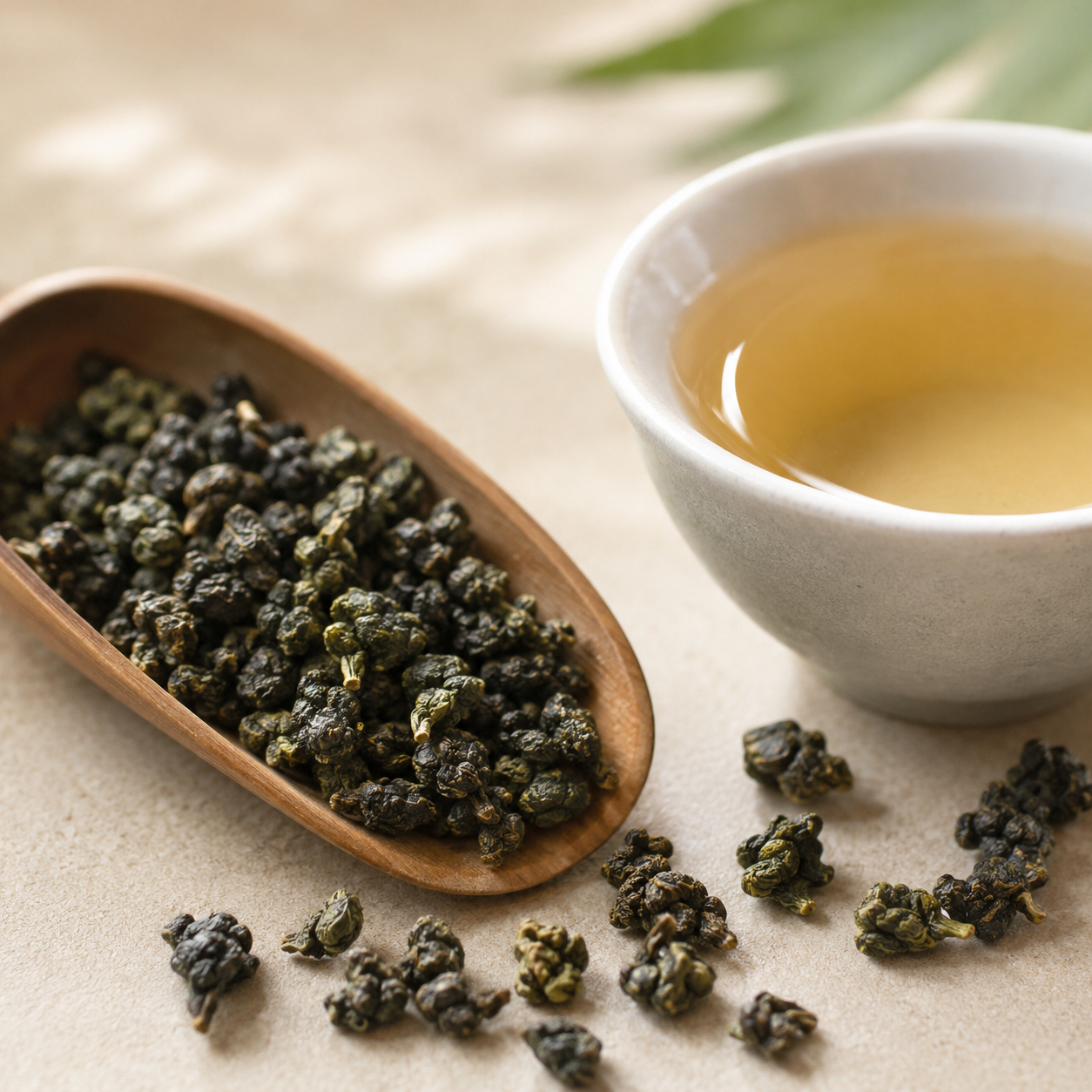
Oolong tea
Partially oxidized, so it contains catechins plus other polyphenols formed during processing. It is a useful option for people who want more variety in tea flavor.
View details →
Caffeine-free herbal tea
People who are very caffeine-sensitive can choose hibiscus, rooibos, or other herbal infusions that do not use tea leaves. Their plant compounds differ from green tea, so they are not an equivalent source of catechins.
View details →Data Sources & Last Updated
Nutrition Data
Basic Information & Food Safety
Research & References
Bhagwat S, Haytowitz DB, Holden JM. (2014). USDA Database for the Flavonoid Content of Selected Foods, Release 3.1.
USDA Agricultural Research Service. DOI / Original
Saklar S, et al. (2015). Effects of Different Brewing Conditions on Catechin Content and Sensory Acceptance in Turkish Green Tea Infusions.
Journal of Food Science. DOI / Original
Yang DJ, Hwang LS, Lin JT. (2007). Effects of Different Steeping Methods and Storage on Caffeine, Catechins and Gallic Acid in Tea Infusions.
Journal of Agricultural and Food Chemistry. DOI / Original
Ayakdaş G, et al. (2025). Determination of L-Theanine and Caffeine Contents in Tea Infusions.
Food research. DOI / Original
Williams JL, et al. (2025). Effects of Tea or Its Bioactive Compounds L-Theanine and Caffeine on Cognition, Sleep and Mood.
Systematic review and meta-analysis. DOI / Original
Haghighatdoost F, et al. (2019). The Effect of Green Tea on Inflammatory Mediators.
Systematic review and meta-analysis. DOI / Original
Fuzi SFA, et al. (2017). A One-hour Time Interval between an Iron-containing Meal and Tea Attenuates the Inhibitory Effect on Iron Absorption.
American Journal of Clinical Nutrition. DOI / Original
Friedman M, et al. (2009). Stability of Green Tea Catechins in Commercial Tea Leaves during Storage for Six Months.
Journal of Food Science. DOI / Original