Whole Grains & Tubers · Whole grain
Sorghum
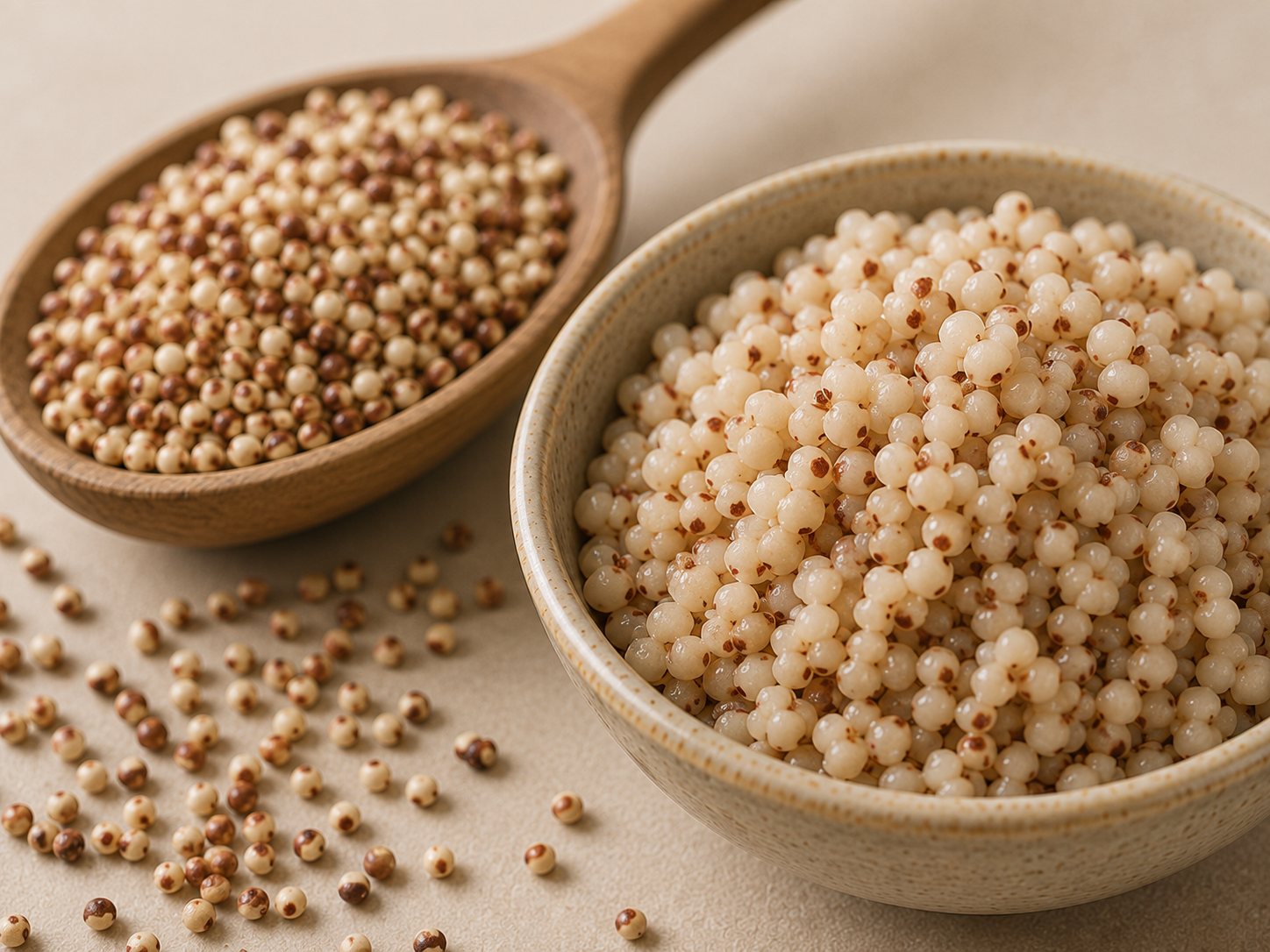
Sorghum is a gluten-free whole grain that provides starch, protein, dietary fiber, magnesium, phosphorus, and polyphenols. Whole kernels can replace part of refined staple foods, while flour, puffed products, and sweetened sorghum foods should be assessed separately.
Food Overview
Key strengths
Sorghum can increase staple-food variety. Whole or minimally processed sorghum provides dietary fiber, plant protein, magnesium, phosphorus, manganese, copper, iron, zinc, vitamin B1, vitamin B6, niacin, and other nutrients.
However, sorghum protein digestibility is affected by protein structure, cultivar, and processing, so actual nutritional value cannot be judged from protein content alone.
How to Eat It
Sorghum works well with rice, brown rice, millet, oat groats, or legumes in mixed-grain rice and can also be used in porridge, stews, grain salads, and grain bowls.
Whole sorghum kernels are usually firmer than ordinary white rice, require longer soaking and cooking, and retain a noticeable chew even after cooking.
What stands out
Prefer intact, minimally processed sorghum grain.
Whole sorghum retains more bran and germ. Dehulling, pearling, milling, and puffing disrupt grain structure to varying degrees and may reduce some dietary fiber, minerals, and phenolic compounds.
Worth noting
Sorghum is not automatically a low-GI food.
In standardized tests, whole sorghum had a GI of 62 and pearled sorghum a GI of 64, both in the medium-GI range. GI can be even higher in sorghum-flour foods, so “whole grain” or “sorghum product” alone does not determine the glucose response.
Basic Nutrition
Showing:100 g Raw Sorghum
View complete nutrition data
GI note:GI varies with cultivar, food structure, processing, and cooking. Raw grains usually do not have directly applicable human GI data.
Raw sorghum is not a direct eating state and has no directly applicable human GI value.
Data notes:Raw-sorghum data use database values for uncooked sorghum grain. Raw grain is not eaten directly, so GI is shown as “—” and cooked-sorghum GI values should not be applied to it.
Cooked sorghum refers to sorghum kernels boiled in water without added oil, sugar, or salt and with the grains remaining relatively intact.
USDA currently does not provide a sufficiently complete independent entry that directly corresponds to ordinary plain boiled whole sorghum.
Water absorption lowers nutrient density per 100 g of cooked sorghum and does not mean that most nutrients disappeared.
Vitamins & Minerals
By default, show values per 100 g of raw sorghum and only representative nutrients providing at least 5% of the adult Daily Value at the current serving.
View all vitamins and minerals
Percentages show how much the selected serving contributes to the adult Daily Value.
Key Bioactive Compounds
3-Deoxyanthocyanidins
Distinctive Sorghum Polyphenol Pigments3-Deoxyanthocyanidins are distinctive pigments in some red, brown, and black sorghum varieties and include apigeninidin and luteolinidin.
Specific amount: —. They are found mainly in the pericarp and bran of dark sorghum, while white sorghum generally contains much less. Levels vary greatly across colors and genotypes.
3-Deoxyanthocyanidins have antioxidant activity in vitro and can increase polyphenol diversity in dark whole grains, but their human absorption and practical effects are still being studied.
To obtain these pigments, choose products clearly labeled red sorghum, black sorghum, or dark whole-grain sorghum and retain the bran.
Data from black sorghum should not be applied to ordinary white sorghum.
Condensed Tannins
PolyphenolsSome brown and high-tannin sorghum varieties contain substantial condensed tannins, which can contribute astringency and help the plant defend against environmental stress and animal feeding.
Specific amount: —. Whether sorghum contains substantial tannin depends on genetic traits of the cultivar; ordinary white or low-tannin varieties may contain very little.
Tannins have antioxidant activity in vitro and may slow digestion of some starch and protein.
Soaking, thorough cooking, or fermentation can improve palatability and digestibility.
More tannin is not necessarily better. Health value should not be judged from in-vitro antioxidant numbers alone.
Ferulic Acid & Other Phenolic Acids
Phenolic acidsFerulic acid is a representative bound phenolic acids in sorghum and is commonly linked to cell walls in the outer grain layers.
Specific amount: —. Ferulic acid and other phenolic acids occur mainly in the pericarp, bran, and aleurone layer, and levels are affected by grain color and milling degree.
These phenolic acids can contribute to dietary antioxidant defenses, and bound phenolic acids may also be released and metabolized by gut microbes in the colon.
Prefer whole sorghum grain or whole-sorghum flour. Soak in advance and cook thoroughly, while limiting highly refined sorghum-starch products.
Ferulic acid in ordinary food servings does not treat metabolic disease, and research on sorghum-bran extracts should not be applied directly to intact cooked sorghum.
How Preparation Changes Sorghum
Raw Sorghum
Raw sorghum contains little water, so energy, carbohydrate, protein, fat, vitamins, and minerals per 100 g appear much higher than in cooked sorghum.
Cooked Sorghum
After cooking, sorghum absorbs a large amount of water, diluting nutrient values per 100 g, but ordinary cooking does not mean all nutrients are lost.
Whole Sorghum Grain
Whole or minimally processed sorghum retains more bran and germ, so dietary fiber, minerals, and phenolics are generally better preserved.
Dehulled Sorghum
Dehulling, refining, or pearling removes some outer structure, making the grains lighter in color and easier to soften, but can also reduce dietary fiber, minerals, and bran phenolics.
Sorghum Flour
Grinding disrupts grain structure and increases contact between starch and digestive enzymes. In standardized tests, whole sorghum and pearled sorghum had GI values of 62 and 64, respectively, while foods made from dark and white whole-sorghum flour had GI values of 66 and 70, showing that flour products are not necessarily better for glucose management than intact grain.
Soaking & Cooking
Sorghum can be soaked in advance to help the kernels absorb water and shorten later cooking. A common approach is about 1 part sorghum to 3 parts water, bringing it to a boil and then simmering for about 40—60 minutes.
Overcooking
Cooking improves palatability and edibility, but prolonged cooking until the kernels completely break down and gelatinize further disrupts food structure. People managing blood glucose should cook sorghum thoroughly but do not need to turn it into a smooth paste.
How to Choose & Store
How to choose
- Prefer products clearly labeled sorghum grain, edible sorghum, whole sorghum, Whole-grain sorghum, or Sorghum grain.
- Dehulled sorghum, refined sorghum, pearled sorghum, or Pearled sorghum may cook more easily but may have lost part of the bran and may not qualify as an intact whole grain.
- Choose sorghum clearly intended for human food use rather than seed, feed, or brewing raw materials with unclear intended use.
- Choose kernels that are relatively intact, naturally colored, dry, and free of mold, moisture clumping, insect damage or eggs, and off odors.
- Plain sorghum usually has only sorghum on the ingredient list.
- Red, brown, or dark color does not indicate a fixed polyphenol content and does not prove a lower GI.
How to store
- Store unopened or opened sorghum in a sealed container in a cool, dry, dark place.
- In hot, humid conditions or for longer storage, refrigerate or freeze in a sealed container to reduce moisture, insect damage, and fat oxidation.
- Discard sorghum with a clear moldy or rancid smell, moisture clumping, visible mold, heavy insect damage or eggs, or an abnormal spoiled odor after cooking.
When buying sorghum, remember three points: food-grade, intact kernels, and dry with no off odors.
How to Include It in Everyday Meals
Sorghum Mixed-Grain Rice
Cook sorghum with rice, brown rice, millet, or quinoa. For a first try, let sorghum make up about one quarter of all grains, then increase gradually after adapting to its firmer, chewier texture.
Whole sorghum can be soaked in advance, and water amount and cooking time can be increased according to kernel firmness.
Sorghum Porridge
Cook sorghum with millet, oat groats, red beans, or mung beans; soak legumes first and cook thoroughly.
Keep some grain texture and avoid large amounts of sugar, syrup, or condensed milk.
Sorghum Vegetable Soup
Cook sorghum with tomatoes, carrots, onions, mushrooms, legumes, or chicken to provide staple-food carbohydrate, vegetables, and protein in the same dish.
When using broth, canned beans, or seasoning, watch sodium and avoid large amounts of concentrated soup base, processed meats, and high-sodium sauces.
Sorghum Grain Salad
Cool cooked sorghum and combine it with tomatoes, bell peppers, cucumber, red cabbage, chickpeas, eggs, or tofu.
Season with a small amount of olive oil, vinegar, lemon juice, and herbs, and use less salad dressing, syrup, fried croutons, and processed meat.
Sorghum Grain Bowl
Use cooked sorghum as the staple base of a grain bowl and pair it with leafy greens, mushrooms, tofu, eggs, fish, or chicken.
Sorghum is itself a staple food. When adding sorghum, reduce white rice, noodles, or other grains accordingly rather than adding an extra staple-food portion on top.
Sorghum Fried Rice
Quickly stir-fry leftover cooked sorghum with eggs, peas, carrots, mushrooms, and scallions.
Use only a small amount of oil and lower-sodium seasoning. There is no need to repeatedly fry until dry and charred, and large amounts of sausage, cured meat, or high-sodium sauce are not recommended.
Who Should Take Extra Care
People managing blood sugar
Measured GI values of 62 for whole sorghum and 64 for pearled sorghum are in the medium range, so sorghum is not automatically a low-GI staple that can be eaten without limit.
People with Celiac Disease or Those Requiring a Gluten-Free Diet
Sorghum itself is naturally gluten-free, but cross-contact with wheat, barley, or rye can occur during cultivation, transport, processing, and packaging. People who require a strict gluten-free diet should choose clearly labeled or certified gluten-free products.
People with digestive sensitivity
Whole sorghum kernels are firm and contain dietary fiber. People who usually eat few whole grains or are prone to bloating or digestive discomfort can start with a smaller portion, soak in advance, and cook until soft, then increase gradually according to tolerance.
People with Weaker Swallowing Ability
Sorghum grains are small but resilient. Infants, older adults, and people with weaker swallowing ability should have sorghum cooked until very soft and, if needed, crushed or made into a finer texture rather than swallowing firm whole kernels directly.
People with Iron or Zinc Deficiency
Sorghum contains iron and zinc, but phytic acid and tannins in some varieties can reduce mineral absorption. Database values showing that sorghum contains iron and zinc do not mean it should be the main strategy for correcting deficiency.
People with impaired kidney function
Sorghum contains phosphorus, potassium, and magnesium. People who need to restrict these minerals should determine the portion based on kidney function, laboratory results, and the overall diet rather than greatly increasing sorghum simply because it is a whole grain.
Similar Food Alternatives
Brown Rice
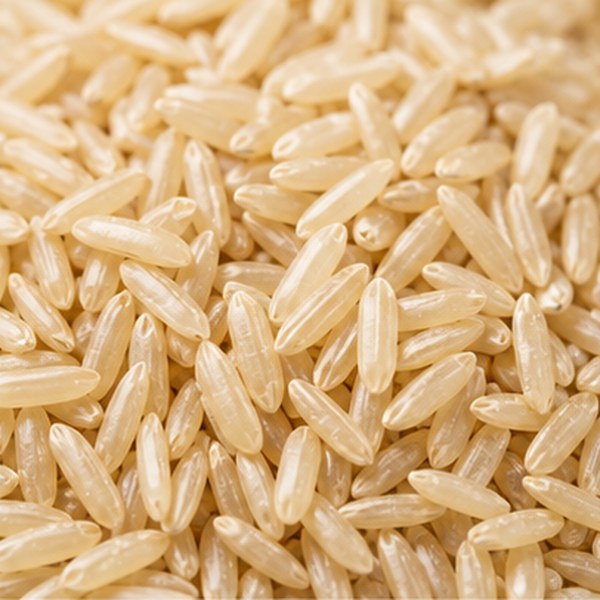
Brown rice has a texture and use pattern closer to everyday rice, works well mixed with white rice, and retains some bran and grain structure.
View details →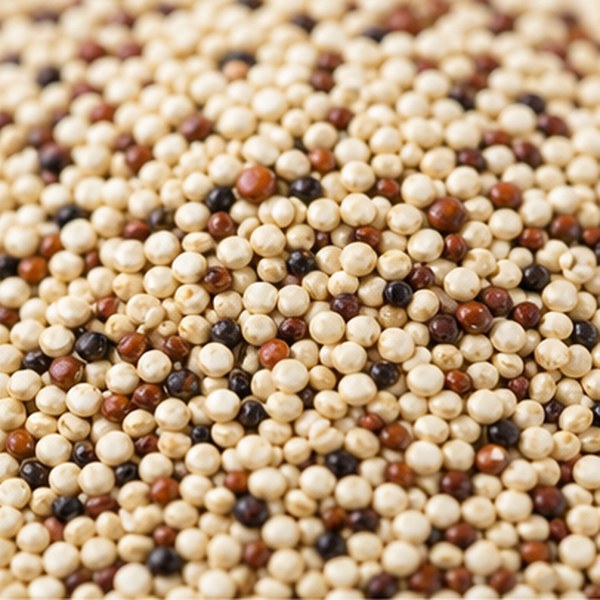
Millet
Millet has smaller grains and is usually easier to cook soft than intact sorghum, making it useful for porridge, mixed-grain rice, and softer staple foods.
View details →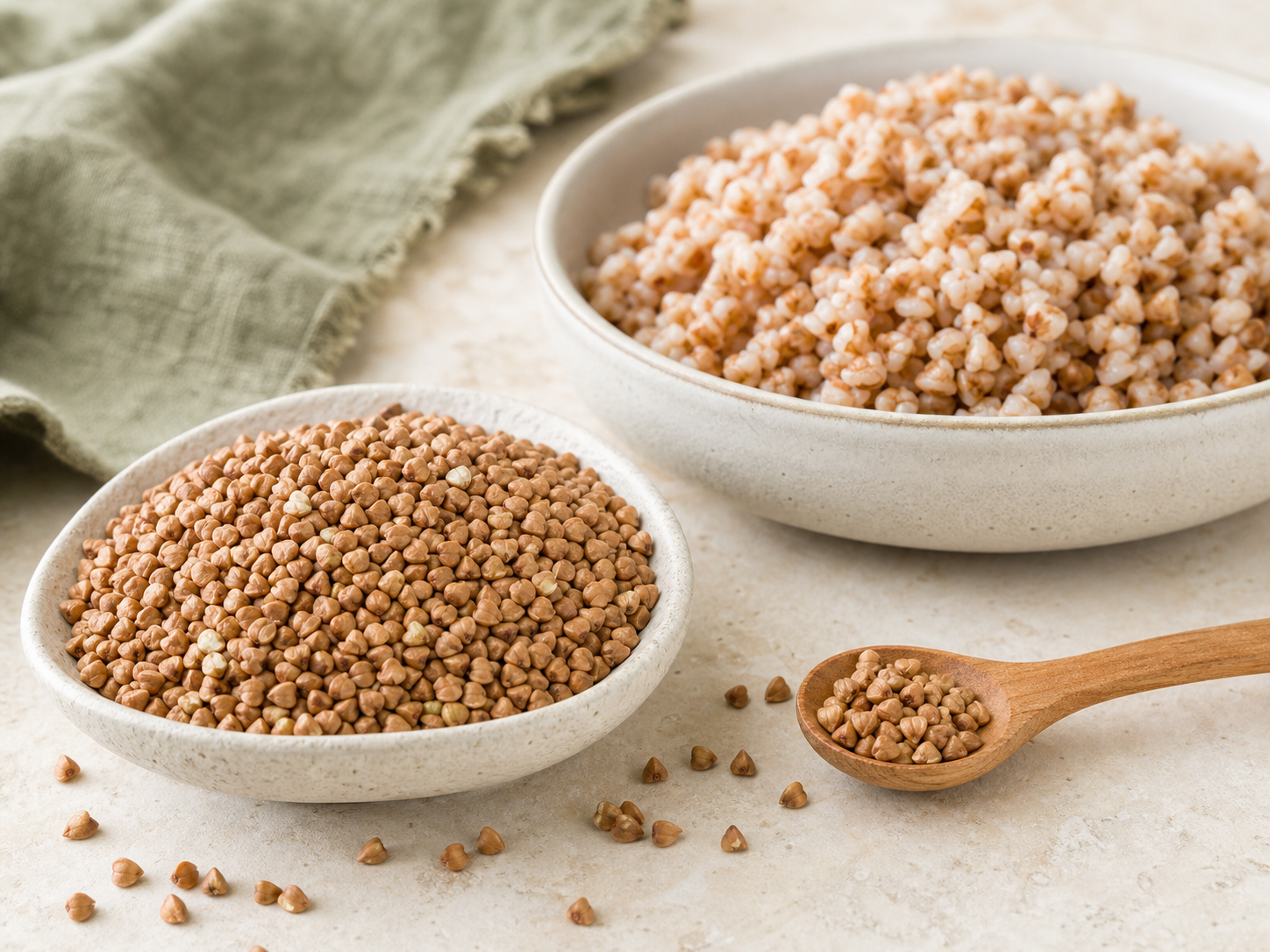
Buckwheat Groats
Buckwheat groats work well in mixed-grain rice, porridge.
View details →Quinoa
Quinoa usually cooks more quickly and works well in mixed-grain rice, soups, and grain salads, helping increase staple-food variety.
View details →Data Sources & Last Updated
Nutrition Data
Basic Information & Food Safety
Research & References
Stefoska-Needham A, et al. (2024). Sorghum and health: An overview of potential protective health effects.
Review.
Lemlioglu-Austin D, et al. (2012). Effects of sorghum crude extracts on starch digestibility, estimated glycemic index and resistant starch.
Research article.
Prasad MPR, et al. (2015). Glycaemic index and glycaemic load of sorghum products.
Research article.
Shobana S, et al. (2022). Carbohydrate profiling and glycaemic indices of selected traditional and modern foods.
Research article.