Healthy plant oils
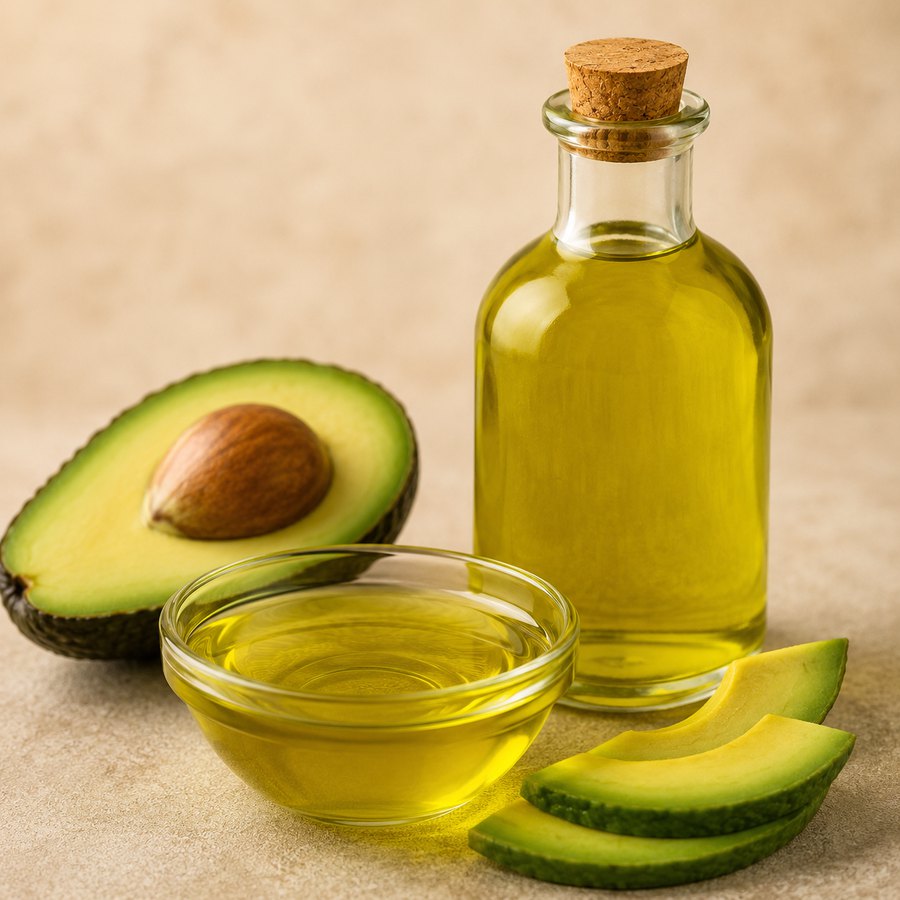
Virgin avocado oil
Virgin avocado oil is rich in monounsaturated fat and retains some vitamin E, phytosterols, and natural pigments. A 10 g serving provides about 88 kcal and roughly 7 g monounsaturated fat. It works best as a replacement for butter, lard, and other saturated-fat-rich fats, not as extra oil added on top of the diet.
Food overview
Key strengths
Avocado oil is dominated by C18:1 monounsaturated fatty acids. Codex gives a natural range of 42%–75% of total fatty acids; USDA generic avocado oil lists about 70.6 g monounsaturated fat per 100 g. Values vary by cultivar, origin, ripeness, and processing.
Best ways to use it
Good for dressings, dipping, cooked vegetables and grains, and short sautéing, pan-cooking, or baking. The main benefit is replacing butter, lard, cream sauces, or other saturated-fat-rich fats rather than drinking extra oil.
What stands out
Virgin products retain some chlorophyll, carotenoids, vitamin E, and phytosterols from the avocado flesh, so they may look green to yellow-green and smell grassy, avocado-like, buttery, or mushroom-like. Color and flavor vary widely by cultivar and process.
Worth noting
A 10 g serving provides about 88 kcal, similar to other pure oils. Its fat profile is favorable, but it is not low-calorie. Long-term human trials specifically on virgin avocado oil remain limited, so benefits are best framed around fat replacement, composition, and overall dietary pattern—not as a proven “potent anti-inflammatory oil.”
Basic Nutrition
Showing:100 g Virgin avocado oil
View complete nutrition data
GI note:GI varies with cultivar, food structure, processing, and cooking. Raw grains usually do not have directly applicable human GI data.
Pure avocado oil has no available carbohydrate, so GI is not applicable; no 0, “low GI,” or estimated value is shown.
Data notes:This page uses one nutrition state: virgin avocado oil made from ripe Persea americana Mill. fruit by physical methods such as mechanical pressing, centrifugation, settling, and filtration, without chemical solvent extraction, deodorization, bleaching, or other refining. Heating conditions, food moisture, and repeated use change vitamin E, phytosterols, chlorophyll, and oxidation, so there is no single “cooked avocado oil” nutrition state.
Basic nutrition uses USDA FoodData Central generic avocado oil (FDC 173573), which is not a virgin-grade-specific assay. Codex ranges are used for authenticity and natural variation; the two sources should not be treated as one fixed test result.
A common serving is 10 g, about 2 teaspoons. Spoon sizes and pour spouts vary, so nutrition calculations use grams.
100 g is a data reference, not a recommended serving.
GI is shown as “—”. Pure avocado oil has no available carbohydrate and cannot provide the 25 or 50 g available carbohydrate needed for standard GI testing. A value of 0 would wrongly imply it was tested. When eaten with bread, rice, or other carbohydrate foods, the meal’s glucose response depends on the full meal and portion sizes.
USDA omega-3 and omega-6 values are approximated from unspecified 18:3 and 18:2 fatty acids and do not prove that ALA and linoleic acid were separately measured. Cholesterol is shown as “—” because the entry lacks a reliable measured value; missing data are not automatically filled as 0.
Codex reference ranges for authentic avocado oil, as a share of total fatty acids: palmitic acid C16:0 about 11.0%–26.0%, palmitoleic acid C16:1 4.0%–17.1%, stearic acid C18:0 0.1%–1.3%, C18:1 monounsaturated fatty acids 42.0%–75.0%, linoleic acid C18:2 7.8%–19.0%, and C18:3 fatty acids including ALA 0.5%–2.1%. These are authenticity ranges, not fixed label values.
Vitamins & Minerals
Only vitamins and minerals providing at least 5% of the Daily Value at the current serving are shown.
No vitamin or mineral reaches 5% of the Daily Value in the selected serving.
There is no single fixed vitamin E value for virgin avocado oil. Codex crude avocado-oil samples contain about 45–270 mg/kg alpha-tocopherol, equivalent to 4.5–27 mg per 100 g or 0.45–2.7 mg per 10 g. Because the low end is below 5% DV and no batch-specific test is available, this page does not uniformly label avocado oil as a vitamin E source. Vitamin K and mineral values from avocado flesh are also not transferred to the oil.
View all vitamins and minerals
Key Bioactive Compounds
Oleic Acid
Monounsaturated fatty acidOleic acid is one of the main fatty acids in virgin avocado oil.
Codex lists C18:1 at about 42%–75% of total fatty acids. USDA generic avocado oil has about 67.9 g/100 g, or 6.8 g/10 g.
FDA says supportive but not conclusive evidence suggests certain high-oleic oils may help reduce coronary heart disease risk when they replace saturated fats without adding calories.
Use about 5–10 g in place of butter, lard, cream sauces, or some coconut oil.
FDA’s qualified claim requires at least 70% oleic acid, while Codex ranges start at 42%. Not every avocado oil is high-oleic or disease-preventing.
Alpha-Tocopherol
Vitamin EAlpha-tocopherol is the main vitamin E-active tocopherol in avocado oil.
Codex crude avocado-oil samples contain about 45–270 mg/kg alpha-tocopherol, or roughly 0.45–2.7 mg per 10 g. AOCS summaries for cold-pressed Hass oil report about 70–190 mg/kg.
Alpha-tocopherol supports vitamin E nutrition and helps protect lipids from oxidation, including the oil itself.
Choose dark packaging, reseal promptly, and store cool and away from light. Cold use, finishing, or short cooking better preserves vitamin E than prolonged high heat.
Levels vary by cultivar, process, and storage. Higher vitamin E does not make avocado oil an anti-aging treatment or equivalent to a high-dose supplement.
β-Sitosterol & Other Phytosterols
Plant sterolsPhytosterols are plant-oil compounds related structurally to cholesterol; beta-sitosterol is the main sterol in avocado oil.
Codex lists about 3000–7500 mg/kg total sterols, or 30–75 mg per 10 g; beta-sitosterol accounts for about 79.0%–93.4%.
Plant sterols can reduce intestinal cholesterol absorption. Fortified-food studies usually use about 1.5–2.4 g/day—far more than a normal serving of avocado oil.
Get phytosterols from a varied diet of nuts, seeds, whole grains, legumes, and plant oils rather than extra oil.
One 10 g serving provides only tens of milligrams, so it should not be claimed to match the cholesterol-lowering effect of fortified products.
How processing changes it
Use cold or after cooking
Minimal heating better preserves the oil’s green color, aroma, vitamin E, chlorophyll, and carotenoids. It suits salads, legumes, whole grains, and cooked vegetables. AOCS summaries for cold-pressed Hass oil report roughly 1.0–3.5 mg/kg total carotenoids, including about 0.5–3.3 mg/kg lutein.
Quick sautéing and pan cooking
Virgin avocado oil can be used for ordinary short sautéing and pan-cooking. Its high monounsaturated-fat content gives reasonable heat stability, but longer and hotter cooking still reduces vitamin E, phytosterols, and natural pigments.
Roasting
Suitable for roasting vegetables, fish, chicken, and tofu. A thin coating is enough; a high smoke point is not a reason to use large amounts of oil or char foods.
Prolonged high heat and repeated frying
In one experiment, avocado oil held at 180°C for 9 hours lost total phytosterols from about 339.6 to 270.4 mg/100 g, and vitamin E became undetectable after about 4 hours. This is harsher than typical home cooking but shows that prolonged repeated heat depletes protective compounds.
Virgin vs. refined avocado oil
Virgin oil retains more natural color, aroma, and some trace compounds; refined oil is usually paler and milder but loses some chlorophyll, carotenoids, and tocopherols. Their basic energy is similar, but their bioactive-compound data should not be shared.
“Cold-pressed” and “virgin” are not identical
Codex defines cold-pressed oils as mechanically extracted without added heat, while some AOCS industry material has used below 50°C for cold-pressed avocado oil. Terminology varies by market, so check actual extraction temperature, solvent use, and whether the oil was refined.
Smoke point is not the only quality marker
AOCS has reported smoke points above about 250°C for some cold-pressed Hass oils, but smoke point depends on free fatty acids, impurities, oxidation, and batch. A high smoke point does not mean unlimited reheating or protection of vitamin E and plant compounds.
How to choose and store it
How to choose
- Check the full name: choose products clearly labeled “Virgin Avocado Oil.” “Avocado oil,” “pure avocado oil,” or “light-tasting avocado oil” may be refined rather than virgin.
- Check the ingredient list: pure virgin oil should list only avocado oil. Codex does not allow food additives in virgin or cold-pressed oils; flavored oils, spray oils, and blends should be judged by their own labels.
- Check processing details: useful information includes mechanical pressing or centrifugation, unrefined, unbleached, undeodorized, no chemical solvents, and origin or batch. Terms such as “natural,” “pure,” or “high smoke point” do not replace real processing information.
- Check packaging: prefer dark glass or opaque metal, an intact seal, and a size you can finish fairly quickly. Chlorophyll can promote photo-oxidation under light, so green virgin oil especially needs light protection.
- Use color cautiously: virgin avocado oil may be emerald, yellow-green, or golden-green depending on cultivar, ripeness, peel inclusion, and filtration. Darker green does not automatically mean purer, fresher, or more nutritious.
- Smell and taste: normal oils may smell like avocado, grass, butter, or mushrooms. Crayon-like, old-paint, stale-nut, cardboard, moldy, or clearly rancid odors suggest oxidation.
- Look for quality and purity evidence: U.S. sampling studies have found early rancidity, mislabeling, and adulteration in some avocado oils. For premium products, batch testing or third-party reports on free fatty acids, peroxide value, fatty-acid profile, sterols, lot number, and lab can add confidence. Price, color, fridge clouding, or home smell tests cannot reliably prove purity.
How to store
- Protect from light: keep it in a cupboard, not by windows, stove lights, or in a clear spice rack. Chlorophyll can accelerate photo-oxidation.
- Seal tightly: close the bottle immediately after each use rather than leaving an open oil cruet out.
- Keep away from heat: avoid storage beside the stove, oven, dishwasher, or direct sun. Heat speeds oxidation and loss of plant compounds.
- Buy a practical size: a bottle you can finish in about 1–3 months after opening is more sensible. If needed, divide a large bottle into clean, dry, opaque smaller containers.
- Refrigeration is not usually required. Cold temperatures may make the oil cloudy or partly solid; it should clear again at room temperature. This does not prove authenticity. Light protection, sealing, and avoiding heat matter more.
Remember three things: look for clear “virgin/unrefined” processing information; choose a small, sealed, light-protective package; and do not use color, price, or smoke point alone as proof of quality.
How to use it in everyday meals
Vegetable salads
Use about 5–10 g with lemon juice, vinegar, pepper, and herbs on leafy greens, tomatoes, carrots, and peppers. Fat can help absorb fat-soluble carotenoids from vegetables, but there is no need to copy large experimental doses such as 24 g.
Drizzle over cooked vegetables
Add about 5 g to cooked broccoli, pumpkin, tomatoes, carrots, or mushrooms after steaming or blanching. This preserves more green color and fresh aroma and avoids prolonged heating.
Quick home sauté
Use for short sautéing of eggs, tofu, onions, mushrooms, or vegetables. Add food soon after the oil goes into the hot pan; avoid heating an empty pan for long periods. If the oil smokes continuously, reduce the heat or change the oil.
Roast vegetables, fish, or tofu
Coat food lightly before roasting and use herbs, pepper, lemon, and garlic for flavor instead of salty sauces. Do not pour on large amounts just for crispness or repeatedly roast until charred.
Mix with whole grains and legumes
Mix into brown rice, quinoa, buckwheat, chickpeas, or lentils with tomatoes, cucumber, red cabbage, and herbs. Its mild flavor suits people who dislike stronger olive notes.
Replace some butter in baking
Use it to replace part of the butter or shortening in whole-grain breads, oat muffins, or vegetable bakes. It still has the same calorie density as other oils, so sugar, refined flour, and portion size still matter.
Who Should Take Extra Care
People managing body weight or total energy intake
A 10 g serving provides about 88 kcal. It is better used to replace another fat than added on top of the diet. Salads, bread dips, and nut-based sauces can still become very energy-dense when heavily oiled.
People following a low-fat diet
People who have been told to restrict fat because of pancreatic, gallbladder, digestive, absorption, or postoperative issues should count avocado oil toward total fat. Its unsaturated-fat profile does not override medical dietary restrictions.
People with a clear avocado allergy
Virgin oil is not deeply refined and may theoretically retain trace non-fat components. Anyone with a history of severe avocado allergy should not self-test expensive unrefined oil without allergy-specialist advice.
Infants & Children
A small amount may be mixed into age-appropriate foods, but there is no need to feed a spoonful of oil directly or copy adult “daily oil drinking” trends.
People managing blood sugar
Avocado oil contains no carbohydrate, but it still provides calories. It does not cancel the carbohydrate in the rest of a meal and cannot replace glucose-lowering medication, insulin, or overall dietary management.
People who need high confidence in product purity
Adulteration and grade mislabeling have been reported in the avocado-oil market. People with severe allergies to other oils or strict fat restrictions should favor products with credible batch testing and supply-chain information.
Similar Food Alternatives
Substitution guide: virgin avocado oil works well in place of butter, lard, and cream sauces. For a mild everyday high-oleic oil, a low-erucic canola oil may fit. For stronger flavor, mature grading standards, and more human evidence, extra virgin olive oil is a strong alternative. For plant ALA omega-3 and a nutty flavor, walnut oil is another option. High-oleic sunflower oil does not yet have a separate page here; check the sunflower-seed page and product label for fatty-acid information.
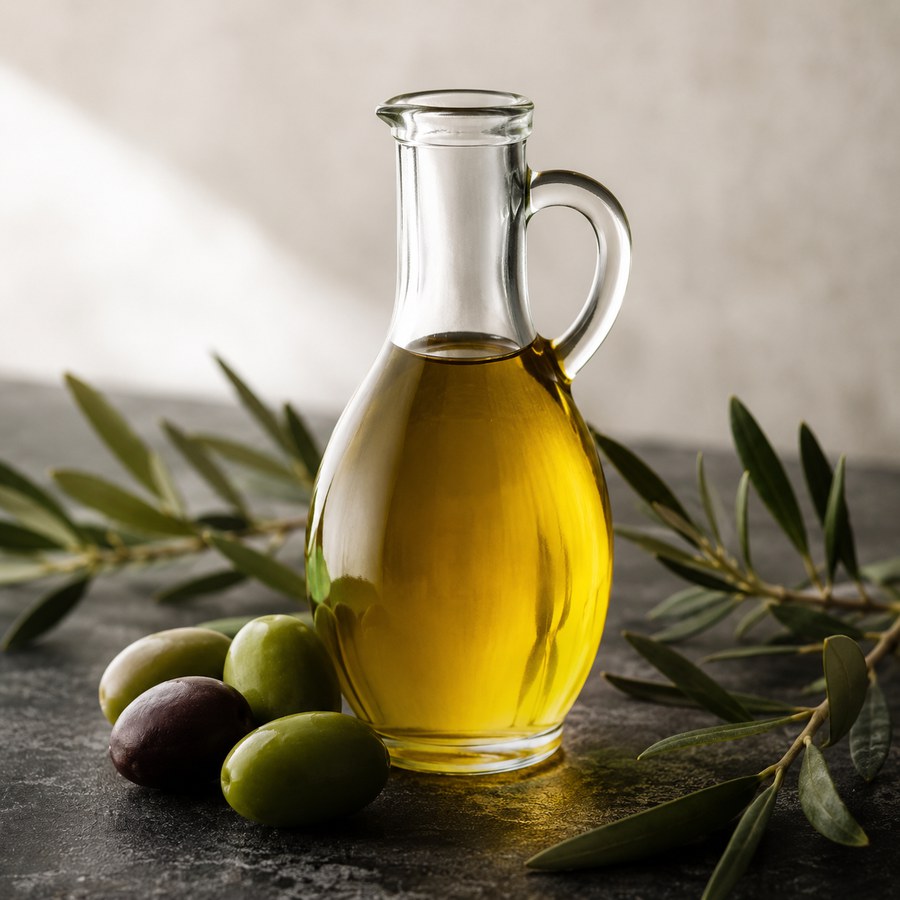
Extra Virgin Olive Oil
Also rich in monounsaturated fat, with more mature international grade standards, more human research, and olive polyphenols such as hydroxytyrosol. Flavor is usually stronger than avocado oil.
View details →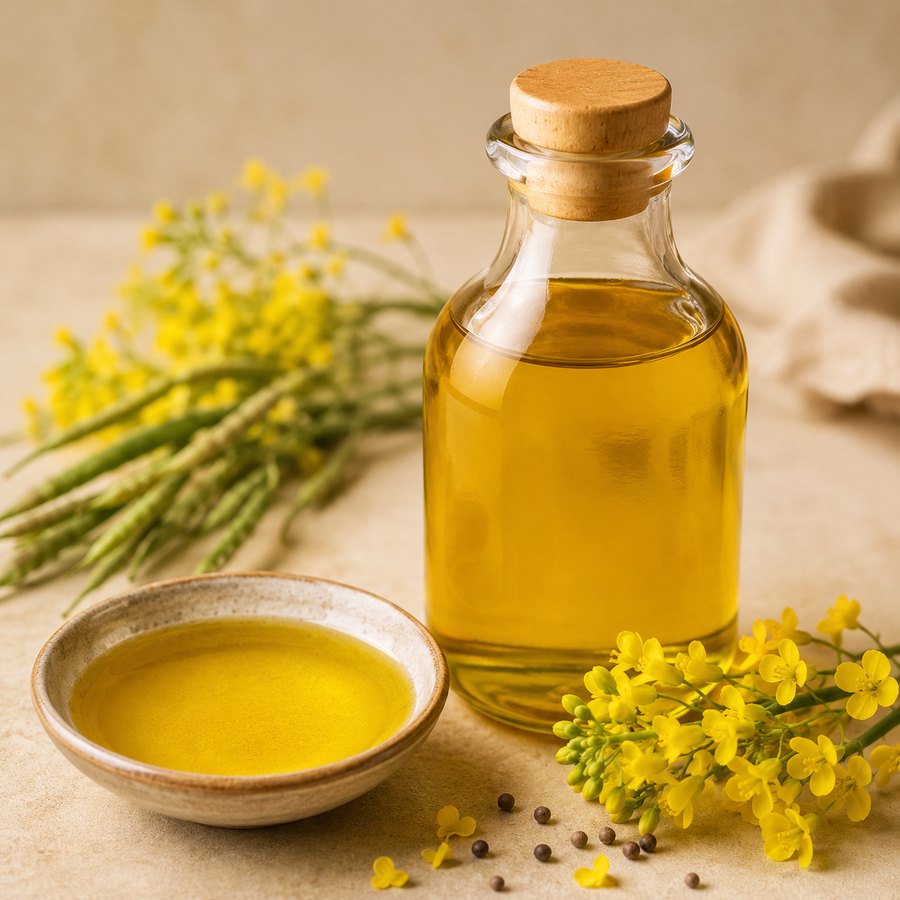
High-oleic canola oil
High in oleic acid with a mild flavor and suitable for everyday sautéing and baking. Refined products usually contain fewer natural pigments and plant compounds than virgin avocado oil. The linked page covers low-erucic canola oil, so check the product label because cultivars and fatty-acid profiles differ.
View details →
Walnut oil
More prominent in plant ALA omega-3 and nutty flavor, and better suited to cold dishes or adding after cooking. Its higher polyunsaturated-fat content means it needs more careful light protection, sealing, and timely use.
View details →