Fermented foods · Fermented vegetables
Sauerkraut
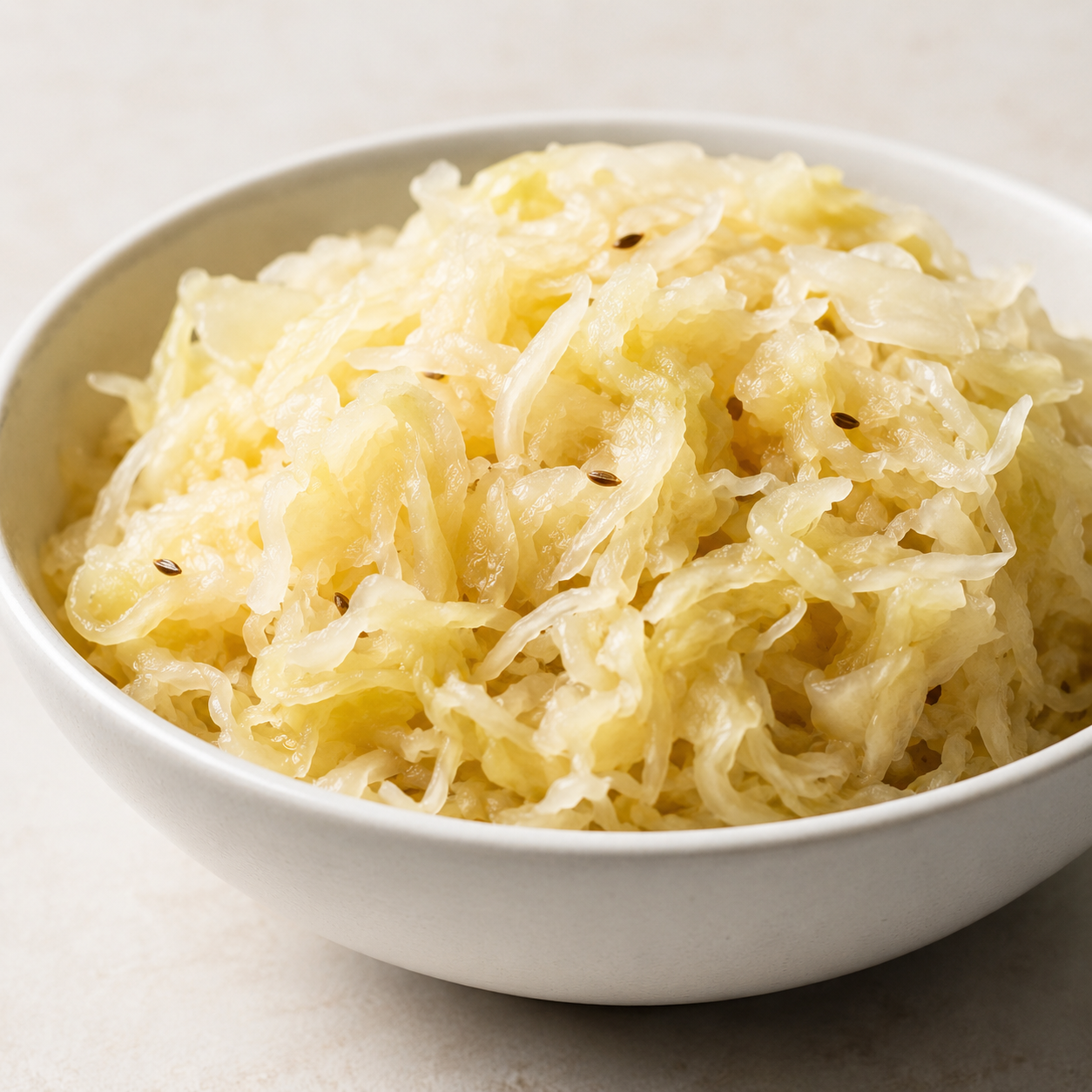
Sauerkraut is a low-energy fermented cabbage that provides fiber, vitamin C, and sulfur-containing compounds from cruciferous vegetables. Refrigerated, unpasteurized products may also retain live lactic-acid bacteria, but sodium is often high, so it should not be treated as an unlimited “probiotic food.” This page covers plain sauerkraut made mainly from mature white cabbage and salt through lactic fermentation; vinegar-pickled cabbage is a different food.
Food overview
Key strengths
Sauerkraut provides only about 19 kcal and 2.9 g fiber per 100 g. Its acidity can add flavor to grains, legumes, fish, and vegetables, reducing the need for sugary sauces or heavy amounts of fat.
How to eat it
Use small amounts cold, in grain bowls, on baked potatoes, or in bean stews, vegetable soups, and sandwiches. If live cultures matter to you, choose a refrigerated, clearly unpasteurized product and avoid prolonged heating.
What stands out
Whether sauerkraut contains live microbes depends mainly on pasteurization, canning, or reheating. Lactic fermentation still leaves lactic acid and other metabolites, but heat-treated sauerkraut should not be described as a reliable source of live cultures.
Worth noting
The USDA standard entry contains about 661 mg sodium per 100 g, roughly 33% of China's sodium NRV; a 50 g serving still provides about 331 mg. People limiting sodium should watch portions and compare labels.
Basic Nutrition
Showing:100 g Canned sauerkraut
View complete nutrition data
GI note:GI varies with cultivar, food structure, processing, and cooking. Raw grains usually do not have directly applicable human GI data.
No reliable universal GI was found for ordinary sauerkraut. Available carbohydrate is low, and brand, fermentation time, draining, and added sugar can change results, so the page shows “—”.
Data notes:This page uses one formal food state: canned sauerkraut, solids and liquids, matching USDA FoodData Central FDC 169279. Refrigerated unpasteurized, drained, rinsed, and homemade sauerkraut can differ substantially in water, sodium, vitamin C, and live-culture content and should not reuse the same values.
True sauerkraut relies on naturally occurring lactic-acid bacteria from cabbage. Cabbage acidified only with vinegar, without lactic fermentation, is pickled cabbage and should not share sauerkraut's live-culture or fermentation data.
Default display is per 100 g; a common serving is about 50 g, roughly a small side portion or 2–3 tablespoons, which better reflects use in sandwiches or grain bowls.
GI is shown as “—”. No reliable universal GI was found for ordinary sauerkraut, and results can vary with available carbohydrate, brand, fermentation time, draining, and added sugar. Cabbage or other pickle GI values are not substituted.
USDA does not provide starch data, so starch is shown as “—” rather than 0.
Omega-3 and omega-6 are organized from the database's 18:3 and 18:2 fatty-acid entries, but the absolute amounts are very small and are not major nutritional advantages of sauerkraut.
Vitamins & Minerals
Uses China's nutrition-label NRVs and shows only nutrients providing at least 5% at the selected amount. Per 100 g, vitamin K, vitamin C, iron, vitamin B6, potassium, and copper are shown, with folate and manganese in the expanded area; at 50 g, only the first four meet the threshold. Sodium is intentionally not shown as a “highlight.”
Percentages use China's nutrition-label NRVs and are rounded. GB 28050—2025 takes effect in 2027, when all food pages should be updated together. Sodium is not presented as a nutrient highlight: 100 g provides 661 mg, about 33% of the daily reference value. At a common 50 g serving, only vitamin K, vitamin C, iron, and vitamin B6 meet the 5% display threshold.
View all vitamins and minerals
Percentages show how much the selected serving contributes to the adult Daily Value.
Key Bioactive Compounds
Lactic-acid bacteria and lactic acid
Live microbes and fermentation metabolitesLactic-acid bacteria ferment cabbage sugars into lactic acid, creating the characteristic sour taste and an acidic environment that suppresses many spoilage organisms.
There is no standardized live-count value. Sauerkraut fermentation can involve Leuconostoc, Pediococcus, Lactiplantibacillus plantarum, Levilactobacillus brevis, and other lactic-acid bacteria, with composition changing by raw material, salt level, temperature, fermentation stage, and storage. Only unpasteurized, continuously refrigerated products may retain culturable live bacteria; canning, pasteurization, and thorough heating greatly reduce or eliminate them.
Live lactic-acid bacteria, lactic acid, and other fermentation metabolites may interact with the gut environment. In one small IBS trial, symptoms improved in both pasteurized and unpasteurized sauerkraut groups, with no significant difference between them, so the study does not show that live bacteria were the main cause.
If you want live cultures, choose refrigerated, unpasteurized sauerkraut with clear live-fermentation labeling and eat it cold or add it after cooking. Start with 1–2 tablespoons if you are prone to bloating.
“Unpasteurized” does not mean a clinically validated probiotic product because strain identity, viable count, and gastrointestinal survival are usually not standardized. In a 2026 randomized crossover trial, 87 healthy adults ate 100 g fresh or pasteurized sauerkraut daily for 4 weeks without clear overall systemic health benefits, so sauerkraut should not be presented as a reliable way to lower inflammation or repair the gut barrier.
Ascorbigen and isothiocyanates
Cruciferous sulfur compoundsGlucosinolates in cabbage break down during chopping and fermentation into ascorbigen, isothiocyanates, and other pungent compounds.
There is no universal content value. In one white-cabbage fermentation study, original glucosinolates fell rapidly by days 2–5 and were undetectable by day 7; a specific experimental sauerkraut formed about 13.0 micromoles ascorbigen and 4.52 micromoles indole-3-carbinol per 100 g fresh weight around days 5–9. Other work also detected ascorbigen and isothiocyanates, but amounts depend on cabbage, microbes, and storage and should not be generalized to all products.
Isothiocyanates and related cruciferous compounds show antioxidant and cell-defense activity in experimental work. Sauerkraut can be one source among varied cruciferous vegetables, but human effects depend on intake, metabolism, and the overall diet.
Eating it cold or warming briefly avoids further heat exposure. Some water-soluble and fermentation-derived compounds are also present in the brine, but the brine is salty and should not be consumed in large amounts just for bioactives.
Laboratory activity does not prove sauerkraut prevents cancer, treats inflammation, or “detoxes.” Fermentation greatly reduces the original glucosinolates, so sauerkraut also should not automatically be described as richer in cruciferous bioactives than fresh cabbage.
Vitamin C
Water-soluble antioxidant vitaminVitamin C is one of sauerkraut's more meaningful antioxidant nutrients and also supports collagen synthesis and normal immune function.
Canned sauerkraut provides about 14.7 mg vitamin C per 100 g; a 50 g serving provides about 7.4 mg. Amounts vary with cabbage variety, fermentation, salt, storage, and heat treatment.
Vitamin C contributes to antioxidant defenses, collagen synthesis, and normal immune function and can improve absorption of non-heme iron from plant foods.
To retain more vitamin C, eat sauerkraut cold or warm it only briefly. It pairs well with legumes, lentils, whole grains, and leafy vegetables. Vitamin C is sensitive to heat and long storage, so repeated prolonged cooking is not ideal.
Sauerkraut provides some vitamin C, but a normal serving is not especially high. It should not replace fresh fruit and varied vegetables or be promoted as a treatment for colds, immunity, or aging.
How processing changes sauerkraut
Refrigerated unpasteurized sauerkraut
Unpasteurized products kept continuously refrigerated may retain live lactic-acid bacteria and often have a crisper texture and brighter acidity. Their strains and counts are usually not standardized and should not be equated with dose-defined probiotic products.
Pasteurized or canned sauerkraut
Heat treatment improves shelf stability but greatly reduces live bacteria. Fiber, lactic acid, and some fermentation compounds remain, so “no live cultures” does not mean “no nutritional value.”
Heated sauerkraut
Heating softens the texture and mellows acidity, making sauerkraut easier to use in soups and stews. Prolonged heat reduces live microbes and may lower vitamin C, so adding it near the end of cooking is a reasonable compromise.
Drained sauerkraut
Draining removes some brine and therefore some sodium, but the actual reduction depends on the product and how thoroughly it is drained. Nutrition data for “solids and liquids” should not be directly applied to fully drained sauerkraut.
Rinsed sauerkraut
A quick rinse before eating can remove some surface sodium but also washes away lactic acid, vitamin C, and some water-soluble fermentation compounds. For sodium control, portion size and label comparison still matter most. Do not rinse away brine before home-canning, because changing acidity can affect safety; rinsing is only for opened food being prepared to eat.
Vinegar-pickled cabbage
If cabbage is acidified mainly with vinegar and not lactic-fermented, it is pickled cabbage. It can still provide vegetables and acidity, but sauerkraut live-culture and fermentation data do not apply.
How to choose and store
How to choose
- Check the ingredients: plain sauerkraut usually lists cabbage and salt. Caraway, juniper, or bay leaf can be normal additions, but watch for extra sugar, oil, preservatives, or heavy sauces.
- Check processing: if you want live cultures, look in the refrigerated section for labels such as “unpasteurized,” “raw,” or “live cultures.” These terms suggest possible live microbes but do not prove a specific strain or count.
- Check sodium: brands vary widely. Compare sodium per 100 g rather than only “per serving,” because serving sizes differ.
- Check the package: cans and jars should not be bulging, leaking, or unsealed; refrigerated pouches should not be badly swollen, torn, or leaking. A normal sour fermented smell is expected; rotten odor, slime, or unusual mold is not.
How to store
- Unopened: canned, jarred, and refrigerated products have different storage requirements, so follow the label. Anything marked “keep refrigerated” should not be stored long-term at room temperature.
- Opened canned product: refrigerate after opening. USDA guidance for high-acid canned foods such as sauerkraut is generally 5–7 days refrigerated; transferring to a clean glass or food-safe container can help preserve quality.
- Refrigerated unpasteurized product: use clean utensils, keep the remaining cabbage submerged in brine, reseal, and refrigerate. Follow the product's own storage guidance.
- Homemade sauerkraut: use a tested salt ratio, container, and temperature method and keep cabbage submerged below brine. Properly fermented sauerkraut can keep refrigerated for months, but mold, slime, or an abnormal foul odor are reasons to discard it without tasting.
When buying sauerkraut, remember four things: cabbage first, compare sodium, know whether it is pasteurized, and refrigerate promptly after opening.
How to use sauerkraut in everyday meals
Sauerkraut vegetable plate
Lightly drain about 30–50 g sauerkraut and pair with cucumber, tomato, shredded carrot, apple, or red cabbage. Season with black pepper, dill, and a little olive oil rather than more salt. Use refrigerated unpasteurized sauerkraut if preserving live cultures matters.
Sauerkraut grain bowl
Add a small amount to brown rice, quinoa, barley or buckwheat with chickpeas, tofu, and leafy greens. Use it as the acidic condiment at the end so you need less salty sauce, and keep salt low when cooking the grains and legumes.
Sauerkraut baked potato
Top a baked potato or sweet potato with sauerkraut, plain yogurt, beans, or a few nuts. If you want to retain live cultures, let the potato cool slightly before adding the sauerkraut rather than baking them together for a long time.
Sauerkraut bean stew
Simmer white beans, lentils, or chickpeas with tomato, onion, carrot, and mushrooms, then stir in a small amount of sauerkraut near the end. This adds acidity without prolonged heat. Because sauerkraut and canned beans can both contain sodium, reduce stock cubes and soy sauce.
Sauerkraut with fish or tofu
Use a small amount as a side for baked or steamed fish, pan-seared tofu, or tempeh with broccoli, peppers, and whole grains. Sauerkraut adds acidity and crunch, so there is no need to pair it with large amounts of sausage, bacon, or other salty processed meat.
Sauerkraut vegetable soup
Add sauerkraut near the end of a potato, bean, tomato, or mushroom soup and warm briefly. Its salt and acidity season the soup, so little extra salt is needed. For live cultures, add a small portion directly to a warm bowl after cooking.
Who Should Take Extra Care
People limiting sodium
Canned sauerkraut provides about 661 mg sodium per 100 g and about 331 mg per 50 g. People with hypertension, heart failure, kidney impairment, or a prescribed low-sodium diet should control portions, compare brands, and decide with their care plan whether rinsing is useful.
People with sensitive digestion or frequent bloating
Fiber, acidity, and fermentable carbohydrate can cause bloating, gas, or abdominal discomfort. Start with about 1 tablespoon rather than jumping to 100 g daily. Fermented-vegetable trials often report bloating or gas, and some human studies have not shown clear improvements in inflammatory markers or microbiome diversity.
People sensitive to histamine or other biogenic amines
Fermented foods can contain histamine, tyramine, and other biogenic amines, with levels varying by microbes, fermentation, and storage. People with known intolerance or symptoms such as headache, flushing, palpitations, or gastrointestinal upset after fermented foods should discuss suitability with a clinician or dietitian.
People Taking Certain Medications
People taking MAO inhibitors, linezolid, or following a low-tyramine diet should follow medical and medication guidance closely. MedlinePlus specifically lists sauerkraut among tyramine-containing fermented foods that should not be consumed in large amounts during linezolid treatment.
People Taking Warfarin
Sauerkraut provides about 13 micrograms vitamin K per 100 g. People taking warfarin do not necessarily need to avoid it completely, but should keep vitamin K intake reasonably consistent rather than suddenly moving from none to large amounts.
People requiring a strict gluten-free diet
Traditional cabbage-and-salt sauerkraut does not use gluten grains, but flavored products may contain beer, malt vinegar, sauces, or be made on shared equipment. People with celiac disease should check ingredients and gluten-free labeling.
Children and people with swallowing difficulty
Long cabbage strands, acidity, and saltiness can be challenging. Cut strands shorter for children, control portions, and do not use high-sodium sauerkraut as the main vegetable source.
Similar Food Alternatives
Korean napa cabbage kimchi
Also based on lactic-fermented vegetables, usually with chili, garlic, and fish sauce. It is spicier, and sodium and allergen profiles can differ.
Northeastern Chinese suancai
Usually made from napa cabbage and suited to soups and stews. The vegetable, texture, and fermentation conditions differ from sauerkraut, so it needs separate nutrition data.
Fermented red cabbage
Fermented red cabbage provides anthocyanins plus different color and flavor. Some commercial “red cabbage” products are sweetened, vinegar-based, and cooked rather than truly fermented, so check the product type.
Vinegar-pickled cabbage
Vinegar-pickled cabbage gives similar acidity and crunch for sandwiches and grain bowls but usually lacks the live cultures and same fermentation metabolites produced by lactic fermentation.