Fruits · Berries
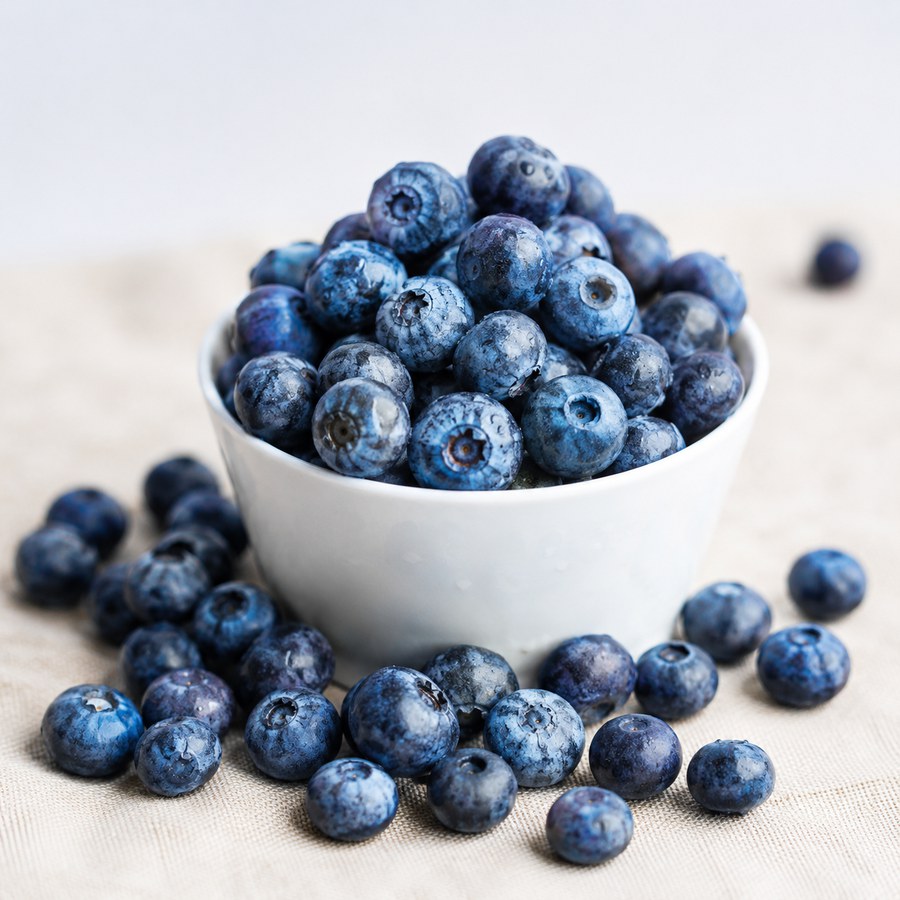
Blueberry
Blueberries are relatively low in energy and provide dietary fiber. For everyday eating, whole fresh blueberries are generally the better choice; the main concern is added sugar in blueberry juice, jam, sweetened dried fruit, and baked goods.
Overview
Key strengths
Per 100 g, fresh blueberries provide about 57 kcal, 14.49 g of carbohydrate, and 2.4 g of dietary fiber, along with vitamin K, manganese, vitamin C, and a little copper.
How to eat it
Blueberries can be eaten whole or added to plain yogurt, oats, whole-grain cereal, fruit salad, or an unsweetened smoothie. Keep the skin and pulp rather than straining them into juice.
What stands out
The blue-purple color of blueberries comes mainly from anthocyanins. Different cultivars can contain glycosides derived from delphinidin, malvidin, petunidin, cyanidin, and peonidin, and chlorogenic acid, proanthocyanidins, and flavonol derivatives such as quercetin, kaempferol, and myricetin.
Worth noting
"Blueberry-flavored" does not necessarily mean a product contains much blueberry. Blueberry yogurt, cereal, jam, juice, and baked goods may get much of their flavor and color from syrups, juice concentrates, flavorings, or color additives.
Basic Nutrition
Showing:100 g Fresh blueberries
View complete nutrition data
GI note:GI varies with cultivar, food structure, processing, and cooking. Raw grains usually do not have directly applicable human GI data.
A reliable human GI measurement directly matching the fresh cultivated highbush blueberries covered here has not been verified. “—” means unconfirmed, not 0; values for wild blueberries, jam, or mixed meals are not substituted.
Data notes:This page includes only whole fresh blueberries; it does not provide separate nutrition states for frozen blueberries, juice, puree, jam, dried or freeze-dried blueberries, or baked products.
The typical serving is also 100 g, so switching to the typical-serving view does not change the nutrition values.
GI is unconfirmed for the whole fresh cultivated blueberries covered here and is shown as “—”, not 0. GI does not scale with serving size; values for wild blueberries, juice, jam, dried fruit, or mixed meals are not substituted.
Vitamins & Minerals
Adult Daily Values are used, and only nutrients that provide at least 5% of the Daily Value at the current serving are shown; nutrients below that threshold are not added simply to fill six cards.
View all vitamins and minerals
Key Bioactive Compounds
Anthocyanins
AnthocyaninsAnthocyanins are the main pigments responsible for the blue-purple color of blueberries, including derivatives of delphinidin, malvidin, and cyanidin.
Across different blueberry types, total anthocyanins have been reported at roughly 57–503 mg per 100 g of fresh fruit. Anthocyanins are concentrated mainly in the skin and dark tissues just beneath it.
Anthocyanins and their metabolites participate in the body's antioxidant defenses. Research has associated intake of anthocyanin-rich berries with cardiovascular health, vascular function, and normal metabolic health.
Rinse and eat blueberries with the skin intact; peeling is unnecessary. Fresh or unsweetened frozen blueberries can both be used.
Blueberries do not treat inflammation, cardiovascular disease, or cognitive disorders.
Chlorogenic acid
Phenolic acidsChlorogenic acid is a representative phenolic acids in blueberries and is a polyphenol produced by the plant during growth and responses to environmental stress.
Specific amount: —. Chlorogenic acid content in blueberries varies substantially with cultivar, ripeness, and growing conditions and is found in both the skin and flesh.
As one of the polyphenols in fruit, chlorogenic acid can contribute to dietary antioxidant activity, and its intake may be associated with normal post-meal metabolic responses.
Eating whole blueberries provides both polyphenols and dietary fiber more effectively than drinking strained juice alone.
Research on chlorogenic acid does not show that blueberries lower blood glucose or replace diabetes treatment.
Vitamin C
Water-soluble vitaminVitamin C is a water-soluble antioxidant nutrient involved in collagen formation, normal immune function, and iron absorption.
Raw blueberries contain about 9.7 mg of vitamin C per 100 g on average, distributed through the flesh and juice-containing cells. Actual levels vary with cultivar, storage time, and ripeness.
Vitamin C contributes to antioxidant defenses and helps support normal immune function and the health of skin and connective tissue.
Refrigerate blueberries after purchase and wash them shortly before eating. Prolonged storage, air exposure after cutting, and repeated heating can increase vitamin C losses.
Blueberries are not among the highest-vitamin-C fruits, and a little blueberries cannot prevent colds or treat infections.
How Preparation Changes Blueberry
Whole fresh blueberries
Fresh blueberries retain the skin, flesh, seeds, and dietary fiber and are well suited to eating whole. Before eating, discard any moldy, leaking, or damaged berries, rinse gently under cool running water, drain, and eat soon afterward.
Blended into a smoothie
When blueberries are blended with plain yogurt, milk, unsweetened soy milk, oats, or nuts without straining, the skin, flesh, and fiber remain. Keep the total fruit portion in check and avoid turning the drink into an extra-large sweet beverage.
Juicing & straining
Juicing and straining out the pulp removes some dietary fiber and disrupts the structure of the whole food. Juice should not use this page’s fresh-fruit nutrition data; its GI also requires a matching product-specific measurement.
Heating & baking
Anthocyanins are sensitive to prolonged high heat, so baking, simmering, and repeated reheating can cause some degradation, but they do not simply disappear as soon as berries are heated.
Blueberry jam
Blueberry jam is usually cooked for longer and made with substantial added sugar. Although some polyphenols may remain, its sugar content, energy density, and typical serving are different from whole blueberries, so fresh-blueberry nutrition data should not be applied and the jam’s GI cannot be inferred from this page.
Dried & freeze-dried blueberries
Regular dried blueberries may contain added sugar, juice concentrate, and oil. Even unsweetened freeze-dried blueberries have much more concentrated energy and sugar per unit weight because most of the water has been removed.
How to Choose & Store
How to choose
- Choose berries with even color that have fully turned blue or blue-purple; a large amount of green or pink usually indicates incomplete ripening.
- The natural gray-white waxy bloom is not mold. Mold is usually localized, fuzzy, cottony, or irregular and is often accompanied by softening or an off odor.
- Choose plump berries that are dry, reasonably firm, free of obvious skin damage, and not sitting above a large amount of leaked juice in the package.
- Avoid berries with fuzzy mold, heavy leakage, severe shriveling, pooled liquid, a fermented or wine-like smell, or a sour-spoiled odor; inspect the bottom of clear packages as well.
How to store
- Refrigerate unwashed blueberries, keeping them as dry as practical with some airflow, and remove moldy, split, leaking, or clearly softened berries first.
- When well refrigerated, blueberries may keep for one to two weeks, but shelf life varies with freshness at purchase, transport, packaging, and refrigerator temperature, so eating them sooner is still preferable.
- Just before eating, rinse gently under cool running water, turn the berries to rinse all sides, and drain thoroughly.
- Do not eat blueberries with obvious fuzzy mold, a fermented or sour-spoiled odor, heavy leaking or sliminess, extensive soft rot, abnormal package swelling, or when the product is included in an official recall.
When buying blueberries, remember three things: choose plump berries, keep surfaces dry, and avoid packages with mold or a large amount of leaked juice.
How to Use in Everyday Meals
Eat them as whole fruit
Rinse and drain blueberries just before eating, then enjoy them as fruit or a snack. This page uses about 100 g as a serving; there is no need to add sugar, condensed milk, or cream.
Blueberries with plain yogurt
Add blueberries to plain yogurt or unsweetened Greek yogurt, with a little oats, walnuts, chia seeds, or flaxseed if desired.
Blueberries with oats or whole-grain cereal
Add blueberries after the oats are cooked to reduce prolonged heating. They can also be paired with milk, unsweetened soy milk, plain yogurt, and nuts so breakfast includes whole grains, protein, and fruit.
Blueberries with whole-grain toast or pancakes
Blueberries can be added to whole-grain toast, oat pancakes, or whole-wheat muffins. Use less sugar, syrup, and butter, and do not treat a high-sugar baked good as healthy fruit simply because it contains blueberries.
Blueberry fruit salad
Combine blueberries with strawberries, kiwi, oranges, apples, pomegranate, or blackberries to add variety in color and type. A little lemon juice, mint, or plain yogurt is enough for flavor; large amounts of dressing, condensed milk, or syrup are unnecessary.
Blueberry smoothie
Blend blueberries with plain yogurt, milk, or unsweetened soy milk without straining out the pulp. a little oats or nuts can be added, but there is no need to also add juice, honey, syrup, and several high-sugar fruits.
Who Should Take Extra Care
People managing blood sugar
GI remains unconfirmed for the fresh blueberries covered here, but 100 g provides about 14.49 g of carbohydrate and 9.96 g of sugars.
People taking warfarin or other vitamin K antagonists
Fresh blueberries contain about 19.3 micrograms of vitamin K per 100 g, less than most dark leafy greens. Complete avoidance is usually unnecessary; the key is to keep overall diet and vitamin K intake relatively consistent rather than suddenly increasing intake, stopping it entirely, or eliminating all vitamin-K-containing foods on your own.
Infants, young children, and people with swallowing difficulties
Whole round berries can pose a choking risk. Depending on developmental stage, flatten blueberries, mash them, or cut them into smaller pieces rather than serving them whole, and supervise eating.
People with blueberry allergy
Blueberry allergy is uncommon but can occur. People with a confirmed allergy should not assume blueberries are safe simply because they are cooked or baked into another food.
People with IBS or gastrointestinal sensitivity
Blueberries can often fit into a low-FODMAP diet in an appropriate portion, but tolerance still depends on serving size and the rest of the meal.
People with impaired kidney function
Fresh blueberries contain about 77 mg of potassium per 100 g and are not generally considered a high-potassium fruit. Suitability and portion size should still take kidney function, blood potassium, dialysis status, medications, overall daily diet, and advice from a clinician or renal dietitian into account; this does not mean every patient can eat unlimited amounts.
People at higher risk from foodborne illness
Young children, pregnant people, older adults, and people with weakened immune systems should inspect and wash fresh blueberries carefully and pay attention to package information and official food recalls.
Similar Food Alternatives
Strawberry
Another berry with relatively low energy density and typically more vitamin C.
Blackberry
A dark-colored berry that provides anthocyanins and relatively more dietary fiber.
Raspberry
Raspberries are notable for dietary fiber and are usually tarter than blueberries.
Mulberry
Ripe mulberries contain anthocyanins and other polyphenols and can substitute for blueberries when in season.
Data Sources & Last Updated
Nutrition Data
Basic Information & Food Safety
Research & References
Ma L, Sun Z, Zeng Y, Luo M, Yang J. (2018). Molecular Mechanism and Health Role of Functional Ingredients in Blueberry for Chronic Disease in Human Beings.
International Journal of Molecular Sciences, 19(9), 2785. DOI / Original
Rodriguez-Mateos A, et al. (2019). Circulating Anthocyanin Metabolites Mediate Vascular Benefits of Blueberries: Insights From Randomized Controlled Trials, Metabolomics, and Nutrigenomics.
The Journals of Gerontology: Series A. DOI / Original
Curtis PJ, et al. (2019). Blueberries improve biomarkers of cardiometabolic function in participants with metabolic syndrome—results from a 6-month, double-blind, randomized controlled trial.
The American Journal of Clinical Nutrition. DOI / Original
Wood E, et al. (2023). Wild blueberry (poly)phenols can improve vascular function and cognitive performance in healthy older individuals: a double-blind randomized controlled trial.
The American Journal of Clinical Nutrition. DOI / Original
Srivastava A, et al. (2010). Cooked Blueberries: Anthocyanin and Anthocyanidin Degradation and Their Radical-Scavenging Activity.
Journal of Agricultural and Food Chemistry. DOI / Original
Brownmiller C, Howard LR, Prior RL. (2008). Processing and Storage Effects on Monomeric Anthocyanins, Percent Polymeric Color, and Antioxidant Capacity of Processed Blueberry Products.
Journal of Food Science, 73, H72–H79. DOI / Original