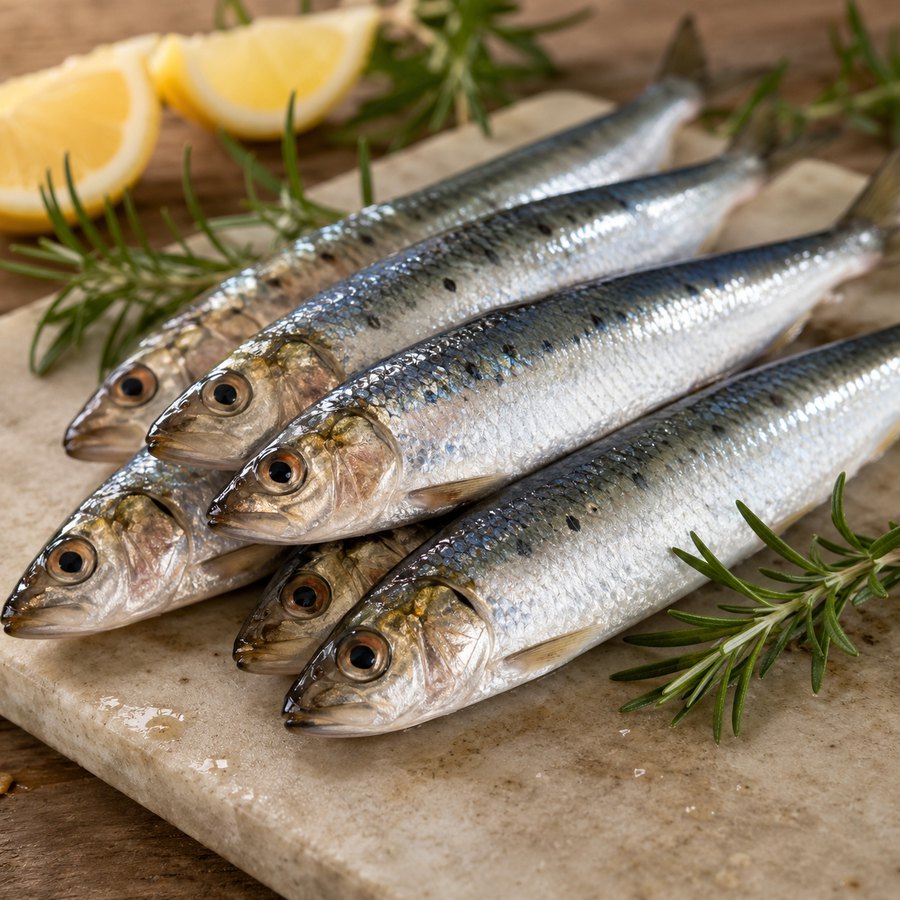
Fish & Seafood
Sardines
Canned sardines in oil provide about 177 kcal, 20.9 g protein, and about 0.84 g EPA+DHA per 85 g, along with vitamin B12, selenium, phosphorus, calcium, and vitamin D. For everyday use, choose bone-in, lower-sodium products and drain excess oil.
Food Overview
Key strengths
Sardines provide protein, EPA+DHA, vitamin B12, selenium, and vitamin D. Bone-in canned sardines also provide substantial calcium, making them one of the few common foods that combine long-chain omega-3s with edible-bone calcium.
How to eat it
Use canned sardines with whole-grain bread, mixed grains, beans, tomatoes, dark leafy greens, or salads. Drain excess oil from oil-packed products; for tomato, water-packed, or seasoned versions, compare sodium, sugar, and energy on the label.
What stands out
Pressure processing softens the bones in bone-in canned sardines so they can usually be eaten with the fish. The database value is about 325 mg calcium per 85 g; boneless products should not use this value.
Worth noting
Sodium varies with brine, tomato sauce, smoking, and seasoning. The default entry has about 261 mg sodium per 85 g, but brands may differ substantially, so use the package label.
Basic Nutrition
Showing:100 g Oil-Packed Canned Sardines
View complete nutrition data
GI note:GI varies with cultivar, food structure, processing, and cooking. Raw grains usually do not have directly applicable human GI data.
Sardines contain almost no available carbohydrate, so GI is not applicable; do not enter 0, low GI, or an estimate. When sardines are eaten with rice, bread, or pasta, the meal’s glucose response depends on all foods, portions, and cooking methods.
Data notes:This page uses one formal food state: Atlantic sardines canned in oil, bone-in, drained solids. Fresh, water-packed, brined, tomato-packed, smoked, boneless, and skinless products are covered under processing differences rather than separate nutrition states.
Basic nutrition uses USDA FoodData Central SR Legacy “Fish, sardine, Atlantic, canned in oil, drained solids with bone” (FDC ID 175139; NDB No. 15088).
A common serving is 85 g, about 3 oz, a standard fish portion used in databases and dietary references; it is not a fixed daily recommendation for everyone.
Both per-100 g and 85 g values refer to drained edible fish and exclude the oil left in the can.
GI is shown as “—”. Sardines contain almost no available carbohydrate, so standard GI testing is not applicable; do not label them GI 0, low GI, or “ultra-low.”
EPA and DHA are converted from the USDA 149 g drained serving (about 0.705 g EPA and 0.758 g DHA per 149 g). Omega-6 in oil-packed products depends strongly on the packing oil and retained oil, so no single value is used for all products and the page shows “—”.
USDA SR Legacy combines laboratory analyses, calculations, and published data and is suitable for general composition reference; use the product label for a specific brand.
Vitamins & Minerals
Only vitamins and minerals providing at least 5% of the Daily Value at the current serving are shown.
The calcium value applies only to bone-in canned sardines eaten with the softened bones (about 325 mg per 85 g). Boneless, skinless sardines should not use it. Vitamin D in the default oil-packed Atlantic sardine entry is about 4.1 μg per 85 g, while NIH lists about 1.2 μg for two drained sardines, showing why serving size and product state must be stated. Sodium should come from the package label because plain, water-packed, oil-packed, tomato-packed, brined, and smoked products can differ widely.
View all vitamins and minerals
Percentages show how much the selected serving contributes to the adult Daily Value.
Key Bioactive Compounds
EPA & DHA
Long-Chain Omega-3 Fatty AcidsEPA and DHA are the main long-chain omega-3 fatty acids in marine fish and are a key feature that distinguishes sardines from most plant foods.
Oil-packed Atlantic sardines provide about 0.47 g EPA and 0.51 g DHA per 100 g, or about 0.40 g EPA and 0.43 g DHA per 85 g, totaling about 0.98 g and 0.84 g, respectively. These values apply to bone-in, oil-packed, drained Atlantic sardines; tomato-packed products, other species, and fresh fish from different seasons may differ.
EPA and DHA are incorporated into cell membranes and help form lipid signaling molecules. Fish-containing dietary patterns are associated with cardiovascular health, and DHA also contributes to normal brain and retinal structure. FDA also lists fish as sources of DHA, EPA, protein, vitamin B12, vitamin D, and selenium.
Pair sardines with vegetables, beans, and whole grains. Steaming, baking, or simply prepared canned products are better everyday choices than breaded frying or heavily salted, sugary sauces. You do not need to consume all the packing oil to obtain EPA and DHA from the fish.
Food-source EPA and DHA do not replace prescription omega-3 products used to lower triglycerides and do not treat arthritis, depression, or other inflammatory conditions. Human studies use different doses and populations.
Taurine
Sulfur-containing amino-acid derivativeTaurine is a sulfur-containing compound naturally present in fish and animal tissues and is involved in bile-acid conjugation, osmotic balance, and normal cell function.
Taurine varies by species, season, muscle, and processing, so there is no single value for all canned sardines. A sardine review cited about 147 mg/100 g, while Sardinella zunasi muscle was measured at about 219 mg/100 g wet weight. These are study-specific values, not label values for all canned products.
Taurine supports several normal physiological functions. Sardines also provide EPA, DHA, protein, and minerals, so whole-food effects cannot be attributed to taurine alone. In one randomized trial in older adults with prediabetes, adding about 200 g sardines per week to the same dietary intervention improved some metabolic markers, but this does not prove taurine was responsible or that the result applies to all healthy adults.
Taurine is present in the fish flesh, so there is no need to consume the remaining packing oil. Normal gentle heating is sufficient; there is no good evidence that a particular home method markedly improves absorption.
Food taurine is not equivalent to high-dose taurine supplements. A single human study does not show that eating more sardines prevents or reverses diabetes and does not replace weight management, exercise, or medical treatment.
Coenzyme Q10
Fat-soluble quinoneCoenzyme Q10 occurs naturally in mitochondria, supports energy production, and participates in antioxidant defense in lipid environments.
Reported CoQ10 values in sardines vary. A methods review reported sardine muscle values up to about 30.5 μg/g, or about 3.05 mg per 100 g and 2.59 mg per 85 g. This is a study-sample maximum, not a fixed value for every species, canned product, or brand.
CoQ10 supports normal cellular energy metabolism and is part of fat-soluble antioxidant systems. Sardine fat provides a food matrix for this compound, but ordinary servings contain far less than typical CoQ10 supplements.
You do not need to consume the can oil for CoQ10; eating the fish is enough. Avoid repeated prolonged high-temperature frying to limit lipid oxidation and maintain overall food quality.
The small amount of CoQ10 in sardines is not equivalent to 100–200 mg supplement doses, and eating sardines has not been shown to treat heart failure, lower blood pressure, or relieve statin-related muscle symptoms. Results from CoQ10 supplement studies are also mixed.
How Preparation Changes Sardines
Fresh Sardines
Fresh sardines generally need scaling, gutting, and thorough cooking. Nutrition varies by species, season, and fat stores and should not use oil-packed canned values. Choose fish kept refrigerated or well iced, with clear eyes, shiny skin, firm flesh, and a mild odor. If eating within 2 days, keep below 4°C; most fish should reach an internal temperature of 63°C.
Oil-Packed Canned Sardines
Oil-packed sardines are soft and more energy-dense, and the fish may absorb some packing oil. Even when drained, fatty-acid composition can be affected by olive, sunflower, soybean, or other oils. The default values are for drained solids, not the oil left in the can.
Water-Packed or Brined
Water-packed products usually contain less added plant oil, but they are not necessarily lower in sodium. Brine strength, seasoning, and draining all matter, so check the label rather than assuming “water-packed” means low sodium or low energy.
Tomato-Packed
Tomato juice or sauce adds some carbohydrate, sugar, and sodium, and the fish species may differ from the default Atlantic sardine entry. NIH lists about 0.74 g DHA and 0.45 g EPA per 85 g for tomato-packed canned sardines, but this is a separate product state.
Bone-In vs Boneless
Soft bones in canned sardines provide substantial calcium. Boneless, skinless products are milder but usually much lower in calcium. If calcium is highlighted, the page must state that the sardines are bone-in and the bones are eaten.
Plain vs Highly Seasoned
Smoked, spicy, salt-baked, fermented-black-bean, and heavy-sauce products may contain more sodium. If limiting sodium, compare sodium per 100 g, sodium per can, and drained net weight.
Fried or Breaded Sardines
Breading and frying add oil, starch, and energy and may create heavy browning. Do not use the carbohydrate or energy values from plain canned sardines for these products.
How to Choose & Store
How to choose
- Check the species. Labels that include a scientific name, catch area, or FAO area make product identity and origin easier to judge. “Sardine” is a market name covering multiple species.
- Check whether bones are included. For more calcium, choose products labeled bone-in, whole, or with softened bones. Boneless products may suit people who dislike bones or have weaker swallowing ability, but their calcium data are different.
- Check the packing medium. Common ingredients include sardines, olive or other plant oil, water, tomato juice, salt, and spices. For lower energy, choose water-packed products or drain oil-packed products well; for lower sodium, compare labels directly.
- Compare sodium per 100 g. Can sizes and manufacturer-defined serving sizes vary, so “sodium per serving” alone can be misleading.
- Inspect the can. Do not buy cans that are swollen, leaking, punctured, severely dented at seams, deeply rusted, or otherwise damaged.
- Check sustainability by species and fishery rather than assuming all sardines are sustainable. For example, U.S. Pacific sardines were assessed as overfished in 2025 and most directed commercial fishing was prohibited for the 2025–2026 season. Species, catch area, and credible certification are more useful than “wild-caught” alone.
How to store
- Unopened cans: store in a cool, clean, dry place away from heat, sunlight, and moisture. Do not use cans that become swollen, leaking, or badly rusted.
- After opening: refrigerate leftovers promptly in a covered glass or food-safe container and use within 3–4 days.
- Fresh sardines: refrigerate immediately. Freeze promptly if not using within 2 days; keep raw fish separate from ready-to-eat foods and use a separate board or clean thoroughly.
- Discard if a can is swollen or leaking, contents spray abnormally on opening, there is a strong rotten odor, unusual color, slime, obvious fermentation, or temperature abuse. Seek medical care if allergy-like symptoms develop rapidly after eating.
Remember three things: confirm the species, bone status, and packing medium; compare sodium per 100 g; and avoid cans that are swollen, leaking, or badly dented at the seams.
How to Use in Everyday Meals
Whole-Grain Toast with Sardines
Drain excess oil, lightly mash the sardines, and place on whole-grain bread with tomato, cucumber, red onion, and a little lemon juice. The fish is already salty, so keep added salt, mayonnaise, and cream cheese modest.
Sardine Vegetable Salad
Combine sardines with dark leafy greens, tomato, bell pepper, chickpeas, or white beans and season with lemon juice, vinegar, and herbs. Oil-packed sardines usually retain enough oil on the fish that extra salad oil can be kept modest.
Sardines with Mixed Grains
Serve sardines over brown rice, quinoa, buckwheat, or barley with broccoli, mushrooms, carrots, and nori. Add the fish at the end and heat gently rather than repeatedly stir-frying until dry or charred.
Tomato Sardine Pasta
Make a simple sauce with tomato, onion, garlic, and herbs, then fold in sardines at the end. Prefer whole-wheat pasta and keep extra salt, cream, and cheese modest to avoid stacking high-sodium ingredients.
Sardine & Bean Soup
Add sardines to tomato, white-bean, chickpea, or lentil soup near the end and warm briefly. Canned sardines are already cooked; if the product is high in sodium, reduce salt and concentrated soup bases.
Baked Fresh Sardines
After gutting and cleaning fresh sardines, bake with lemon, herbs, and a little plant oil. Cook until opaque and easily flaked, with an internal temperature of about 63°C; avoid repeated frying or heavy charring.
Who Should Take Extra Care
People with Fish Allergy
Sardines are a fish allergen. People with diagnosed fish allergy should avoid them and check processed foods for fish ingredients and cross-contact warnings. Fish allergy is different from histamine poisoning, and one reaction alone cannot identify the cause.
Histamine Sensitivity or Poor Cold Chain
Sardines can accumulate histamine when temperature control is poor. Once formed, histamine is not reliably removed by washing, freezing, or cooking. If burning in the mouth or throat, rash, headache, palpitations, nausea, vomiting, diarrhea, or breathing discomfort occurs soon after eating, stop and seek medical care.
People Limiting Sodium
People with hypertension, heart failure, kidney disease, or prescribed sodium restriction should favor lower-sodium or no-added-salt products and compare sodium per 100 g. Rinsing may remove some surface salt, but it cannot tell you the final sodium amount or replace the nutrition label.
People with impaired kidney function
An 85 g serving of bone-in oil-packed sardines provides about 417 mg phosphorus, 337 mg potassium, 20.9 g protein, and 261 mg sodium. People limiting phosphorus, potassium, sodium, or protein should include sardines in the daily total and adjust with a clinician or dietitian.
People with gout or high uric acid
Sardines are relatively high in purines. During an acute gout flare or when advised to limit high-purine foods, control portion and frequency rather than eating large amounts because they contain omega-3s. The American College of Rheumatology conditionally recommends limiting purines for gout, but the degree of restriction depends on medication, uric acid, and individual flare patterns.
Pregnancy, Preconception & Breastfeeding
FDA and EPA list sardines as a low-mercury “Best Choice.” During pregnancy and breastfeeding, choose a variety of fish and aim for 2–3 servings per week from the low-mercury “Best Choices” rather than eating the same fish every day. Use reliable products, avoid raw fish, limit high-sodium seasoning, and do not use damaged cans; “low mercury” does not mean mercury-free.
Infants, young children, and people with swallowing difficulties
Although canned sardine bones are soft, crush the fish well and check for larger spinal bones or hard pieces. Adjust portion and piece size for the child’s age and avoid large intact chunks.
People Managing Total Energy Intake
An 85 g serving of drained oil-packed sardines provides about 177 kcal. Remaining can oil, mayonnaise, cheese, and bread add more energy. It is more useful to replace processed meat or some high-saturated-fat foods with sardines than to add a whole can on top of an existing meal.
Similar Food Alternatives
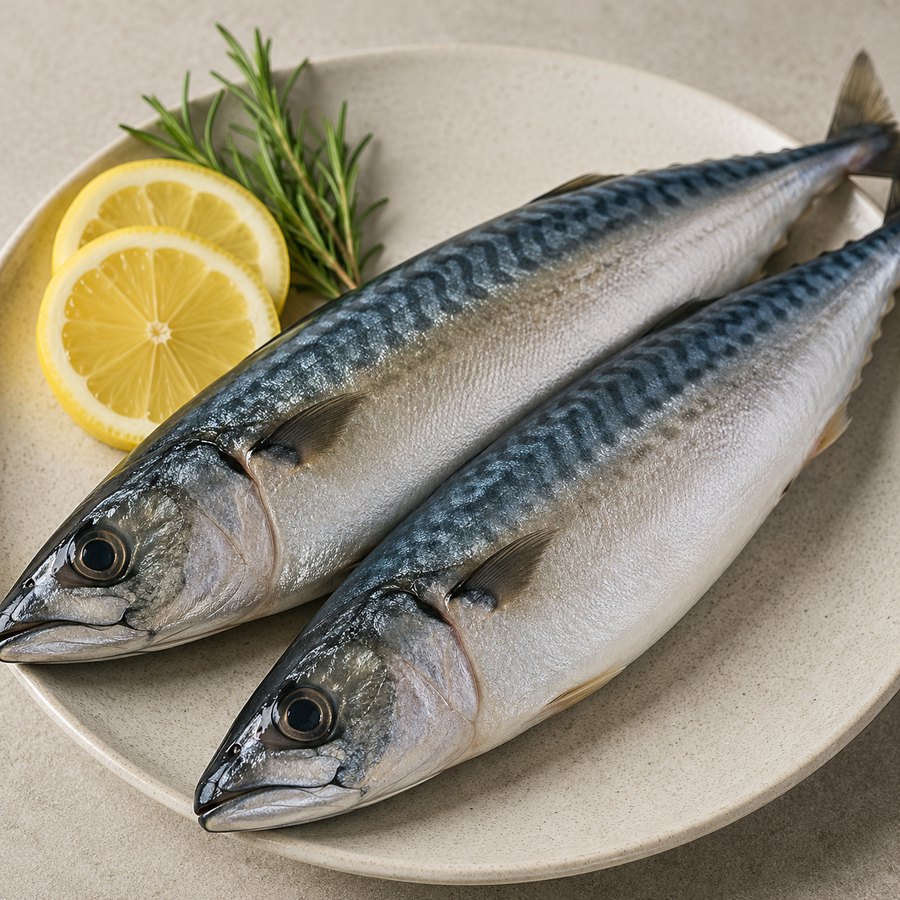
Mackerel
Also rich in EPA, DHA, protein, and vitamin B12 and usually higher in fat. Distinguish Atlantic and Pacific mackerel from higher-mercury king mackerel; the site also has a Pacific mackerel entry.
View details →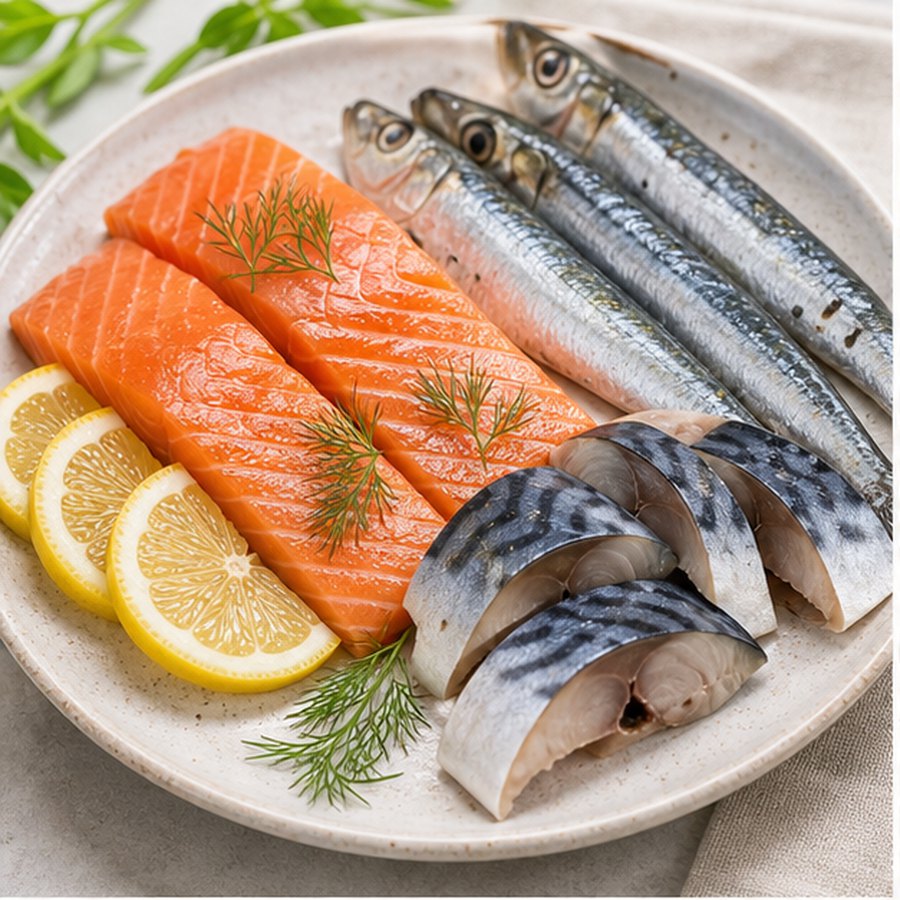
Atlantic Herring
Another small oily fish rich in EPA and DHA. Pickled herring can be high in sodium, so distinguish fresh, pickled, and canned forms.
View details →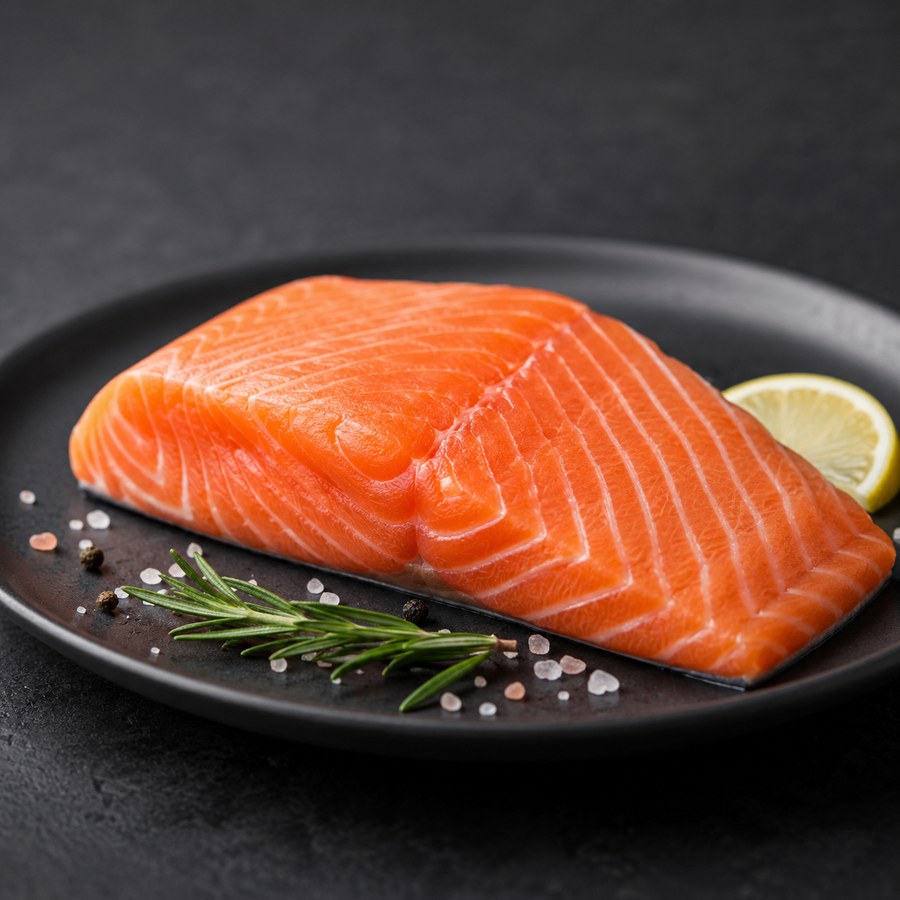
Canned Salmon with Bones
Provides EPA, DHA, protein, and edible-bone calcium, with a milder flavor than sardines. Boneless products are also much lower in calcium.
View details →Anchovy / European Anchovy
Also a small fish containing EPA and DHA, but common canned anchovies are salt-cured and usually much higher in sodium than sardines, making them better as a small seasoning than as an equal-size fish serving.
View details →