Nuts & Seeds · Seeds
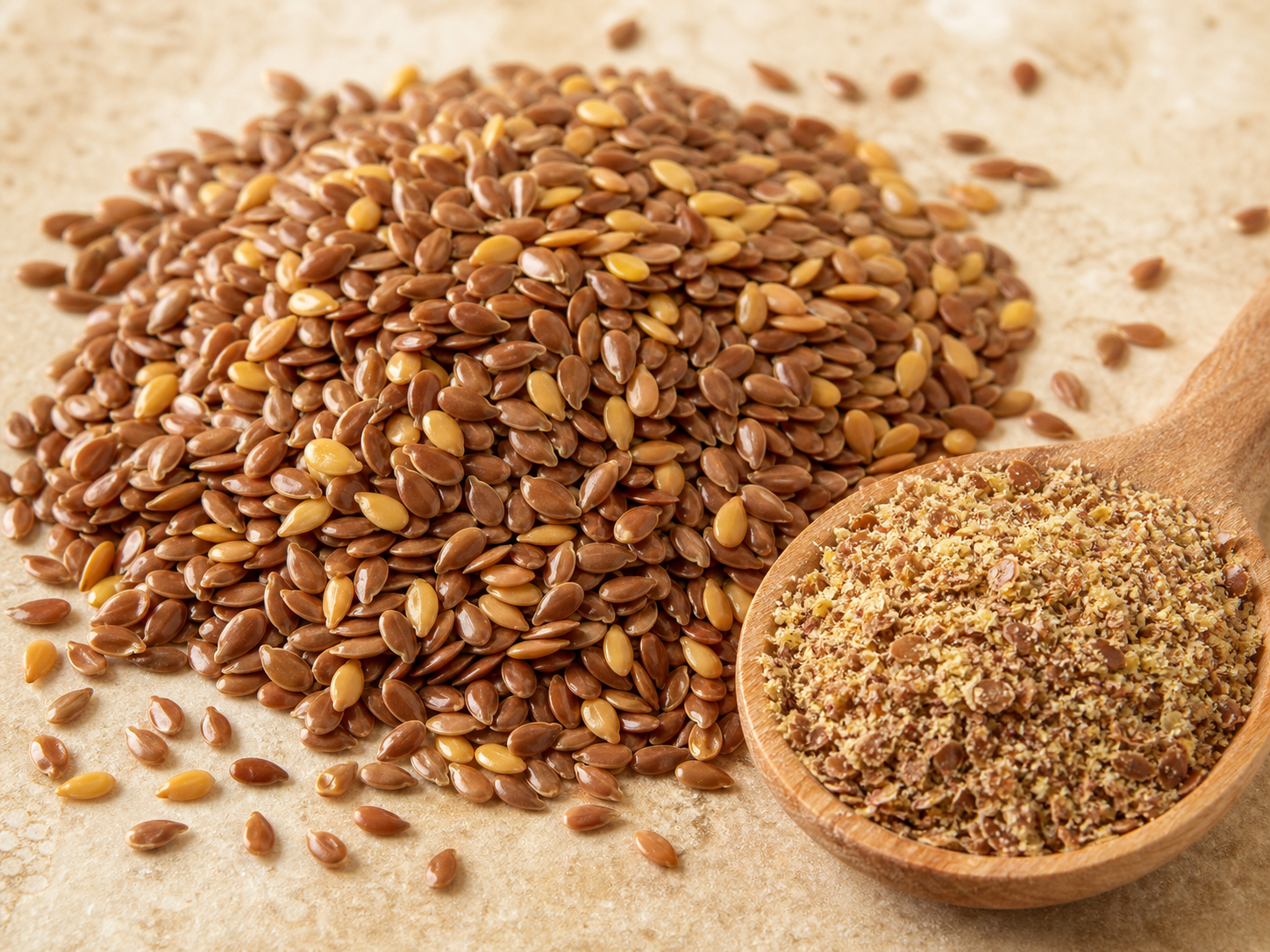
Flaxseed
Flaxseed is rich in ALA plant omega-3, dietary fiber, and lignans, and also provides vitamin B1, magnesium, copper, and manganese. Grinding improves access to the seed’s nutrients, but high research doses should not be treated as routine daily recommendations.
Food overview
Key strengths
Flaxseed provides about 42.2 g fat, 27.3 g fiber, and 18.3 g protein per 100 g. About 22.8 g is alpha-linolenic acid (ALA), a plant omega-3. A 10 g serving provides about 2.28 g ALA and 2.73 g fiber.
Best ways to eat it
Flaxseed is usually more useful when ground and added in small amounts to oats, plain yogurt, soy milk, smoothies, porridge, salads, or whole-grain baking. Whole seeds add texture, but some may pass through the digestive tract without being fully broken down.
What stands out
Flaxseed’s value is not only ALA. The seed coat and outer tissues also contain lignans and mucilage polysaccharides, which are not present in the same amounts in flaxseed oil.
Worth noting
Flax fiber swells with water, so a sudden large increase may cause bloating, gas, diarrhea, or constipation. A 2026 German BfR risk notice advises adults to keep raw ground flaxseed to about 15–20 g/day, considering cyanogenic glycosides and cadmium exposure.
Basic Nutrition
Showing:100 g Raw flaxseed
View complete nutrition data
GI note:GI varies with cultivar, food structure, processing, and cooking. Raw grains usually do not have directly applicable human GI data.
Reliable human GI data suitable for plain flaxseed are lacking. Most of its carbohydrate is fiber and available carbohydrate is low, but GI should not be entered as 0 or borrowed from flaxseed bread, cookies, or mixed meals.
Data notes:This page uses one formal nutrition state: raw flaxseed, meaning mature, food-grade, uncooked flaxseed. It does not include immature seeds.
Whole and ground flaxseed have similar basic composition at the same weight. The main difference is digestibility and nutrient accessibility, so separate nutrition states are not created.
About 10 g equals roughly 1 level tablespoon of whole flaxseed or 1.5 level tablespoons of ground flaxseed. Measuring tools and grind size vary, so grams are more reliable.
Vitamins & Minerals
Only vitamins and minerals reaching at least 5% of the FDA Daily Value for adults and children age 4+ at the selected serving are shown.
Nutrient values come from USDA and percentages use FDA Daily Values for adults and children age 4+. At a 10 g serving, only vitamin B1, copper, manganese, magnesium, and phosphorus reach 5% DV; lower values are not added just to fill cards.
View all vitamins and minerals
Percentages show how much the selected serving contributes to the adult Daily Value.
Key Bioactive Compounds
Alpha-linolenic acid (ALA)
Plant omega-3 polyunsaturated fatALA is an essential fatty acid the body cannot make and is the most abundant characteristic fatty acid in flaxseed.
Raw flaxseed provides about 22.8 g ALA per 100 g, or about 2.28 g per 10 g serving. ALA is mainly in the seed’s oil-rich tissues, so grinding the seed coat usually improves access compared with swallowing whole seeds. U.S. Adequate Intakes are 1.6 g/day for adult men and 1.1 g/day for adult women, so 10 g flaxseed already provides a substantial amount. These AIs are not minimum or maximum flaxseed intake targets.
ALA is part of cell-membrane fats and lipid metabolism. Trials of whole ground flaxseed suggest small improvements in total cholesterol, LDL cholesterol, and blood pressure, but these effects reflect ALA, fiber, lignans, and the overall food matrix together.
Use ground flaxseed in oats, soy milk, yogurt, or other foods to release the internal oils. Freshly grind it or buy sealed ground flaxseed. There is no need to eat large amounts for ALA; about 10 g already provides roughly 2.3 g ALA.
ALA is not the same as EPA or DHA from fish or algal oil. The body can convert some ALA to EPA and DHA, but conversion is limited, generally below 15%, so flaxseed does not fully replace long-chain omega-3 sources. ALA alone does not treat cardiovascular disease, arthritis, or chronic inflammation.
Flaxseed Lignan SDG
Plant lignan polyphenolThe most characteristic flax lignan is secoisolariciresinol diglucoside, or SDG, concentrated mainly in the outer seed tissues.
Reviews report average SDG contents around 610–1300 mg/100 g, with wider ranges of 6.1–28.8 mg/g across varieties and methods. SDG is concentrated in specific seed-coat and outer tissue layers. Using the 610–1300 mg/100 g representative range, 10 g flaxseed may contain about 61–130 mg SDG, but this is a study-based estimate, not a fixed value for every retail product.
Gut microbes can convert SDG into enterodiol and enterolactone. These lignans have polyphenol properties and are studied in relation to antioxidant defenses, cardiovascular health, and hormone-related outcomes. Individual gut microbiota affect conversion, so the same flaxseed intake does not produce identical metabolite levels in everyone.
Grinding improves lignan availability compared with swallowing whole seeds. In one human study, whole flaxseed produced only about 28% of the enterolignan bioavailability seen with ground flaxseed. There is no need to remove the seed coat or buy concentrated lignan extracts; ground whole flaxseed also provides ALA and fiber.
Lignans have weak phytoestrogen-like activity, but that does not mean flaxseed simply “raises estrogen” or “balances female hormones.” In-vitro, animal, and extract studies do not prove that ordinary servings prevent or treat breast cancer, prostate cancer, menopausal symptoms, or other hormone-related diseases.
Mucilage Soluble Fiber
Soluble dietary fiberThe outer layer of flaxseed contains polysaccharides that absorb water and form a viscous gel, commonly called flax mucilage or flaxseed gum.
Total dietary fiber is about 27.3 g/100 g, or about 2.73 g per 10 g serving. Research suggests mucilage accounts for roughly 6%–10% of seed weight and is concentrated in the outer seed coat. Total fiber is not all mucilage; flaxseed also contains insoluble fiber.
When mucilage absorbs water, it increases bulk and viscosity and can support regular bowel movements. Trials of ground flaxseed have improved bowel frequency, stool form, and constipation scores in some people. Soluble fiber may also affect bile-acid and cholesterol metabolism, but these effects cannot be separated completely from ALA and lignans.
Start with about 5–10 g, mix it into moist foods, and drink normally through the day. Adding it to oats, soy milk, yogurt, soups, or porridge is better than swallowing a spoonful of dry powder. Increase gradually so the gut can adapt.
Flaxseed is not a treatment for every cause of constipation. Too little fluid, very large amounts, or underlying swallowing difficulty, intestinal narrowing, or obstruction risk can make swelling fiber uncomfortable or unsafe.
Whole, ground, and processed forms
Whole flaxseed
Whole seeds have a hard outer coat, store well, and add texture. If not chewed thoroughly, some may pass through intact, reducing access to internal ALA and lignans.
Ground flaxseed
Grinding breaks the seed coat and improves release and use of ALA and lignans. It does not create more ALA, protein, or minerals; it simply makes the contents more accessible and digestible.
Soaked or mixed with water
When flaxseed contacts water, the outer mucilage forms a gel. Soaking is not required to obtain ALA or lignans, but it changes texture and can be used for “flax eggs” or to add binding to oats, porridge, and baking.
Baking and cooking
Normal baking and cooking can reduce risk from natural cyanogenic glycosides. Research also suggests much of the ALA and SDG can remain in ordinary baked foods, although retention depends on time, temperature, and recipe. Higher heat is not always better, and repeated frying or heavy charring is not recommended.
Flaxseed oil
Flaxseed oil mainly provides fat and ALA. It lacks the fiber of whole flaxseed, and lignan content depends on processing and filtration. It should be treated as a separate food and should not use whole-flaxseed protein, fiber, lignan, or mineral data.
Defatted flaxseed meal
Defatted flaxseed meal is the residue after oil extraction. Protein, fiber, and lignan proportions may be higher, while fat and ALA are much lower. It should not use whole-flaxseed data directly.
Brown vs golden flaxseed
Both brown and golden flaxseed are flaxseed. Color alone does not reliably indicate higher ALA, lignans, or minerals; variety, origin, maturity, and growing conditions matter more.
How to choose and store
How to choose
- Plain flaxseed products should ideally contain only flaxseed, without added sugar, salt, flavors, or plant oils.
- For ALA and lignans, choose whole flaxseed and grind it before eating, or buy sealed ground flaxseed.
- Choose mature flaxseed clearly labeled as food-grade and edible. Do not eat immature seeds or raw products labeled only for baking or cooking.
- Whole seeds should be dry and smooth, without mold, insect damage, or damp clumping.
- Fresh flaxseed usually has a mild nutty or grain-like smell. Strong paint-like, rancid, bitter, or stale-oil odors are signs to discard it.
How to store
- Store whole flaxseed in an airtight container in a cool, dry, dark place away from the stove, steam, and strong odors.
- After grinding, minimize exposure to air, light, and heat. At home, sealed refrigeration is a practical option; follow the package use-by guidance.
- With good packaging that limits oxygen and light, ground flaxseed can remain stable for months. Refrigeration is a conservative and practical home-storage choice.
- Flaxseed oil oxidizes more easily than whole or ground seed and should be stored dark and refrigerated according to the label. It is a separate product with different storage guidance.
Remember four things: choose mature food-grade seed, keep the ingredient list simple, prefer grinding before use, and store sealed away from light.
How to use it in everyday meals
Add to oats or mixed-grain porridge
Stir 5–10 g ground flaxseed into cooked oats, mixed-grain porridge, or a whole-grain breakfast. Pair with berries, apple, or nuts without adding large amounts of honey, brown sugar, or condensed milk.
Mix with plain yogurt or soy milk
Stir ground flaxseed into plain yogurt, unsweetened soy milk, or a soy-oat bowl. It will thicken slightly after a few minutes. Start with about 5 g if new to flaxseed and maintain normal fluid intake.
Add to smoothies
Blend with whole fruit, unsweetened soy milk, and leafy greens. Use ground flaxseed and avoid also adding juice, syrup, and large amounts of dried fruit, which can raise the drink’s sugar load.
Sprinkle on salads and vegetables
Sprinkle a small amount of ground flaxseed over salads, roasted vegetables, or bean salads. Olive oil, vinegar, and herbs work well; there is no need to add large amounts of nuts, tahini, or other high-fat sauces at the same time.
Add to whole-grain baking
Use a small amount of ground flaxseed in whole-wheat pancakes, bread, oat cakes, or muffins. Ordinary baking can retain much of the ALA and lignans while reducing cyanogenic-glycoside risk; keep refined sugar, butter, and cream moderate.
Make flax gel
Mix ground flaxseed with water and let it form a gel for use as a binder in some baking recipes. The gel still contains the seed’s fat and fiber and is not calorie-free.
Who Should Take Extra Care
People new to flaxseed or with sensitive digestion
Flaxseed contains substantial fiber and fermentable components. A sudden large increase may cause bloating, gas, abdominal pain, or diarrhea. Start around 5 g and increase gradually as tolerated.
People who drink little fluid
Flax mucilage and fiber absorb water and swell. Maintain adequate fluid intake with ground flaxseed and avoid swallowing a large spoonful of dry powder.
People with swallowing difficulty or gastrointestinal narrowing
People with dysphagia, esophageal or intestinal narrowing, severe motility disorders, or a history of bowel obstruction should not self-use large amounts of swelling flax fiber. Inadequate fluid can increase blockage risk.
People taking oral medicines
Flaxseed and its fiber should not be taken at the same time as oral medicines because fiber and mucilage may affect absorption of some drugs. Follow the medication label or pharmacist advice for spacing.
People using anticoagulant or antiplatelet medicines
NCCIH notes a theoretical interaction between flaxseed or flaxseed oil and anticoagulant or antiplatelet drugs. People planning long-term regular intake or concentrated products should discuss it with a clinician or pharmacist.
People using glucose-lowering or blood-pressure medicines
Some studies show small effects of flaxseed on glucose and blood pressure. People already using these medicines should monitor appropriately and consult a clinician if they plan a major increase rather than adjusting medication on their own.
Pregnancy & Breastfeeding
Evidence is insufficient to establish the safety of long-term, high-dose flaxseed or flaxseed oil during pregnancy or breastfeeding. NCCIH notes possible safety concerns in some pregnancy research, although evidence is uncertain. Small food amounts are not the same as high-dose supplements. Lignan extracts or high-dose flaxseed-oil supplements should not be self-used during pregnancy or breastfeeding.
Children
Germany’s BfR advises young children to avoid raw ground flaxseed; for children age 4 and older, it suggests no more than about 4 g/day of raw ground flaxseed. This is a conservative German risk-assessment position, not a universal dietary recommendation.
People with flaxseed allergy
Flaxseed allergy is uncommon, but hives, gastrointestinal reactions, throat tightness, and anaphylaxis have been reported. Stop eating and seek urgent care for breathing difficulty, generalized hives, or facial swelling.
Raw-intake and natural-compound considerations
Mature flaxseed naturally contains cyanogenic glycosides and can also accumulate cadmium. Germany’s BfR advises adults to keep raw ground flaxseed to about 15–20 g/day; baking and cooking can lower hydrogen-cyanide-related risk. Some cholesterol trials used 30–40 g ground flaxseed, but research doses are not the same as long-term everyday recommendations.
Similar Food Alternatives
Chia seeds
Also rich in ALA and fiber and forms a gel with water. Chia is usually eaten whole, but its lignan profile and mineral proportions differ from flaxseed.
Walnuts
Provides ALA, polyphenols, protein, and unsaturated fat and works well as a nut-style alternative. Walnuts generally provide less ALA and fiber per weight than flaxseed but are easier to eat directly.
Hemp hearts
Provide plant protein, magnesium, and polyunsaturated fats with a soft texture and no need for grinding. Their omega-6 proportion is higher, while lignans and mucilage fiber are less prominent than in flaxseed.
Sesame seeds
Sesame also contains lignans and provides calcium, copper, and unsaturated fat, but it contains very little omega-3 and is not an equivalent ALA substitute.
Sources
Nutrition Data
Basic Information & Food Safety
Research & References
Kuijsten A., et al. (2005). The Relative Bioavailability of Enterolignans in Humans Is Enhanced by Milling and Crushing of Flaxseed.
Austria J.A., et al. (2008). Bioavailability of Alpha-Linolenic Acid in Subjects after Ingestion of Three Different Forms of Flaxseed.
Dalisay D.S., et al. (2016). Cell Layer-Specific Accumulation of Secoisolariciresinol Diglucoside in Flaxseed Coats.
Kajla P., Sharma A., Sood D.R. (2015). Flaxseed—A Potential Functional Food Source.
Nowak W., Jeziorek M. (2023). The Role of Flaxseed in Improving Human Health.
Hadi A., et al. (2020). Effect of Flaxseed Supplementation on Lipid Profile: An Updated Systematic Review and Dose–Response Meta-analysis.
Ursoniu S., et al. (2016). Effects of Flaxseed Supplements on Blood Pressure: A Systematic Review and Meta-analysis.
Rahimlou M., et al. (2019). Effects of Flaxseed Interventions on Circulating Inflammatory Biomarkers.
Soltanian N., Janghorbani M. (2019). Effect of Flaxseed or Psyllium versus Placebo on Constipation and Metabolic Markers.
Malcolmson L.J., et al. (2000). Storage Stability of Milled Flaxseed.
Chen Z.Y., et al. (1994). Oxidative Stability of Flaxseed Lipids during Baking.