Healthy plant oils
Low-erucic-acid canola oil
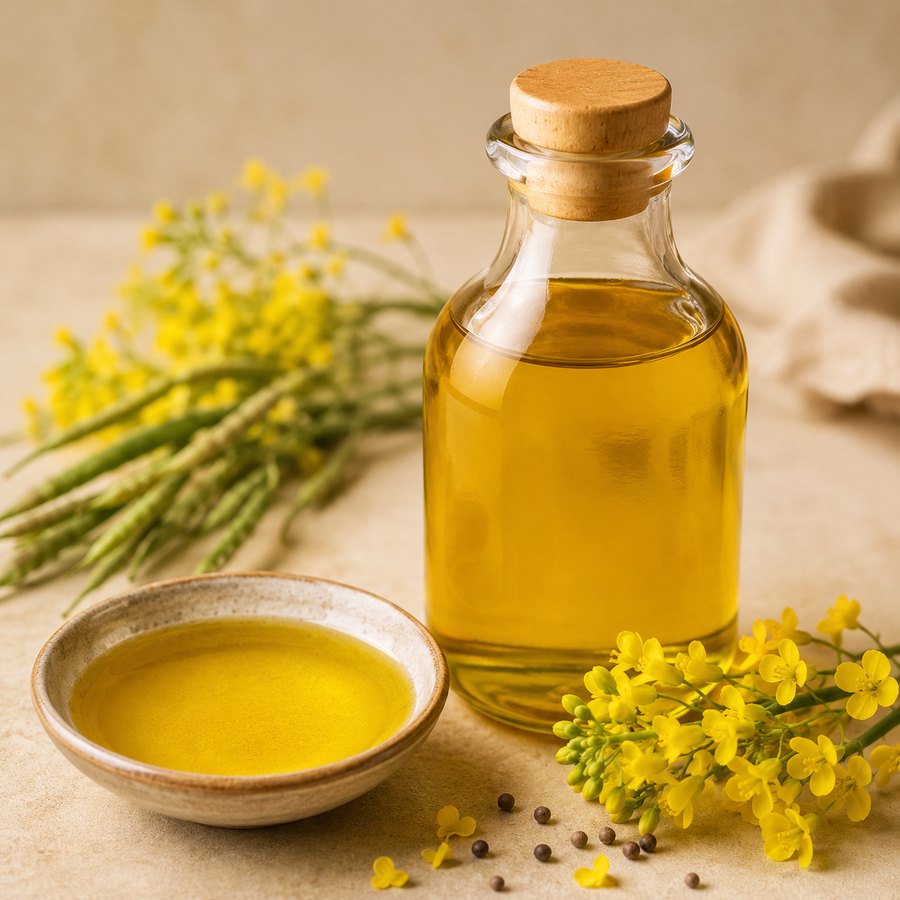
Low-erucic-acid canola oil is made from low-erucic rapeseed. It is mainly monounsaturated fat, with some alpha-linolenic acid (ALA) and relatively little saturated fat, making it versatile for stir-frying, baking, and salads. China’s current rapeseed-oil standard is GB/T 1536—2021, which defines low-erucic oil as no more than 3% erucic acid in total fatty acids. Canada defines Canola more strictly at below 2%, so “low erucic” limits are not identical across countries.
Food overview
Key strengths
Low-erucic canola oil has a balanced fatty-acid profile led by monounsaturated fat, while also providing linoleic acid and ALA. A representative database sample contains about 60 g monounsaturated fat, 7.5 g plant omega-3, and 7 g saturated fat per 100 g.
Best ways to use it
Refined low-erucic canola oil has a mild flavor and works for everyday stir-frying, short pan-cooking, baking, steaming, and salad dressings. Cold-pressed versions have more seed flavor and are better suited to salads, dipping, and low-to-moderate heat.
What stands out
When buying, first confirm that the product is clearly labeled low-erucic rapeseed/canola oil, then check whether it is pure or blended and whether it is pressed, solvent-extracted, refined, or cold-pressed.
Worth noting
“Low erucic” only means erucic acid is controlled. It does not make the oil unlimited or guarantee more antioxidants. Cultivar, growing temperature, and processing affect ALA, tocopherols, and phytosterols.
Basic Nutrition
Showing:100 g Low-erucic-acid canola oil
View complete nutrition data
GI note:GI varies with cultivar, food structure, processing, and cooking. Raw grains usually do not have directly applicable human GI data.
Pure canola oil has no available carbohydrate, so GI does not apply. It is not labeled 0 or treated as missing data.
Data notes:This page uses one formal food state: pure low-erucic rapeseed/canola oil with no other oils in the ingredient list. Differences among refined, cold-pressed, roasted, and high-oleic products are discussed under processing rather than treated as separate nutrition states.
Basic nutrition uses the Japanese food-composition entry for rapeseed oil. Its 22:1 fatty-acid level is very low, so the profile is representative of modern low-erucic oil, but it is not a substitute for brand-specific testing.
A common serving is 10 g; values are calculated from the 100 g data to allow consistent comparison with olive, camellia, perilla, and flaxseed oils.
100 g is a database reference amount, not a sensible single serving.
GI is shown as “not applicable” because pure canola oil has no available carbohydrate. It is not shown as 0, which would imply standardized GI testing, and it is not shown as ordinary missing data.
The Japanese database does not provide separate reliable values for sugar, starch, or trans fat, so these are shown as “—”.
Vitamin E Daily Value is based on alpha-tocopherol. Gamma-tocopherol and other forms should not simply be added to it.
Vitamins & Minerals
Using adult Daily Values, only nutrients reaching at least 5% at the current serving are shown. At 10 g, vitamin E (alpha-tocopherol) and vitamin K are both around 10%.
The database lists about 15.0 mg alpha-tocopherol and 120 mcg vitamin K per 100 g, or about 1.5 mg and 12 mcg per 10 g—roughly 10% of the Daily Value for each. Beta-, gamma-, and delta-tocopherol have antioxidant activity but are not added directly to the vitamin E Daily Value. Nearly 900 kcal per 100 g is a comparison basis, not a serving recommendation.
View all vitamins and minerals
Key Bioactive Compounds
Alpha-Linolenic Acid
Omega-3 polyunsaturated fatALA is an essential omega-3 fat and one feature that distinguishes low-erucic canola oil from many high-oleic oils.
A representative sample contains about 7.5 g ALA per 100 g, or 0.75 g per 10 g; typical Canadian Canola is about 8.6% ALA. Cultivar, region, year, and temperature affect the level.
ALA supports cell membranes and normal lipid metabolism. U.S. adequate intake is 1.1 g/day for women and 1.6 g/day for men; conversion to EPA/DHA is limited, generally below 15%.
Use refined canola as one everyday cooking oil and rotate it with other oils.
ALA does not make canola oil equivalent to fish or algal EPA/DHA or a treatment for inflammation or cardiovascular disease.
Alpha- and gamma-tocopherol
Fat-soluble antioxidant compoundsTocopherols are natural antioxidants in canola oil. Alpha-tocopherol has vitamin E activity, while gamma-tocopherol is another abundant antioxidant form.
Per 100 g, the Japanese database lists about 15.0 mg alpha-, 0.3 mg beta-, 32.0 mg gamma-, and 1.0 mg delta-tocopherol; per 10 g, about 1.5 mg alpha- and 3.2 mg gamma-tocopherol.
Tocopherols help protect membrane lipids and slow oxidation of unsaturated fats in the oil.
Choose a recent date, intact seal, and keep the bottle away from heat and sunlight.
Gamma-tocopherol should not be fully counted as label vitamin E, and tocopherols do not make repeatedly fried oil nutritionally unchanged.
Plant sterols
Plant sterolsPhytosterols are natural minor lipids in canola oil, including beta-sitosterol, campesterol, and brassicasterol.
Values vary by method and processing. Studies report about 774–836 mg total phytosterols per 100 g in cold-pressed oils, while free phytosterols were about 129–178 mg per 100 g in other processed samples.
Phytosterols can compete with cholesterol for intestinal absorption, though canola oil’s main nutritional advantage remains its fatty-acid profile.
Use ordinary culinary amounts; nuts, seeds, legumes, whole grains, and other oils also provide phytosterols.
One serving is far below concentrated fortified-food or clinical doses and should not be promoted as clearly lowering cholesterol or replacing treatment.
How processing changes it
Refined low-erucic canola oil
Refined oil is usually lighter in color and flavor and has lower levels of free fatty acids, impurities, and some pigments, making it suitable for everyday stir-frying, pan-cooking, and baking. Refining can reduce tocopherols and phytosterols; one industrial study found total sterols and tocopherols fell about 55.9% and 34.2% from crude to deodorized oil, though actual losses depend on conditions.
Cold-pressed low-erucic canola oil
Cold-pressed oil usually retains more seed flavor and minor compounds and suits salads, dipping, and low-to-moderate heat. “Cold-pressed” does not automatically mean fresher or more antioxidant-rich; raw material, acid value, peroxide value, filtration, packaging, and storage still matter.
Roasted or strongly flavored canola oil
Roasting seeds creates a stronger aroma and can change phenolics, tocopherols, and oil stability. Darker color or stronger flavor does not automatically mean higher nutritional value, and excessive roasting can increase oxidation products.
High-oleic canola oil
High-oleic canola oil is a distinct cultivar with more oleic acid and usually better high-heat stability. Its fatty-acid profile differs from regular low-erucic canola oil, so this page’s ALA, linoleic-acid, and polyunsaturated-fat data should not be copied to it.
Canola blended oil
If the ingredient list also contains soybean, corn, sunflower, or other oils, it is a blend. Fatty acids and vitamin E depend on the actual formulation and should not use pure canola-oil values.
Repeated frying
Canola oil can be heated for normal household cooking, but repeated high-temperature frying still causes oxidation, polymerization, and quality loss. Studies show free fatty acids and oxidation markers rise with repeated frying and storage, while smoke point and some fatty-acid measures decline.
How to choose and store it
How to choose
- Check the product name: prefer clear “low-erucic rapeseed oil” labeling. “Rapeseed oil” alone does not always guarantee low erucic acid; “canola oil” usually refers to low-erucic types, but the label and product standard take priority.
- Check ingredients: pure low-erucic canola oil usually lists only low-erucic rapeseed/canola oil. If other oils appear, treat it as a blend and use that product’s nutrition facts.
- Check the standard: China’s current national rapeseed-oil standard is GB/T 1536—2021, effective May 1, 2022, with Amendment No. 1 noted on the official standard page.
- Check processing: choose refined oil for mild flavor, everyday stir-frying, and baking; choose cold-pressed or pressed oil when you want more seed flavor for salads or lower-heat use.
- Check nutrition information: focus on saturated fat per 100 g, ALA/omega-3, whether it is high-oleic, and whether other oils are added. Single claims such as “golden ratio,” “zero cholesterol,” “non-GMO,” or “physical pressing” do not determine overall quality.
- Check packaging and date: choose a recent date, intact seal, and suitable volume. Dark or opaque packaging can reduce light exposure, but package color does not replace freshness, seal quality, and correct storage.
How to store
- Unopened: store in a cool, dry, dark place away from the stove, oven, window, and hot vehicles.
- After opening: reseal promptly to reduce air, moisture, and odor exposure. Refined oil can usually be stored at room temperature as directed; refrigerate cold-pressed oil if the label says so.
- Discard if it develops obvious rancid, paint-like, waxy, or stale-nut odors, harsh bitterness, unusual cloudiness, sediment or contamination, or a clear change from when opened. Oxidized oil cannot be restored by heating, seasoning, or mixing with fresh oil.
Remember four points: confirm low-erucic labeling, check whether it is pure or blended, choose refined or cold-pressed based on use, and pick a recent date in a size you can finish reasonably quickly.
How to use it in everyday meals
Everyday stir-fried vegetables
Use about 5–10 g refined low-erucic canola oil over medium heat for leafy greens, mushrooms, beans, or peppers. Avoid heating an empty pan until heavily smoking or adding excess oil just to prevent sticking.
Pan-cook eggs, tofu, or fish
Use a small amount to coat the pan and cook over medium heat. Charring is not healthier; lower the heat if food blackens and avoid prolonged dry heating.
Season steamed or blanched foods
Add a little canola oil, vinegar, herbs, or low-sodium soy sauce to cooked broccoli, spinach, okra, asparagus, or tofu. This adds texture while keeping total oil controlled.
Make a salad dressing
Blend canola oil with olive oil, vinegar, lemon juice, mustard, or herbs for a mild dressing. Keep syrup, mayonnaise, and salt modest so the overall sauce does not become high in sugar and sodium.
Home baking
Use it to replace some butter, shortening, or coconut oil in bread, muffins, and other baked foods. Swapping the fat does not automatically make a high-sugar pastry healthy; total oil, refined sugar, and portion still matter.
Season soup, porridge, or mixed grains
Add a small amount after cooking for a smoother texture. Pairing oils with legumes, vegetables, whole grains, fish, and nuts matters more than simply increasing oil intake.
Who Should Take Extra Care
People Managing Total Energy
Low-erucic canola oil provides about 89 kcal per 10 g. It can improve dietary fat quality but remains almost pure fat, so count it within total oil and energy intake rather than adding extra because it is “low erucic.”
People seeking EPA and DHA
Canola oil mainly provides ALA, not meaningful EPA or DHA. Conversion is limited, so it cannot fully replace fish, fish oil, or algal oil.
People advised to limit fat intake
Anyone told to restrict fat because of pancreatic, gallbladder, digestive, or other medical issues should count canola oil within the total daily fat allowance. A “healthy plant oil” is still energy-dense fat.
People taking vitamin K antagonist anticoagulants
Canola oil contains vitamin K. People taking warfarin or other vitamin K antagonists usually do not need to avoid it completely, but should keep intake reasonably consistent and follow individualized medical or pharmacy advice. A representative 10 g serving contains about 12 mcg vitamin K.
People likely to confuse product names
Low-erucic canola oil, traditional rapeseed oil, mustard oil, high-oleic canola oil, and blended rapeseed oil are not the same product. Check the product name, ingredients, and standard rather than relying on a rapeseed flower image or one marketing term.
Oil with an abnormal odor
Stop using oil with a clear rancid smell, harsh bitterness, or stale-oil odor. Do not use spoiled oil for deep-frying or heavily seasoned dishes just to avoid waste.
Similar Food Alternatives
Extra Virgin Olive Oil
Provides more monounsaturated fat and olive polyphenols and works for salads and everyday cooking, but usually less plant omega-3 than low-erucic canola oil.
Camellia oil
Also rich in oleic acid and mild in flavor, suitable for stir-frying and steamed-food seasoning, but usually lower in ALA.
Soybean oil
Contains more linoleic acid and polyunsaturated fat and some ALA. It works for everyday cooking but has a different fatty-acid profile and flavor.
Flaxseed or perilla seed oil
Much higher in ALA and better suited to cold use or adding after cooking, but less oxidation-stable and not ideal as the main high-heat cooking oil.