Whole Grains & Tubers · Tubers
Taro
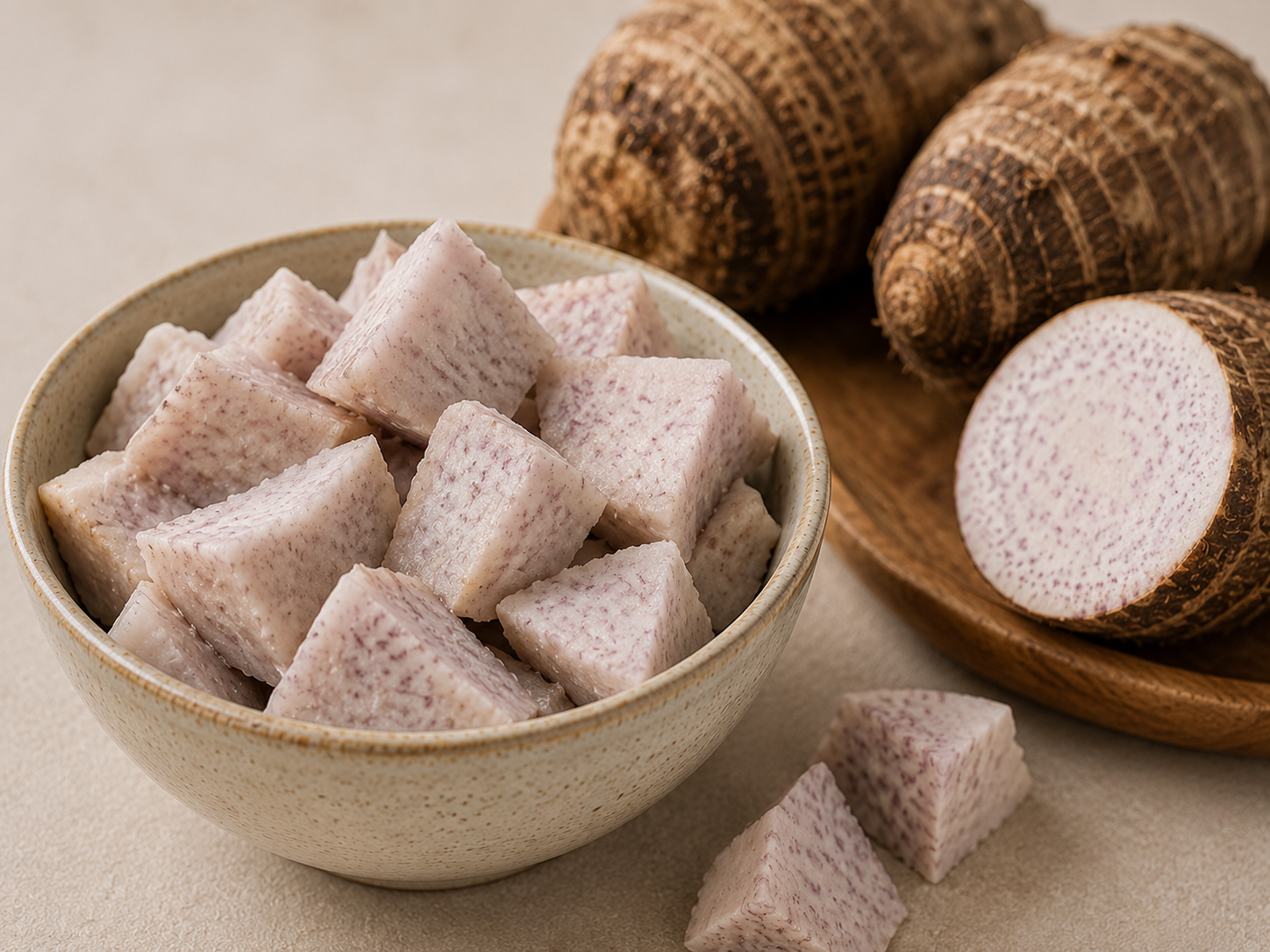
Taro is a high-moisture starchy tuber. Per 100 g of boiled taro, it provides about 52 kcal, 13.4 g of carbohydrate, and 2.4 g of dietary fiber, with potassium, copper, molybdenum, vitamin B6, and folate among the more notable nutrients.
Food Overview
Key strengths
Taro is about 84% water, so its energy density is lower than that of dry grains and cooked rice. Per 100 g after boiling, it provides about 52 kcal, 13.4 g of carbohydrate, and 2.4 g of dietary fiber, along with potassium, copper, molybdenum, vitamin B6, and folate.
How to Eat It
Taro is suitable for steaming, boiling, stewing in soup, or adding to mixed-grain rice. It can also be boiled and mashed roughly while retaining some small pieces.
What stands out
The slippery texture that appears after taro is cut or cooked is mainly related to a mucilage made up of water-soluble polysaccharides and small amounts of protein.
Worth noting
Taro must be thoroughly cooked before eating. Taro corms contain needle-shaped calcium oxalate crystals and related irritants; peeling raw taro can cause hand itching, and undercooked taro may irritate the lips, mouth, and throat. The University of Hawaii postharvest guidance for taro also states clearly that taro must be cooked before consumption.
Basic Nutrition
Showing:100 g Raw Taro
View complete nutrition data
GI note:GI varies with cultivar, food structure, processing, and cooking. Raw grains usually do not have directly applicable human GI data.
Raw taro should not be eaten directly, and no suitable raw-food GI value is available for display here.
Data notes:Raw and boiled taro data come from their corresponding food-state entries and are not calculated using a fixed raw-to-cooked weight multiplier.
Taro should not be eaten raw; the raw state is included only for pre-cooking weighing and nutrition-database display.
“Sugars” is the sum of glucose, fructose, sucrose, and maltose in the database.
GI studies exist for different taro cultivars, but varieties and cooking methods differ substantially, and no reliable value exactly matches the ordinary taro state used on this page.
Vitamins & Minerals
By default, show values per 100 g of raw taro and only representative nutrients providing at least 5% of the adult Daily Value at the current serving
View all vitamins and minerals
Percentages show how much the selected serving contributes to the adult Daily Value.
Key Bioactive Compounds
Resistant Starch
Functional carbohydratesTaro starch granules are relatively small, and some starch can be less rapidly digested in the small intestine under certain conditions.
Specific amount: —. Values vary widely with taro cultivar, raw or cooked state, and analytical method.
Some starch that escapes small-intestinal digestion can reach the colon and be fermented by gut microbes, potentially supporting short-chain-fatty-acid production and a normal gut environment.
Taro must be fully steamed, boiled, or stewed. Do not eat it undercooked in an attempt to preserve resistant starch.
Resistant-starch content is not fixed and does not make taro a “zero-carb” food.
Taro Mucilage Polysaccharides
Functional PolysaccharidesThe slippery texture of cut or cooked taro comes partly from a complex mixture of mucilage polysaccharides, proteins, and other water-soluble components.
Specific amount: —. Cultivars differ, and extraction and measurement methods for taro mucilage vary widely. There is no unified fresh-weight value suitable for a general food page. The mucilage is found mainly in corm cells and intercellular spaces.
Mucilage polysaccharides can contribute fermentable carbohydrate to the diet and may support gut microbes and food texture.
Use steaming, boiling, or stewing and retain some of the cooking liquid where appropriate.
Taro mucilage is not a gastric-mucosal protective layer and does not treat gastritis, gastric ulcers, or intestinal disease.
Phenolic Acids & Other Polyphenols
PolyphenolsTaro contains small amounts of phenolic acids and other polyphenols, some of which may be associated with mucilage polysaccharides and cell walls.
Specific amount: —. Values vary with cultivar, color, and analytical method, and outer tissues or colored taro cultivars may contain more phenolic compounds.
These compounds can contribute to dietary antioxidant defenses as part of taro’s phytochemical profile, but human evidence is limited overall.
Remove the inedible outer skin and cook thoroughly. Limit deep-fried taro and sweet taro mash made with large amounts of fat and sugar.
Antioxidant or anti-inflammatory activity in cell studies does not prove that ordinary cooked taro has disease-treating effects.
How Preparation Changes Taro
Raw Taro
Raw taro is included only for pre-cooking weighing and database display and is not suitable for direct consumption. The juice may irritate the skin during peeling and cutting, and undercooked taro can cause tingling or itching of the lips, tongue, and throat.
Boiled Taro
After boiling, taro becomes soft inside and its irritating effect is reduced. Per 100 g, boiled taro provides 52 kcal, 13.4 g of carbohydrate, and 2.4 g of dietary fiber; potassium changes from 640 mg in the raw state to 560 mg after boiling, and vitamin C from 6 mg to 5 mg.
Steamed Taro
Steaming involves less direct contact with water and more easily preserves the whole shape and mealy texture. However, a steamed-taro nutrition entry as complete as the boiled entry used on this page was not found, so boiled values should not be relabeled as directly measured steamed values.
Mashed Taro
Mashing does not create extra carbohydrate, but it disrupts the original chunk structure and may increase eating speed.
Refrigerated After Cooking
Cooling can cause some gelatinized starch to reorganize, but the degree depends on cultivar, cooking level, refrigeration time, and reheating method.
Deep-Fried & Highly Processed Products
Deep-fried taro, taro pastries, taro balls, and sweet taro mash cannot use the nutrition data for boiled taro on this page.
How to Choose & Store
How to choose
- Confirm that the product is edible taro or small taro corms, and do not confuse it with konjac, Chinese yam, or ornamental aroids such as elephant ear plants.
- Choose taro that feels firm and heavy for its size. Avoid products that are clearly soft when pressed, leaking locally, or have a rotten odor.
- A small amount of soil and fine root hairs on the skin is normal, but there should not be extensive mold, insect holes, cracks, or decay.
- For peeled, cut, or vacuum-packed products, confirm proper chilled or frozen storage and avoid packages with leaks, swelling, or abnormally cloudy liquid.
How to store
- Wrap unwashed, unpeeled taro in paper and store it in a cool, ventilated, dark place.
- Do not seal it in a damp plastic bag.
- Peeled or cut taro should be sealed, refrigerated, and cooked promptly.
- For longer storage, cook thoroughly, portion, and freeze.
- Cooked taro should be cooled promptly and refrigerated rather than left at room temperature for a long time.
- Discard it if there is extensive softening or leaking, obvious mold, sour, alcoholic, or rotten odors, a swollen package, or leakage.
When buying taro, remember three things: confirm the food identity, choose firm corms, and avoid mold or off odors.
How to Include It in Everyday Meals
Whole Steamed Taro
Wash the taro and steam it with the skin on, then peel after it is fully cooked; this can reduce hand irritation from peeling raw taro. Steam until chopsticks pass easily through the center, then pair with eggs, tofu, fish, and vegetables.
Taro Mixed-Grain Rice
Peel taro, cut it into large pieces, and cook it with white rice, brown rice, millet, or legumes. Reduce the amount of rice when taro is added rather than eating a full portion of rice plus a full portion of taro.
Taro Stew
Taro works well stewed with tomato, carrot, daikon, mushrooms, tofu, chicken, or beef. Cook it thoroughly first, then season with small amounts of salt, soy sauce, and spices.
Taro Vegetable Soup
Cut taro into chunks and cook with Chinese cabbage, spinach, tomato, mushrooms, or legumes. Do not cut the pieces too small or simmer until completely dissolved.
Coarse Taro Mash
Mash thoroughly steamed taro while leaving small pieces, and add a small amount of unsweetened milk, soy milk, black pepper, or herbs if desired.
Chilled Taro Salad
Cool boiled taro and combine with cucumber, tomato, legumes, egg, or tofu. Refrigerate promptly and discard it if it develops a sour odor or abnormal slime.
Who Should Take Extra Care
People Whose Skin Itches When Handling Raw Taro
Wear gloves when peeling and avoid getting raw taro juice in the eyes, on the lips, or on broken skin. Seek medical care if there is marked facial swelling, persistent throat discomfort, or difficulty breathing.
People managing blood sugar
Taro is still a starchy staple food. A 150 g serving of boiled taro contains about 20.1 g of carbohydrate and should not be added in large amounts on top of rice or noodles.
People Who Need to Limit Potassium
Boiled taro contains 560 mg of potassium per 100 g, and 150 g provides about 840 mg. People with impaired kidney function, high blood potassium, or a prescribed potassium restriction should decide portions based on laboratory results and the rest of the day’s diet.
People Who Need to Limit Oxalate
Taro tissues contain calcium oxalate crystals. People with recurrent calcium oxalate stones or those following a low-oxalate diet should decide whether and how much to eat with guidance from a physician or dietitian and should avoid raw or undercooked taro.
People with digestive sensitivity
Taro contains starch and dietary fiber, and some people may feel bloated after a large serving. Start with a smaller portion, cook until soft, and avoid pairing it with large amounts of fat or fried foods at the same time.
Infants, young children, and people with swallowing difficulties
Cook completely and mash or cut it to a size appropriate for swallowing, making sure no hard pieces remain. Do not give infants or young children undercooked taro, and do not add large amounts of sugar, honey, or condensed milk to improve the taste.
Similar Food Alternatives
Potato
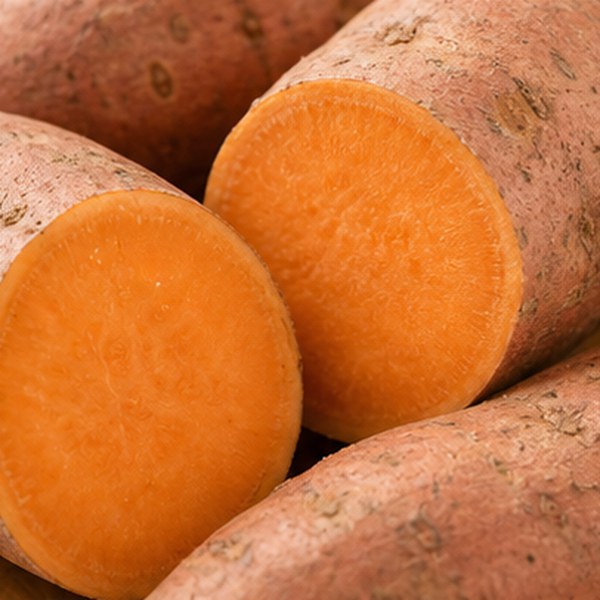
Cooking methods are similar to taro: steaming, boiling, stewing, and salads all work well.
View details →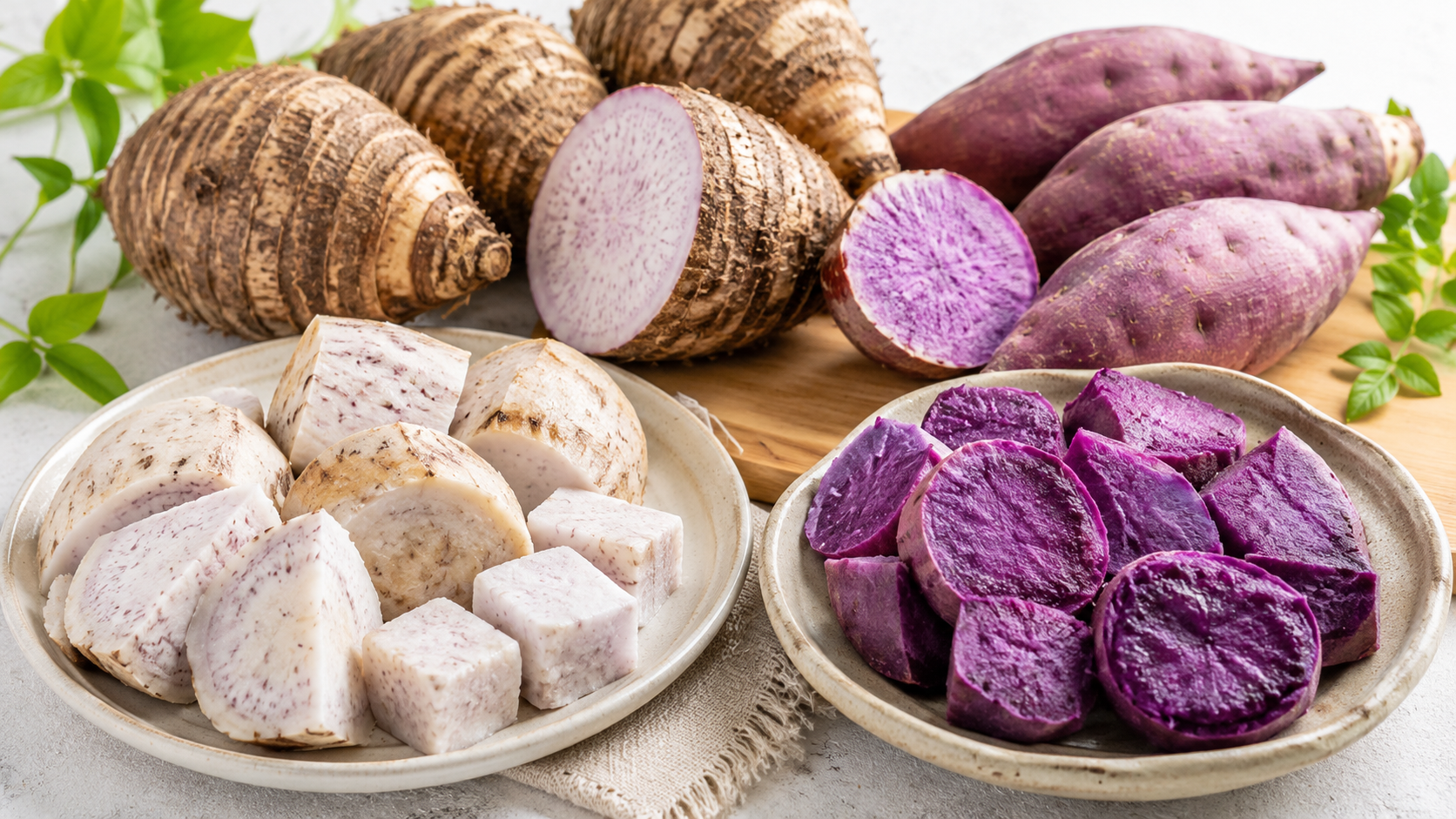
Chinese Yam
It can be steamed, boiled, added to soups, or used in mixed-grain rice, with a texture that is usually crisper or finer than taro.
View details →Sweet potato
It is noticeably sweeter and works well steamed or moderately roasted to replace part of rice or noodles.
View details →Lipu Taro
It belongs to the same broader taro group but is usually larger and mealier, and the cultivar and edible part may differ.
View details →Data Sources & Last Updated
Nutrition Data
Basic Information & Food Safety
Research & References
Simsek S, El SN. (2015). In vitro starch digestibility, estimated glycemic index and antioxidant potential of taro (Colocasia esculenta L. Schott) corm.
Food Chemistry, 168, 257–261. DOI / Original
Tosif MM, et al. (2022). A concise review on taro mucilage: Extraction techniques, chemical composition, characterization, applications, and health attributes.
Bahado-Singh PS, et al. (2006). Food processing methods influence the glycaemic indices of some commonly eaten West Indian carbohydrate-rich foods.
British Journal of Nutrition, 96(3), 476–481.
Ramdath DD, et al. (2004). Glycaemic index of selected staples commonly eaten in the Caribbean and the effects of boiling versus crushing.
British Journal of Nutrition, 91(6), 971–977.