Fish & Seafood
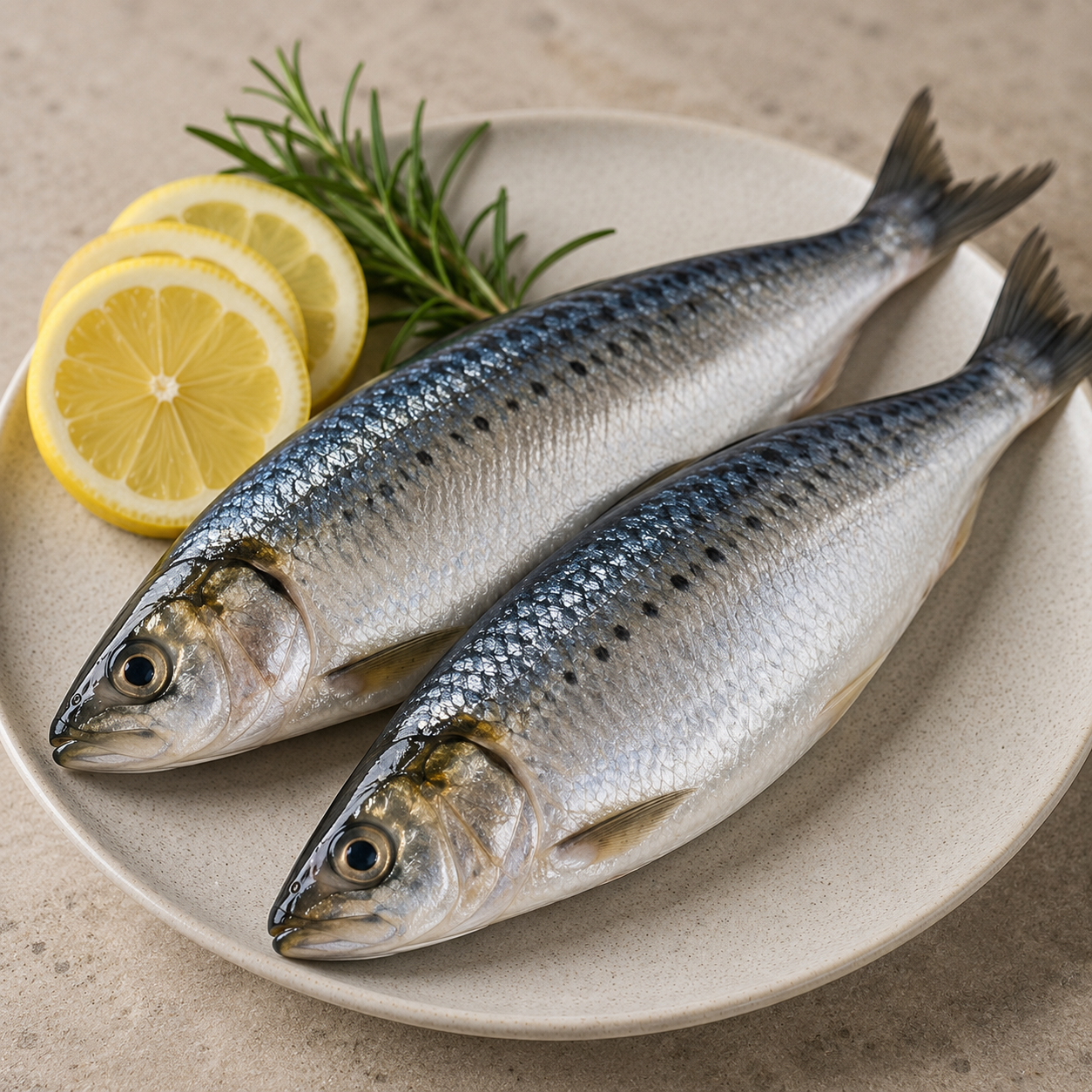
Atlantic Herring
Atlantic herring is a small oily fish from North Atlantic waters and continental shelves. It provides protein, EPA, DHA, vitamin B12, selenium, and some vitamin D. This page covers Atlantic herring (Clupea harengus); pickled, salted, smoked, and canned products need separate data.
Food Overview
Key strengths
Atlantic herring is rich in long-chain omega-3 fats. Per 100 g, dry-heat-cooked herring provides about 909 mg EPA, 1,100 mg DHA, and 23 g protein.
How to Eat It
Bake, steam, stew, or pan-cook briefly with a little oil. Herring is already fatty, so large amounts of butter, cream, or frying oil are unnecessary.
What stands out
Check both species and processing state. Labels such as Atlantic herring or Clupea harengus match this page; Pacific herring, roe, pickled herring, and smoked herring need separate data.
Worth noting
Cold-chain control matters because herring and processed herring can form histamine if temperature control fails. Once formed, histamine is not reliably removed by washing, freezing, or cooking.
Basic Nutrition
Showing:85 g Dry-Heat-Cooked Atlantic Herring
View complete nutrition data
GI note:GI varies with cultivar, food structure, processing, and cooking. Raw grains usually do not have directly applicable human GI data.
Plain herring contains too little available carbohydrate for GI to be useful, so it is shown as “not applicable,” not 0. Sweetened pickled products require separate assessment.
Data notes:This page has two formal states: raw Atlantic herring and dry-heat-cooked Atlantic herring. Pickled, salted, smoked, canned, and dried products are discussed separately rather than treated as nutrition states.
Basic nutrition uses USDA FoodData Central Atlantic herring entries: raw (FDC 175116) and dry-heat cooked (FDC 175117). 'Dry heat' refers to a roasting-type preparation without added water, not smoked or dried fish.
A common serving is 85 g, about 3 oz, matching the site’s fish-serving convention. It is not a fixed daily recommendation.
Default view is 85 g dry-heat-cooked herring. Switching state also switches nutrition, fatty acids, vitamins, and minerals.
GI is shown as “not applicable” because plain herring contains almost no available carbohydrate. Sweetened pickled products must be judged from their own recipe.
Per-100 g energy, protein, fat, EPA, and DHA are higher after cooking mainly because water falls from about 72.1 g to 64.2 g, concentrating nutrients.
USDA provides individual EPA, DPA, and DHA values but not one standardized total omega-3 or omega-6 value, so the page does not add categories manually.
Atlantic and Pacific herring are different species. These data also do not apply directly to roe, pickled, smoked, or canned herring.
Vitamins & Minerals
Only vitamins and minerals providing at least 5% of the Daily Value at the current serving are shown. The default is 85 g cooked Atlantic herring.
An 85 g cooked serving has 15 vitamins and minerals meeting at least 5% of the Daily Value. Vitamin B12 and selenium are especially notable.
View all vitamins and minerals
Percentages show how much the selected serving contributes to the adult Daily Value.
Key Bioactive Compounds
EPA & DHA
Long-Chain Omega-3 Fatty AcidsEPA and DHA are the most characteristic fatty acids in Atlantic herring.
Per 100 g, raw herring provides about 709 mg EPA and 862 mg DHA; cooked herring about 909 mg and 1,100 mg. An 85 g cooked serving provides about 1,708 mg combined.
EPA and DHA support normal cell membranes, lipid signaling, brain, retinal, and cardiovascular functions.
Bake, steam, stew, or pan-cook briefly with little oil; avoid deep-frying, repeated high heat, and heavy charring.
Herring provides omega-3 fats but does not treat inflammation or high blood lipids and is not equivalent to fish-oil or prescription omega-3 products.
Selenium
Antioxidant MineralSelenium is an essential trace mineral and part of antioxidant selenoproteins.
Raw Atlantic herring provides about 36.5 μg per 100 g; cooked herring about 46.8 μg. An 85 g cooked serving provides about 39.8 μg, around 72% of the Daily Value.
Selenoproteins support antioxidant defense, thyroid-hormone metabolism, DNA synthesis, and normal immune function.
Rotate herring with other seafood, eggs, meat, legumes, and whole grains.
Selenium is essential but more is not always better; herring does not replace high-dose supplements or thyroid treatment.
Vitamin D
Fat-Soluble VitaminVitamin D occurs naturally in relatively few foods, and oily fish are important natural sources.
Raw herring provides about 4.2 μg per 100 g; cooked herring about 5.4 μg. An 85 g cooked serving provides about 4.59 μg, around 23% of the Daily Value.
Vitamin D supports calcium absorption, bone mineralization, muscle and nerve function, and normal immune function.
Steam, bake, or stew herring until fully cooked; there is no need to eat it raw to preserve vitamin D.
Herring can contribute vitamin D but cannot guarantee normal blood levels or replace testing and treatment for deficiency.
How Preparation Changes Atlantic Herring
Raw Atlantic Herring
Raw Atlantic herring provides about 158 kcal, 17.96 g protein, 9.04 g fat, and 72.05 g water per 100 g. 'Raw' means uncooked, not automatically safe for raw eating.
Dry-Heat-Cooked Atlantic Herring
Dry-heat cooking provides about 203 kcal, 23 g protein, and 11.6 g fat per 100 g, with water falling to 64.2 g. Higher nutrient density mainly reflects water loss.
Pickled Herring
One USDA pickled Atlantic herring entry provides about 262 kcal and 870 mg sodium per 100 g. Pickling may also add sugar, so plain-herring data do not apply.
Smoked Herring / Kipper
One USDA smoked Atlantic herring entry provides about 217 kcal, 24.6 g protein, and 918 mg sodium per 100 g. Salting varies widely by brand.
Canned Herring
Canned herring may be packed in brine, oil, tomato juice, or other sauces. Energy and sodium depend heavily on the packing medium and seasoning.
Raw & Cold-Smoked Products
Freezing can kill some parasites but does not eliminate all harmful microbes. Thorough cooking remains the most reliable way to reduce foodborne-disease risk, especially for high-risk groups.
Histamine Risk
If temperature control fails, herring can form histamine. Once formed, freezing, cooking, smoking, salting, and canning do not reliably destroy it; prevention depends on proper cold-chain handling.
How to Choose & Store
How to choose
- Look for Atlantic herring or Clupea harengus. Both Atlantic and Pacific herring may be sold simply as 'herring,' so the species name helps confirm the product.
- Check whether the product is fresh, frozen, pickled, salted, smoked, canned, ready-to-eat, or needs cooking. Processed products require separate checks for sodium, added sugar, oils, and storage instructions.
- Fresh fish should stay refrigerated or on plenty of ice, smell mild rather than sour, ammonia-like, or rancid, and have flesh that springs back slightly when pressed.
- Avoid frozen packages with cracks, heavy ice crystals, or fish that has softened or can bend, which may suggest prolonged storage or thaw-refreeze cycles.
- For processed products, compare sodium per 100 g or serving, added sugar, packing oil, salty sauces, refrigeration requirements, and use-after-opening instructions.
How to store
- Refrigerate fresh herring at 4°C or below. FDA suggests refrigerating if it will be eaten within about 2 days; FoodSafety.gov lists about 1–3 days for fatty fish.
- At −18°C, about 2–3 months is a quality guideline. Longer continuous freezing does not automatically mean unsafe food, but quality may decline.
- Thaw in the refrigerator when possible. For faster thawing, seal and submerge in cold water; cook immediately after microwave thawing. Avoid prolonged room-temperature thawing.
- After handling raw fish, wash hands, boards, knives, utensils, and work surfaces. Keep raw fish juices away from ready-to-eat foods.
- Cook fish to an internal temperature of 63°C. Without a thermometer, look for opaque flesh that flakes easily with a fork.
- Do not rely on reheating to fix a broken cold chain. Histamine already formed from temperature abuse is not removed by later cooking.
When buying Atlantic herring, confirm Clupea harengus, distinguish plain from processed products, check dates and cold-chain condition, and compare sodium in smoked or pickled versions.
Easy Ways to Eat Herring
Baked Atlantic Herring
Season with lemon, black pepper, garlic, and herbs, then bake until fully cooked. Use only a little oil and pair with vegetables rather than butter-heavy or salty sauces.
Steamed Atlantic Herring
Steam with ginger, scallions, and lemon until fully cooked, then add a little lower-sodium soy sauce or vinegar. Pair with mushrooms, leafy greens, or tofu.
Tomato-Braised Herring
Stew briefly with tomatoes, onions, peppers, and mushrooms. Keep salt, ketchup, and concentrated stock modest so a low-sodium fresh fish does not become a high-sodium dish.
Herring Whole-Grain Bowl
Remove bones carefully and pair cooked herring with brown rice, quinoa, or buckwheat plus vegetables, edamame, or chickpeas. Use lemon, vinegar, and herbs instead of heavy mayonnaise.
Herring & Potato Vegetable Salad
Combine cooked herring and potatoes with onion, cucumber, peas, and leafy greens. Use plain yogurt, mustard, and lemon for dressing; reduce extra salt if using smoked or pickled herring.
Small Pickled-Herring Plate
Choose a product lower in sodium and added sugar and use it as a small side rather than the main protein. Pair with whole-grain bread, potatoes, onions, and vegetables.
Who Should Take Extra Care
People with Fish Allergy
People allergic to fish protein should avoid Atlantic herring. Heating does not reliably remove fish allergens, and people with previous significant reactions should not test small amounts on their own.
People Sensitive to Histamine or Exposed to Poor Cold-Chain Fish
Histamine fish poisoning can cause burning in the mouth or throat, flushing, rash, headache, dizziness, nausea, diarrhea, palpitations, or breathing symptoms soon after eating. Stop eating and seek care for significant reactions.
Pregnancy, Breastfeeding & Children
FDA and EPA list herring among lower-mercury 'Best Choices.' Pregnancy and breastfeeding guidance allows 2–3 servings per week from this category, with smaller age-appropriate portions for children. These groups should still avoid raw, undercooked, or poorly handled herring.
People Limiting Sodium
Plain raw Atlantic herring contains about 90 mg sodium per 100 g, while representative pickled and smoked products contain about 870 mg and 918 mg. Choose plain fish or compare labels carefully.
People with impaired kidney function
Atlantic herring is rich in protein and phosphorus and also provides potassium. People following restrictions for protein, phosphorus, potassium, or sodium should use individualized portions, especially with smoked or pickled products.
Infants, young children, and people with swallowing difficulties
Herring can contain many fine bones. Cook thoroughly, remove bones carefully, and cut or mash to a texture suitable for swallowing.
People Managing Total Energy
Cooked Atlantic herring provides about 203 kcal and 11.6 g fat per 100 g. It can fit weight-management diets, but portions and added frying oil, butter, cream sauces, and oil-packed cans still matter.
Similar Food Alternatives
Sardines
Another small oily fish rich in EPA and DHA. Canned sardines with edible bones also provide substantial calcium and are easy to store.
Atlantic Mackerel
A thicker, stronger-flavored oily fish and a good EPA/DHA source. Distinguish it from higher-mercury king mackerel.
Salmon
Larger, softer fillets that also provide EPA, DHA, protein, and vitamin D, and may be easier for people who dislike herring’s small bones and stronger flavor.
Anchovies
Small fish often sold salted or canned. They provide omega-3 but can be high in sodium, so they are better used in small amounts for flavor.