Fish & Seafood
Oyster
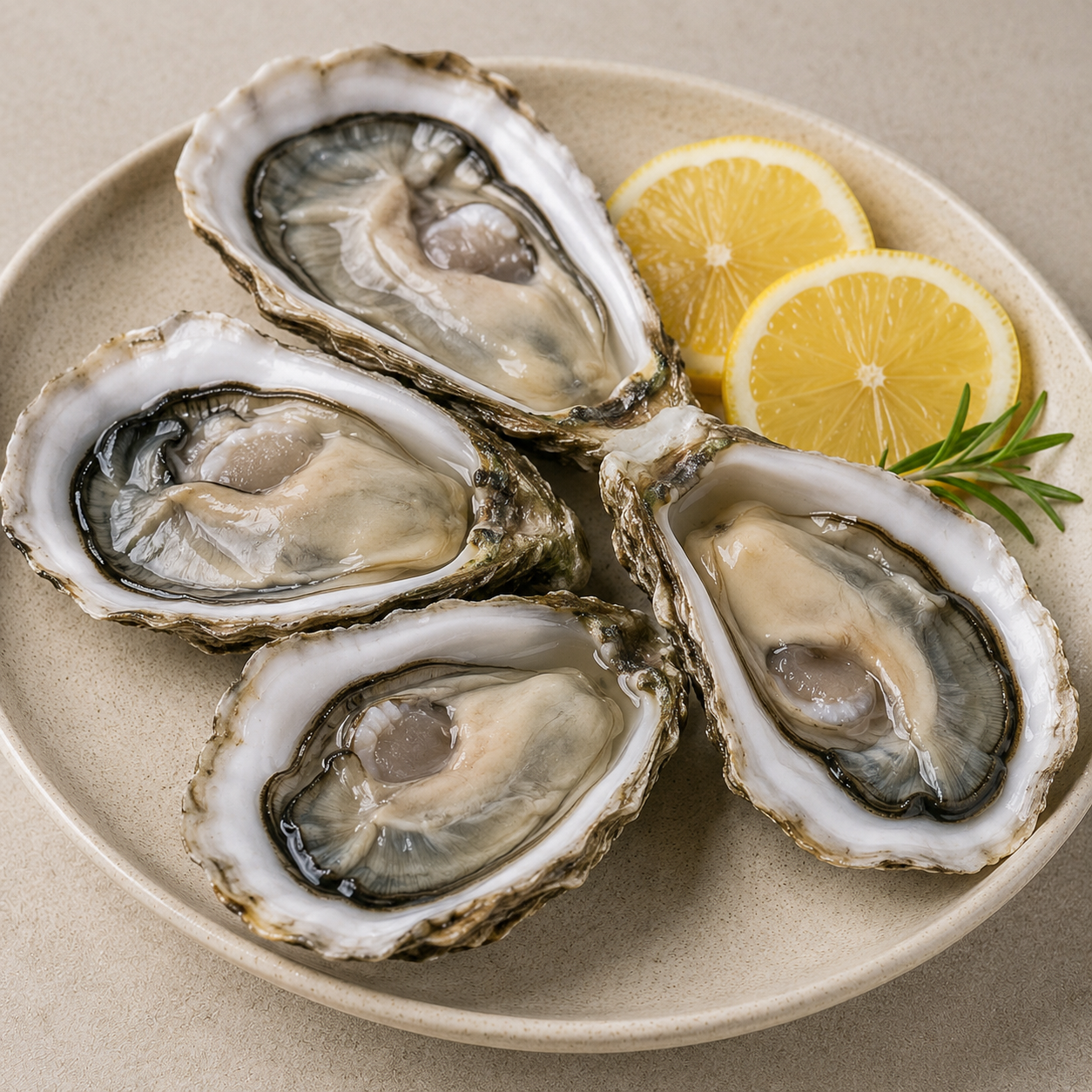
“Oyster” is the common food name for edible oysters. This page uses farmed Pacific oyster data (Crassostrea gigas / Magallana gigas). Oysters are bivalve mollusks, relatively low in energy and fat but rich in zinc, vitamin B12, copper, selenium, and iodine, with smaller amounts of EPA and DHA. The main concern is not fat or cholesterol but the risk of Vibrio, norovirus, and other foodborne pathogens when eaten raw.
Food overview
Key strengths
Raw oysters provide about 14 mg zinc, 23 µg vitamin B12, 1.04 mg copper, and 46 µg selenium per 100 g, making them a concentrated source of these micronutrients.
Best ways to eat it
Boil thoroughly, steam, bake, simmer in soup, or pan-cook with a little oil. Pair with vegetables, tofu, and whole grains rather than large amounts of butter, cheese, or salty sauces.
What stands out
The standout nutrients are zinc and vitamin B12. A common 85 g serving provides about 11.9 mg zinc and 19.6 µg vitamin B12, roughly 108% and 815% of their Daily Values.
Worth noting
Harmful bacteria or viruses in raw oysters may not be detectable by appearance, smell, or taste. Lemon juice, hot sauce, and alcohol do not kill Vibrio; thorough cooking is the main way to reduce infection risk.
Basic Nutrition
Showing:100 g Raw oyster meat
View complete nutrition data
GI note:GI varies with cultivar, food structure, processing, and cooking. Raw grains usually do not have directly applicable human GI data.
Reliable oyster GI data are lacking, so GI is not estimated from carbohydrate content. The page distinguishes a database value explicitly recorded as 0 from data that were not provided or cannot be determined reliably.
Data notes:This page uses the edible soft tissue of farmed Pacific oysters (Crassostrea gigas; accepted name Magallana gigas), with two nutrition states: raw oyster meat and boiled oyster meat.
The word “oyster” does not mean it must be eaten raw. “Raw oyster meat” is only a nutrition-data state, not a recommendation to eat oysters raw.
Values are based on 100 g edible portion. A common serving is 85 g of shucked oyster meat, not total shell-on weight. Oyster size varies too much to define the serving by number of oysters.
Basic nutrition uses Japanese food-composition entries for farmed Pacific oysters: raw (food no. 10292) and boiled (food no. 10293). Fatty-acid data come from the same database (MODE=4).
The 85 g values are scaled from per-100 g data. Because boiled samples contain less water, some nutrients appear more concentrated per 100 g; this does not mean cooking “creates” nutrients.
GI is shown as “—” because reliable oyster GI data are lacking. It is not estimated from carbohydrate content and is not shown as 0.
The carbohydrate detail provides starch but not reliable separate glucose, fructose, or sucrose values. Sugar is therefore shown as “—” rather than calculated as total carbohydrate minus starch.
The boiled-oyster entry does not provide detailed fatty-acid data, so saturated, monounsaturated, polyunsaturated fat, omega-3, omega-6, EPA, and DHA are shown as “—” for that state.
Vitamins & Minerals
Only vitamins and minerals reaching at least 5% DV at the selected serving are shown. Raw oyster meat per 100 g is the default; users can switch to 85 g or boiled oysters. Sodium is shown separately in Section 02 rather than repeated here.
Oysters are very low in vitamin D and should not be promoted as a major vitamin D source simply because they are seafood. Sodium is already shown in Section 02 and is not repeated as a nutrient card here. Percentages use FDA Daily Values for adults and children age 4+; actual values vary with water salinity, draining, and sample differences.
View all vitamins and minerals
Percentages show how much the selected serving contributes to the adult Daily Value.
Key Bioactive Compounds
Zinc
Essential trace mineralZinc supports many enzymes and is one of the most characteristic nutrients in oysters.
Raw oyster meat provides about 14 mg zinc per 100 g, or about 11.9 mg per 85 g serving. Zinc values refer to edible oyster tissue; shell minerals are not part of the edible serving.
Zinc supports immune function, protein and DNA synthesis, cell signaling, wound healing, and normal taste.
A normal serving of thoroughly cooked oysters already provides substantial zinc. People using multivitamins or high-dose zinc supplements should consider food and supplements together rather than eating very large amounts of oysters for zinc.
High zinc does not mean oysters have an immediate aphrodisiac effect or can raise testosterone, treat infertility, or fix every immune problem. The adult zinc UL is 40 mg/day, and long-term excess can disrupt copper status.
Selenium
Antioxidant-related mineralSelenium is part of several selenoproteins involved in antioxidant defenses and thyroid-hormone metabolism.
Raw oysters provide about 46 µg selenium per 100 g, or about 39.1 µg per 85 g serving—roughly 71% DV. Actual content can vary with growing waters and sample differences.
Selenoproteins such as glutathione peroxidases and thioredoxin reductases help protect cells from excessive oxidative damage and support DNA synthesis, immunity, and thyroid-hormone metabolism.
Get selenium from oysters, fish, eggs, meat, and other foods as part of a varied diet. On a day you eat oysters, there is usually no need to add high-dose selenium supplements for “extra antioxidant” effects.
Selenium supports antioxidant defenses, but oysters do not treat thyroid disease, prevent cancer, or slow every aspect of aging. Extra selenium in already replete people does not necessarily provide added benefit.
EPA & DHA
Long-Chain Omega-3 Fatty AcidsEPA and DHA are characteristic long-chain omega-3s in seafood and contribute to cell membranes and lipid signaling.
Raw oysters provide about 230 mg EPA and 180 mg DHA per 100 g, about 410 mg combined; an 85 g serving provides roughly 349 mg EPA+DHA.
EPA and DHA contribute to cell membranes and lipid mediators involved in cardiovascular, immune, and inflammatory processes. Seafood provides these fats directly rather than relying on limited conversion from plant ALA.
Boiling, steaming, baking, or brief simmering is sufficient. There is no need to eat oysters raw to “preserve omega-3”; the safety benefit of thorough cooking is usually more important than small differences in fatty-acid retention.
Oysters provide EPA and DHA, but usually less than many fatty fish. A normal serving should not be equated with high-dose fish-oil studies and does not instantly “eliminate inflammation” or replace cardiovascular treatment.
Raw, cooked, and processed forms
Raw oyster meat
Per 100 g: about 58 kcal, 6.9 g protein, 2.2 g fat, 14 mg zinc, and 23 µg vitamin B12. Nutrient-dense, but raw consumption carries Vibrio, norovirus, and other pathogen risks.
Boiled oyster meat
Per 100 g: about 90 kcal, 9.9 g protein, 3.6 g fat, 18 mg zinc, and 24 µg vitamin B12. Lower water content makes some nutrients look more concentrated per 100 g.
Fried oysters
Per 100 g: about 256 kcal, 11.1 g fat, and 32.9 g carbohydrate. Breading and absorbed cooking oil greatly increase energy, fat, and carbohydrate, so fried-oyster data should not be applied to plain oysters.
Comparing the three states
Raw oysters: 58 kcal, 85.0 g water, 6.9 g protein, 2.2 g fat, 4.9 g carbohydrate, 14 mg zinc, and 23 µg vitamin B12 per 100 g. Boiled: 90 kcal, 78.7 g water, 9.9 g protein, 3.6 g fat, 7.1 g carbohydrate, 18 mg zinc, and 24 µg B12. Fried: 256 kcal, 46.6 g water, 7.6 g protein, 11.1 g fat, 32.9 g carbohydrate, 12 mg zinc, and 30 µg B12. These are different database samples, not before-and-after measurements of the same oysters. Higher per-100 g values after boiling mainly reflect water loss and sample differences.
Seasonings do not make raw oysters safe
Lemon juice, vinegar, hot sauce, alcohol, or a brief quick steam cannot reliably kill Vibrio in oysters. CDC notes that lemon juice, hot sauce, and alcohol do not kill Vibrio, and inadequate steaming may also fail to eliminate norovirus.
Products that should use separate nutrition data
Fried oysters, smoked oysters, oil-packed or seasoned canned oysters, dried oysters, oyster sauce, oyster paste, oyster extract, and oyster supplements differ substantially in water, salt, sugar, breading, and added fat and should be treated as separate products.
How to choose and store
How to choose
- Live shell-on oysters: check that packaging, origin, harvest area, and seller information are clear; keep them continuously chilled or on ice; choose intact closed shells that close when tapped; and avoid products with obvious spoilage or ammonia odors. Do not buy or eat shells that are cracked or remain open after tapping.
- Shucked oyster meat: choose products with complete production, packaging, and refrigeration information. Packaging should be sealed, not swollen or leaking, and kept continuously chilled or frozen. Avoid sour, spoiled, or ammonia odors, excessive ice crystals, or signs of repeated thawing.
- Smell is not enough. Oysters contaminated with Vibrio, norovirus, or shellfish toxins may look, smell, and taste normal, so “smells fresh” does not prove they are safe to eat raw.
How to store
- Refrigerate or place on ice soon after purchase. If using within two days, keep at 4°C or below; otherwise follow product instructions for freezing.
- Thaw frozen oysters slowly in the refrigerator and keep raw oyster liquid away from ready-to-eat foods.
- After handling raw oysters, wash hands with soap and clean knives, cutting boards, containers, and counters to prevent cross-contamination with cooked or ready-to-eat foods.
- Cook thoroughly: aim for an internal temperature of at least 63°C. Shell-on oysters should open during cooking; discard any that stay closed. Shucked oysters should be heated through and no longer cold or translucent inside.
- Shellfish-toxin reminder: oysters can accumulate marine biotoxins such as paralytic shellfish toxins. Home cooking may not destroy these stable toxins, so buy oysters from regulated harvest areas and do not eat self-collected oysters of uncertain origin.
Remember three things when buying oysters: buy from regulated harvest sources, keep them cold, and do not use smell alone to decide whether they are safe to eat raw.
How to use it in everyday meals
Garlic-steamed oysters
Clean and open the shells, top the oyster meat with garlic, scallion, and a little oil, then steam until fully cooked. Oysters already contain sodium, so use less soy sauce, oyster sauce, and salt, and avoid pouring on large amounts of hot oil.
Oyster and tofu soup
Simmer oysters with tofu, mushrooms, tomato, or leafy greens, making sure the oysters are thoroughly boiled and cooked through. Use ginger, pepper, and herbs for flavor rather than salty soup bases and processed meats.
Tomato-braised oysters
Cook tomato, onion, and mushrooms into a sauce, then add oyster meat and heat until done. Serve with brown rice, whole-grain noodles, or mixed grains and avoid heavy cream, sugar, or salty tomato sauces.
Oyster steamed egg
Add oyster meat to beaten egg and steam until the egg is set and the oysters are fully cooked. Pair with spinach, mushrooms, or finely chopped carrot and season lightly.
Lightly pan-cooked oysters
Drain the oyster meat and cook in a nonstick pan with a little plant oil until both sides are set and the center is cooked through. Pair with cabbage, asparagus, or bell pepper and avoid repeated high-heat charring.
Boiled oyster grain bowl
Boil oysters thoroughly, then pair with brown rice, quinoa, chickpeas, and colorful vegetables. Season with lemon, vinegar, and herbs—but remember lemon adds flavor; it does not replace thorough cooking.
Who Should Take Extra Care
Anyone planning to eat oysters raw
Anyone who eats raw or undercooked oysters can become infected with Vibrio, norovirus, or other pathogens. Contaminated oysters may look, smell, and taste completely normal and can cause illness in any month of the year.
People with liver disease, diabetes, or weakened immunity
People with chronic liver disease, diabetes, cancer treatment, organ transplants, HIV, iron overload, or other immune impairment are at higher risk of severe sepsis from Vibrio vulnificus and should avoid raw or undercooked oysters.
Pregnant people, children, and older adults
Pregnant people, children, older adults, and those with weakened immunity are at higher risk of severe foodborne illness. They should eat only fully cooked oysters and avoid raw, undercooked, or foods containing raw oyster juices.
People with shellfish allergy
People with diagnosed oyster or other mollusk allergy should avoid oyster meat, oyster liquid, oyster sauce, oyster paste, and seafood with possible cross-contact. Severe symptoms such as breathing difficulty, throat tightness, or marked facial/lip swelling require emergency care.
People taking high-dose zinc supplements
An 85 g serving of raw oysters provides about 11.9 mg zinc. People using high-dose single-ingredient zinc, multivitamins, or zinc-containing cold remedies should consider total intake and avoid chronically exceeding the adult UL of 40 mg/day.
People limiting sodium
Raw oysters provide about 460 mg sodium per 100 g, and seasoned, smoked, or canned products may contain more. People limiting sodium should choose plain oysters and reduce soy sauce, oyster sauce, added salt, and salty broths.
People who gather oysters themselves
Do not harvest oysters from waters that are closed or not monitored. Bacteria, viruses, and shellfish toxins cannot be judged by water appearance or oyster smell, and some toxins are not fully destroyed by ordinary cooking.
If symptoms occur after eating
After eating raw oysters, seek medical care promptly for marked diarrhea, vomiting, abdominal pain, fever, chills, skin blisters, confusion, or rapidly worsening illness, and mention recent raw-oyster intake. Vibrio vulnificus can progress quickly in some high-risk people.
Similar Food Alternatives
Mussels
Another bivalve that provides vitamin B12, iron, selenium, and long-chain omega-3s and works well boiled, steamed, or in vegetable soup.
Clams
Especially notable for vitamin B12 and iron, suitable for soups or with vegetables and tofu. Purge grit and cook thoroughly before eating.
Scallops
Provide protein, vitamin B12, and selenium, are usually lower in fat, and have a milder flavor. Good for steaming or light pan-cooking.
Sardines
Not a shellfish, but provides more EPA and DHA along with protein, vitamin B12, and selenium. Bone-in canned sardines can also provide calcium; check sodium.