Tea & Coffee · Tea beverage
Yellow tea
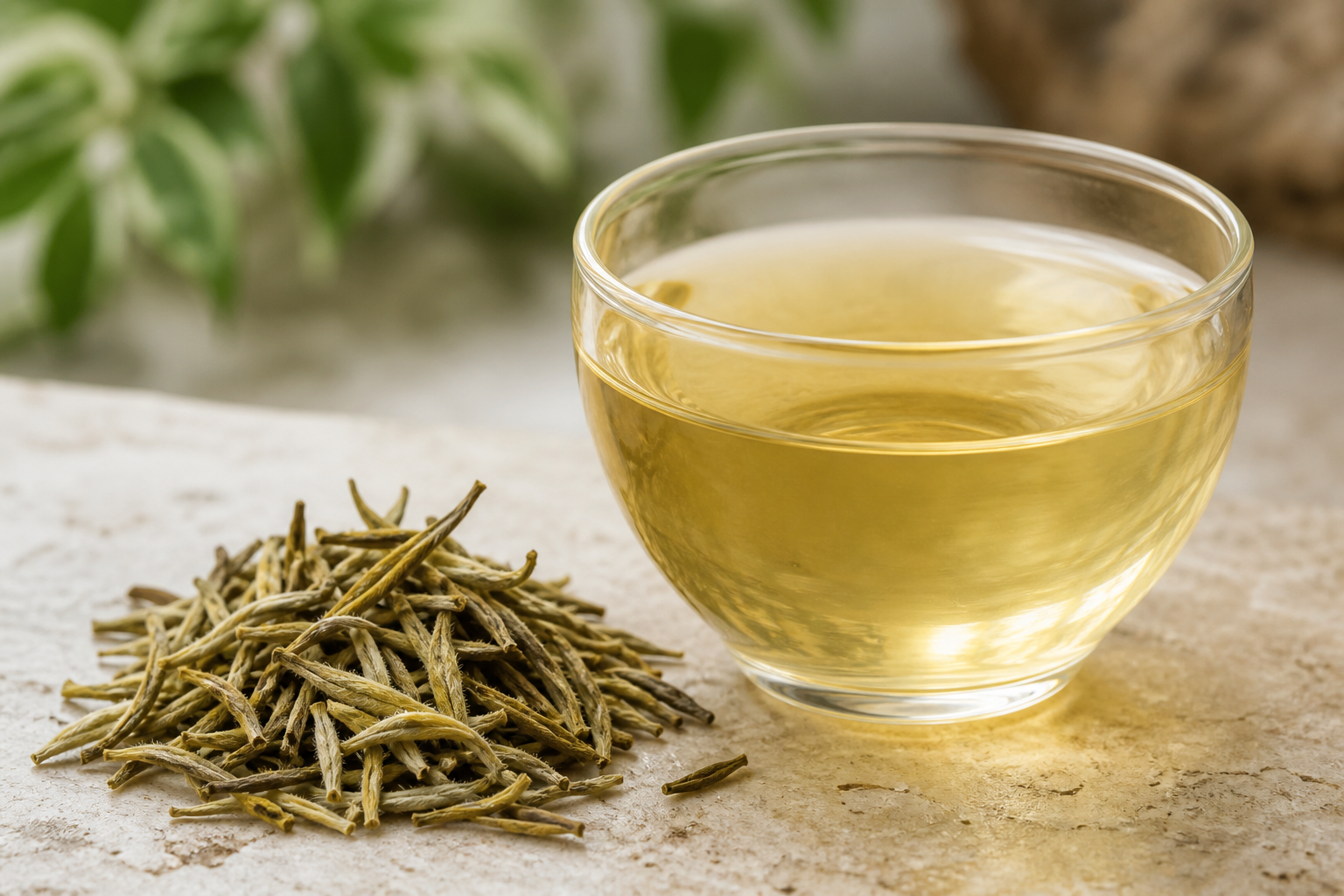
Yellow tea is made with a “yellowing” step that usually gives a softer, less bitter profile than comparable green tea. Unsweetened yellow tea provides almost no energy, while still supplying catechins, phenolic acids, theanine, and caffeine; amounts vary with cultivar, leaf maturity, degree of yellowing, and brewing.
Food overview
Key strengths
Unsweetened yellow-tea infusion contains almost no fat or available carbohydrate. Its main value comes from water, tea polyphenols, theanine, caffeine, and aroma compounds rather than vitamins, minerals, or calories. Because the leaves are not normally eaten, dry-leaf nutrition per 100 g should not be used for a cup of tea.
How to drink it
Best enjoyed plain. Start with about 2–3 g of tea per 200 mL water and adjust temperature and time for bud-style, small-leaf, or large-leaf yellow tea. Keeping sugar, honey, condensed milk, and creamer low preserves its low-energy beverage profile.
What stands out
The yellowing step is more than simply making the leaves “turn yellow.” Research shows it changes catechins, free amino acids, and aroma compounds, often reducing bitterness and astringency while increasing mellow sweetness and umami, though the direction and size of changes vary by process.
Worth noting
Yellow tea is not automatically low in caffeine. One study of teas with different fermentation levels found about 13.8–52.5 mg caffeine per 200 mL yellow-tea infusion; using more tea, hotter water, or longer steeping can increase intake.
Basic Nutrition
Showing:100 mL Unsweetened yellow-tea infusion
View complete nutrition data
GI note:GI varies with cultivar, food structure, processing, and cooking. Raw grains usually do not have directly applicable human GI data.
Plain yellow-tea infusion contains almost no available carbohydrate, so normal servings cannot supply the carbohydrate load required for standard GI testing. Reliable standard GI measurements are also lacking, so GI is shown as “—”, not 0 or “low GI.”
Data notes:This page uses one nutrition state: unsweetened yellow-tea infusion. Values are shown per 100 mL for consistency, with a common 200 mL serving and roughly 2–3 g dry tea as a reference amount.
Energy and macronutrients use a practical approximation for unsweetened brewed tea; caffeine and theanine use direct measurements from yellow-tea infusions.
Caffeine and theanine ranges come from a limited number of yellow-tea samples brewed under specific conditions and should not be treated as fixed values for every cup.
Vitamins & Minerals
Nutrition defaults to per 100 mL unsweetened yellow-tea infusion. At the selected serving, no vitamin or mineral can be confirmed to reach 5% of the adult Daily Value.
No vitamin or mineral reaches 5% of the Daily Value in the selected serving.
At the current serving, no vitamin or mineral can be confirmed to reach 5% of the Daily Value. Dry yellow tea may contain potassium, manganese, magnesium, and other minerals, but extraction into the drink varies with cultivar, tea amount, water, temperature, and time. This page does not substitute dry-leaf per-100-g data or estimate DV percentages.
View all vitamins and minerals
Key Bioactive Compounds
EGCG, EGC, and other catechins
CatechinsCatechins are signature tea polyphenols, mainly EGCG, EGC, ECG, EC, and catechin. They also contribute to yellow tea’s bitterness, astringency, and in-vitro antioxidant activity.
One study comparing 30 teas tested five yellow teas. After experimental brewing and conversion per gram of dry tea, EGCG was about 18.55–54.38 mg/g, EGC 11.96–39.23 mg/g, and ECG 6.21–28.68 mg/g. Samples included Huoshan Huangdacha, Junshan Yinzhen, Mengding Huangya, Weishan Maojian, and Yuan’an Luyuan. These are values for specific teas and conditions, not fixed amounts per cup.
Catechins can participate in free-radical scavenging and other redox reactions under experimental conditions. Regular unsweetened tea can add plant polyphenols to the diet, but human clinical research specific to yellow tea remains limited.
For bud-style and tender yellow teas, start around 80–85°C for 2–3 minutes. Larger-leaf or more roasted yellow teas can tolerate slightly hotter water or longer steeping. Adjust mainly for taste; there is no need to boil tea for long periods to maximize catechins.
Laboratory total-phenol and antioxidant tests do not directly prove anti-inflammatory, anticancer, or anti-aging effects in people. Ordinary yellow tea does not replace medication and should not be equated with high-dose EGCG extracts.
Gallic acid, ellagic acid, and flavonoids
Phenolic acids & flavonoidsBeyond catechins, yellow tea contains gallic acid, ellagic acid, quercetin glycosides, and other phenolics that contribute to flavor, color, and in-vitro antioxidant behavior.
In the five yellow-tea samples above, per gram of dry tea, gallic acid was about 1.19–3.16 mg and ellagic acid 2.39–9.79 mg; quercitrin in some samples was about 0.89–1.43 mg. Differences were substantial and some compounds were not detected in every tea, so these ranges are not universal label values.
These phenolic acids and flavonoids show antioxidant activity in vitro and may work alongside catechins to shape the overall phytochemical profile. The practical value of everyday tea drinking is mainly as an unsweetened plant beverage and polyphenol source, not as a therapeutic dose of one compound.
Drink it plain and fresh when possible. Limiting sugar, syrup, condensed milk, and foam toppings prevents added sugar and calories from overshadowing the tea itself. Prolonged reheating can reduce aroma and intensify flavor; there is no need to keep tea boiling to “extract more antioxidants.”
In-vitro free-radical scavenging does not prove that a cup of yellow tea can “remove all free radicals” or treat chronic inflammation. Higher levels in a particular sample do not guarantee stronger health effects in people.
Theanine and caffeine
Amino acids and alkaloidsTheanine contributes to umami and a softer taste; caffeine increases alertness and also contributes to yellow tea’s stimulating effect and some bitterness.
One study using 80°C and 100°C water with different steep times found about 4.1–8.9 mg theanine and 13.8–52.5 mg caffeine per 200 mL yellow-tea infusion. Under shorter brewing at 80°C, some samples had about 13.8 mg caffeine/200 mL; after 10 minutes, some rose to about 53 mg/200 mL.
Caffeine can temporarily improve alertness and reduce drowsiness. Theanine may influence relaxation and attention, but human intervention studies on yellow tea itself are limited, so different yellow teas cannot be assumed to have the same mood or cognitive effects.
Yellow tea is better placed in the morning or early afternoon. Caffeine-sensitive people can use less dry tea, shorten steeping, and avoid repeatedly keeping the leaves submerged for long periods. Theanine does not completely offset caffeine, and a mild taste does not mean no sleep effect.
Yellow tea is not naturally caffeine-free and does not treat fatigue, anxiety, or attention disorders. Caffeine varies widely between products and cannot be judged from color or bitterness alone.
Production and brewing differences
Yellowing process
Yellow tea is usually heat-fixed and then held under controlled warmth and humidity for the yellowing step. Research suggests EGCG and total tea polyphenols may decline, while some non-ester catechins, theaflavins, and free amino acids may rise, reducing bitterness and increasing mellow sweetness and umami.
Bud-style yellow tea
Bud-style yellow tea uses very tender buds, such as Junshan Yinzhen and Mengding Huangya. The liquor is often delicate and works well with lower temperatures and shorter steeps. More tender buds do not automatically mean less caffeine or fewer catechins; cultivar and processing still matter.
Bud-and-leaf and larger-leaf yellow tea
Bud-and-leaf, small-leaf, and large-leaf yellow teas use progressively more mature leaves, and some show stronger grain, roast, or mellow notes. Their chemistry and in-vitro activity can differ substantially, so data from Junshan Yinzhen should not be used for large-leaf yellow tea.
Water-temperature differences
Hotter water generally speeds extraction of caffeine, theanine, and polyphenols and may increase bitterness. Tender yellow teas can start around 80–85°C; more mature or fuller-bodied teas may suit 85–90°C, then adjust to the product.
Steeping time
Longer steeping usually extracts more caffeine. To limit caffeine, reducing tea amount and steeping time is more direct than simply adding more water; later infusions should not be treated as caffeine-free.
Sugar and milk
Plain yellow-tea infusion provides almost no energy. Once sugar, honey, creamer, condensed milk, or foam topping is added, energy and sugar come mainly from those ingredients and the finished drink needs separate nutrition data.
How to choose and store
How to choose
- The package should clearly identify it as yellow tea and ideally name the product, such as Junshan Yinzhen, Mengding Huangya, Huoshan Huangya, Pingyang Huangtang, Huoshan Huangdacha, or Yuan’an yellow tea.
- Names such as “golden tea,” “yellow-leaf tea,” or “green-tea powder” do not prove that a yellow-tea process was used.
- Dry leaves should match the product style, with relatively intact buds or leaves, natural yellow-green, yellow-brown, or golden tones, and a dry, non-sticky feel.
- Avoid visible mold, insects, excessive debris, and foreign matter. Yellow teas vary widely in color, so “more yellow” does not mean better quality.
- Normal aromas may include tender, sweet, grain-like, roasted-chestnut, or light roast notes. Avoid moldy, rancid, damp-cardboard, or strongly artificial odors.
- Prefer intact sealed packages with a clear tea category, raw material, production information, and shelf-life information, ideally in smaller sizes.
How to store
- After opening, keep it sealed, dark, and dry, away from the stove, sink, spices, coffee, and other strong odors.
- For short-term use, a cool dry cupboard is fine. If refrigerating, use moisture-proof airtight packaging.
- Before opening refrigerated tea, let the sealed package return to room temperature to reduce condensation on the leaves.
- Do not drink tea with visible mold, obvious damp softness, moldy or sour odor, rancid smell, abnormal clumping, insects, or foreign material.
- Slight darkening may simply reflect quality decline, but damp tea with an abnormal odor should be discarded.
When buying yellow tea, remember three things: confirm it is made with a yellow-tea process, choose well-sealed smaller packs, and avoid moldy, damp, or strongly artificial-smelling tea.
How to fit it into your diet
1. Traditional plain brewing
Use about 2–3 g yellow tea per 200 mL water. For bud-style tea, start at 80–85°C for 2–3 minutes; for larger leaves, try 85–90°C for 3–4 minutes. Aim first for a clean sweet cup without marked bitterness, then adjust tea amount and time.
2. Short gaiwan infusions
With a gaiwan, you can use more leaf but shorten each steep and drink across multiple infusions. Pour off the early steeps quickly and lengthen later ones. Multiple infusions do not mean very low caffeine; total intake still depends on total tea and extraction.
3. Large-cup everyday brew
For office or home mug brewing, use less tea and separate the leaves from the liquor in time to avoid continuous steeping, which increases bitterness and caffeine extraction. Do not leave a large handful of tea steeping in a thermos all day.
4. Cooled unsweetened yellow tea
Yellow tea can be cooled naturally or refrigerated after brewing. Use a clean sealed container and drink it promptly. Cooling does not remove caffeine, and brewed tea should not sit at room temperature for long periods.
5. With meals or snacks
Yellow tea can accompany plain nuts, whole-grain snacks, or lower-sugar meals. People with iron deficiency or taking iron supplements should not use strong tea to swallow iron pills and should separate it from major iron-containing meals by about 2 hours.
6. Lightly flavored yellow tea
For variety, add a little lemon, mint, or unsweetened sparkling water while keeping the drink essentially unsweetened. Once honey, syrup, jam, or creamer is added, treat it as a mixed beverage rather than plain yellow tea.
Who Should Take Extra Care
People sensitive to caffeine or with poor sleep
Yellow tea provides about 13.8–52.5 mg caffeine per 200 mL, and strong brewing, long steeping, or more leaves can raise it further. People prone to insomnia, palpitations, tremor, anxiety, or headache should reduce the serving and avoid it later in the day.
Pregnant and breastfeeding people
Count caffeine from yellow tea, coffee, other teas, cola, chocolate, energy drinks, and caffeinated medicines together. EFSA considers up to 200 mg/day from all sources generally not a safety concern during pregnancy and breastfeeding.
People with iron deficiency or taking iron supplements
Tea polyphenols can reduce absorption of non-heme iron and oral iron supplements. People with iron deficiency, anemia, or iron treatment should separate yellow tea from iron pills and major iron-containing meals by about 2 hours and should not take iron with tea.
Children and adolescents
Children and adolescents may be more sensitive to caffeine. Yellow tea is not appropriate as a routine stimulant drink for children, and sweet yellow-tea milk drinks should not replace water, milk, or regular meals.
People with reflux or a sensitive stomach
Strong tea, drinking on an empty stomach, or a large amount at once may cause nausea, heartburn, or stomach discomfort in some people. Use less tea, steep for less time, and try drinking it after food.
People prone to frequent urination
Tea adds substantial fluid, and caffeine may increase urinary urgency in some people. Those who wake to urinate at night should reduce evening tea rather than assuming yellow tea is too mild to affect sleep.
People sensitive to very hot drinks
Let the tea cool to a comfortable temperature before drinking. Lowering drinking temperature does not suddenly remove tea polyphenols or caffeine and does not diminish the main tea-drinking experience.
Similar beverage alternatives
Green tea
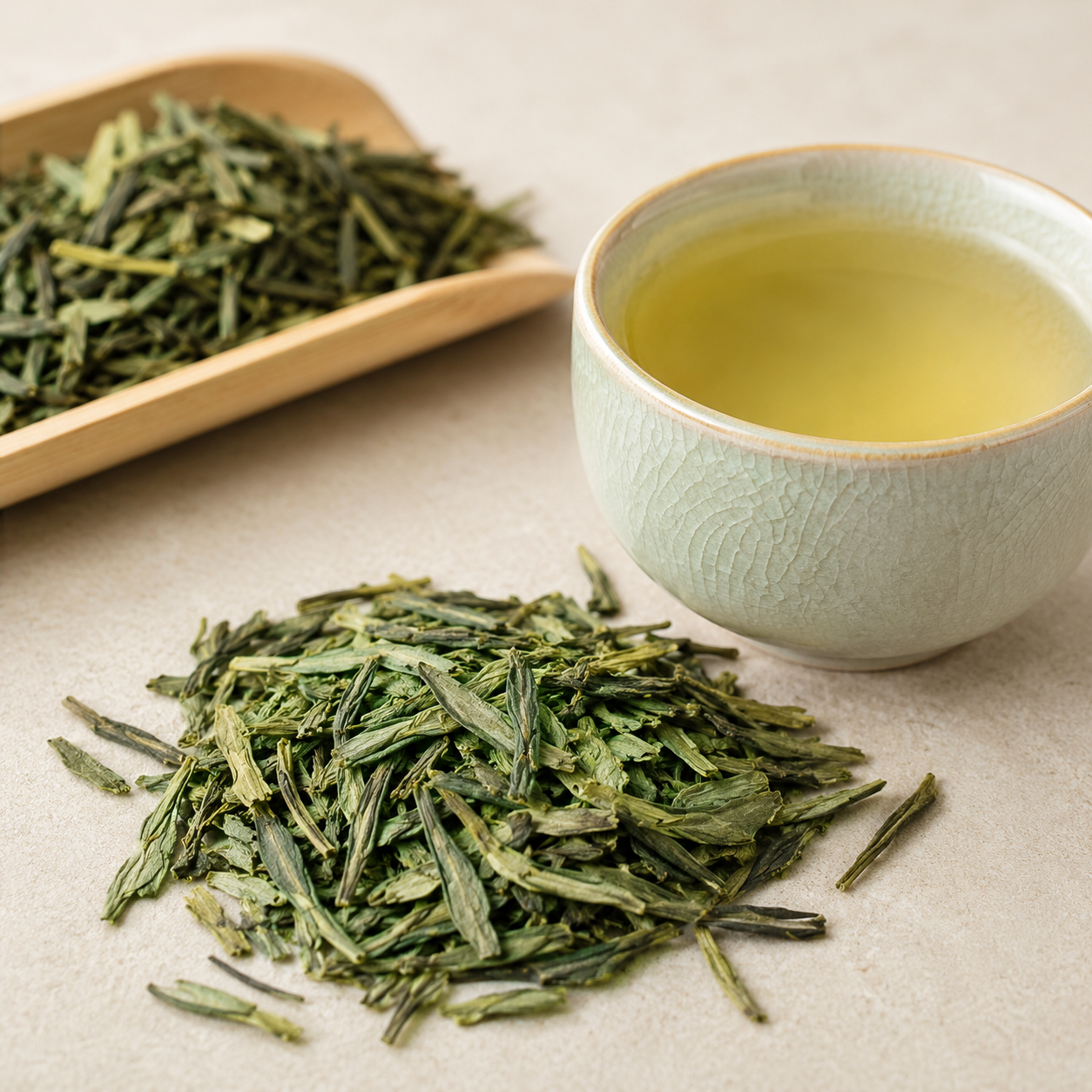
Also contains EGCG, EGC, and caffeine, usually with a fresher, more vegetal, and more bitter profile. Green tea does not undergo yellow tea’s characteristic yellowing process, so its data should not be reused directly.
View details →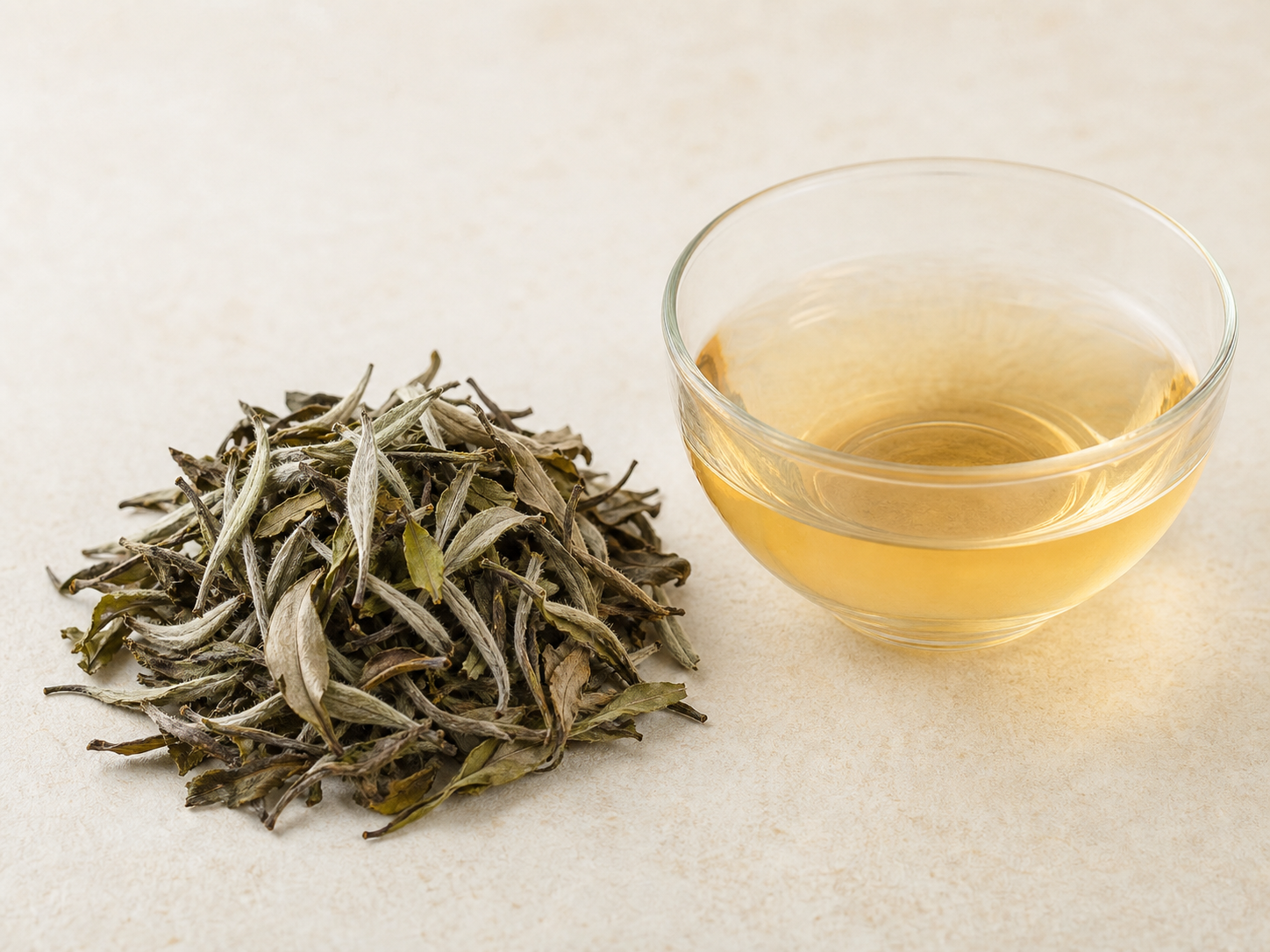
White tea
Usually processed more lightly and often mild in flavor, while still containing catechins and caffeine. White tea is not caffeine-free, and its chemistry varies with storage and leaf maturity.
View details →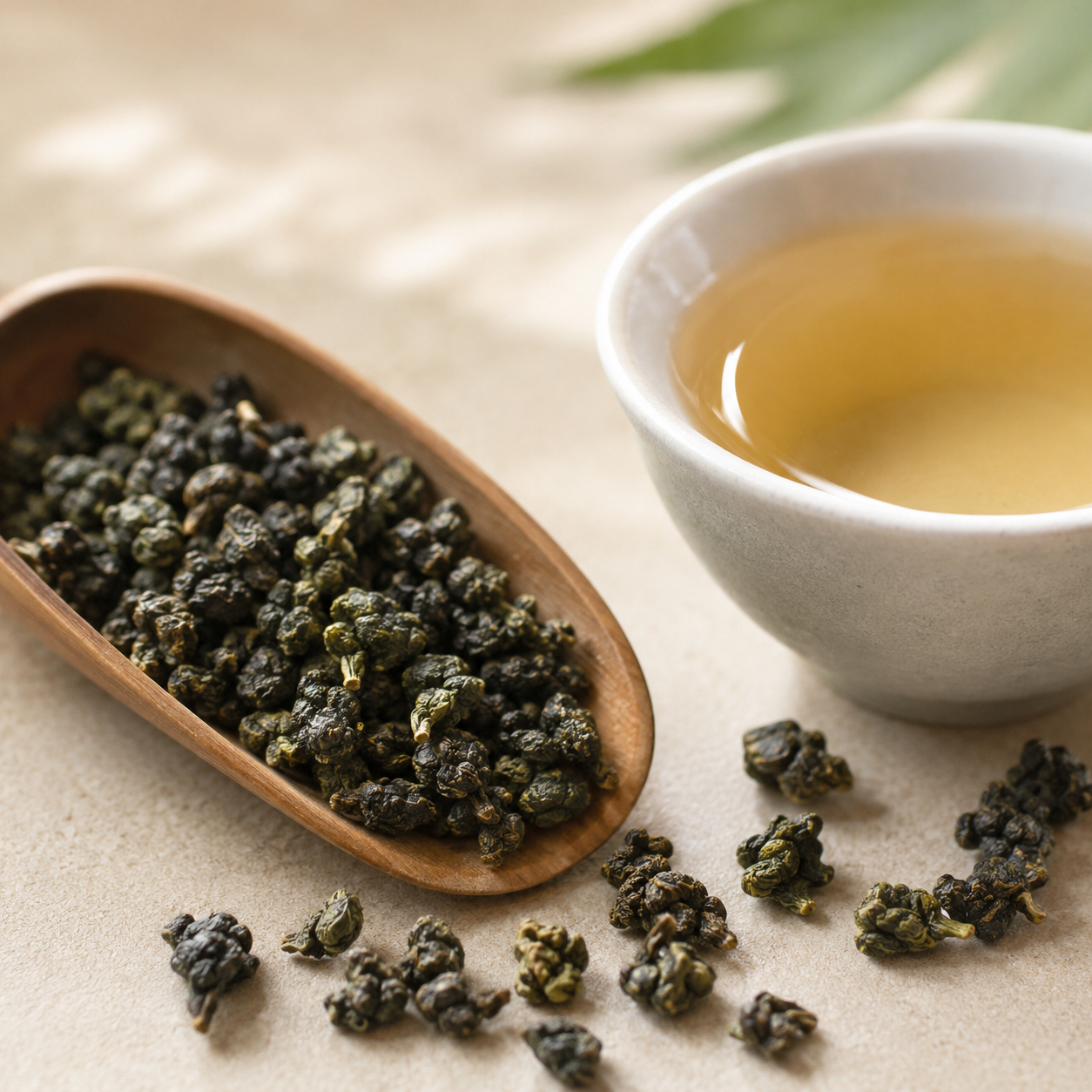
Lightly oxidized oolong
More floral and mellow, suitable for people who prefer aromatic teas. Oolong oxidation and polyphenol profiles differ from yellow tea, so it is not a same-composition substitute.
View details →Lower-caffeine or decaffeinated tea
Useful for people who need less caffeine, but “low caffeine” and “decaffeinated” do not mean caffeine-free. Check the label rather than judging from tea category alone.
View details →Data Sources & Last Updated
Nutrition Data
Ayakdaş G., et al. (2025). Determination of L-Theanine and Caffeine Contents in Tea Infusions with Different Fermentation Degrees and Brewing Conditions Using the Chromatographic Method.
Foods, 14(13), 2313. DOI / Original
Basic Information & Food Safety
Research & References
Tang G.Y., et al. (2019). Phenolic Profiles and Antioxidant Activities of 30 Tea Infusions from Green, Black, Oolong, White, Yellow and Dark Teas.
Antioxidants, 8(6), 215. DOI / Original
Fan F., et al. (2022). The Effects of Yellowing Process on the Quality of Yellow Tea.
Molecules, 27(3), 940. DOI / Original
Qin et al. (2024). Effects of temperature and humidity during yellowing on volatile components and aroma characteristics of yellow tea.
Food Chemistry: X. DOI / Original