Fermented foods · Legumes & Soy Foods
Tempeh
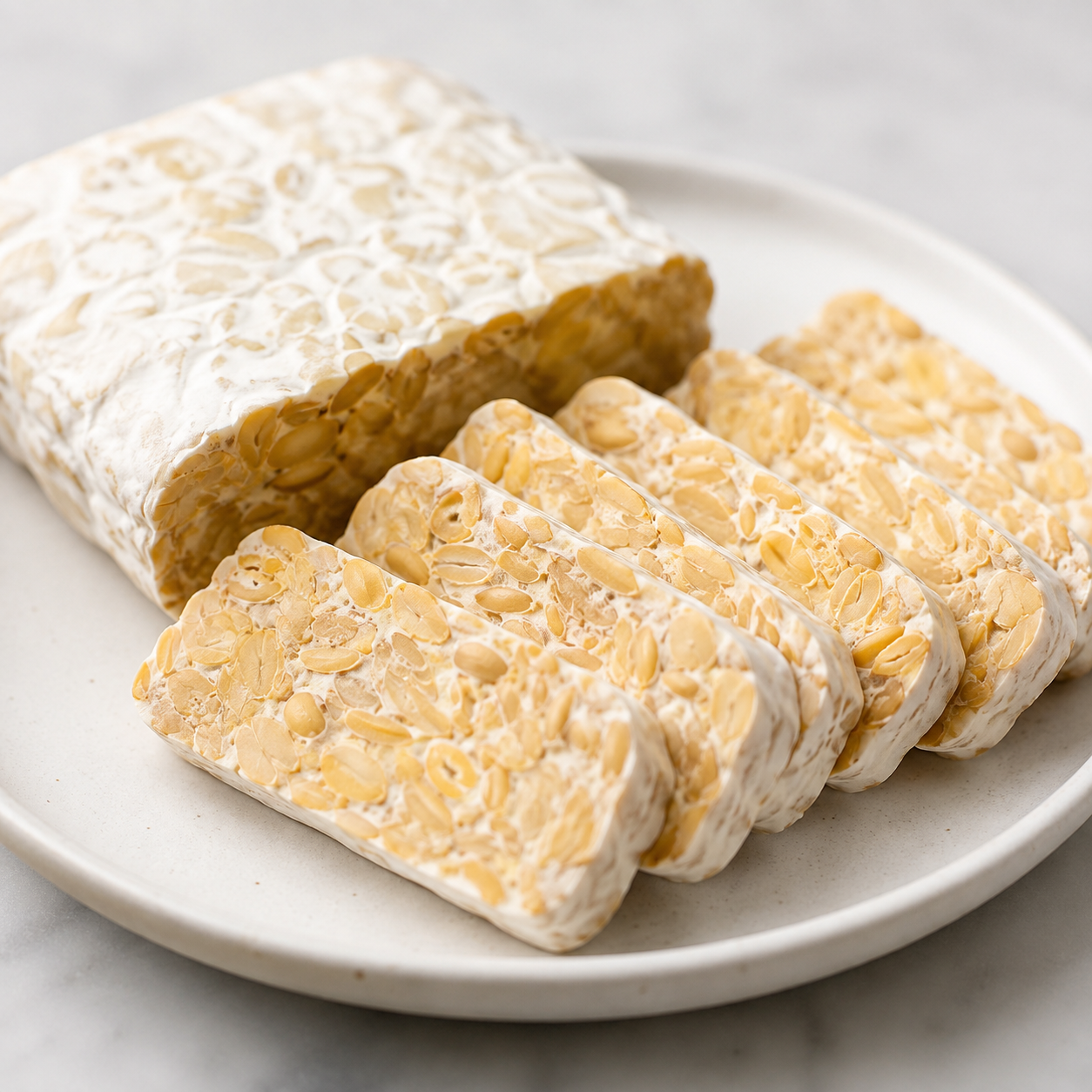
Tempeh is an Indonesian fermented soybean food made mainly from cooked, dehulled soybeans bound into a firm cake by Rhizopus molds during solid-state fermentation. It retains much of the whole soybean structure; cooked tempeh provides about 20 g protein per 100 g plus magnesium, phosphorus, potassium, manganese, copper, and soy isoflavones. Fermentation changes protein and isoflavone forms, but tempeh should not be marketed as an anti-inflammatory treatment or a “superfood” replacement for all animal protein.
Food overview
Key strengths
Cooked tempeh provides about 19.9 g protein per 100 g. Unlike tofu, it is made largely from whole or mostly intact soybeans, giving it a firmer texture that works well sliced, cubed, or crumbled in place of some meat-based dishes.
How to eat it
It works well steamed or simmered first, then briefly pan-seared, baked, stir-fried, or stewed. Tempeh has a nutty, bean-like, slightly mushroomy flavor and absorbs tomato, curry, herbs, vinegar, and reduced-sodium sauces well.
What stands out
Fermentation partly breaks down soybean proteins into shorter peptides and converts some glycoside isoflavones into aglycones such as daidzein and genistein. Recent proteomic work also found shorter peptides during in-vitro digestion and greater protein digestibility than in unfermented soybean samples.
Worth noting
“Fermented” does not mean the final product always contains large amounts of live probiotic microbes. Commercial tempeh may be pasteurized, frozen, or otherwise processed, and home cooking further reduces viable organisms, so it should not automatically be labeled a probiotic food.
Basic Nutrition
Showing:100 g Cooked tempeh
View complete nutrition data
GI note:GI varies with cultivar, food structure, processing, and cooking. Raw grains usually do not have directly applicable human GI data.
No reliable universal GI value is available for ordinary cooked tempeh, so this page shows “—” rather than using data from soybeans, tofu, or other tempeh products.
Data notes:This page defines tempeh as traditional soybean tempeh made mainly from dehulled soybeans fermented with Rhizopus molds. Chickpea tempeh, black-bean tempeh, and commercial versions containing grains, seeds, or added seasonings need separate data rather than reusing soybean-tempeh values.
The nutrition module uses one state only: cooked plain soybean tempeh without added salt, sugar, or frying, after steaming, boiling, or another basic heat treatment.
A common serving is about 85 g, closer to the amount used as a protein side in a meal; 100 g values are retained for standardized comparison.
Basic nutrition data come from USDA FoodData Central cooked tempeh (FDC 172467).
The USDA cooked-tempeh entry does not provide usable dietary fiber data, so fiber is shown as “—” rather than estimated from total carbohydrate.
No reliable universal GI value was found for ordinary cooked tempeh, so GI is shown as “—” rather than borrowing values from soybeans, tofu, or branded tempeh products.
USDA lists fatty acids as 18:2 and unspecified 18:3. These are shown approximately as omega-6 and omega-3, without inferring specific isomers.
Seasoned, smoked, fried, or ready-to-eat tempeh can contain much more sodium and fat; use the product label.
Vitamins & Minerals
Shows only nutrients providing at least 5% of the daily reference value. At 100 g cooked tempeh, 14 nutrients meet the threshold; values scale proportionally for a common 85 g serving.
Percentages use China's current nutrition-label NRVs (GB 28050—2011). GB 28050—2025 takes effect in 2027, when all food pages should be updated together. Selenium is explicitly listed as 0 micrograms in this entry; vitamin E, vitamin K, and some other nutrients lack reliable values and should not be treated as 0. Vitamin B12 also needs caution: tempeh is not a dependable B12 source. Pure Rhizopus generally does not produce B12, and B12 in some traditional tempeh comes from other bacteria, so levels vary greatly by process and batch. Vegans should rely on fortified foods or supplements for B12.
View all vitamins and minerals
Percentages show how much the selected serving contributes to the adult Daily Value.
Key Bioactive Compounds
Daidzein and genistein
Soy isoflavone aglyconesDaidzein and genistein are representative soy isoflavones. During fermentation, Rhizopus enzymes can convert some glycoside-bound isoflavones into aglycone forms.
One analysis of commercial tempeh found about 26±6 mg daidzein and 28±11 mg genistein per 100 g wet weight. Another experimental sample contained about 38.91 mg daidzein and 24.03 mg genistein per 100 g. These are product-specific values and vary with soybean variety, culture, fermentation time, moisture, and cooking.
Soy isoflavones have antioxidant activity and weak interactions with estrogen receptors. Whole soy foods and soy protein may modestly affect blood lipids, blood pressure, and some menopausal outcomes, but results vary across products and populations.
Choose plain soybean tempeh with a simple ingredient list and use steaming, stewing, or moderate-temperature baking. In one study, batter-frying reduced total isoflavones by about 45% on a dry-weight basis, so prolonged deep-frying is not the best routine method.
Isoflavones in ordinary tempeh are not equivalent to high-dose supplements and do not justify claims that tempeh regulates hormones, prevents cancer, or treats menopausal symptoms. Replacing some animal protein with soy protein may modestly improve blood lipids, but tempeh alone is not a treatment for high cholesterol.
Fermentation-derived small peptides
Bioactive peptidesRhizopus fermentation partly breaks down soybean proteins into free amino acids and shorter peptides, contributing to tempeh's flavor and digestion characteristics.
There is no standardized amount of “bioactive peptides per 100 g” suitable for ordinary tempeh. Different cultures, fermentation times, heat treatments, and analytical methods yield different peptide profiles. Proteomic and peptidomic studies show that fermentation creates new small peptides and that in-vitro digestion produces shorter peptides, but these findings cannot be converted into a universal food-content value.
Some tempeh peptides show antioxidant or ACE-inhibitory activity in experimental studies, and fermentation may improve in-vitro protein digestibility. These findings are best understood as part of fermentation-related changes in protein structure.
There is no need to seek over-fermented or strongly darkened tempeh. Choose a firm product within its date and cook it thoroughly. Steaming or brief stewing softens the texture; deep-frying adds substantially more energy and fat.
Evidence on tempeh's small peptides comes mainly from composition analysis, in-vitro digestion, and laboratory activity tests. It does not show that ordinary servings lower blood pressure, reduce inflammation, or prevent cardiovascular disease.
Phenolic Acids & Other Polyphenols
PolyphenolsTempeh also contains phenolic compounds beyond soy isoflavones. Fermentation may release some phenolics bound within soybean tissue and change measurable antioxidant activity.
Because studies use different strains, fermentation times, extraction solvents, and “total phenol” assays, there is no universal per-100-g value. Experimental work generally shows that extractable phenolics and in-vitro antioxidant activity change during fermentation, but longer fermentation does not necessarily mean better eating quality.
Phenolic compounds contribute to antioxidant chemistry in foods and the body. Including tempeh within a varied diet rich in legumes, vegetables, whole grains, and nuts broadens the range of plant compounds consumed.
Prefer steaming, boiling, stewing, baking, or brief low-oil stir-frying. Avoid repeated deep-frying and extensive charring. Pairing tempeh with tomatoes, peppers, leafy greens, and spices gives a wider plant-compound mix than chasing one specific tempeh polyphenol.
DPPH radical-scavenging or extract antioxidant activity in the lab does not equal anti-inflammatory or anti-aging effects in humans. Tempeh's value comes mainly from its overall nutrient profile and what it replaces in the diet, not one polyphenol score.
How processing changes tempeh
Fermented tempeh before reheating
Traditional tempeh is fermented from already cooked soybeans, but the finished cake may still contain active mold and other microbes. Whether it can be eaten without further cooking depends on pasteurization and package directions; for most consumers, following the label and cooking thoroughly is the safer approach.
Steaming or boiling
About 10 minutes of steaming can soften texture, reduce some fermented aroma, and help marinades penetrate. Boiling does not need to continue until the cake falls apart or becomes waterlogged.
Brief pan-searing
Slice or cube tempeh and sear with a small amount of oil until lightly browned for a nuttier aroma. Use medium heat and avoid repeated cooking to a dark char.
Baking or air-frying
These methods can reduce added oil, but temperature and time still matter. Lightly marinate and turn the pieces so they brown without becoming excessively dry or charred.
Deep-fried tempeh
Deep-frying substantially increases energy and fat. In research, prolonged batter-frying also reduced total isoflavones, so it is not the best everyday preparation method.
Seasoned or composite tempeh
Adding soy sauce, salt, sugar, coconut milk, oil, grains, or nuts changes the nutrition profile. Smoked tempeh, tempeh bacon, and ready-to-eat products should not use the sodium, sugar, and fat values for plain cooked tempeh.
How to choose and store
How to choose
- Check the ingredient list: traditional plain tempeh is usually based on soybeans, a tempeh/Rhizopus culture, water, and sometimes a little vinegar or another acidulant. To control sodium, sugar, and fat, choose products that are not pre-fried or heavily sauced.
- Check appearance: good tempeh is usually firm, with soybeans evenly bound by white mycelium. A few gray-black spots can be mature Rhizopus spores and are not necessarily spoilage, but always judge together with the date, smell, and texture.
- Check for added grains: some products contain barley, wheat, oats, brown rice, black beans, or chickpeas. People requiring a strict gluten-free diet should choose clearly labeled gluten-free products with reliable cross-contact controls.
- Check storage: buy tempeh refrigerated or frozen with an intact package, without obvious swelling, damage, or leaks. Return it to cold storage promptly after purchase.
How to store
- Unopened: refrigerate or freeze according to the package rather than applying one universal storage time. Traditional fresh tempeh is highly perishable; commercial products often use freezing or heat treatment to extend shelf life.
- After opening: refrigerate in a sealed container and use promptly. If preparing several meals, portion out the part to be saved first and chill it quickly at 4°C or below.
- Cooked leftovers: do not leave cooked tempeh at room temperature for long. Reheat thoroughly before eating. Discard if there is a rancid or rotten odor, sliminess, or markedly soft, spoiled texture.
- Unusual color: a few gray-black spore spots may be normal. Pink, green, or blue mold, especially with slime or a strong unpleasant odor, is a reason to discard the product.
When buying tempeh, remember four things: soybean-based, simple ingredients, firm structure, and continuous refrigeration.
How to use tempeh in everyday meals
Steam, then lightly pan-sear
Slice tempeh about 0.5 cm thick, steam for around 10 minutes, then brown both sides with a little oil. Serve with broccoli, tomatoes, mushrooms, and brown rice. Season with lemon, black pepper, garlic, and a small amount of reduced-sodium soy sauce rather than frying repeatedly in a lot of oil.
Tempeh vegetable stir-fry
Steam and cube tempeh, then stir-fry briefly with peppers, onion, asparagus, mushrooms, and leafy greens. Tempeh already provides substantial protein, so there is no need to add a large amount of processed meat. Keep soy sauce, bean paste, and chili sauce modest to control sodium.
Tomato tempeh stew
Simmer tempeh with tomatoes, onion, carrot, chickpeas, or lentils. Tomato acidity balances the fermented aroma and helps flavor the tempeh. Use vegetables, herbs, and spices instead of large amounts of cream, coconut milk, or sugar.
Tempeh curry
Steam tempeh first, then simmer with cauliflower, pumpkin, spinach, and chickpeas plus turmeric, cumin, ginger, and a little curry powder. Unsweetened soy milk or tomato works as a lighter base than large amounts of coconut milk, butter, or salty curry blocks.
Tempeh grain bowl
Combine baked tempeh with brown rice, quinoa, or barley, edamame, red cabbage, tomatoes, and leafy greens. Dress with vinegar, lemon, sesame, and a little olive oil so tempeh functions as the meal's protein component rather than being eaten in a large amount by itself.
Crumbled tempeh tomato sauce
Crumble cooked tempeh and simmer with onion, tomato, celery, and mushrooms for a sauce served with whole-wheat pasta, buckwheat noodles, or roasted vegetables. It adds texture and protein without needing a lot of salt, sugar, or oil.
Who Should Take Extra Care
People with Soy Allergy
Traditional tempeh is soybean-based, so people with soy allergy should avoid it. Composite and prepared tempeh may also contain wheat, peanuts, sesame, or tree nuts.
First-time eaters or people with sensitive digestion
Soy foods can cause bloating, nausea, constipation, or diarrhea in some people. Start with about 30–50 g and eat it with cooked vegetables and a staple food while checking tolerance.
Vegans
Tempeh is protein-rich but is not a reliable vitamin B12 source. B12 levels vary widely, and pure Rhizopus usually does not produce it.
People with celiac disease or a strict gluten-free diet
Plain soybean tempeh does not inherently contain gluten grains, but commercial products may include wheat, barley, or gluten-containing seasonings or may have cross-contact. Check ingredients and gluten-free labeling.
People taking monoamine oxidase inhibitors
Fermented foods can contain tyramine and other biogenic amines. People taking MAO inhibitors and following a low-tyramine diet should ask their doctor or pharmacist whether tempeh is appropriate rather than experimenting with large amounts.
People who need to limit potassium or phosphorus
Cooked tempeh provides about 401 mg potassium and 253 mg phosphorus per 100 g. People with kidney disease or other reasons to restrict these minerals should fit portions to their individualized diet plan.
Pregnant People, Older Adults & People with Weakened Immunity
Choose commercially produced, continuously refrigerated tempeh and cook it according to package directions. Do not eat failed homemade batches, products of uncertain origin, or uncooked fresh tempeh.
Similar Food Alternatives
Tofu
Made from soy with a milder flavor and softer texture. Protein density is usually lower than tempeh, though calcium-set tofu may provide more calcium.
Edamame
Retains the whole-soybean structure and works in grain bowls, salads, and vegetable dishes. It lacks tempeh's fermented flavor and may be easier for people new to soy foods.
Natto
Another fermented soybean food, but it uses bacterial fermentation and has a sticky texture and stronger aroma. Its nutrient profile and vitamin K composition differ from tempeh, so the data are not interchangeable.
Cooked chickpeas or lentils
Soy-free sources of plant protein, fiber, and minerals. They can replace tempeh in some dishes for people with soy allergy, although texture and protein density differ.