Healthy plant oils
Perilla seed oil
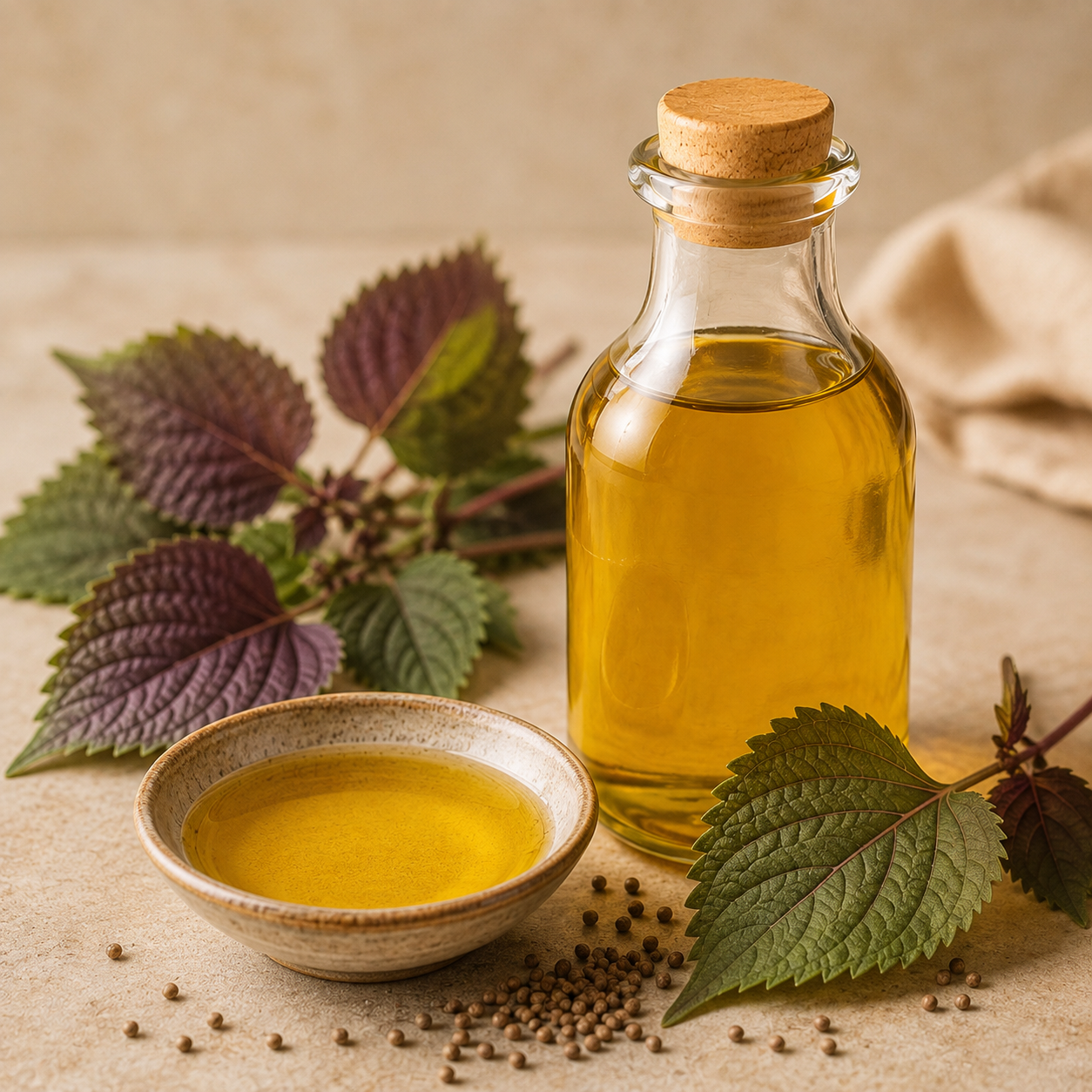
Perilla seed oil is made from mature perilla seeds. Its defining feature is a high alpha-linolenic acid (ALA) content, which also makes it more sensitive to heat, oxygen, and light. It is best used cold, as a dip, or added in small amounts after cooking.
Food overview
Key strengths
Perilla seed oil is a concentrated plant source of omega-3. A sample in the Japanese food-composition database contains about 58 g ALA per 100 g, much more than most common cooking oils.
Best ways to use it
Use it for salads, noodles, dipping, or add it to soup, porridge, grain dishes, and steamed vegetables after cooking. About 5–10 g at a time is enough; there is no need to drink it in large amounts.
What stands out
When buying, check that it is pure perilla seed oil, review the ALA content, production date, processing method, and light-protective packaging rather than relying on claims such as “anti-inflammatory oil” or “brain gold.”
Worth noting
Perilla seed oil is highly unsaturated and sensitive to heat and oxygen. It is not suited to prolonged high-heat frying or repeated use, and it cannot fully replace EPA and DHA from fish, fish oil, or algal oil.
Basic Nutrition
Showing:100 g Perilla seed oil
View complete nutrition data
GI note:GI varies with cultivar, food structure, processing, and cooking. Raw grains usually do not have directly applicable human GI data.
Perilla seed oil has essentially no available carbohydrate, so GI does not apply. It is not labeled 0, low-GI, or estimated.
Data notes:This page uses one formal food state: pure edible perilla seed oil made from mature perilla seeds with no other oils in the ingredient list. Cold-pressed, roasted, and refined versions may have similar fatty-acid profiles, but tocopherols, phytosterols, phenolics, and oxidative stability vary with raw material and processing.
Basic nutrition uses the Japanese Standard Tables of Food Composition, 2023 supplement, entry for perilla oil.
A common serving is 10 g; values are calculated from the 100 g data for comparison with other oil pages.
100 g is a data reference, not a recommended serving.
GI is shown as “—” because perilla seed oil has essentially no available carbohydrate and GI does not apply to pure oil. Showing 0 would imply a GI test was performed.
In expanded data, “0” means the database explicitly records zero, “—” means data are unavailable or cannot be reliably calculated, and “trace” means the database reports a trace amount. These are not interchangeable.
Vitamins & Minerals
Only vitamins and minerals providing at least 5% of the Daily Value at the current serving are shown.
Vitamin E is counted only as alpha-tocopherol. The Japanese database lists 2.4 mg alpha-tocopherol per 100 g, about 16% of the Daily Value. Gamma-tocopherol is much higher and has antioxidant activity, but it is not added directly to the vitamin E Daily Value. Nearly 900 kcal per 100 g is only a comparison basis, not a serving suggestion.
View all vitamins and minerals
Key Bioactive Compounds
Alpha-Linolenic Acid
Omega-3 polyunsaturated fatALA is an essential omega-3 fat and the defining nutrient in perilla seed oil.
The Japanese database lists about 58 g ALA per 100 g, or 5.8 g per 10 g; one Chinese study measured 66.4 g per 100 g. Cultivar, origin, and extraction affect the level.
ALA supports cell membranes, energy use, and normal lipid metabolism. Conversion to EPA and DHA is limited, generally below 15%.
Use mainly cold or after cooking and rotate with other plant oils.
High ALA does not make perilla oil equivalent to fish oil or a direct source of large amounts of EPA/DHA, and it should not be presented as treating inflammation or disease.
Gamma-tocopherol and other tocopherols
Fat-soluble antioxidant compoundsGamma-tocopherol is the dominant tocopherol in perilla seed oil and helps protect its highly unsaturated fats from oxidation.
Per 100 g, the Japanese database lists about 2.4 mg alpha-, 0.6 mg beta-, 59.0 mg gamma-, and 4.6 mg delta-tocopherol; amounts vary by cultivar and processing.
Tocopherols slow oxidation. Alpha-tocopherol is the main form used to assess vitamin E intake; gamma-tocopherol has antioxidant activity but is not counted equivalently.
Choose a recent date, good seal, light-protective packaging, and store cool or refrigerated as directed.
High gamma-tocopherol does not mean a tablespoon provides a large vitamin E dose or proves anti-inflammatory or anti-aging effects in people.
Plant sterols
Plant sterolsPhytosterols are natural plant-oil compounds; beta-sitosterol is a representative form in perilla seed oil.
One Chinese study found about 0.39 g total phytosterols per 100 g, including 0.31 g beta-sitosterol; 10 g provides roughly 39 mg and 31 mg respectively.
Phytosterols can compete with cholesterol for intestinal absorption, but ALA remains the oil’s main nutritional feature.
Use normal culinary amounts rather than adding extra oil just for phytosterols.
EFSA-assessed cholesterol-lowering intakes are about 1.5–2.4 g/day, far above a 10 g serving of perilla oil. It should not be presented as a cholesterol treatment or medication substitute.
How processing changes it
Cold-pressed perilla seed oil
Cold-pressed oil usually keeps a more noticeable seed flavor and involves less processing. “Cold-pressed” does not automatically mean higher nutrient content or better quality; raw material, date, acid value, peroxide value, packaging, and storage still matter. Its high ALA content makes protection from air, light, and heat especially important.
Roasted perilla seed oil
Roasting the seeds before pressing creates a stronger nutty, toasted flavor. Moderate roasting may increase release of some tocopherols and oxidative stability, but excessive heat or time can increase trans fat or degrade some compounds. “Cold-pressed is always healthier” and “hotter roasting is better” are both oversimplifications.
Refined perilla seed oil
Refining changes flavor, color, free fatty acids, and some minor compounds. Refined, cold-pressed, and roasted oils should not share one set of tocopherol, phytosterol, or phenolic values; use product-specific data when available.
Perilla blended oil
If the ingredient list also contains soybean, corn, canola, or other oils, it is a blend. Its ALA content depends on the formulation and should not be assigned the pure perilla-oil value of about 58 g/100 g.
High-heat cooking
Because perilla seed oil is highly unsaturated, oxidation speeds up as temperature rises. Studies show it oxidizes more readily than corn oil and is especially sensitive to temperature.
How to choose and store it
How to choose
- Check the product name: choose products clearly labeled “perilla seed oil.” Do not confuse them with perilla leaf essential oil, aromatherapy oil, perilla extract, or compounded essential oils.
- Check ingredients: pure perilla seed oil usually lists only perilla seed oil. If other vegetable oils appear, treat it as a blend and use the package nutrition label.
- Check the product standard: China’s current recommended grain-industry standard is LS/T 3254—2017 Perilla Seed Oil, covering edible commercial oil made from perilla seeds and specifying quality, testing, labeling, packaging, storage, and transport.
- Check ALA information: some products list alpha-linolenic acid, omega-3 content, or fatty-acid testing. Verifiable data are more useful than vague claims such as “premium nutrition oil,” “natural brain gold,” or “powerful anti-inflammatory.”
- Check packaging and date: choose a recent production date, smaller volume, intact seal, and dark or opaque bottle. Oxygen markedly accelerates oxidation; in one study, oxygen-excluding packaging kept acid and peroxide values more stable over 6 months than ordinary air packaging.
How to store
- Unopened: store in a cool, dry, dark place away from the stove, oven, window, and other heat sources.
- After opening: close the cap immediately after each use to reduce air exposure.
- Follow the label: in warm rooms or with infrequent use, refrigeration can help slow oxidation, but package directions take priority.
- Discard if the oil develops a clear rancid, paint-like, or old-nut odor, harsh bitterness, a noticeable change from when first opened, or contamination. Oxidized oil cannot be restored by heating, adding spices, or mixing with fresh oil.
Remember four points: confirm pure perilla seed oil, check ALA and the product standard, choose a small light-protective bottle, and prefer a recent production date.
How to use it in everyday meals
Salad vegetables
Mix about 5 g with vinegar, lemon juice, a little soy sauce, or herbs for leafy greens, tomatoes, cucumber, red cabbage, or beans. Its flavor is pronounced, so it can be blended with olive oil without using a large amount.
Tofu and steamed vegetables
After steaming tofu, broccoli, spinach, okra, or other vegetables, let them cool slightly and add a little perilla oil, vinegar, scallion, or sesame. This avoids prolonged heating and spreads the flavor well.
Add to grain bowls
Add about 1/2 to 1 teaspoon to cooked brown rice, quinoa, buckwheat, or oat grains just before eating, alongside beans, mushrooms, eggs, fish, and colorful vegetables.
Noodles or cold noodles
Drain cooked noodles and add a little perilla oil, vinegar, shredded vegetables, egg, or tofu. Keep high-salt sauces, chili oil, and processed meats modest so the meal does not become overly salty and oily.
Add to soup, porridge, or stew
Stir in about 1/2 teaspoon when the soup, porridge, or stew is finished and ready to eat. Do not add it at the start and heat it for a long time.
Make a small dipping sauce
Mix with vinegar, garlic, herbs, and a little soy sauce for boiled vegetables, tofu, or seafood. Water-, garlic-, and herb-containing dips should be made fresh rather than stored for long periods.
Who Should Take Extra Care
People with perilla seed allergy
Perilla seed can cause food allergy and severe reactions have been reported. A 2026 study also identified oil-body proteins and oleosins as possible important allergens. People with confirmed perilla seed allergy should not self-test cold-pressed oil. There is not enough evidence to generalize how much allergenic protein remains across different refining levels.
People Managing Total Energy
Perilla seed oil provides about 90 kcal per 10 g. Omega-3 content does not remove its calories. During weight management, count it within total oil and energy intake rather than adding it on top of the usual diet.
People seeking EPA and DHA
Perilla seed oil mainly provides ALA and contains no meaningful EPA or DHA. Because conversion is limited, it cannot fully replace fish, fish oil, or algal oil.
People advised to limit fat intake
Anyone told to restrict fat because of pancreatic, gallbladder, digestive, or other medical issues should count perilla seed oil within total daily fat. A “healthy plant oil” is still almost pure fat.
Oil with an abnormal odor
Stop using oil that develops a clear rancid or paint-like smell or harsh bitterness. Do not use spoiled oil for stir-frying or frying just to avoid waste.
Similar Food Alternatives
Replacement principle: choose perilla or flaxseed oil when you want more plant-based omega-3; canola, camellia, or olive oil for everyday cooking; and perilla, walnut, or extra virgin olive oil for cold dishes and flavor. Rotating oils by cooking method and overall diet is more useful than relying on one oil long term.
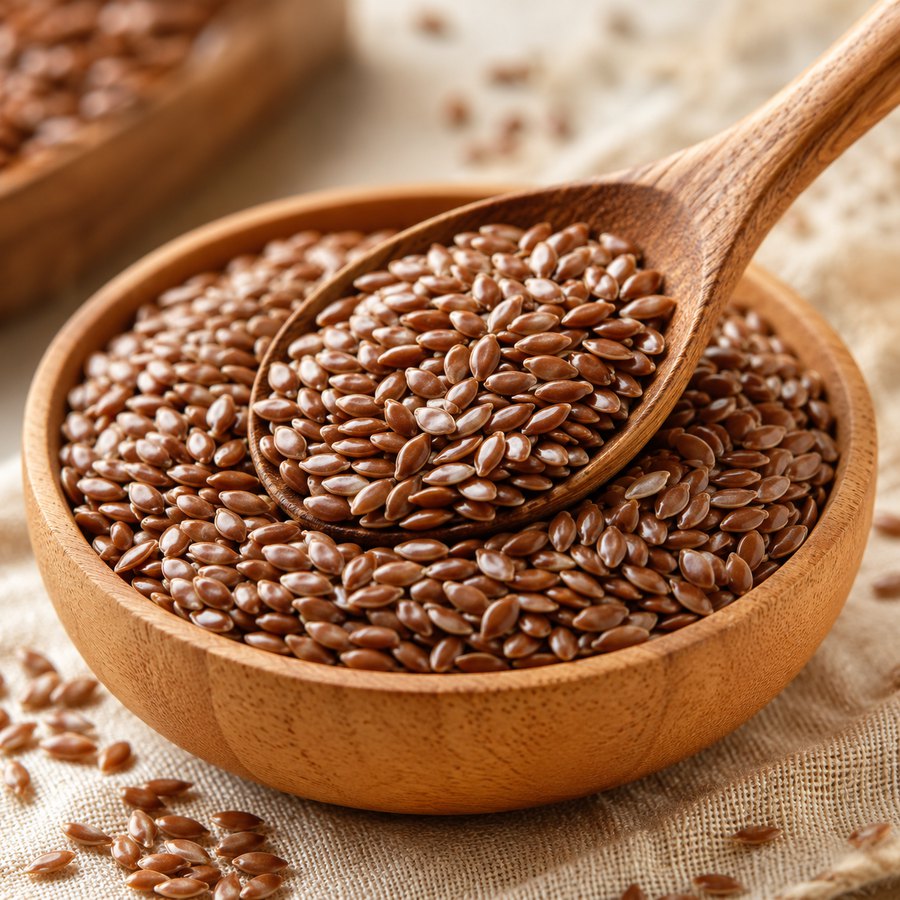
Flaxseed oil
Also high in ALA and best used cold or after cooking; protect it from light and air and limit high heat.
View details →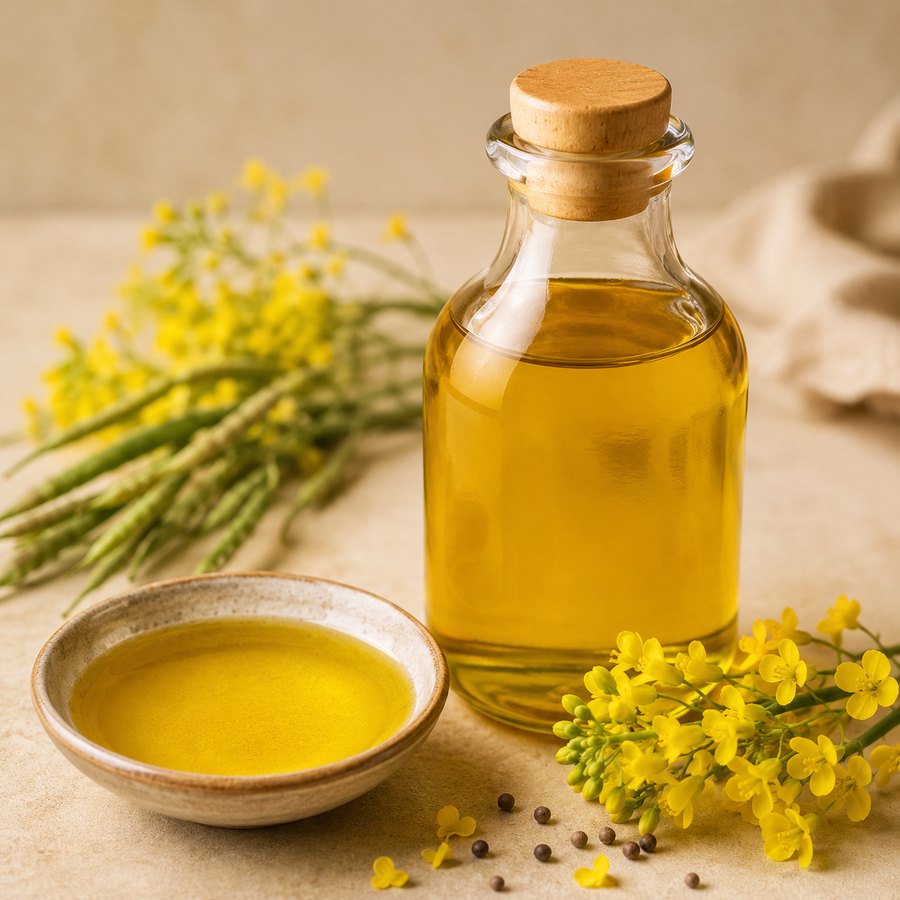
Low-erucic-acid canola oil
Provides some ALA, has a milder flavor, and is more versatile than perilla oil for everyday short cooking.
View details →
Walnut oil
Has a distinct nutty flavor and works well in salads, grains, and bread-based cold dishes, adding variety among plant oils.
View details →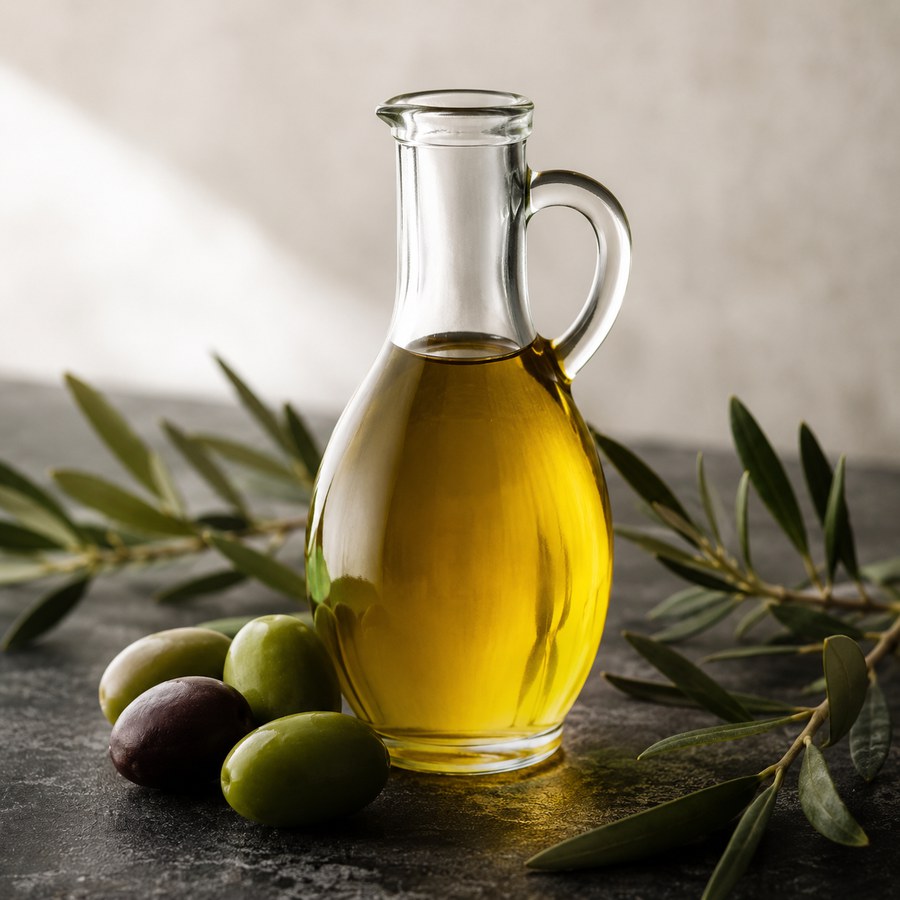
Extra Virgin Olive Oil
Mainly provides monounsaturated fat and olive polyphenols and works well for salads and ordinary household cooking. It is not a high-ALA oil but complements perilla oil with a different fatty-acid and bioactive profile.
View details →