Fruits · Berries
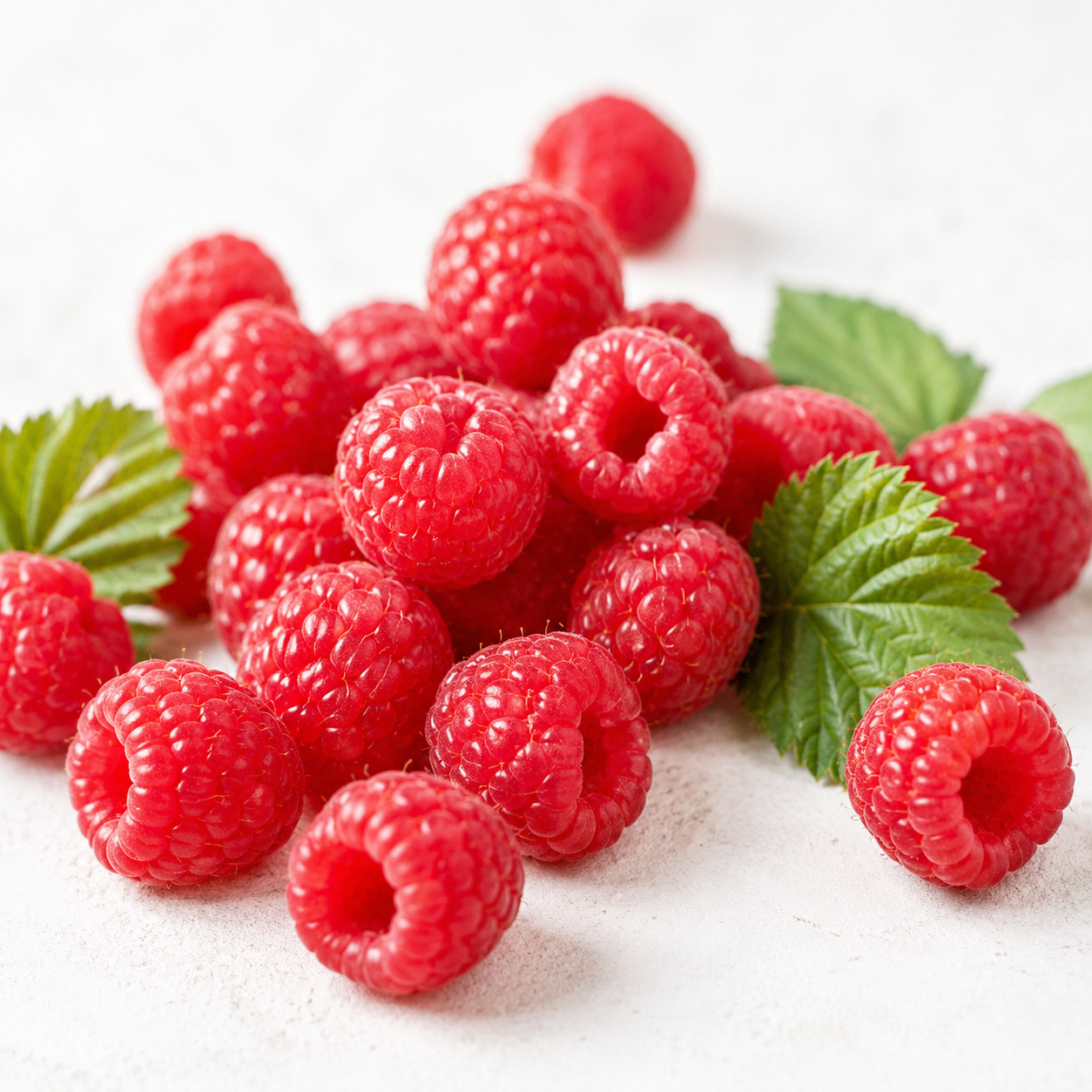
Raspberry
Fresh red raspberries are relatively high in dietary fiber and relatively low in sugar and energy. They also provide vitamin C, manganese, and polyphenols such as ellagitannins and anthocyanins, and work well eaten fresh or paired with plain yogurt, oats, and nuts.
Overview
Key strengths
Fresh raspberries provide about 52 kcal, 11.94 g of carbohydrate, and 6.5 g of dietary fiber per 100 g, with about 4.42 g of total sugar.
How to eat it
Raspberries can be rinsed and eaten fresh or paired with unsweetened plain yogurt, oats, nuts, chia seeds, and other fresh fruit. Their tartness also works in vegetable or whole-grain salads and can reduce the need for syrups or sweet dressings.
What stands out
The major polyphenols in red raspberries include anthocyanins and ellagitannins. These are among the berry’s most representative antioxidant phytochemicals; after digestion and gut-microbial metabolism, ellagitannins may also give rise to ellagic acid and urolithin metabolites.
Worth noting
Raspberries are very delicate and do not keep long after harvest. Pressure or excess surface moisture can quickly lead to leaking and mold. Refrigerate soon after purchase, leave unwashed during storage, and gently rinse under low-pressure running water just before eating.
Basic Nutrition
Showing:100 g Fresh Raspberries
View complete nutrition data
GI note:GI varies with cultivar, food structure, processing, and cooking. Raw grains usually do not have directly applicable human GI data.
Fresh raspberries contain relatively little available carbohydrate, making standard GI testing difficult. Unverified online estimates are not used, and GI values for raspberry jam or fruit spreads are not applied.
Data notes:This page covers fresh red raspberries only and does not create separate nutrition states for frozen berries, dried berries, jam, juice, puree, or raspberry powder.
A common serving is 123 g, about 1 cup of fresh raspberries; this is not the fixed weight of all retail packages.
The USDA entry does not provide a reliable starch value suitable for direct use here, so it is shown as “—”.
Vitamins & Minerals
Uses FDA Daily Values for adults and children age 4 and older, showing only nutrients that reach at least 5% of the Daily Value at the current serving size; the first six are shown by default.
View all vitamins and minerals
Percentages show how much the selected serving contributes to the adult Daily Value.
Key Bioactive Compounds
Ellagitannins & Ellagic Acid
PolyphenolsRed raspberries are a representative dietary source of ellagitannins, some of which can release ellagic acid during digestion and metabolism.
Specific amount: —. Research values vary substantially with cultivar, ripeness, and analytical method. Ellagitannins are found in the flesh, outer tissues, and small seeds.
Some gut microbes can convert ellagitannins into urolithin metabolites, which may contribute to gut and systemic antioxidant defenses.
Eat raspberries whole, keeping the small seeds and pulp.
People differ greatly in their ability to produce urolithins, and cell or animal studies do not establish that raspberries have definite anti-cancer or anti-aging effects in humans.
Anthocyanins
AnthocyaninsAnthocyanins are a major source of the red color in raspberries and consist mainly of cyanidin glycosides.
Specific amount: —. Red and purple raspberries generally contain more anthocyanins, while yellow cultivars contain much less. Anthocyanins are concentrated mainly in the fruit surface and red drupelet tissues.
Anthocyanins contribute to antioxidant defenses, and berry-rich dietary patterns may support normal vascular and metabolic function.
Rinse and eat whole, avoiding prolonged boiling. When using raspberries with yogurt or oats, keep honey, syrups, and refined sugar to a minimum.
Higher anthocyanin content does not mean raspberries directly lower blood glucose or blood pressure or eliminate inflammation.
Dietary Fiber
Dietary FiberRaspberries contain many small seeds and cell-wall fibers, making them relatively high in dietary fiber among common fruits.
Raw red raspberries provide about 6.5 g of dietary fiber per 100 g, mainly from the small seeds, fruit cell walls, and pectin.
Dietary fiber helps support normal bowel movements and provides fermentable substrate for some gut microbes, supporting the intestinal environment.
Prefer whole fruit rather than clarified juice.
Raspberries alone cannot “rebuild the gut microbiome” and cannot replace the fiber provided by a varied range of plant foods throughout the day.
How Preparation Changes Raspberry
Whole Fresh Raspberries
Whole berries retain all of the flesh, small seeds, and dietary fiber. Because raspberries are soft and hollow in the center, they crush easily, so avoid placing heavy items on the container during purchase or storage.
Washed Raspberries
Residual moisture after washing speeds softening and mold growth, so wash raspberries just before eating. Use low-pressure running water and avoid soap, detergent, bleach, or commercial produce washes.
Crushed or Blended
Blending fresh raspberries with the small seeds and pulp retains most of the dietary fiber. Because blending increases air exposure, drink soon after preparation and avoid adding large amounts of syrup, honey, or juice.
Cut or Crushed Before Serving
Raspberries usually do not need to be cut. Once crushed or chopped they release juice quickly, lose texture and flavor, and become more vulnerable to cross-contamination.
Red vs. Black Raspberries
Red and black raspberries are different species with different color, anthocyanin profiles, and research evidence. Findings from black raspberry powder, extracts, or clinical studies should not be applied directly to fresh red raspberries.
How to Choose & Store Raspberry
How to choose
- Choose evenly colored, fully red raspberries. Very pale or largely white unripe fruit will not continue to ripen substantially after harvest.
- Choose intact fruit with plump, well-formed drupelets. The hollow center is normal and does not mean insect damage or that the fruit has been hollowed out.
- Check the bottom of the container for pooled juice, crushed fruit, or mold rather than judging only the top layer.
- Prefer raspberries with dry surfaces. Fine hairs are normal, but gray-white or green mold, slime, or an unusual fermented odor are not.
How to store
- Refrigerate immediately after purchase, keep some airflow in the container, and avoid excessive condensation.
- Remove crushed or moldy berries before storage and keep the rest dry.
- Use a shallow, ventilated container to avoid stacking and compression.
- Fresh raspberries usually keep only about 1–2 days in the refrigerator, so eat them promptly.
When buying raspberries, remember three things: choose fully colored ripe fruit, keep the berries dry, and avoid mold or leaking juice.
How to Use Raspberry in Everyday Meals
Rinse and Eat Fresh
Place raspberries in a colander, gently rinse under low-pressure running water, drain, and eat fresh. A common serving is about 1 cup, or 123 g.
Raspberry & Plain Yogurt Bowl
Pair fresh raspberries with unsweetened or low-sugar plain yogurt and add a little oats, walnuts, or chia seeds. Yogurt provides protein, while raspberries and oats add fiber.
Raspberry Oat Bowl
Cook the oats and let them cool slightly before adding fresh raspberries, nuts, and cinnamon. Because raspberries are soft, add them at the end rather than cooking them for a long time.
Raspberry Vegetable Salad
Raspberries pair well with spinach, lettuce, kale, avocado, walnuts, chickpeas, or a little cheese, dressed with olive oil, lemon juice, or vinegar.
Whole-Raspberry Smoothie
Blend raspberries with unsweetened yogurt, milk, or unsweetened soy milk, keeping all of the pulp and small seeds and skipping straining.
Raspberries on Whole-Grain Bread
Gently crush raspberries onto whole-grain bread with unsweetened peanut butter or plain cheese. Prepare and eat them fresh rather than cooking them into jam in advance, and do not add large amounts of sugar simply to extend storage.
Who Should Take Extra Care
People with digestive sensitivity
Raspberries provide about 6.5 g of dietary fiber per 100 g and about 8 g in a common serving. People who usually eat little fiber or are prone to bloating or diarrhea can start with a smaller amount and assess tolerance.
People managing blood sugar
Fresh raspberries do not have a reliable standard GI value, so unverified estimates should not be used. Serving size and the rest of the meal still matter. Jam, syrup, baked desserts, and raspberry-flavored drinks cannot use fresh-fruit data.
People Allergic to Raspberries or Other Rosaceae Fruits
A small number of people may be allergic to raspberry proteins. Stop eating if symptoms such as lip or throat itching, hives, vomiting, wheezing, or breathing difficulty occur; breathing difficulty or a severe systemic reaction requires immediate medical attention.
Infants, young children, and people with chewing difficulties
Raspberries are soft, but whole berries still have some size. Do not hand a large handful of whole raspberries to a young child who cannot yet swallow reliably.
People With Weakened Immunity and Other High-Risk Groups
Raspberries are usually eaten raw. Pregnant people, older adults, young children, and people with weakened immunity should pay particular attention to sourcing and refrigeration, rinse under clean running water before eating, and discard damaged, spoiled, or moldy fruit.
Food Safety Note
Fresh and frozen berries have been linked to outbreaks of foodborne illness involving hepatitis A virus, norovirus, and Cyclospora. Do not soak berries in soap, detergent, bleach, or highly concentrated disinfectants.
Similar Food Alternatives
Blackberry
Blackberries are also made up of many drupelets, are relatively high in dietary fiber, and contain anthocyanins and ellagitannins.
Strawberry
Strawberries likewise contain ellagic-acid-related compounds and anthocyanins and are a good source of vitamin C.
Blueberry
Blueberries are suitable for eating fresh and contain several dark anthocyanins. They usually provide less dietary fiber than raspberries but are easier to store and transport.
Blackcurrant
Blackcurrants are notable for vitamin C and anthocyanins and are usually more tart than raspberries.
Data Sources & Last Updated
Nutrition Data
Basic Information & Food Safety
Research & References
Burton-Freeman BM, Sandhu AK, Edirisinghe I. (2016). Red Raspberries and Their Bioactive Polyphenols: Cardiometabolic and Neuronal Health Links.
Advances in Nutrition, 7(1), 44–65. DOI / Original
Rao AV, Snyder DM. (2010). Raspberries and Human Health: A Review.
Journal of Agricultural and Food Chemistry, 58(7), 3871–3883. DOI / Original
Koponen JM, Happonen AM, Mattila PH, Törrönen AR. (2007). Contents of Anthocyanins and Ellagitannins in Selected Foods Consumed in Finland.
Journal of Agricultural and Food Chemistry, 55(4), 1612–1619. DOI / Original
Bobinaitė R, Viškelis P, Venskutonis PR. (2012). Variation of Total Phenolics, Anthocyanins, Ellagic Acid and Radical Scavenging Capacity in Various Raspberry Cultivars.
Food Chemistry, 132(3), 1495–1501. DOI / Original
González-Barrio R, et al. (2011). Colonic Catabolism of Ellagitannins, Ellagic Acid, and Raspberry Anthocyanins: In Vivo and In Vitro Studies.
Drug Metabolism and Disposition. DOI / Original
Xiao D, et al. (2019). Attenuation of Postmeal Metabolic Indices with Red Raspberries in Individuals at Risk for Diabetes: A Randomized Controlled Trial.
Obesity, 27(4), 542–550. DOI / Original
Schell J, et al. (2020). Effects of Daily Raspberry Consumption on Immune-Metabolic Health in Subjects at Risk of Metabolic Syndrome: A Randomized Controlled Trial.
Nutrients, 12(12), 3858. DOI / Original