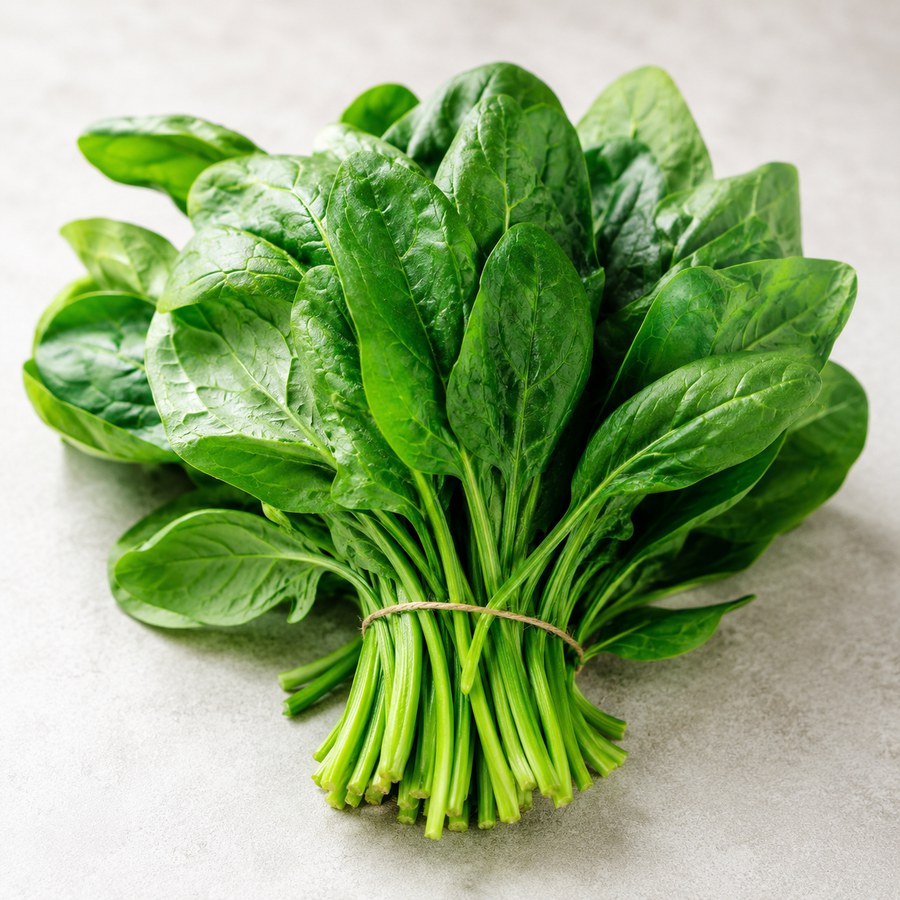
Vegetables · Dark green leafy vegetables
Spinach
Spinach is a nutrient-dense dark green leafy vegetable that provides vitamin K, folate, vitamin A, vitamin C, magnesium, iron, lutein, and beta-carotene. Raw and cooked spinach each have advantages. Spinach is high in oxalate, which can reduce calcium availability, while its iron is non-heme iron whose absorption depends on the food matrix and the rest of the meal.
Food Overview
Key strengths
Spinach provides many vitamins, minerals, and carotenoids for very little energy. Per 100 g, raw spinach contains about 23 kcal, 194 μg of folate, 79 mg of magnesium, 2.71 mg of iron, 469 μg RAE of vitamin A, and more than 12 mg of lutein plus zeaxanthin.
How to eat it
Tender spinach can be thoroughly washed and used in salads or cooked by blanching, steaming, quick stir-frying, or adding it to soups, eggs, beans, mushrooms, and whole grains.
What stands out
Notable spinach compounds include lutein, zeaxanthin, beta-carotene, flavonoids, and dietary nitrate. Spinach nitrate can participate in nitric-oxide pathways in the body, but spinach does not replace standard treatment for eye disease or high blood pressure.
Worth noting
Spinach is high in oxalate, which can reduce the availability of minerals such as calcium. People with high urinary oxalate or calcium oxalate kidney stones may need to watch portions and preparation. It is also high in vitamin K; people taking warfarin should keep intake reasonably consistent.
Basic Nutrition
Showing:100 g Boiled spinach
View complete nutrition data
GI note:GI varies with cultivar, food structure, processing, and cooking. Raw grains usually do not have directly applicable human GI data.
Boiled spinach does not have a standardized human GI value that exactly matches the state shown on this page.
Data notes:Basic nutrition data correspond to raw spinach and spinach boiled, drained, and prepared without added salt.
USDA does not provide a separate starch value suitable for this page, so starch is shown as “—” rather than automatically entered as 0.
The iron in spinach is non-heme iron, and oxalate can affect the availability of some minerals.
Vitamins & Minerals
Uses FDA Daily Values for adults and children age 4 and older and shows only nutrients that provide at least 5% of the Daily Value in the selected state and serving.
Per 100 g, boiled spinach contains less vitamin C and folate than raw spinach, while iron, calcium, and magnesium may appear more concentrated as volume decreases and water is drained.
View all vitamins and minerals
Percentages show how much the selected serving contributes to the adult Daily Value.
Key Bioactive Compounds
Lutein & zeaxanthin
CarotenoidsLutein and zeaxanthin are carotenoids abundant in spinach leaves and are part of the eye’s macular pigment.
Raw spinach contains about 12,198 μg per 100 g, mainly in green leaf tissues. Levels vary with cultivar, leaf age, and storage.
They support normal visual function and antioxidant defense in eye tissues.
Brief cooking or thorough chewing, plus a little plant oil, can improve absorption.
Spinach does not treat myopia, cataracts, dry eye, or macular disease.
Beta-carotene
CarotenoidBeta-carotene is present in spinach leaves, although chlorophyll masks its orange-yellow color.
Raw spinach contains about 5,626 μg per 100 g, mainly in green leaf tissues. Levels vary by cultivar, season, and leaf age.
The body can convert beta-carotene to vitamin A, supporting normal vision, skin, and immune function.
Brief heating and a little plant oil can help absorption.
Spinach is not equivalent to a high-dose beta-carotene supplement and does not treat vitamin A deficiency.
Nitrate
Inorganic nitrogen compoundSpinach readily accumulates nitrate, which the body can convert through the nitrate–nitrite–nitric oxide pathway.
Raw spinach commonly contains about 250–500 mg per 100 g, although some samples exceed 700 mg.
Dietary nitrate can support normal vasodilation and blood-flow responses.
Cold preparations and brief cooking retain more nitrate; boiling moves some into the cooking water.
Vegetable nitrate is not equivalent to nitrite in processed meats, and spinach does not replace blood-pressure medication.
How Preparation Changes Spinach
Raw spinach
Raw spinach tends to retain more vitamin C and folate and works well in salads, sandwiches, and cold dishes.
Boiling or blanching
Boiling moves some oxalate, nitrate, and water-soluble nutrients into the cooking water. Brief blanching can provide a balance between lowering oxalate and retaining carotenoids, but the exact change depends on cutting, water volume, and cultivar.
Steaming
Because spinach is not immersed in water for long during steaming, fewer water-soluble nutrients may move into cooking water. However, steaming may reduce oxalate differently from blanching.
Quick stir-frying
Spinach can be quickly stir-fried with a little plant oil until just wilted. Quick stir-frying also does not remove the same amount of oxalate as blanching.
Chopping or juicing
Chopped spinach works well in fillings, eggs, and soups, but juicing or blending spinach into a very smooth drink may make it easier to consume a large amount of raw spinach quickly.
Frozen spinach
Frozen spinach is usually blanched before freezing and works well in soups, stews, and baked egg dishes. Distinguish plain frozen spinach from products with added salt, cream, or sauce; the latter should not use the boiled-spinach nutrition data on this page.
How to Choose & Store Spinach
How to choose
- Choose spinach with deep-green, crisp, relatively intact leaves and avoid leaves that are clearly yellowed, wilted, slimy, or extensively damaged.
- Stems should be reasonably tender and crisp, without obvious decay or leaking moisture.
- For bagged baby spinach, check the use-by date and package integrity.
- Baby spinach is better suited to raw use; mature spinach has a stronger flavor and is generally better for blanching, stir-frying, or soup.
How to store
- Refrigerate spinach after purchase and use it promptly. Lining the container with absorbent paper can help keep the leaves drier.
- Fresh spinach is best used within about one week of purchase.
- For freezing, wash and blanch in boiling water for about 2 minutes, cool immediately in ice water, drain thoroughly, and freeze in portions.
- Do not continue eating spinach if the leaves become extensively slimy, smell sour or rotten, the package swells, there is substantial blackened leaking tissue, or mold appears.
Remember three things when buying spinach: deep-green, crisp leaves; no slime or off odor; and prompt refrigeration and use.
How to Use Spinach in Everyday Meals
Blanched spinach salad
Wash spinach, blanch briefly in boiling water, drain, cool slightly, and season with garlic, vinegar, sesame, and a little plant oil. Use high-sodium soy sauce, oyster sauce, and large amounts of sesame paste sparingly.
Garlic spinach
Heat a little plant oil, briefly cook sliced garlic, then add well-drained spinach and stir-fry until just wilted. Pair with tofu, eggs, fish, shrimp, or lean meat.
Spinach with eggs
Spinach can be blanched first and lightly squeezed before stir-frying with eggs or adding to steamed egg custard. Keep seasoning light and avoid large amounts of oil or processed meat just for flavor.
Spinach & tofu soup
Briefly blanch spinach, then add it to soup with tofu, mushrooms, and a little shrimp or chicken. Spinach and tofu can be eaten together normally; insoluble calcium oxalate formed in the digestive tract is excreted in stool and does not automatically deposit in the kidneys.
Spinach grain bowl
Combine boiled or quickly stir-fried spinach with brown rice, quinoa, chickpeas, eggs, tofu, or fish. Spinach is a non-starchy vegetable and does not need to replace staple foods; it is better used to increase vegetable proportion and color variety in the meal.
Raw spinach salad
After thorough washing, baby spinach can be combined with tomatoes, bell peppers, oranges, beans, eggs, or nuts. Vitamin C-rich fruits and vegetables can improve absorption of non-heme iron from the meal, while a little olive oil, nuts, or egg can help carotenoid absorption.
Who Should Take Extra Care
People taking warfarin
Spinach is very high in vitamin K. People taking warfarin do not need to eliminate spinach, but daily and weekly intake should stay relatively consistent.
People with calcium oxalate stones or high urinary oxalate
Spinach is high in oxalate. Blanching and discarding the cooking water can reduce some soluble oxalate but does not make spinach oxalate-free.
People with impaired kidney function or potassium restriction
Raw spinach contains about 558 mg of potassium per 100 g, while boiled spinach contains about 466 mg per 100 g. People with impaired kidney function, elevated blood potassium, or prescribed potassium restriction should follow an individualized portion plan.
People with iron deficiency or anemia
Spinach contains iron, but it is non-heme iron, which is generally absorbed less efficiently than heme iron from meat. Its absorption depends on the overall food matrix and meal composition; pairing spinach with vitamin-C-rich foods can help improve non-heme iron absorption.
Infants and young children
Spinach can be part of a varied complementary diet but should be thoroughly washed and cooked and prepared in an age-appropriate texture.
People prone to bloating or digestive sensitivity
Drinking a large amount of raw spinach juice or a concentrated spinach smoothie at once may cause more digestive discomfort than eating a normal serving of cooked vegetables.
Similar Food Alternatives
Baby bok choy
Tender and suitable for quick stir-frying, blanching, or soups. Its oxalate and micronutrient profile differs from spinach, so spinach data should not be applied directly.
View details →Bok choy
Mild in flavor and cooked in similar ways to spinach, especially quick stir-frying and soups.
View details →Lettuce
Better suited to raw use and salads and has a crisp texture, but its vitamin K, folate, magnesium, and carotenoid levels differ from spinach.
View details →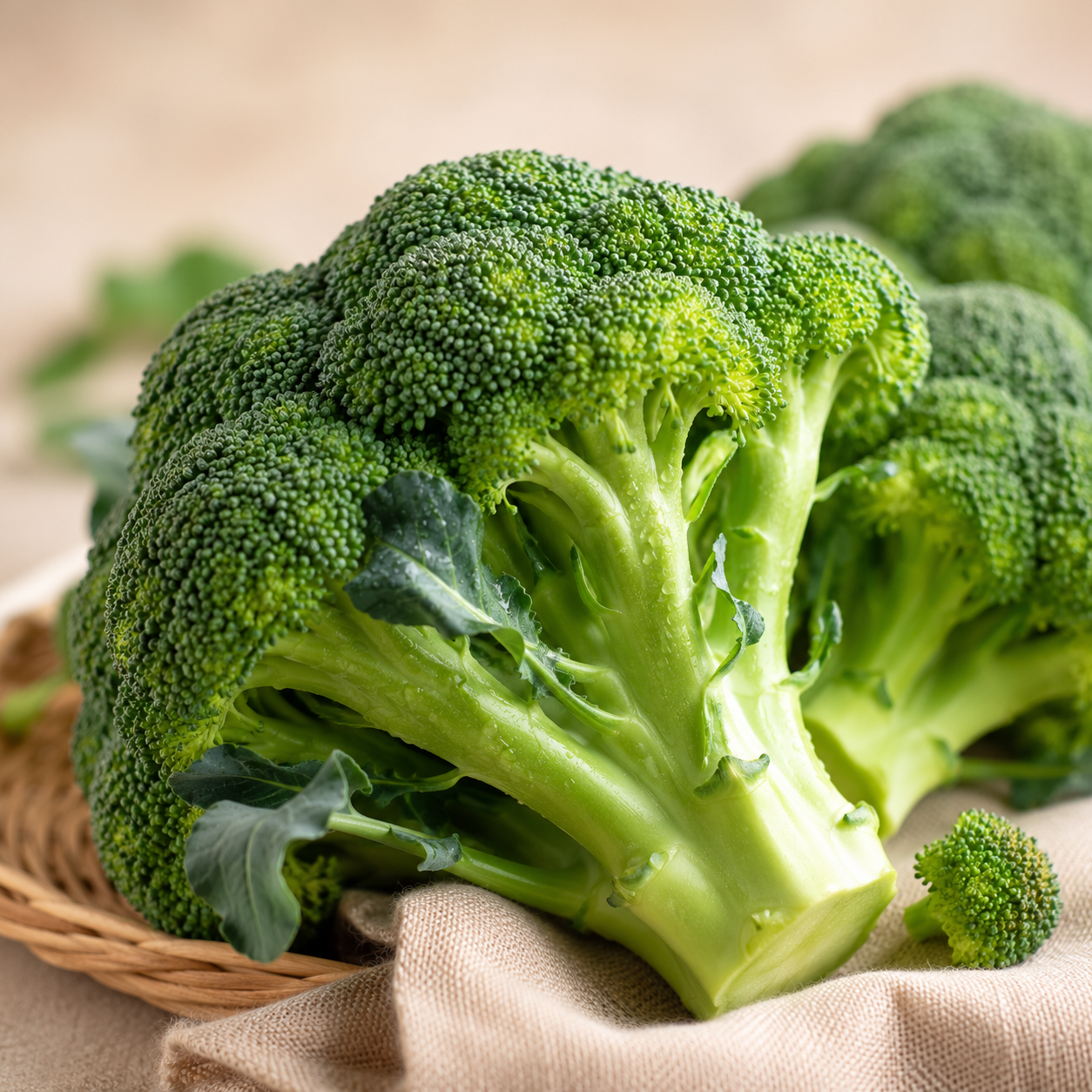
Broccoli
Also provides vitamin C, folate, and varied plant compounds and works well steamed, blanched, or briefly stir-fried.
View details →Data Sources & Last Updated
Nutrition Data
Basic Information & Food Safety
Research & References
Wang Z, et al. (2019). Changes in Oxalate, Nitrate, and Lutein Contents in Whole and Cut Spinach Boiled with Different Additives.
Food Science and Technology Research, 25(6), 801–807. DOI / Original
Jovanovski E, et al. (2015). Effect of Spinach, a High Dietary Nitrate Source, on Arterial Stiffness and Related Hemodynamic Measures: A Randomized, Controlled Trial in Healthy Adults.
Clinical Nutrition Research, 4(3), 160–167. DOI / Original
Eisenhauer B, et al. (2017). Lutein and Zeaxanthin—Food Sources, Bioavailability and Dietary Variety in Age-Related Macular Degeneration Protection.
Nutrients, 9(2), 120. DOI / Original
Salgado N, et al. (2023). Oxalate in Foods: Extraction Conditions, Analytical Methods, Occurrence, and Health Implications.
Foods, 12. DOI / Original
Joshi V, et al. (2021). Regulation of Oxalate Metabolism in Spinach Revealed by RNA-Seq-Based Transcriptomics.
Research article. DOI / Original