Vegetables · Allium vegetables
Red Onion
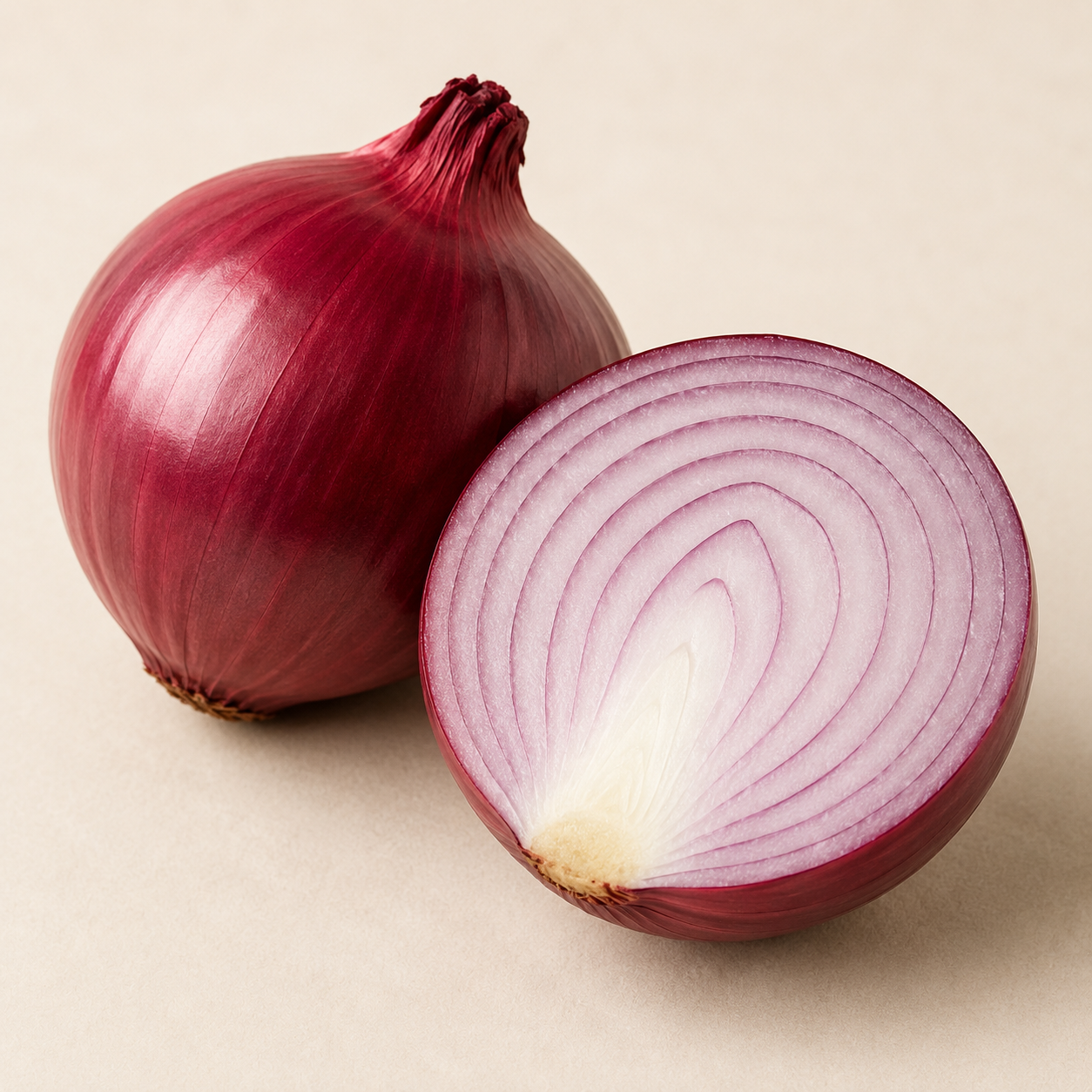
Red onion is a low-energy allium vegetable with very little fat or sodium. It provides dietary fiber, a little vitamin C, inulin, and fructans. Its most characteristic plant compounds include quercetin glycosides, anthocyanins, and sulfur-containing compounds, but their levels vary substantially with cultivar, outer-layer color, degree of peeling, and cooking method.
Food Overview
Key strengths
Raw red onion provides about 28 kcal, 1.8 g dietary fiber, 5.5 g sugars, and 1.1 g inulin per 100 g, with 0 g fat and about 5 mg sodium.
How to eat it
Red onion can be thinly sliced for salads, grain bowls, sandwiches, and salsa, and also works well in quick stir-fries, roasting, soups, or with beans, mushrooms, eggs, fish, or poultry.
What stands out
Characteristic plant compounds in red onion include quercetin and its glycosides, anthocyanins dominated by cyanidin derivatives, and several sulfur-containing flavor precursors. Anthocyanins are concentrated in the red-purple outer tissues, while quercetin compounds are also often more abundant in the outer edible scales.
Worth noting
Red onion contains fructans, including fermentable carbohydrates such as inulin. Most people can eat it normally, but people with irritable bowel syndrome or FODMAP sensitivity may experience bloating, gas, abdominal pain, or changes in bowel habits.
Basic Nutrition
Showing:100 g Cooked red onion, stir-fried without oil
View complete nutrition data
GI note:GI varies with cultivar, food structure, processing, and cooking. Raw grains usually do not have directly applicable human GI data.
Red onion cooked without oil does not have a standardized human GI value that directly matches this preparation.
Data notes:Carbohydrate is displayed as available carbohydrate plus dietary fiber. Inulin is already included within dietary fiber and should not be added again.
A 50 g serving is a site reference portion for red onion used as a side or flavoring ingredient, not an official standard serving.
“0” means the database records or classifies the value as zero; “—” means reliable standardized human testing data are not available.
Vitamins & Minerals
Uses FDA Daily Values for adults and children age 4 and older and shows only items that provide at least 5% of the Daily Value in the selected state and serving. Filtering uses unrounded percentages.
This cooked entry is an official AFCD recipe-derived value rather than a direct laboratory measurement of a cooked sample; at a 50 g serving, no item reaches 5% of the Daily Value.
View all vitamins and minerals
Key Bioactive Compounds
Quercetin glycosides
FlavonolsQuercetin occurs mainly as glycosides in red onion and is a key flavonoids in onions.
A red onion soup sample used in one human trial was equivalent to about 47 mg quercetin per 100 g red onion, but this value does not represent all cultivars.
Quercetin contributes to antioxidant metabolism as part of dietary flavonoid intake. Observational research has linked greater intake of flavonoid-rich fruits and vegetables with cardiovascular health.
Remove only dry, damaged, or inedible papery skin and keep the intact outer edible scales when possible.
Doses from studies of specific cultivars or extracts should not be applied to ordinary red onion, and quercetin content does not mean red onion can treat allergies, high blood pressure, or inflammation.
Anthocyanins
AnthocyaninsThe purple-red color of the outer layers comes from anthocyanins, mainly cyanidin-related derivatives.
Anthocyanins are concentrated in the purple-red scales near the surface and are generally more abundant toward the outside.
Anthocyanins add to the diversity of dietary polyphenols provided by red onion and contribute to antioxidant metabolism within an overall plant-rich diet.
Keep intact, deeply colored outer edible scales and remove dry, contaminated, or tough skin.
Do not eat large amounts of papery onion skin just for anthocyanins.
Cysteine sulfoxides
Sulfur-containing compoundsThe pungent odor and tear-inducing effect after cutting onion come mainly from volatile products formed when sulfur-containing precursors are broken down by enzymes.
Red onion scales contain several sulfur-containing precursors. Cultivar, growing conditions, and storage strongly affect pungency and composition. Cutting or chewing triggers enzymatic reactions that form volatile sulfur compounds and the lachrymatory factor.
These compounds contribute to the flavor and plant-defense system of Allium vegetables.
Brief cooking after cutting preserves some flavor, while prolonged high heat reduces volatile compounds.
The sulfur compounds in red onion are not the same as allicin, and they do not mean red onion can kill microbes, dissolve blood clots, or replace medication.
How Preparation Changes Red Onion
Raw red onion
Raw red onion retains its crisp texture, pungent flavor, and red-purple outer layers and works well thinly sliced or finely diced.
Cutting & resting
Cutting disrupts onion cells and brings enzymes into contact with sulfur-containing precursors, gradually producing pungent and eye-irritating volatile compounds. Finer cutting generally causes more tissue disruption and stronger flavor release.
Cooking without added oil
Cooking reduces water content, softens the onion, and concentrates sweetness. The database lists more energy, sugars, and fiber per 100 g for cooked than raw red onion mainly because less water concentrates nutrients per unit weight, not because sugar or oil was added.
Boiling
Boiling can move some water-soluble compounds into the cooking liquid. This page does not have separate nutrition data for boiled red onion.
Roasting & grilling
Some studies have measured higher total phenolics or quercetin derivatives after roasting, grilling, or frying. This may reflect water loss, release from cell structures, or chemical transformation rather than heat “creating more antioxidant nutrients.
Peeling
Remove dry, moldy, or damaged outer skin, but there is no need to strip away all fresh red-purple fleshy outer layers. Anthocyanins and quercetin compounds are more concentrated near the outside, so excessive peeling removes edible tissue and some plant polyphenols.
Pickling & frying
The sugar, sodium, and acidity of pickled red onion depend on the recipe, so the raw-onion data on this page should not be used.
How to Choose & Store Red Onions
How to choose
- Choose red onions that feel firm and heavy for their size and have no obvious soft spots when gently pressed.
- The outer skin should be relatively dry and intact, without extensive mold or damp, slimy areas.
- The neck should be fairly tight and dry, and the root end should show no obvious rot.
- Pre-cut products should remain refrigerated, have intact packaging, and show no excessive pooled liquid, swollen packaging, slime, or sour spoilage odor.
How to store
- Store whole uncut red onions in a cool, dry, dark, well-ventilated place. Avoid sealing them in damp plastic bags.
- Refrigerate cut or peeled red onion in a sealed container and use promptly.
- Cool cooked onion promptly, transfer to a shallow container, and refrigerate; do not leave it at room temperature for long periods.
- Discard onions with large soft leaking areas, visible mold, sliminess or off odors, internal rot, unusual sourness, or swollen packaging in cut products.
When buying red onions, remember three things: choose firm, heavy bulbs; look for dry outer skins without mold; and refrigerate cut onion in a sealed container.
How to Use Red Onions in Everyday Meals
Red onion salad
Slice red onion very thinly and combine with tomato, cucumber, lettuce, purple cabbage, chickpeas, or eggs. Dress with a little olive oil, vinegar, or lemon juice.
Tomato & red onion salsa
Finely dice red onion and combine with tomato, bell pepper, cilantro, and lemon or lime juice. Serve with fish, beans, or whole grains.
Quick stir-fried red onion
Cut red onion into large pieces and quickly stir-fry with bell pepper, mushrooms, broccoli, chicken, shrimp, or tofu. Use a little plant oil and cook only until just softened; avoid repeated heating to the point of charring and avoid relying on lots of oyster sauce, soy sauce, or sugar for flavor.
Roasted red onion
Cut red onion into thick slices or wedges and roast with pumpkin, carrot, cauliflower, fish, or chicken. Avoid extensive charring and large amounts of cheese or sweet barbecue sauce.
Red onion & bean bowl
Add a little raw or softened red onion to chickpeas, black beans, quinoa, brown rice, and varied vegetables. Beans and whole grains contribute more protein and fiber, while red onion mainly adds color, aroma, and polyphenols.
Red onion vegetable soup
Red onion works well in soup with tomato, carrot, celery, mushrooms, beans, and chicken. Soften the onion first with a little oil or water, then add the other ingredients.
Who Should Take Extra Care
People with IBS or FODMAP sensitivity
Onions are a notable source of fructans. Whether restriction is needed and what amount is tolerated should be based on individual response and professional guidance; long-term exclusion is not necessary for everyone.
People with onion allergy
Severe onion allergy is rarely reported but can occur, and some heat-stable allergens may still cause reactions to cooked onion. If eating onion causes hives, facial swelling, wheezing, or breathing difficulty, stop eating it and seek medical care promptly.
People prone to digestive discomfort
The pungent compounds and fermentable fructans in raw red onion may trigger heartburn, bloating, or stomach discomfort in some people. Reduce the raw amount, slice thinly, chew thoroughly, or cook until soft, and adjust according to personal tolerance.
People managing blood sugar
A 50 g serving of raw red onion contains about 3.7 g total carbohydrate, including 0.9 g dietary fiber, so the carbohydrate load is small.
Infants, young children, and people with chewing difficulties
Raw red onion is pungent and crisp. Avoid large pieces, rings, or hard raw onion for people with limited chewing or swallowing ability, and do not use large amounts of sugar or salt just to reduce the pungency.
Similar Food Alternatives
Yellow onion
Its sweetness and versatility increase with cooking, making it suitable for soups, stir-fries, and roasting.
White onion
Crisp with a cleaner flavor, white onion works well in salsa, salads, and quick stir-fries.
Shallot
Strongly flavored and useful for seasoning, quick stir-fries, and sauces.
Leek
Milder in flavor and suitable for soups, stews, and roasting. The edible parts and fiber structure of leeks differ from bulb onions, so they require separate nutrition data.
Data Sources & Last Updated
Nutrition Data
Basic Information & Food Safety
Research & References
Slimestad R, Fossen T, Vågen IM. (2007). Onions: A Source of Unique Dietary Flavonoids.
Journal of Agricultural and Food Chemistry, 55(25), 10067–10080. DOI / Original
Cattivelli A, et al. (2021). Influence of Cooking Methods on Onion Phenolic Compounds Bioaccessibility.
Foods, 10(5), 1023. DOI / Original
Kim S, et al. (2016). Change in Organosulfur Compounds in Onion during Heat Treatment.
Food Science and Biotechnology. DOI / Original
Kaźmińska K, et al. (2022). Onion Anthocyanins: Extraction, Stability, Bioavailability, Dietary Effect and Health Implications.
International Journal of Molecular Sciences. DOI / Original
Albanesi M, et al. (2019). Immunological Characterization of Onion Allergy.
Postępy Dermatologii i Alergologii. DOI / Original