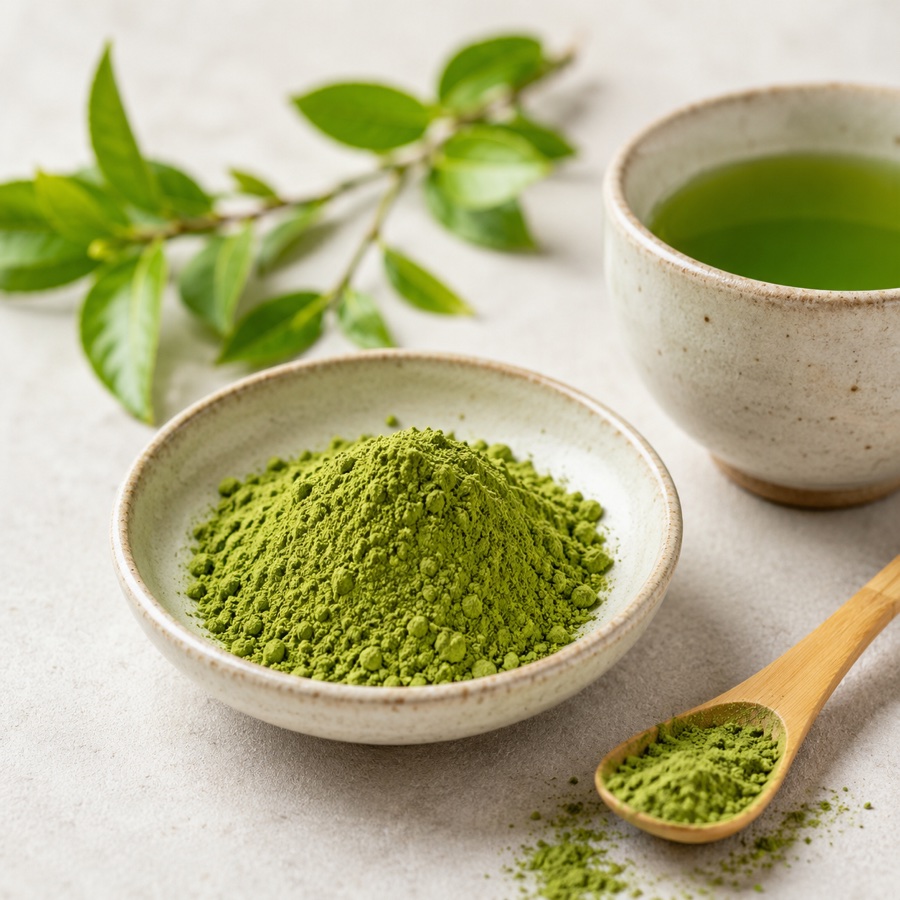
Tea & Coffee · Pure tea powder
Matcha
Matcha is made by grinding tencha from shade-grown tea leaves into a fine powder that is consumed whole. This means the drink includes catechins, theanine, caffeine, chlorophyll, and some fiber from the leaf itself. A typical serving is only about 1–2 g, so the high nutrient values per 100 g should not be treated as the amount in one cup.
Food Overview
Key strengths
Unlike brewed tea, matcha is whisked into water and consumed with the suspended leaf powder, so more of the tea solids are ingested. A 2 g serving provides about 0.77 g fiber and 58 micrograms vitamin K, and the Japanese food-composition table averages about 64 mg caffeine.
How to drink it
Use about 1–2 g of pure matcha with water, or mix it with unsweetened milk or soy milk. Plain matcha is very low in energy, but syrup, condensed milk, whipped toppings, and large amounts of cream can completely change the drink’s nutritional profile.
What stands out
True matcha is made from tencha. Shade-growing helps preserve more theanine, reduces some bitterness, and supports the deep green color. Labels such as “ceremonial grade,” “tea-ceremony grade,” or “culinary grade” are mainly commercial categories and do not by themselves prove higher bioactive content or greater health value.
Worth noting
Matcha contains caffeine. Using the Japanese food-composition average, 1.5 g provides about 48 mg and 2 g about 64 mg, although products can vary substantially. People who are sleep-sensitive, prone to palpitations, pregnant, or limiting caffeine should count matcha together with coffee, other tea, cola, energy drinks, and caffeine-containing medicines.
Basic Nutrition
Showing:100 g Pure matcha powder
View complete nutrition data
GI note:GI varies with cultivar, food structure, processing, and cooking. Raw grains usually do not have directly applicable human GI data.
A standardized GI value suitable for pure matcha powder is not available. A 2 g serving contains only about 0.03 g available carbohydrate, far below the amount usually needed for standard GI testing. GI is therefore shown as “—,” not 0 or a self-assigned “low GI” value.
Data notes:This page uses one nutrition state: pure matcha powder. It does not create separate raw/cooked or hot/cold preparation states.
The amount of water changes concentration and taste, not the total nutrients or caffeine, as long as the full amount of powder is consumed.
Matcha looks very nutrient-dense per 100 g, but a normal serving is only about 1–2 g. The 100 g values should not be used to exaggerate the contribution of one cup.
Vitamins & Minerals
Only nutrients providing at least 5% of the FDA Daily Value for adults and children age 4 and older are shown; the first six appear by default. At a common 2 g serving, only vitamin K, folate, and vitamin A meet the display threshold.
Vitamin A in matcha comes mainly from carotenoids such as beta-carotene converted to vitamin A activity, not from preformed vitamin A found in animal foods. Cultivar, harvest season, shading, and storage also affect actual levels.
View all vitamins and minerals
Percentages show how much the selected serving contributes to the adult Daily Value.
Key Bioactive Compounds
EGCG, EGC, and other catechins
CatechinsCatechins such as EGCG and EGC are major green-tea polyphenols and contribute to matcha’s bitterness.
A commercial study using 85°C water extraction measured about 4.36–41.97 mg/g EGCG and 30.02–57.25 mg/g EGC, plus smaller amounts of other catechins. Product and method differences are large, and “ceremonial grade” does not guarantee more catechins.
Catechins show antioxidant redox activity in vitro. Green tea has been studied for cardiovascular and metabolic outcomes, but matcha-specific human trials remain limited.
Use about 1–2 g with 60–70 mL water around 70–80°C. Prolonged boiling is unnecessary; limiting sweeteners matters more than making matcha very concentrated.
Laboratory antioxidant activity does not equal proven anti-inflammatory, anticancer, or anti-aging effects, and matcha is not the same as high-dose EGCG extract.
Theanine and caffeine
Amino acid and methylxanthineTheanine contributes to umami, while caffeine increases alertness; together they shape matcha’s drinking experience.
Some high-grade Japanese matcha contained over 18 mg/g theanine, or over 36 mg in 2 g. Japanese composition data average about 32 mg/g caffeine, or 64 mg per 2 g; another commercial study found roughly 42–110 mg per 2 g.
Caffeine can improve alertness, and theanine may influence relaxation and attention. Small randomized trials report modest or inconsistent cognitive effects.
Drink matcha in the morning or earlier afternoon; people new to caffeine can start with about 1 g. Theanine does not fully cancel caffeine.
Matcha is not a substitute for sleep, ADHD treatment, or anxiety medication. Response depends on caffeine sensitivity, timing, and product content.
Chlorophyll
Plant pigmentChlorophyll is a key green pigment in matcha, and shade-growing helps leaves retain more of it.
Tea-ceremony matcha studies found chlorophyll a above 2.5 mg/g. Another commercial study measured total chlorophyll at about 1.68–4.44 mg/g, averaging 4.09 mg/g in tea-ceremony and 2.72 mg/g in culinary samples. Color alone cannot be converted into a chlorophyll value.
Chlorophyll and its derivatives show antioxidant activity experimentally, but evidence for an independent anti-inflammatory effect in people is limited.
Choose naturally vivid green matcha with a fresh aroma, then store it sealed, dark, and dry and use it reasonably soon.
Chlorophyll does not “detox” the body or treat liver disease, and greener color does not guarantee stronger health effects.
How Preparation Changes Matcha
True matcha vs. ordinary green tea powder
True matcha is ground tencha made from shade-grown tea. Tencha is steamed without rolling, then stems and coarse veins are removed. Ordinary green tea powder may come from sencha, bancha, or other teas and should not automatically share matcha data.
Tea-ceremony vs. culinary matcha
Tea-ceremony matcha usually emphasizes umami, fine texture, young leaves, and deep green color; culinary matcha often emphasizes stronger tea flavor. Product studies show compositional differences, but tea-ceremony grade is not automatically more nutritious or more antioxidant.
Whisked with water
Plain matcha with water is very low in energy and reflects the tea’s own flavor and caffeine. More or less water changes strength and mouthfeel, but not the total nutrients in the powder if the whole serving is consumed.
Matcha latte
Milk or soy milk adds protein, fat, carbohydrate, and energy. An unsweetened latte can still be an everyday drink, but syrup, condensed milk, creamer, or whipped toppings change the full nutritional profile.
Cold or iced matcha
Matcha does not need a long steep. Mix it with a little water or shake in a sealed bottle, then add cold water and ice. Serving it cold does not remove caffeine or make portion size irrelevant.
Baking and desserts
Matcha works in oats, yogurt, bread, and baked foods, but prolonged high heat can affect color and some plant compounds. The finished food’s health profile depends more on sugar, refined flour, cream, and portion size.
How to Choose and Store
How to choose
- Pure matcha should have a simple ingredient list—ideally only matcha or tencha powder. Products containing sugar, creamer, maltodextrin, flavoring, or non-dairy creamer are not pure matcha powder.
- More transparent products may list the tencha source, origin, tea cultivar, harvest season, grinding method, packing date, and intended use.
- If a product only says “green tea powder” without identifying tencha, it should not automatically be treated as traditional matcha.
- Fresh matcha is often naturally vivid green to blue-green, but color alone cannot prove authenticity or nutritional value.
- Normal matcha usually smells fresh and vegetal, seaweed-like, leafy, or umami-rich. Avoid products with a musty, damp-cardboard, rancid, or obviously artificial aroma.
- Labels such as “ceremonial grade,” “tea-ceremony grade,” and “culinary grade” do not replace raw-material or testing information.
How to store
- Unopened products can be refrigerated or frozen if the package recommends it. After taking the sealed package out, let it warm to room temperature before opening to reduce condensation and moisture uptake.
- After opening, keep matcha tightly sealed, protected from light and moisture, and use a clean, dry scoop. Reseal immediately after each use.
- Buy small packages when possible and aim to use them within about 2 weeks to 1 month. Repeated trips in and out of the refrigerator can promote moisture uptake and odor absorption.
- Do not keep using matcha with visible mold, obvious damp hard clumps, musty or rancid odor, water-damaged packaging, insects, or foreign material.
When buying matcha, remember three things: confirm tencha as the raw material, choose a product with only pure matcha, and favor small packages with good light and moisture protection.
How to Use It in Everyday Meals
1. Traditional usucha
Sift about 2 g matcha into a tea bowl, add roughly 60–70 mL water at about 70–80°C, and whisk quickly. No sugar is needed. First-time users can start with 1 g rather than using several scoops just to make the drink stronger.
2. Iced matcha
Whisk or shake 1–2 g matcha with a little room-temperature water, then add cold water and ice. This helps prevent clumps. The amount of powder—not the cold temperature—determines caffeine intake.
3. Unsweetened matcha latte
Mix 1–2 g matcha with a little warm water and 150–200 mL unsweetened milk or soy milk. Count the full recipe, and keep syrup, condensed milk, creamer, and whipped toppings low.
4. Matcha oats or yogurt
Stir about 0.5–1 g matcha into plain oatmeal or unsweetened yogurt and pair with blueberries, kiwi, nuts, or seeds. Matcha is strong, so large amounts are unnecessary. Avoid loading the bowl with honey, syrup, condensed milk, or sweetened cereal.
5. Matcha soy drink or smoothie
Blend about 1 g matcha with unsweetened soy milk, plain yogurt, banana, or berries. Fruit can provide natural sweetness, but keep whole ingredients and their fiber rather than filtering everything out, and do not market it as a “detox drink.”
6. Lower-sugar matcha baking
Matcha can be added to whole-grain bread, oat muffins, or lower-sugar snacks. Culinary matcha is often more economical and has a stronger tea flavor. Controlling sugar, butter, cream, and white chocolate matters more than simply increasing the matcha powder.
Who Should Take Extra Care
People sensitive to caffeine or with poor sleep
A 2 g serving contains about 64 mg caffeine on average, while commercial products may provide roughly 42–110 mg. People prone to insomnia, palpitations, tremor, anxiety, stomach upset, or headache should start smaller and avoid matcha late in the day.
Pregnant and breastfeeding people
Count caffeine from matcha together with coffee, other tea, cola, chocolate, and medicines. EFSA considers up to 200 mg/day from all sources during pregnancy and breastfeeding generally not a safety concern. A 2 g matcha serving at about 64 mg is roughly one-third of that.
People with iron deficiency or taking iron supplements
Tea polyphenols can reduce absorption of non-heme iron and oral iron supplements. People with iron deficiency, anemia, or iron supplementation should separate matcha from iron tablets and iron-rich meals by about 2 hours rather than taking iron with matcha.
People taking warfarin
A 2 g serving provides about 58 micrograms vitamin K, around 48% of the Daily Value. Warfarin users usually need stable intake, not necessarily complete avoidance. Avoid sudden changes in matcha habits, discuss major changes with the anticoagulation clinic, and monitor INR as advised. This does not automatically apply to all newer anticoagulants.
Children and adolescents
Children may be more sensitive to caffeine. Matcha is not an ideal everyday stimulant drink for children, and high-sugar matcha milk tea should not replace milk or meals. Use smaller amounts and count caffeine from other foods and drinks as well.
People with reflux or a sensitive stomach
Strong matcha or drinking it on an empty stomach can cause nausea, heartburn, or stomach discomfort in some people. Use a weaker preparation or drink it with or after food, and avoid combining it with large amounts of fat and sugar.
People using caffeine-containing medicines or stimulants
Some cold remedies, pain relievers, alertness products, and sports supplements contain caffeine. Combining them with matcha can make palpitations, insomnia, or anxiety more likely, so check medicine and supplement labels.
People with liver disease or using concentrated green-tea extracts
Ordinary matcha drinks are not the same as concentrated green-tea extracts or EGCG capsules. People with liver disease, abnormal liver tests, or multiple medicines should not add high-dose green-tea extracts on their own; matcha itself should also stay within moderate portions and follow medical advice when relevant.
Similar Food Alternatives
Green tea
Also provides catechins and caffeine, but only the leaf infusion is consumed. Strength is easier to adjust by using less tea or shortening steep time.
Gyokuro
Also shade-grown and rich in umami, but brewed from whole leaves rather than powder. It can still be high in caffeine.
Unsweetened green tea powder
Often cheaper and useful in cooking or baking, but may be made from sencha or other teas, so its flavor and compound profile differ from matcha.
Hojicha or hojicha powder
Roasted and usually less bitter; useful in unsweetened milk drinks and baking. It can still contain caffeine and is not caffeine-free.
Data Sources & Last Updated
Nutrition Data
Basic Information & Food Safety
Research & References
Horie H., Ema K., Sumikawa O. (2017). Chemical Components of Matcha and Powdered Green Tea.
Journal of Cookery Science of Japan. DOI / Original
White J., et al. (2025). Comparison of culinary and ceremonial matcha green teas: relationship between phytochemical composition and antioxidant properties.
Journal of Food Measurement and Characterization. DOI / Original
Sokary S., et al. (2023). The therapeutic potential of matcha tea: A critical review on human and animal studies.
Current Research in Food Science. DOI / Original
Dietz C., et al. (2017). An intervention study on the effect of matcha tea, in drink and snack bar formats, on mood and cognitive performance.
Food Research International. DOI / Original
Baba Y., et al. (2021). Matcha consumption maintains attentional function following a mild acute psychological stress.