Fruits · Pome fruit
Apple
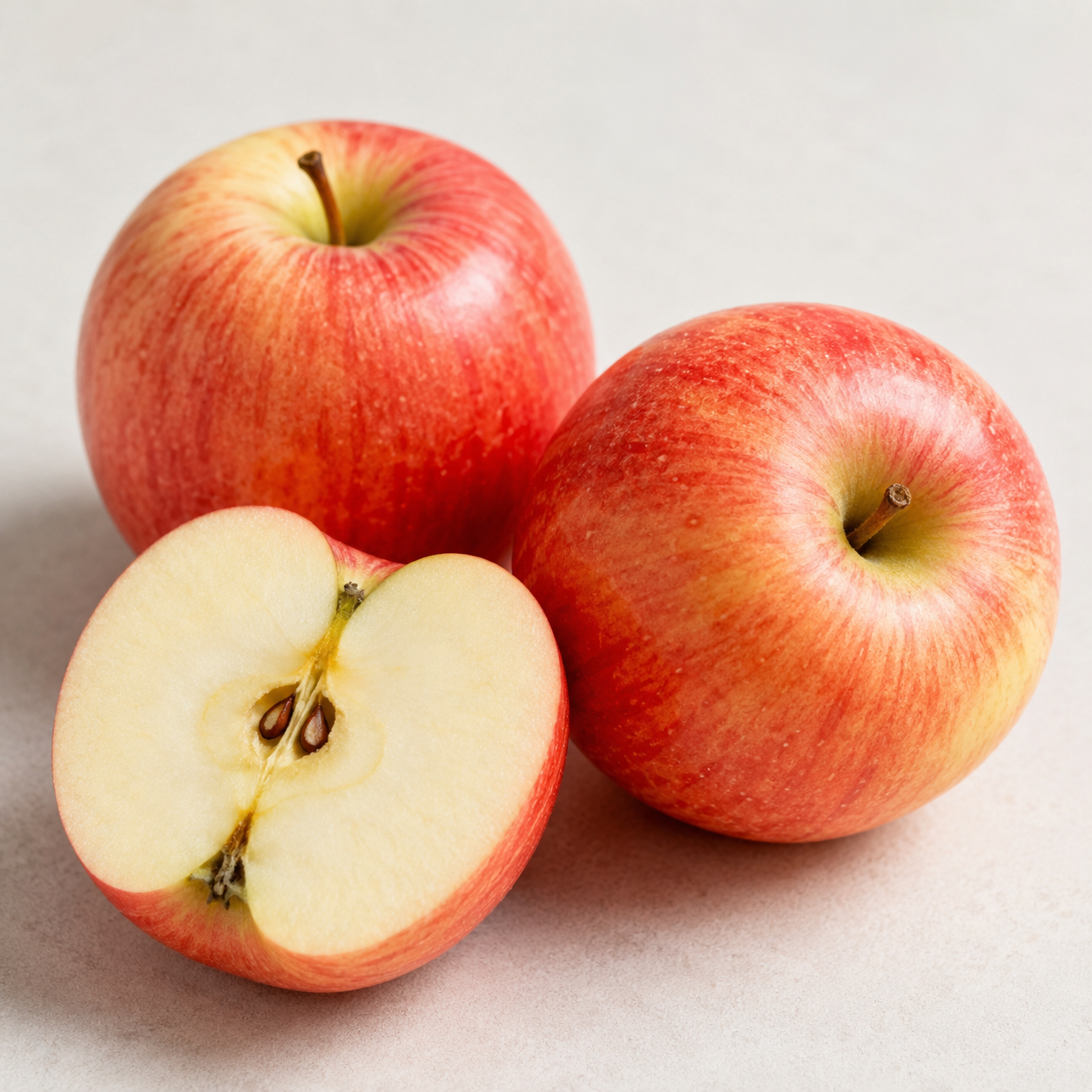
Apple is a high-water, low-fat, low-sodium everyday fruit. Per 100 g, a fresh apple with skin provides about 52 kcal, 2.4 g of dietary fiber, and 10.4 g of sugar.
Food Overview
Key strengths
Per 100 g, fresh apple with skin provides about 52 kcal, 13.81 g of carbohydrate, 2.4 g of dietary fiber, and 10.39 g of sugar.
How to Eat It
After washing, apple can be sliced and eaten with the skin or added to plain yogurt, oats, nuts, fruit salad, or vegetable salad.
What stands out
Apple polyphenols are not found only in the skin. Quercetin glycosides and red anthocyanins are concentrated mainly in the skin, chlorogenic acid is more representative in the flesh, and proanthocyanidins, catechin, and epicatechin can be distributed in both skin and flesh.
Worth noting
Apples contain excess fructose and sorbitol. Some people with irritable bowel syndrome may develop bloating, gas, abdominal pain, or bowel changes after eating a larger amount at one time. Apple juice and apple juice concentrate are also high-FODMAP ingredients to watch.
Basic Nutrition
Showing:100 g Fresh Apple with Skin
View complete nutrition data
GI note:GI varies with cultivar, food structure, processing, and cooking. Raw grains usually do not have directly applicable human GI data.
The University of Sydney GI research service lists a representative GI of 44 for fresh whole apples.
Data notes:This page includes only fresh whole apples with skin. It does not create separate switches for red, yellow, or green cultivars, nor for juice, purée, applesauce, dried apple, or apple cider vinegar.
Basic nutrition uses USDA “Apples, raw, with skin” (FDC ID 171688) generic data.
A common serving is 1 medium apple, about 182 g of edible portion.
Sugar is moved to the expanded section; GI is not scaled with serving weight.
Vitamins & Minerals
FDA Daily Values for adults and children age 4 and older are used. Only nutrients providing at least 5% of the Daily Value at the current serving are shown; if fewer than six meet the threshold, the list is not padded.
View all vitamins and minerals
Key Bioactive Compounds
Quercetin Glycosides
FlavonolsQuercetin in apples occurs mainly as glycosides and is a representative flavonols in apple skin.
Specific amount: —. Quercetin glycosides are concentrated mainly in the skin and are much lower in the flesh. Cultivar, color, sunlight exposure, and storage conditions can cause substantial variation.
Quercetin and its metabolites may contribute to vascular and antioxidant defenses, but the forms absorbed and metabolized in the body differ from those present in the food.
After washing thoroughly, eating the apple with the skin can provide more flavonols and dietary fiber.
Quercetin in apples does not treat allergies, inflammation, or cardiovascular disease, and supplement studies cannot be treated as evidence for eating apples.
Chlorogenic acid
Phenolic acidsChlorogenic acid is a representative phenolic acids in apple flesh and is related to apple acidity, browning, and plant defense.
Specific amount: —. Chlorogenic acid is widely present in apple flesh and is one of the major polyphenols in some cultivars. Cultivar, ripeness, and storage affect the actual amount.
Chlorogenic acid can contribute to dietary antioxidant defenses as part of the apple polyphenol profile and may support normal post-meal metabolic responses.
Eat cut apples promptly. Slight browning does not mean the apple is no longer edible, but prolonged air exposure can oxidize some polyphenols.
Chlorogenic-acid experiments do not establish that apples directly lower blood glucose, burn fat, or treat metabolic disease.
Proanthocyanidins & Catechins
PolyphenolsApples contain catechin and proanthocyanidins built from related flavanol units; these compounds contribute to the fruit’s mild astringency.
Specific amount: —. Proanthocyanidins occur in both skin and flesh, and their amount and degree of polymerization differ markedly among cultivars. Procyanidin B2 is relatively representative in some commercial varieties.
These polyphenols and their gut-derived metabolites may contribute to vascular, gut, and antioxidant defenses.
Eating whole apples retains more polyphenols and fiber than clarified apple juice. If making apple purée, keep the skin where practical and avoid adding large amounts of sugar.
Apple polyphenol extracts are not equivalent to ordinary apples and do not prove that “an apple a day” prevents every disease.
Pectin & Other Dietary Fiber
Dietary FiberPectin is a representative soluble fiber in apples; apples also contain cellulose and other insoluble fibers.
Raw apple with skin provides about 2.4 g of total dietary fiber per 100 g, of which pectin is only one part.
Apple fiber supports normal bowel movements. Some pectin can be used by gut microbes and may help slow digestion and absorption when the fruit is eaten whole.
Prefer whole apples with the skin. For dental or gastrointestinal discomfort, the apple can be steamed until soft or made into an unstrained purée without large amounts of added sugar.
Apples do not “cleanse” or detox the gut and do not treat constipation on their own.
How Preparation Changes Apple
Whole Apple with Skin
A whole apple with the skin retains the peel, flesh, and dietary fiber and is the default state on this page.
Peeled Apple
Peeling removes some skin fiber, quercetin glycosides, and red anthocyanins, but the flesh still contains chlorogenic acid, proanthocyanidins, and basic nutrients.
Cut or Grated Apple
Cutting and grating disrupt some cell structure, making the apple easier to chew and quicker to eat. Browning on the cut surface mainly reflects enzymatic oxidation after tissue damage and does not mean a freshly cut apple has spoiled; discard it if sliminess, mold, or off odors are also present.
Apple Purée & Applesauce
Apple purée can retain some flesh and fiber, but the structure is more broken down and it is easier to eat quickly.
Apple Juice
Juicing and filtering remove much of the pulp and dietary fiber and make it easy to drink a larger portion quickly. Apple juice is not used as a state in sections 02 and 03.
Baked or Stewed Apple
Heating softens the tissue and can change vitamin C, polyphenols, and pectin structure depending on temperature, time, whether the skin is removed, and whether the cooking liquid is discarded. Use less sugar, butter, and cream, avoid repeated baking until charred, and keep the final portion reasonable.
Dried Apple & Apple Chips
Dehydration greatly concentrates sugar and energy per unit weight, and some apple chips are fried or coated with syrup. 100 g of fresh apple is not equivalent to 100 g of dried apple or apple chips, so these products are not included in the fresh-fruit nutrition data.
Apple Cider Vinegar
Apple cider vinegar is a fermented condiment, not a fruit serving, and it does not contain the same dietary fiber or nutrient structure as whole apple.
How to Choose & Store
How to choose
- Choose firm apples with intact skin and the normal color for the cultivar, without mold, decay, large bruises, obvious insect holes, or cracks.
- Do not judge ripeness by color alone. Cultivars have different normal colors, and deeper red does not necessarily mean sweeter, fresher, or richer in polyphenols.
- Avoid fruit with marked flesh softening, widespread wrinkling, brown soft spots, fuzzy mold, fermented odors, cracked leaking areas, or signs of internal decay.
How to store
- Refrigeration slows ripening and softening more effectively than room temperature.
- Apples produce ethylene, so during longer storage they can be kept somewhat separate from leafy greens and other produce that yellow or soften readily.
- Before eating or cutting, wash the skin under running water and rub gently.
- Refrigerate cut apples in a clean sealed container and eat promptly. Discard fruit that develops mold, sliminess, off odors, or extensive soft decay.
Choose normal color for the cultivar, select firm fruit without decay, and refrigerate after purchase to slow softening.
How to Include It in Everyday Meals
Eat It Sliced
Wash the apple under running water, remove the core and seeds, and slice it. Keep the skin if the texture is acceptable to retain more of the natural fiber and peel polyphenols.
Apple with Plain Yogurt
Dice apple and add it to plain yogurt or unsweetened Greek yogurt, with a small amount of walnuts, oats, chia seeds, or flaxseeds if desired. Avoid adding sweetened yogurt, honey, jam, and high-sugar granola at the same time.
Apple Oatmeal
After cooking oats, let them cool slightly and add fresh diced apple to retain some crispness. A small amount of apple and cinnamon can also be cooked with the oats, but there is no need to add large amounts of brown sugar, maple syrup, or condensed milk.
Apple Fruit Salad
Combine apple with blueberries, strawberries, oranges, kiwifruit, or pomegranate. Use a small amount of lemon juice, mint, or plain yogurt for flavor; large amounts of salad dressing, syrup, or canned fruit are unnecessary.
Apple Vegetable Salad
Apple slices can be combined with leafy greens, red cabbage, celery, carrots, nuts, legumes, or eggs. The fruit’s sweet-tart flavor can reduce the need for sweet dressings; use a small amount of olive oil, vinegar, and herbs.
Baked Apple
Core and cut the apple, then bake it moderately with oats, walnuts, and cinnamon. Bake only until the flesh softens; there is no need for large amounts of butter, cream, or white sugar, and avoid repeated baking until large areas are charred.
Who Should Take Extra Care
People managing blood sugar
Fresh whole apple has a GI of about 44, but 1 medium apple still contains about 25.1 g of total carbohydrate and 18.9 g of sugar.
People with Irritable Bowel Syndrome or FODMAP Sensitivity
Apples contain both excess fructose and sorbitol and are a common high-FODMAP fruit. Start with a smaller portion, avoid eating them at the same time as pears, cherries, and large amounts of dried fruit, and adjust according to personal tolerance.
People with Birch-Pollen Allergy or Oral Allergy Syndrome
The major apple allergen Mal d 1 cross-reacts with the major birch-pollen allergen Bet v 1. Some people develop itching, tingling, or mild swelling of the mouth and throat after eating raw apple.
Infants, young children, and people with swallowing difficulties
Raw apple is firm, and large chunks can pose a choking risk. Use steamed or cooked soft apple, finely grated apple, purée, or thin slices appropriate to the child’s developmental stage rather than serving hard large chunks.
Apple Seeds
Apple seeds contain amygdalin. Accidentally swallowing one or two whole seeds is generally not expected to cause poisoning, but do not intentionally chew, grind, or eat large amounts.
People with Limited Dental or Chewing Ability
Raw apples are firm. People with sensitive teeth, braces, dentures, or weaker chewing ability can cut them into thin slices, grate them finely, or cook them until soft.
Similar Food Alternatives
Pear
Another pome fruit with similar structure and everyday uses and a source of dietary fiber.
Kiwifruit
More notable for vitamin C and also provides dietary fiber.
Guava
Much higher in vitamin C and dietary fiber than a typical apple and useful as a nutritional alternative.
Blueberry
Provide anthocyanins and are small enough to add directly to oats or yogurt.
Data Sources & Last Updated
Nutrition Data
Basic Information & Food Safety
Research & References
Boyer J, Liu RH. (2004). Apple phytochemicals and their health benefits.
Nutrition Journal, 3, 5. DOI / Original
Kschonsek J, Wolfram T, Stöckl A, Böhm V. (2018). Polyphenolic Compounds Analysis of Old and New Apple Cultivars and Contribution of Polyphenolic Profile to the In Vitro Antioxidant Capacity.
Antioxidants, 7(1), 20. DOI / Original
Kaeswurm JAH, et al. (2022). Bioaccessibility of Apple Polyphenols from Peel and Flesh during Oral Digestion.
Journal of Agricultural and Food Chemistry, 70(14), 4407–4417. DOI / Original
Flood-Obbagy JE, Rolls BJ. (2009). The effect of fruit in different forms on energy intake and satiety at a meal.
Appetite, 52(2), 416–422. DOI / Original
Kopac P, et al. (2012). Continuous apple consumption induces oral tolerance in birch-pollen-associated apple allergy.
Allergy, 67(2), 280–285. DOI / Original