Fish & Seafood
Salmon Roe
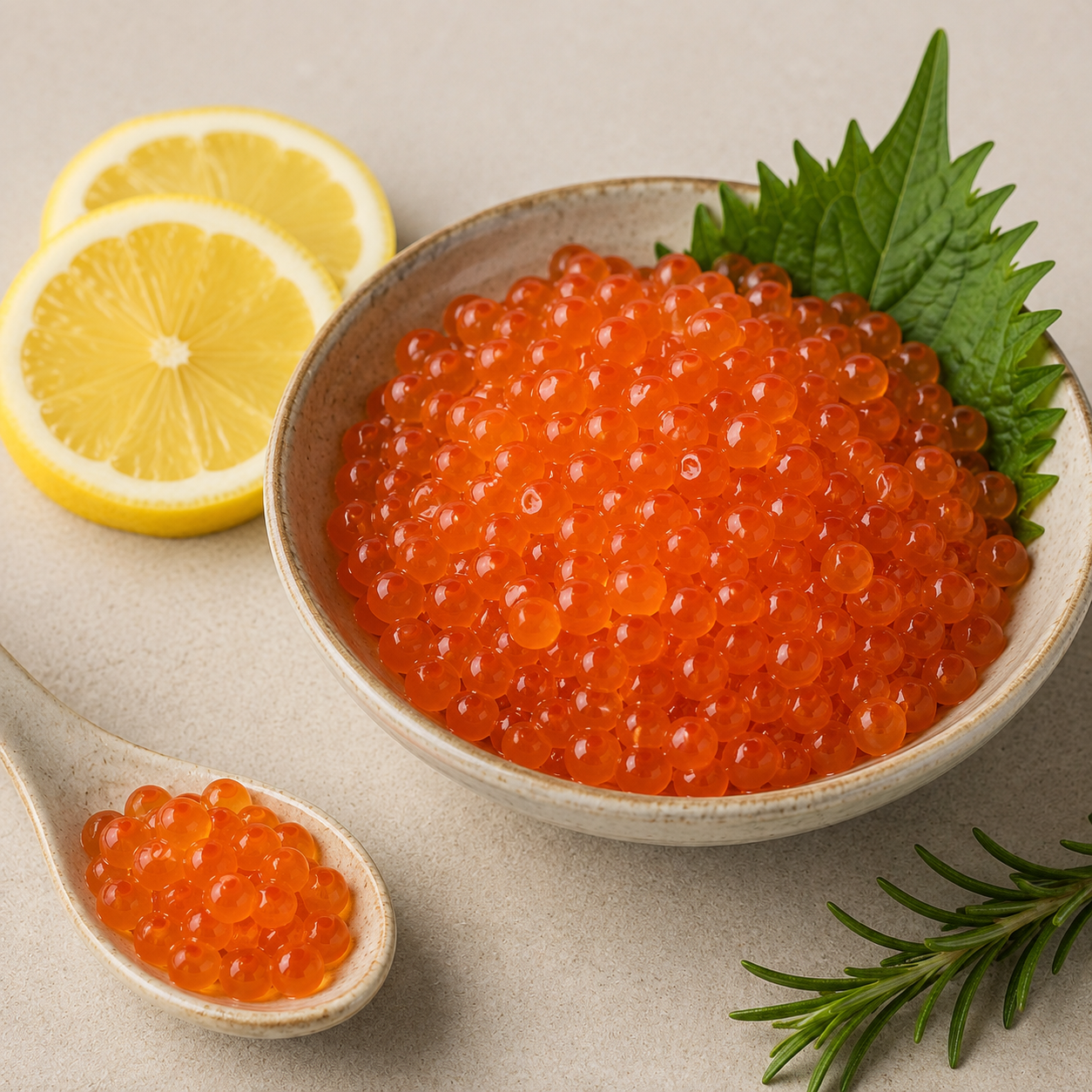
Salmon roe refers to mature salmon eggs. Commercial products are commonly salted, soy-marinated, frozen, or otherwise processed, so nutrition data should not be mixed across species and formulations. This page uses Japanese food-composition data for salted chum salmon roe (ikura; Oncorhynchus keta). Per 100 g it provides about 32.6 g protein, 1.6 g EPA, and 2.0 g DHA, plus vitamin D, vitamin B12, and vitamin E. A common 20 g serving provides about 720 mg EPA+DHA.
Food overview
Key strengths
Salmon roe is nutrient-dense, providing protein, EPA, DHA, vitamin D, vitamin B12, and vitamin E. Salted chum salmon roe contains about 32.6 g protein, 1.6 g EPA, and 2.0 g DHA per 100 g.
Best ways to eat it
Use a small amount as a topping for rice, grain bowls, sushi, tofu, eggs, or vegetable dishes rather than eating it in fish-fillet-sized portions.
What stands out
A small serving can provide substantial EPA, DHA, and vitamin B12, but salted roe also contains notable sodium and cholesterol. Its value comes from high nutrient density in a small portion, not from eating unlimited amounts because it is rich in omega-3s.
Worth noting
Most commercial salmon roe is refrigerated or thawed and eaten without thorough home cooking. Ready-to-eat raw seafood still carries microbial risk, so pregnant people, children, older adults, and people with weakened immunity should avoid products of uncertain origin or unclear safety processing.
Basic Nutrition
Showing:20 g Salted salmon roe
View complete nutrition data
GI note:GI varies with cultivar, food structure, processing, and cooking. Raw grains usually do not have directly applicable human GI data.
Salmon roe contains only about 0.2 g available carbohydrate per 100 g, so GI is not applicable. It is shown as “not applicable,” not 0, “low GI,” or missing.
Data notes:This page uses one formal state: salted salmon roe, represented by salted chum salmon roe (ikura; Oncorhynchus keta). Soy-marinated, reduced-sodium, pasteurized, and flavored products should use their own labels rather than sharing the same nutrition state.
Basic nutrition uses the Japanese Ministry of Education food-composition entry for salted chum salmon roe (food no. 10140, ITEM_NO 10_10140_6). Fatty-acid data come from the same entry (MODE=4), avoiding mixtures of species or brands.
A common serving is 20 g, reflecting how salmon roe is usually used as a topping rather than a main dish. It is not a fixed daily recommendation for everyone.
GI is shown as “not applicable.” Salmon roe has only about 0.2 g available carbohydrate per 100 g and is not typically tested as a carbohydrate food. The page distinguishes 0 (explicitly recorded zero), “—” (not provided/not measured/cannot be reliably converted), and “not applicable.”
Per-100 g and 20 g serving values refer to the salted roe itself and exclude extra sauce.
The Japanese database entry does not provide selenium, iodine, or biotin, so this page does not fill those gaps with values from other roe or salmon meat.
Brand sodium can differ substantially from the database. Soy-marinated, heavily salted, and seasoned products should be judged by their package nutrition label first.
Vitamins & Minerals
Only vitamins and minerals providing at least 5% of the Daily Value at the current serving are shown.
Percentages use FDA Daily Values for adults and children age 4+. The 20 g serving is shown by default; switching to 100 g shows percentages for the database’s per-100 g values. The Japanese database does not provide selenium, iodine, or biotin for this entry, so these are not borrowed from other roe or salmon. Sodium and cholesterol are shown in basic nutrition and cautions rather than as “nutrient advantage” cards.
View all vitamins and minerals
Percentages show how much the selected serving contributes to the adult Daily Value.
Key Bioactive Compounds
EPA & DHA
Long-Chain Omega-3 Fatty AcidsEPA and DHA are the most characteristic fatty acids in salmon roe and contribute to cell membranes and normal physiological regulation.
Salted chum salmon roe provides about 1,600 mg EPA and 2,000 mg DHA per 100 g, about 3.6 g combined. A 20 g serving provides about 320 mg EPA and 400 mg DHA, or about 720 mg combined. Total omega-3 is about 4.7 g/100 g versus about 0.27 g omega-6.
EPA and DHA contribute to cell membranes, lipid signaling, and normal regulation of inflammatory mediators. DHA is abundant in brain and retinal tissue, and both are major marine forms of omega-3.
About 10–20 g per use is enough. Pair with brown rice, mixed grains, tofu, eggs, and vegetables without adding large amounts of extra fat. After opening, refrigerate and use promptly; avoid repeated thawing, long room-temperature exposure, or eating products with obvious off odors.
Salmon roe provides EPA and DHA, but it should not be described as “eliminating inflammation” or treating cardiovascular disease. Roe, fish, fish-oil supplements, and prescription omega-3 differ in dose, food matrix, and purpose.
Astaxanthin
CarotenoidsAstaxanthin is one pigment that gives salmon roe its orange-red color. During maturation and migration, some pigments are transferred from other tissues and accumulate in the ovaries and eggs.
Amount: —. There is no single reliable astaxanthin value suitable for all commercial salted chum salmon roe. Species, maturity, egg color, and processing affect content. Studies confirm carotenoid accumulation in salmon ovaries, but they do not justify assigning one fixed value to every retail product.
Astaxanthin is an antioxidant carotenoid. Salmon roe also contains EPA, DHA, vitamin E, and other nutrients, so the overall effect of ordinary servings cannot be attributed to astaxanthin alone.
Choose intact eggs with natural color and a clear cold-chain history. Color intensity alone does not reliably indicate astaxanthin content, freshness, or nutritional value. Some salted-dried roe research found carotenoid losses, but those results came from specific king salmon roe and processing methods and should not be applied directly to ordinary ikura.
Orange-red color does not prove a very high astaxanthin level or stronger anti-inflammatory or “anti-aging” effects. Food-level astaxanthin intake should not be equated with high-dose supplement studies.
Vitamin E
Fat-soluble antioxidant vitaminVitamin E in salmon roe is measured mainly as alpha-tocopherol, which helps protect lipids and cell membranes from excessive oxidation.
Salted chum salmon roe provides about 9.1 mg alpha-tocopherol per 100 g. A 20 g serving provides about 1.82 mg, roughly 12% of the Daily Value.
Vitamin E has antioxidant activity, helps protect cells from oxidative damage, and supports normal immune function.
Salmon roe already contains fat, so there is no need to add large amounts of oil to absorb vitamin E. Store sealed and refrigerated, limiting prolonged exposure to air and light to reduce lipid oxidation and flavor deterioration.
A 20 g serving provides about 12% DV vitamin E—a meaningful dietary source, but not comparable to a high-dose supplement. Vitamin E content also does not cancel out high sodium, excessive portions, or poor cold-chain handling.
Freshness and processing differences
Salted salmon roe
This is the state used for this page’s nutrition data. Salting creates the typical flavor and helps preservation, but also raises sodium. The database value is 910 mg sodium per 100 g, equivalent to about 2.3 g salt.
Soy-marinated salmon roe
Soy-marinated products often contain soy sauce, salt, sugar, or other seasonings. Sodium, sugar, and carbohydrate can vary widely, so do not apply this page’s salted-roe values directly. Use the package label and ingredient list.
Fresh unseasoned roe
Fresh, unsalted roe is a different food state from this page. Water, sodium, and nutrient concentrations may differ. Without a reliable matched database entry, values should not be estimated by simply “subtracting salt.”
Frozen salmon roe
Freezing extends shelf life, but thawed roe is still a highly perishable ready-to-eat seafood. Thaw in the refrigerator according to package instructions and avoid prolonged room-temperature exposure. Freezing does not kill all harmful microbes, so “previously frozen” does not make every product safe for every person.
Cooked salmon roe
Adding roe to steamed egg, fried rice, or hot soup and heating thoroughly lowers risks associated with eating it raw, though the eggs may lose their translucent, popping texture. For pregnant people, young children, older adults, and people with weakened immunity, cooked roe is a safer option than uncertain cold ready-to-eat products.
Salted-dried roe
Salted drying creates a different product, changing water, salt, fatty acids, cholesterol, and carotenoids. Research on king salmon roe found losses of astaxanthin and lutein during salted drying, so those values should not be applied to ordinary ikura.
How to choose and store
How to choose
- Check the exact name: look for salmon roe or ikura and, when possible, the species. Chum salmon, Atlantic salmon, king salmon, and trout roe should not automatically share the same nutrition data.
- Check processing: determine whether it is salted, soy-marinated, pasteurized, frozen, thawed ready-to-eat, or meant to be heated. Marketing terms such as “chilled,” “imported,” or “sashimi grade” do not replace clear storage and eating instructions.
- Check the ingredient list: simpler products often contain roe and salt; soy-marinated versions may also contain soy sauce, sugar, alcoholic seasonings, MSG, or other additives. People allergic to soy or wheat should also check for allergens in the seasoning.
- Check appearance: choose plump eggs with relatively intact membranes and liquid that is not unusually cloudy. Avoid leaking or swollen packs, extensive broken eggs, or products with sour, spoiled, rancid, or ammonia-like odors.
- Check cold chain and date: buy only products kept consistently chilled or frozen, with intact packaging and within the use-by period. Ready-to-eat raw seafood should come from reputable, licensed sellers.
How to store
- Unopened: follow the package’s refrigeration or freezing instructions. Products requiring refrigeration should be moved promptly to 0–4°C storage.
- After opening: use clean utensils, reseal immediately, and refrigerate. Finish promptly rather than keeping it for a long time just because it still smells normal.
- Thawing: thaw slowly in the refrigerator. Avoid prolonged room-temperature thawing and repeated thaw-refreeze cycles.
- Prevent cross-contamination: salmon roe is usually eaten directly after opening. Use clean utensils and containers and keep it away from raw meat, raw fish juices, or used cutting boards. Store ready-to-eat seafood separately from raw foods that still need cooking.
- Room-temperature limit: do not leave refrigerated ready-to-eat salmon roe out for more than 2 hours, or more than 1 hour when ambient temperature is above about 32°C.
Remember four things when buying salmon roe: confirm the species and processing state; check sodium and ingredients; verify cold chain, date, and eating instructions; and refrigerate promptly after opening.
How to use it in everyday meals
Salmon roe grain bowl
Add about 10–20 g salmon roe to cooked brown rice, quinoa, or rice after it cools slightly. Pair with cucumber, nori, edamame, avocado, or blanched leafy greens. Because the roe is already salty, avoid pouring on large amounts of soy sauce.
Salmon roe with tofu
Top chilled soft tofu with a small amount of salmon roe, scallion, shiso, or nori. Add a little vinegar or lemon instead of high-sodium sauce. This combines soy protein with marine fatty acids.
Salmon roe steamed egg
Steam the egg mixture until nearly set, add a little salmon roe, then continue heating until fully cooked. Add mushrooms, spinach, or shrimp. This is more suitable than cold raw roe for people who should avoid ready-to-eat raw seafood.
Salmon roe vegetable bowl
Build a bowl with lettuce, tomato, cucumber, bell pepper, chickpeas, or cooked broccoli, then add 10–20 g salmon roe. Dress with lemon, vinegar, and herbs rather than heavy dressing and extra salt.
Salmon roe sushi or hand roll
Use a small amount of salmon roe in each roll with cucumber, avocado, nori, and a moderate amount of rice. Limit soy sauce and pickled ginger so sodium from the roe, seasoned rice, and dipping sauce does not stack up.
Salmon roe whole-wheat toast
Top whole-wheat toast with plain soft cheese, mashed avocado, or egg, then add a small amount of salmon roe. Favor plain ingredients and avoid stacking butter, processed cheese, and high-sodium smoked fish.
Who Should Take Extra Care
People with fish or fish-roe allergy
Fish is a major food allergen. Anyone who has reacted to salmon, other fish, or fish roe should avoid trying salmon roe on their own and should read species and allergen labels carefully. Soy-marinated products may also contain soy and wheat.
Pregnancy, Children, Older Adults & People with Weakened Immunity
Refrigerated ready-to-eat salmon roe may not be fully cooked. Food-safety guidance advises pregnant people, children, older adults, people with chronic illness, and those with weakened immunity to avoid raw or undercooked ready-to-eat seafood. Pasteurized or thoroughly cooked options are safer.
People Limiting Sodium
Salted chum salmon roe contains 910 mg sodium per 100 g, or about 182 mg per 20 g. A small portion alone is not extremely high, but sodium can add up quickly with soy sauce, smoked fish, pickles, and seasoned sushi rice. People on strict sodium limits should compare labels and keep portions small.
People monitoring dietary cholesterol
Salted chum salmon roe provides about 480 mg cholesterol per 100 g, or about 96 mg per 20 g—roughly 32% of the FDA Daily Value. Healthy adults do not need to panic about occasional small portions, but “rich in omega-3” does not mean cholesterol and portion size no longer matter.
People with impaired kidney function or phosphorus restriction
A 20 g serving provides about 106 mg phosphorus plus sodium and protein. Anyone following medical limits for phosphorus, sodium, or protein should count roe toward the day’s intake rather than treating it as a negligible garnish.
Infants and young children
Salmon roe is a fish allergen and a refrigerated ready-to-eat seafood. Before giving it to young children, confirm that the product has been handled appropriately for children and start with a very small amount. Small egg size does not remove allergy, cold-chain, or swallowing considerations.
People Managing Total Energy
A 20 g serving provides about 50 kcal. The bigger calorie issue is often the sushi rice, mayonnaise, cream cheese, or other energy-dense foods served with it.
Similar Food Alternatives
Trout roe
Similar in appearance and use to salmon roe and suitable for rice, sushi, or cold dishes, but it comes from different fish. Egg size, fatty acids, and vitamins should not be assumed to match this page. Consider trout roe when you want a similar look and texture.
Flying-fish roe
Smaller and crisper, commonly used in sushi and hand rolls. Commercial products may contain added salt, sugar, or coloring, so check ingredients and sodium. Choose it when a smaller, crunchier roe is preferred.
Capelin roe
Fine-grained roe commonly used in sushi, rice balls, and seasoned roe products. Its species and nutrient profile differ from salmon roe, so orange-red color does not make the data interchangeable. It can be a more budget-friendly option.
Salmon
If your main goal is EPA, DHA, protein, and vitamin D rather than the texture of roe, salmon flesh is a more practical main protein for a meal. Salmon roe works better as a small garnish. See the Salmon page for salmon-specific data. Different roe products vary in species, salt, coloring, sugar, and fatty acids, so substitutions are not nutritionally identical.